How we make this list: we compare pricing pages, product documentation and public user reviews. Ratings come from G2, Capterra or Trustpilot, with the date we checked them.
Both can start cheap, and both can grow costly as you add paid features. PrestaShop Classic is free to download, but you still pay for hosting, a domain, a theme, and paid modules. WooCommerce is also free, but you still pay for WordPress hosting, a domain, a theme, and paid extensions. Hosting is often the largest regular cost. WooCommerce hosting typically costs 25 dollars to 350 dollars per month. The hosted PrestaShop plan starts at 24 euros per month excluding VAT on annual billing. WooPayments adds 2.9 percent plus 0.30 dollars per transaction. Add up hosting, a theme, essential modules, and payment fees for a full year.
PrestaShop gives you a store-first system. Product management, stock, orders, discounts, and customer groups are built into the core product. WooCommerce gives you control through WordPress. You can change almost any part of the store with plugins, code, and themes, and you can use WordPress content tools for blogs and landing pages. That flexibility is useful, but it also means more parts to manage and update. PrestaShop also allows custom code and modules, and paid modules commonly cost 50 to 300 euros each. If you want a dedicated store dashboard from day one, PrestaShop has the edge. If you want deep content control, WooCommerce has the edge.
Both platforms can scale, but they scale in different ways. WooCommerce scales with better hosting, caching, and careful plugin choices. A store with many products and high traffic needs managed WordPress hosting and fewer heavy plugins. PrestaShop scales as a dedicated store system, and its current release is PrestaShop 9.2, released on 30 September 2026. Larger PrestaShop stores often move to Hosted or Enterprise plans. Enterprise pricing is quote only. One source cites from about 2,115 euros per month with a 24-month commitment. Treat that figure as a single-source figure to confirm with PrestaShop. For very large catalogues, Adobe Commerce is a stronger fit. Shopify and BigCommerce also scale well, because hosting is handled for you.
WooCommerce setup is simple if you already run WordPress. You install the plugin, add products, set up payments and shipping, and choose a theme. If you do not run WordPress, you need to set up hosting and WordPress first, which adds steps. PrestaShop setup is also direct. You install the software on hosting or start with the Hosted plan, then add products, payments, and shipping. Day to day work is similar for both. You update software, back up the store, check orders, manage stock, and test the checkout. Hosted platforms reduce this work. Shopify, BigCommerce, Wix, and Squarespace handle hosting, security updates, and core software for you.
If you want less technical work, neither PrestaShop Classic nor WooCommerce is the lowest-effort option. Both are self-hosted in their free forms, so you or your host must handle updates, backups, and security. PrestaShop Hosted removes much of that work, at 24 euros per month excluding VAT on annual billing or 29 euros per month excluding VAT month to month, with a 14-day trial. Shopify is the clearest low-effort alternative. It hosts the store and handles updates. Wix and Squarespace are simpler still, and they suit small stores with a simple catalogue. Choose a hosted platform when you want to spend time on products and marketing, not on store maintenance.
Quick comparison
| Tool | Best for | Starting price | Free plan |
|---|
 PrestaShop | Sellers who want a dedicated ecommerce system with strong product and order tools | Classic free to download; Hosted 24 euros per month excluding VAT billed annually (290 euros per year invoiced) or 29 euros per month excluding VAT month to month; Enterprise quote only | Classic is free open-source software to download, hosting separate |
 WooCommerce | WordPress users who want a flexible store with a large extension market | Free plugin; hosting typically 25 dollars to 350 dollars per month | Free plugin to install on WordPress, hosting separate |
 Shopify | Sellers who want a hosted store with fast setup and a large app market | Basic 29 dollars per month billed annually (39 dollars monthly); Grow 79 dollars (105 dollars); Advanced 299 dollars (399 dollars); Plus from 2,300 dollars per month | No free plan; trial available |
 BigCommerce | Growing stores that need strong built-in selling tools without many paid apps | Core 29 dollars per month; Growth 79 dollars; Scale 299 dollars; Performance from 1,499 dollars | No free plan; trial available |
 Magento (Adobe Commerce) | Large stores with complex catalogues and developer support | Magento Open Source free to download; Adobe Commerce quote based, industry estimates from about 22,000 dollars per year on-premise and about 40,000 dollars per year on Cloud | Magento Open Source is free to download, hosting and development separate |
 OpenCart | Small stores that want a free open-source store with low software cost | Free open-source download; hosting, themes and extensions separate | Free download |
 Wix | Small stores that want simple design tools and a fast hosted setup | Light 17 dollars per month billed annually; Core 29 dollars; Business 39 dollars; Business Elite 159 dollars | Free plan with limits |
 Squarespace | Design-led small stores that want a clean hosted store | Basic 19 dollars per month billed annually; Core 29 dollars; Plus 49 dollars; Advanced 99 dollars | No free plan; trial available |
Is your product missing or out of date?
We review this list regularly. Vendors can request a listing, send updated pricing or ask about featured placement.
| Tool |
Starting price |
Free plan |
Best for |
| PrestaShop |
Classic free; Hosted 24 euros per month excluding VAT billed annually |
Classic free download |
Sellers who want a dedicated store system |
| WooCommerce |
Free plugin; hosting typically 25 to 350 dollars per month |
Free plugin |
WordPress stores that need flexibility |
| Shopify |
Basic 29 dollars per month billed annually |
No free plan; trial available |
Hosted selling with less setup |
| BigCommerce |
Core 29 dollars per month |
No free plan; trial available |
Growing stores that need built-in tools |
| Magento (Adobe Commerce) |
Magento Open Source free; Adobe Commerce quote only |
Open Source free download |
Large stores with developer support |
| OpenCart |
Free download; hosting and extensions separate |
Free download |
Low-cost stores with technical help |
| Wix |
Light 17 dollars per month billed annually |
Free plan with limits |
Small stores that value simple design |
| Squarespace |
Basic 19 dollars per month billed annually |
No free plan; trial available |
Design-led small stores |
#1PrestaShop
Best for: Sellers who want a dedicated ecommerce system with strong product and order tools4.3/5 on
G2 (159 reviews, checked Oct 2026)
Visit prestashop.com
Starting priceClassic free to download; Hosted 24 euros per month excluding VAT billed annually (290 euros per year invoiced) or 29 euros per month excluding VAT month to month; Enterprise quote only
Free planClassic is free open-source software to download, hosting separate
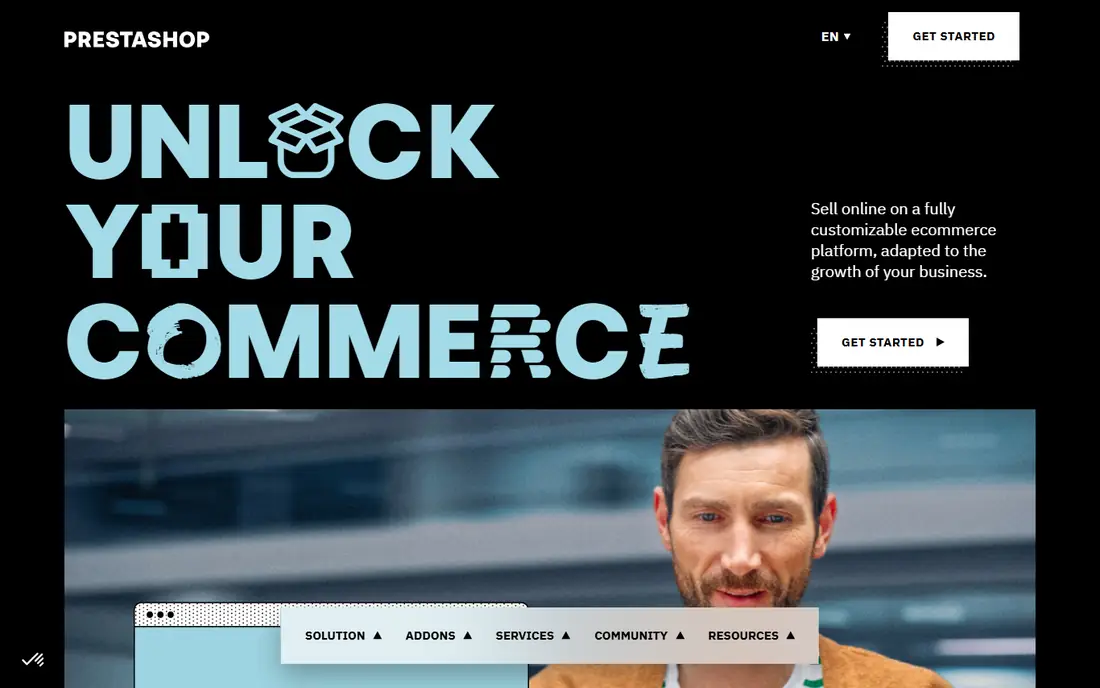
PrestaShop is a dedicated ecommerce platform, and that focus shows in the admin area. Products, combinations, stock, orders, discounts, and customer groups are part of the core system. The current release is PrestaShop 9.2, released on 30 September 2026. Classic is free to download, but you pay for hosting, a domain, a theme, and paid modules. Hosted starts at 24 euros per month excluding VAT on annual billing, which is 290 euros per year invoiced, or 29 euros per month excluding VAT month to month, with a 14-day trial. Enterprise is quote only. One source cites from about 2,115 euros per month with a 24-month commitment, so confirm that figure with PrestaShop.
What we like- Purpose-built for ecommerce, strong product and order management, large module market, active community
Watch out for- Paid modules commonly cost 50 to 300 euros each, so costs can rise fast, and self-hosted setup needs technical care
#2WooCommerce
Best for: WordPress users who want a flexible store with a large extension market4.4/5 on
G2 (1,283 reviews, checked Oct 2026)
Visit woocommerce.com
Starting priceFree plugin; hosting typically 25 dollars to 350 dollars per month
Free planFree plugin to install on WordPress, hosting separate
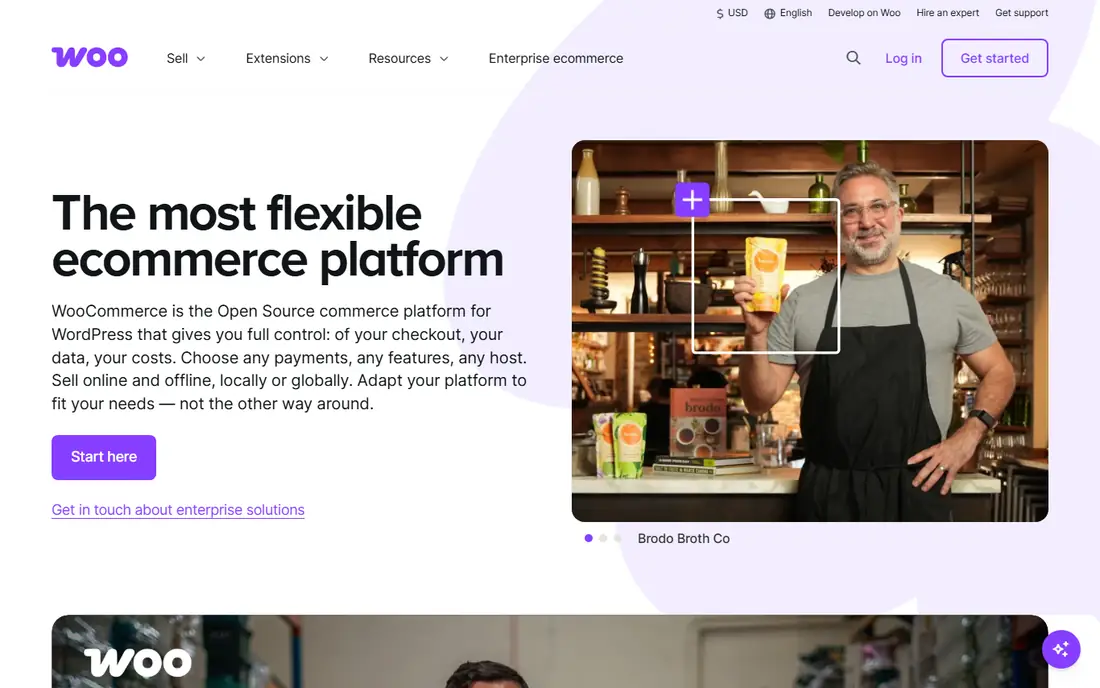
WooCommerce turns a WordPress site into a store. The plugin itself is free, and you can sell physical products, digital products, and services. Hosting typically costs 25 dollars to 350 dollars per month, depending on traffic and support. WooPayments charges 2.9 percent plus 0.30 dollars per transaction. You can choose other payment providers, and their fees vary. The main strength is flexibility. You can add almost any feature with an extension, change the design with a theme, and use WordPress for content marketing. The main cost is upkeep. You must update WordPress, WooCommerce, the theme, and extensions before they go live.
What we like- Free core plugin, deep WordPress integration, huge theme and extension market, full control over data
Watch out for- Costs depend on paid extensions and hosting, and updates across WordPress, themes, and plugins need regular care
#3Shopify
Best for: Sellers who want a hosted store with fast setup and a large app market4.4/5 on
G2 (5,144 reviews, checked Oct 2026)
Visit shopify.com
Starting priceBasic 29 dollars per month billed annually (39 dollars monthly); Grow 79 dollars (105 dollars); Advanced 299 dollars (399 dollars); Plus from 2,300 dollars per month
Free planNo free plan; trial available

Shopify is the most direct hosted alternative to PrestaShop and WooCommerce. You do not manage hosting or core updates. Basic costs 29 dollars per month billed annually, or 39 dollars month to month. Grow costs 79 dollars billed annually, or 105 dollars month to month. Advanced costs 299 dollars billed annually, or 399 dollars month to month. Plus starts from 2,300 dollars per month. Price note: a 16 November 2026 read showed Grow at 89 dollars and Advanced at 359 dollars on yearly billing, and a non-United States read showed Basic at 19 dollars and Grow at 49 dollars. Prices can vary by region, so confirm the price at checkout. Shopify suits sellers who want to launch fast and avoid server work.
What we like- Hosted platform with fast setup, strong checkout, large app market, reliable support options
Watch out for- Monthly fees rise with each tier, and paid apps can add a large extra monthly cost
#4BigCommerce
Best for: Growing stores that need strong built-in selling tools without many paid apps4.2/5 on
G2 (580 reviews, checked Oct 2026)
Visit bigcommerce.com
Starting priceCore 29 dollars per month; Growth 79 dollars; Scale 299 dollars; Performance from 1,499 dollars
Free planNo free plan; trial available
BigCommerce is a hosted platform with more built-in selling tools than many rivals. Core costs 29 dollars per month. Growth costs 79 dollars per month. Scale costs 299 dollars per month. Performance starts from 1,499 dollars per month. These prices follow the June 2026 rename of the plans. Gross merchandise value caps apply, and buyers should check the limit for the plan they choose. Scale has a 0.9 percent overage charge when sales pass the cap. That rule matters for fast-growing stores, so check the cap and the overage rate before you sign up. BigCommerce suits stores that want built-in features and fewer paid apps.
What we like- Strong built-in features, no transaction fees on most plans, good multi-channel selling tools
Watch out for- Gross merchandise value caps apply, with 30,000 dollars and 100,000 dollars tiers noted, and Scale has a 0.9 percent overage charge
#5
Magento (Adobe Commerce)
Best for: Large stores with complex catalogues and developer support
Visit business.adobe.com
Starting priceMagento Open Source free to download; Adobe Commerce quote based, industry estimates from about 22,000 dollars per year on-premise and about 40,000 dollars per year on Cloud
Free planMagento Open Source is free to download, hosting and development separate
Magento Open Source is free to download, but it is not a low-cost option in practice. You pay for hosting, development, themes, extensions, and ongoing support. Adobe Commerce is quote based. Industry estimates start around 22,000 dollars per year on-premise and around 40,000 dollars per year on Cloud, scaling with gross merchandise value. Total cost of ownership typically runs two to three times the licence fee. Adobe Commerce suits large stores with complex products, custom pricing, business-to-business sales, or high order volumes. It is not a good fit for a first store, or for a small team with no developer.
What we like- Very flexible for large catalogues, strong business-to-business features, wide partner and developer network
Watch out for- Total cost of ownership typically runs two to three times the licence fee, so hosting, development, and support costs are high
#6OpenCart
Best for: Small stores that want a free open-source store with low software cost4.3/5 on
G2 (106 reviews, checked Oct 2026)
Visit opencart.com
Starting priceFree open-source download; hosting, themes and extensions separate
Free planFree download
OpenCart is a free open-source ecommerce platform. You download the software, install it on hosting, and add a theme and extensions. There is no monthly licence fee for the core software. That makes it one of the lowest-cost ways to start a store, if you have technical help. Hosting, a domain, a theme, and paid extensions are still separate costs. The platform covers products, categories, orders, discounts, and basic reporting. It has an extension market for payments, shipping, and extra features. OpenCart suits a small store with a simple catalogue and a tight budget, when the owner or a developer can handle setup and updates.
What we like- Free core software, simple store setup, low software cost, many extensions available
Watch out for- The admin and design feel dated next to newer platforms, and good themes and support often cost extra
#7Wix
Best for: Small stores that want simple design tools and a fast hosted setup4.2/5 on
G2 (1,888 reviews, checked Oct 2026)
Visit wix.com
Starting priceLight 17 dollars per month billed annually; Core 29 dollars; Business 39 dollars; Business Elite 159 dollars
Free planFree plan with limits
Wix is a hosted website builder with ecommerce plans for small stores. Light costs 17 dollars per month billed annually. Core costs 29 dollars per month billed annually. Business costs 39 dollars per month billed annually. Business Elite costs 159 dollars per month billed annually. Many Wix plans are sold with a 50 percent first-year discount, and they renew at full price. Check the renewal price, not just the first-year price, before you compare Wix with other platforms. Wix suits sellers who want a simple store, a clean design, and no server work. You can add products, take payments, and manage orders from one dashboard.
What we like- Easy drag-and-drop design, hosted platform, good templates, simple store setup
Watch out for- 50 percent first-year discounts renew at full price, so the second-year cost is much higher
#8Squarespace
Best for: Design-led small stores that want a clean hosted store4.4/5 on
G2 (1,133 reviews, checked Oct 2026)
Visit squarespace.com
Starting priceBasic 19 dollars per month billed annually; Core 29 dollars; Plus 49 dollars; Advanced 99 dollars
Free planNo free plan; trial available
Squarespace is a hosted platform known for clean design. The plans follow the July 2026 rename. Basic costs 19 dollars per month billed annually. Core costs 29 dollars per month billed annually. Plus costs 49 dollars per month billed annually. Advanced costs 99 dollars per month billed annually. Do not use the old 16, 23, 28, and 52 dollar figures, as those prices no longer apply. Squarespace suits a small store where design and brand matter most, and where the catalogue is simple. You can build a polished store without a developer, and hosting and core updates are handled for you. It has fewer ecommerce extensions than Shopify or WooCommerce, so check that it covers your payment and shipping needs before you commit.
What we like- Strong design templates, hosted platform, simple store tools, good for brand-led stores
Watch out for- Fewer ecommerce extensions than Shopify or WooCommerce, so complex store needs may hit limits
Frequently asked questions
Is PrestaShop or WooCommerce better for a beginner?
WooCommerce is often easier for a beginner who already uses WordPress, because the store sits inside a familiar site and the setup steps are clear. PrestaShop is also clear for a beginner, because the admin area is built for selling from the start. If you have a WordPress site, start with WooCommerce. If you have no site and want a store-only system, PrestaShop is a strong start.
Is PrestaShop really free?
PrestaShop Classic is free open-source software to download, but running a store is not free. You still pay for hosting, a domain, a theme, and any paid modules you need. Paid modules commonly cost 50 to 300 euros each, so the total can rise fast. PrestaShop Hosted starts at 24 euros per month excluding VAT on annual billing. Always budget for hosting and modules, not just the free download.
Is WooCommerce really free?
WooCommerce is a free plugin, but running a store still costs money. You pay for WordPress hosting, a domain, a theme, and any paid extensions you need. Hosting typically costs 25 dollars to 350 dollars per month. WooPayments charges 2.9 percent plus 0.30 dollars per transaction. Other payment providers have their own fees. Add up hosting, extensions, and payment fees for a full year before you choose.
Can I move from PrestaShop to WooCommerce later?
Yes, you can move, but it takes planning and time. You need to export products, customers, and orders, rebuild the design, set up payments and shipping again, and redirect old product URLs to the new store. A migration tool or a developer can help, and you should test the new store before you switch it live. Plan the move in a quiet sales period.
Which platform is best for a large store?
For a large store, Adobe Commerce is often the strongest option in this list, because it handles complex catalogues, business-to-business sales, and high order volumes. Shopify Plus and BigCommerce Performance also suit large stores, with hosted infrastructure and strong support. PrestaShop Enterprise and WooCommerce on managed hosting can also work at scale, but they need developer support. Choose based on catalogue size, order volume, and your technical team.
Sources we checked (9)
- https://www.prestashop.com/en/pricing
- https://woocommerce.com
- https://www.shopify.com/pricing
- https://www.bigcommerce.com/pricing/
- https://business.adobe.com/products/magento/magento-commerce.html
- https://www.opencart.com
- https://www.wix.com/pricing
- https://www.squarespace.com/pricing
- https://rankite.com
How we picked
We compared PrestaShop and WooCommerce head to head on cost, control, scaling, setup, and running work, then added six alternatives in the same ecommerce-platform category. Prices are search-verified on 19 November 2026, not individually homepage-opened, so confirm the price at checkout, especially where we flagged a conflicting read or a single-source figure.
Last verified: 19 November 2026
Is your product missing or out of date?
We review this list regularly. Vendors can request a listing, send updated pricing or ask about featured placement.

Shihab Mia · Founder, Rankite
Shihab has 5+ years in B2B and SaaS SEO. He writes Rankite's software buying guides from pricing pages, documentation and public user reviews. More about Shihab.