How we make this list: we compare pricing pages, product documentation and public user reviews. Ratings come from G2, Capterra or Trustpilot, with the date we checked them.
Key takeaways
- Databricks suits data engineering teams wanting an open lakehouse with pay-as-you-go pricing, while Snowflake suits data warehouse teams from $2 per credit on demand.
- Microsoft Fabric suits Microsoft 365 shops from about $263 per month for F2 capacity, while Google BigQuery suits serverless analytics at $6.25 per TB scanned.
- Amazon Redshift suits AWS-native analytics from $0.36 per RPU-hour serverless reported, while Dataiku suits analytics and data science teams on enterprise contracts.
- C3 AI suits large enterprises wanting prebuilt industry AI apps, while Stardog suits teams adding a semantic layer over an existing warehouse with a free tier.
- The target difference matters: the target pairs software with forward-deployed engineers and an operational ontology, while these platforms assume your team or a partner models the business.
Quick comparison
| Tool | Best for | Starting price | Free plan |
|---|
 Databricks | Open lakehouse, data engineering | Pay as you go | No |
 Snowflake | Data warehouse, multi-cloud | $2 per credit | No |
 Microsoft Fabric | Microsoft 365 shops | $263 per month | No |
 Google BigQuery | Serverless analytics | $6.25 per TB scanned | Yes |
 Amazon Redshift | AWS-native analytics | $0.36 per RPU-hour | No |
 Dataiku | Analytics, data science teams | See website | No |
 C3 AI | Prebuilt industry AI apps | See website | No |
 Stardog | Semantic layer over a warehouse | Free | Yes |
Is your product missing or out of date?
We review this list regularly. Vendors can request a listing, send updated pricing or ask about featured placement.
The best Palantir alternatives
#1Databricks
Best for: Open lakehouse, data engineering4.6/5 on
G2 (1,383 reviews, checked Oct 2026)
Visit databricks.com
Starting pricePay as you go
Free planNo
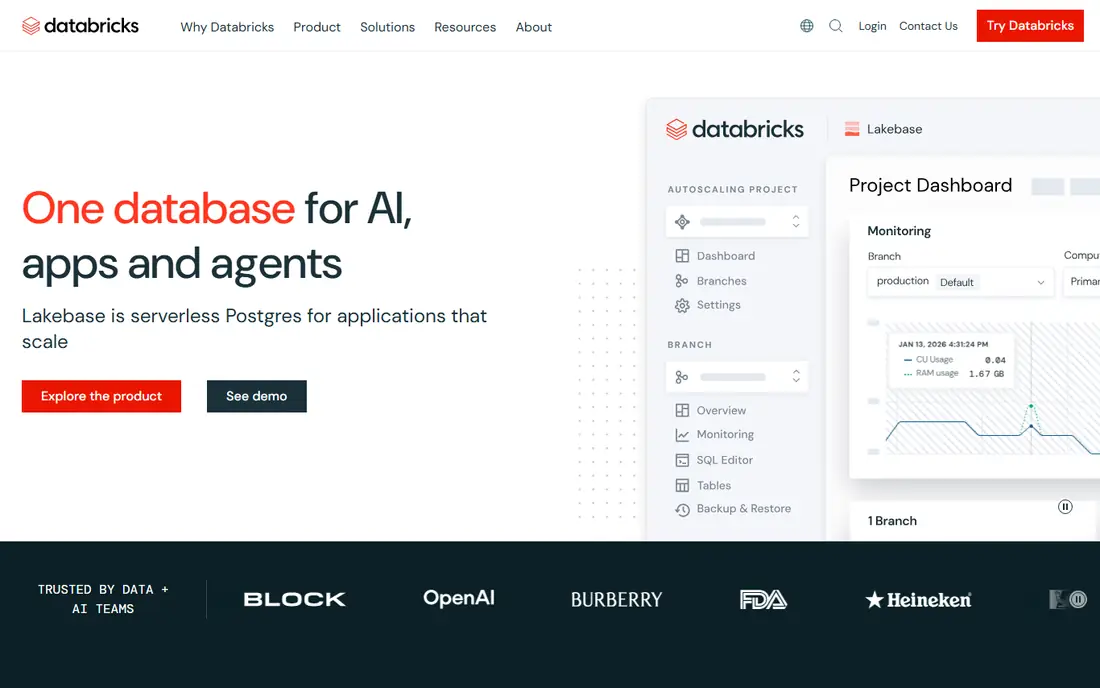
Databricks is the open lakehouse pick, suiting companies with a data engineering team that wants an open lakehouse, with pay-as-you-go pricing and no upfront commitment. SQL pricing runs $0.22 per DBU for Classic, $0.55 for Pro, and $0.70 for Serverless with VM bundled on Azure, while cloud infrastructure often adds 50 to 70 percent on top for non-serverless workloads. Databricks now runs its own forward-deployed engineering team, aimed mainly at strategic accounts, which narrows the target gap for large buyers.
The trade off is lakehouse power against cost governance. Databricks handles engineering, ML, and streaming well, but cluster sprawl and idle compute drive bills. Databricks fits teams with a data engineering staff that wants an open lakehouse.
What we like- Open lakehouse for data engineering, ML, and streaming
- Pay as you go with no upfront commitment
- SQL Classic $0.22, SQL Pro $0.55, SQL Serverless $0.70 per DBU
- 14-day full trial
- Now runs its own forward-deployed engineering team for strategic accounts
Watch out for- Cloud infrastructure often adds 50 to 70 percent on top of DBU fees for non-serverless workloads
- Cluster sprawl and idle compute drive costs
- People costs for data teams usually exceed tooling costs
- No operational ontology included
#2Snowflake
Best for: Data warehouse, multi-cloud4.6/5 on
G2 (762 reviews, checked Oct 2026)
Visit snowflake.com
Starting price$2 per credit
Free planNo
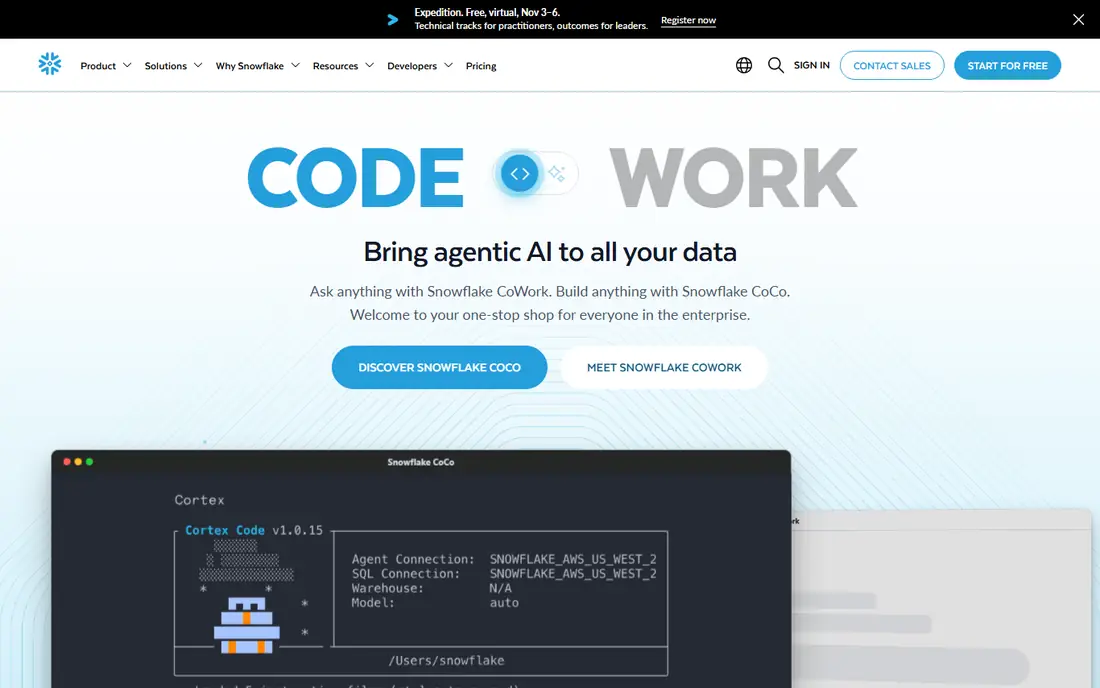
Snowflake is the data warehouse pick, offering a multi-cloud warehouse with Standard pricing from $2 per credit on demand, storage at $23 per TB per month on AWS US East, and strong data sharing across clouds. A 30-day trial plus $400 credits is available, and one report puts the median buyer at about $96,000 per year. Snowflake suits teams that mainly need a data warehouse, staffed by partners where needed.
The trade off is warehouse maturity against runaway queries. Snowflake warehouses maturely, but oversized warehouses and runaway queries drive costs. Snowflake fits teams that mainly need a data warehouse with multi-cloud sharing.
What we like- Multi-cloud warehouse on AWS, Azure, and Google Cloud
- Standard $2.00 per credit, storage $23.00 per TB per month on AWS US East
- Strong data sharing
- 30-day trial plus $400 credits
- Median buyer about $96,000 per year in one report
Watch out for- Oversized warehouses and runaway queries drive costs
- Typical startup-to-midmarket monthly compute of $600 to $2,000 in one benchmark
- Serverless feature credits add up
- No operational ontology included
#3Microsoft Fabric
Best for: Microsoft 365 shops4.6/5 on
G2 (47 reviews, checked Oct 2026)
Visit microsoft.com
Starting price$263 per month
Free planNo
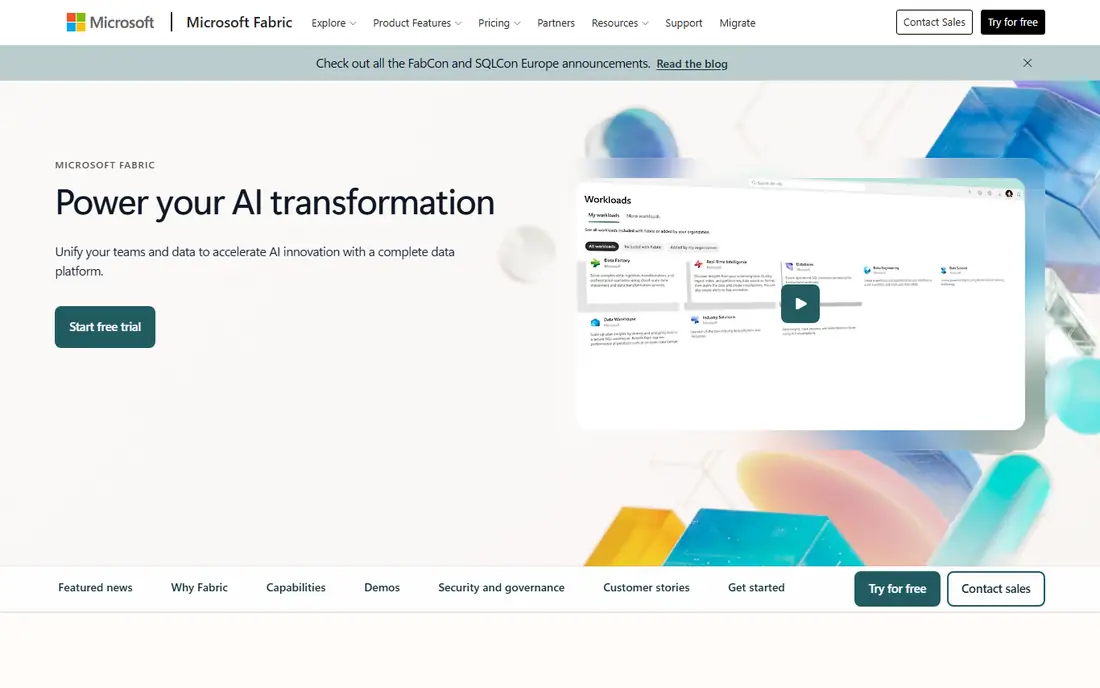
Microsoft Fabric is the Microsoft shop pick, offering one vendor for Microsoft 365 shops that want to stay inside one vendor, with F2 capacity at about $263 per month to F64 at about $8,410 per month in one guide. Power BI integration and OneLake security make it smooth for business users, and Azure Synapse serverless pricing is $5.00 per TB processed. Total cost depends heavily on the chosen capacity tier and existing Microsoft licensing.
The trade off is integration against licensing complexity. Fabric integrates Microsoft tools smoothly, but capacity sizing and Power BI licensing confuse buyers. Microsoft Fabric fits Microsoft 365 shops that want one vendor.
What we like- One vendor for Microsoft 365 shops
- F2 capacity about $263 per month to F64 about $8,410 per month in one guide
- Power BI integration
- OneLake security
- Azure Synapse serverless at $5.00 per TB processed
- Smooth integrated experience for business users
Watch out for- Total cost depends heavily on capacity tier and existing Microsoft licensing
- Capacity sizing and Power BI licensing confusion in one report
- Azure-only SaaS
- F2 to F2048 range makes sizing hard
Starting price$6.25 per TB scanned
Free planYes
Google BigQuery is the serverless analytics pick, running analytics without clusters at $6.25 per TB scanned on demand, with the first 1 TB per month free and the first 10 GiB of storage free each month. Slot-hour pricing ranges from $0.04 for Standard to $0.10 for Enterprise Plus, with three-year commits reducing Enterprise tiers by about 40 percent. BigQuery suits analytics without clusters on Google Cloud.
The trade off is serverless ease against scan costs. BigQuery needs no clusters, but unpartitioned tables and broad scans drive bills. Google BigQuery fits Google Cloud teams that want serverless analytics.
What we like- Serverless analytics without clusters
- $6.25 per TB scanned on demand, first 1 TB per month free
- First 10 GiB storage free each month
- Slot-hour pricing from $0.04 Standard to $0.10 Enterprise Plus
- BigQuery ML
- Queries data in S3 and Azure Blob through Omni
Watch out for- Unpartitioned tables and broad scans drive costs
- Typical startup monthly cost $300 to $1,500 in one benchmark
- Three-year commits needed for 40 percent savings on Enterprise tiers
- Google Cloud-centric value
#5Amazon Redshift
Best for: AWS-native analytics4.3/5 on
G2 (404 reviews, checked Oct 2026)
Visit aws.amazon.com
Starting price$0.36 per RPU-hour
Free planNo
Amazon Redshift is the AWS-native pick, offering AWS-native analytics with Serverless pricing from $0.36 per RPU-hour in US East in one benchmark, while another table lists Serverless from $1.50 per hour, so confirm the current pricing unit. Three-year reservations can deliver up to 45 percent savings, and typical startup monthly cost is $400 to $2,500 in one benchmark. Redshift suits AWS-native teams with steady workloads.
The trade off is AWS fit against workload management. Redshift fits AWS estates well, but poor workload management and overprovisioning drive costs. Amazon Redshift fits AWS-native analytics teams.
What we like- AWS-native analytics
- Serverless from $0.36 per RPU-hour in US East in one benchmark, $1.50 per hour in another table
- Three-year reservations up to 45 percent savings
- Typical startup monthly cost $400 to $2,500
- Predictable for steady workloads with reservations
Watch out for- Poor workload management and overprovisioning drive costs
- Serverless pricing conflicts across sources
- AWS-only value
- Node-hour versus RPU-hour confusion for buyers
#6Dataiku
Best for: Analytics, data science teams4.4/5 on
G2 (266 reviews, checked Oct 2026)
Visit dataiku.com
Starting priceSee website
Free planNo
Dataiku is the analytics and data science pick, suiting analytics and data science teams with enterprise governance and collaboration. Pricing is listed at £15,000 to £200,000 per year on UK G-Cloud in one guide, with a median buyer of about $160,000, so this guide lists it as See website for US buyers. Dataiku fits teams that need analytics and data science in one governed platform.
The trade off is data science depth against enterprise cost. Dataiku collaborates on analytics well, but median buyer cost is high. Dataiku fits analytics and data science teams with enterprise budgets.
What we like- Analytics and data science teams focus
- £15,000 to £200,000 per year on UK G-Cloud in one guide
- Median buyer about $160,000 in the same guide
- Good for analytics and data science collaboration
- Enterprise governance
Watch out for- Enterprise pricing only, no public list price in most regions
- Median buyer cost is high for mid-market teams
- UK G-Cloud figures need conversion for US buyers
- Platform alone needs a data team
#7
C3 AI
Best for: Prebuilt industry AI apps
Visit c3.ai
Starting priceSee website
Free planNo
C3 AI is the prebuilt app pick, offering prebuilt industry AI apps for large enterprises that want applications, not just platforms. One guide lists $500,000 for a six-month initial deployment, so this guide lists it as See website, since enterprise pricing varies by industry and scope. C3 AI suits large enterprises that want prebuilt industry AI apps with vendor delivery.
The trade off is app readiness against entry cost. C3 AI delivers industry apps, but the entry deployment is $500,000. C3 AI fits large enterprises that want prebuilt industry AI apps.
What we like- Prebuilt industry AI apps for large enterprises
- $500,000 for a six-month initial deployment in one guide
- Good for enterprises wanting apps, not just platforms
- Industry-specific models
Watch out for- $500,000 entry deployment is enterprise only
- Six-month initial deployment needs a large budget
- Smaller teams cannot justify entry cost
- App focus means warehouse flexibility is secondary
Starting priceFree
Free planYes
Stardog is the semantic layer pick, adding a semantic layer over an existing warehouse, with a free tier and enterprise pricing by quote. It suits teams that already have a warehouse and need to add meaning, relationships, and querying across sources without moving data. Stardog complements Snowflake, BigQuery, or Redshift rather than replacing them.
The trade off is semantic depth against standalone value. Stardog adds meaning to warehouse data, but it needs an existing warehouse. Stardog fits teams adding a semantic layer over an existing warehouse.
What we like- Semantic layer over an existing warehouse
- Free tier available
- Enterprise by quote
- Good for adding meaning and relationships to warehouse data
- Complements Snowflake, BigQuery, or Redshift
Watch out for- Enterprise pricing is quote only
- Semantic layer only, not a full warehouse
- Smaller brand than rivals
- Needs an existing warehouse to add value
How we chose
We compared 2026 data platform guides, recording published list prices and reported figures separately, since platform pricing varies by edition, plan, cloud, and region. We favored platforms with distinct strengths, open lakehouse, multi-cloud warehouse, Microsoft integration, serverless analytics, AWS-native analytics, data science collaboration, prebuilt industry apps, and semantic layers, and we listed Dataiku and C3 AI as See website because their pricing is enterprise or region-specific. We weighed platform power, team requirements, and total cost separately, since people costs for data teams usually exceed tooling costs.
How to choose a Palantir alternative
Start with team reality: companies with a data engineering team should shortlist Databricks and Snowflake, Microsoft shops should shortlist Fabric, Google Cloud teams should shortlist BigQuery, and AWS teams should shortlist Redshift. Next, check the ontology gap: if no one in your company will model the business, budget for a partner or a forward-deployed style engagement, since buying a platform alone produces a well-organized warehouse with little decision change. Then govern costs from day one: set cost alerts, naming conventions, workload owners, and monthly usage reviews, since runaway queries, idle compute, and broad scans drive bills on every usage-based platform. Finally, trial with a real decision workflow, not just a query benchmark, since the platform that changes decisions is the one that models the business. A platform that fits your stack, your team, and your ontology plan will deliver decisions, not just a warehouse.
Frequently asked questions
What is the best Palantir alternative overall?
Databricks suits lakehouse teams, Snowflake suits warehouse teams, Fabric suits Microsoft shops, and BigQuery suits serverless analytics, so the best pick depends on stack and team.
Is there a free Palantir alternative?
Stardog offers a free tier, BigQuery offers 1 TB of queries and 10 GiB of storage free each month, and Snowflake and Databricks offer trials with credits.
Why do data platform prices vary so much?
Pricing varies by edition, plan, cloud, and region, and usage-based models mean runaway queries, idle compute, and broad scans drive bills differently.
What is an operational ontology?
An operational ontology is a shared model of the business, its objects, and their relationships, which the target builds with forward-deployed engineers and most platforms assume you build yourself.
Should mid-market companies buy a platform alone?
Usually not without a data team or partner, since buying a platform alone produces a well-organized warehouse with little change in how people make decisions.
How do I control data platform costs?
Set cost alerts, naming conventions, workload owners, and monthly usage reviews from day one, and watch runaway queries, idle compute, and broad scans.
Sources we checked (0)
Is your product missing or out of date?
We review this list regularly. Vendors can request a listing, send updated pricing or ask about featured placement.

Shihab Mia · Founder, Rankite
Shihab has 5+ years in B2B and SaaS SEO. He writes Rankite's software buying guides from pricing pages, documentation and public user reviews. More about Shihab.