How we make this list: we compare pricing pages, product documentation and public user reviews. Ratings come from G2, Capterra or Trustpilot, with the date we checked them.

Linear vs ClickUp: which one should your product team pick
Linear and ClickUp take opposite approaches to the same job. Linear does one thing, issue tracking for software teams, and does it fast. ClickUp does many things, tasks, docs, goals, chat, whiteboards and time tracking, in one workspace at a low price. A team that wants speed and focus usually prefers Linear. A team that wants to replace several tools with one subscription usually prefers ClickUp. This guide compares them directly, then adds six more tools so you can judge the whole field.
Direct answer: For an engineering led team that ships code every week, Linear is the better pick, because its speed and code integrations keep developers in flow. For a team that wants one tool for tasks, docs, goals and time tracking without buying several subscriptions, ClickUp is the better pick at $9 per user per month. Asana is the best alternative for teams that want structure without the breadth of ClickUp or the engineering focus of Linear.
Key takeaways
- Linear Basic costs $10 per user per month billed annually, and Business costs $16. ClickUp Core costs $9 and Business costs $17.
- Linear is faster and more focused. ClickUp covers far more features in one workspace.
- Linear free covers unlimited members up to 250 issues. ClickUp free covers basic tasks with 100 MB storage.
- Teams that value speed over breadth should pick Linear. Teams that value one subscription over several should pick ClickUp.
- Jira, Asana, monday, Trello, Wrike and Smartsheet each cover a different team shape, from simple boards to enterprise workflows.
Linear is faster for everyday work. Issues open instantly, keyboard shortcuts handle most actions, and the interface stays out of the way. Creating an issue, assigning it, moving it through a cycle and linking a pull request takes seconds. Engineers update issues because it is quick, so the board stays current without a process enforcer. Offline sync means work continues on a bad connection and syncs later.
ClickUp is slower in daily use, because it does more. Every screen carries more menus, more views and more settings, and new users need time to learn where things live. That breadth is the trade: ClickUp replaces a task tracker, a docs tool, a goals tool and a time tracker, but each of those jobs is a little slower than in a focused tool. A team that works mostly in tasks and docs will feel the difference. A team that values having everything in one place will accept it.
How do Linear and ClickUp compare on price
On annual billing, Linear Basic costs $10 per user per month and Business costs $16. ClickUp Core costs $9 per user per month and Business costs $17. At the entry tier, ClickUp Core is $1 cheaper than Linear Basic. At the higher tier, Linear Business at $16 is $1 cheaper than ClickUp Business at $17. For a ten person team, the gap is about $10 per month either way, so price should not decide this comparison. Features and fit should.
Two warnings matter here. First, Linear renamed its plans in 2026: older pages still list Standard at $8 and Plus at $14, while current listings show Basic at $10 and Business at $16 billed annually. Check the live pricing page before you buy, because the older figures are now out of date. Second, some ClickUp workspaces still bill on legacy rates of Unlimited $7 and Business $12, so an existing customer may see different numbers from a new buyer. Prices in this guide were checked on 17 November 2026.
ClickUp covers far more of your workflow. Tasks, docs, goals, chat, whiteboards, time tracking and dashboards live in one workspace, and the view options include list, board, calendar, Gantt, timeline and mind map. A team can run its whole operation in ClickUp without a second subscription, which is why its fans describe it as an all in one workspace. The cost is complexity: every feature adds menus, and the interface can feel crowded.
Linear covers a narrower workflow on purpose. It tracks issues, runs cycles, manages projects and shows a roadmap, and it integrates with GitHub, GitLab, Slack and Figma for the rest. It does not try to be a docs tool or a chat tool. That focus is why engineers like it: there is nothing to learn beyond issue tracking, and nothing to distract from shipping. A team that already uses Notion or Google Docs for writing and Slack for chat will find Linear fits neatly alongside them. A team that wants one tool for everything will find ClickUp more complete.
What should you check before you choose between them
Start with how your team actually works. Count the tools you pay for today. If you pay for a tracker, a docs tool and a time tracker separately, ClickUp may replace all three and save money. If you pay for a tracker only and your docs live elsewhere, Linear adds speed without forcing you to move your writing. Run a pilot with one real project and the real team for two weeks, and measure how long it takes to update status and whether the board stays current.
Check the learning curve as well. Linear takes an hour to learn for an engineer and a day for a non technical user. ClickUp takes longer: the feature set is wide, and teams usually need a week to settle on a structure. If your team turns over quickly or includes many non technical users, the simpler tool wins. Finally, check your integrations. Linear connects deeply to developer tools. ClickUp connects to a wider range of business tools. Test the one integration your team cannot live without before you commit.
Quick comparison
| Tool | Best for | Starting price | Free plan |
|---|
 Linear | Engineering and product teams that want fast issue tracking with minimal admin | Basic $10 per user per month billed annually; Business $16 | Yes, free plan with unlimited members, up to 250 issues and 2 teams |
 ClickUp | Teams that want one tool for tasks, docs, goals, chat and time tracking | Core $9 per user per month billed annually; Business $17 | Yes, free forever plan with 100 MB storage and basic task features |
 Jira | Software organisations that need configurable agile process and portfolio planning | Standard $9.70 per user per month for 1 to 100 users; Premium $19.60 | Yes, free plan for up to 10 users |
 Asana | Cross functional teams that want structured projects, goals and portfolios | Starter $10.99 per user per month billed annually ($13.49 monthly); Advanced $24.99 ($30.49 monthly) | Yes, free plan for up to 10 users with basic task management |
 monday Work Management | Teams that want visual boards, timelines and automations for mixed project work | Basic $9 per seat per month billed annually; Standard $12; Pro $19 | Yes, free plan for up to 2 seats with limited features |
 Trello | Small teams that want the simplest board for tracking work | Standard $5 per user per month billed annually; Premium $10; Enterprise $17.50 | Yes, free plan with up to 10 boards per workspace |
 Wrike | Mid sized and large teams that need structured workflows, approvals and reporting | Team $10 per user per month billed annually; Business $25 | Yes, free plan for up to 5 users with basic task management |
 Smartsheet | Teams that plan in spreadsheets and want Gantt charts, forms and portfolio reporting | Pro $9 per user per month billed annually; Business $19 | No free plan for new signups since 28 August 2024; 30 day trial available |
Is your product missing or out of date?
We review this list regularly. Vendors can request a listing, send updated pricing or ask about featured placement.
#1Linear
Best for: Engineering and product teams that want fast issue tracking with minimal admin4.6/5 on
G2 (124 reviews, checked Oct 2026)
Visit linear.app
Starting priceBasic $10 per user per month billed annually; Business $16
Free planYes, free plan with unlimited members, up to 250 issues and 2 teams
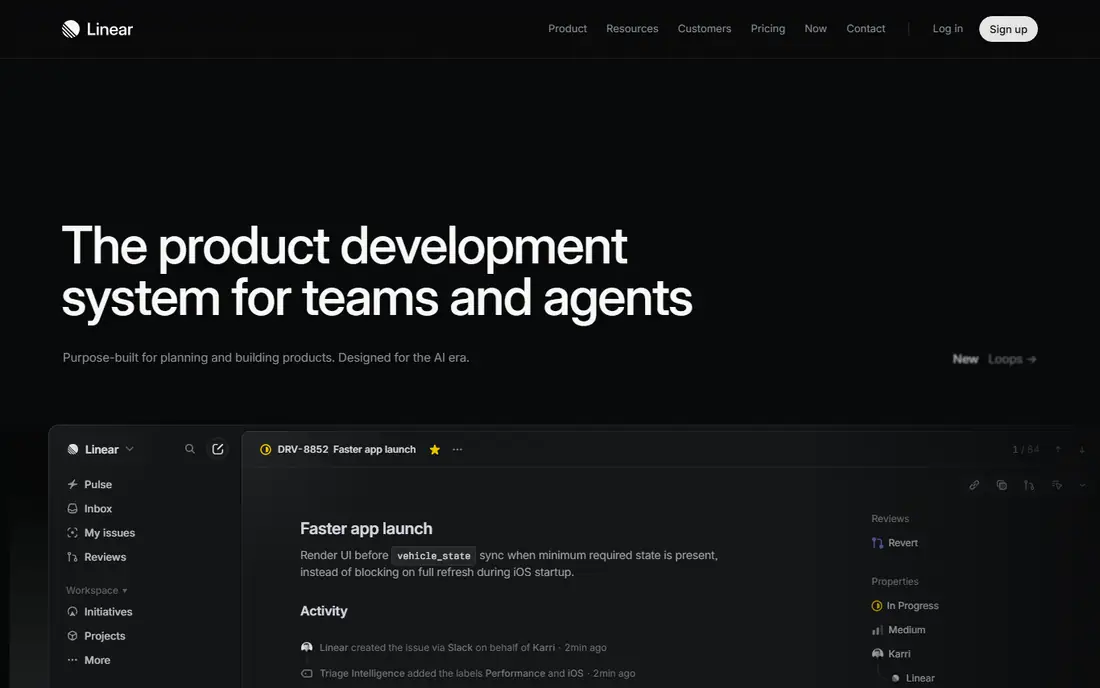
Linear is the speed pick. Its issue model is simple: issues belong to teams, teams run cycles, cycles feed projects, and the roadmap shows what is next. The interface responds instantly, and keyboard driven work means engineers can triage a backlog in minutes. Integrations with GitHub and GitLab link pull requests to issues automatically, and the agent platform adds AI triage and code aware workflows. The weakness is breadth. Linear does not try to replace your docs tool or your chat tool, so teams that want one workspace will find it thin. For a team that ships code every week, it is the most efficient tool in this list.
What we like- Very fast interface with keyboard shortcuts
- Opinionated cycles and projects
- Strong GitHub and GitLab integrations
- Offline sync
Watch out for- Narrower feature set than ClickUp, with no docs, chat or time tracking
- Reporting is simpler than enterprise tools
- Older pages still list Standard $8 and Plus $14, so pricing pages can confuse buyers
#2ClickUp
Best for: Teams that want one tool for tasks, docs, goals, chat and time tracking4.6/5 on
G2 (14,878 reviews, checked Oct 2026)
Visit clickup.com
Starting priceCore $9 per user per month billed annually; Business $17
Free planYes, free forever plan with 100 MB storage and basic task features
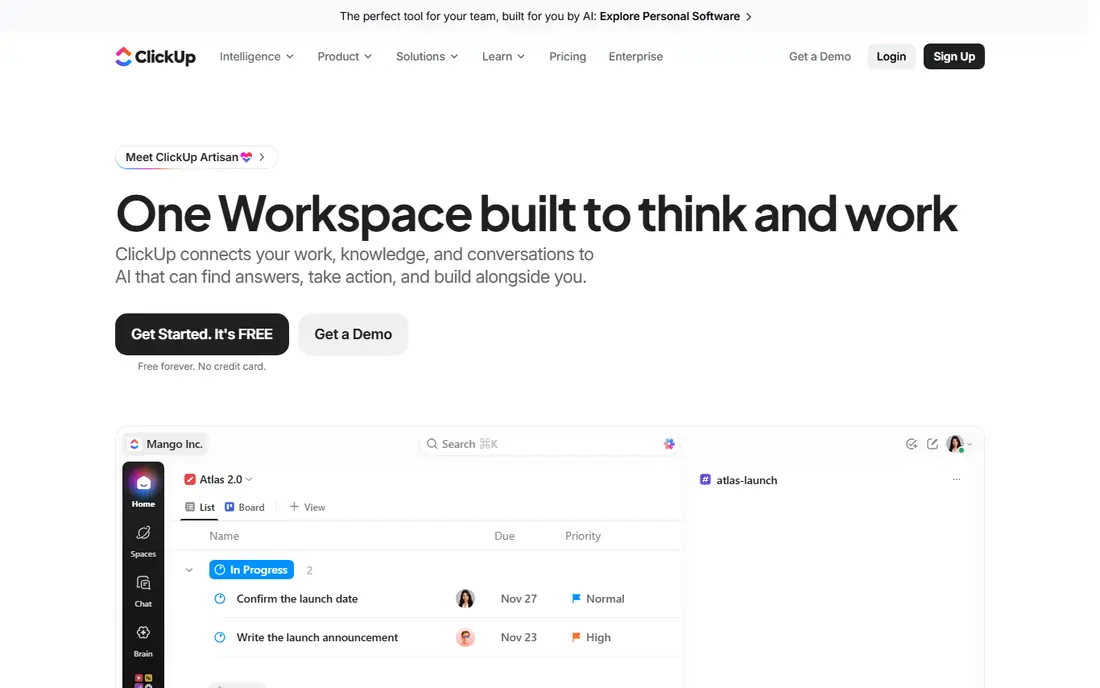
ClickUp is the breadth pick. It replaces several tools at once, which saves money and keeps work in one place. Docs sit next to tasks, goals track objectives, and time tracking runs without an add-on. The Core plan at $9 is good value for teams that want all of that in one subscription. The trade is focus: ClickUp does many jobs well and none as fast as a focused tool. Teams that value simplicity over features may find it overwhelming, and engineering teams may miss the speed of Linear.
What we like- Very wide feature set for the price
- Many views including list, board, calendar and Gantt
- Docs and whiteboards included
- Time tracking built in
Watch out for- The interface can feel crowded and slow to learn
- Sprint features are less refined than Linear
- Some workspaces still bill on legacy Unlimited $7 and Business $12 rates, so pricing can confuse buyers
#3Jira
Best for: Software organisations that need configurable agile process and portfolio planning4.3/5 on
G2 (7,984 reviews, checked Oct 2026)
Visit atlassian.com
Starting priceStandard $9.70 per user per month for 1 to 100 users; Premium $19.60
Free planYes, free plan for up to 10 users
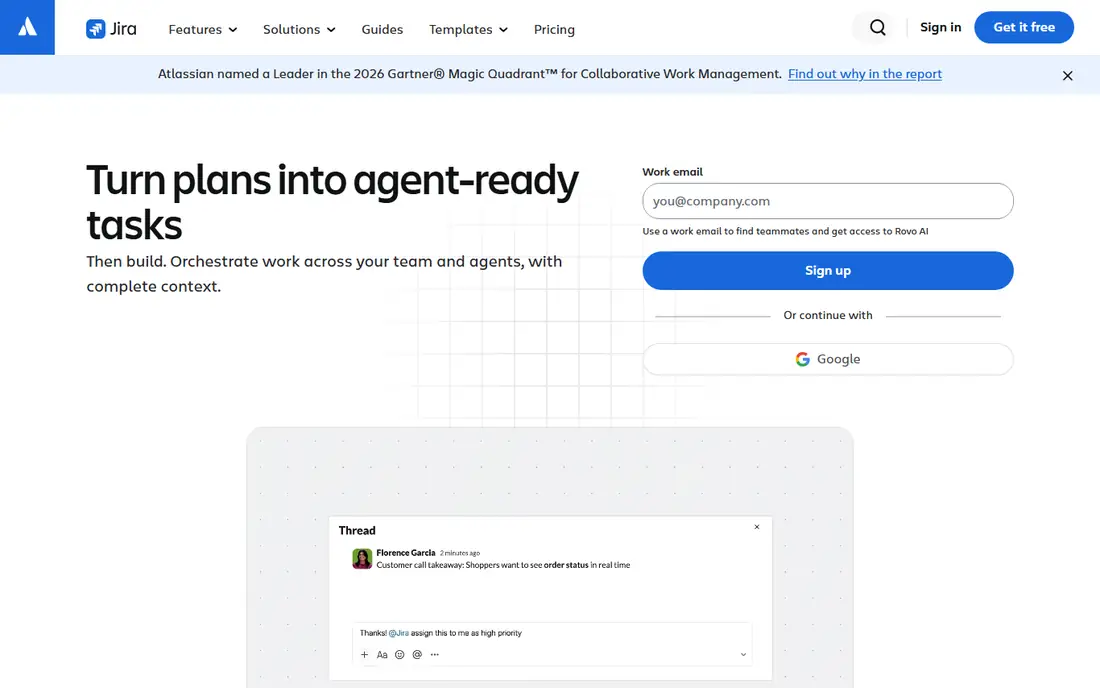
Jira is the enterprise agile pick. It handles any process you can describe, enforces fields and approvals, and Premium adds Advanced Roadmaps for portfolio planning. It is heavier than both Linear and ClickUp: it needs an administrator, onboarding takes longer, and engineers spend more clicks per issue. Choose Jira when your organisation needs formal process across many teams, not when a small product team needs speed or an all in one workspace.
What we like- Deep agile features including sprints, backlogs and roadmaps
- Very configurable workflows
- Huge marketplace
- Strong Atlassian ecosystem
Watch out for- Setup and administration take real effort
- Daily use is slower than Linear
- Prices rose on 13 October 2026, so older price lists are out of date
#4Asana
Best for: Cross functional teams that want structured projects, goals and portfolios4.4/5 on
G2 (13,930 reviews, checked Oct 2026)
Visit asana.com
Starting priceStarter $10.99 per user per month billed annually ($13.49 monthly); Advanced $24.99 ($30.49 monthly)
Free planYes, free plan for up to 10 users with basic task management
Asana is the structure pick. Projects, tasks, subtasks and sections guide how work is organised, and portfolios give managers a cross project view. It is less broad than ClickUp, with no built in time tracking or whiteboards, and less code focused than Linear. For mixed teams that include product, design, marketing and operations, Asana is the most balanced tool here.
What we like- Clear task lists, timelines and portfolios
- Goals connect work to objectives
- Workload view helps managers
- Wide integration list
Watch out for- Not built for code level issue tracking
- The jump from Starter to Advanced is steep
- Advanced reporting needs the higher plan
#5
monday Work Management
Best for: Teams that want visual boards, timelines and automations for mixed project work
Visit monday.com
Starting priceBasic $9 per seat per month billed annually; Standard $12; Pro $19
Free planYes, free plan for up to 2 seats with limited features
monday Work Management is the visual pick. Boards, timelines and dashboards make project status obvious to anyone, including executives who never open a task tool. Automations handle reminders and status changes. For a product team, monday sits between Linear and ClickUp: clearer than Linear for non technical people, but less broad than ClickUp. Use it when the audience for your boards includes people outside the product team.
What we like- Boards are readable at a glance
- Strong automations and dashboards
- Many templates
- Good mobile apps
Watch out for- Weaker than Linear for code work and narrower than ClickUp for docs
- Costs rise with seats
- Confirm you are viewing Work Management prices, not monday CRM prices
#6Trello
Best for: Small teams that want the simplest board for tracking work4.4/5 on
G2 (14,064 reviews, checked Oct 2026)
Visit trello.com
Starting priceStandard $5 per user per month billed annually; Premium $10; Enterprise $17.50
Free planYes, free plan with up to 10 boards per workspace
Trello is the simple pick. A board with lists and cards is easy to learn and cheap to run, and Standard at $5 is the lowest paid tier in this list. It cannot match Linear for engineering work or ClickUp for breadth. It suits a small team tracking a simple pipeline, or a lightweight board alongside a real tracker. Product teams that need sprints, docs or reporting should look at the tools above.
What we like- Easiest board tool to learn
- Low price
- Power-Ups add calendar, custom fields and integrations
Watch out for- No native sprint planning or docs
- Weak reporting
- Large projects outgrow boards quickly
#7Wrike
Best for: Mid sized and large teams that need structured workflows, approvals and reporting4.2/5 on
G2 (4,540 reviews, checked Oct 2026)
Visit wrike.com
Starting priceTeam $10 per user per month billed annually; Business $25
Free planYes, free plan for up to 5 users with basic task management
Wrike suits organisations with formal processes that span departments. Request forms feed work in, approvals route automatically, and dashboards report across teams. It handles marketing, professional services and operations well. For pure product delivery, Linear is faster and ClickUp is broader. Wrike wins when the work crosses engineering, marketing and operations and needs one governed system.
What we like- Strong workflow automation and request forms
- Good reporting and time tracking
- Scales to large teams
Watch out for- The interface takes time to learn
- Business at $25 is one of the pricier options here
- Setup benefits from an administrator
#8Smartsheet
Best for: Teams that plan in spreadsheets and want Gantt charts, forms and portfolio reporting4.4/5 on
G2 (22,767 reviews, checked Oct 2026)
Visit smartsheet.com
Starting pricePro $9 per user per month billed annually; Business $19
Free planNo free plan for new signups since 28 August 2024; 30 day trial available
Smartsheet is the spreadsheet shaped option. Teams that plan in grids will feel at home, and it adds Gantt charts, dependencies and dashboards on top. It is popular in project management offices that report across many projects. For product teams, it is a poor fit for sprints and issue tracking, but for a PMO that needs portfolio reporting across product and business projects, it is worth a look.
What we like- Familiar spreadsheet grid
- Strong Gantt and card views
- Forms and automations included
- Good for portfolio reporting
Watch out for- No free plan for new users
- The interface feels dated
- Weak for code level issue tracking
Comparison table
| Tool |
Starting price (annual billing) |
Free plan |
Best for |
| Linear |
Basic $10 per user per month |
Yes, up to 250 issues |
Fast issue tracking |
| ClickUp |
Core $9 per user per month |
Yes |
All in one tasks and docs |
| Jira |
Standard $9.70 per user per month |
Yes, up to 10 users |
Configurable agile at scale |
| Asana |
Starter $10.99 per user per month |
Yes, up to 10 users |
Structured projects and goals |
| monday Work Management |
Basic $9 per seat per month |
Yes, up to 2 seats |
Visual boards and automations |
| Trello |
Standard $5 per user per month |
Yes, up to 10 boards |
Simple Kanban boards |
| Wrike |
Team $10 per user per month |
Yes, up to 5 users |
Workflows and approvals |
| Smartsheet |
Pro $9 per user per month |
No, trial only |
Spreadsheet style planning |
Frequently asked questions
Is Linear or ClickUp better for a software team
Linear is better for a software team that values speed and code integration. ClickUp is better for a software team that also wants docs, goals and time tracking in the same tool. If your team is mostly engineers shipping code, Linear keeps them in flow. If your team mixes engineering with product, design and operations work, ClickUp covers more of the workflow in one place.
Can ClickUp replace Linear for developers
ClickUp can track development work, including sprints, but it does not match Linear for speed or code integration. Developers in ClickUp spend more clicks per issue and lose the keyboard driven triage and automatic pull request linking that Linear provides. Teams that switch from Linear to ClickUp usually do it to consolidate tools, and they accept slower issue tracking in exchange.
Which is cheaper, Linear or ClickUp
At the entry tier, ClickUp Core at $9 per user per month is $1 cheaper than Linear Basic at $10 on annual billing. At the higher tier, Linear Business at $16 is $1 cheaper than ClickUp Business at $17. The gap is about $10 per month for a ten person team either way, so choose on fit, not price. Note that older pages list Linear Standard at $8 and Plus at $14, and some ClickUp workspaces still bill legacy $7 and $12 rates.
Does ClickUp have the same speed as Linear
No. Linear is built for speed, with an instant interface, keyboard shortcuts and offline sync. ClickUp carries a much wider feature set, so screens load more slowly and navigation takes more clicks. Teams that value having tasks, docs and time tracking in one place accept the slower feel. Teams that value speed above breadth will notice the difference every day.
What is the best alternative to Linear and ClickUp
Asana is the best general alternative for teams that want structured project work without the breadth of ClickUp or the engineering focus of Linear, from $10.99 per user per month. Jira is the best alternative for teams that need deep agile process and enterprise scale, from $9.70. monday Work Management is the best visual alternative for mixed teams, from $9 per seat per month.
Sources we checked (8)
- https://linear.app/pricing
- https://clickup.com/pricing
- https://www.atlassian.com/software/jira/pricing
- https://asana.com/pricing
- https://monday.com/pricing/
- https://trello.com/pricing
- https://www.wrike.com/pricing/
- https://www.smartsheet.com/pricing
Is your product missing or out of date?
We review this list regularly. Vendors can request a listing, send updated pricing or ask about featured placement.

Shihab Mia · Founder, Rankite
Shihab has 5+ years in B2B and SaaS SEO. He writes Rankite's software buying guides from pricing pages, documentation and public user reviews. More about Shihab.