To rank in People Also Ask boxes, first get a page ranking on page one for the query that triggers the box, then add a heading that matches the exact PAA question and answer it in a direct 40 to 60 word block right below. Match the format Google already shows, keep the HTML clean, add FAQ schema, and cover the topic deeply enough that Google trusts you for related questions too.
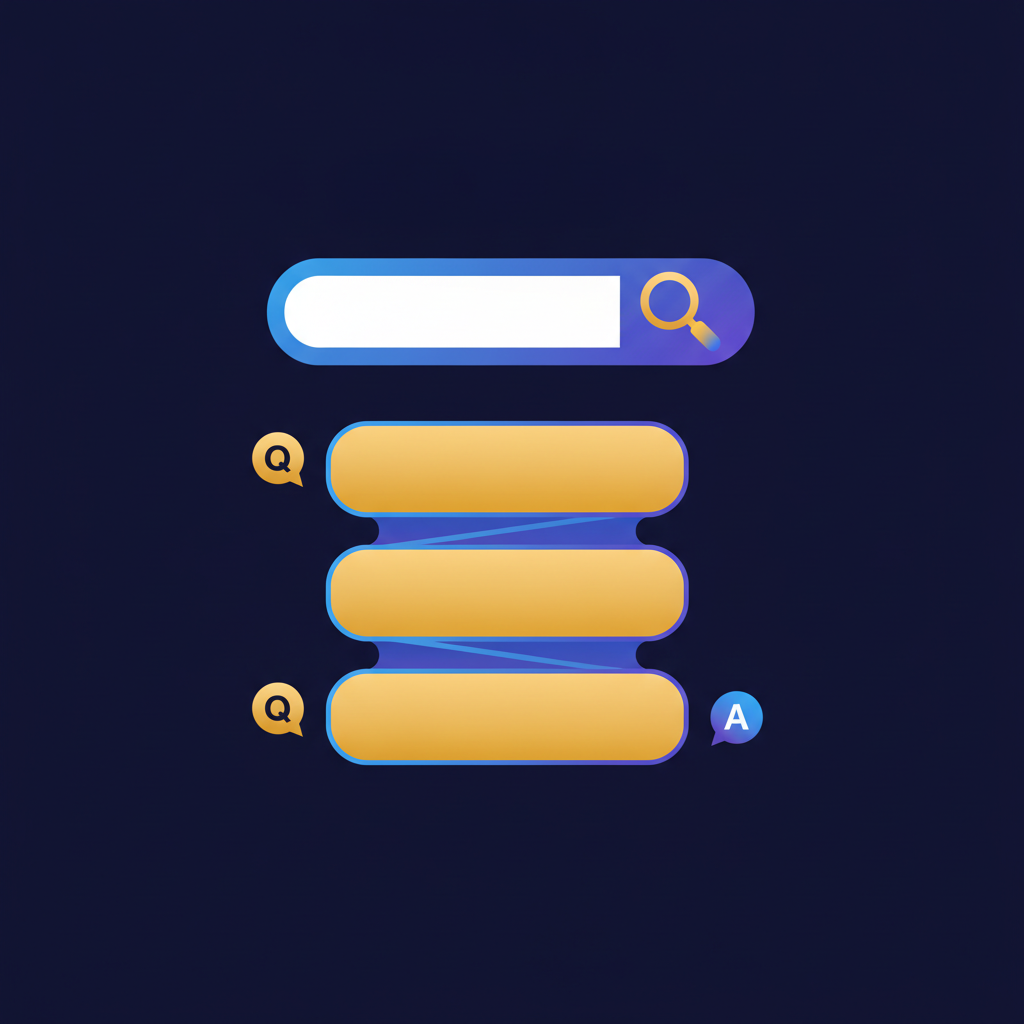
People Also Ask (PAA) is the expandable list of related questions Google shows inside search results. Click one and it opens a short answer pulled from a web page, then loads more questions underneath. It is one of the most common SERP features, and increasingly the raw material for AI answers.
According to seoClarity, PAA boxes now appear in roughly 75% of desktop and mobile searches, and in about 92% of purely informational queries. Its Research Grid database also recorded a 34.7% jump in US mobile PAA visibility and a 37.5% jump on desktop between February 2024 and January 2025. In other words, if you publish informational content, most of your target queries already carry a PAA box.
A few traits make PAA behave differently from a normal ranking. Ahrefs notes that each box typically shows three to four questions by default, that new questions keep loading as you expand answers, and that Google tends to reuse the same source page for a given question across different searches. So winning a PAA answer once can earn you visibility on dozens of related queries at the same time.
Google picks PAA answers from pages that already rank well for the question and that state the answer in a clean, liftable form. Ahrefs found the page answering a PAA question almost always sits in the top ten for that question already, so PAA is a reward for trusted pages, not a shortcut around ranking.
Practically, that means three things decide whether Google pulls your page. First, relevance: the page has to genuinely answer the specific question, not just mention the topic. Second, trust: Google leans on pages it already ranks, so your underlying position matters. Third, extractability: the answer needs a clear heading and a short, self-contained response Google can lift without the surrounding paragraphs. Miss any of the three and a competitor takes the slot.
Google also matches the answer format to the question. seoClarity and Ahrefs both note that PAA answers appear as paragraphs, numbered lists, tables, or even video, depending on what the question needs. A how-many question often gets a number, a how-to question often gets steps. Look at the format Google currently shows, then structure your answer the same way.
The workflow below is the same one we run for clients targeting answer engines. It moves from finding the right questions to shaping answers Google can lift, then proving depth so the page earns Google's trust.
Start by searching your main keyword and expanding the PAA box a few times, since every click loads fresh questions. Jot down the ones that keep reappearing. To do this at scale, Ahrefs suggests exporting PAA questions across many related keywords in Keywords Explorer, then using a pivot to see which questions surface most often. Free tools like AlsoAsked and AnswerThePublic map the same question trees visually.
Once you have a list, cluster the questions by intent so you know which page each belongs on. Before you invest, check that your site already ranks in the top ten for the question, or realistically can. Ahrefs is blunt about this: if you are nowhere near page one for the underlying query, chasing its PAA answer is premature. Fix the ranking first, then the answer.
Give each target question its own H2 or H3 that mirrors how the searcher phrased it. Header matching is the strongest on-page signal you control, because it tells Google the block below is a direct response to that exact query. Use the natural question wording rather than a keyword-stuffed variant, and keep one clear question per heading.
Right under the heading, lead with the answer in the first sentence, then add one or two sentences of support. Backlinko's featured-snippet research points to answers around 40 to 60 words as the sweet spot Google lifts most cleanly, and the same range works for PAA. Do not bury the answer three paragraphs down and do not pad it past 60 words, or Google cannot extract a tidy snippet.
If the current PAA answer for your question is a numbered list, answer with a numbered list. If it is a table, build a table. seoClarity recommends matching the existing answer format (paragraph, list, image, or video), because Google has already decided what shape that question wants. Keep the underlying HTML clean too, since messy markup makes extraction harder.
Wrap your question-and-answer pairs in FAQPage schema so Google can parse the structure with confidence. Schema does not force you into a PAA box on its own, but it reinforces the on-page signal and, as our guide to answer engine optimization explains, the same structured answers feed AI Overviews and assistants. The visible heading plus a clean answer still does the heavy lifting; schema backs it up.
Google trusts pages that clearly own a subject, so surround your target question with the related ones. Build a cluster: one thorough page plus supporting content, all interlinked with descriptive anchors. This is where semantic SEO earns its keep, since covering the entities and subtopics around a question is what convinces Google you deserve the answer slot for the whole family of related PAA queries.
PAA, featured snippets, and AI Overviews are three separate SERP features that reward the same underlying skill: giving a clear, self-contained answer under a matching question. Win one and you are usually most of the way to the others, because all three lift the same tight answer blocks.
The cleanest way to see the difference is side by side. A featured snippet shows one source at the very top of the page. A PAA box shows several sources, one per expandable question, and can sit anywhere from position two to well down the page.
AI Overviews raise the stakes. seoClarity reports that PAA appears alongside an AI Overview in about 90% of the searches that show both features, and Google's generated answers draw on the same clean, extractable content that feeds PAA. That overlap is why an answer-first structure now does triple duty. If you want the deeper background on how AI answers reshaped search, our explainer on what SGE means in SEO traces how Google moved from links to generated answers, and SEO versus AEO covers where the two disciplines split.
PAA is worth targeting for visibility and AI citation more than for raw clicks. A Backlinko study cited by seoClarity puts average PAA interaction near 3%, rising to about 13.6% for purchase-related queries, so the direct click rate is modest. The payoff is that being the named answer builds authority and feeds the AI Overviews that increasingly decide who gets cited.
That is the honest trade-off. If you measure PAA purely on clicks, it can look thin, since many searches end without anyone leaving the results page. But the same structured answers that win PAA also win featured snippets and AI Overview citations, so the work compounds across three features at once. For most informational and commercial pages, that combined visibility is well worth the modest effort of restructuring a few answers.
We have seen this play out in client work. Structuring content as clean question-and-answer blocks is part of how LiveHelpNow added more than 3,000 monthly organic visits and started getting cited in AI Overviews, and how Heartbeat AI grew to over 4,000 monthly organic visits by owning the questions its buyers actually search. The format that earns PAA is the same format that earns those citations.
Most PAA misses come from small structural errors, not weak writing. Fix these and your extraction rate climbs.
The through-line is simple: answer the exact question, fast, in the format Google expects, on a page it already trusts.
How do you rank in People Also Ask boxes? Rank first on page one for a query that triggers the box, then add a heading that matches the exact PAA question and answer it in a direct 40 to 60 word block right underneath. Match the format Google already shows, keep the HTML clean, and cover the topic in depth so Google trusts the page for related questions.
Do you need to rank on page one to appear in PAA boxes? Usually yes. Ahrefs found the page that answers a PAA question almost always ranks in the top ten for that question already, so PAA rewards pages Google trusts rather than pulling from anywhere. Get the underlying page ranking first, then optimize the specific answer.
How long should a People Also Ask answer be? Aim for 40 to 60 words. Google favors a concise, self-contained reply that leads with the direct answer in the first sentence, then adds a little supporting detail. Longer than about 60 words and Google struggles to lift a clean snippet.
How do I find People Also Ask questions to target? Start by searching your keyword and expanding the PAA box, since each click loads more questions. For scale, use a tool like Ahrefs Keywords Explorer or AlsoAsked to export PAA questions across many related keywords, then prioritize the questions that appear again and again.
Does People Also Ask use featured snippets? They are separate but related features. A featured snippet shows one source at the top of the page, while a PAA box shows several sources, one per expandable question. Both reward the same tight, question-and-answer formatting, so optimizing for one usually helps you win the other.
Does FAQ schema help you rank in People Also Ask? Schema does not directly force you into a PAA box, but it helps Google parse your question-and-answer structure with confidence. The bigger win is a visible on-page question heading with a clean answer under it. Use FAQPage schema to reinforce that structure, not to replace it.
How is People Also Ask connected to AI Overviews? Very closely. seoClarity found PAA appears alongside an AI Overview in about 90% of the searches that show both, and both features pull from the same kind of clean, extractable answers. Winning PAA usually means your content is already shaped the way AI Overviews cite sources.
How much traffic can a People Also Ask box send? On its own, not a lot. A Backlinko study cited by seoClarity puts average PAA interaction near 3%, rising to about 13.6% for purchase-related queries. The real value is visibility and AI citation, since being the named answer builds authority even when the click rate is modest.
How often do People Also Ask boxes appear in search results? Very often. seoClarity reports PAA now shows in roughly 75% of desktop and mobile searches, climbing to about 92% for informational queries. Its own Research Grid also recorded a 34.7% jump in US mobile PAA visibility in a single year, so the feature keeps expanding.
Can you lose a People Also Ask position? Yes. PAA answers change as Google re-evaluates pages, so a competitor with a tighter answer or fresher content can take your spot. Track which questions you own, keep answers current, and refresh the format if Google switches from a paragraph to a list or table.
Pick one page that already ranks near the top for an informational query, find the PAA questions around it, and restructure two or three answers into tight 40 to 60 word blocks under matching headings. Then track which questions you start to own. If you would rather have a team map the questions and rebuild the answers for you, request a free AEO audit from Rankite and we will show you where the fastest PAA and AI Overview wins are hiding.
Get a free, no-obligation SEO audit and a 30-minute strategy session. We'll show you exactly where the growth is hiding.
Fill out the form and we'll get back to you within one business day. Prefer email? Write to us directly at contact@rankite.com.