How we make this list: we compare pricing pages, product documentation and public user reviews. Ratings come from G2, Capterra or Trustpilot, with the date we checked them.
Key takeaways
- The StoryGraph is the best all-round replacement, with mood filters, quarter-star ratings, and clear reading stats.
- Hardcover is the best free modern tracker, while Literal and Fable suit readers who want clubs and social reading.
- Bookly and Bookmory focus on daily habit stats, and LibraryThing and BookWyrm suit catalogers and privacy-minded readers.
- Check what imports cleanly before you delete Goodreads, since notes and dates do not always transfer in full.
Quick comparison
| Tool | Best for | Starting price | Free plan |
|---|
 The StoryGraph | Data-rich tracking and mood picks | See website | Yes |
 Hardcover | A modern free tracker | See website | Yes |
 Literal | Social reading and book clubs | See website | Yes |
 Fable | Group reading and clubs | See website | Yes |
 Bookly | Daily reading habits and timers | See website | Yes |
 Bookmory | Session stats on a budget | See website | Yes |
 LibraryThing | Serious cataloging for large libraries | See website | Yes |
 BookWyrm | Private open-source tracking | See website | Yes |
Is your product missing or out of date?
We review this list regularly. Vendors can request a listing, send updated pricing or ask about featured placement.
The best Goodreads alternatives
Starting priceSee website
Free planYes
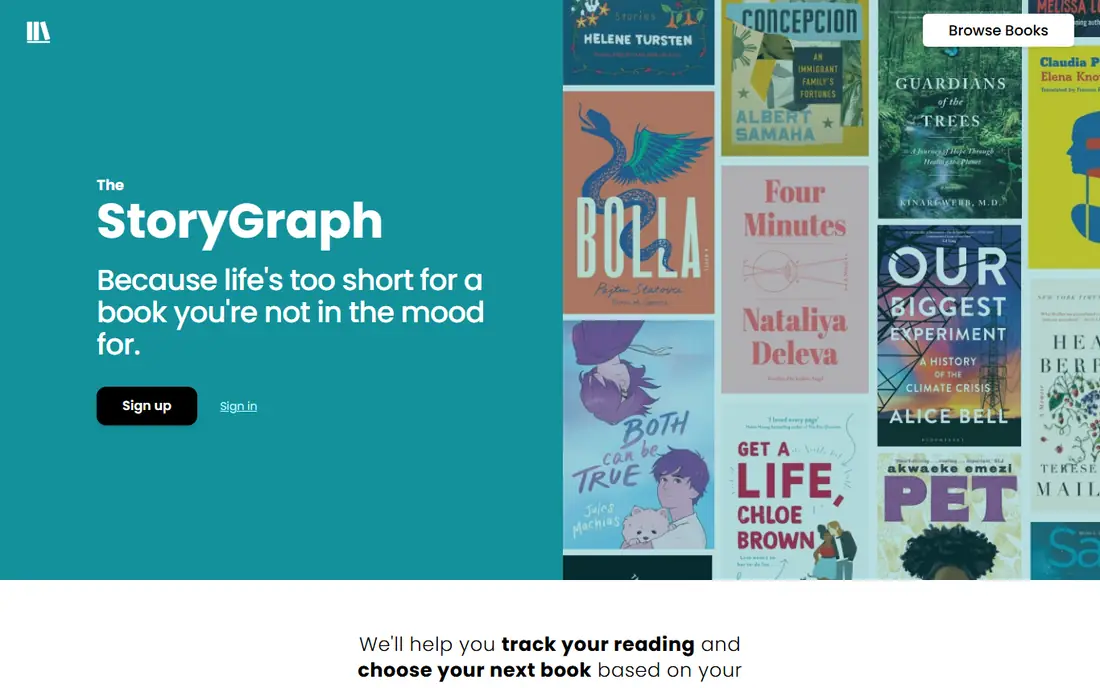
The StoryGraph is the closest direct replacement for Goodreads for most readers. It tracks books, shelves, and reading goals, and it adds mood, pace, and content warnings to help you pick a next book. Quarter-star ratings let you be more precise than a whole-star system, and stats pages show your habits by genre, mood, and length.
The social side is quieter. You will find fewer friends and fewer public reviews than on Goodreads, and buddy reads and deeper stats sit on the paid plan. If you track mainly for yourself and want better recommendations, that trade is easy to accept.
What we like- Quarter-star ratings
- Mood and pace filters
- Reading stats and challenges
Watch out for- Smaller social community than Goodreads
- Some features need a paid plan
Starting priceSee website
Free planYes
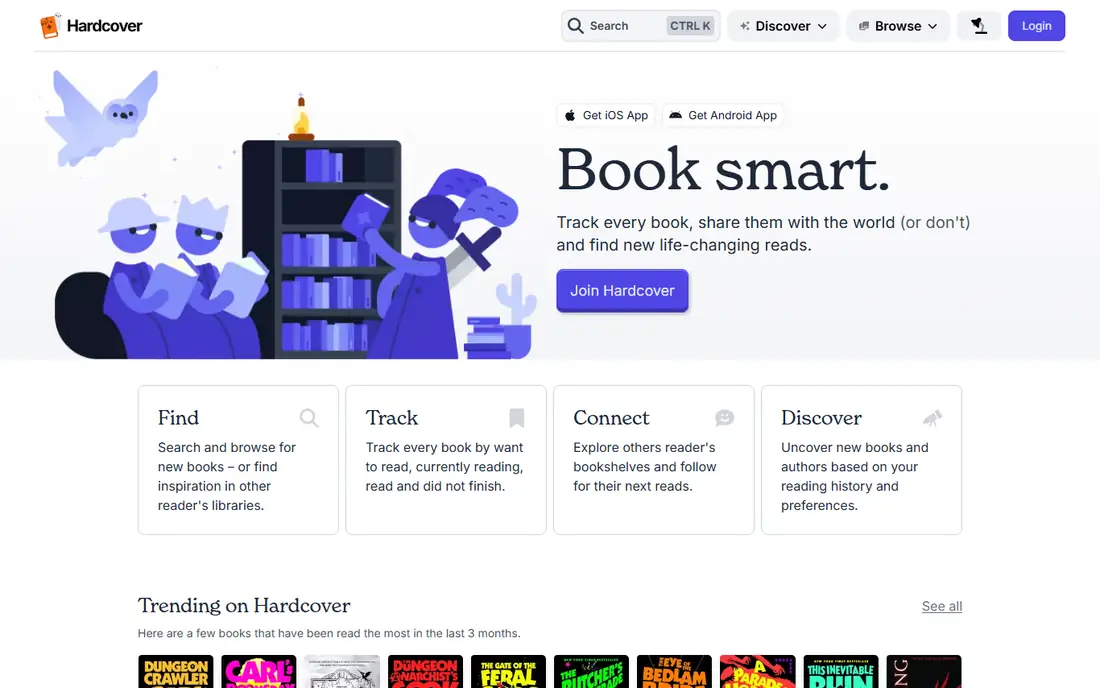
Hardcover rebuilds the Goodreads core with a cleaner design and a free plan that covers the main tracking job. Import from Goodreads is a central feature, and shelves, goals, and stats work without a paywall for basic use. The interface feels current, which matters if Goodreads felt dated to you.
Because Hardcover is newer, its community is smaller. You may find fewer ratings for obscure titles and fewer discussion threads. For solo tracking with occasional discovery, it is still one of the best free options available.
What we like- Free tracking with strong import tools
- Clean design
- Reading goals and stats
Watch out for- Newer community, so fewer reviews
- Some social features are still growing
Starting priceSee website
Free planYes
Literal mixes tracking with a social layer that feels lighter than Goodreads. You can follow friends, join clubs, and keep shelves for read, reading, and want-to-read books. The design is clean on web and mobile, and importing a Goodreads library is part of the setup flow.
Social discovery is both the strength and the limit. Readers who want a quiet private log may find the feed distracting, and rare editions can be missing from the catalog. If friends and clubs motivate your reading, Literal fits well.
What we like- Book clubs and social shelves
- Clean mobile apps
- Goodreads import
Watch out for- Discovery leans social, so solo trackers may find extra noise
- Catalog gaps for rare editions
Starting priceSee website
Free planYes
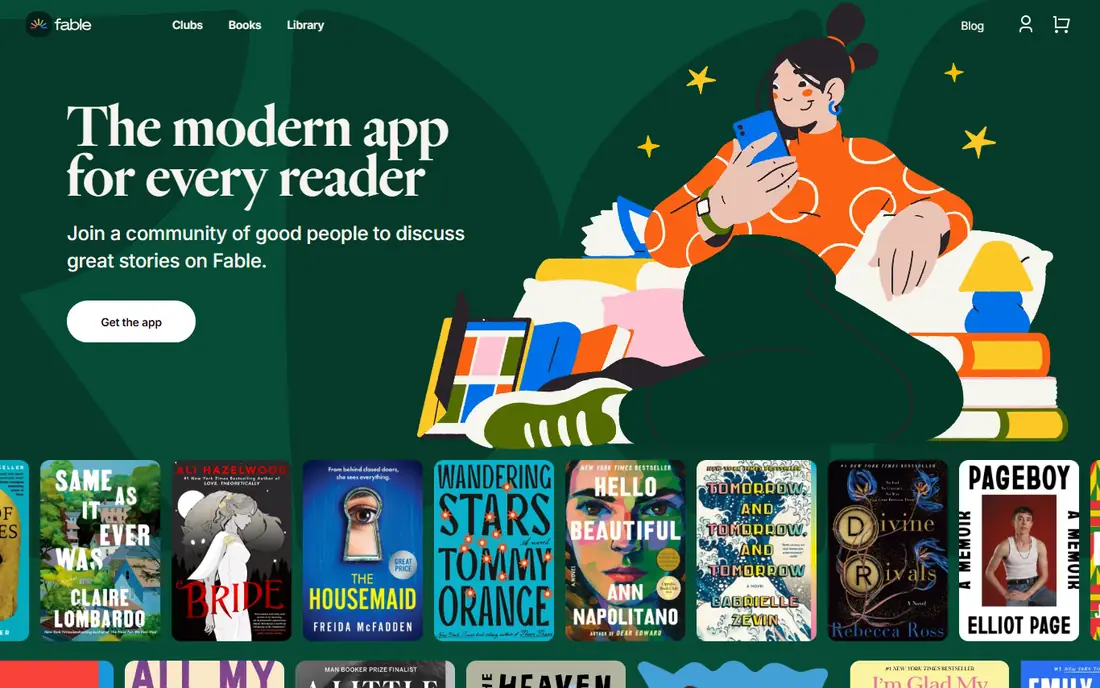
Fable is built for readers who finish books together. Clubs can set a schedule, discuss chapters, and host events, and the feed surfaces what other readers are finishing now. For book clubs that moved online, Fable gives structure that a plain tracker lacks.
Private trackers may find Fable busy. The social feed sits at the center, and some club features sit behind a paid tier. If you read alone and only want stats, StoryGraph or Hardcover will feel calmer.
What we like- Strong book club tools
- Social feed and reading rooms
- Author and club events
Watch out for- Social focus can crowd out private tracking
- Some clubs need a paid tier
Starting priceSee website
Free planYes
Bookly focuses on the act of reading, not just the list of books. A timer logs each session, and stats show pages per session, total time, and streaks. That feedback helps readers who want a daily habit more than a large social network.
The free tier covers basic logging, but deeper stats and unlimited history sit behind a subscription. Bookly also lacks the broad community reviews of Goodreads. As a habit tool beside a catalog tracker, it works well.
What we like- Reading timer and session stats
- Streaks and goals
- Quotes and notes
Watch out for- Full stats need a subscription
- Social features are limited
Starting priceSee website
Free planYes
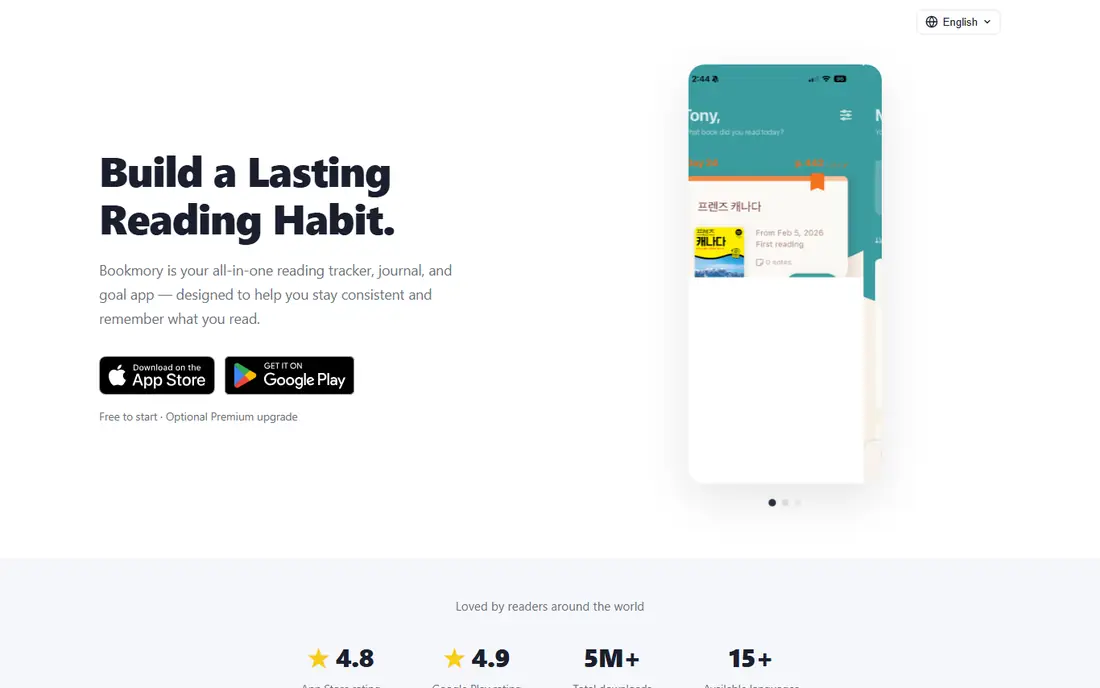
Bookmory gives session tracking at a lower cost than many rivals. You can time reading, log pages, add memos, and view a calendar of your habit. The app suits readers who want numbers on their reading without paying for a large social platform.
It is not a discovery platform. Social features are minimal, and catalog coverage can be thinner for less common books. Pair it with StoryGraph for recommendations if you need both stats and discovery.
What we like- Timer, calendar, and reading stats
- Memo and quote capture
- Goodreads import in many cases
Watch out for- No broad social network
- Design and catalog depth vary by title
Starting priceSee website
Free planYes
LibraryThing suits readers with large home libraries. Cataloging is deep, with tags, collections, and edition detail that casual trackers skip. Data export is stronger than on many free apps, which helps if you ever move libraries again.
The interface shows its age. New readers may find the layout dense, and social discovery is not the main draw. For collectors and catalogers, that depth outweighs the dated look.
What we like- Deep cataloging and tagging
- Large book database
- Strong data export
Watch out for- Design feels dated
- Social discovery is weaker than newer apps
Starting priceSee website
Free planYes
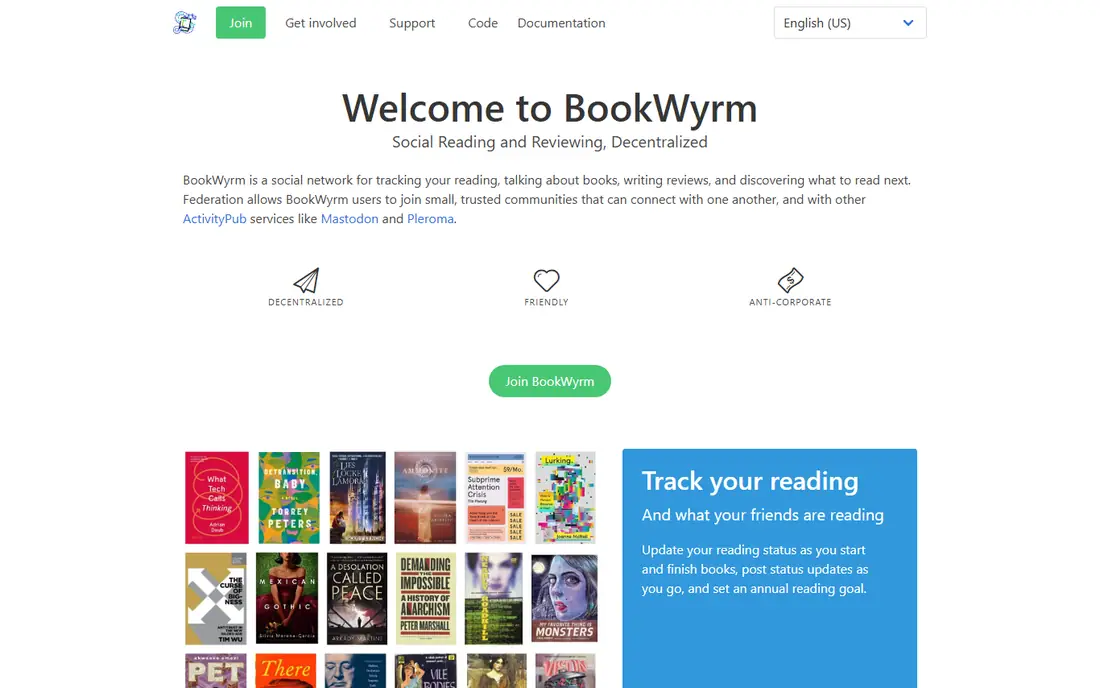
BookWyrm is the privacy-first option. It is open-source and decentralized, so you join an instance rather than one central company, and there are no ads in the core experience. Shelves, reviews, and reading status cover the Goodreads basics.
The trade is convenience. There is no polished native mobile app to match the leaders, and your experience depends on the instance you pick. Readers who value control over polish will accept that, while most others will prefer StoryGraph or Hardcover.
What we like- Open-source and decentralized
- No ads
- Shelves and reviews without a central owner
Watch out for- Web-first with no full native app
- Setup depends on which instance you join
How we chose
We compared pricing pages, import documentation, and public reviews on G2, Capterra, and Reddit, and we checked each app for shelves, ratings, stats, clubs, and data export. We favored apps that import from Goodreads, state their free limits plainly, and work on web and mobile where possible. We did not rank on community size alone, since a large community does not help a private tracker.
Fit mattered as much as features. A social reader and a solo stats reader need different apps, even if both leave Goodreads for the same reason. Each write-up below names that fit first, so you can shortlist two apps instead of trying all eight.
Moving from Goodreads without losing your library
Export your Goodreads library first, before you close anything. Goodreads lets you export shelves and ratings, and most alternatives accept that file or a direct import link. After import, spot-check a dozen books for correct editions, dates, and shelves, since edition mismatches are common.
Then decide what you need to keep. Ratings and shelves usually transfer well, while private notes, reading dates, and reviews transfer less reliably. Keep your Goodreads export file as a backup until you are sure the new tracker holds what matters.
If you want better recommendations
StoryGraph leads here, since mood and pace filters shape picks more than friend activity does. Hardcover and Literal also surface discovery, but through community lists and clubs rather than mood data. Try a month of stats first, then judge the picks.
If you read with friends
Fable and Literal are the natural fits, with clubs, schedules, and discussion built in. StoryGraph buddy reads work for pairs, but a full club will feel smoother on Fable. Set the club schedule before inviting members, so the first book starts cleanly.
A short routine for tracking without extra work
Log a book when you start it, not when you finish it, so progress, quotes, and notes stay in one place. A quick start entry takes seconds, while reconstructing a finished book from memory takes far longer. Add the edition you actually read, since cover and page counts differ across editions.
Use shelves for status and tags for topics, rather than mixing the two. Status shelves cover want-to-read, reading, and read, while tags cover genre, mood, and source, such as library or gift. That split keeps filters useful as your library grows past a few hundred books.
Finally, review your stats once a month, not once a day. Monthly views show genre balance, reading pace, and unfinished books without turning tracking into a chore. If tracking starts to feel like homework, simplify shelves until it feels light again.
Keep your Goodreads export file even after a smooth import, since it holds your original shelves and dates in one place. If a later tracker changes its import rules or closes, that file lets you move again without starting from scratch. A backup costs nothing to keep and saves hours later.
Frequently asked questions
What is the best Goodreads alternative overall?
The StoryGraph is the best all-round pick for most readers, thanks to mood-based picks, quarter-star ratings, and strong stats. Hardcover is close behind for readers who want a free modern tracker with a clean design.
Can I import my Goodreads library?
Yes, most alternatives in this guide support Goodreads import, either by file upload or by account link. Check shelves, ratings, and dates after import, since notes and exact editions may not transfer perfectly.
Is there a Goodreads alternative without Amazon?
Yes. The StoryGraph, Hardcover, Literal, and BookWyrm are all independent of Amazon. StoryGraph states this independence plainly on its home page, which is one reason many readers switch to it.
Which alternative is best for book clubs?
Fable is built for clubs, with schedules, discussion, and events in one place. Literal also works well for smaller clubs and friend groups that want shared shelves.
Are these alternatives free?
Most offer a free tier that covers basic tracking. Paid plans add deeper stats, buddy reads, or club features, so start free and upgrade only if you use the paid feature each week.
Sources we checked (8)
- https://www.thestorygraph.com/
- https://hardcover.app/
- https://literal.club/
- https://fable.co/
- https://bookly.app/
- https://bookmory.net/
- https://www.librarything.com/
- https://joinbookwyrm.com/
Is your product missing or out of date?
We review this list regularly. Vendors can request a listing, send updated pricing or ask about featured placement.

Shihab Mia · Founder, Rankite
Shihab has 5+ years in B2B and SaaS SEO. He writes Rankite's software buying guides from pricing pages, documentation and public user reviews. More about Shihab.