How we make this list: we compare pricing pages, product documentation and public user reviews. Ratings come from G2, Capterra or Trustpilot, with the date we checked them.
Key takeaways
- Givebutter, GiveSendGo, FundRazr, spotfund, and FreeFunder all offer a 0% platform fee model funded by optional donor tips.
- Payment processing still costs money everywhere, usually 2.9% plus $0.30 per donation, so no platform is truly free.
- Bonfire fits a different goal: selling custom shirts and products instead of collecting straight donations.
- Indiegogo only fits individuals with a creative project, since it is built around perks and flexible funding rather than personal causes.
- Read the payout rules before you launch, because holds and verification checks can delay access to the money by days.
Quick comparison
| Tool | Best for | Starting price | Free plan |
|---|
 Givebutter | All-round personal fundraising | Free to start | Yes |
 GiveSendGo | Faith-based and community causes | Free to start | Yes |
 FundRazr | Flexible fee models | Free to start | Yes |
 GoGetFunding | International personal campaigns | Free to start | Yes |
 spotfund | Simple no-fee personal pages | Free to start | Yes |
 FreeFunder | Zero-fee personal fundraising | Free to start | Yes |
 Bonfire | Merchandise fundraising | Free to start | Yes |
 Indiegogo | Creative projects with perks | 5% platform fee | No |
Is your product missing or out of date?
We review this list regularly. Vendors can request a listing, send updated pricing or ask about featured placement.
The best GoFundMe alternatives for individuals
#1Givebutter
Best for: All-round personal fundraising4.7/5 on
G2 (2,256 reviews, checked Oct 2026)
Visit givebutter.com
Starting priceFree to start
Free planYes
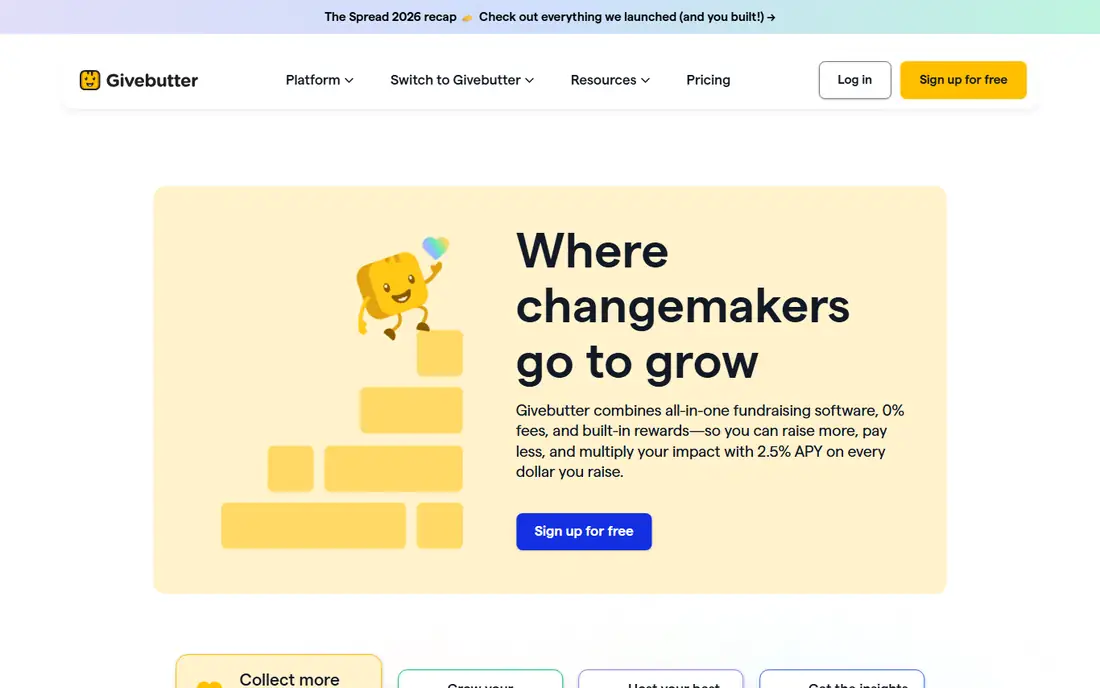
Givebutter is the closest all-round replacement for GoFundMe, and it covers more ground. You can run a simple donation page, sell event tickets, or add an auction without moving to another service. The page builder is friendly, and the sharing tools make it easy to push a campaign through text and social media.
The fee model is what draws most people. Givebutter charges no platform fee when donors add an optional tip, and processing runs at 2.9% plus $0.30 per donation. If you turn tips off, a platform fee applies, so most organizers leave tips on. Payouts go to a linked bank account, and the dashboard tracks donors in one place, which helps when you need to send thank-you notes later.
The catch is that Givebutter grew up serving nonprofits, so some menus carry options a single person will never use. That extra depth rarely gets in the way, but the setup screens can feel longer than GoFundMe's. For a personal medical, memorial, or emergency fundraiser, the free price and the wide toolset make it a strong first pick.
What we like- 0% platform fee with donor tips
- Pages, events, and auctions in one place
- Built-in donor management
Watch out for- Processing fees apply unless donors cover them
- Some features suit teams more than a single person
Starting priceFree to start
Free planYes
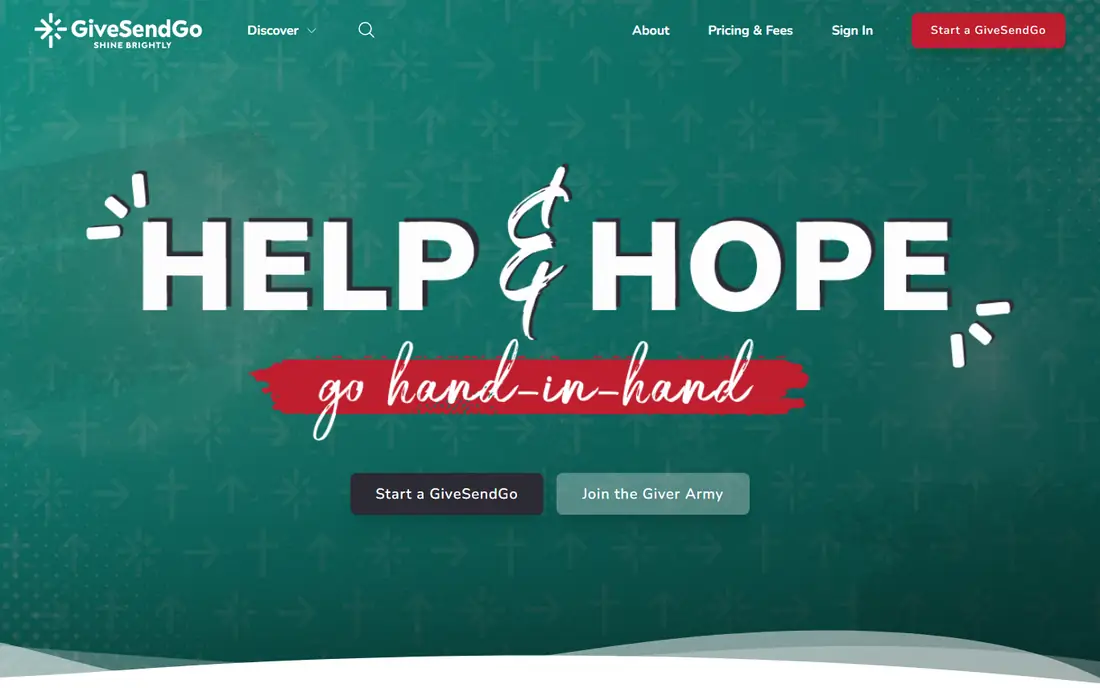
GiveSendGo keeps the pitch simple: no platform fee, and campaigns run on optional donor tips. Processing in US dollars costs 2.7% plus $0.30 per donation, which is slightly lower than the standard 2.9% rate most rivals charge. Campaign creation takes a few minutes, with a story section, photos, and updates for supporters.
The platform has a clear faith-based identity, and many of its campaigns come from churches and community groups. Causes are not limited to religious ones, but the audience leans that way, which can help a church fundraiser and matter less for a general personal appeal. Sharing tools cover the usual social channels, and supporters can leave prayers and messages alongside donations.
The trade-off is reach. GoFundMe's name recognition brings in strangers, while GiveSendGo depends more on your own network. If your donors already know you, that gap barely matters. If you need discovery from people who have never met you, a bigger platform may pull more traffic.
What we like- 0% platform fee
- Simple campaign setup
- Strong community and faith-based audience
Watch out for- Smaller donor reach than GoFundMe
- Optional donor tips add cost for givers
Starting priceFree to start
Free planYes
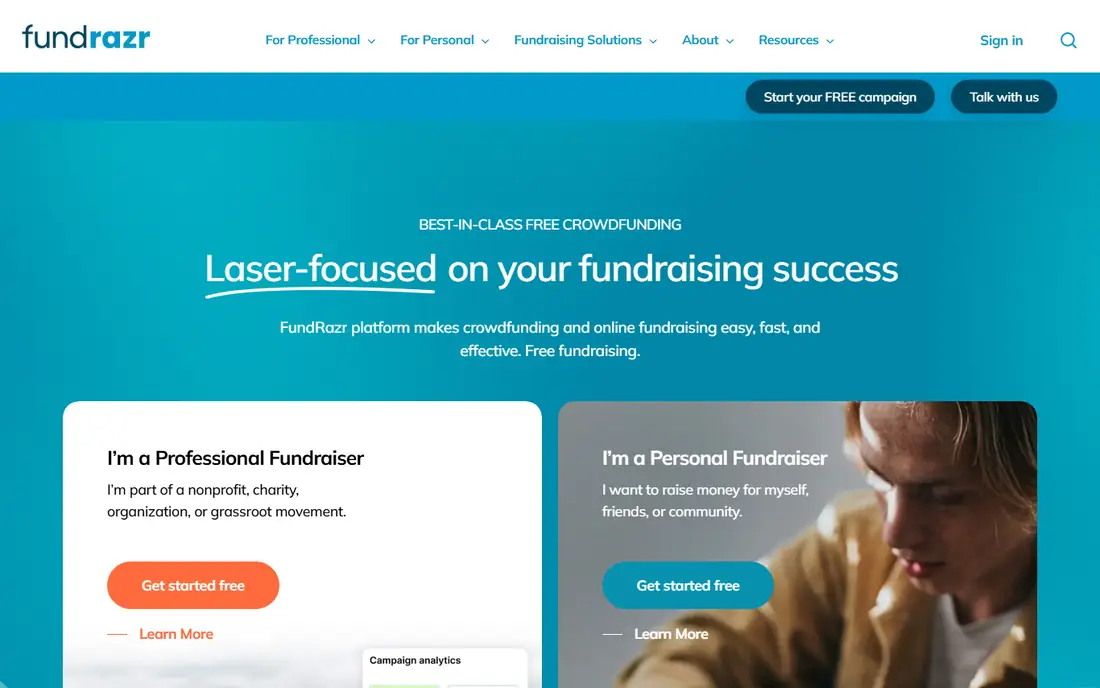
FundRazr lets you pick how fees work, which is unusual. Under its tips model, the platform fee is 0% and donors can add a voluntary tip. Under fee recovery, the platform takes 1% on donation forms and 5% on fundraising pages, with donors given the choice to cover the cost. Processing sits at 2.9% plus $0.30 per donation in both cases.
That flexibility suits people who want control. A wishlist feature lets supporters buy specific items instead of giving cash, which works well for a classroom, a sports team, or a family rebuilding after a fire. Perks and rewards add another option for campaigns that want to thank donors with something tangible.
The downside is the learning curve. Two fee models, plus wishlists and perks, mean more decisions before launch. FundRazr is a good fit if you want those levers and will use them. If you only need a plain donation page, a simpler platform will get you live faster.
What we like- Choice between tips model and fee recovery
- Wishlist and perk options
- Works for individuals and nonprofits
Watch out for- Fee choices can confuse first-time organizers
- Processing fees still apply
Starting priceFree to start
Free planYes
GoGetFunding is a practical pick for people outside the United States or raising money across borders. It accepts personal campaigns from many countries, and its pages cover the usual ground: a story, a goal, photos, and updates. Setup is quick, and the sharing tools work across the major social networks.
For US organizers, the main question is audience. GoGetFunding is far less known in the United States than GoFundMe, so most donations will come from people you send to the page yourself. That is fine for a family or community fundraiser, but weaker for a campaign hoping to go viral.
Fees deserve a close read before launch, because they vary by location and payment method. Check the pricing page for your country rather than trusting a comparison table. For an international personal cause, GoGetFunding's reach across countries is a real advantage that bigger US-focused platforms do not match.
What we like- Accepts campaigns from many countries
- Simple page setup
- Personal and community causes welcome
Watch out for- Smaller US audience than GoFundMe
- Fee details vary by location
Starting priceFree to start
Free planYes
Spotfund strips personal fundraising back to the basics. You build a page, tell your story, and share the link. The platform charges no platform fee, and processing fees are the usual card cost. There is little to configure, which is the point: a person dealing with a medical bill or a funeral does not want a week of setup.
The simplicity cuts both ways. Spotfund lacks the events, auctions, and donor management tools that Givebutter bundles in. If your campaign is a single ask with a single goal, you will not miss them. If you later want to run a gala or a raffle, you will need a second tool.
Brand recognition is the other limit. Donors who have never heard of spotfund may hesitate for a moment before giving, though the checkout itself is standard. For a campaign driven by friends, family, and coworkers, spotfund's zero platform fee and plain setup are hard to beat.
What we like- 0% platform fee
- Very simple setup
- Built for personal causes
Watch out for- Fewer tools than Givebutter
- Smaller brand recognition
Starting priceFree to start
Free planYes
FreeFunder lives up to its name on the platform-fee line: it charges none. Like the other tip-funded platforms, it relies on optional donor contributions to stay free, and card processing still costs the standard rate. Campaigns cover personal needs, from medical costs to memorials to community projects.
One unusual feature is the share bonus. FreeFunder rewards campaigns with bonus donations when supporters share the page on Facebook, which can add a small lift to a campaign that already has an active network. The page builder covers the essentials, with a story, goal, photos, and updates.
The platform is small, so do not expect strangers to stumble onto your page. FreeFunder works best when you bring your own audience and want every possible dollar to reach the cause. For a personal fundraiser with a ready network, the zero platform fee is a genuine saving over a percentage-based rival.
What we like- 0% platform fee
- Bonus donations for social shares
- Built for personal causes
Watch out for- Smaller platform with less donor traffic
- Processing fees still apply
Starting priceFree to start
Free planYes
Bonfire answers a different question: what if supporters would rather buy a shirt than make a donation? You design a product, set the selling price, and keep the difference between that price and the base cost. Bonfire prints and ships each order, so you never hold inventory or handle fulfillment.
This model suits teams, schools, clubs, and causes with a visual identity people want to wear. A memorial shirt, a team fundraiser, or a charity run all translate well to merchandise. Profit per item rises at higher order quantities, so a campaign with a big audience earns more per sale.
Bonfire is not a replacement for a donation page. Buyers can add an optional donation at checkout, but that donation carries an 8% fee. If most of your support will come as straight gifts, pair Bonfire with a donation platform instead of using it alone. Used for what it is good at, though, it turns supporters into walking promotion for the cause.
What we like- Free to launch
- You set the selling price
- No inventory to hold
Watch out for- Not a straight donation platform
- Optional donation checkout carries an 8% fee
#8Indiegogo
Best for: Creative projects with perks3.1/5 on
G2 (35 reviews, checked Oct 2026)
Visit indiegogo.com
Starting price5% platform fee
Free planNo
Indiegogo belongs on this list for one specific kind of individual: a creator. Musicians, filmmakers, inventors, and writers use it to fund projects with perks, such as early copies, signed editions, or behind-the-scenes access. Flexible funding lets you keep what you raise even if the goal is missed, while fixed funding returns money when a goal falls short.
The fee is higher than the tip-funded platforms. Indiegogo takes 5% of funds raised plus payment processing, which adds up on a large campaign. The audience is also project-minded rather than cause-minded, so a medical fundraiser will feel out of place here.
Still, for a creative project, Indiegogo's discovery traffic and perk system are worth the fee. Backers expect rewards and updates, and the platform is built for that rhythm. If your goal is a product or a piece of art rather than help with a bill, Indiegogo fits better than any pure donation site.
What we like- Flexible funding option
- Large creative audience
- Perk and reward system
Watch out for- 5% platform fee plus processing
- Poor fit for personal hardship causes
How we chose
We compared platforms that accept personal campaigns in the United States, using each vendor's pricing page and recent fee comparisons from July 2026. We favored platforms with a 0% platform fee option, checked whether personal causes (not just registered nonprofits) can raise money, and weighed payout rules, audience size, and extra tools such as events or merchandise. Platforms that no longer operate independently, such as Fundly, were left out. Where fee details vary by country or payment method, we say so rather than printing a single figure as if it applied everywhere.
Fees are only the first line of the decision. A platform with a 0% fee still passes card processing costs to someone, and the donor tip model means your supporters may pay more than they planned. Read the fee page for your own situation, and decide whether you would rather absorb processing costs or let donors cover them.
Payout timing matters just as much. Some platforms hold funds for verification, and reviews can take several business days. If you need money for an urgent bill, ask how long the first payout takes and what documents you will need. A platform that releases money slowly can hurt even when its fees look low.
Audience is the third factor. GoFundMe's advantage has always been that strangers trust the name. Smaller platforms save you fees but bring less built-in traffic, so your own sharing does more work. Match the platform to your network: a big personal network favors a no-fee platform, while a campaign hoping for viral reach may still benefit from a larger brand.
Tax and legal notes deserve a mention too. Personal gifts are usually not tax-deductible for donors, and money raised for someone else can carry reporting duties. This article is not tax or legal advice, and a quick check with a tax professional is wise for large campaigns. Keep records of what was raised and how it was spent, since donors and organizers both benefit from that paper trail.
Frequently asked questions
What is the cheapest GoFundMe alternative for individuals?
Givebutter, GiveSendGo, FundRazr, spotfund, and FreeFunder all offer a 0% platform fee model funded by optional donor tips. Card processing still costs around 2.9% plus $0.30 per donation, so compare the full cost, not just the platform fee line.
Do donors pay extra on tip-funded platforms?
Donors are asked to add an optional tip, which they can usually change or remove at checkout. The tip goes to the platform, not to your campaign, and it never reduces the amount you receive from the gift itself.
Can I use these platforms for a medical fundraiser?
Yes, personal medical fundraising is the most common use case on Givebutter, GiveSendGo, FundRazr, GoGetFunding, spotfund, and FreeFunder. Share updates about treatment and costs, and keep receipts, since donors trust campaigns that show where the money goes.
How fast can I withdraw the money?
Payout speed varies by platform and by verification checks, and first payouts can take several business days. Link your bank account early, complete identity checks before you share the page widely, and read the payout policy for your country.
Is Indiegogo a good alternative to GoFundMe?
Only for creative projects. Indiegogo charges a 5% platform fee and is built around perks and rewards, so it suits a film, album, or product launch. For a personal hardship or medical cause, a donation platform with a 0% fee model is a better fit.
Are donations on these platforms tax-deductible?
Donations to a personal campaign are generally not tax-deductible, because the recipient is an individual rather than a registered charity. Platforms built for nonprofits, such as Zeffy, work differently, so check the recipient's tax status before promising donors a deduction.
Sources we checked (6)
- https://www.tiing.co/blog/crowdfunding/gofundme-alternatives/
- https://charitysafaris.com/best-fundraising-sites/
- https://gogetfunding.com/blog/gofundme-alternatives/
- https://givebutter.com/pricing
- https://givesendgo.com/pricing
- https://fundrazr.com/pricing
Is your product missing or out of date?
We review this list regularly. Vendors can request a listing, send updated pricing or ask about featured placement.

Shihab Mia · Founder, Rankite
Shihab has 5+ years in B2B and SaaS SEO. He writes Rankite's software buying guides from pricing pages, documentation and public user reviews. More about Shihab.