How we make this list: we compare pricing pages, product documentation and public user reviews. Ratings come from G2, Capterra or Trustpilot, with the date we checked them.
Key takeaways
- Snowflake is the strongest choice for analyst-led SQL workloads, with per-second warehouses and auto-suspend that keep idle costs down.
- BigQuery wins for unpredictable, ad-hoc analytics, since on-demand pricing charges per terabyte scanned and nothing when idle.
- ClickHouse and Firebolt beat the general platforms on real-time and customer-facing analytics, where sub-second queries matter more than ML notebooks.
- Databricks still leads for teams that combine SQL, streaming, and machine learning in one platform, so switch only if your workload is narrower.
Quick comparison
| Tool | Best for | Starting price | Free plan |
|---|
 Snowflake | Analyst-led SQL and BI | $2 per credit | Yes |
 Google BigQuery | Serverless ad-hoc analytics | $6.25 per TiB scanned | Yes |
 Amazon Redshift | AWS-native warehousing | $0.375 per RPU hour | No |
 Microsoft Fabric | Microsoft and Power BI shops | See website | Yes |
 ClickHouse | Real-time event analytics | See website | Yes |
 Starburst | Querying data without moving it | See website | No |
 Dremio | Open lakehouse on Iceberg | See website | Yes |
 Firebolt | Customer-facing analytics | See website | No |
Is your product missing or out of date?
We review this list regularly. Vendors can request a listing, send updated pricing or ask about featured placement.
The best Databricks alternatives
#1Snowflake
Best for: Analyst-led SQL and BI4.6/5 on
G2 (762 reviews, checked Oct 2026)
Visit snowflake.com
Starting price$2 per credit
Free planYes
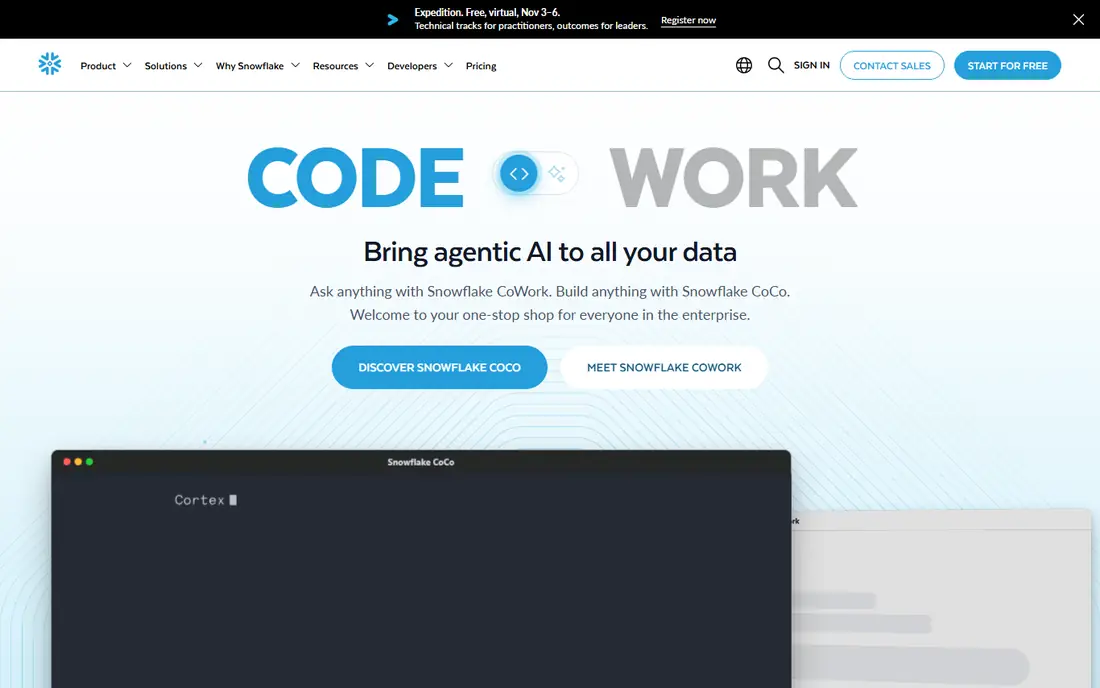
Snowflake is the default alternative for teams whose main users are analysts writing SQL. Virtual warehouses charge per second while running and auto-suspend after 60 seconds idle, which keeps dashboard workloads predictable, and a free trial lets teams test before committing. Standard credits list at $2 per credit in US regions, with storage around $23 per terabyte per month on S3-backed storage.
The trade-offs are governance and ML depth. Snowflake storage uses a proprietary format rather than open table formats, and heavy concurrency can push credit consumption higher than a first estimate suggests. Machine learning support has grown, but teams running complex Spark pipelines will still find Databricks stronger. For BI-led organizations, Snowflake is the safest switch.
What we like- Per-second warehouses with auto-suspend
- Strong governance and data sharing
- Multi-cloud
Watch out for- Storage uses proprietary format
- Costs climb with concurrency
- ML tooling lags Databricks
#2Google BigQuery
Best for: Serverless ad-hoc analytics4.5/5 on
G2 (1,223 reviews, checked Oct 2026)
Visit cloud.google.com
Starting price$6.25 per TiB scanned
Free planYes
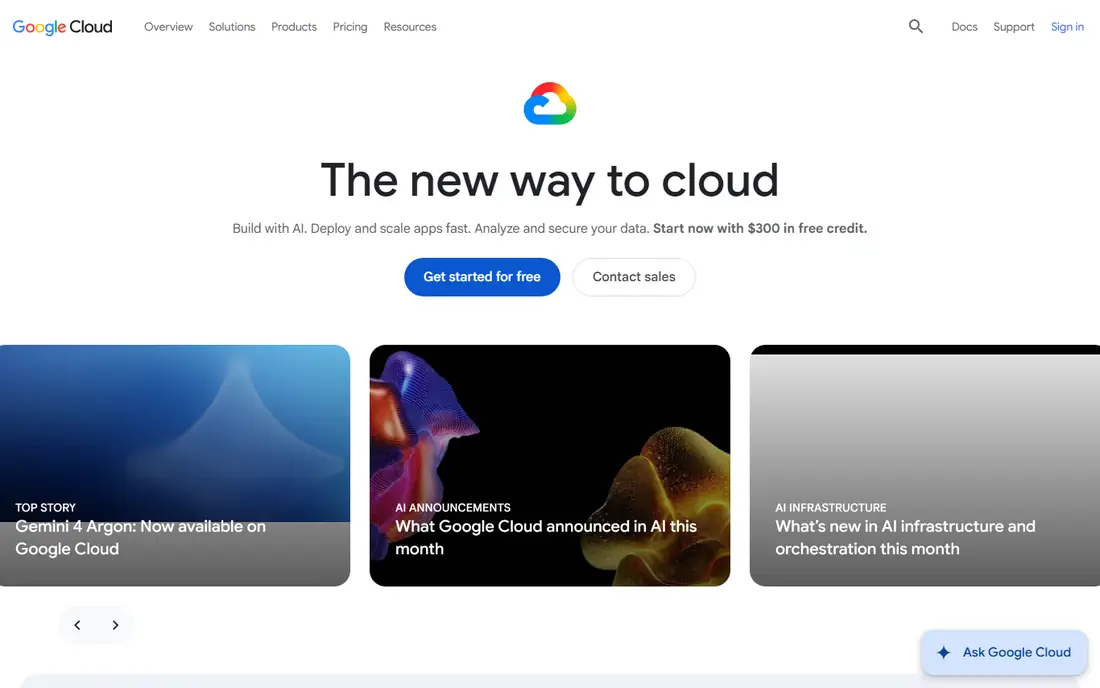
BigQuery suits teams that run unpredictable queries and hate managing clusters. On-demand pricing charges $6.25 per tebibyte scanned, with no charge when idle, and a free tier covers the first terabyte each month. BigQuery ML lets analysts build models in SQL, which narrows the gap with Databricks for lighter ML work.
The risk is scan discipline. A query against an unpartitioned table can scan far more data than expected, and costs can spike before anyone notices. Flat-rate slot commitments help heavy users, but they need forecasting. GCP-native teams get the most value, while multi-cloud teams should check egress costs first.
What we like- No provisioning or idle cost
- BigQuery ML built in
- Generous free tier
Watch out for- Scan costs punish unpartitioned tables
- Slot pricing takes planning at scale
#3Amazon Redshift
Best for: AWS-native warehousing4.3/5 on
G2 (404 reviews, checked Oct 2026)
Visit aws.amazon.com
Starting price$0.375 per RPU hour
Free planNo
Redshift is the natural pick for teams already committed to AWS. Serverless pricing starts at $0.375 per RPU hour with a 60-second minimum, while provisioned RA3 nodes suit steady workloads with reserved pricing up to 45 percent off. Integration with S3, Glue, and SageMaker keeps pipelines inside one cloud.
Operational overhead is the catch. Provisioned clusters need vacuum, distribution, and sort key tuning, and reserved nodes keep charging even when idle. Redshift Serverless removes much of that work, but per-query costs can exceed provisioned pricing for constant workloads. AWS-locked teams will still find it the lowest-friction alternative.
What we like- Deep AWS integration
- Serverless option
- Reserved pricing cuts steady costs
Watch out for- Provisioned clusters need tuning
- Vacuum and sizing work falls on your team
#4Microsoft Fabric
Best for: Microsoft and Power BI shops4.6/5 on
G2 (47 reviews, checked Oct 2026)
Visit microsoft.com
Starting priceSee website
Free planYes
Microsoft Fabric bundles lakehouse, warehouse, data engineering, and Power BI into one capacity-based platform, which appeals to organizations already standardized on Microsoft tools. A 2026 workload comparison priced a typical BI workload at $323 per month on Fabric, the cheapest of eight engines tested, thanks to its capacity and storage model.
Fabric is also the newest platform here, so its ecosystem is thinner than Snowflake or BigQuery, and the capacity model needs careful sizing. Teams that live in Power BI and Teams get the most benefit, while teams outside the Microsoft stack gain less. For Microsoft shops, Fabric is the first alternative to trial.
What we like- One capacity for lakehouse, warehouse, and BI
- Power BI native
- Low cost on sample workloads
Watch out for- Capacity model takes learning
- Newest platform here
- Power BI dependence
#5ClickHouse
Best for: Real-time event analytics4.3/5 on
G2 (55 reviews, checked Oct 2026)
Visit clickhouse.com
Starting priceSee website
Free planYes
ClickHouse is an open source columnar database built for sustained, high-throughput event ingestion and real-time queries. Self-hosting is free, while ClickHouse Cloud starts around $0.50 per hour in guides, and its speed per dollar beats general warehouses on log, telemetry, and product analytics. A free tier on Cloud lets small teams start without a bill.
The cost is expertise. MergeTree table tuning, partitioning, and merge behavior reward engineers who understand the engine, and teams without that skill can stall. ClickHouse is also weaker for notebook-driven ML pipelines than Databricks. For real-time analytics, it is the strongest open option here.
What we like- Very fast analytical queries
- Open source self-hosting
- Low cost per query
Watch out for- MergeTree tuning needs expertise
- Weaker for heavy ML pipelines
#6Starburst
Best for: Querying data without moving it4.3/5 on
G2 (121 reviews, checked Oct 2026)
Visit starburst.io
Starting priceSee website
Free planNo
Starburst, built on open source Trino, lets teams query data where it lives instead of copying it into a warehouse first. That matters for organizations with data spread across lakes, warehouses, and operational systems, since federation avoids duplicate pipelines and stale copies. Guides list compute from $0.50 per hour.
Federation has limits. Query speed depends on source systems, and heavy workloads can cost more than a centralized warehouse once compute hours accumulate. Starburst also lacks Databricks-style ML notebooks, so it fits analytics and governance use cases better than data science teams. Use it where data movement is the real bottleneck.
What we like- Federated queries across sources
- Trino-based
- No data movement needed
Watch out for- Compute from $0.50 per hour adds up
- Needs source systems to stay queryable
Starting priceSee website
Free planYes
Dremio builds an open lakehouse on Apache Iceberg, with a semantic layer that lets analysts query governed datasets without copying data. Guides list compute from about $1 per hour, and a free tier covers small deployments. Open formats avoid lock-in, which is a real advantage over proprietary storage.
The ecosystem is smaller than Snowflake or Databricks, so connectors and community guides are thinner. The semantic layer also needs modeling work before analysts see value. Teams committed to Iceberg and open formats will find Dremio the most direct Databricks alternative for SQL analytics.
What we like- Iceberg-native lakehouse
- Semantic layer
- Compute from about $1 per hour
Watch out for- Smaller ecosystem than Snowflake
- Semantic layer needs modeling effort
#8Firebolt
Best for: Customer-facing analytics4.5/5 on
G2 (14 reviews, checked Oct 2026)
Visit firebolt.io
Starting priceSee website
Free planNo
Firebolt is a specialist engine for customer-facing analytics, where dashboards and in-app queries must return in under a second. Engine-based pay-per-use pricing means you pay for the engines you run rather than a broad warehouse capacity, and its indexing is tuned for high-concurrency reads. That focus makes it faster than general platforms for user-facing workloads.
The narrow focus is also the limit. Firebolt is not a general ML platform and not a replacement for a full data engineering stack, so most teams pair it with a warehouse rather than replacing one outright. If your bottleneck is dashboard speed for end users, Firebolt belongs on the shortlist.
What we like- Sub-second queries for apps
- Engine-based pay per use
- Strong indexing
Watch out for- Narrower use case than a warehouse
- Pricing less transparent
How we chose
We compared October 2026 pricing trackers and comparison guides for each platform, checking billing units, entry rates, storage costs, and the workload each engine suits. We favored platforms with published pricing and a distinct strength, and we treated Databricks as the baseline for combined SQL, streaming, and ML work. Where guides disagreed on a price, we used the most recent figure and marked it as a guide figure. We did not claim hands-on testing.
Start from who queries the data and how often. Analyst-led BI teams should trial Snowflake or Fabric first, since both optimize for SQL dashboards and governance. Ad-hoc and spiky workloads favor BigQuery, where idle time costs nothing, while steady AWS workloads favor Redshift with reservations. Real-time and customer-facing analytics belong on ClickHouse or Firebolt, not on a general warehouse.
Cost models matter more than headline prices
Credits, DBUs, RPUs, and slots all hide the true cost of a query, so compare platforms on an identical workload before committing. A 2026 comparison of the same BI workload priced Fabric at $323 per month and Synapse dedicated pools at $2,624, an 8x gap driven by paying for capacity held versus bytes read. Run your own top 20 queries through a trial on each finalist, and check storage, concurrency, and idle behavior, not just the compute rate. Ask each vendor for a bill estimate on your actual query history, since a rate card alone rarely predicts a monthly total, and confirm whether storage, egress, and support carry separate charges before you sign.
When Databricks stays the right answer
Keep Databricks if your team runs Spark pipelines, streaming jobs, and ML training in one place, since no alternative here matches that breadth. Alternatives win when the workload narrows to SQL analytics, real-time queries, or a single cloud ecosystem. A hybrid setup is also common, with Databricks kept for engineering and a warehouse added for analysts.
Frequently asked questions
Is Snowflake cheaper than Databricks?
It depends on the workload. Snowflake charges per credit with auto-suspend, which suits BI dashboards, while Databricks charges per DBU plus compute, which suits engineering and ML pipelines. For pure SQL analytics, Snowflake often costs less, but for combined SQL and ML work, Databricks can be cheaper than running two tools.
Can I replace Databricks with BigQuery alone?
Yes, if your workload is SQL analytics and light ML through BigQuery ML. Teams running heavy Spark pipelines, streaming, or custom model training will miss Databricks notebooks and cluster control, and should keep Databricks or add a specialist ML platform alongside BigQuery.
What is the best open source Databricks alternative?
ClickHouse is the strongest open source pick for real-time analytics, while Dremio leads for an open lakehouse on Iceberg. Apache Spark itself remains free and open, but it is a processing engine, not a managed platform, so it needs hosting and operations work.
Does Microsoft Fabric replace both Databricks and Power BI costs?
Fabric bundles lakehouse, warehouse, and Power BI capacity, which can consolidate bills for Microsoft shops. Capacity sizing still needs care, and teams outside the Microsoft stack gain less from the bundle, so compare total Fabric capacity cost against your current combined spend.
How do I avoid surprise bills on usage-based platforms?
Set budget alerts, partition tables, and auto-suspend or auto-terminate idle compute. Test your heaviest queries during a trial, track cost per query rather than total spend alone, and prefer slot or capacity commitments only after a month of real usage data.
Sources we checked (10)
- https://www.snowflake.com
- https://cloud.google.com
- https://aws.amazon.com
- https://www.microsoft.com
- https://clickhouse.com
- https://www.starburst.io
- https://www.dremio.com
- https://www.firebolt.io
- https://bigdataexplained.com/
- https://www.doit.com/blog/snowflake-competitors-compared
Is your product missing or out of date?
We review this list regularly. Vendors can request a listing, send updated pricing or ask about featured placement.

Shihab Mia · Founder, Rankite
Shihab has 5+ years in B2B and SaaS SEO. He writes Rankite's software buying guides from pricing pages, documentation and public user reviews. More about Shihab.