How we make this list: we compare pricing pages, product documentation and public user reviews. Ratings come from G2, Capterra or Trustpilot, with the date we checked them.
Key takeaways
- CaptivateIQ fits mid-market teams with complex plans, but quote-based pricing and a multi-month setup push smaller teams toward simpler tools.
- Xactly and Varicent handle the largest global plans, yet both need dedicated admin time and carry enterprise price tags.
- Salesforce Spiff gives the clearest rep-facing view for Salesforce shops, while QuotaPath and Sales Cookie publish prices and suit smaller teams.
- Before signing, total the first-year cost including implementation and connectors, and check how plan changes are made without vendor help.
Quick comparison
| Tool | Best for | Starting price | Free plan |
|---|
 Xactly | Large enterprises with global plans | See website | No |
 Varicent | Enterprises with 500 plus payees | See website | No |
 Salesforce Spiff | Salesforce-centered sales teams | See website | No |
 Everstage | Mid-market teams that want fast setup | See website | No |
 QuotaPath | Teams under 50 reps | See website | Free trial |
 Performio | Configurable ICM without enterprise weight | See website | No |
 Visdum | Global teams with multi-country payouts | See website | No |
 Sales Cookie | Small businesses on a tight budget | See website | Free trial |
Is your product missing or out of date?
We review this list regularly. Vendors can request a listing, send updated pricing or ask about featured placement.
The best captivateiq alternatives
Starting priceSee website
Free planNo
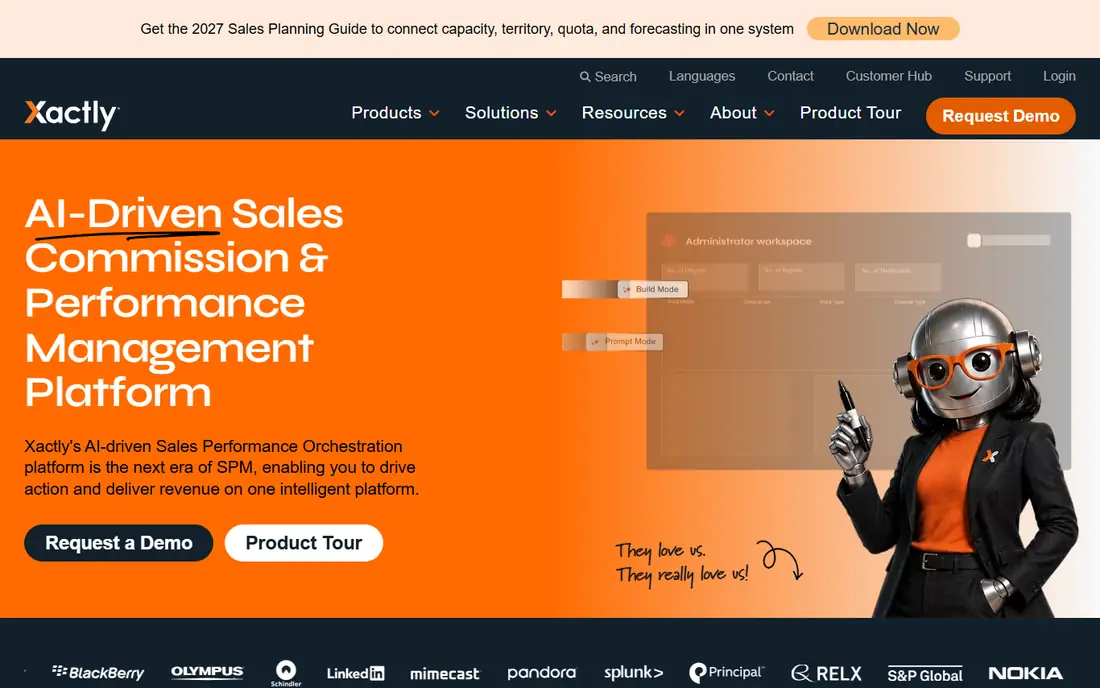
Xactly is the enterprise default for incentive compensation management. It handles multi-currency plans, large payee counts, and layered approval chains that smaller tools cannot model. Teams that run plans across many countries also get benchmark data drawn from other Xactly customers, which helps when setting quotas and checking whether payout levels sit near market norms.
The trade-off is weight. Full enterprise deployment often takes six to nine months, and plan changes tend to need admin expertise rather than a quick edit by a comp analyst. Implementation services can add tens of thousands of dollars to the first year. Xactly makes sense when plan complexity and governance matter more than speed, and when the team has someone who owns the system full time.
What we like- Deep plan modeling
- Benchmark data from a large customer base
- Multi-currency and multi-country support
Watch out for- Long implementation
- Needs dedicated admin expertise
- High total cost
#2Varicent
Best for: Enterprises with 500 plus payees4.5/5 on
G2 (617 reviews, checked Oct 2026)
Visit varicent.com
Starting priceSee website
Free planNo
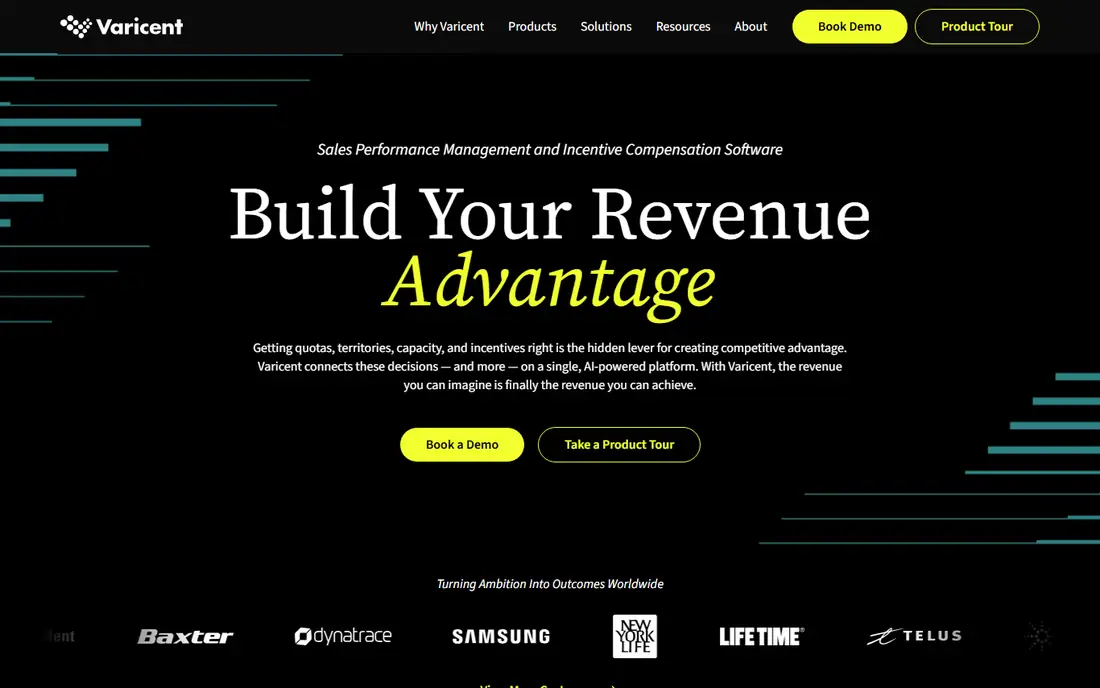
Varicent covers compensation inside a wider sales performance suite that also touches territory and quota planning. Its no-code and low-code configuration lets analysts build complex plans, and its analytics tools help finance teams explain payout results to leadership. Reviewers often praise its flexibility and customer support.
Varicent is still an enterprise purchase. Pricing is quote-based, setup takes real project time, and a team with only a few dozen reps will pay for depth it never uses. It fits best when the company already plans to buy territory and quota tools from the same vendor, or when payee counts run into the hundreds and plan rules change often.
What we like- Flexible no-code configuration
- Strong analytics
- Full sales performance suite
Watch out for- Enterprise pricing
- Complex setup
- Heavy for small teams
#3Salesforce Spiff
Best for: Salesforce-centered sales teams4.6/5 on
G2 (3,070 reviews, checked Oct 2026)
Visit salesforce.com
Starting priceSee website
Free planNo
Spiff, now Salesforce Spiff after Salesforce completed its acquisition in February 2024, calculates commissions inside Salesforce and shows reps their earnings as deals move. That live view cuts down on the end-of-month questions that fill a comp admin inbox. The visual plan designer handles tiered rates and accelerators well for standard plans.
Pricing is quote-based through Salesforce, and third-party guides report around 75 dollars per user per month billed annually, with each non-Salesforce connector adding a monthly fee. There are no trial licenses, so buyers should ask for a guided demo on their own plan data. Teams on HubSpot or another CRM should price those connectors before comparing Spiff with a CRM-neutral tool.
What we like- Real-time rep visibility
- Native Salesforce link
- Visual plan designer
Watch out for- Non-Salesforce connectors cost extra
- No trial licenses
- Complex plans need more setup
#4Everstage
Best for: Mid-market teams that want fast setup4.8/5 on
G2 (2,187 reviews, checked Oct 2026)
Visit everstage.com
Starting priceSee website
Free planNo
Everstage pitches speed and rep engagement. Its no-code plan builder covers standard commission structures, and its dashboards give reps a clear view of attainment and expected pay. A forecasting tool called Crystal adds earnings projections, which helps reps plan their quarter. Reviewers rate Everstage highly for value and ease of use.
The gap against CaptivateIQ is modeling depth. Teams with unusual plan rules, frequent mid-quarter changes, or heavy what-if planning may find Everstage thinner. Pricing is quote-based, so the value story depends on the negotiated contract. Everstage is a strong pick for a mid-market team that wants to go live fast and keep reps motivated, rather than for a team modeling its tenth plan variant.
What we like- Fast go-live claims
- Rep motivation features
- Clear dashboards
Watch out for- Modeling depth below CaptivateIQ
- Quote-based pricing
- Forecasting is a separate tool
Starting priceSee website
Free planFree trial
QuotaPath is the transparent option in this list. It publishes per-user pricing, with comparison guides reporting around 35 to 50 dollars per user per month plus a platform fee, and it offers a trial period. Setup is simpler than the enterprise tools, and reps get clear statements that show how each deal contributed to pay.
The limit is scale and complexity. QuotaPath suits teams under about 50 reps with plans that do not need multi-currency modeling or deep governance workflows. Larger teams with layered plans will outgrow it. For a small team moving off spreadsheets, though, the published price and short setup make it the easiest first step.
What we like- Published per-user pricing
- Simple setup
- Clear rep statements
Watch out for- Fewer enterprise features
- Platform fee on top of seats
- Limited global depth
#6Performio
Best for: Configurable ICM without enterprise weight4.4/5 on
G2 (1,071 reviews, checked Oct 2026)
Visit performio.co
Starting priceSee website
Free planNo
Performio sits between the small-team tools and the enterprise suites. It offers configurable incentive compensation with dependable administration and reporting, and it handles plan changes without forcing every edit through professional services. That middle position appeals to growing companies that have outgrown spreadsheets but are not ready for an enterprise suite contract.
The honest catch is proof. Performio has a smaller public review base than Xactly or CaptivateIQ, and it publishes fewer benchmark figures. Buyers should ask for customer references in their own industry and test a real plan change during the demo. Pricing is quote-based, so the final number depends on payee count and plan complexity.
What we like- Configurable plans
- Reliable administration
- Solid reporting
Watch out for- Quote-based pricing
- Smaller review base
- Fewer public benchmarks
Starting priceSee website
Free planNo
Visdum processes commissions across more than a dozen countries and reports handling tens of thousands of payees, which makes it a serious option for global teams. It connects with Salesforce and HubSpot, and its pitch centers on accurate payouts without the spreadsheet work. Teams with reps in several currencies should shortlist it alongside Xactly and Varicent.
Visdum is less established in the US mid-market than the names above, so reference checks matter more. Pricing is quote-based and implementation scope varies with data sources, so buyers should get the full first-year number in writing. For a global team that needs multi-country payouts without enterprise-suite weight, it is worth a demo.
What we like- Multi-country support
- Handles large payee counts
- Salesforce and HubSpot links
Watch out for- Quote-based pricing
- Less known in the US mid-market
- Implementation scope varies
#8Sales Cookie
Best for: Small businesses on a tight budget4.9/5 on
G2 (69 reviews, checked Oct 2026)
Visit salescookie.com
Starting priceSee website
Free planFree trial
Sales Cookie targets small businesses that need commission automation without an enterprise contract. It publishes its pricing, keeps plans flexible, and offers a trial so a small team can test it on real data before paying. That combination is rare in this category, where most vendors hide prices behind a sales call.
The trade-off is depth. Sales Cookie does not match the modeling, governance, or benchmark data of the enterprise tools, and its vendor is smaller, so support coverage and roadmap pace deserve questions. For a team with simple plans and a tight budget, those limits rarely matter. It is the low-cost way to leave spreadsheets behind.
What we like- Published pricing
- Affordable entry
- Flexible plans
Watch out for- Fewer enterprise features
- Smaller vendor
- Limited benchmark data
How we chose
We compared these tools on plan flexibility, payout accuracy, rep-facing transparency, administration effort, and total first-year cost. Pricing pages, vendor documentation, and public reviews on G2 and Capterra shaped the shortlist, and comparison guides helped where vendors do not publish prices. We favored tools that let a comp admin change plans without vendor help, and we flagged every case where a price comes from a third-party guide rather than the vendor.
We also weighed fit by team size. A tool built for 500 payees is a poor pick for a 20-rep team even when it tops a feature list, and a simple tool is a poor pick for a global enterprise even when it costs less. The list below mixes enterprise suites with smaller vendors so that teams at different sizes can find a realistic match.
What to check before you sign
Plan changes without vendor help
Ask who can change a plan, and how long a typical change takes. In CaptivateIQ and Everstage, analysts can often edit plans themselves. In Xactly and Varicent, complex changes may need admin expertise or vendor time. Run a real change in the demo, such as adding a tier or changing a split, and time it.
Data quality first
Commission software only calculates from the data it receives. Stale CRM records, duplicate accounts, and misattributed deals cause payout disputes no matter which tool you pick. Before implementation, clean the CRM data that feeds deals, owners, and close dates. A tool with a clear data audit trail makes disputes easier to settle later.
First-year total cost
Compare the full first year, not the license line alone. Add implementation services, connectors for non-native CRMs, premium support, and any per-connector monthly fees. Quote-based tools can look similar on paper and differ by tens of thousands of dollars once services are added. Get the total in writing and ask what a second-year renewal typically costs.
Frequently asked questions
Is CaptivateIQ still a good choice?
Yes, for mid-market and enterprise teams with complex plans. It offers flexible no-code plan building and rep-facing transparency. The case for switching usually rests on price, setup time, or a need for deeper enterprise governance, not on missing core features.
What is the cheapest CaptivateIQ alternative?
Sales Cookie and QuotaPath are the lowest-cost options here. Sales Cookie publishes affordable pricing for small teams, and QuotaPath publishes per-user rates with a trial. Both suit teams under about 50 reps with plans that are not highly complex.
Do any of these tools offer a free plan?
None of the eight offers a free plan in the usual sense. QuotaPath and Sales Cookie offer trial periods, while the rest sell through quotes and demos. Teams that need a free tier should look at spreadsheet automation tools instead, and accept the manual work that comes with them.
How long does implementation take?
Timelines range from weeks to months. Everstage and QuotaPath claim the fastest setups, while Xactly enterprise deployments can take six to nine months. CaptivateIQ itself averages around three months in reviewer reports. Plan complexity and data cleanup drive the timeline more than the vendor name.
Which alternative works best without Salesforce?
CaptivateIQ, Xactly, Varicent, Everstage, and Visdum all work with multiple CRMs. Spiff is the one to price carefully without Salesforce, since each non-Salesforce connector adds a monthly fee. HubSpot-led teams should confirm which deal objects sync before choosing.
Sources we checked (11)
- https://www.xactlycorp.com
- https://www.varicent.com
- https://www.salesforce.com
- https://www.everstage.com
- https://www.quotapath.com
- https://www.performio.co
- https://www.visdum.com
- https://www.salescookie.com
- https://www.visdum.com/blog/spiff-vs-captivateiq
- https://coefficient.io/sales-operations/captivateiq-pricing
- https://www.g2.com/compare/captivateiq-vs-everstage
Is your product missing or out of date?
We review this list regularly. Vendors can request a listing, send updated pricing or ask about featured placement.

Shihab Mia · Founder, Rankite
Shihab has 5+ years in B2B and SaaS SEO. He writes Rankite's software buying guides from pricing pages, documentation and public user reviews. More about Shihab.