How we make this list: we compare pricing pages, product documentation and public user reviews. Ratings come from G2, Capterra or Trustpilot, with the date we checked them.
Key takeaways
- Snyk is the best developer platform alternative, with a free tier, per developer pricing, and fix pull requests in the developer workflow.
- Mend is the best remediation automation alternative, with Renovate inside for automated dependency updates at scale.
- Sonatype Lifecycle is the best repository firewall alternative, blocking bad packages at ingestion before they reach builds.
- FOSSA is the best license compliance alternative, with license first workflows, SBOM generation, and compliance reporting.
- GitHub Dependabot is the best free baseline alternative, free for all repos and the easiest starting point for GitHub teams.
Quick comparison
Is your product missing or out of date?
We review this list regularly. Vendors can request a listing, send updated pricing or ask about featured placement.
The best Black Duck alternatives
Starting priceFree
Free planYes
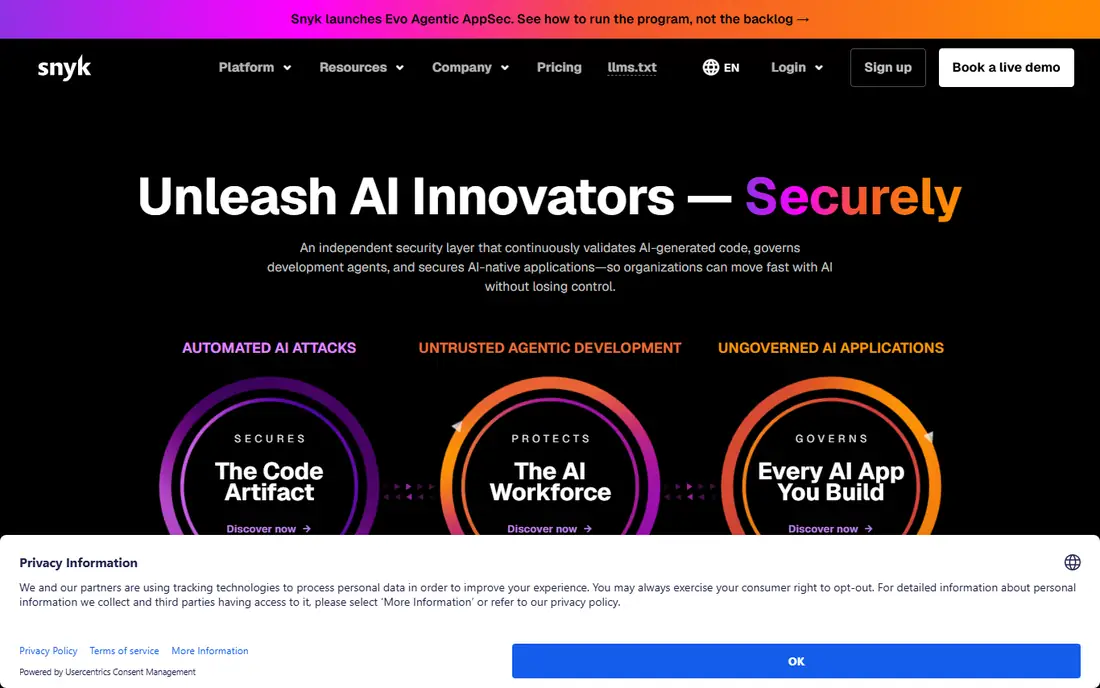
Snyk is the best developer platform alternative, with a free tier, per developer pricing for Team and Enterprise plans, and fix pull requests that land in the developer workflow rather than a separate security queue. It scans open source code, containers, and infrastructure as code, with IDE, CI, and repository integrations that surface findings where developers already work. That developer experience is why Snyk leads for cloud native dev teams.
Snyk is cloud only, per developer costs grow with team size, and license depth is thinner than license first tools. For a team that wants developers to fix vulnerabilities themselves with minimal friction, Snyk is the top pick.
What we like- Free tier plus per developer pricing
- Fix pull requests in the developer workflow
- Snyk vulnerability database plus public feeds
Watch out for- Cloud only
- Per developer costs grow with team size
- License depth is thinner than FOSSA
#2Mend
Best for: Remediation automation4.7/5 on
G2 (133 reviews, checked Oct 2026)
Visit mend.io
Starting priceSee website
Free planNo
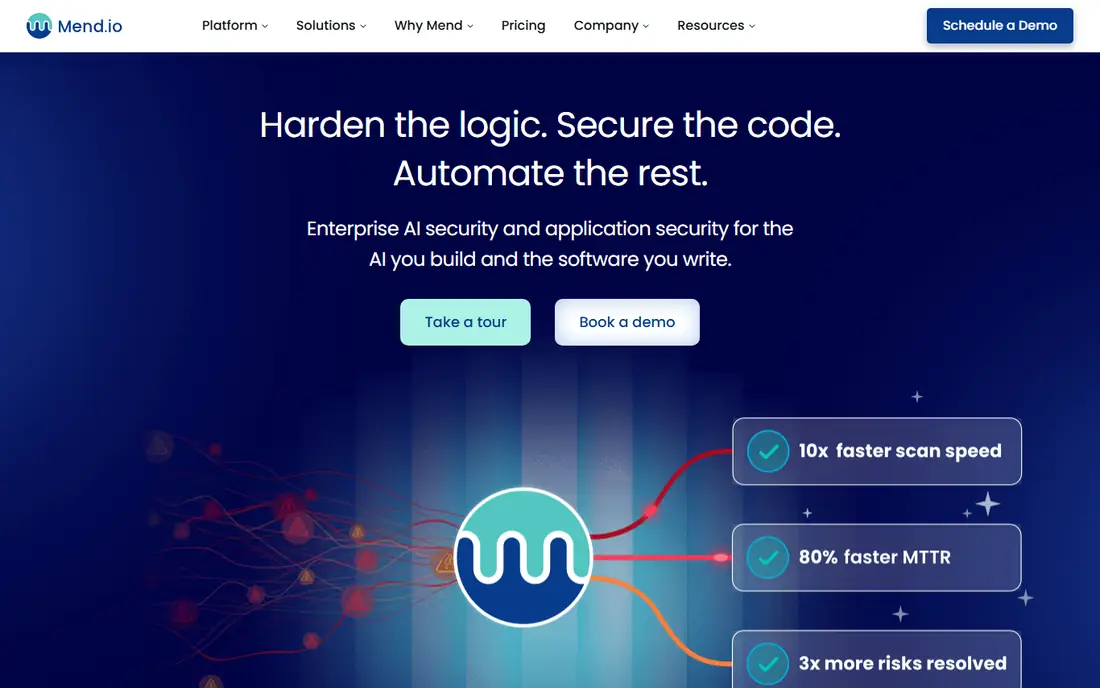
Mend, formerly WhiteSource, is the best remediation automation alternative, with Renovate inside for automated dependency updates at scale. It pioneered auto pull requests for dependency updates, and it suits teams that prioritize remediation throughput: finding a vulnerability matters less than fixing it quickly across hundreds of repositories. Mend research plus public feeds covers vulnerability data, with license compliance and policy enforcement included.
Pricing is enterprise quote, with per contributing developer contracts, and no free tier is advertised. For a mid market or enterprise team whose bottleneck is fixing, not finding, Mend is the strongest choice.
What we like- Best remediation automation with Renovate inside
- Auto pull requests at scale
- Mend research plus public feeds
- Cloud and on-prem deployment
Watch out for- Enterprise quote pricing
- No advertised free tier
- Per contributing developer contracts can be costly for large teams
Starting priceSee website
Free planNo
Sonatype Lifecycle is the best repository firewall alternative, blocking bad packages at ingestion before they reach builds, rather than finding them after they are already in code. That shift left approach suits organizations that want policy control at the repository, with Sonatype OSS Index plus research data behind policy decisions. It covers vulnerability, license, and policy enforcement in one platform.
Pricing is enterprise quote, and setup can be complex in hybrid environments. For an organization that already runs Nexus Repository or wants the strongest ingestion controls, Sonatype is the best fit.
What we like- Best repository firewall, blocking bad packages at ingestion
- Sonatype OSS Index plus research data
- On-prem and cloud deployment
Watch out for- Enterprise quote pricing
- Setup complexity for hybrid environments
- Best value inside the Sonatype repository ecosystem
Starting priceFree
Free planYes
FOSSA is the best license compliance alternative, with license first workflows, SBOM generation, and compliance reporting built for legal and open source program teams. It suits organizations where license obligations, attribution, and audit readiness matter as much as vulnerabilities, with FOSSA research plus public feeds behind its scans. A free tier covers small use, with subscription tiers for larger programs.
Vulnerability scanning is thinner than Snyk or Mend, and remediation is guidance rather than native fix pull requests. For a team whose main risk is license exposure, FOSSA is the clearest choice.
What we like- Best license and legal depth
- License first workflows
- SBOM generation and compliance reporting
- Free tier plus subscription tiers
Watch out for- Vulnerability scanning is thinner than Snyk or Mend
- Guidance rather than native fix pull requests
- Pricing by project or annual contract
Starting price$150 per month
Free planNo
JFrog Xray is the best artifact scanning alternative, with deep recursive scanning of artifacts and container layers, policy based blocking, and SBOM generation, all native to the JFrog Platform. It suits organizations already on JFrog Artifactory that want SCA, SBOMs, and policy gates across repositories and pipelines from one control point, with contextual analysis to reduce noise.
Setup can be complex in hybrid environments, and the best value sits inside the JFrog ecosystem. JFrog Pro starts at $150 per month, with enterprise tiers and advanced security packages above. For a JFrog shop, Xray is the obvious SCA choice.
What we like- Deep recursive scanning of artifacts and container layers
- Policy based blocking
- SBOM generation
- Native Artifactory integration
Watch out for- Best value inside the JFrog ecosystem
- Setup complexity in hybrid environments
- JFrog Pro starts at $150 per month with enterprise tiers above
Starting priceFree
Free planYes
GitHub Dependabot is the best free baseline alternative, free for all repositories with native fix pull requests from the GitHub Advisory Database. It is the easiest starting point for any team already on GitHub: enable it everywhere today, and every repository gets automated dependency updates with no procurement, no install, and no bill. That free floor covers the most common vulnerabilities for most teams.
License compliance is limited, there is no reachability triage, and it is GitHub native. For a GitHub team that needs a baseline before buying a deeper tool, Dependabot is the essential first step.
What we like- Free for all repos, public and private
- Native fix pull requests
- GitHub Advisory Database
- Zero friction for GitHub hosted teams
Watch out for- License compliance is limited
- No reachability triage
- GitHub native, so other hosts need a different tool
Starting priceFree
Free planYes
Socket is the best malicious package detection alternative, using behavioral analysis of packages to catch supply chain attacks, typosquatting, and suspicious install scripts that vulnerability databases miss. Known CVEs are only one threat: a malicious package with no known CVE still harms, and Socket's behavioral approach is designed for exactly that gap. A free tier covers small use, with subscription tiers above.
Socket is narrower than full SCA platforms, with thinner license and vulnerability depth. For a team worried about supply chain attacks on open source packages, Socket is the best specialized layer to add alongside a broader scanner.
What we like- Best malicious package detection through behavioral analysis
- Free tier plus subscription tiers
- Catches supply chain attacks other scanners miss
Watch out for- Narrower than full SCA platforms
- License and vulnerability depth thinner than Snyk or FOSSA
- Smaller ecosystem
Starting priceSee website
Free planNo
Endor Labs is the best reachability triage alternative, analyzing at function level whether a vulnerable dependency is actually called by your code. That distinction matters because most SCA alerts are not reachable in production, and alert fatigue is the biggest SCA problem teams report. Endor cuts the queue to the vulnerabilities that truly matter, with upgrade guidance for each.
Pricing is tiered quote, and Endor is narrower than full SCA platforms, working best as a triage layer rather than a sole scanner. For a team drowning in SCA alerts, Endor's reachability analysis is the fastest way to a manageable queue.
What we like- Best reachability triage at function level
- Cuts alert noise by showing which vulnerabilities code actually calls
- Dependency upgrade guidance
Watch out for- Tiered quote pricing
- Narrower than full SCA platforms
- Best as a triage layer rather than a sole scanner
How we chose
We compared software composition analysis tools using published 2026 pricing, vulnerability data sources, remediation automation, license compliance depth, deployment options, and reachability analysis, drawing on vendor pages and independent SCA comparisons. Each tool had to scan open source dependencies for vulnerabilities, licenses, or malicious packages. We weighted remediation automation, license depth, and alert triage, and we left out tools that only scan first party code without dependency analysis. Prices change, so confirm the current rate before signing.
Buying guide: how to pick a Black Duck alternative
Start with the threat you most need to cover. A team worried about known CVEs and developer fixes should shortlist Snyk and Mend. A team worried about license exposure should shortlist FOSSA. A team worried about bad packages entering builds should shortlist Sonatype. A team worried about malicious packages should add Socket. A team drowning in alerts should add Endor Labs for reachability triage.
Next, place the tool in the pipeline, not in a quarterly report. SCA belongs in pull requests and CI pipelines, since new vulnerabilities appear every week. Test the pull request experience during a trial: does the tool open fix pull requests, does it block risky merges, and does it show reachability so developers trust the alerts? A tool developers ignore is a cost, not a control.
Finally, model cost by the right unit. Snyk and Mend price per developer, FOSSA by project or contract, JFrog Xray by platform tier, and several vendors by quote only. A large team with many contributors pays differently from a small team with many repositories. Get a written quote for your real developer count and repository count before deciding, and keep Dependabot enabled as a free baseline regardless of which paid tool you choose.
Frequently asked questions
What is software composition analysis?
Software composition analysis scans open source dependencies for known vulnerabilities, malicious packages, and license risks. It inventories every third party component in your code, checks each against vulnerability and license databases, and reports which ones need fixing or replacing.
Do I still need SCA if I use Dependabot?
For many small teams, Dependabot plus a license check is enough. Larger teams need deeper tools for reachability triage, license compliance, policy enforcement, and artifact scanning that Dependabot does not cover. Keep Dependabot enabled as a free baseline even with a paid tool.
What is reachability analysis, and why does it matter?
Reachability analysis checks whether a vulnerable function in a dependency is actually called by your code. Most SCA alerts are not reachable in production, so reachability cuts alert noise and lets teams fix the vulnerabilities that truly matter first.
How do I handle license risks in open source?
Use a license first tool like FOSSA to inventory licenses, flag copyleft or incompatible licenses, and generate SBOMs and attribution reports. Set license policies in CI so a risky license blocks a merge rather than reaching production unnoticed.
What is an SBOM, and do I need one?
A software bill of materials lists every component in your software, with versions and licenses. Customers, regulators, and enterprise buyers increasingly require SBOMs, and tools like FOSSA, JFrog Xray, and Sonatype generate them automatically from scans.
Can SCA tools fix vulnerabilities automatically?
Some can. Mend Renovate and GitHub Dependabot open fix pull requests automatically, and Snyk opens fix pull requests in the developer workflow. Other tools give guidance and leave the fix to developers. For remediation throughput, prioritize tools with native fix pull requests.
Sources we checked (0)
Is your product missing or out of date?
We review this list regularly. Vendors can request a listing, send updated pricing or ask about featured placement.

Shihab Mia · Founder, Rankite
Shihab has 5+ years in B2B and SaaS SEO. He writes Rankite's software buying guides from pricing pages, documentation and public user reviews. More about Shihab.
 Snyk
 Sonatype Lifecycle
 FOSSA
 JFrog Xray
 GitHub Dependabot
 Socket
 Endor Labs