How we make this list: we compare pricing pages, product documentation and public user reviews. Rankite is independent; if a vendor ever pays for a featured spot, that listing is clearly labeled Partner.
Key takeaways
- VDP splits into designer-driven tools (DesignMerge for InDesign, XMPie uDirect) and platform-grade composition engines (Pageflex, Racami, Quadient Inspire).
- The modern buying conversation is as much about creative automation and web-to-print as classic mail-merge VDP; vendors like CHILI publish and Infigo sell the whole workflow.
- Printable has rebranded around MarcomCentral, its brand portal line; FusionPro VDP remains part of the offering.
- All pricing is quote-based. Desktop VDP plugins are the most affordable entry; server platforms and CCM suites are enterprise investments.
- Always check output format support (PDF/VT, PPML, VPS) against your press and RIP before committing.
Quick comparison
| Tool | Best for | Starting price | Free plan |
|---|
 XMPie XMPie | personalized campaigns across print and digital | See website | Free trial |
 Quadient Inspire Quadient Inspire | regulated enterprise customer communications | See website | No |
 Pageflex Pageflex | franchises and enterprises needing distributed marketing | See website | No |
 Racami Racami | print and mail shops automating production workflows | See website | No |
 CHILI publish CHILI publish | brands automating creative at scale | See website | No |
 DesignMerge DesignMerge | designers doing VDP inside InDesign | See website | No |
 MarcomCentral MarcomCentral | enterprises distributing personalized collateral | See website | No |
 Infigo Infigo | print businesses selling personalized print online | See website | No |
 Solimar Systems Solimar Systems | production shops optimizing document workflows | See website | No |
Is your product missing or out of date?
We review this list regularly. Vendors can request a listing, send updated pricing or ask about featured placement.
The best variable data printing software
#1
XMPie
Best for: personalized campaigns across print and digital
Visit xmpie.com
Starting priceSee website
Free planFree trial
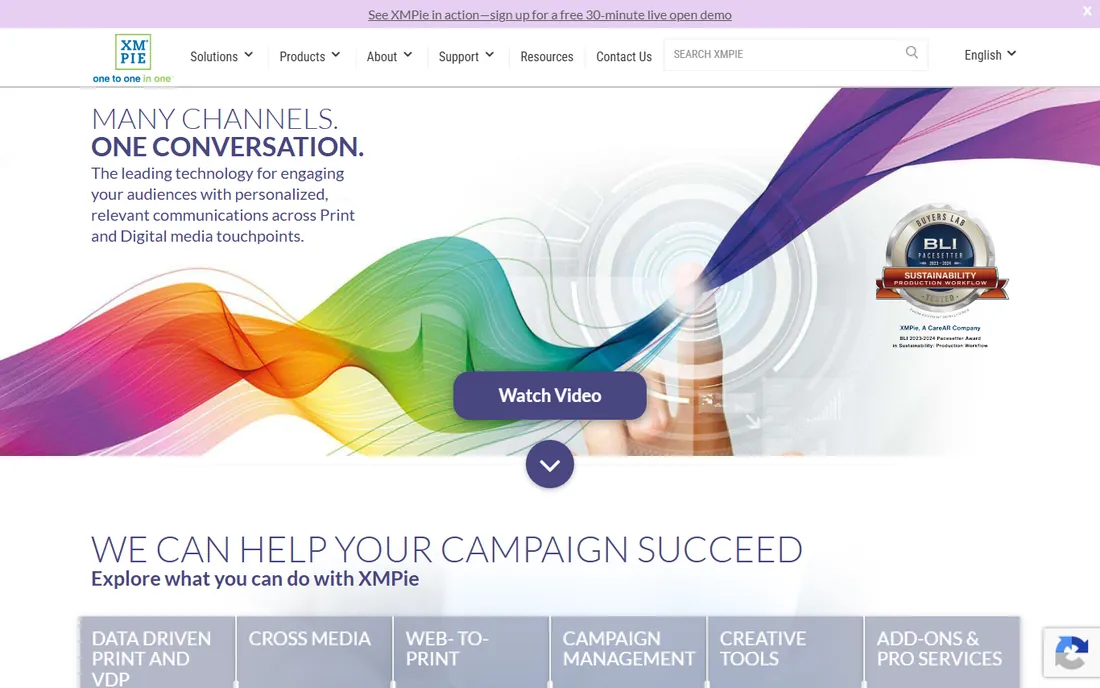
XMPie has been the reference name in variable data printing for over two decades. Now a Xerox company, it offers a full ladder: uDirect for desktop VDP inside Adobe InDesign, PersonalEffect Print for server-based high-volume composition, and cross-media modules for email, web, and personalized video. The Adobe workflow is the draw: designers build personalization inside the InDesign files they already know, with tools like uImage for personalized graphics and uChart for data-driven charts.
The range is both strength and complication. A small shop can start with a desktop license and grow into server composition without switching vendors, which protects the investment. The catch is complexity in choosing: you will want a conversation with their team to map products to your actual jobs. XMPie offers a free download and trial, so you can test the InDesign workflow before any commercial discussion. For printers and marketing service providers building personalization as a business line, it remains the safest all-around bet.
What we like- Deep Adobe InDesign integration
- Desktop-to-server growth path
- Free trial available
Watch out for- Xerox-owned enterprise sales motion
- Product range can confuse first-time buyers
- Server editions need real infrastructure
#2
Quadient Inspire
Best for: regulated enterprise customer communications
Visit quadient.com
Starting priceSee website
Free planNo
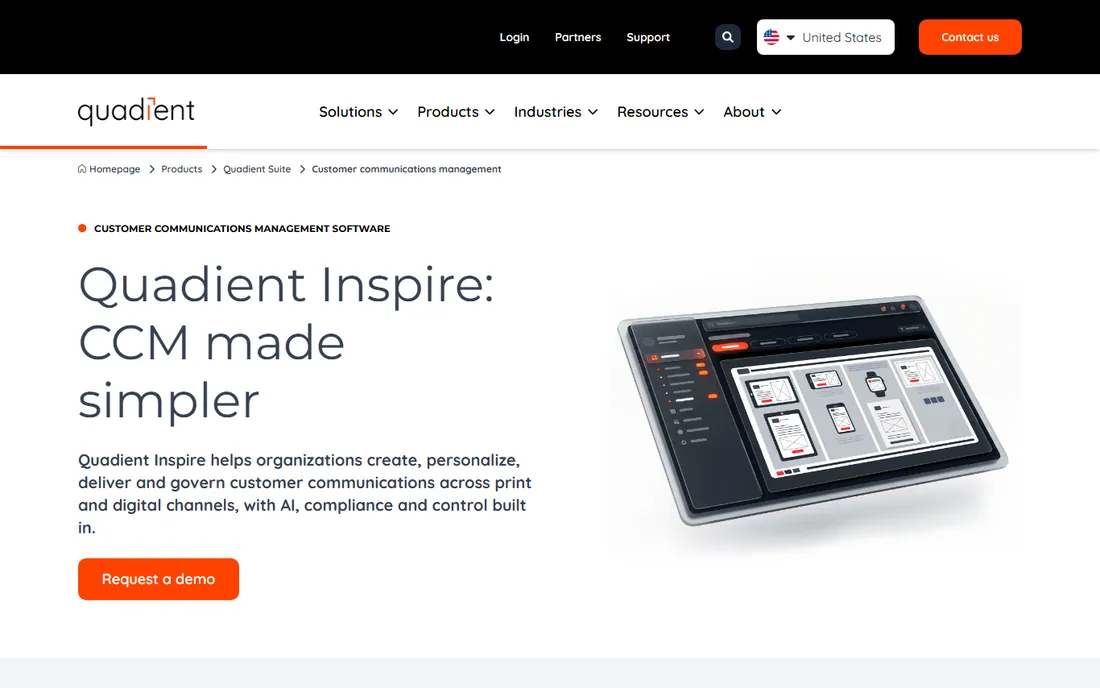
Quadient Inspire comes from customer communications management rather than print-shop VDP, and that shows in its strengths. It is designed for organizations sending millions of personalized statements, policies, and bills across print and digital channels with approval workflows, audit controls, and accessibility compliance. Quadient claims the largest market share in CCM, and its AI features now cut template conversion time dramatically.
Do not buy Inspire for personalized postcards. Do consider it if your variable data printing lives inside regulated customer communications at real scale, especially in financial services, insurance, or healthcare. The platform handles journey mapping, design, delivery, and archiving in one system, which eliminates the multi-vendor sprawl that plagues large enterprises. The price and implementation effort reflect that scope. It is the heavyweight here, and it knows it.
What we like- Market-leading CCM platform with 2,800+ organizations
- Strong compliance and governance
- AI-assisted template conversion
Watch out for- Enterprise scope far beyond pure VDP
- Pricing is quote-only and substantial
- Overkill for simple personalization jobs
#3
Pageflex
Best for: franchises and enterprises needing distributed marketing
Visit pageflex.com
Starting priceSee website
Free planNo
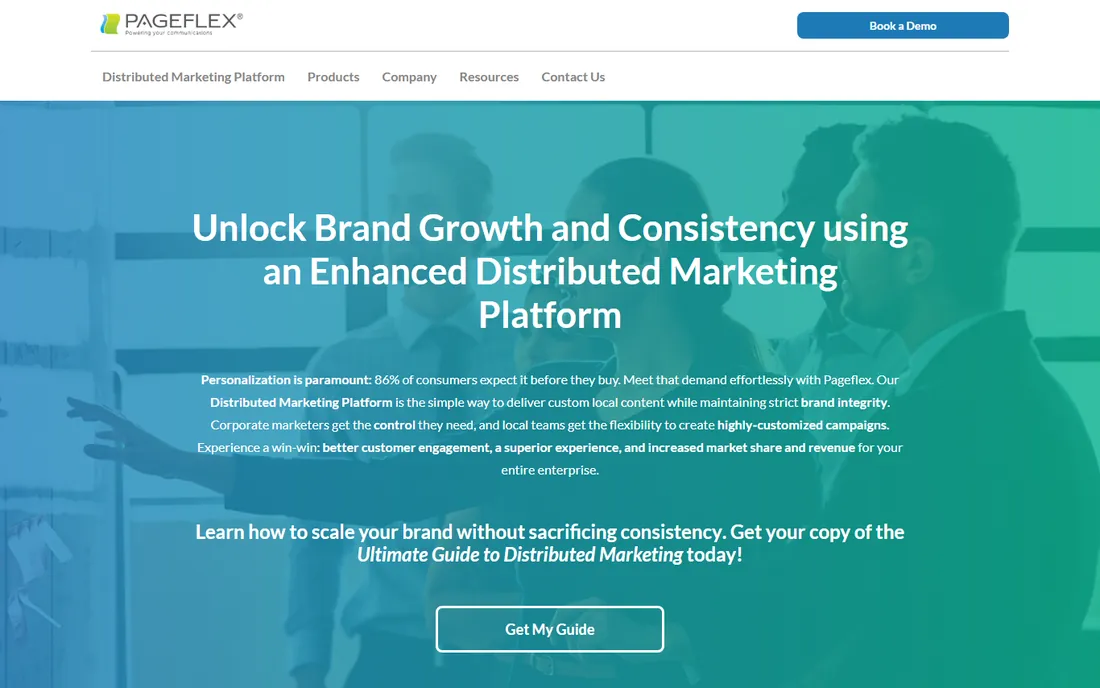
Pageflex sells distributed marketing: headquarters controls the brand while franchisees, dealers, and local teams customize materials within locked templates. Underneath sits serious variable data capability, with the Pando platform handling document composition and the Storefront module taking web-to-print orders. The patented flex technology was built to protect design integrity no matter how much users personalize.
The fit is specific and strong. If you support fifty or more distributed users producing localized versions of corporate campaigns, Pageflex's model of control plus flexibility is exactly the problem it solves. Pure VDP shops wanting a fast composition engine may find the platform heavier than needed, and pricing is quote-based with an enterprise sales process. But for brand-driven distributed printing, it has been doing this longer than almost anyone.
What we like- Strong brand-control plus local customization model
- Modules for web-to-print, VDP, and email
- Long track record since 1999
Watch out for- Enterprise-oriented sales and pricing
- Homepage now emphasizes distributed marketing over pure VDP
- UI shows its heritage
#4
Racami
Best for: print and mail shops automating production workflows
Visit racami.com
Starting priceSee website
Free planNo
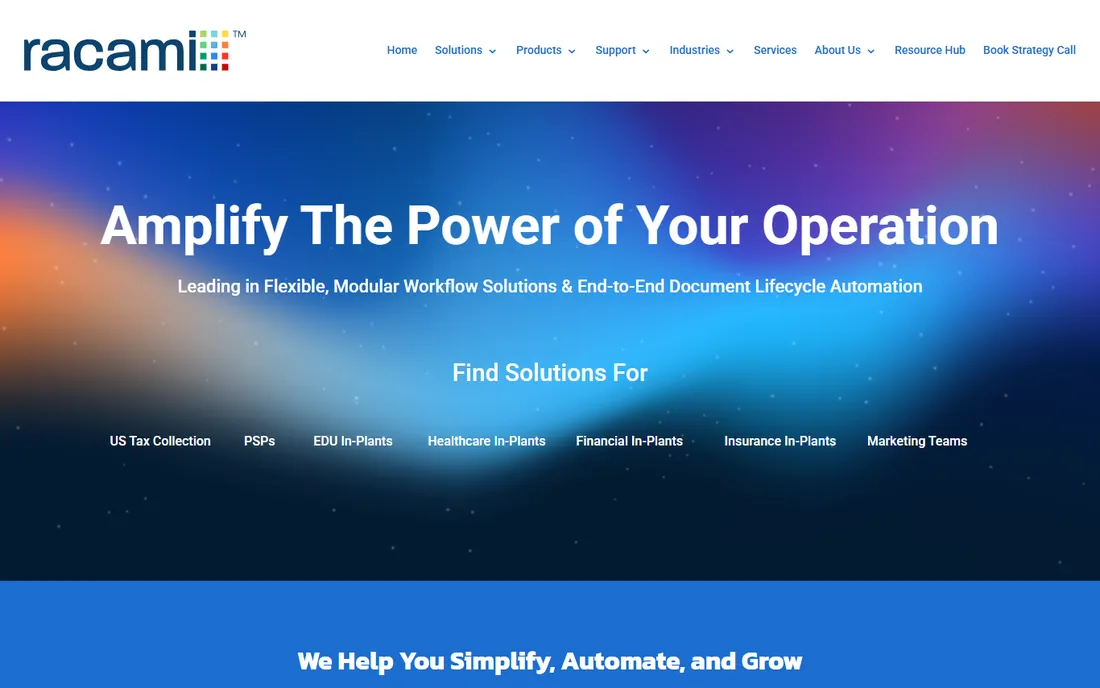
Racami is the production-floor answer to VDP. The Alchem-e platform spans storefront ordering, online proofing and approval, batch postal processing, and real-time production tracking, with composition for variable data jobs built into the workflow. Its customer base leans toward government tax collection, in-plants, insurance, and financial services: operations where accuracy and auditability matter as much as personalization.
That operational focus is the differentiator. Where XMPie sells personalization creativity, Racami sells a document lifecycle that happens to personalize: order comes in, proofs get approved, jobs get tracked, mail goes out. For print service providers and in-plants drowning in manual handoffs, that end-to-end view is more valuable than any single VDP feature. Expect a consultative, quote-based sale and plan an implementation project, not a download.
What we like- Alchem-e covers storefront, proofing, batch, and production
- Strong in government and regulated mail
- Responsive support reputation
Watch out for- Broader workflow suite than a pure VDP tool
- Smaller brand presence than XMPie or Quadient
- Quote-based pricing
Starting priceSee website
Free planNo
CHILI publish plays one level above classic VDP: creative automation for brands that need thousands of on-brand variations across print, digital, and in-store. Its CHILI GraFx platform lets designers build governed design systems, then lets local teams, data feeds, and AI agents generate variants within brand rules. Customer names like Coca-Cola, Mars, and Carrefour show where it sits in the market.
If your VDP need is really "produce endless localized versions of brand campaigns without a designer bottleneck," CHILI publish is arguably the most modern answer here. The API-first design and DAM integrations (Aprimo, Bynder) suit martech stacks. But print service providers looking for a composition engine will find it aimed at the brand owner, not the shop floor. Evaluate it as creative automation that includes VDP, not the other way around.
What we like- Cloud-native creative automation with AI agents
- Governed design systems protect the brand
- Strong retail and CPG customer base
Watch out for- Positioned for brands and agencies, not print shops
- Enterprise pricing
- VDP is one use case among many
Starting priceSee website
Free planNo
DesignMerge by Meadows Publishing Solutions is the craftsman's VDP tool. It lives inside Adobe InDesign as a panel-driven suite: point at any text frame, picture, or layout element and make it variable, with conditional logic, copyfitting, barcoding, and multi-up imposition, all without writing code. Everything InDesign can do, DesignMerge can make variable. The company even offers a free version of its PDF Imposer.
The testimonials on its site read like love letters, mostly about support responsiveness, and the product genuinely suits designers who want full creative control over personalized pieces. Direct mail, catalogs, labels, badges, and packaging all work. The trade-off is the ceiling: lights-out automation and web-to-print need the DesignMerge Server and Enfocus Switch integrations, adding cost and complexity. For design-led shops and in-plants, it is the most approachable serious VDP on this list.
What we like- Works directly inside Adobe InDesign, no programming
- Free PDF Imposer available
- Excellent customer support reputation
Watch out for- Tied to InDesign
- Server automation needs the companion modules
- Smaller company means roadmap risk
Starting priceSee website
Free planNo
The company formerly known as Printable now leads with MarcomCentral, a brand portal where distributed teams customize approved templates and order personalized materials. The VDP engine is FusionPro, with over 13,000 client installs, and the portal reports four million print and digital transactions a year across five thousand branded portals. That is a lot of personalized collateral moving through one system.
The positioning matters: this is a distributed marketing tool with VDP inside, not a VDP composition tool with a portal attached. If your need is franchisees and sales teams personalizing brochures, direct mail, and business cards within brand guardrails, the fit is excellent, with a tier (MarcomCentral Core) aimed at smaller marketing teams. If you are a print shop needing raw composition speed, look at the desktop and server options elsewhere on this list.
What we like- Proven brand portal with 3M+ users
- FusionPro VDP with 13,000+ installs
- Quick deployment for small marketing teams
Watch out for- VDP is embedded in a portal product, not standalone
- Pricing by quote
- The Printable-to-MarcomCentral branding takes explaining
#8
Infigo
Best for: print businesses selling personalized print online
Visit infigo.net
Starting priceSee website
Free planNo
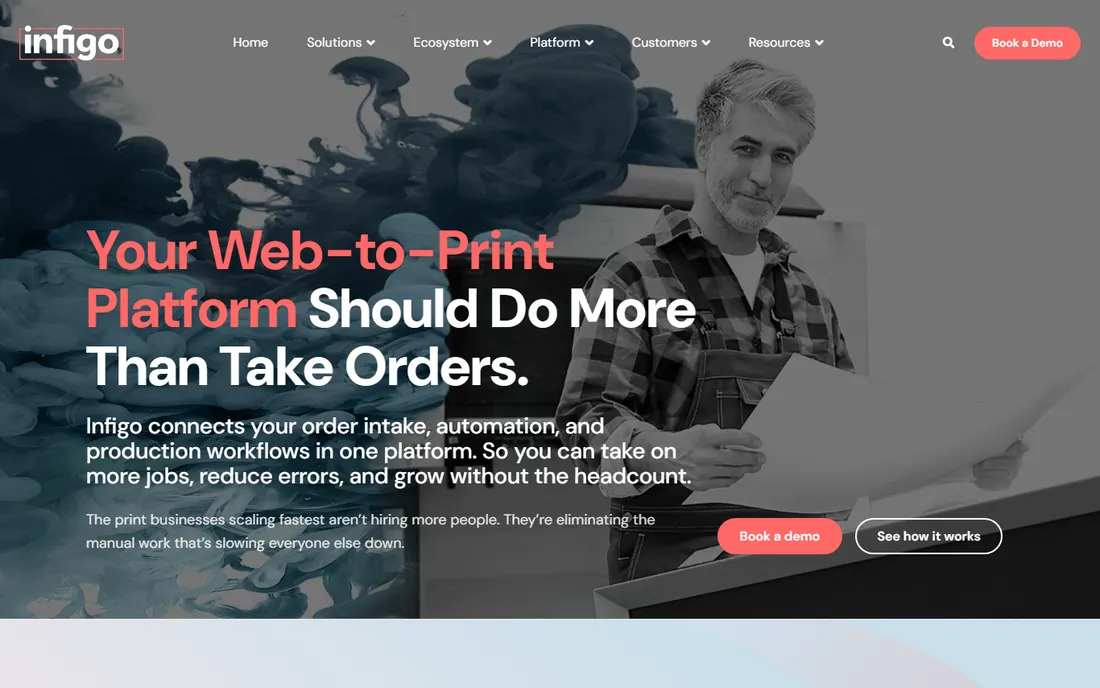
Infigo is web-to-print for printers who have outgrown patchwork systems. The platform combines B2B portals and B2C storefronts with an online editor (MegaEdit), automated preflight, and deep integrations with MIS systems like printIQ, Tharstern, and CERM. Variable data fits naturally: customers personalize within brand-locked templates, approve proofs online, and the job flows to production without re-keying.
The honest positioning on its own site is refreshing: Infigo says it is not a self-serve tool for micro print shops, but infrastructure for businesses processing real volume. Pricing is customized to the business, which means a demo-led sale. For a commercial printer or label converter wanting to sell personalized products online at scale, with the back office automated, Infigo is one of the strongest options in the market.
What we like- Modern web-to-print with VDP personalization built in
- MegaEdit browser editor
- 15+ MIS and prepress integrations
Watch out for- Aimed at growth-stage printers, not micro shops
- Pricing is customized and unpublished
- UK company with US presence
Starting priceSee website
Free planNo
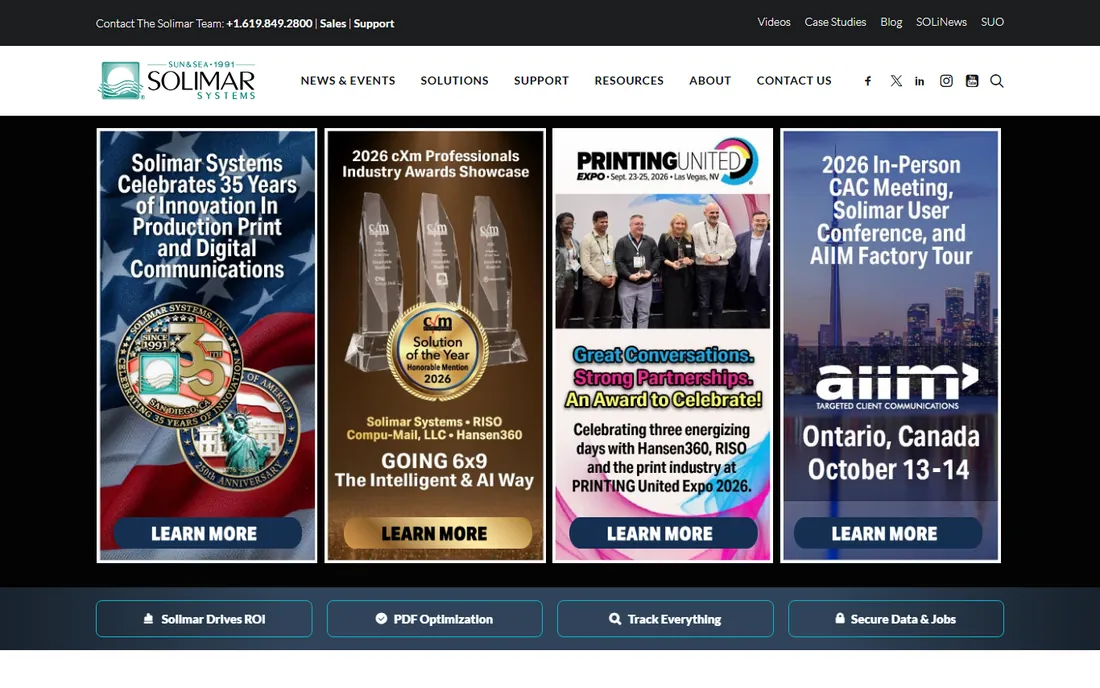
Solimar Systems approaches variable data from the production side. Its Chemistry platform onboards, enhances, and tracks documents through the print workflow, converting legacy formats like AFP, IPDS, and PCL into optimized, print-ready PDF and giving operators live visibility into every job. For transactional printers and in-plants, this is the unglamorous layer that makes high-volume variable output reliable.
You would not buy Solimar to design a personalized direct mail piece. You buy it when your shop runs variable jobs from mainframe-era systems and needs them modernized, optimized, and tracked without errors. Paired with a composition tool from elsewhere on this list, it completes the stack. Solimar University, its cloud training platform, suggests a company serious about customer enablement rather than just license sales.
What we like- Chemistry platform converts legacy formats to optimized PDF
- Live job tracking and reporting
- Strong transactional print heritage
Watch out for- Workflow optimization rather than creative VDP
- Smaller marketing footprint
- Quote-based enterprise pricing
How we chose
We verified each vendor's current homepage and brand status, opening every site to confirm the live URL. We reviewed product documentation, company press releases, and industry sources including WhatTheyThink and FESPA's VDP coverage, plus public review platforms where available. We dropped DirectSmile because EFI acquired and folded it into MarketDirect, and we list Printable under its current MarcomCentral branding with the old name noted once. Pricing is quote-based across this category, so we report that rather than inventing figures. We did not test any tool hands-on.
What to check before you buy VDP software
Match the tool to who does the personalizing
VDP has three different users, and they need three different tools. Designers personalizing creative work need InDesign-native tools like DesignMerge or XMPie uDirect. Print operations automating production need workflow platforms like Racami, Solimar, or Infigo. Brand and marketing teams distributing localized campaigns need portals like MarcomCentral, Pageflex, or CHILI publish. Buying the wrong category for your user is the most expensive mistake in VDP.
Output formats decide press compatibility
Before anything else, confirm the software produces the formats your press and RIP expect: PDF/VT, PPML, and vendor-specific formats like Creo VPS. A composition engine that cannot feed your digital front end at rated speed is a non-starter, no matter how good the design tools are. Ask vendors for reference customers running your exact press model.
Data handling is the hidden work
Every VDP job starts with a messy spreadsheet. Ask how the tool ingests CSV and Excel, what data validation it performs before merge, and how it handles missing images or bad records mid-run. The best tools flag data problems during setup; the worst discover them at the RIP. If your data lives in a CRM or MIS, API and hot-folder integration matters more than design features.
Price the implementation, not just the license
Desktop VDP plugins are genuinely affordable; server platforms, CCM suites, and workflow automation are enterprise projects with services attached. Ask for the total first-year cost including implementation, training, and the press/RIP integration work. The vendors on this list are honest that their pricing is customized, so make them put numbers against your actual job mix.
Where VDP is heading
The category is converging on a single idea: personalization without a designer in the loop. CHILI publish's AI agents generating governed variants, Quadient's AI cutting template conversion time, and Infigo's self-service personalization all point the same direction. The composition engine is becoming plumbing; the value is in who can create personalized pieces safely without touching layout software.
For buyers, this means evaluating governance as much as graphics. Brand-locked templates, approval workflows, and data validation are the features that determine whether self-service personalization succeeds or produces expensive mistakes. The vendors winning new business are the ones that make personalization boring and reliable, not the ones with the flashiest creative tools.
Frequently asked questions
What is variable data printing software?
Variable data printing software merges a data file (names, addresses, images, barcodes) with a design template so every piece in a print run is unique. Unlike a basic mail merge, VDP controls layout, images, conditional content, and press-ready output formats like PDF/VT and PPML.
How much does VDP software cost?
Desktop VDP plugins for InDesign cost hundreds to low thousands of dollars. Server-based composition engines, web-to-print platforms, and CCM suites are quote-based enterprise purchases, often with implementation services. XMPie offers a free trial; most others require a demo and a custom quote.
What is the difference between VDP and mail merge?
A mail merge fills text fields in a document. Variable data printing works on the print template itself: text, images, barcodes, and QR codes can all change per record, with conditional logic controlling which content appears. VDP output is press-ready PDF with proper color management and finishing controls.
Which file formats does VDP software produce?
Common outputs include PDF/VT (the ISO standard for variable data exchange), PPML, PostScript, and press-specific formats like Creo VPS. Confirm your RIP and digital press support the formats your chosen software produces before you buy.
Do I need a designer to use VDP software?
It depends on the tool. DesignMerge and XMPie uDirect are built for designers working in InDesign. Web-to-print platforms like Infigo and brand portals like MarcomCentral let non-designers personalize within locked templates. Production workflow tools like Racami and Solimar are built for operators.
Can VDP software handle images and barcodes, or just text?
Modern VDP tools handle variable images, personalized graphics, QR codes, and barcodes alongside text. Some, like XMPie's uImage, specialize in image personalization. Check that the tool supports your specific variable elements, including any 2D barcode symbologies you need.
Sources we checked (10)
- https://xmpie.com/
- https://www.quadient.com/en/customer-communications/inspire-platform
- https://pageflex.com/
- https://racami.com/
- https://www.chili-publish.com/
- https://meadowsps.com/
- https://printable.com/
- https://infigo.net
- https://solimarsystems.com/
- https://www.fespa.com/en/news-media/variable-data-printing-vdp-tools-workflows-and-real-world-examples-for-profitable-digital-printing/
Is your product missing or out of date?
We review this list regularly. Vendors can request a listing, send updated pricing or ask about featured placement.

Shihab Mia · Founder, Rankite
Shihab has spent more than a decade helping SaaS and e-commerce brands grow through search. He writes Rankite's software buying guides from pricing pages, documentation and public user reviews. More about Shihab.