How we make this list: we compare pricing pages, product documentation and public user reviews. Ratings come from G2, Capterra or Trustpilot, with the date we checked them.
Key takeaways
- A feedback board without a roadmap and changelog will collect ideas but rarely close the loop with customers.
- Voting helps rank demand, but revenue, segment, and effort must also shape what gets built.
- Small teams need a low-cost board with a changelog, while larger teams need segmentation and integrations.
- Public boards build trust when statuses are updated, and they damage trust when ideas sit untouched for months.
- Start with one board, one roadmap view, and a monthly update habit before adding surveys and analytics.
Quick comparison
| Tool | Best for | Starting price | Free plan |
|---|
 Canny | Public voting boards | $79 per month | Yes |
 Productboard | Feedback to roadmap planning | $19 per maker/month | Yes |
 UserVoice | Enterprise feedback governance | See website | No |
 Featurebase | Low-cost all-in-one feedback | $29 per seat/month | Yes |
 Frill | Flat-rate all-in-one boards | $25 per month | Yes |
 Nolt | Clean simple voting boards | $29 per month | No |
 Sleekplan | Budget portal plus roadmap | See website | Yes |
 ProdPad | Feedback linked to roadmapping | See website | Free trial |
Is your product missing or out of date?
We review this list regularly. Vendors can request a listing, send updated pricing or ask about featured placement.
#1Canny
Best for: Public voting boards4.5/5 on
G2 (108 reviews, checked Oct 2026)
Visit canny.io
Starting price$79 per month
Free planYes
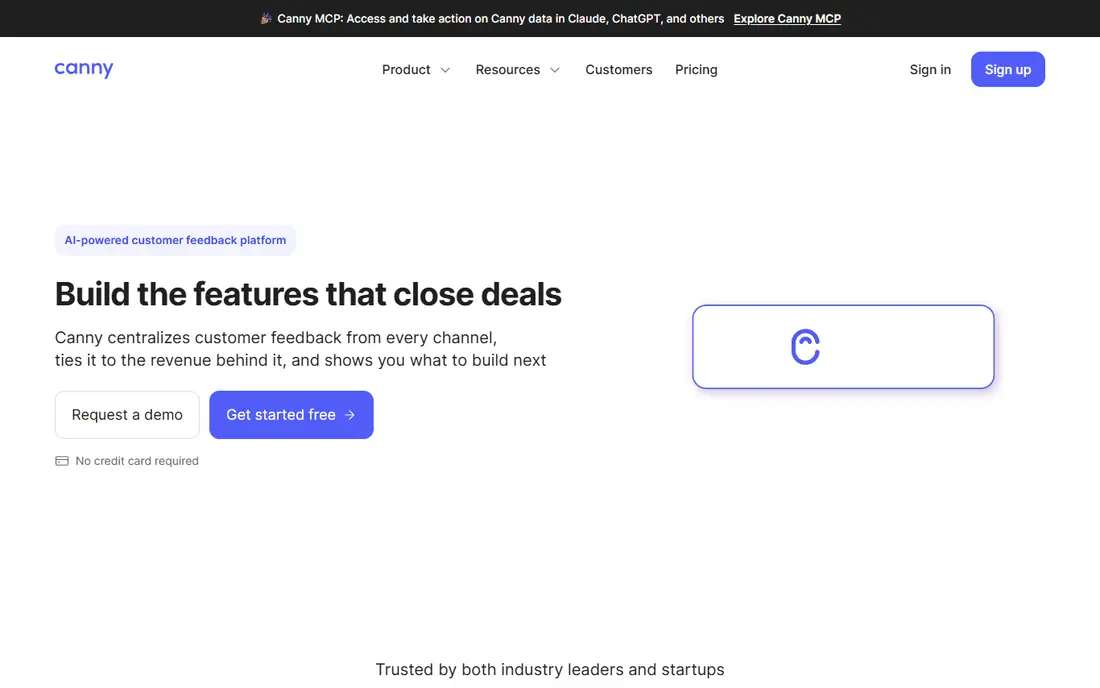
Canny is the best-known voting board for SaaS teams, and its strength is the full loop from idea to release. Customers submit ideas, vote on them, and follow status changes on a public roadmap. When a feature ships, the changelog closes the loop and notifies voters, which builds trust over time. Integrations with Slack, Jira, Intercom, and other tools help product teams capture feedback from support and sales without manual copying.
Cost is the main watch-out. The free plan covers a limited number of tracked users, and paid plans scale as engagement grows, so a popular board can become expensive. Some automation and segmentation features also sit on higher tiers. Canny fits SaaS teams that want a public, customer-facing board and are willing to maintain it with regular status updates.
What we like- Polished voting boards
- Roadmap and changelog included
- Strong integrations
Watch out for- Cost scales with engagement
- Some advanced features need higher tiers
Starting price$19 per maker/month
Free planYes
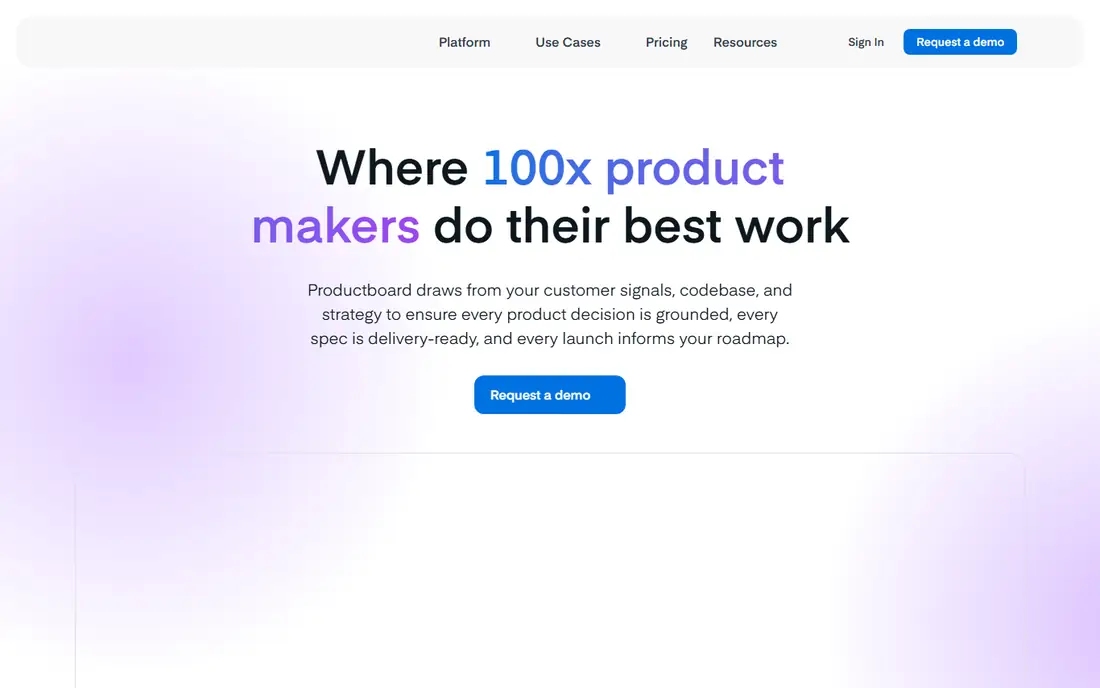
Productboard suits product teams that need to turn scattered feedback into a planned roadmap, not only a voting list. Feedback from portals, email, Slack, and integrations lands in one hub, where product managers can tag, segment, and score it against company objectives. Roadmaps then show how planned work connects to those objectives, which helps in planning meetings with leadership and engineering. That planning depth is why larger product organizations choose Productboard.
Per-maker pricing means the cost grows with each product manager, even if only a few people edit roadmaps. The portal experience is also more structured than a simple voting board, which can feel heavy for a very small team. Productboard fits mid-size and larger product teams that plan against objectives and need to justify priorities with evidence, not only vote counts.
What we like- Central feedback hub
- Prioritization frameworks
- Roadmap planning against objectives
Watch out for- Per-maker pricing adds up
- Portal is less simple than Canny for small teams
Starting priceSee website
Free planNo
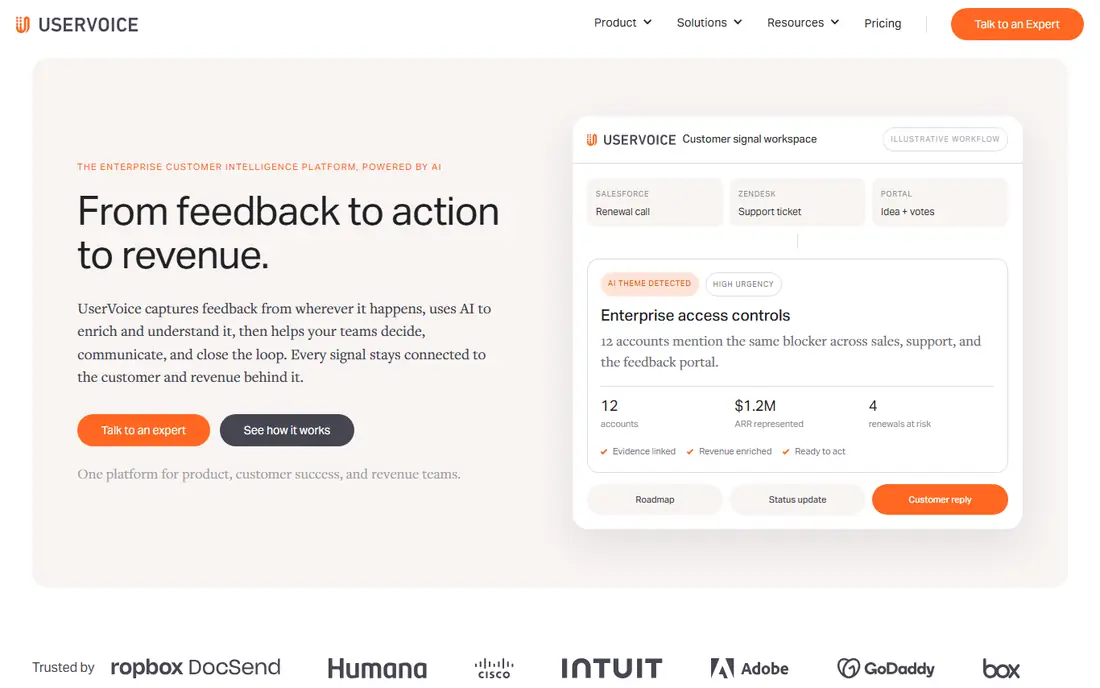
UserVoice is built for enterprise feedback programs where governance, segmentation, and CRM data matter. Product teams can segment feedback by customer type, plan, or account, and link ideas to revenue data from a CRM. That link helps prioritize work that affects key accounts, not only work with the most votes. Analytics and reporting support large programs with many products and stakeholders.
The price and complexity put UserVoice out of reach for most small teams. Pricing is quoted, implementation takes time, and the platform needs dedicated product operations to stay useful. Small teams will get faster value from Canny, Frill, or Featurebase. UserVoice fits enterprises with complex feedback governance needs and a budget to match.
What we like- Strong segmentation and analytics
- CRM integrations
- Governance for large programs
Watch out for- Quote-only pricing
- Highest cost on this list for most teams
Starting price$29 per seat/month
Free planYes
Featurebase gives small SaaS teams an all-in-one feedback suite at a lower price than Canny or Productboard. The free plan covers one seat, and Growth at $29 per seat per month adds the core board, roadmap, and changelog features that most teams need. The interface is clean and modern, which helps customers actually use the board instead of ignoring it. Prioritization tools help product managers sort ideas without a separate spreadsheet.
The ecosystem is smaller than Canny, so some integrations are newer or less deep. Teams that rely on a specific support or CRM integration should check it during a trial. Featurebase fits early-stage and growing SaaS teams that want a complete feedback loop at a fair price, without enterprise complexity.
What we like- Feedback, roadmap, and changelog in one tool
- Low entry price
- Modern interface
Watch out for- Smaller ecosystem than Canny
- Some integrations are newer
Starting price$25 per month
Free planYes
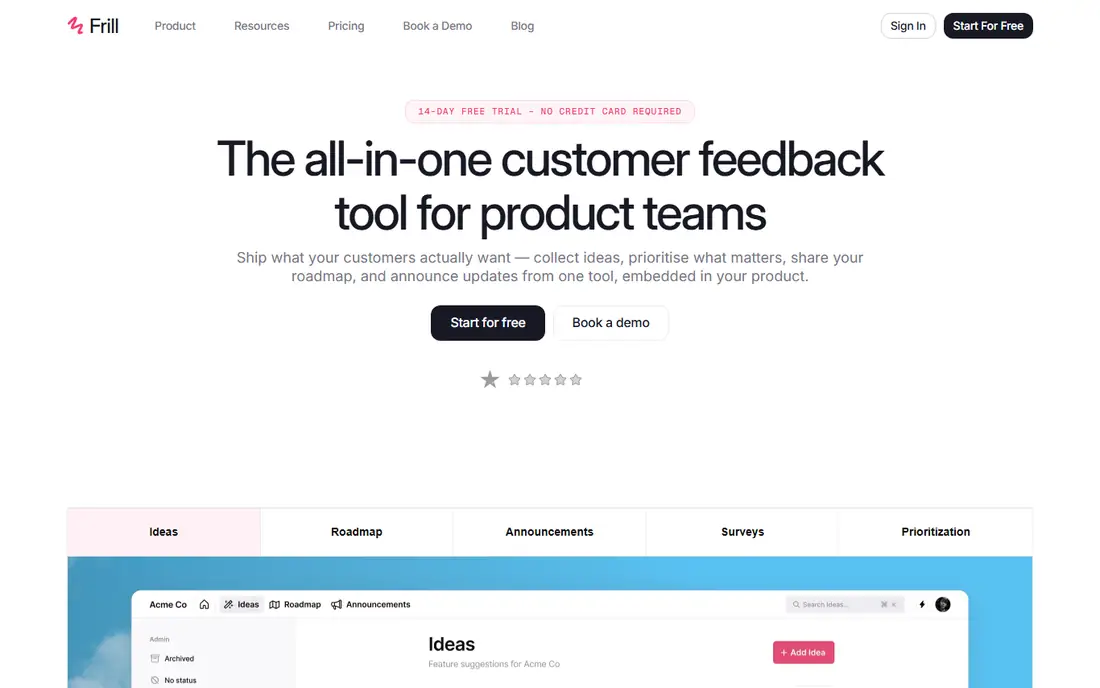
Frill stands out for flat-rate pricing, which makes budgeting simple for a small team. At $25 per month, teams get a feedback board, roadmap, and changelog without per-user scaling on the entry plan. The free plan allows unlimited posts, which lets a team test public feedback without a user cap. Setup is fast, and the board looks polished enough for a customer-facing page.
Support and enterprise features are thinner than Canny or UserVoice. Lower plans use email-only support, and advanced segmentation, SSO, and analytics are limited. Frill fits lean teams that want a simple, affordable, customer-facing board and do not need enterprise governance. If your team grows into complex segmentation needs, you may outgrow Frill and move to a larger platform.
What we like- Flat monthly price
- Unlimited posts on free plan
- Simple setup
Watch out for- Support is email-only on lower plans
- Fewer enterprise features
Starting price$29 per month
Free planNo
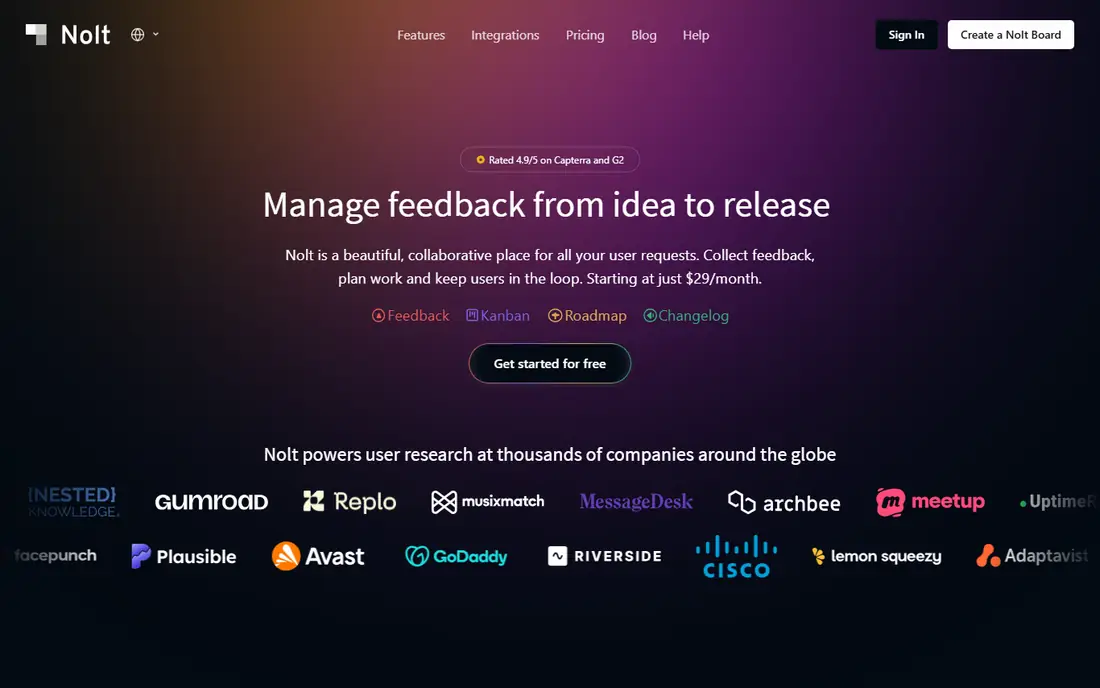
Nolt appeals to teams that want a clean, simple voting board without extra clutter. Customers can submit ideas, vote, and comment in an interface that needs almost no explanation. SSO is included, which helps internal teams and B2B customers who need secure access. The simplicity drives participation, because customers are more likely to vote when the board is easy to use.
The limit is the missing changelog and basic roadmap features. Teams that need to close the loop with release notes will need another tool or a manual process for announcements. Nolt fits teams that prioritize a clean voting experience over a full feedback suite, and that handle changelogs elsewhere. Pair Nolt with a simple changelog page if release communication matters to your customers.
What we like- Very clean board design
- SSO included
- Easy for customers to use
Watch out for- No changelog on the core product
- Roadmap features are basic
Starting priceSee website
Free planYes
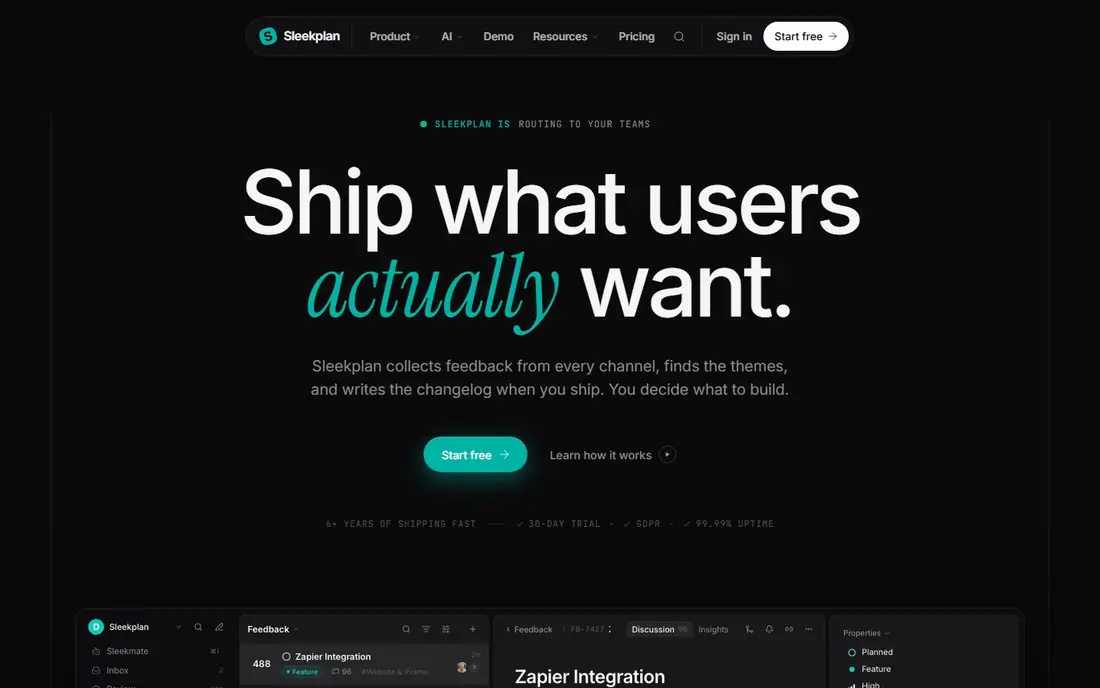
Sleekplan offers a budget-friendly portal, roadmap, and changelog bundle for small SaaS teams. The free plan lets a team start a public feedback board without paying, and paid plans add more capacity and features at a lower price than many rivals. Setup is quick, and the board, roadmap, and changelog work together to close the loop with customers. For a bootstrapped team, that bundle at a low price is attractive.
Buyers should confirm current pricing and limits on the vendor site, because Sleekplan pricing has changed over time in public listings. The team behind the product is also smaller than Canny or Productboard, which can affect support speed and integration depth. Sleekplan fits budget-conscious teams that want the full bundle and are comfortable checking current terms before buying.
What we like- Low-cost entry
- Portal, roadmap, and changelog bundle
- Easy setup
Watch out for- Pricing and limits have changed over time
- Smaller team behind the product
#8ProdPad
Best for: Feedback linked to roadmapping4.3/5 on
G2 (99 reviews, checked Oct 2026)
Visit prodpad.com
Starting priceSee website
Free planFree trial
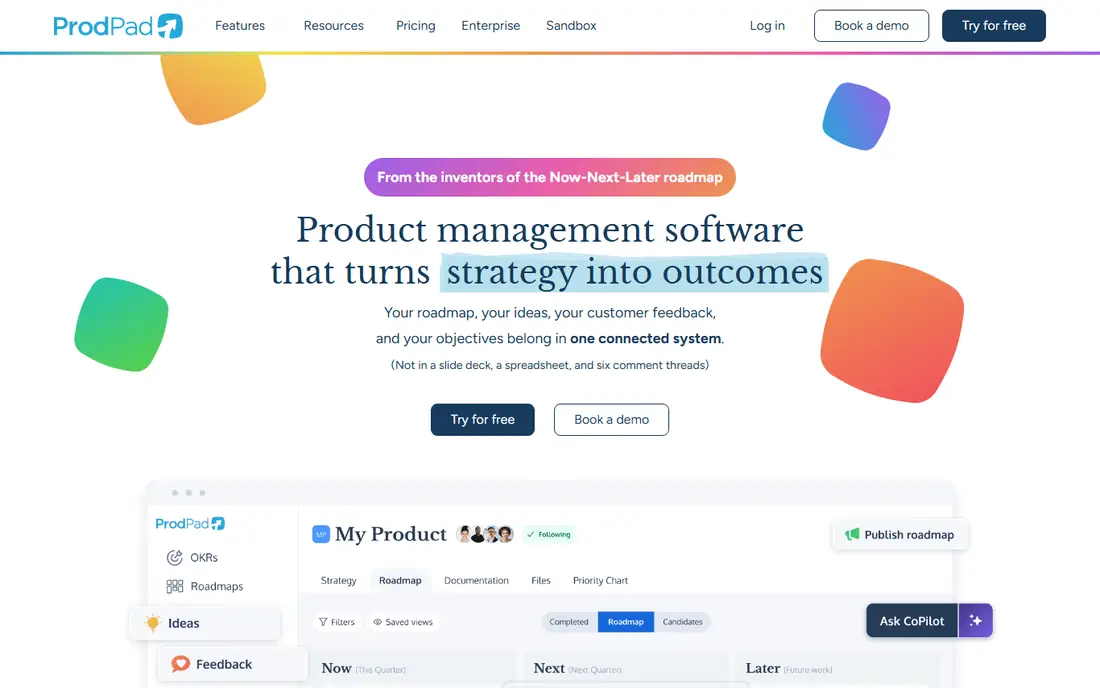
ProdPad helps product teams move from a pile of ideas to a prioritized roadmap with a clear workflow. Ideas can be captured, scored, and linked to roadmap items, so the team can show why a feature was chosen and what problem it solves. That flow suits teams with many ideas from sales, support, and customers, where a simple vote count is not enough to decide. Prioritization frameworks help balance customer demand, business value, and effort.
Pricing transparency is weaker than Frill or Featurebase, and new users may need time to learn the idea management workflow. Teams that only need a public voting board may find ProdPad more structured than necessary. ProdPad fits product teams that manage a large idea backlog and need a disciplined path from feedback to roadmap, not teams that only want a simple public board.
What we like- Clear idea to roadmap flow
- Prioritization tools
- Good for product teams with many ideas
Watch out for- Pricing is less transparent
- Interface takes time to learn for new users
How to run a feedback board that customers trust
Publish the board, explain how ideas are reviewed, and set a review cadence you can keep, such as monthly. Update statuses when an idea moves from under review to planned, in progress, or shipped, and add a short note explaining decisions, especially for popular ideas you will not build. Silence is what damages trust, not a polite no with a reason. A board with fifty ideas and no updates for six months is worse than no board at all.
Prioritize beyond votes
Score ideas by customer segment, revenue impact, strategic fit, and effort, alongside vote count. A request from ten enterprise customers may matter more than a request from one hundred free users, depending on your business model. Share the scoring criteria internally, so sales and support understand why a popular idea is not first. Use the board as evidence in planning, not as an automatic build list.
How we chose
We compared pricing pages, product documentation, and public reviews on G2, Capterra, and Reddit, focusing on voting boards, roadmaps, changelogs, prioritization, and integrations. We favored tools that close the loop from idea to release, and we included both low-cost and enterprise options so teams at different sizes can shortlist fairly. Prices change, so confirm the current plan, seat terms, and user limits on the vendor site before buying.
Frequently asked questions
Should a feedback board be public or private?
A public board builds trust and lets customers see that others want the same feature, which helps prioritization. A private board suits B2B teams with sensitive customer data or competitive roadmaps. Many teams use both, with a public board for general ideas and a private board for key accounts.
How many votes should an idea need before it gets built?
There is no fixed number, because votes must be weighed against segment, revenue, effort, and strategy. A small number of votes from paying customers can outweigh many votes from free users. Use votes as one signal, and document the other factors that shaped the decision.
How often should roadmap statuses be updated?
Update statuses at least monthly, and sooner when a planned feature moves into development or ships. Regular updates show customers that the board is maintained. If an idea will not be built, mark it as declined with a short reason rather than leaving it open indefinitely.
Can feedback tools replace user interviews?
No, feedback tools collect what customers ask for, while interviews reveal problems customers cannot yet describe as a feature. Use boards for demand signals and interviews for deeper understanding of workflows and pain points. The best product decisions combine both sources.
What integrations matter most for a feedback tool?
Slack, Jira or Linear, Intercom or Zendesk, and CRM integrations matter most for most SaaS teams. They let feedback flow from support and sales into the product hub without manual copying. Check the specific integration depth during a trial, because a logo on an integrations page does not guarantee two-way sync.
Is a free plan enough for a small team?
A free plan is often enough to start, especially for a team with one product manager and a modest user base. Limits on tracked users, seats, or roadmap views usually appear as the board grows. Upgrade when those limits block real work, not only because a paid plan offers more features.
Sources we checked (8)
- https://www.canny.io
- https://www.productboard.com
- https://www.uservoice.com
- https://www.featurebase.app
- https://www.frill.co
- https://www.nolt.io
- https://www.sleekplan.com
- https://www.prodpad.com
Is your product missing or out of date?
We review this list regularly. Vendors can request a listing, send updated pricing or ask about featured placement.

Shihab Mia · Founder, Rankite
Shihab has 5+ years in B2B and SaaS SEO. He writes Rankite's software buying guides from pricing pages, documentation and public user reviews. More about Shihab.