How we make this list: we compare pricing pages, product documentation and public user reviews. Ratings come from G2, Capterra or Trustpilot, with the date we checked them.
Key takeaways
- A timeshare is a long-term vacation ownership contract, not a hotel booking, and the yearly fees continue whether you travel or not.
- The big brand names win on resort choice and exchange networks, but developer prices are far higher than resale prices for similar stays.
- Average 2026 maintenance fees are projected near 1,550 to 1,600 dollars a year, and they tend to rise over time.
- Resale value is usually far below the original purchase price, so buy only if you plan to use the ownership for many years.
- Never pay a large upfront fee to an exit company that promises to cancel your contract, since that is the most common timeshare scam pattern.
- Read the rescission period in your state before you sign, because it is the only easy window to cancel.
Quick comparison
Is your product missing or out of date?
We review this list regularly. Vendors can request a listing, send updated pricing or ask about featured placement.
The best timeshare companies
A timeshare purchase is one of the few travel decisions that behaves like a mortgage. You pay a large sum upfront, then you pay annual maintenance fees, club dues, and sometimes special assessments for as long as you own it. The companies below are the largest and most established names in the US market. They differ in resort locations, points rules, exchange partners, and fee levels, and those differences matter more than any sales presentation claim about nightly value.
Starting priceSee website
Free planNo
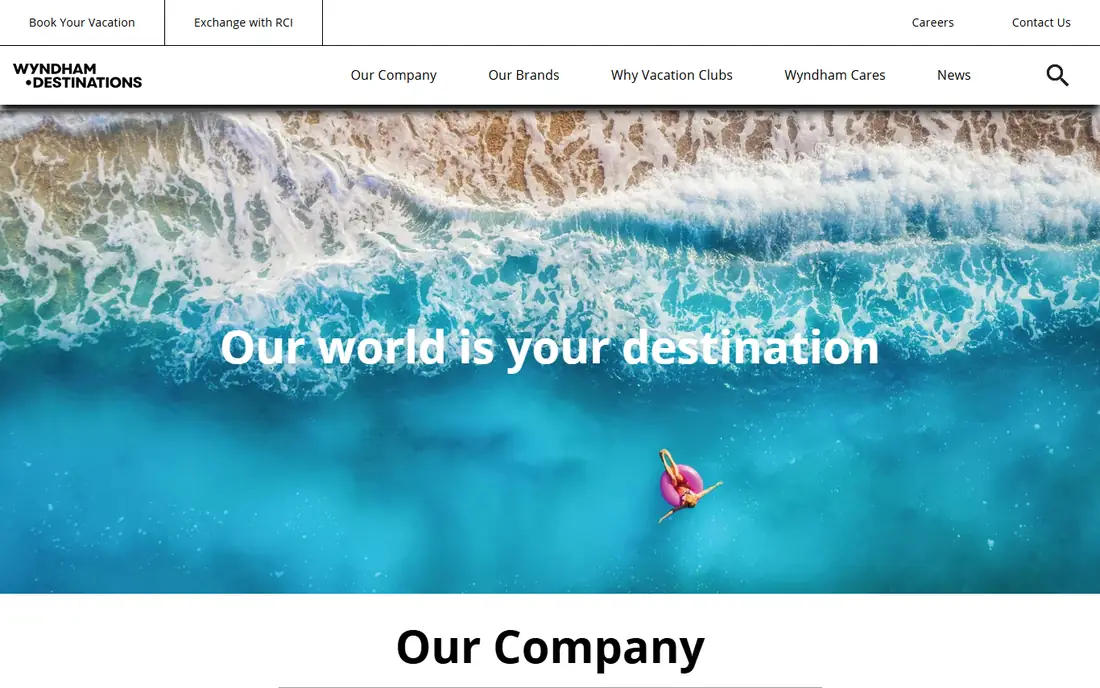
Wyndham Destinations, which sells under the Club Wyndham brand, runs the largest timeshare resort network in the United States, with hundreds of resorts across the country plus exchange access through RCI. That scale is the main reason to pick it: if you want a different destination almost every year without leaving one system, few companies match it. Points can be used across the network, and owners can bank or borrow points to shape larger trips.
The trade-off is fee spread. Because the network covers older and newer resorts, maintenance fees differ a lot by property, and special assessments at older resorts can add surprise bills. Developer prices are also high compared with resale listings for the same resorts, so compare both before you commit. Wyndham suits travelers who will use the network often and who are comfortable learning a points chart.
What we like- Biggest resort network in the US
- Points work across many brands
- Frequent owner promotions
Watch out for- Maintenance fees vary widely by resort
- Sales presentations are high pressure
- Resale prices are far below developer prices
Starting priceSee website
Free planNo
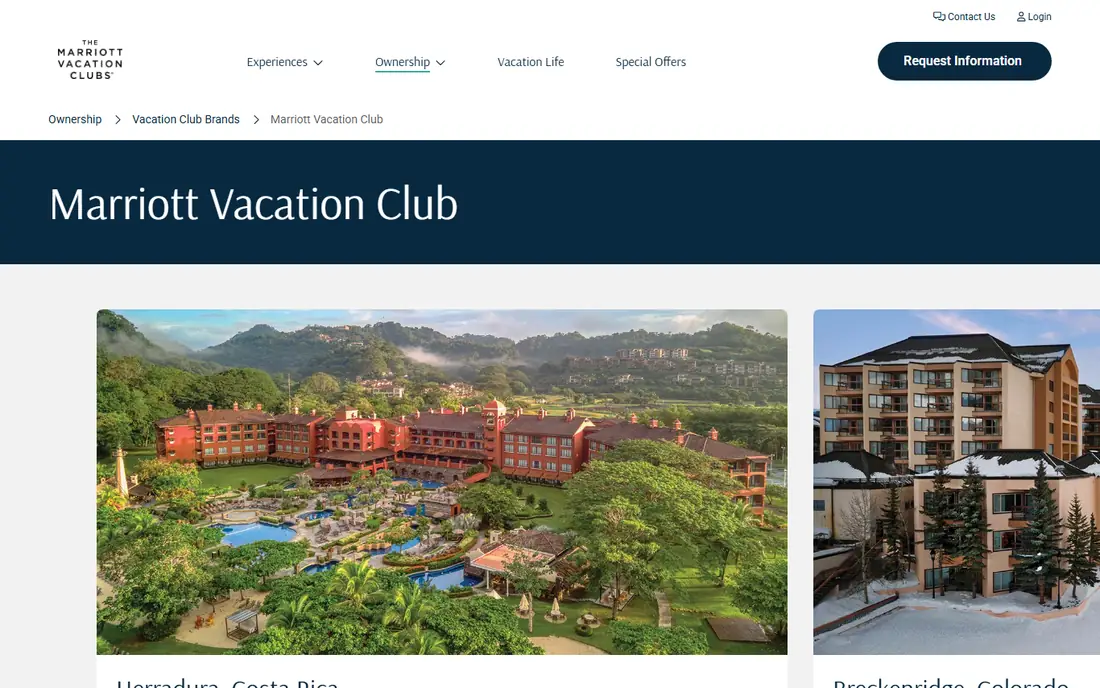
Marriott Vacation Club is the points-based flagship of Marriott Vacations Worldwide, and it appeals to travelers who already stay in Marriott hotels. Points can be used across Marriott Vacation Club resorts and, through exchange, at many other properties. Owner guides put 2026 per-point maintenance near 0.81 dollars per point, so a 2,000-point ownership costs roughly 1,630 dollars a year in maintenance before club dues of roughly 250 to 300 dollars.
That math shows why point totals matter more than nightly rates in a sales pitch. A large package can carry several thousand dollars a year in fees, and those fees tend to rise. Marriott suits buyers who want upscale resorts, flexible destinations, and hotel-brand consistency, and who will use enough points each year to justify the carrying cost.
What we like- Strong points system with hotel ties
- Large portfolio of upscale resorts
- Exchange through Interval International
Watch out for- High per-point developer prices
- Yearly fees rise with point totals
- Complex booking tiers
Starting priceSee website
Free planNo

Hilton Grand Vacations sells deeded interests tied to annual point allotments, and its strength is the Hilton ecosystem. Owners can connect stays with Hilton Honors, and the portfolio is strong in Hawaii, Orlando, Las Vegas, and New York. The newer HGV Max program widens access across more properties, which helps owners who want variety.
Fee levels vary more here than in a pure points system, because fees attach to the deeded interest. Owner reports put smaller packages under 1,000 dollars a year in maintenance at older Las Vegas resorts, while large Hawaii packages run into several thousand dollars. Club dues run in the low 200 dollar range for standard Club, rising toward the low 300s for Max tiers. Hilton Grand Vacations suits buyers who value the Hilton brand and who travel often to its core destinations.
What we like- Hilton Honors integration
- Strong Hawaii and Orlando presence
- HGV Max widens resort access
Watch out for- Deeded structure makes fee comparisons harder
- Newer Hawaii packages carry high fees
- Developer prices are high
Starting priceSee website
Free planNo
Disney Vacation Club is different from the other companies on this list because the product is tied to Disney resorts rather than a general vacation network. Members buy points at a home resort, such as a Walt Disney World or Disneyland property, and use them across Disney Vacation Club resorts. For families who visit Disney parks most years, that focus is the appeal: rooms are larger than standard hotel rooms, and booking windows favor home-resort owners.
The limits are real. Contracts end on fixed dates that vary by resort, so a purchase made today does not last forever. Peak park seasons are the hardest to book, and developer prices carry a Disney premium. Disney Vacation Club suits families with a firm, long-term Disney habit. If Disney is only an occasional trip, a general timeshare network gives more destination choice for the money.
What we like- Direct resort access at Disney parks
- Points work across Disney resorts
- Strong member community
Watch out for- Highest demand at peak park seasons
- Contracts have fixed end dates
- Premium developer prices
Starting priceSee website
Free planNo
Bluegreen Vacations is a mid-size operator with resorts concentrated in the eastern United States, the Midwest, and a few destination spots. Its appeal is a lower entry cost: smaller point packages make it easier to start than the big brands, and points can be exchanged through RCI for stays outside the network. Owner cost guides have shown Bluegreen packages with maintenance fees under 1,000 dollars a year for moderate point totals, though resort-level fees vary.
The smaller network is the main limit. If you travel mostly to the West Coast or internationally, you will rely on exchange more often, and exchange availability is never guaranteed. Bluegreen suits buyers who live near its resorts, travel regionally, and want a modest package rather than a large points commitment.
What we like- Lower entry point packages
- Points plus exchange options
- Many East Coast and Midwest resorts
Watch out for- Smaller network than Wyndham or Marriott
- Fee-per-point varies by resort
- Resale market is thin
Starting priceSee website
Free planNo
Holiday Inn Club Vacations, part of the IHG family, runs family-oriented resorts with a concentration in Florida, the Southeast, and a few mountain and desert locations. The resorts lean toward water parks, kids activities, and larger units, which suits family groups that need space. The IHG connection also gives owners a familiar hotel brand behind the product.
The portfolio is narrower than Wyndham or Marriott, so destination variety is limited, and the most popular Florida weeks book early. Entry costs tend to be lower than the upscale brands, but larger units and peak seasons still carry meaningful yearly fees. Holiday Inn Club Vacations suits families who vacation mainly in the Southeast and who value on-site activities over destination variety.
What we like- Family-focused resorts with water parks and activities
- IHG hotel ties
- Simpler weeks and points mix
Watch out for- Resort locations are concentrated in the Southeast
- Fewer upscale options
- Fees rise with larger units
Starting priceSee website
Free planNo
Westgate Resorts is one of the largest privately held timeshare companies in the United States, with resorts in Orlando, Las Vegas, Gatlinburg, Branson, and other leisure destinations. Its size gives owners a solid range of US vacation spots, and its Orlando and Las Vegas resorts are among its strongest draws. Products mix deeded weeks and points-style ownership depending on the resort.
Westgate also carries the most mixed owner reputation on this list, with frequent complaints about sales pressure and about resale values that fall far below developer prices. Fee levels vary by property, so buyers should compare the specific resort contract rather than any company average. Westgate suits buyers who have researched one specific resort, understand its fees, and plan to use it often.
What we like- Large portfolio across the US
- Many Orlando and Las Vegas options
- Flexible weeks and points products
Watch out for- Aggressive sales reputation
- Resale values are low
- Fee levels vary widely by property
Starting priceSee website
Free planNo
Hyatt Vacation Club, part of Marriott Vacations Worldwide, offers a smaller, more upscale portfolio than its sister brand Marriott Vacation Club. Resorts sit in destinations such as Hawaii, Colorado, Florida, and the Caribbean, and the emphasis is on service and residential-style units rather than sheer choice. Points can be exchanged through Interval International for stays beyond the portfolio.
The small portfolio is the main drawback. Owners who want a new destination every year will hit the limits of the network quickly and lean on exchange. Developer prices also carry a premium for the Hyatt name. Hyatt Vacation Club suits buyers who prefer upscale resorts, who like the destinations it covers, and who do not mind exchanging for variety.
What we like- Upscale resorts with strong service
- Hyatt hotel ties
- Points exchange through Interval International
Watch out for- Smallest portfolio on this list
- Fewer budget options
- Developer prices carry a premium
How we chose
We started from the size and stability of each company, since a timeshare contract can last decades and the operator needs to still be there in twenty years. We favored companies with large resort networks, clear points or weeks systems, and published fee guidance from owner reports and industry guides. We excluded exit companies, resale brokers, and rental platforms, since this list is about the ownership companies themselves. Prices in this category are mostly quote-based or vary by resort, so where a figure comes from a third-party guide rather than a vendor price page, we say so in the text.
Buying guide
Start by deciding how you actually travel. If you take one family trip a year to the same kind of place, a deeded week at a single resort can be simpler and cheaper than a points package. If your destinations change every year, points give you more choice but add booking rules, point charts, and blackout pressure at peak times.
Next, compare the full yearly cost, not the nightly cost in a sales pitch. Add maintenance fees, club dues, exchange membership, and any reservation fees, then divide by the nights you will realistically use. If that number is higher than booking a comparable hotel or rental, the timeshare is not saving you money.
Then check the resale market before you buy from a developer. Similar ownerships often sell on the resale market for a small fraction of developer prices, though resale buyers sometimes lose some developer perks. A developer purchase can still make sense if those perks matter to you, but you should know the gap before you sign.
Finally, protect yourself on exit. Your state rescission period, usually a few days to two weeks, is the clean window to cancel after signing. After that, exit options are limited to selling, giving back through a developer deed-back program if offered, or working with an attorney. Any company that demands a large upfront fee and promises a guaranteed cancellation should be treated as a scam risk.
Frequently asked questions
Is a timeshare a good investment?
No. A timeshare is a vacation purchase, not an investment. Resale prices are usually far below developer prices, and yearly fees continue regardless of use. Buy it only if the vacations themselves are worth the total cost to you.
How much are annual timeshare fees?
Industry guides project the average 2026 maintenance fee near 1,550 to 1,600 dollars a year, before club dues and special assessments. Large point packages at prime resorts can cost several thousand dollars a year in total fees.
Can I sell my timeshare later?
Yes, but expect a low resale price and a slow sale. Some brands run deed-back or surrender programs for owners in good standing, so ask the developer about those options before paying an outside exit company.
What is the biggest timeshare scam to avoid?
Upfront-fee exit scams. A company that charges thousands of dollars in advance and promises to cancel your contract, often after a cold call, is a major red flag. Legitimate help usually comes from the developer, a licensed attorney, or a state consumer protection office.
Should I buy resale instead of from the developer?
Often yes, if you do not need developer-only perks. Resale ownerships can cost far less for the same resort and unit type, but check which benefits transfer, since some exchange and bonus perks are developer-only.
Sources we checked (0)
Is your product missing or out of date?
We review this list regularly. Vendors can request a listing, send updated pricing or ask about featured placement.

Shihab Mia · Founder, Rankite
Shihab has 5+ years in B2B and SaaS SEO. He writes Rankite's software buying guides from pricing pages, documentation and public user reviews. More about Shihab.
 Wyndham Destinations
 Marriott Vacation Club
 Hilton Grand Vacations
 Disney Vacation Club
 Bluegreen Vacations
 Holiday Inn Club Vacations
 Westgate Resorts
 Hyatt Vacation Club