How we make this list: we compare pricing pages, product documentation and public user reviews. Rankite is independent; if a vendor ever pays for a featured spot, that listing is clearly labeled Partner.
Key takeaways
- Optro (formerly AuditBoard) and TeamMate are the pure-play internal audit leaders, with decades of focus on audit workflows specifically.
- Diligent One, MetricStream, LogicGate, and Onspring sell broader GRC platforms where audit is one module; choose them when risk and compliance need the same system.
- Workiva fits finance-led teams running SOX programs, since audit evidence connects directly to financial reporting.
- Hyperproof and Ideagen suit continuous compliance models, where audits are ongoing rather than annual events.
- No vendor here publishes pricing or offers a self-serve trial, so plan for demos, reference calls, and a sales cycle measured in weeks.
Quick comparison
| Tool | Best for | Starting price | Free plan |
|---|
 Optro Optro | internal audit teams at large enterprises | See website | No |
 Diligent One Diligent One | boards and GRC leaders wanting one platform | See website | No |
 TeamMate TeamMate | internal audit departments with global teams | See website | No |
 Onspring Onspring | configurable GRC without heavy IT | See website | No |
 Workiva Workiva | SOX and financial audit teams | See website | No |
 LogicGate LogicGate | custom GRC workflows at enterprise scale | See website | No |
 MetricStream MetricStream | large enterprises standardizing GRC | See website | No |
 Hyperproof Hyperproof | continuous compliance and audit readiness | See website | No |
 Ideagen Ideagen | regulated industries needing audit plus quality | See website | No |
Is your product missing or out of date?
We review this list regularly. Vendors can request a listing, send updated pricing or ask about featured placement.
The best audit management software
#1
Optro
Best for: internal audit teams at large enterprises
Visit optro.ai
Starting priceSee website
Free planNo
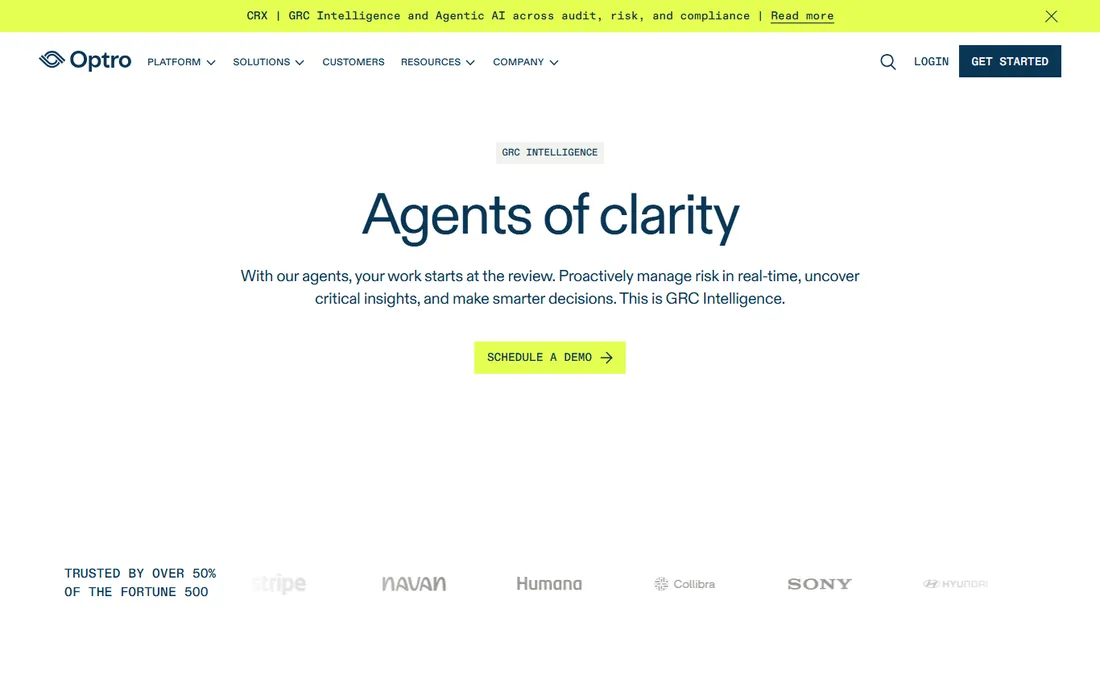
Optro is the new name for AuditBoard, rebranded in 2026 around AI-driven GRC, and it remains the reference point for internal audit software. The platform covers the full audit lifecycle: risk-based planning, fieldwork, workpaper management, findings tracking, and reporting, with connected modules for SOX, risk, and ESG. Its customer base, more than half of the Fortune 500, means the product has been tested against just about every audit scenario.
That maturity comes with enterprise buying dynamics: demos, quotes, and implementation timelines measured in months for large deployments. Smaller audit shops may find it more than they need. But for a chief audit executive building a modern internal audit function, Optro is the default shortlist entry, and competitors get evaluated against it.
What we like- Purpose-built for audit, risk, and compliance workflows
- Trusted by over half the Fortune 500
- Named a Leader in Gartner's GRC evaluations
Watch out for- Enterprise pricing through sales
- Implementation is a real project
Starting priceSee website
Free planNo
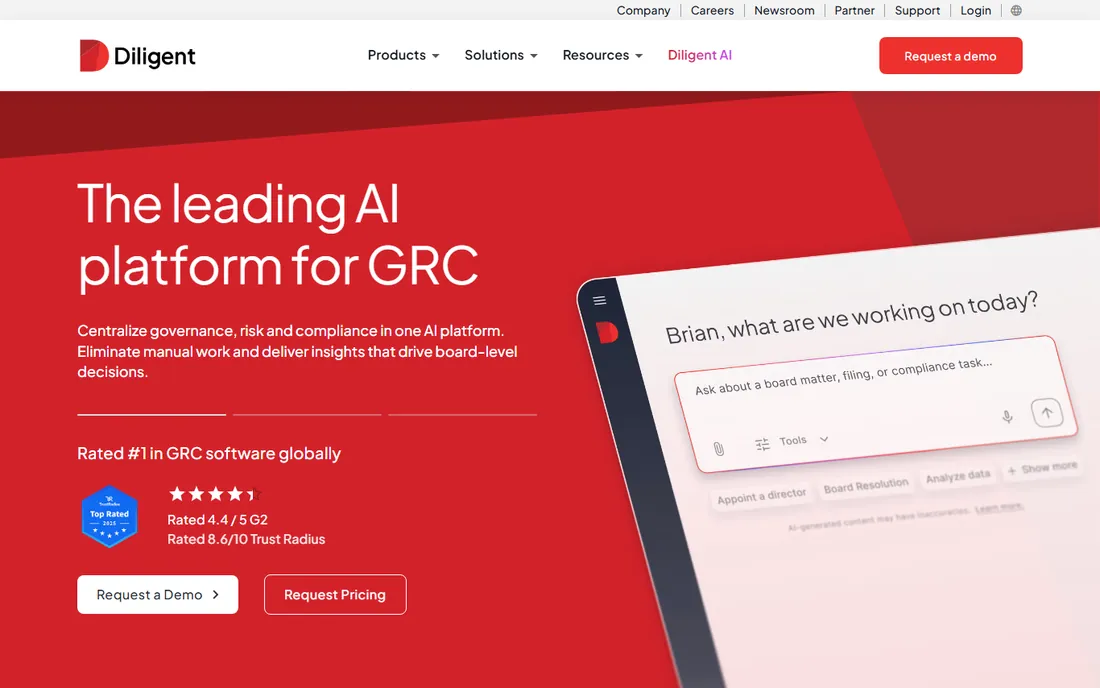
Diligent One approaches audit from the top down. Where Optro starts with the audit team, Diligent starts with the boardroom and extends downward through governance, risk, and compliance into audit execution. For organizations that want directors, executives, and auditors working from the same view of risk, that unified model is the selling point.
The platform's 25,000-plus customers span industries and company sizes, and Diligent positions flexible pricing for leaner teams. In practice, the sales process is still enterprise, and audit teams evaluating it should confirm the audit module's depth matches their methodology rather than assuming the platform's breadth covers everything. It fits best where audit, risk, and compliance report into one GRC function.
What we like- Unifies board governance, risk, compliance, and audit
- 25,000+ customers worldwide
- AI features across the platform
Watch out for- Breadth can exceed what a pure audit team needs
- Pricing is quote-based
Starting priceSee website
Free planNo
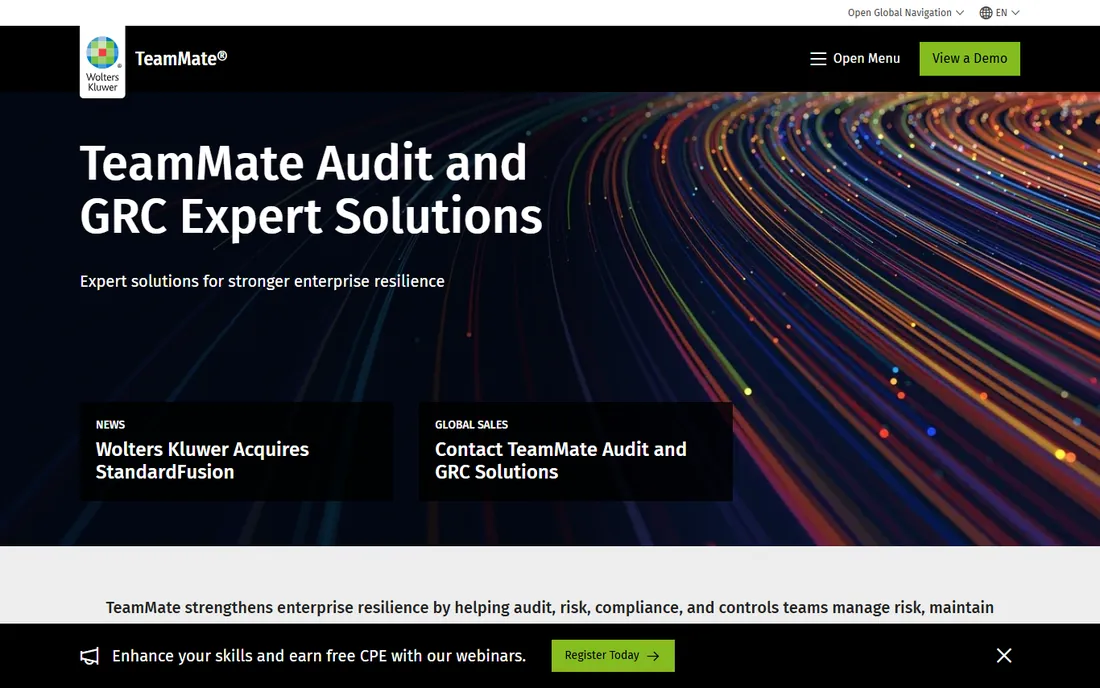
TeamMate has been the working tool of internal audit departments longer than most competitors have existed. Its strength is methodology: risk assessment, audit planning, fieldwork documentation, and issue tracking built around how internal auditors actually work, with multi-language and multi-currency support for global teams. Wolters Kluwer's ownership adds stability and a deep bench of regulatory content.
The product's age is visible in the user experience, which feels more traditional than newer cloud rivals. Organizations that prioritize proven audit methodology over modern interfaces will not mind. Global internal audit functions, especially in regulated industries, keep choosing TeamMate because it handles their complexity without drama. Expect a classic enterprise buying process.
What we like- Decades of focus on internal audit methodology
- Operates in 150 countries with 19 languages
- Backed by Wolters Kluwer
Watch out for- Interface reflects its long history
- Enterprise sales process
Starting priceSee website
Free planNo
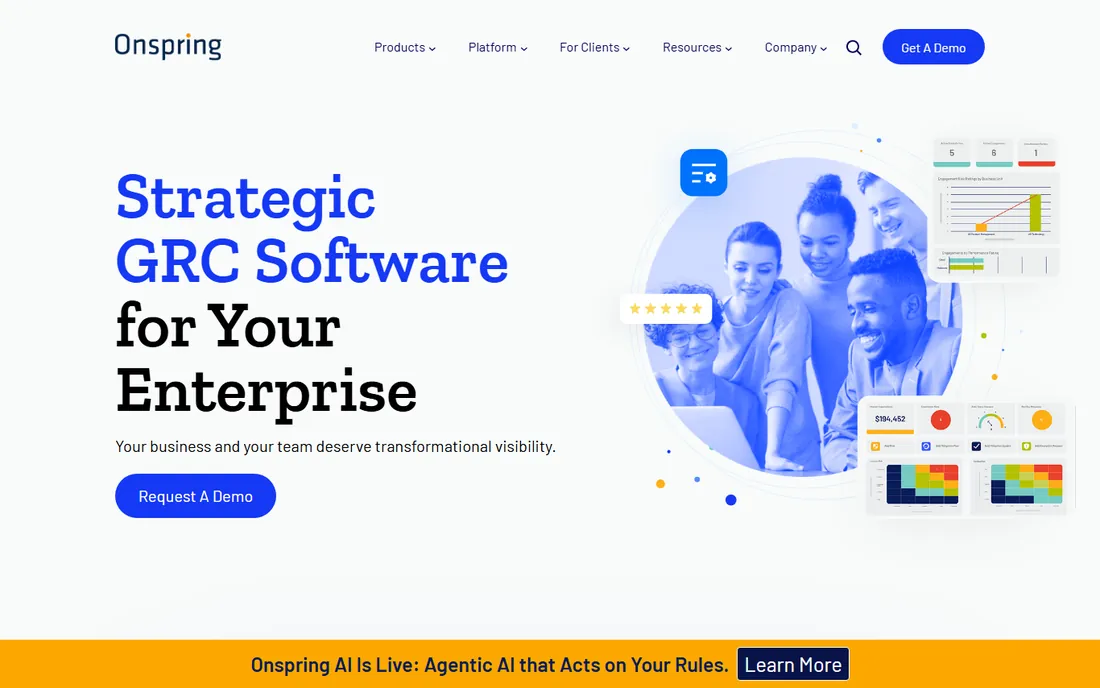
Onspring's pitch is configurability without developers. Business users build audit workflows, forms, and reports through no-code tools, which means the audit team can adapt the system as methodologies change instead of filing IT tickets. The company claims first programs go live in under 30 days, and its sustained top ranking in Software Reviews' GRC evaluations suggests customers believe the usability story.
The flip side of flexibility is ownership: someone on your team becomes the Onspring administrator, and that role needs real time. Pricing is quote-based. Onspring suits mid-size to large organizations that want GRC software shaped around their processes rather than a rigid product they must conform to. Teams that prefer out-of-the-box audit methodology may find it too open-ended.
What we like- No-code configuration business users can manage
- Top-ranked in Software Reviews GRC evaluations
- First programs live in under 30 days
Watch out for- Pricing requires a sales conversation
- Flexibility demands ongoing admin attention
Starting priceSee website
Free planNo
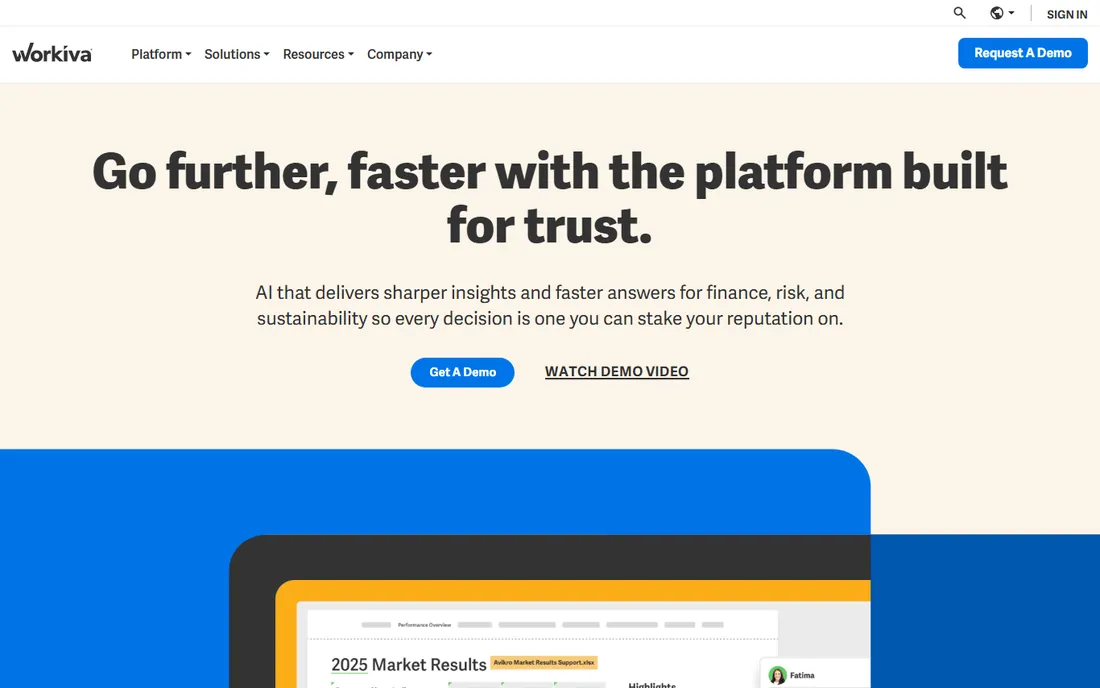
Workiva grew up in financial reporting, and that heritage defines its audit offering. Controls testing, evidence collection, and audit documentation connect directly to the financial reports and filings the controls are meant to protect, which is exactly what SOX teams need. With 6,700-plus customers, many of them public companies, the platform is proven at the scale where audit failures make headlines.
The product is unapologetically enterprise: quote-based pricing, implementation support, and a platform that spans finance, risk, sustainability, and capital markets alongside audit. A five-person internal audit team at a private company will find it heavy. A SOX program at a public company will find it purpose-built. Match the tool to the regulatory burden.
What we like- Audit evidence connects directly to financial reporting
- Trusted by 6,700+ companies
- Strong controls and SOX workflows
Watch out for- Premium enterprise pricing
- More platform than small audit teams need
Starting priceSee website
Free planNo
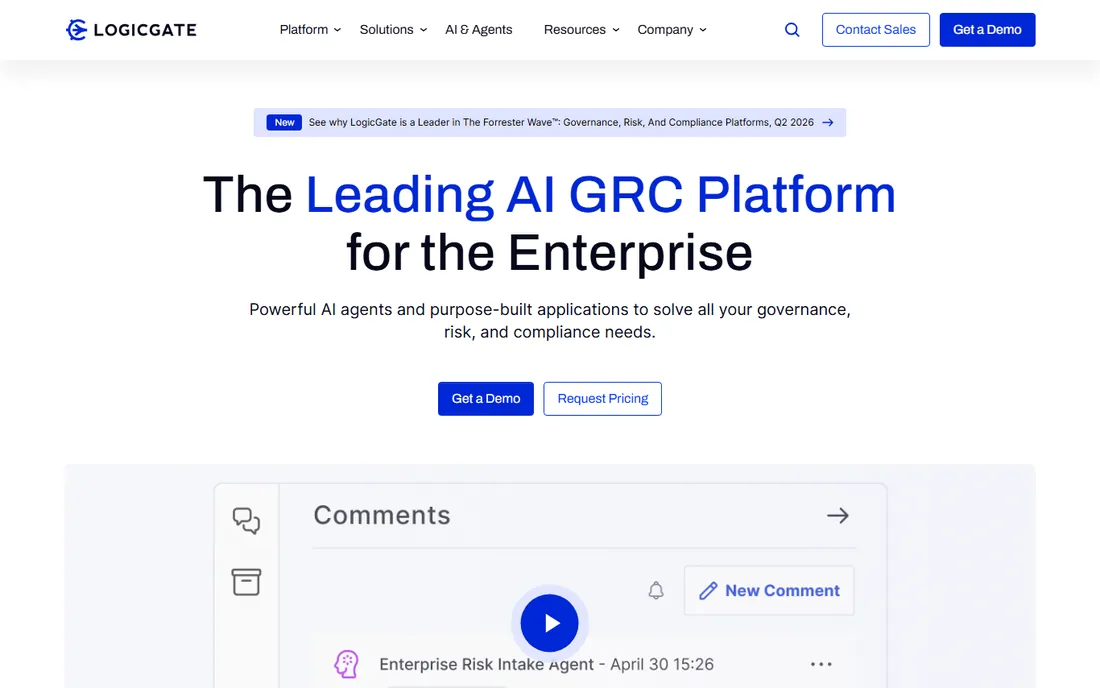
LogicGate's Risk Cloud platform treats GRC as a set of connected applications rather than a single product, and audit management is one of them. The technical differentiator is a no-code graph database that maps how controls, risks, assets, and processes relate, giving program owners a multi-hop view that flat lists cannot. GRC agents and automated control testing push the platform toward continuous compliance.
With 20,000-plus active users and recognition as a Gartner Magic Quadrant Leader for GRC, LogicGate has earned its enterprise credentials. Buyers focused purely on internal audit should evaluate the audit application specifically, since the platform's energy goes toward the broader GRC vision. Organizations that want audit connected to risk and compliance programs will get more from it than audit-only shops.
What we like- Risk Cloud's no-code graph database models complex relationships
- 20,000+ active users
- Implementation averaging around 96 days per the vendor
Watch out for- Audit is one application among many
- Pricing is quote-based
Starting priceSee website
Free planNo
MetricStream is the analyst favorite in enterprise GRC, ranked at the top by Chartis and named a Leader by IDC, Gartner, and Verdantix. Its connected GRC platform includes a dedicated audit management module covering planning, scheduling, fieldwork, and reporting, unified with risk, compliance, and issue management. For large enterprises standardizing on one GRC vendor, MetricStream is built for exactly that decision.
Everything about the product assumes scale: the sales cycle, the implementation, and the price. Mid-market companies will find lighter tools faster to deploy and easier to administer. But for global enterprises with complex audit universes spanning business units and regulators, MetricStream's breadth and analyst validation make it a natural finalist.
What we like- Top-ranked across analyst evaluations including Chartis and IDC
- AI-first connected GRC platform
- Dedicated audit management module
Watch out for- Enterprise sales cycle and implementation scope
- Heavyweight for the mid-market
Starting priceSee website
Free planNo
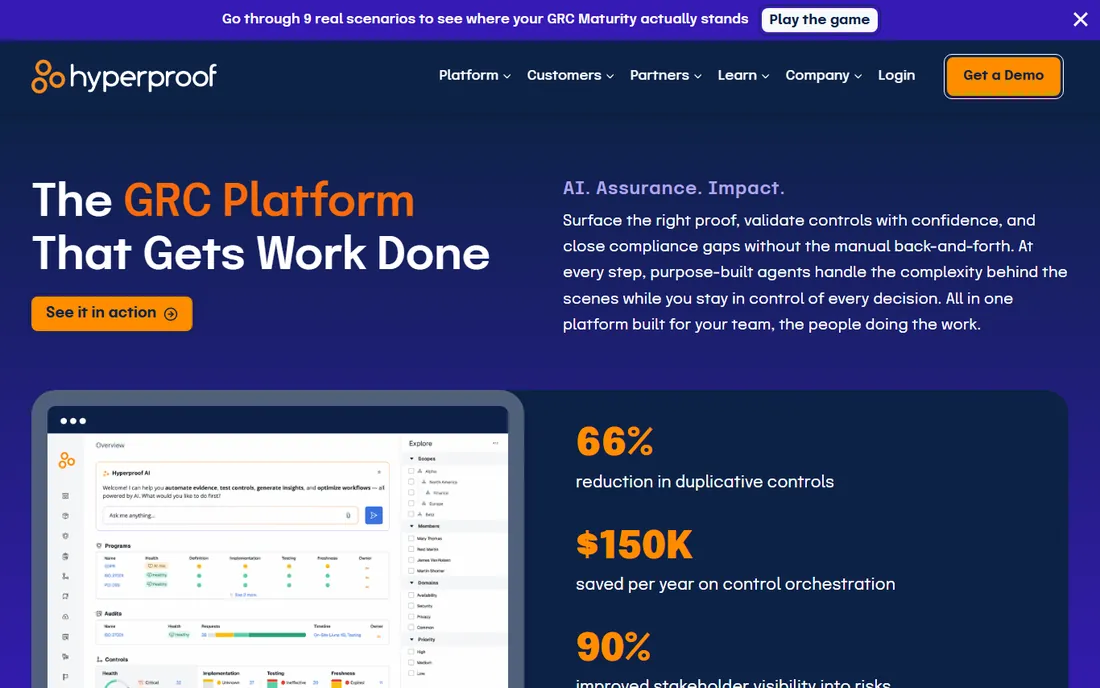
Hyperproof is built for the continuous audit model: instead of scrambling before an annual audit, controls are tested ongoing, evidence is collected automatically from integrated systems, and the organization stays audit-ready by default. With 200-plus integrations spanning cloud providers, identity tools, and ticketing systems, evidence gathering requires less manual chasing than traditional approaches.
The platform covers compliance frameworks, risk, and trust centers alongside audit, which suits technology companies managing SOC 2, ISO 27001, and customer security questionnaires simultaneously. A FedRAMP-authorized government environment serves public-sector needs. Hyperproof is younger than Optro or TeamMate, so buyers should check reference customers in their industry, but the product vision matches where audit practice is heading.
What we like- Automates control mapping and evidence collection
- 200+ integrations with everyday tools
- FedRAMP-authorized Gov environment available
Watch out for- Quote-based pricing
- Younger vendor than the incumbents
#9
Ideagen
Best for: regulated industries needing audit plus quality
Visit ideagen.com
Starting priceSee website
Free planNo
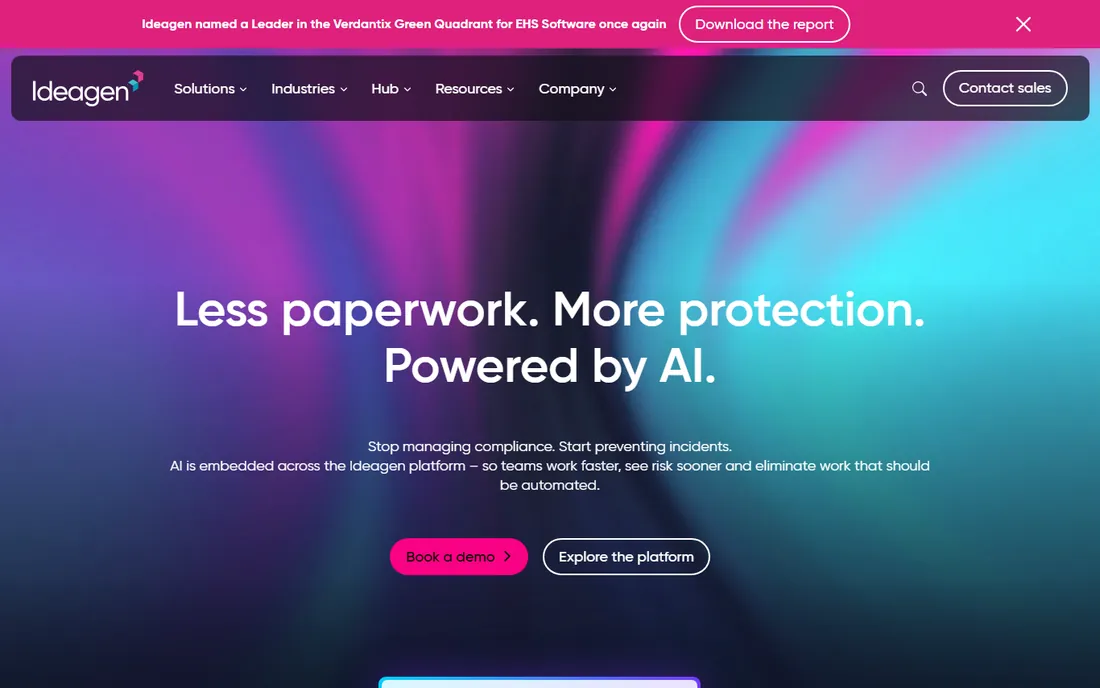
Ideagen's internal audit product grew out of Pentana, a long-standing audit methodology tool, and it shows in the workflow depth: risk-based planning, fieldwork, and reporting built for career auditors. Around it sits a broad platform covering quality management, EHS, and compliance, which makes Ideagen compelling for regulated industries like healthcare, aviation, and manufacturing where audits span operational domains.
With 18,500-plus organizations as customers, the vendor has scale and staying power. The trade-off is focus: buyers who need only internal audit may find the wider suite distracting, while those managing quality and safety audits alongside financial ones get a unified system. Like everything else in this category, pricing starts with a conversation.
What we like- Internal audit module with deep methodology roots
- 18,500+ organizations served
- Combines audit with quality, EHS, and compliance
Watch out for- Broad suite can overwhelm audit-only buyers
- Pricing is quote-based
What actually makes audits efficient
Software does not make audits efficient by itself. It makes them efficient by removing the manual work that eats audit hours: chasing evidence, version-controlling workpapers, and following up on findings. When you evaluate tools, ask each vendor to demonstrate those three workflows specifically, not the dashboard.
Evidence collection is the biggest time sink. Tools that integrate with your systems, Hyperproof's 200-plus integrations or Workiva's connected reporting, pull evidence automatically. Tools without integrations leave your team uploading files by hand, which is barely better than email. Ask how evidence maps to controls and whether the mapping survives when frameworks update.
Findings follow-up is where audits actually create value, and it is where most programs stall. The tool should track every finding to remediation with owners, due dates, and escalation, and it should make overdue items visible without manual reports. During demos, ask to see the overdue-findings view. If the vendor cannot show it in two clicks, keep looking.
What audit software really costs
Nobody in this category publishes prices, which frustrates buyers but reflects reality: cost depends on users, modules, data volume, and implementation scope. A mid-market internal audit team might pay tens of thousands per year; a global enterprise running full GRC can pay several hundred thousand. Implementation services often add 50 to 100 percent of the first-year license cost.
Negotiate on structure, not just price. Ask whether pricing is per user, per module, or platform-wide, and model the cost at your three-year user count, not today's. Ask what implementation includes and what is billed separately. Ask about price caps on renewal, because first-year discounts are common and the second-year increase is where budgets break.
Also budget the internal cost. Someone on your team will administer the system, migrate historical audits, and train auditors. That work is real whether the vendor quotes it or not. The cheapest license with a failed adoption costs more than an expensive one your team actually uses.
How we chose
We opened each vendor's homepage on 2026-10-14 and recorded product positioning, customer counts, and analyst recognitions exactly as published. We read product documentation to confirm audit-specific capabilities, deployment models, and integration claims, then checked public reviews on G2, Capterra, and Reddit for recurring strengths and complaints. We replaced one shortlisted vendor whose domain now redirects to an unrelated company with an equivalent audit product, and we used current brand names where renames had occurred. No vendor paid for placement, and we did not run hands-on trials.
Frequently asked questions
What is the difference between audit management software and GRC software?
Audit management software focuses on the audit lifecycle: planning, fieldwork, evidence, findings, and reporting. GRC software covers governance, risk, and compliance broadly, with audit as one module. Pure-play tools like Optro and TeamMate go deeper on audit methodology; GRC platforms like Diligent One and MetricStream connect audit to enterprise risk.
How long does it take to implement audit management software?
Cloud tools for mid-size teams typically go live in one to three months. Enterprise deployments with data migration, integrations, and methodology configuration take three to nine months. The biggest variable is your own readiness: clean audit universes and defined workflows shorten every implementation.
Can small internal audit teams justify dedicated software?
It depends on audit volume and regulatory pressure. A three-person team running twenty audits a year often manages with structured tools, though even small teams benefit from centralized findings tracking. Once evidence requests, follow-ups, or SOX testing consume weeks of manual work, the software pays for itself.
Does audit software replace external auditors?
No. It makes their work faster and your preparation less painful. External auditors still apply independent judgment, but organized workpapers, mapped evidence, and clear finding histories reduce their hours, which can reduce their fees. Several vendors explicitly market this time saving.
How does audit software handle evidence collection?
Modern tools connect to business systems and pull evidence automatically, map it to controls and requirements, and flag gaps. Traditional tools rely on manual uploads with version control. During evaluation, ask each vendor to show evidence collection for one of your actual controls rather than accepting a generic demo.
Sources we checked (9)
- https://optro.ai/
- https://www.diligent.com/
- https://onspring.com/
- https://www.wolterskluwer.com/en/solutions/teammate
- https://workiva.com/
- https://logicgate.com/
- https://metricstream.com/
- https://hyperproof.io/
- https://ideagen.com/
Is your product missing or out of date?
We review this list regularly. Vendors can request a listing, send updated pricing or ask about featured placement.

Shihab Mia · Founder, Rankite
Shihab has spent more than a decade helping SaaS and e-commerce brands grow through search. He writes Rankite's software buying guides from pricing pages, documentation and public user reviews. More about Shihab.