How we make this list: we compare pricing pages, product documentation and public user reviews. Ratings come from G2, Capterra or Trustpilot, with the date we checked them.
Key takeaways
- Per-seat pricing changes the real cost fast: Sprout Social starts at $79 per seat per month billed annually, while Hootsuite starts at $99 per user per month billed annually, so a five-person team pays very different totals for similar-looking plans.
- Rival IQ and Socialinsider are the most focused choices when competitor benchmarking is the main job, not publishing or inbox management.
- Metricool and Agorapulse give smaller teams a workable entry point, with free plans or lower starting prices, but competitor depth is thinner on the cheapest tiers.
- Brandwatch and Semrush suit teams that need listening or search context around social data, and both require a larger budget or a sales conversation for full access.
- No single tool covers every network equally well, so check TikTok, LinkedIn, and Instagram coverage for your specific rivals before you commit.
Quick comparison
| Tool | Best for | Starting price | Free plan |
|---|
 Sprout Social | Mid-market teams needing reports and listening | $79 per user/month (billed annually) | Free trial (30 days) |
 Hootsuite | Large teams combining publishing and benchmarking | $99 per user/month (billed annually) | Free trial (14 days) |
 Rival IQ | Side-by-side competitor benchmarking | $239 per user/month (billed monthly) | Free trial (14 days) |
 Socialinsider | Cross-network content and benchmark analysis | $99 per user/month (billed monthly) | Free trial (14 days) |
 Metricool | Small teams and agencies on a budget | $20 per user/month (billed annually) | Yes |
 Agorapulse | Teams proving social ROI | $79 per user/month (billed annually) | Yes |
 Semrush | Teams linking social to search and traffic | $139.95 per user/month (billed monthly) | Yes |
 BuzzSumo | Finding rival content that earns attention | $199 per user/month (billed monthly) | Free trial (30 days) |
 Brandwatch | Enterprise listening and share of voice | See website | No |
Is your product missing or out of date?
We review this list regularly. Vendors can request a listing, send updated pricing or ask about featured placement.
#1Sprout Social
Best for: Mid-market teams needing reports and listening4.4/5 on
G2 (6,880 reviews, checked Oct 2026)
Visit sproutsocial.com
Starting price$79 per user/month (billed annually)
Free planFree trial (30 days)
Sprout Social works best when one team owns publishing, customer replies, and reporting, and needs those numbers to line up. Its competitive reports compare your profiles against rivals on follower growth, engagement, and posting patterns, which makes monthly reporting much easier to defend in a meeting. The reporting builder also lets you combine paid and organic results, so a social lead can show what actually moved, not just what was posted.
The catch is price and plan boundaries. Essentials starts at $79 per seat per month billed annually, but it does not include the unified inbox, so small teams that need reply management must step up to Standard at $199 per seat per month billed annually. Listening is sold separately on top of that for many buyers. If your main need is a simple rival benchmark, Sprout may be more tool than you need. If you need reporting that executives will read, it earns its place on the shortlist.
What we like- Strong cross-network reports
- Competitive reports on higher plans
- Unified inbox on Standard and above
Watch out for- Per-seat cost rises quickly
- Full listening is a paid add-on
- Essentials lacks the inbox
#2Hootsuite
Best for: Large teams combining publishing and benchmarking4.3/5 on
G2 (7,433 reviews, checked Oct 2026)
Visit hootsuite.com
Starting price$99 per user/month (billed annually)
Free planFree trial (14 days)
Hootsuite pairs competitor tracking with the publishing workflow most large teams already use. You can follow up to 20 competitors on some plans, compare posting frequency and engagement, and place your results against industry benchmarks. That context matters when a rival suddenly grows: you can see if the whole category moved or if one account changed tactics.
Approval workflows, message routing, and branded reports sit on higher plans, with Advanced at $399 per user per month billed annually. Teams that need strict sign-off should budget for that tier from the start, not discover it after rollout. Hootsuite also charges per user, so adding community managers and analysts increases the bill in a straight line. It fits best when one platform must cover scheduling, inbox, listening basics, and competitor reports for a team of five or more.
What we like- Competitor benchmarks on all plans
- Wide network coverage
- Industry benchmarks for context
Watch out for- Approvals require the Advanced plan
- Per-user pricing adds up
- Enterprise features are gated
#3Rival IQ
Best for: Side-by-side competitor benchmarking4.5/5 on
G2 (49 reviews, checked Oct 2026)
Visit rivaliq.com
Starting price$239 per user/month (billed monthly)
Free planFree trial (14 days)
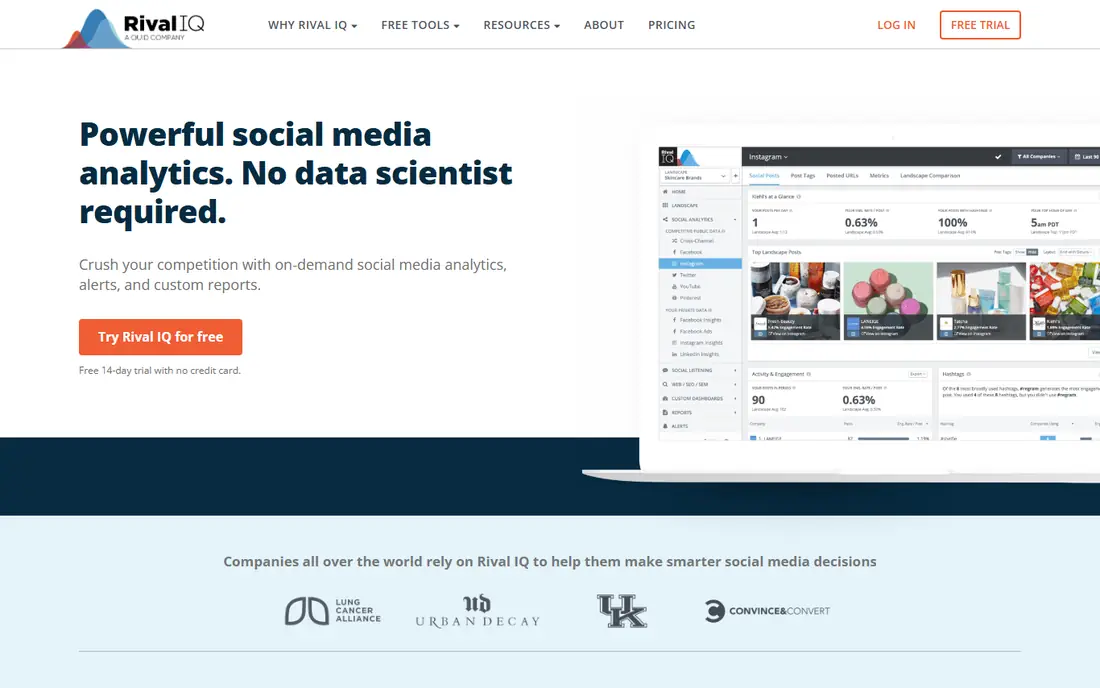
Rival IQ is built around one question: how do you stack up against specific rivals, post by post and month by month. Its reports break down engagement rate, posting cadence, hashtag use, and top-performing content for each competitor you track. Agencies like it because the reports are easy to export and explain to a client who does not live inside social tools all day.
The trade-off is scope. Rival IQ is not a full publishing suite, and its starting price of $239 per month puts it above generalist tools for a solo marketer. It makes sense when benchmarking is a recurring deliverable, such as a monthly client report or a quarterly strategy review. If you only need an occasional rival check, a cheaper analytics tool or native insights may cover it.
What we like- Clear head-to-head benchmarking
- Agency-friendly reports
- Long historical comparisons
Watch out for- High starting price
- No free plan
- Publishing features are limited
#4Socialinsider
Best for: Cross-network content and benchmark analysis4.7/5 on
G2 (142 reviews, checked Oct 2026)
Visit socialinsider.io
Starting price$99 per user/month (billed monthly)
Free planFree trial (14 days)
Socialinsider lets you analyze public profiles without needing access to a rival's account, which is exactly what competitor work requires. You can compare engagement, growth, and content mix across Instagram, TikTok, Facebook, LinkedIn, YouTube, and X, then drill into which posts performed best and why. Content pillar tagging helps a strategist see if a rival leans on product posts, education, humor, or community content.
Because it is analytics-first, teams that also need scheduling will pair it with another tool. Profile limits matter too: tracking many rivals across many networks pushes you to a higher plan. For a strategist or analyst whose deliverable is insight, not posts, Socialinsider gives more depth per dollar than most all-in-one suites.
What we like- Benchmarks any public profile
- Content pillars and post-level detail
- Up to four years of history on some plans
Watch out for- No publishing suite
- Costs rise with profile count
- Learning curve for new analysts
#5Metricool
Best for: Small teams and agencies on a budget4.5/5 on
G2 (98 reviews, checked Oct 2026)
Visit metricool.com
Starting price$20 per user/month (billed annually)
Free planYes
Metricool is the practical pick for a small business or freelancer who needs competitor tracking without an enterprise contract. The free plan covers basic analytics and scheduling, and paid plans from $20 per month billed annually add competitor analysis, more brands, and reporting options. Agencies like the per-brand pricing model, since adding a client does not always mean adding a seat.
Limits show up at the edges. The free plan has posting caps and network gaps, and competitor reports are less detailed than Rival IQ or Socialinsider for deep content analysis. Still, for a team tracking five to ten rivals and reporting monthly, Metricool covers the core job at a fraction of the cost of the big suites. Start here if budget is the binding constraint.
What we like- Low entry price
- Competitor tracking included
- Looker Studio connection for custom reports
Watch out for- Free plan excludes LinkedIn and X competitor data
- Depth is thinner than specialist tools
- Support is mainly online
#6Agorapulse
Best for: Teams proving social ROI4.5/5 on
G2 (975 reviews, checked Oct 2026)
Visit agorapulse.com
Starting price$79 per user/month (billed annually)
Free planYes
Agorapulse suits a team that must connect social work to website traffic and conversions. Its reports link social activity to Google Analytics results, which helps a marketing manager answer the question every finance lead asks: what did social actually contribute. Competitor comparison reports sit alongside owned analytics, so you can benchmark without switching tools.
The profile cap deserves attention. Public plans cover up to 10 social profiles, with extra profiles billed separately, so a brand with many local pages or an agency with many clients should model the total cost carefully. Agorapulse also charges per user, which adds up for larger teams. It is a strong fit for a focused brand team that values inbox quality and ROI reporting over deep listening.
What we like- Strong inbox and reporting
- Competitor comparison reports
- Google Analytics connection for ROI
Watch out for- Profile cap of 10 on public plans
- Per-user pricing
- Listening depth is limited on lower tiers
#7Semrush
Best for: Teams linking social to search and traffic4.4/5 on
G2 (4,035 reviews, checked Oct 2026)
Visit semrush.com
Starting price$139.95 per user/month (billed monthly)
Free planYes
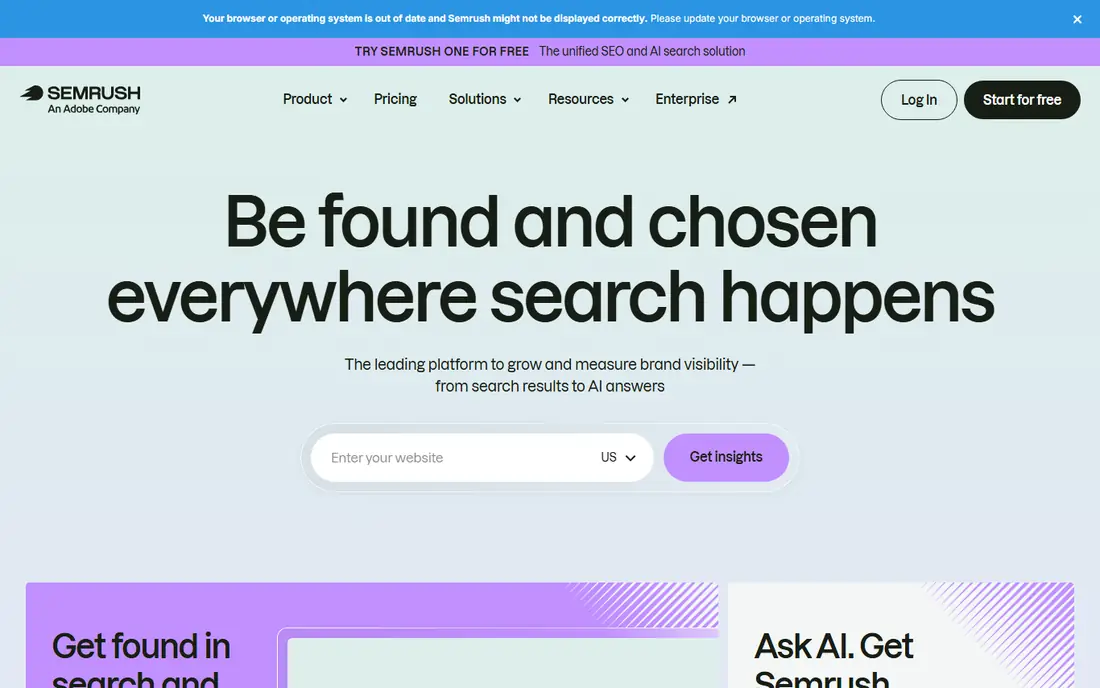
Semrush is not a pure social tool, and that is the point for some buyers. Its Social Tracker follows rival accounts, posting activity, and engagement, while the rest of the platform shows search rankings, paid ads, and website traffic for the same rivals. A strategist can then see if a competitor's social push lines up with a search campaign or a traffic spike.
Social depth alone does not beat Rival IQ or Socialinsider. Semrush social reporting is solid for benchmarking but thinner on post-level creative analysis. The price also buys a large SEO suite, so it only makes sense if your team will use that side too. For a team that already pays for Semrush for search, adding social competitor tracking costs nothing extra beyond the plan you hold.
What we like- Social tracker plus SEO and traffic data
- Broad competitor intelligence
- Useful for agencies with mixed clients
Watch out for- Social features are not as deep as specialists
- Price reflects a full marketing suite
- Learning curve is real
#8BuzzSumo
Best for: Finding rival content that earns attention4.5/5 on
G2 (107 reviews, checked Oct 2026)
Visit buzzsumo.com
Starting price$199 per user/month (billed monthly)
Free planFree trial (30 days)
BuzzSumo answers a different competitor question: which articles, videos, and posts actually earned shares and links. You can search a rival domain, see its most shared content, and track new content as it appears. That makes it valuable for a content lead planning the next quarter, because it shows formats and topics that already proved they can travel.
It is less useful as a day-to-day social dashboard. Engagement metrics focus on shares and links rather than full platform analytics, and the $199 monthly starting price is hard to justify if you only need follower benchmarks. Pair BuzzSumo with a cheaper social analytics tool when content discovery is the gap, not reporting.
What we like- Finds top shared content by topic or domain
- Content alerts for rivals
- Strong for content strategy research
Watch out for- Expensive for social-only use
- Social network coverage is narrower
- Interface takes time to learn
#9Brandwatch
Best for: Enterprise listening and share of voice4.4/5 on
G2 (730 reviews, checked Oct 2026)
Visit brandwatch.com
Starting priceSee website
Free planNo
Brandwatch is the enterprise option for teams that need to hear the whole category conversation, not just track a handful of profiles. Its listening engine covers social posts, news, blogs, and forums, and it can measure share of voice, sentiment shifts, and emerging topics across markets. Large brands use it to spot a crisis early or to test how a campaign landed in different regions.
Pricing is quote-based, which means budgeting requires a sales conversation and a clear scope for mentions, users, and data history. Setup and training also take longer than a self-serve analytics tool. Small teams should skip Brandwatch unless listening is a core, funded need. For a global brand with many markets, it is one of the few tools that can carry that workload.
What we like- Very large listening coverage
- Share of voice and sentiment analysis
- Strong for global brands
Watch out for- No published starting price
- Implementation takes time
- Overkill for small teams
How we chose
We started from vendor pricing pages, product documentation, and public review sites including G2, Capterra, and Reddit threads where users describe plan limits in practice. We kept only tools that offer a real competitor feature, such as tracking public rival profiles, benchmarking engagement, or measuring share of voice, and we dropped general schedulers that only report on your own accounts. We weighed network coverage, report quality, pricing model, and fit for different team sizes, and we favored tools that publish clear limits on profiles, seats, or history so buyers can compare totals, not just headline prices.
What to check before you pay
Price is only one part of the decision. A tool that looks cheap per month can become expensive once you add seats, profiles, or data history, and a tool that looks expensive can save time if it replaces two other subscriptions.
Count seats, profiles, and rivals separately
Per-seat tools charge for every teammate, per-brand tools charge for every client, and profile caps limit how many accounts you can track. Write down your real numbers before a trial: team size, owned profiles, and the rival list you actually need. Then price that exact setup on each vendor page, not the headline plan.
Match the tool to the deliverable
A monthly client report needs clean exports and benchmarks. A content strategy needs post-level detail and topic trends. A crisis watch needs listening alerts and sentiment. Pick the tool whose strongest report matches the document you must produce, and treat other features as a bonus.
Run a trial on your real rivals
Add your top five rivals during the trial and build the exact report you will send each month. Check TikTok and LinkedIn coverage, data history length, and export format. If a key network is missing or history stops at 90 days, you will feel that limit every month after purchase.
Frequently asked questions
What is social media competitor analysis?
It is the practice of tracking rival accounts, content, and engagement so you can benchmark your own performance. You compare follower growth, posting frequency, engagement rate, and top content, then use those gaps to adjust your strategy. It does not require access to a rival account, since most tools analyze public profiles.
How many competitors should I track?
Five to ten direct rivals is a workable range for most teams. Fewer than five can hide category trends, while more than fifteen makes reports noisy and pushes you into higher plan tiers. Start with direct competitors, then add one or two aspirational brands for creative ideas.
Do I need a paid tool, or are native insights enough?
Native insights from Instagram, TikTok, and LinkedIn are free and accurate for your own accounts, but they do not benchmark rivals side by side. A paid tool earns its cost when you need regular rival reports, historical comparisons, or cross-network views in one place. For an occasional check, native tools plus a free plan may be enough.
Can these tools see private rival data?
No. They analyze public posts, follower counts, and engagement that anyone can see. They cannot show a rival's ad spend breakdown, private messages, or unpublished drafts. Tools that promise private data should be treated with caution.
How often should I run a competitor analysis?
Monthly is the right cadence for most teams, with a deeper quarterly review for strategy changes. Weekly checks help during a product launch or a crisis, but daily rival tracking usually creates noise without better decisions. Set alerts for sudden follower spikes or viral rival posts instead of watching dashboards all day.
Which tool is best for a small business?
Metricool is the best starting point for most small businesses because it pairs a free plan with low-cost competitor tracking. If you need deeper content analysis later, add Socialinsider or Rival IQ for benchmarking while keeping Metricool for scheduling. That two-tool setup often costs less than one enterprise suite.
Sources we checked (9)
- https://sproutsocial.com/pricing
- https://www.hootsuite.com/plans
- https://www.rivaliq.com/pricing
- https://socialinsider.io/pricing
- https://metricool.com/pricing
- https://www.agorapulse.com/pricing
- https://www.semrush.com/pricing
- https://buzzsumo.com/pricing
- https://www.brandwatch.com/pricing
Is your product missing or out of date?
We review this list regularly. Vendors can request a listing, send updated pricing or ask about featured placement.

Shihab Mia · Founder, Rankite
Shihab has 5+ years in B2B and SaaS SEO. He writes Rankite's software buying guides from pricing pages, documentation and public user reviews. More about Shihab.