How we make this list: we compare pricing pages, product documentation and public user reviews. Ratings come from G2, Capterra or Trustpilot, with the date we checked them.
Key takeaways
- Little Angels Service Dogs is the clearest fit for civilians with extreme anxiety disorders, with explicit training for panic and anxiety alerts, but it requires a large fundraising commitment.
- Canine Companions, K9s For Warriors, and Warrior Paws place dogs at no charge to approved recipients, but each serves a defined group and has a long wait.
- Mission Working Dogs and Canine Partners for Life offer structured, accredited-style programs, yet wait times can run to several years.
- Paws and Affection suits families with children near Philadelphia, while ECAD suits applicants who can work through a fundraising-supported program.
- No program can guarantee a match or a date, so apply to more than one eligible program and keep treatment and support in place while you wait.
Quick comparison
Is your product missing or out of date?
We review this list regularly. Vendors can request a listing, send updated pricing or ask about featured placement.
The best service dogs for anxiety

#1
Canine Companions
Best for: Veterans and people with disabilities
Visit canine.org
Starting price$0 placement fee
Free planYes
Canine Companions fits adults, children, veterans, and professionals who need a service dog for a qualifying disability, including veterans in its PTSD service dog program. Its dogs are bred and trained for tasks that support independence, and clients attend team training with their matched dog. The program states that its service and facility dogs, and all follow-up services, are provided free of charge to clients, though clients cover daily food, grooming, and routine veterinary care.
The honest catch is time and eligibility. The application process is multi-step, with forms, medical documentation, interviews, and a waitlist after approval, and the wait for an invitation to team training can vary a great deal by need and dog availability. Applicants whose main need is anxiety alone should confirm eligibility early, because Canine Companions does not place dogs solely for emotional comfort or social support.
What we like- Service dogs and follow-up services at no charge to clients
- Accredited program with regional training centres
- Lifelong support for placed teams
Watch out for- Application and matching process takes months, with a wait after approval
- Not every anxiety-only case will meet its disability criteria
Starting price$75 application fee
Free planNo
Little Angels Service Dogs fits civilians, including children and adults, whose anxiety disorder is severe enough to limit daily life. Its published program page states that its dogs are trained for extreme anxiety disorders, as well as PTSD for veterans and civilians, and that tasks can include alerting to panic and anxiety attacks, providing deep pressure therapy, and offering non-protective boundary control. Recipients attend two weeks of handler training, and travel costs are separate from the fundraising goal.
The honest catch is money and time. The application fee is $75, a $500 down payment can join an approved recipient to the waiting list, and recipients must commit to paying or fundraising at least $21,500, with staff guidance for fundraising. The placement list often has around 100 recipients waiting, and dogs are matched by fit rather than in order, so no precise wait time can be promised. For civilians who need a psychiatric service dog and can fundraise, it is one of the clearest options in this list.
What we like- Explicit training for panic and anxiety alerts and deep pressure therapy
- Serves children and adults
- Lifetime refresher training offered
Watch out for- Recipients must commit to paying or fundraising at least $21,500
- Wait time varies and cannot be given precisely
Starting price$0 to veteran
Free planYes
K9s For Warriors fits military veterans in the United States living with service-connected PTSD, traumatic brain injury, or military sexual trauma. Its dogs learn tasks such as creating space in crowds and applying pressure, and veterans attend a three-week residential training program at its Florida headquarters to learn to work with their matched dog. The program provides the dog and training at no financial cost to the veteran, and it reports monthly check-ins for veterans on the waitlist.
The honest catch is scope and wait. The program serves veterans, not the general public, and its published waitlist is between 18 and 24 months, though it can vary. Veterans must also be able to attend the residential program and care for the dog after placement. For an eligible veteran, the no-cost model and structured training make it a strong first application.
What we like- Service dog and residential training at no financial cost to the veteran
- Many dogs are rescues
- Monthly check-ins while on the waitlist
Watch out for- Serves veterans only, with a waitlist of 18 to 24 months
- Requires a three-week residential program in Florida
Starting priceSee website
Free planNo
Mission Working Dogs fits people with a physical disability requiring mobility help, or with a PTSD diagnosis verified by a medical provider, including cases where both apply. Its published process includes an application, disability verification, an interview, and a handler assessment for a fully trained dog, followed by a final review. Once matched, handlers complete two weeks of team training covering laws, etiquette, canine first aid, and a public access test.
The honest catch is the timeline. Its FAQ states that wait times vary but average about two years, and that clients seeking a PTSD service dog must have been in treatment for at least nine months before applying. Applicants must also show they can care for the dog physically and financially. That structure suits applicants who are already in treatment and can plan for a long wait.
What we like- Clear application steps with medical verification and handler assessment
- Two weeks of team training
- Follow-up and recertification for teams
Watch out for- Average wait is about two years
- Applicants seeking a PTSD dog must have been in treatment for at least nine months
#5
Canine Partners for Life
Best for: People needing a full service dog
Visit k94life.org
Starting priceSee website
Free planYes
Canine Partners for Life fits people who need a full service dog and can work through a long, structured program. Its FAQ states that its dogs and services are offered at no cost, with recipients asked to support the organisation in a way that is meaningful to them, and that matched recipients attend an onsite training program of two and a half weeks at its campus in Cochranville, Pennsylvania. Its dogs go through a two-year training program before matching.
The honest catch is access. Its service dog waiting list is currently closed, and for those already on the list the wait is about five to seven years. Travel costs for non-local recipients also apply. That makes it a program to watch and revisit, rather than a current application route for most readers, unless the list reopens.
What we like- Dogs and services offered at no cost to recipients
- Accredited member of Assistance Dogs International
- Two-year training program before matching
Watch out for- Service dog waiting list is currently closed, and the wait for those already listed is about five to seven years
- Requires onsite training in Pennsylvania
Starting price$5,000 placement fee
Free planNo
Paws and Affection fits families with a child who needs a service dog for anxiety and who live within about one hour of the greater Philadelphia area. Its model focuses on children, which matters because a child handler often needs a parent or guardian to act as facilitator, and because school, home, and community settings all need planning. A published placement fee of $5,000 helps families budget, though ongoing food, grooming, and veterinary costs remain the family's responsibility.
The honest catch is geography. Families outside the service area cannot use this program, no matter how strong the need. Families should also confirm current eligibility, age rules, and training steps directly with the program, since small programs can change intake rules as capacity changes. For an eligible local family, the focused scope is an advantage.
What we like- Service dogs trained to help children with anxiety
- Local program with hands-on placement support
- Clear placement fee for planning
Watch out for- Serves children within about one hour of the greater Philadelphia area only
- Placement fee and ongoing care costs apply
Starting priceSee website
Free planYes
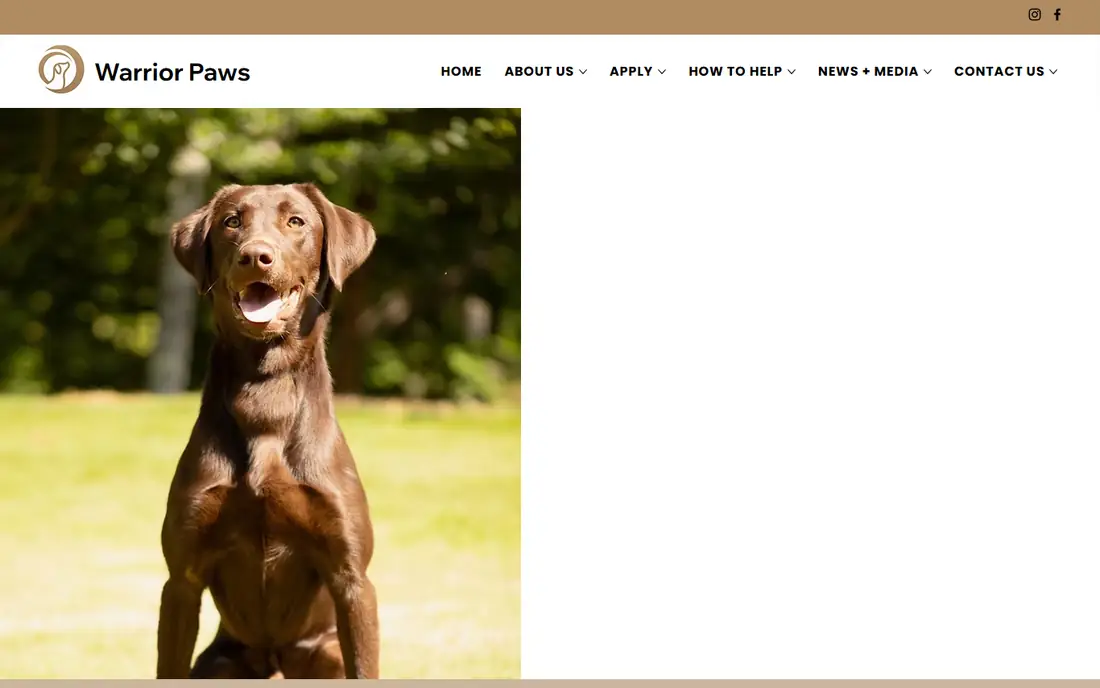
Warrior Paws fits veterans and first responders living with service-related challenges such as PTSD, anxiety, mobility issues, or chronic pain. Its FAQ states that the cost of the dog, training, and veterinary care before placement is covered through the program, while applicants cover personal travel and post-placement care. An assigned advocate helps applicants through the process, and wait times are given as estimates after application and interview.
The honest catch is eligibility and timing. Civilians outside the veteran and first responder groups cannot apply, and no fixed wait time is published, since matching depends on need, dog availability, and training cycles. Applicants should also confirm what documentation is required at each stage. For an eligible veteran or first responder, the covered pre-placement costs remove a major barrier.
What we like- Dog, training, and pre-placement veterinary care covered through donor support
- Trauma-informed training model
- Advocate support during the wait
Watch out for- Serves veterans and first responders only
- Wait time varies by need, dog availability, and training cycles, with no fixed date

#8
ECAD
Best for: People needing a fundraising-supported dog
Visit ecad1.org
Starting priceSee website
Free planNo
ECAD, or Educated Canines Assisting with Disabilities, fits applicants who need a service dog and can work through a program that fundraises the cost of each placement. Published reporting puts the cost at about $25,000 per dog, covering housing, training, feeding, and veterinary costs, funded through fundraising. Its training model is intensive, with far more hours than the minimum many programs cite, which suits applicants who need a highly trained working dog.
The honest catch is confirmation. ECAD is best known for service dogs for people with physical and other disabilities, so applicants whose main need is anxiety should confirm current psychiatric eligibility, intake status, and wait times directly with ECAD before applying. Do not assume a general anxiety application will be accepted. For applicants who do qualify, the fundraising model can make a trained dog reachable without a large direct payment.
What we like- Long-running service dog program with intensive training
- Program costs fundraised rather than charged in full to the recipient
- Lifetime caregiver model
Watch out for- Published cost per dog is about $25,000, so fundraising and capacity affect timing
- Applicants must confirm current psychiatric eligibility before applying
Questions to ask before you apply
Start with eligibility, not with a favourite program. Ask whether the program serves your group, whether it places dogs for anxiety as a primary need, and what medical documentation it requires. Ask about geographic limits, age rules, and whether a parent or guardian must act as handler for a child.
Ask about tasks, not just comfort
A service dog must perform tasks linked to a disability. Ask which tasks the program trains for anxiety, such as alerting to an attack, interrupting repetitive behaviour, applying deep pressure, or creating space in a crowd. If a program cannot name tasks, or if it mainly offers comfort, it may be an emotional support program, which does not carry the same public access rights.
Ask about the full timeline and the full cost
Ask for the application fee, any waitlist fee, any fundraising commitment, travel costs for team training, and ongoing food and veterinary costs. Ask how long each stage takes, from application review to matching to team training, and what happens if a match is not suitable. A program that gives a range, rather than a promise, is more honest.
Ask about support after placement
Ask whether the program offers follow-up training, recertification, help if the dog retires, and support if the handler's needs change. Follow-up support matters as much as the first placement. Programs with lifetime support, refresher training, and clear contact routes are easier to live with long term.
Frequently asked questions
What tasks can a service dog perform for anxiety?
A psychiatric service dog can be trained to alert to early signs of a panic or anxiety attack, interrupt distressing behaviour, apply deep pressure during an episode, create space in crowded places, and retrieve medication or a phone when needed. The exact tasks depend on the handler's disability and the program's training. Comfort alone does not make a dog a service dog, so tasks must be linked to a disability.
Is a service dog the same as an emotional support animal?
No. A service dog is individually trained to perform tasks for a disability and has public access rights under disability law in the United States. An emotional support animal provides comfort but is not task-trained, and it does not have the same public access rights. Housing and travel rules also differ, so check current law for your situation before relying on either label.
How long does it take to get a service dog for anxiety?
It often takes one to several years from application to placement, depending on the program, fundraising, dog availability, and matching. Some programs report waits of about two years, while others report longer waits or closed lists. Private-pay training can be faster in some cases, but it costs far more. Keep treatment in place while you wait, and apply to more than one eligible program.
How much does a service dog for anxiety cost?
Costs vary widely. Some nonprofits place dogs at no charge to approved recipients, while others require application fees, waitlist fees, or fundraising commitments of $5,000 to more than $21,000. Fully trained private placements can cost $20,000 to $30,000 or more, plus ongoing food and veterinary care. Always confirm the full cost, including travel for team training, before you apply.
Can a service dog replace therapy or medication for anxiety?
No. A service dog is not a substitute for professional treatment, and it works best alongside clinical care. Therapy, medication, and other supports address the underlying condition, while a dog helps with specific daily tasks and episodes. Talk with your clinician about whether a service dog fits your care plan, and do not stop treatment because a dog is placed.
What should I watch out for when choosing a program?
Watch out for online registries that sell certificates or ID cards, since there is no mandatory federal certification for service dogs in the United States and such documents do not grant legal status. Check accreditation, training hours, task training, follow-up support, and published fees. Avoid any program that promises instant placement, guarantees a result, or asks for a large payment before an eligibility review.
How we chose
We compared program pages, application guides, and public reviews, focusing on whether each program places psychiatric service dogs for anxiety, what tasks it trains, who it serves, and what it publishes about wait times and costs. We gave weight to accredited nonprofits and established programs with clear application steps, and we left out online registries, since they do not train or place dogs. We also left out programs that do not train psychiatric service dogs for psychological conditions, even if they are well known for other types of service dogs.
Eligibility fit shaped the final list. Some programs serve only veterans or only children, and that limit is stated in each write-up rather than hidden. Where a program did not publish a wait time or a fee, the table says See website. A service dog is a long commitment, so a program that is honest about limits scored higher than one that promises a fast, certain outcome.
Sources we checked (8)
- https://canine.org/service-dogs/
- https://littleangelsservicedogs.org/apply-for-a-dog/
- https://k9sforwarriors.org/faq/
- https://www.missionworkingdogs.org/faq/
- https://k94life.org/faqs/
- https://www.warrior-paws.org/faqs
- https://pawsandaffection.org/
- https://www.ecad1.org
Is your product missing or out of date?
We review this list regularly. Vendors can request a listing, send updated pricing or ask about featured placement.

Shihab Mia · Founder, Rankite
Shihab has 5+ years in B2B and SaaS SEO. He writes Rankite's software buying guides from pricing pages, documentation and public user reviews. More about Shihab.
 Little Angels Service Dogs
 K9s For Warriors
 Mission Working Dogs
 Paws and Affection
 Warrior Paws