How we make this list: we compare pricing pages, product documentation and public user reviews. Ratings come from G2, Capterra or Trustpilot, with the date we checked them.
Key takeaways
- ABB, FANUC, KUKA, and Yaskawa are not on this list by accident: together they form the traditional core of industrial robotics, with the deepest installed bases.
- Universal Robots is the clearest starting point for a smaller manufacturer that wants a collaborative arm without a full safety cage.
- Boston Dynamics and Agility Robotics show where mobile and humanoid machines are moving, but both still fit specific jobs better than general work.
- Intuitive Surgical is in a different category from the rest, since surgical systems are bought as clinical platforms with training, service, and regulatory clearance.
- Locus Robotics and Symbotic represent two warehouse paths: mobile robots that work beside people, and large fixed automation for high-volume sites.
Quick comparison
| Tool | Best for | Starting price | Free plan |
|---|
 ABB Robotics | Large-scale factory automation | See website | No |
 FANUC | Automotive and precision manufacturing | See website | No |
 Boston Dynamics | Mobile inspection and warehouse work | See website | No |
 KUKA | Automotive, aerospace, and electronics | See website | No |
 Universal Robots | Collaborative arms for smaller makers | See website | No |
 Intuitive Surgical | Minimally invasive surgery | See website | No |
 Locus Robotics | Warehouse picking beside people | See website | No |
 Symbotic | High-volume warehouse automation | See website | No |
 iRobot | Home cleaning robots | See website | No |
Is your product missing or out of date?
We review this list regularly. Vendors can request a listing, send updated pricing or ask about featured placement.
The best robotics companies
#1
ABB Robotics
Best for: Large-scale factory automation
Visit abb.com
Starting priceSee website
Free planNo
ABB is the first name many plant engineers reach for, and the reason is coverage. Its range runs from small arms for electronics work to large robots for car bodies, plus autonomous mobile robots for moving material inside a plant. Software for programming, simulation, and fleet management sits alongside the hardware, which helps when a line needs to change over to a new product.
The weakness is access. ABB sells largely through partners and project quotes, so a small shop will not get a simple online price or a plug-and-play purchase. You will likely work with an integrator who sizes the cell, adds safety equipment, and programs the first jobs. For a large manufacturer, that structure is a strength. For a ten-person shop, it can feel heavy.
What we like- Very broad industrial range
- Strong software and service network
- Industrial arms plus mobile robots
Watch out for- Pricing is project-based and opaque
- Smaller buyers may need an integrator
- Product range can be hard to navigate
Starting priceSee website
Free planNo
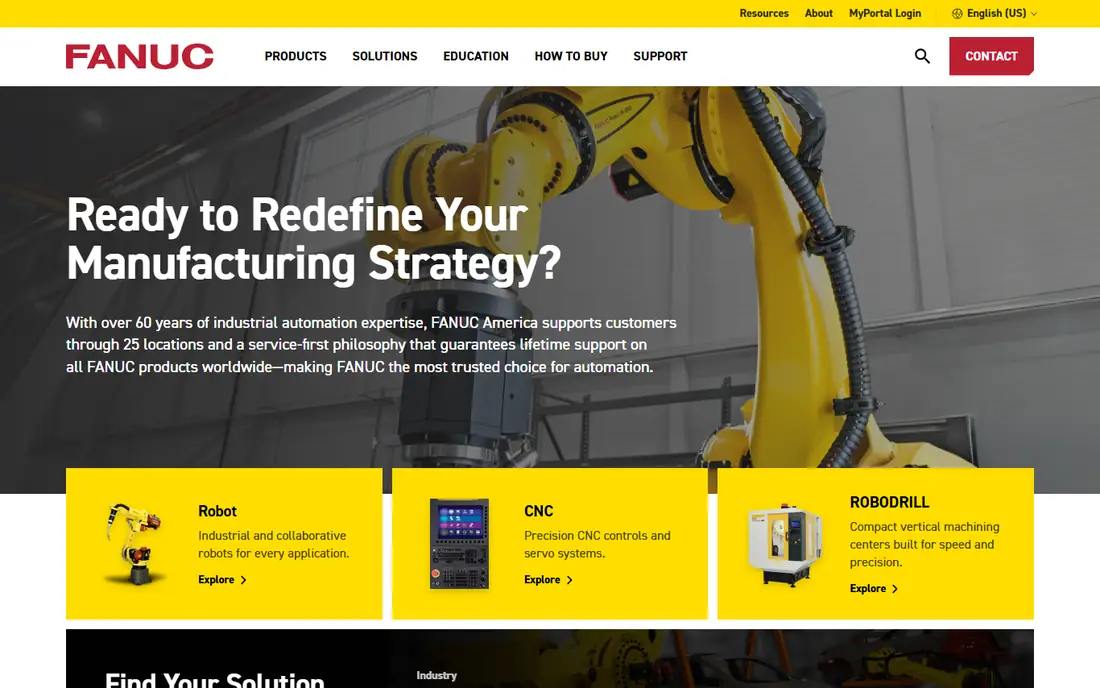
FANUC robots are the machines behind a large share of car plants and electronics lines, and that history is the pitch. Buyers choose FANUC when uptime matters more than novelty, because the installed base means parts, programmers, and integrators are easy to find in most manufacturing regions. The controls also tie closely to FANUC CNC systems, which suits shops already running that equipment.
New buyers should expect a learning curve. The programming environment is powerful but less friendly than a collaborative robot's tablet interface, and training staff takes time. FANUC fits a plant with steady, high-volume work and an automation team, or a reliable integrator, more than a first-time buyer who wants to teach a robot in an afternoon.
What we like- Huge installed base and reliability record
- Wide range from tiny to very large arms
- Strong control and CNC integration
Watch out for- Interface feels dated to new users
- Pricing is quoted per project
- Support often runs through integrators
Starting priceSee website
Free planNo
Boston Dynamics earns its place here on Spot, the quadruped robot used for inspection in plants, construction sites, and other places where wheels struggle. Spot carries cameras and sensors, climbs stairs, and runs routine patrols that would otherwise need a person walking a large site. Stretch, its warehouse robot, targets truck unloading and case handling, a specific and physically hard job.
The honest limit is scope. Atlas, the humanoid seen in videos, is a research and development platform moving toward commercial work, not a machine you order for a warehouse today. Boston Dynamics fits buyers with a clear mobile inspection or unloading problem and a budget for a platform, not buyers looking for one robot to do everything.
What we like- Spot is a proven mobile inspection platform
- Strong mobility over stairs and rough floors
- Growing warehouse arm with Stretch
Watch out for- Atlas humanoid is not a general purchase
- Costs are high and project-based
- Use cases are narrower than the videos suggest
#4
KUKA
Best for: Automotive, aerospace, and electronics
Visit kuka.com
Starting priceSee website
Free planNo
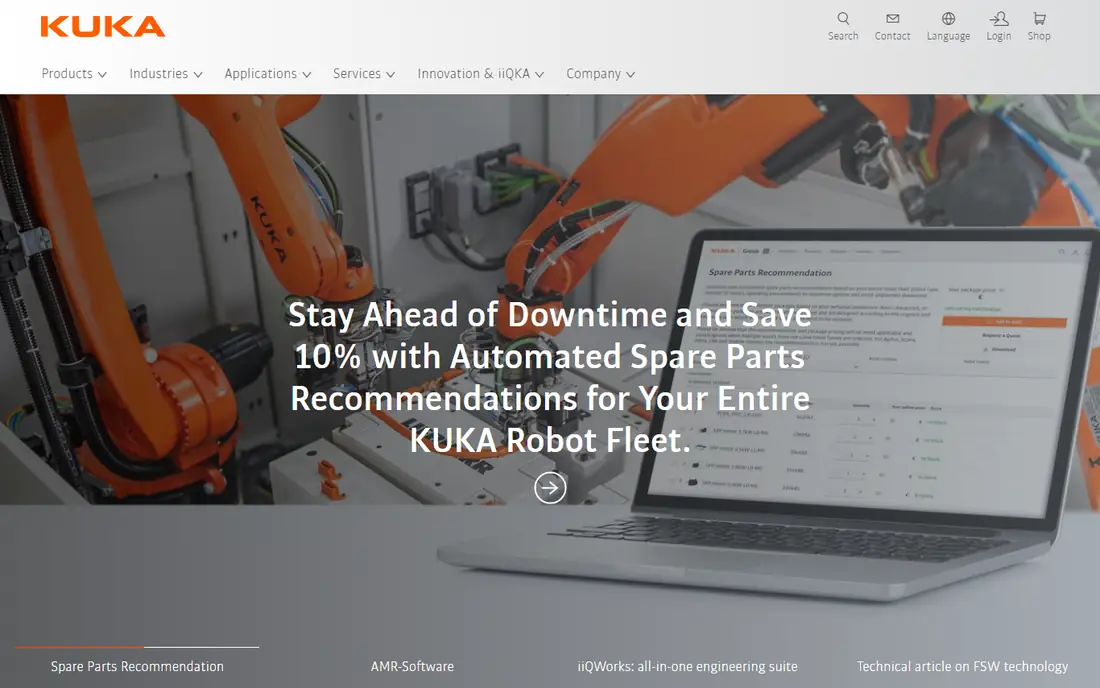
KUKA has built robots for car plants for decades, and that experience shows in heavy-payload arms, welding cells, and lines that run around the clock. Its range also includes smaller and collaborative models, plus software for simulating a cell before any steel is cut. For aerospace and electronics work, where precision and repeatability matter, KUKA is a standard shortlist name.
The company is now part of Midea Group, a large Chinese appliances and automation group, which some buyers will want to weigh in procurement discussions. Like ABB and FANUC, KUKA sells through projects and partners rather than a simple online store. It fits mid-size and large manufacturers best, especially those with an integrator already in place.
What we like- Deep automotive and aerospace experience
- Broad industrial and collaborative range
- Strong simulation software
Watch out for- Now part of Midea Group, which changes its corporate picture
- Pricing is project-based
- Smaller buyers need integrator help
Starting priceSee website
Free planNo
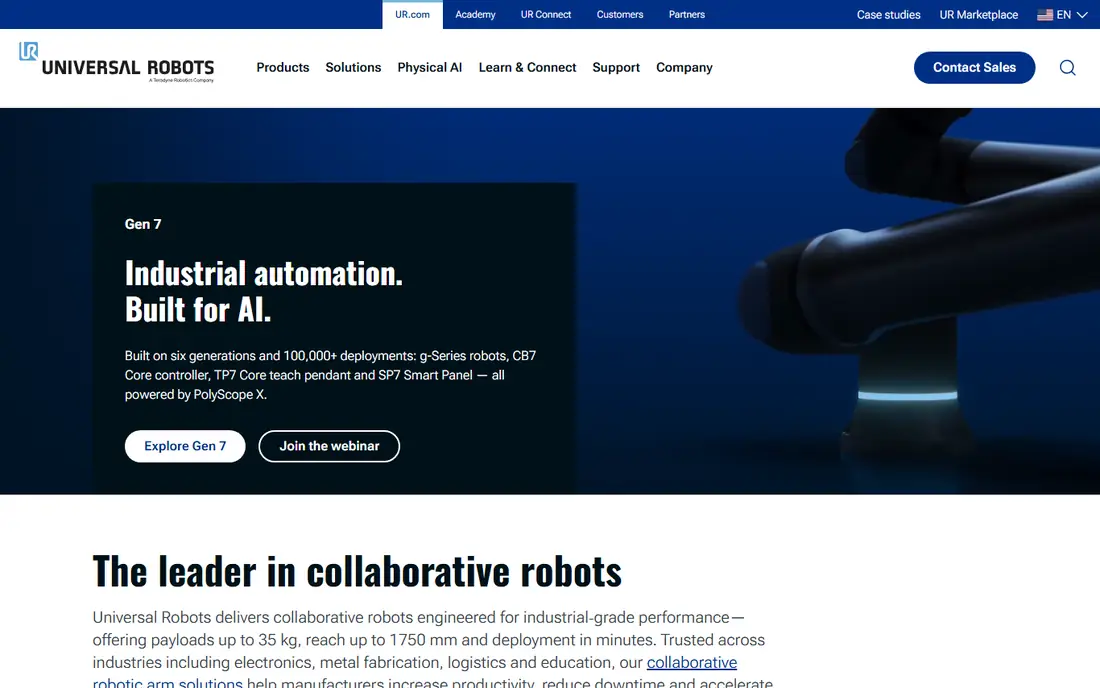
Universal Robots built the collaborative robot category for smaller manufacturers. Its arms are programmed from a tablet with a visual interface, and a shop can often teach pick-and-place, machine tending, or packaging tasks without a specialist programmer. The ecosystem of grippers, cameras, and software from partner firms is the largest in the cobot market, which shortens the time from delivery to first production.
The limits are physical. Payloads top out well below a large industrial arm, and collaborative speed limits mean cycle times suit light and medium work, not heavy high-speed lines. Buyers must also budget for grippers, safety risk assessment, and integration, even though the arm itself is simpler to buy. For a small or mid-size maker automating a first job, Universal Robots is usually the first quote to get.
What we like- Easy tablet programming for common tasks
- Large ecosystem of grippers and software
- No safety cage needed for many jobs
Watch out for- Payload and speed limits suit light work
- Heavy industrial jobs need a larger arm
- Total cell cost still includes tooling and safety checks
Starting priceSee website
Free planNo
Intuitive Surgical is the only company on this list whose robots operate on people as a routine clinical tool. Its da Vinci systems let surgeons work through small incisions with wristed instruments and a magnified 3D view, and hospitals use them across urology, gynecology, general surgery, and other specialties. The training programs and clinical support around the platform are part of the product, not an add-on.
That focus also sets the price and the buyer. A da Vinci system, service contract, and instrument costs run far above any factory arm, and a hospital needs enough procedure volume and trained staff to justify it. Intuitive fits health systems planning a surgical robotics program, not manufacturers or warehouses. Compare it on clinical outcomes, training, and service, not on payload or speed.
What we like- Da Vinci is the established surgical platform
- Large surgeon training network
- Broad procedure coverage
Watch out for- Systems and service cost far more than other robots here
- Hospitals need training and procedure volume
- Not a general robotics buy
Starting priceSee website
Free planNo
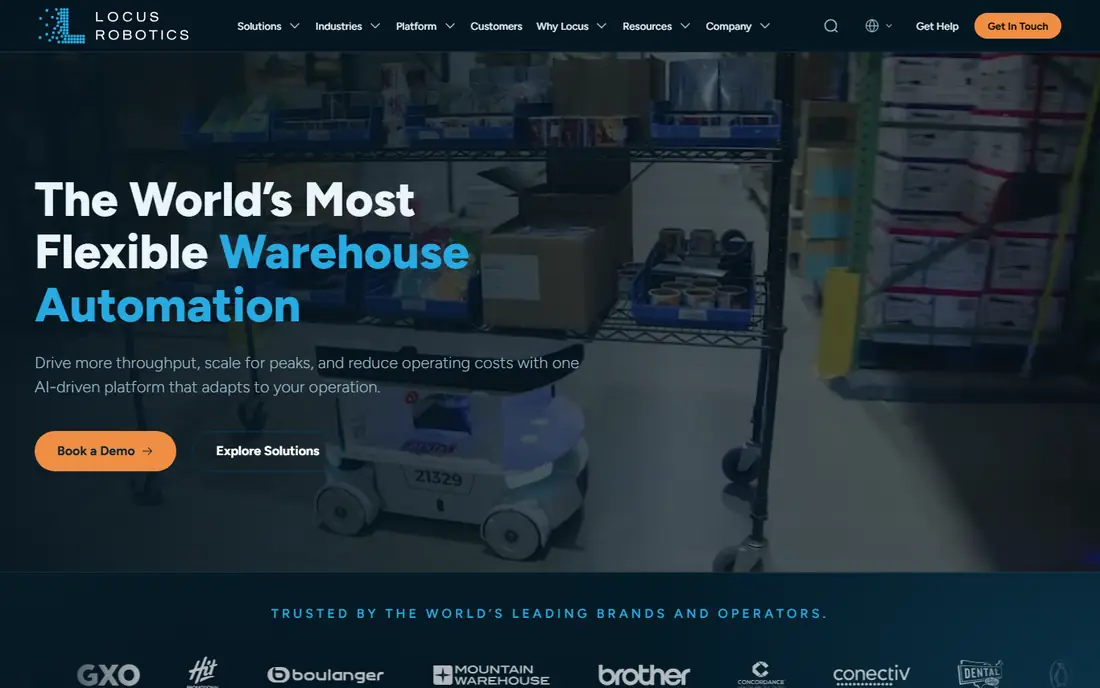
Locus takes a different approach to warehouse automation. Instead of replacing pickers, its mobile robots travel to shelves and guide workers through picks, cutting walking time and raising throughput. The robots-as-a-service model means sites pay a subscription rather than buying a fleet outright, which lowers the upfront cost and lets a site scale robots up for peak season and down after it.
The fit is specific. Locus shines in piece-picking operations for retail and third-party logistics, where orders are many small items. It is not a fix for pallet handling, heavy goods, or fully lights-out automation. Buyers should model the subscription over several years, not just the first-year cost, and check that their order profile matches the picking model.
What we like- Robots-as-a-service model lowers upfront cost
- Robots work alongside staff
- Deployment in weeks for many sites
Watch out for- Suits piece picking, not every warehouse job
- Ongoing subscription cost adds up
- Performance depends on site layout and order profile
Starting priceSee website
Free planNo
Symbotic builds large, integrated warehouse systems that store, retrieve, and palletize cases with fleets of autonomous robots and software directing the whole flow. Its customers are mainly large retailers and grocers running high-volume distribution centers, where the system replaces a large share of manual case handling. At that scale, the pitch is throughput, accuracy, and labor stability over many years.
Small and mid-size warehouses should not expect a Symbotic quote to fit. These are capital projects with long design and installation timelines, and the economics depend on volume that most regional warehouses do not have. Symbotic belongs on the shortlist for a company planning a major distribution center, and it should be compared with other large integrators on total project cost and delivery time.
What we like- End-to-end automation for large distribution centers
- Handles case picking at scale
- Strong grocery and retail customer base
Watch out for- Built for large sites, not small warehouses
- Long implementation projects
- High capital commitment
Starting priceSee website
Free planNo
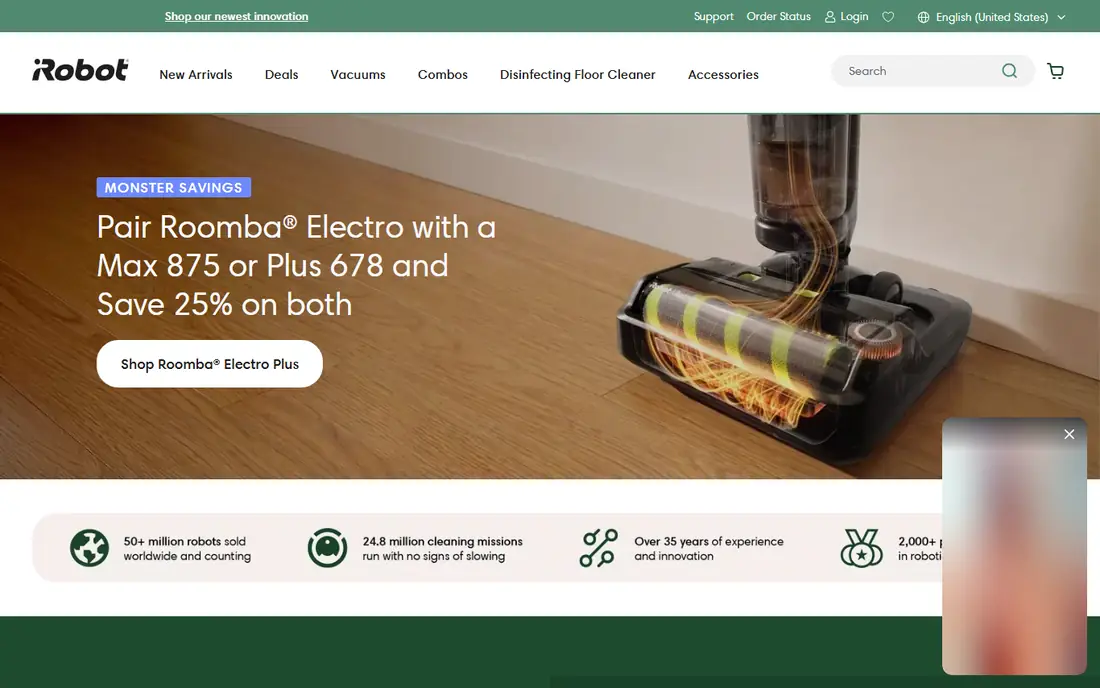
iRobot made home robots normal. The Roomba line covers basic vacuuming through self-emptying models with mapping, room selection, and obstacle avoidance, and Braava models handle mopping. For a buyer, the appeal is simple: a known brand, broad retail availability, and an app that most people can set up without help.
The company picture changed in late 2025, when iRobot filed for bankruptcy and was acquired by Shenzhen Picea Robotics. Buyers should check current warranty, support, and model availability before ordering, since a change of ownership can affect service. iRobot fits a household that wants a proven cleaning robot and does not need a general-purpose home machine, a category that still does not exist at a consumer price.
What we like- Roomba is the best-known home robot brand
- Wide retail range from basic to self-emptying models
- Simple app control
Watch out for- Company went through bankruptcy and acquisition in late 2025
- Competition from lower-priced rivals is intense
- Home robots clean, they do not do general tasks
How we chose
We compared company product lines, public documentation, and public reviews and reporting on G2, Capterra, and Reddit where relevant, along with each company's own site and published customer examples. A company made this list only if it has real, shipping products or active commercial deployments in its category, not just a prototype or a press release. We did not claim hands-on testing, and we treated demo videos as marketing, not as proof of performance in a buyer's plant or warehouse.
We also weighed category fit over fame. A famous humanoid video did not earn a place unless the company had a commercial product or deployment to match, and a large industrial maker did not automatically beat a smaller specialist in a niche job. Buyers should still request a site visit, a reference customer in the same industry, and a written quote that includes integration, safety, training, and service.
How to compare robotics companies before you buy
Start with the job, not the robot. Write down the task, the weight, the cycle time, the floor or room layout, and the safety rules that apply. That short spec will rule out most of the list quickly, which is the point. A company that cannot meet the spec in writing is not a shortlist candidate, however good its demo looks.
Check the full cell cost
The robot arm or mobile base is only part of the bill. Add grippers or tools, safety equipment, fencing or sensors, programming, integration, training, spare parts, and a service contract. For warehouse subscriptions, model the cost over three to five years, including peak-season scaling. Ask each vendor for a total cost in the same format so quotes can be compared line by line.
Ask about service where you operate
A robot that stops is a line that stops. Ask how many service engineers cover your region, what response times the contract promises, and how parts are stocked. For smaller buyers, a local integrator with a service agreement can matter more than the brand on the arm. Request two reference customers in your industry and call them about uptime and support, not just installation.
Plan for people, not just machines
Collaborative and mobile robots change how staff work, and that change needs planning. Decide who will program, maintain, and supervise the robot, and what training those people need before go-live. For surgical and warehouse systems, the staffing and workflow plan is often the difference between a successful deployment and an expensive machine that sits idle.
Frequently asked questions
Which robotics company is the largest?
By installed base and range, ABB, FANUC, and KUKA are the largest traditional industrial robot makers, with Yaskawa close behind them. "Largest" depends on the measure, though, since Intuitive leads surgical robotics and Locus and Symbotic lead different warehouse segments. Pick by category first, then compare size within that category.
Are collaborative robots safe to use without a cage?
Many collaborative arms can run without a full safety cage, but only after a risk assessment for the specific task, tool, and workpiece. A sharp or heavy part, a fast motion, or a pinch point can still require guarding, sensors, or speed limits. Never skip the risk assessment because the robot is labeled collaborative.
How much does an industrial robot cost?
Most industrial robots are quoted per project, so there is no single reliable sticker price. The arm itself can range from tens of thousands of dollars for a small cobot to far more for a large industrial arm, and integration, tooling, safety, and service add to that. Always ask for a total cell cost, including programming and training, before comparing vendors.
Which company is best for a small manufacturer?
Universal Robots is the usual first quote for a small manufacturer automating light tasks like machine tending or packaging. Its programming is simpler than a traditional industrial arm, and its partner ecosystem covers common grippers and cameras. Get a second quote from a traditional maker or integrator if the job is heavy, fast, or high-volume.
Is a humanoid robot a practical buy in 2026?
For most buyers, no. Humanoids from Boston Dynamics, Agility Robotics, and Figure AI are moving into real pilots and early commercial jobs, mainly in warehouses and factories, but they are not general-purpose machines you can buy and assign to any task. A mobile robot or a fixed arm will usually do a specific job better and cheaper today.
Sources we checked (9)
- https://www.abb.com
- https://www.fanucamerica.com
- https://www.bostondynamics.com
- https://www.kuka.com
- https://www.universal-robots.com
- https://www.intuitive.com
- https://www.locusrobotics.com
- https://www.symbotic.com
- https://www.irobot.com
Is your product missing or out of date?
We review this list regularly. Vendors can request a listing, send updated pricing or ask about featured placement.

Shihab Mia · Founder, Rankite
Shihab has 5+ years in B2B and SaaS SEO. He writes Rankite's software buying guides from pricing pages, documentation and public user reviews. More about Shihab.