How we make this list: we compare pricing pages, product documentation and public user reviews. Rankite is independent; if a vendor ever pays for a featured spot, that listing is clearly labeled Partner.
Key takeaways
- A bad RFP process costs deals: teams miss deadlines, answers contradict each other, and winnable bids go out sloppy.
- Responsive, Loopio, and Qvidian are the established leaders for dedicated RFP response management with deep content libraries.
- 1up and Ombud represent the newer AI-first wave, automating answers from your knowledge base with minimal setup.
- Proposify, PandaDoc, and Xait focus on the proposal document itself: beautiful, trackable, signable deliverables.
Quick comparison
| Tool | Best for | Starting price | Free plan |
|---|
 Responsive Responsive | enterprises running strategic response management | See website | No |
 Loopio Loopio | teams that want the leader with the best support | See website | No |
 Qvidian Qvidian | proposal teams that live in content management | See website | No |
 Proposify Proposify | sales teams that need beautiful proposals quickly | See website | No |
 PandaDoc PandaDoc | teams that want documents through signature in one tool | See website | No |
 Ombud Ombud | enterprise RevOps teams with complex sales cycles | See website | No |
 Xait Xait | complex tenders with dozens of co-authors | See website | No |
 1up 1up | sales teams drowning in ad-hoc questions | See website | No |
Is your product missing or out of date?
We review this list regularly. Vendors can request a listing, send updated pricing or ask about featured placement.
The best rfp management software
Responding to RFPs is one of the highest-value activities in B2B sales and one of the most painful. Subject matter experts get chased for answers at the last minute, the same questions get answered differently across bids, and proposal managers burn weekends on formatting. The cost of getting the tooling wrong is measured in lost deals and burned-out teams.
#1
Responsive
Best for: enterprises running strategic response management
Visit rfp360.com
Starting priceSee website
Free planNo
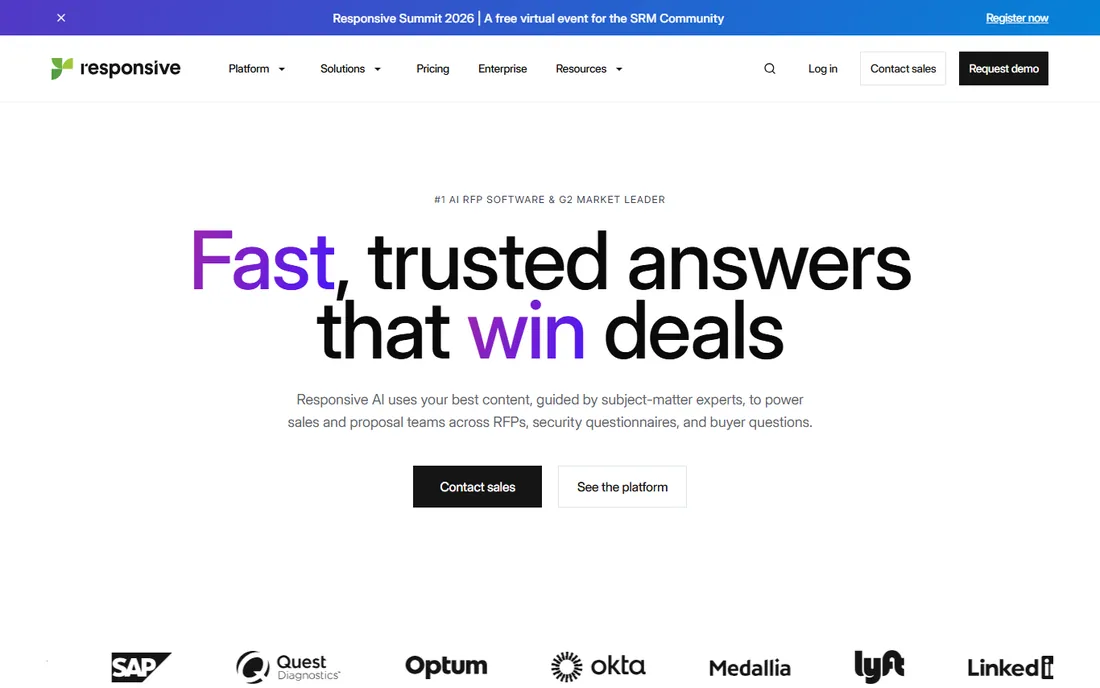
Responsive, formerly RFPIO, pioneered what it calls Strategic Response Management: a single source of truth for RFPs, RFIs, DDQs, and security questionnaires. Its AI drafts answers from your best content, guided by subject matter experts, so responses come out 80% faster while staying grounded in approved, current information rather than generic model output.
The platform's differentiators are governance and scale. TRACE Score tells you whether answers address every aspect of a question, and the system maintains millions of Q&A pairs with review workflows that keep content fresh. With more than $1 trillion in managed opportunities, it is the market leader by volume.
The honest catch is enterprise reality. Pricing is quote-based, and rolling out a governed knowledge base across departments takes commitment. For large organizations where response quality directly moves revenue, Responsive sets the standard.
What we like- AI drafts grounded in a governed knowledge base
- TRACE Score validates answer completeness
- Trusted by 2,000+ companies
Watch out for- Quote-based enterprise pricing
- Implementation is a real project
#2
Loopio
Best for: teams that want the leader with the best support
Visit loopio.com
Starting priceSee website
Free planNo
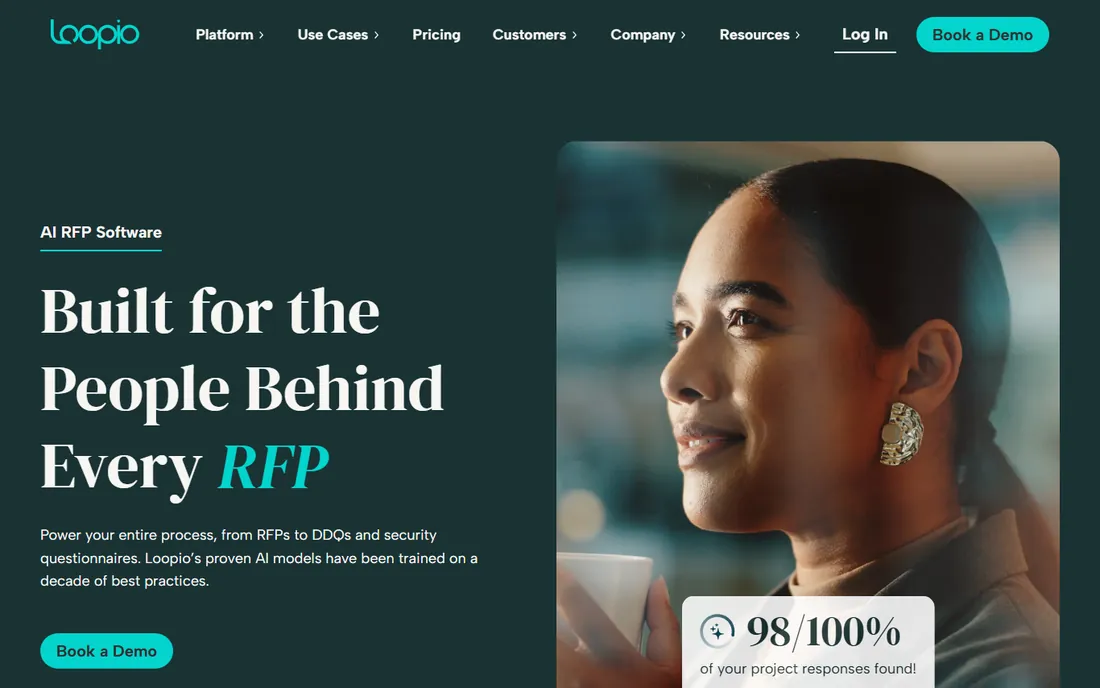
Loopio helps teams respond to RFPs, RFIs, DDQs, and security questionnaires from one collaborative workspace. The content library is the core: pre-approved answers that the AI and automation assemble into first drafts in minutes, with smart assignments routing questions to subject matter experts and automated nudges keeping everyone on deadline.
What teams consistently praise is the rollout experience. Most organizations are responding within 15 to 30 days, with strategic onboarding, scalable training, and support that customers rate among the industry's best. Integrations span Salesforce, HubSpot, Slack, Microsoft 365, and hundreds of knowledge sources.
The tradeoff is maintenance. A content library is only as good as its curation, and someone has to own review cycles. Pricing is quote-based with tiers from Foundations upward. For teams that want a proven platform with a genuinely helpful vendor behind it, Loopio is the safe, strong pick.
What we like- First drafts in minutes from the content library
- 15-30 day typical onboarding
- Renowned customer support (4.6/5 on G2)
Watch out for- Quote-based pricing
- The library needs ongoing curation to stay accurate
Starting priceSee website
Free planNo
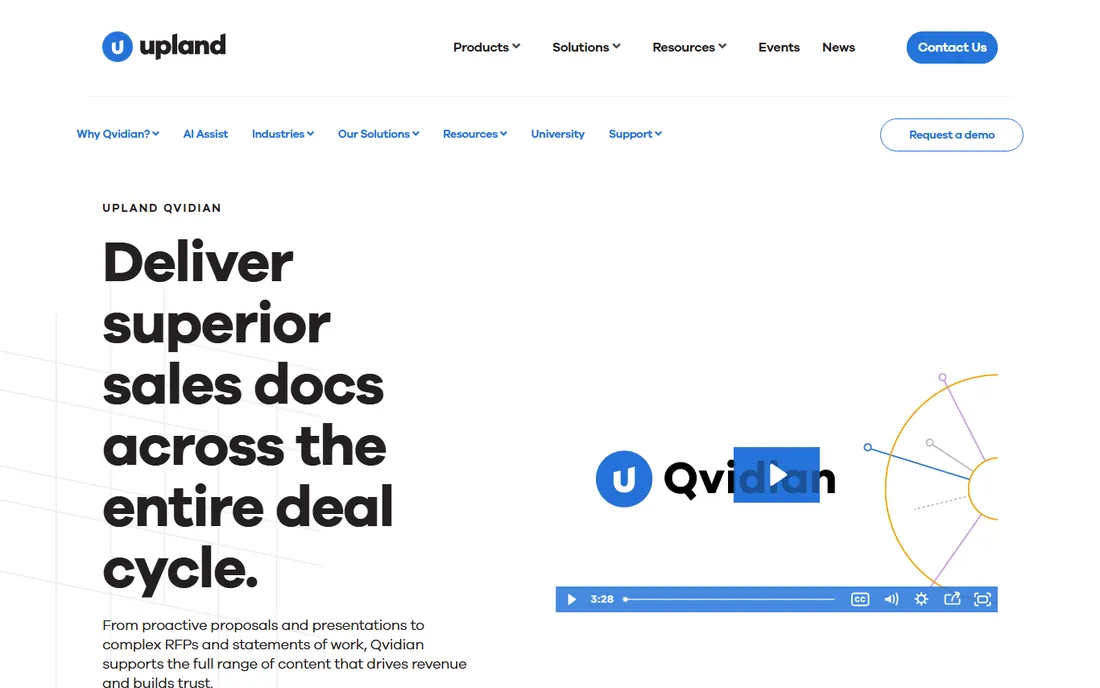
Qvidian, part of Upland Software, brings the longest industry pedigree in this space: nearly five decades of proposal management experience built by proposal writing experts. The platform combines central content storage, branded templates, and automation with generative AI tools that draft, revise, and personalize responses.
The content management is the deepest here. Libraries support expiration dates, usage analytics across 70+ out-of-the-box reports, and permissions that keep teams on message. Integrations with Word, Excel, PowerPoint, Teams, and Salesforce mean proposal managers work where they already live.
The honest catch is weight. Qvidian's depth suits established proposal operations; small teams may find it more than they need. Pricing is quote-based. For organizations where proposals are a core revenue function with serious content governance needs, the expertise shows.
What we like- Nearly 50 years of proposal industry expertise
- Deep content library with expiration and analytics
- Strong Microsoft Office integration
Watch out for- Quote-based pricing
- The depth can feel heavy for small teams
Starting priceSee website
Free planNo
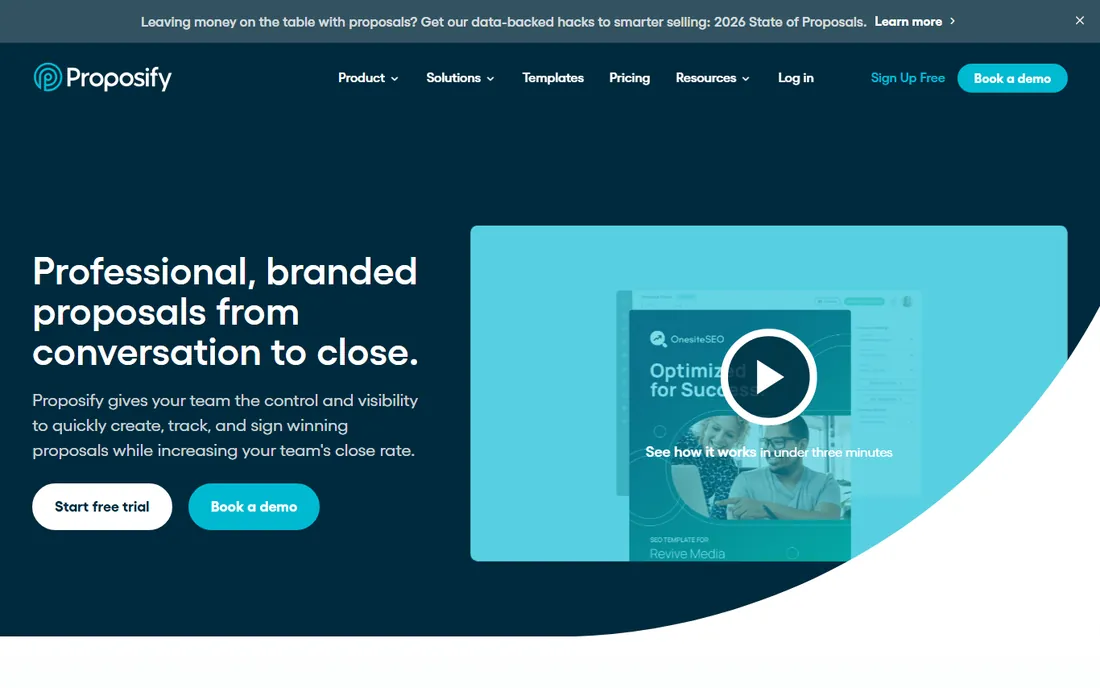
Proposify attacks the other end of the problem: the proposal document itself. Its drag-and-drop builder produces branded, professional proposals in about 17 minutes on average, with e-signatures, engagement analytics showing how prospects interact with each section, and CRM integrations that pull accurate data into every document.
The visibility is the selling point for sales leaders. Notifications when prospects open proposals, time-spent analytics per section, and win-rate tracking turn proposals from black boxes into measurable pipeline stages. Customers report close rates well above industry averages.
The tradeoff is scope. Proposify is proposal software, not an RFP questionnaire automation platform; it will not auto-answer a 200-question security DDQ. For sales-led teams where the deliverable is the proposal, it is the most design-forward option on this list.
What we like- Drag-and-drop templates that look genuinely professional
- Prospect engagement analytics
- CRM data pull eliminates typos
Watch out for- Proposal-focused rather than RFP questionnaire automation
- Pricing tiers by quote
#5
PandaDoc
Best for: teams that want documents through signature in one tool
Visit pandadoc.com
Starting priceSee website
Free planNo
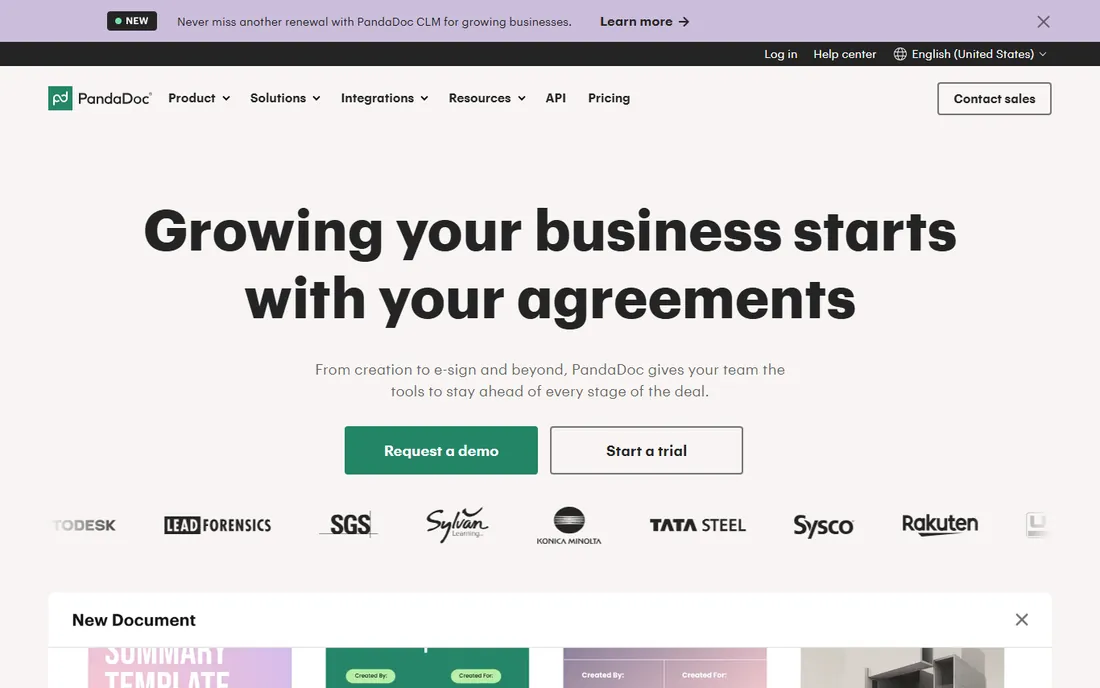
PandaDoc is the 360-degree document platform: create proposals with a drag-and-drop editor, route them through approvals, track engagement, collect legally binding e-signatures, and even take payment. The HubSpot integration is particularly deep, pulling CRM data directly into documents.
Compliance credentials are enterprise-grade: E-SIGN, UETA, HIPAA compliance, and SOC 2 certification, with SSO and a solid API for permissions. Teams report dramatic reductions in proposal creation time and faster signature turnaround.
The honest catch is positioning. PandaDoc manages documents beautifully but does not offer the RFP-specific response automation, content libraries, or SME workflows that Responsive, Loopio, and Qvidian do. For teams whose RFP process ends in a polished, signable document, it completes the workflow.
What we like- Complete workflow from creation to e-sign to payment
- Strong CRM integrations
- SOC 2 certified with HIPAA compliance
Watch out for- Document-centric rather than RFP response automation
- Advanced features on higher tiers
#6
Ombud
Best for: enterprise RevOps teams with complex sales cycles
Visit ombud.com
Starting priceSee website
Free planNo
Ombud serves enterprise RevOps teams with what it calls an orchestrated platform: AI-enabled, context-aware assistants ("Ombuddies") that automate routine work across the sales cycle. The Response Management Ombuddy handles the heavy lifting of RFP responses, proposal workflows, and InfoSec questionnaires with an emphasis on accuracy and repeatability.
The pitch goes beyond basic automation. Context-aware support means the system understands the deal context, not just the question text, aiming for error-free, consistent deliverables across POVs, POCs, RFPs, and SOWs. That resonates with complex enterprise sales where every response carries risk.
The catch is maturity and access. Ombud is a newer brand in response management with enterprise positioning and quote-based pricing. For large RevOps organizations looking to automate the full response lifecycle with AI, it is worth evaluating alongside the incumbents.
What we like- AI Ombuddies automate RFPs, SOWs, and InfoSec questionnaires
- Context-aware automation beyond basic templates
- Enterprise RevOps focus
Watch out for- Enterprise positioning with quote pricing
- Newer brand in the response space
#7
Xait
Best for: complex tenders with dozens of co-authors
Visit xait.com
Starting priceSee website
Free planNo
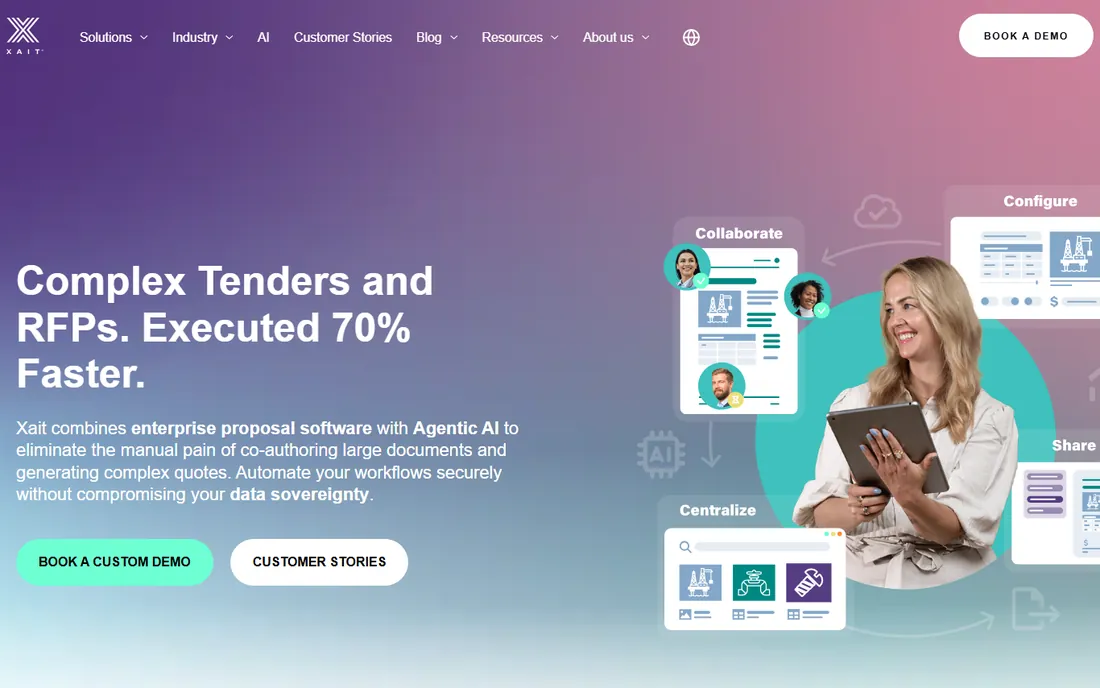
Xait has spent more than 25 years on the hardest proposal problem: huge, complex tenders co-authored by dozens of people under brutal deadlines. Its XaitPorter platform lets large teams collaborate on a single document without the version chaos of email attachments, and the company claims complex tenders get executed 70% faster.
The customer base tells the story: energy, renewables, manufacturing, construction, and government, with 300+ clients and 70,000+ users worldwide. Agentic AI now assists the co-authoring workflow while the company emphasizes data sovereignty for security-conscious industries.
The honest catch is specialization. Xait is built for complex tenders in heavy industry, not for SaaS teams answering security questionnaires. Pricing is enterprise and quote-based. For bid teams producing hundred-page tenders, few tools understand the workflow this well.
What we like- Built for massive multi-author tender documents
- 25+ years serving energy and construction
- Agentic AI with data sovereignty focus
Watch out for- Niche industry focus
- Quote-based enterprise pricing
#8
1up
Best for: sales teams drowning in ad-hoc questions
Visit 1up.ai
Starting priceSee website
Free planNo
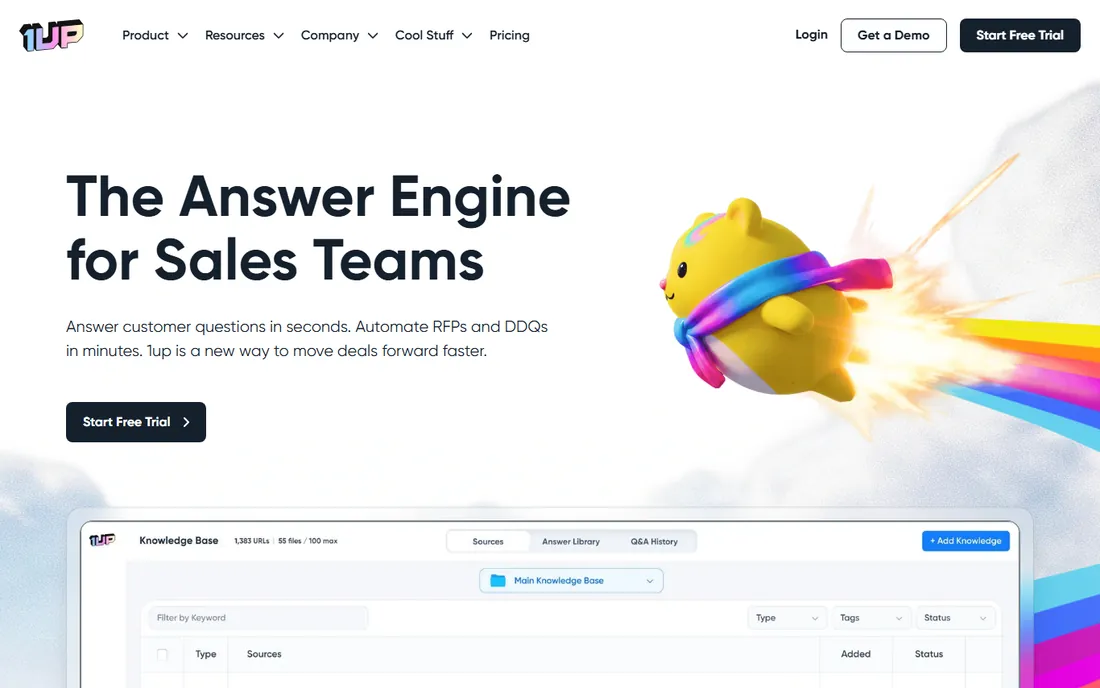
1up calls itself the answer engine for sales teams, and the concept is simple: connect your trusted sources, and 1up gives accurate answers to customer questions about products, pricing, and compliance in seconds. It automates RFPs and DDQs in minutes rather than days, with a browser plugin that auto-fills answers directly into web-based questionnaires.
The security posture is strong for a young company: SOC 2 Type II certified, built by former cybersecurity engineers, with encryption at rest and in transit. Customers report questionnaire completion rates jumping from around 45% to over 90% through automation.
The tradeoff is depth. 1up excels at answering questions but offers less of the proposal project management, SME workflows, and content governance that the established leaders provide. For sales-led teams buried in ad-hoc questions and web portals, it is the fastest path to relief.
What we like- Answers customer questions in seconds from trusted sources
- Browser plugin auto-fills web questionnaires
- SOC 2 Type II certified
Watch out for- Newer vendor with a smaller footprint
- Less proposal workflow depth than the leaders
How we chose
We evaluated RFP management software on what decides whether bids get better: AI drafting quality and grounding, content library management, SME collaboration workflows, questionnaire automation, proposal document creation, integrations with CRM and communication tools, and security credentials. We verified each vendor's homepage and current positioning, noting that RFPIO has rebranded to Responsive. We covered both response management platforms and proposal document tools because "RFP software" spans both. We excluded any tool whose homepage we could not open and confirm, and we did not test any platform hands-on.
Building a content library that actually works
The software is only half the battle. Every RFP tool on this list depends on a content library, and libraries die without ownership.
Assign a librarian
Someone must own review cycles, archive stale answers, and chase SMEs for updates. Without an owner, the library rots within two quarters and teams stop trusting it.
Write answers once, reuse forever
The best libraries answer each question once, in final quality, tagged and versioned. Resist the urge to keep slightly different versions for different bids; divergence is how contradictions creep in.
Measure what the library earns
Track reuse rates, time saved per response, and win rates on library-assisted bids. When leadership sees the numbers, the library gets the budget it needs to stay current.
AI drafting vs governed content: getting both
The newest tools promise AI that answers everything. The established ones promise governed libraries. You need both, and the order matters.
AI drafting without governance produces confident, fluent, wrong answers. Every AI-generated response needs a human review step and a traceable source before it goes to a buyer. The vendors that do this well, like Responsive with its TRACE scoring, build validation into the workflow rather than bolting it on.
Governance without AI is just slow. Manual libraries cannot keep up with RFP volume, and teams quietly revert to old documents. The winning setup is AI drafting grounded in a curated, reviewed knowledge base, with SMEs validating rather than writing from scratch.
Frequently asked questions
What is the best RFP management software?
For dedicated RFP response management, Responsive, Loopio, and Qvidian lead. For AI-first questionnaire automation, 1up and Ombud are strong newer options. For the proposal document itself, Proposify, PandaDoc, and Xait excel.
What is the difference between RFP software and proposal software?
RFP software automates answering questionnaires and managing the response process (content libraries, SME workflows, AI drafting). Proposal software creates the polished, branded document the buyer receives. Many teams use one of each.
How much does RFP management software cost?
All the vendors on this list price by quote based on seats, volume, and features. Expect mid-market to enterprise pricing; the established leaders (Responsive, Loopio, Qvidian) typically require annual contracts. Always request a formal quote.
Can AI write RFP responses?
Yes, modern tools draft responses from your knowledge base, but every AI-generated answer needs human review before it reaches a buyer. The best platforms ground AI in governed, approved content and score answer completeness automatically.
How long does it take to implement RFP software?
It varies widely. Loopio reports most teams responding within 15 to 30 days. Enterprise platforms with governed libraries take longer because the content migration and review workflows are the real project, not the software installation.
Do I need RFP software if I only respond to a few RFPs per year?
Probably not. These tools pay off when RFP volume, questionnaire complexity, or team size makes the manual process painful. If you answer fewer than a handful of RFPs annually, templates and a shared drive may suffice.
Sources we checked (8)
- https://www.rfp360.com
- https://loopio.com/
- https://www.qvidian.com
- https://proposify.com/
- https://pandadoc.com
- https://ombud.com/
- https://www.xait.com
- https://1up.ai/
Is your product missing or out of date?
We review this list regularly. Vendors can request a listing, send updated pricing or ask about featured placement.

Shihab Mia · Founder, Rankite
Shihab has spent more than a decade helping SaaS and e-commerce brands grow through search. He writes Rankite's software buying guides from pricing pages, documentation and public user reviews. More about Shihab.