How we make this list: we compare pricing pages, product documentation and public user reviews. Ratings come from G2, Capterra or Trustpilot, with the date we checked them.
Key takeaways
- Census and Hightouch are the category leaders: both sync warehouse data into Salesforce, HubSpot, ad platforms, and hundreds of other tools, with audience building for non technical users on top.
- RudderStack is the open core option, strongest when reverse ETL sits inside a wider customer data pipeline the team wants to control.
- Polytomic is the quiet all rounder that also syncs between databases and SaaS tools, not only out of warehouses.
- Every vendor here prices by rows, records, or sync volume on a quote, so the honest comparison is your monthly active rows pushed through real syncs in a trial.
- Reverse ETL does not fix a warehouse nobody trusts. Model the customer and account tables properly first, or the tools below will distribute bad data faster.
Quick comparison
| Tool | Best for | Starting price | Free plan |
|---|
 Census | Warehouse activation with governance | See website | No |
 Hightouch | Audiences and syncs at scale | See website | No |
 RudderStack | Open core data pipelines | See website | Yes |
 Polytomic | Syncs between any systems | See website | No |
 Segment Reverse ETL | Segment estates adding activation | See website | No |
 Hevo | Pipelines in both directions | $239 per month | No |
 Integrate.io | Managed ELT and reverse ETL | See website | No |
 SeekWell | Lightweight warehouse to app syncs | See website | No |
Is your product missing or out of date?
We review this list regularly. Vendors can request a listing, send updated pricing or ask about featured placement.
Starting priceSee website
Free planNo
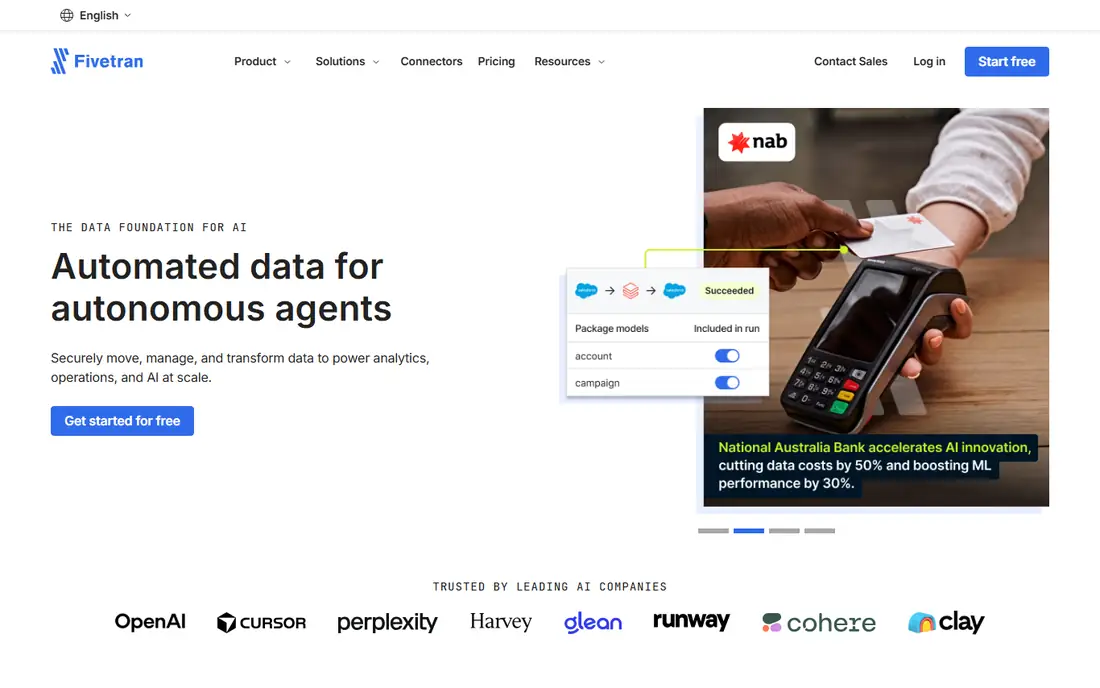
Census built the category's enterprise face: syncs from Snowflake, BigQuery, Databricks, and the rest into hundreds of destinations, wrapped in the controls a data team needs before it lets marketing push audiences to ad platforms. Its acquisition by Fivetran in 2025 joined it to the pipeline most warehouses already fill with.
The trade off is platform weight against assurance. Census fits mid size and large companies activating warehouse data across many teams, where a bad sync to Salesforce is a company incident, not a shrug.
What we like- Deep sync catalogue across CRM, ads, and support tools
- Strong audience builder for marketing users
- Governance features such as sync tracking and approval flows
- Part of Fivetran since their 2025 merger, which pairs it with the largest ELT base
Watch out for- Enterprise leaning pricing by quote
- Value depends on your warehouse being well modelled
- Some destinations vary in field level depth
#2Hightouch
Best for: Audiences and syncs at scale4.6/5 on
G2 (421 reviews, checked Oct 2026)
Visit hightouch.com
Starting priceSee website
Free planNo

Hightouch matches Census feature for feature at the top of the market and leans harder into the marketing use case: composable audiences built on warehouse data, pushed to every ad and lifecycle platform, with identity resolution in the same tool. Data teams keep control through SQL and git based workflows.
The trade off between Hightouch and Census is taste, ecosystem, and price negotiation more than capability. Hightouch fits companies whose activation centre of gravity is marketing and growth, syncing at serious volume.
What we like- The other category leader, with a deep destination catalogue
- Audience and identity features aimed at marketing activation
- Parent child syncs and granular scheduling
- Strong dbt and warehouse native integrations
Watch out for- Quote based pricing on sync volume
- Breadth of features takes onboarding
- Smaller teams may use a fraction of it
Starting priceSee website
Free planYes
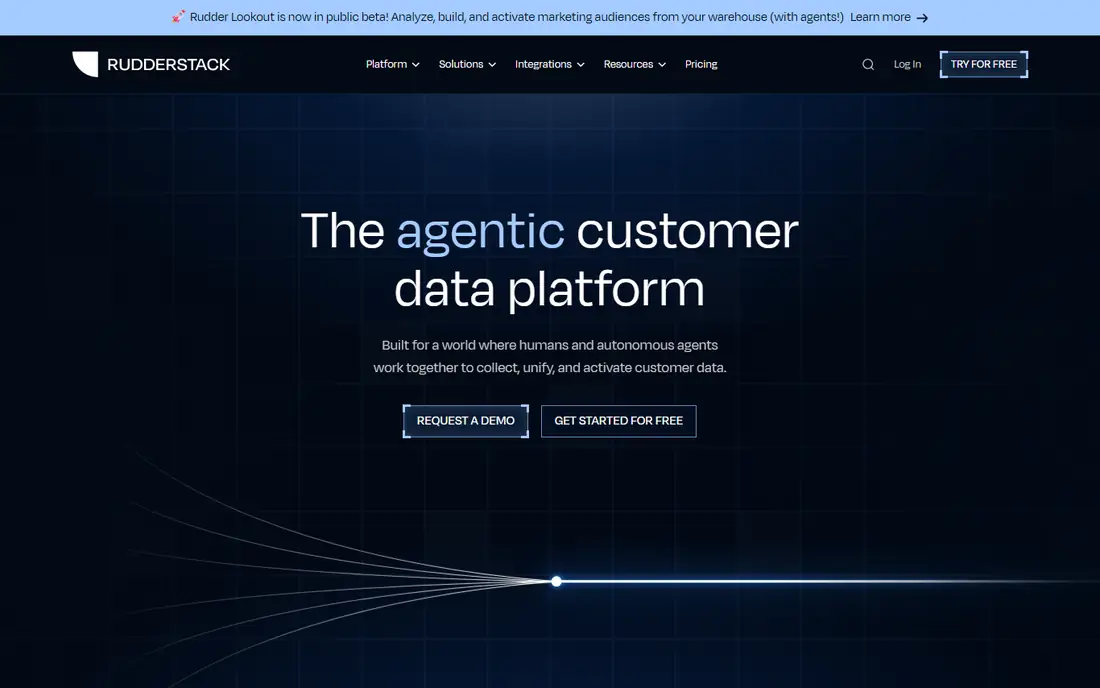
RudderStack approaches the problem as a customer data platform built warehouse first: collect events, model in your warehouse, and activate back out through its sync features, with an open source core for teams that want the option to run it themselves.
The trade off is control against point focus. RudderStack fits engineering led companies building a composable data stack who would rather own the pipeline than rent five separate tools.
What we like- Open source core with a managed cloud tier
- Reverse ETL through its warehouse actions and integrations
- Strong when event collection and activation must live together
- Data stays in your warehouse by design
Watch out for- Reverse ETL is one part of a wider platform, less polished as a pure play
- Self hosting carries real engineering cost
- Audience tooling trails Census and Hightouch
Starting priceSee website
Free planNo
Polytomic refuses the category boundary: it syncs data between warehouses, databases, and SaaS applications in any direction, which matches how messy real estates are. Its reverse ETL is fully featured, and its pricing reputation is kinder than the top two.
The trade off is breadth of direction against marketing depth. Polytomic fits data teams whose sync problems ignore the warehouse to app label, syncing product databases, CRMs, and warehouses into each other.
What we like- Syncs warehouse to app, app to warehouse, and app to app in one tool
- Bulk and change based syncs handle large tables well
- Clean interface smaller teams praise
- Good value reputation in the mid market
Watch out for- Smaller brand and team than the leaders
- Marketing audience features are lighter
- Pricing by quote
Starting priceSee website
Free planNo
Segment added reverse ETL to its customer data platform so existing customers can push warehouse modelled data back through Segment's destination network. For a Segment estate, that closes the composable loop without a new vendor review.
The trade off is convenience against specialisation. Segment fits its own installed base; a company without Segment should start with the pure play tools above it on this page.
What we like- Sits inside the Segment platform many companies already run
- Warehouse sources to Segment destinations with the same governance as the rest of the CDP
- Reduces vendor count for Segment loyalists
Watch out for- Only rational inside a Segment contract
- Destination depth trails the pure play leaders
- Twilio level enterprise pricing logic applies
Starting price$239 per month
Free planNo
Hevo sells the two way pipeline to the mid market: load data into the warehouse with its ELT, then activate it back out, under published pricing that starts at a reported $239 per month. For a company buying both directions at once, one contract and one interface is a real simplification.
The trade off is convenience against best of breed depth in either direction. Hevo fits growing companies whose data team is one or two people and whose sync needs are broad rather than extreme.
What we like- Published pricing with a Starter tier reported at $239 per month
- Runs pipelines into the warehouse and reverse syncs out of it
- No code interface business teams can operate
- Wide source catalogue
Watch out for- Reverse ETL depth is younger than the leaders
- Pricing scales with events and rows in ways that need modelling
- Enterprise governance features are lighter
#7Integrate.io
Best for: Managed ELT and reverse ETL4.3/5 on
G2 (213 reviews, checked Oct 2026)
Visit integrate.io
Starting priceSee website
Free planNo
Integrate.io has moved data for enterprises since before reverse ETL had a name, and its platform covers the full loop: ingest, prepare, and activate, with a services led approach that appeals to teams buying an outcome rather than a tool to run.
The trade off is managed comfort against community momentum. Integrate.io fits organisations, often Salesforce centric, that want integration handled with support rather than assembled from developer tools.
What we like- A long established data integration platform covering ELT, reverse ETL, and data preparation
- Managed service posture suits teams without data engineers
- Strong Salesforce heritage
Watch out for- Less visible in the composable data community than rivals
- Interface feels enterprise traditional
- Pricing by quote
Starting priceSee website
Free planNo
SeekWell is the small tool for the common job: a modelled table in the warehouse that a business app should simply have. It writes warehouse data into Sheets and CRMs on a schedule without a platform project, which is why analysts adopted it early.
The trade off is simplicity against ceiling. A company wide activation programme will outgrow it. SeekWell fits analysts and small data teams with a short list of high value syncs to keep alive.
What we like- Simple, focused tool for syncing warehouse data into Google Sheets, Salesforce, HubSpot, and similar endpoints
- Quick to set up for a handful of valuable syncs
- Now part of ThoughtSpot, with investment behind it
Watch out for- Narrow scope by design
- Not a platform for company wide activation programmes
- Pricing and packaging have shifted under new ownership
How we chose
We compared the reverse ETL tools data teams shortlist in 2026, from the category leaders to the pipeline platforms that include reverse syncs. Pricing is volume quoted almost everywhere, so apart from Hevo's published Starter tier we marked prices See website and say so plainly rather than repeating figures from old roundups. We required warehouse native operation, meaning the tool reads modelled tables rather than scraping application APIs, because that design is the category's point. Note for the record that this market consolidated recently: Fivetran acquired Census and merged with dbt Labs in 2026, and Stitch, once a common adjacent name, now sits inside Qlik Talend Cloud and is not a reverse ETL tool, so it is not listed.
Start with the destinations that matter and test their depth, not their logos: a Salesforce sync that cannot write to custom objects, or an ads sync without the audience features you need, fails the only test that counts. Sync a real table in the trial and time it: initial load, incremental changes, and error handling when a row is rejected, because the tool's behaviour on a bad row at 2 a.m. is the product. Decide who builds syncs: marketing facing audience builders at Census and Hightouch serve one buyer; SQL and git workflows serve another, and buying for the wrong user shelves the tool. Model your volume honestly, monthly rows synced across all destinations, and negotiate on that number with overage terms in writing. Finally, assign ownership of the warehouse models the syncs read: reverse ETL amplifies whatever the models say, so a named owner for the customer table is worth more than any feature on this page.
Frequently asked questions
How is reverse ETL different from regular ETL?
ETL loads data from applications into the warehouse for analysis. Reverse ETL runs the other way, pushing modelled warehouse data into the applications where teams work: CRMs, ad platforms, support tools. Most companies end up running both directions.
What does reverse ETL cost?
Almost every vendor prices by synced rows or records on a quote, so costs range from hundreds a month at small volume to six figures a year for enterprise activation. Hevo is the exception with a published Starter tier at a reported $239 per month. Model your monthly synced rows before any demo.
Do I still need a CDP if I have reverse ETL?
For many companies the warehouse plus reverse ETL covers the CDP's activation job, which is the composable argument RudderStack and the leaders make. A packaged CDP still helps when you need its identity, consent, or real time event machinery and lack the data team to build on a warehouse.
Which warehouses do these tools support?
Snowflake, BigQuery, Redshift, Databricks, and Postgres are supported by effectively every tool here, with newer lakehouse formats covered by the leaders. Confirm your exact warehouse and version in the trial, especially for incremental sync support.
What breaks most often in reverse ETL projects?
The model, not the sync. If the warehouse's customer table has three definitions of an active account, reverse ETL will faithfully deliver all three to Salesforce. Governance and a single owner for core models are the unglamorous fix.
Can reverse ETL work in real time?
Near real time, yes: the leaders support frequent incremental syncs down to minutes, and streaming options exist for some destinations. True event level real time usually belongs to the event pipeline, RudderStack or Segment, rather than warehouse syncs.
Sources we checked (0)
Is your product missing or out of date?
We review this list regularly. Vendors can request a listing, send updated pricing or ask about featured placement.

Shihab Mia · Founder, Rankite
Shihab has 5+ years in B2B and SaaS SEO. He writes Rankite's software buying guides from pricing pages, documentation and public user reviews. More about Shihab.