How we make this list: we compare pricing pages, product documentation and public user reviews. Ratings come from G2, Capterra or Trustpilot, with the date we checked them.
Key takeaways
- Real estate investment platforms fall into two camps: fractional shares of homes for everyday investors, and private commercial deals for accredited investors.
- Groundfloor and Arrived offer the lowest entry points, while EquityMultiple and CrowdStreet typically start at $5,000 and require more capital and patience.
- Liquidity is the biggest trade-off: most of these investments lock your money up for months or years, with only limited redemption windows.
- Past returns on these platforms are not a promise of future returns, and private real estate can lose value. This article is educational, not financial advice.
Quick comparison
| Tool | Best for | Starting price | Free plan |
|---|
 Fundrise | Diversified private-market funds | See website | No |
 RealtyMogul | Private placements and REITs | See website | No |
 Arrived | Fractional shares of rental homes | See website | No |
 EquityMultiple | Vetted commercial deals | $5,000 minimum investment | No |
 CrowdStreet | Accredited investor deal access | $5,000 minimum investment (typical) | No |
 Groundfloor | Short-term real estate-backed notes | $10 minimum investment | No |
 Yieldstreet | Private-market alternatives | See website | No |
 Roofstock | Buying whole rental properties | See website | No |
Is your product missing or out of date?
We review this list regularly. Vendors can request a listing, send updated pricing or ask about featured placement.
The best real estate investment companies
Starting priceSee website
Free planNo
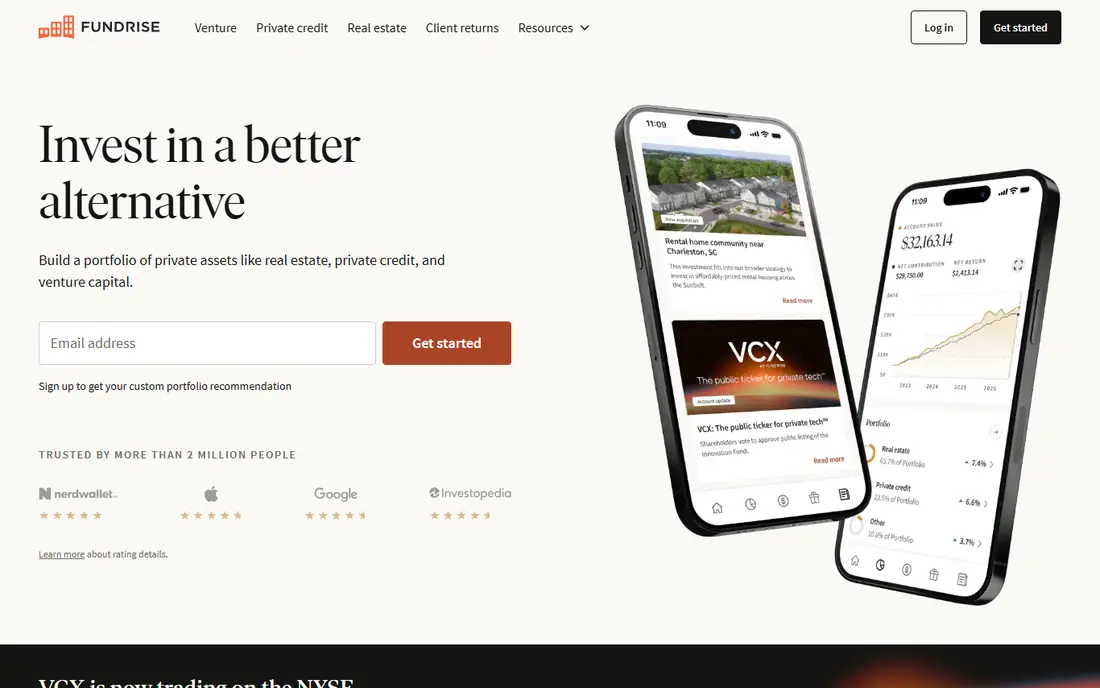
Fundrise calls itself America's largest direct-to-consumer private markets manager, and its homepage emphasizes low fees, flexible minimums, and quarterly liquidity. Instead of picking single properties, you invest in funds that hold diversified portfolios, which spreads risk across many assets. The platform has expanded beyond real estate into venture capital, so check whether a fund you pick is real estate focused or broader.
The trade-off is opacity on entry costs: the homepage does not state a minimum investment or fee schedule, so confirm both before committing. Quarterly liquidity also means you cannot exit on demand. Fundrise suits investors who want diversified private exposure without choosing individual deals.
What we like- Large direct-to-consumer platform
- Funds span real estate and venture
- Quarterly liquidity windows
- Low fees with no carried interest
Watch out for- Minimums and fees are not stated on the homepage
- Returns depend on private markets
- Liquidity is quarterly, not instant
Starting priceSee website
Free planNo

RealtyMogul has operated for over a decade, giving investors access to commercial real estate through private placements, 1031 exchange properties, and real estate investment trusts. Its homepage stresses a formal review process for every deal, covering the sponsor, business plan, property, and documentation, plus transparent information for each offering.
The platform's own disclosures are blunt: investments are speculative, involve substantial risk including loss of capital, and are illiquid. Many offerings are limited to accredited investors, and minimums are not published on the homepage. RealtyMogul fits experienced investors who read offering documents carefully and can hold for years.
What we like- Over 10 years in business
- Private placements, 1031 exchange properties, and REITs
- Detailed deal documentation
- Responsive customer service
Watch out for- Many offerings are for accredited investors
- Minimums are not on the homepage
- Investments are speculative and illiquid
Starting priceSee website
Free planNo
Arrived lets you buy shares of individual rental homes rather than a fund, so you pick properties by location and strategy. The homepage shows live share prices and returns for named properties, with total invested over $490 million and $124 million distributed to investors. Property managers handle tenants and repairs, so you are an investor, not a landlord.
Liquidity is limited: redemptions are available only during quarterly windows and only after your first six months invested, subject to approval. The homepage also shows properties with negative returns alongside winners, which is an honest reminder that house prices fall. Arrived suits investors who want to handpick rentals with small amounts and can hold long term.
What we like- Buy shares of individual rental homes
- Monthly cash flow plus appreciation potential
- Property managers handle tenants
- Share prices are transparent
Watch out for- Redemption is limited to quarterly windows after six months
- Some properties have lost value
- Rental income is not guaranteed
Starting price$5,000 minimum investment
Free planNo

EquityMultiple simplifies commercial real estate investing with a $5,000 starting minimum and a strict filter: it accepts only around 5 percent of the investments it considers. Its team conducts extensive due diligence and manages assets through each deal's lifecycle, aiming to protect capital as well as grow it.
The commercial focus brings both opportunity and risk. Deals are larger and longer than single-family rentals, and performance depends on the underlying property and sponsor. EquityMultiple suits investors with at least $5,000 who want vetted commercial exposure and understand that private deals are long-term commitments.
What we like- Starts at $5,000
- Accepts only around 5 percent of deals considered
- Institutional-grade due diligence
- Asset management through the deal lifecycle
Watch out for- Commercial focus means larger, longer commitments
- Returns depend on deal performance
- Many offerings require accreditation
Starting price$5,000 minimum investment (typical)
Free planNo
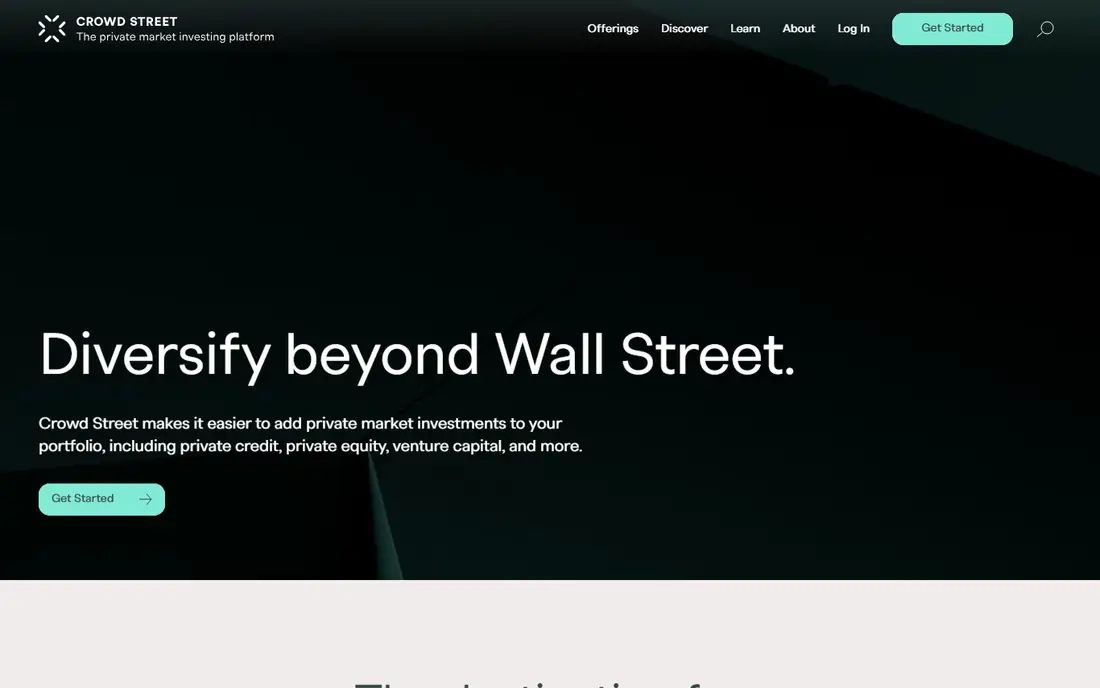
CrowdStreet, now styled Crowd Street, gives accredited investors direct access to private market opportunities including commercial real estate, private equity, and private credit. It charges investors no account fees, earning revenue from sales loads and servicing fees paid by funds, and its minimum investment is typically $5,000, though some offerings require more.
The platform's disclosures are clear about risk: private market investments are not traded on public exchanges, liquidity may be limited, some offerings are not registered with regulators, and investors must be able to sustain a full loss of capital. CrowdStreet fits accredited investors who want broad private-market access and can accept long lockups.
What we like- No account fees charged to investors
- Access to funds from leading managers
- Over 300,000 members
- Direct access to private market deals
Watch out for- Limited to accredited investors
- Minimums may be higher for some offerings
- Investments are illiquid and may not be registered with regulators
Starting price$10 minimum investment
Free planNo
Groundfloor stands out for its low entry point: real estate-backed notes start at $10, with fixed rates up to 9.0 percent APY and terms as short as 6 to 12 months. Every loan is secured by a first or second lien on real property, and the platform claims a perfect repayment track record across more than $2.2 billion facilitated since 2013.
Higher-yield products have higher minimums, from $1,000 to $10,000, and target returns are not guarantees. Groundfloor has also expanded into consumer credit, music royalties, and pre-IPO stock, which carry different risks than real estate loans. It suits investors who want short, secured real estate exposure starting small.
What we like- Starts at just $10 for notes
- Short 6 to 12 month loan terms
- First or second lien security on loans
- Perfect repayment track record claimed
Watch out for- Higher-yield products require $1,000 to $10,000
- Returns are targets, not guarantees
- Newer categories such as pre-IPO carry different risks
Starting priceSee website
Free planNo
Yieldstreet built its name on private-market alternatives, including real estate, art, and private credit, and its site now presents under the Willow Wealth brand. The platform's disclosures stress that private placements are not bank deposits, are not FDIC insured, may lose value, and are only suitable for investors who can afford to lose their entire investment and hold for at least five to seven years.
That long horizon is the key filter. Yieldstreet suits investors who already hold a diversified portfolio and want a small alternatives allocation, not anyone seeking quick returns or easy exits. Minimums and current offerings are not stated on the homepage, so review offering documents before investing.
What we like- Broad private-market menu beyond real estate
- Asset-based loans and funds
- Platform now presents as Willow Wealth
Watch out for- Investments are highly illiquid and speculative
- Minimums are not on the homepage
- Only suitable for investors who can afford total loss
Starting priceSee website
Free planNo
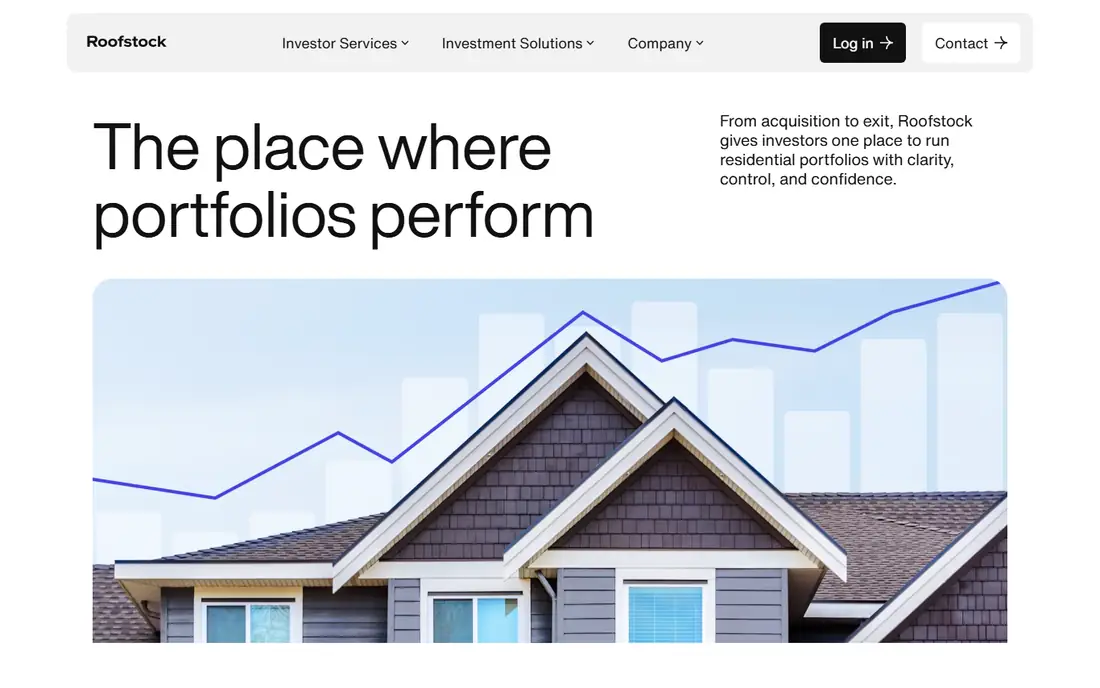
Roofstock differs from every other platform here: you buy whole rental properties, not shares or notes. Its marketplace covers 50 markets with over 400,000 users and $10 billion transacted, and its tools support the full lifecycle from acquisition to exit, including property management through its brands.
That ownership brings real responsibility and real capital requirements, since a whole house costs far more than a $10 note. Rents, vacancies, and repairs remain your problem even with a manager. Roofstock suits investors ready to own rental property outright and who want a marketplace with data and management support rather than a fractional platform.
What we like- Buy entire single-family and build-to-rent properties
- Marketplace spans 50 markets
- Tools cover acquisition through exit
- Over $10 billion transacted
Watch out for- Whole-property prices mean large capital commitments
- You remain a landlord, even with management
- Property prices and rents vary by market
How we chose
We verified all eight homepages by opening them and confirming each loads and belongs to the product listed, including noting that yieldstreet.com now presents as Willow Wealth. Minimums were taken from vendor homepages where stated, and we used "See website" where the homepage does not publish a figure. We covered the full spectrum from fractional shares to whole-property ownership, and we weighed liquidity, accreditation requirements, and transparency about risk.
Start with liquidity. Ask how long your money is locked up, whether redemptions exist, and what happens if you need to exit early. A platform with quarterly windows is very different from one with a five-year hold, and that difference matters more than a headline return figure.
Next, check accreditation and minimums. Several platforms here serve accredited investors only or set $5,000 minimums, while Groundfloor notes start at $10. Then read the offering documents for fees, since platforms earn money differently: some charge investors directly, others take fees from funds, and both reduce your net return. Watch for fee layers too, since a fund can charge its own management fee on top of a platform fee. Finally, diversify across deals and platforms rather than concentrating in one property or sponsor, and never invest money you cannot afford to lose.
Frequently asked questions
How much money do I need to start investing in real estate platforms?
It ranges from $10 for Groundfloor notes to $5,000 typical minimums at EquityMultiple and CrowdStreet, while whole properties on Roofstock cost far more. Fractional platforms such as Arrived let you start with a single share.
Are these investments safe?
No investment is safe, and private real estate carries specific risks: illiquidity, property value declines, sponsor failure, and total loss of capital. Platforms disclose these risks in their offering documents, and you should read them before investing.
Do I need to be an accredited investor?
For some platforms, yes. CrowdStreet and many RealtyMogul offerings require accreditation, while Arrived, Fundrise, and Groundfloor notes are open to everyday investors. Accreditation generally depends on income or net worth thresholds set by regulators.
How do I get my money back?
It depends on the platform. Some offer quarterly redemption windows, some return capital when a loan matures or a property sells, and some require holding until a fund exits. Always confirm the exit path before investing.
Is this article financial advice?
No. This article compares platforms for education only and is not financial, tax, or legal advice. Consult a licensed financial advisor before making investment decisions.
Sources we checked (8)
- https://fundrise.com
- https://realtymogul.com
- https://arrived.com
- https://www.equitymultiple.com
- https://crowdstreet.com
- https://groundfloor.com
- https://yieldstreet.com
- https://www.roofstock.com
Is your product missing or out of date?
We review this list regularly. Vendors can request a listing, send updated pricing or ask about featured placement.

Shihab Mia · Founder, Rankite
Shihab has 5+ years in B2B and SaaS SEO. He writes Rankite's software buying guides from pricing pages, documentation and public user reviews. More about Shihab.