How we make this list: we compare pricing pages, product documentation and public user reviews. Rankite is independent; if a vendor ever pays for a featured spot, that listing is clearly labeled Partner.
Key takeaways
- Maintenance software splits two ways: dedicated coordination platforms (Property Meld, Latchel, Fixflo) that sit on top of your accounting system, and all-in-one suites (AppFolio, Buildium, DoorLoop, TenantCloud, RentRedi) that bundle maintenance with leasing and accounting.
- Property Meld is the most maintenance-obsessed option, with a $200/month minimum and workflows built around the full repair lifecycle. It fits managers with 100+ doors; smaller landlords will find it oversized.
- The cheapest credible starting point is TenantCloud at $15/month billed annually. Buildium's $62/month Essential plan adds stronger accounting for managers who want one system.
- Nobody publishes complete pricing except at the entry level. Per-unit fees, monthly minimums, payment processing charges and add-on modules decide the real bill, so model your door count before comparing.
Quick comparison
| Tool | Best for | Starting price | Free plan |
|---|
 Property Meld Property Meld | Dedicated maintenance coordination | From $200/month | No |
 Latchel Latchel | 24/7 maintenance contact center | See website | No |
 AppFolio AppFolio | Full-suite with AI maintenance dispatch | See website | No |
 Buildium Buildium | All-in-one for growing managers | From $62/month | No |
 TenantCloud TenantCloud | Budget all-in-one for landlords | From $15/month | Free trial (14 days) |
 RentRedi RentRedi | Simple mobile-first management | See website | No |
 DoorLoop DoorLoop | Modern all-in-one with easy onboarding | See website | No |
 Fixflo Fixflo | Structured repairs for letting agents | See website | No |
Is your product missing or out of date?
We review this list regularly. Vendors can request a listing, send updated pricing or ask about featured placement.
The best property management maintenance software
Starting priceFrom $200/month
Free planNo
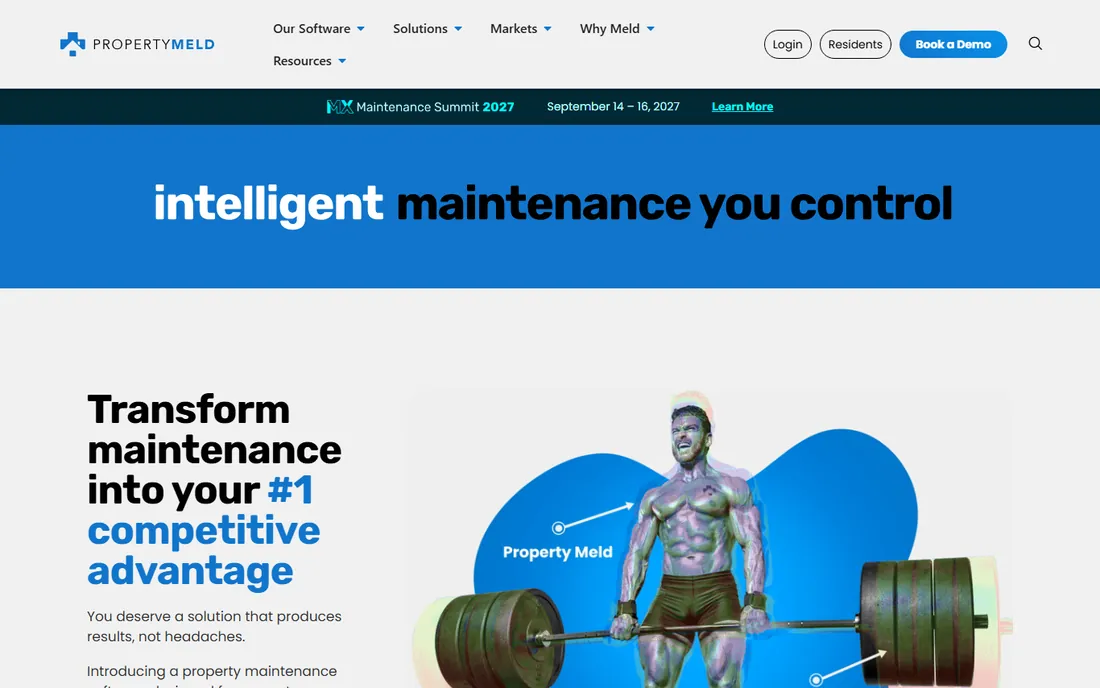
Property Meld does not try to be your accounting software. It does one job, coordinating maintenance between residents, vendors, managers and owners, and it does it with unusual depth. Residents submit requests and exchange availability directly with vendors, invoices route through owner approval thresholds, and the analytics track cycle times, technician efficiency and average invoice costs across the portfolio.
The vendor is upfront that it fits management companies with 100+ doors, and the $200 monthly minimum enforces that positioning. If maintenance chaos is your biggest operational cost, the specialization pays for itself. If you manage 20 doors and just need a ticketing queue, it is more system than you need.
What we like- Purpose-built for the full repair lifecycle, from request to invoice
- Vendor and resident scheduling in as little as 4 minutes
- Deep maintenance analytics and owner approval workflows
Watch out for- $200/month minimum prices out small landlords
- Adds a second system if you already run a full property suite
Starting priceSee website
Free planNo
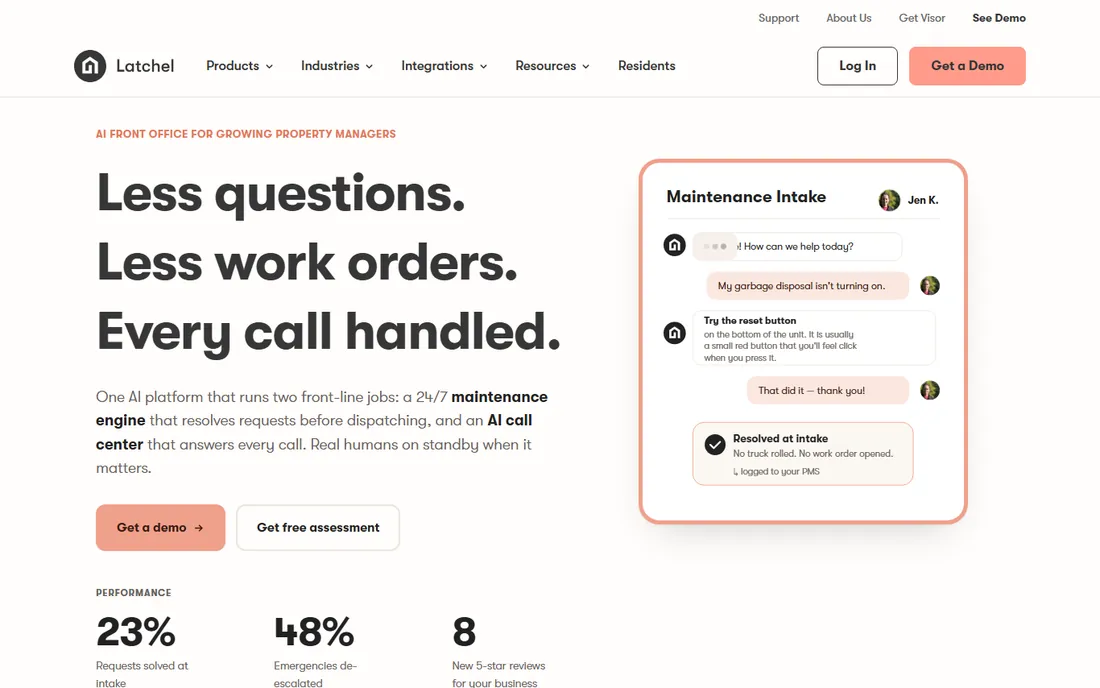
Latchel's pitch is simple: never let a maintenance call go to voicemail again. The service combines software with a 24/7 contact center that takes resident calls, triages emergencies, dispatches vendors and follows up, while the platform keeps every ticket visible to your team. For managers losing after-hours emergencies to voicemail, that coverage is the product.
It is a service-plus-software model, so expect quote-based pricing rather than a self-serve signup, and the ongoing cost sits on top of whatever property management suite you already pay for. The math works when one prevented emergency or one retained owner covers the fee.
What we like- Around-the-clock maintenance call handling for residents
- Triages emergencies before they reach your team
- Integrates with major property suites
Watch out for- Quote-based pricing with no public numbers
- Adds ongoing service cost on top of software
Starting priceSee website
Free planNo
AppFolio bundles maintenance into a full property management suite, and the maintenance workflows benefit from the platform's scale: online work orders, vendor assignment, AI-assisted dispatch, and invoice processing that reads bills for you. Managers running mixed portfolios get one system for residential, commercial and student housing instead of three.
The trade-offs are well documented in user reviews. Pricing is quote-based and per-unit, which scales painfully for large portfolios, and support response times draw regular complaints. It is the power pick for bigger operations that can absorb the cost and manage the vendor relationship firmly.
What we like- AI-assisted maintenance dispatch and invoice reading
- Strong mobile app for running work orders in the field
- Handles residential, commercial and student housing
Watch out for- Quote-based pricing
- Per-unit model gets expensive at scale
- Support responsiveness is a common complaint
Starting priceFrom $62/month
Free planNo
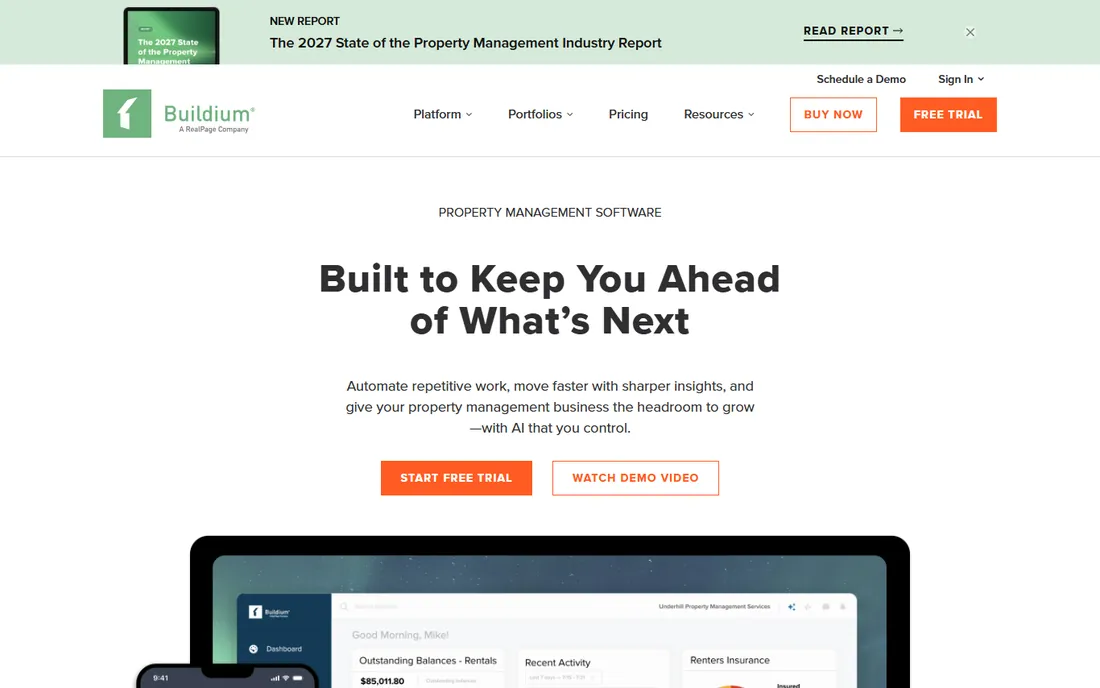
Buildium is the sensible middle ground: a full property management platform with real maintenance workflows, work orders, vendor tracking, resident portals, at a published entry price. The Essential plan starts at $62 per month, with Growth at $192 and Premium at $400 adding automation, analytics and an open API. A 14-day free trial lets you test with your own data.
The honest catch is the unit-based scaling. That $62 entry price covers a small portfolio; the bill grows with your door count, and the genuinely useful automation lives on the higher tiers. For residential managers who want one system without enterprise complexity, it remains one of the easiest recommendations on this list.
What we like- Published pricing from $62/month on Essential
- Maintenance, accounting and leasing in one system
- 14-day free trial with no credit card
Watch out for- Pricing scales with unit count, so costs rise as you grow
- Advanced automation reserved for higher tiers
Starting priceFrom $15/month
Free planFree trial (14 days)
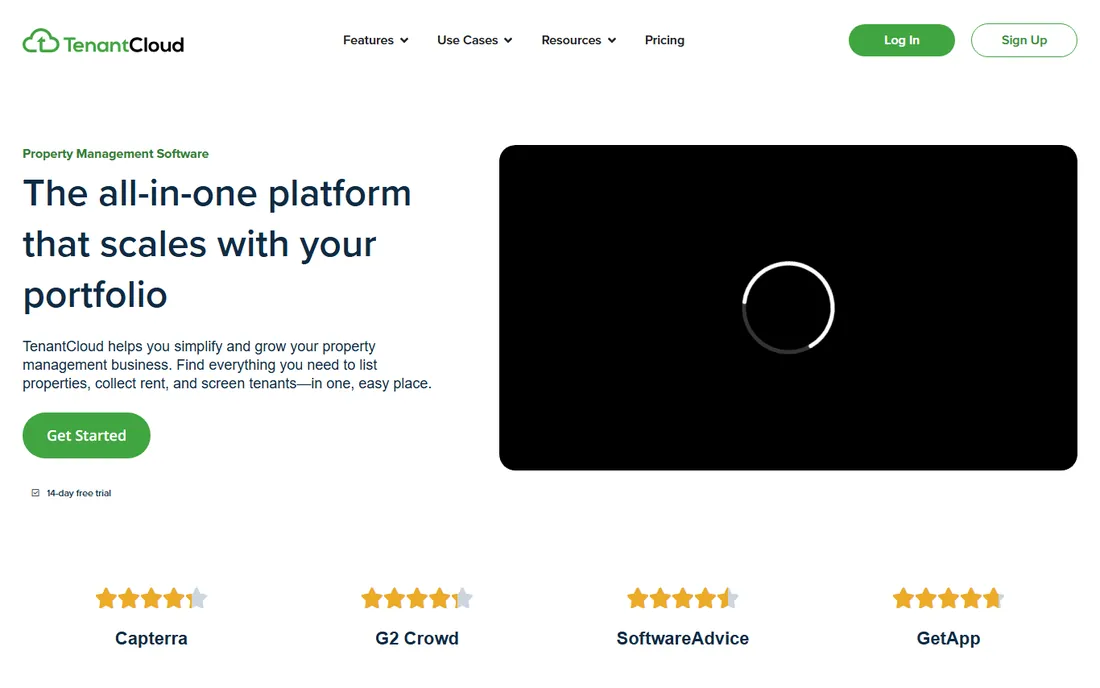
TenantCloud is the budget play that still takes maintenance seriously. The Starter plan runs $15 per month billed annually and includes a full maintenance system: request tracking, vendor assignment through Thumbtack, tenant billing for chargebacks, and inspection tools. Paid plans cover unlimited units, which keeps the math simple as you grow.
Two things to watch. There is no permanent free plan, just a 14-day trial, and payment processing fees (3.5% plus 30 cents for cards, around $2 for bank transfers) sit on top of the subscription. For DIY landlords and small managers, it is the lowest-cost way to get organized maintenance.
What we like- Cheapest entry on this list at $15/month billed annually
- Maintenance system with vendor assignment and inspection tools
- Unlimited units on paid plans
Watch out for- No free plan, only a 14-day trial
- Advanced accounting features need higher tiers
- Payment processing fees add up
Starting priceSee website
Free planNo
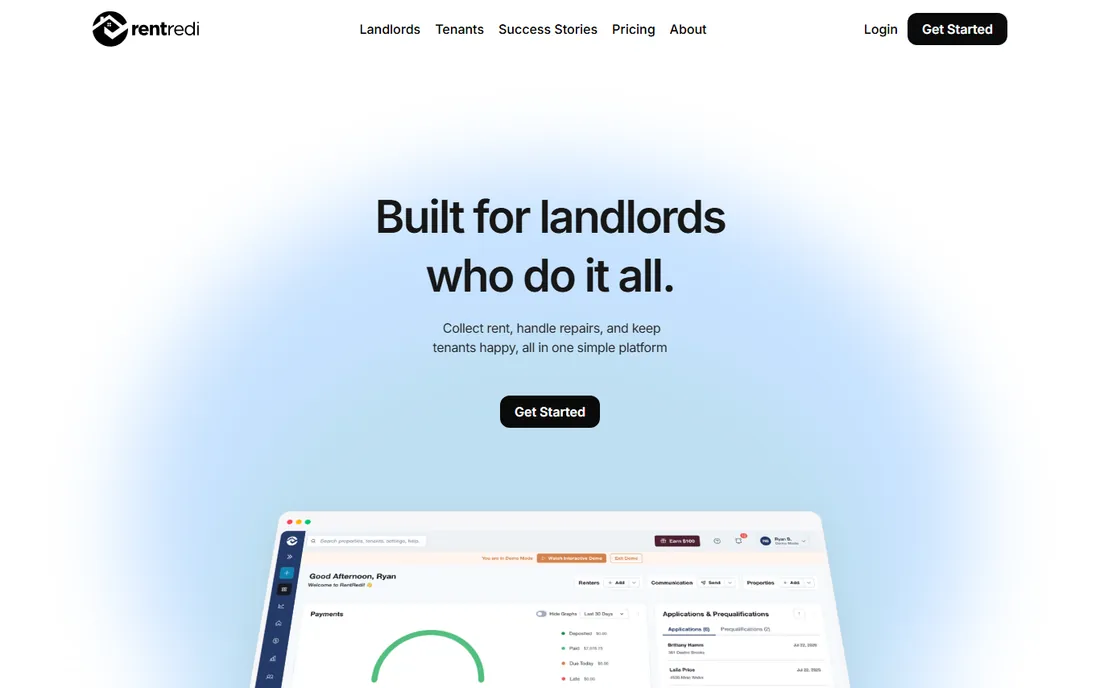
RentRedi keeps property management simple and mobile-first, which suits landlords who run their business from a phone. Tenants submit maintenance requests through the app, landlords track and assign them, and the core leasing and payment workflows stay uncluttered. Onboarding is fast enough that most landlords are running in an afternoon.
Simplicity is also the limit. Maintenance tracking covers the basics but lacks the vendor coordination depth of Property Meld or the automation of Buildium's higher tiers. It is a good fit for landlords who want maintenance requests to stop living in text messages, not for managers running complex vendor operations.
What we like- Clean mobile experience for landlords and tenants
- Straightforward maintenance request tracking
- Low-friction onboarding
Watch out for- No published pricing
- Maintenance features are basic compared to dedicated platforms
Starting priceSee website
Free planNo
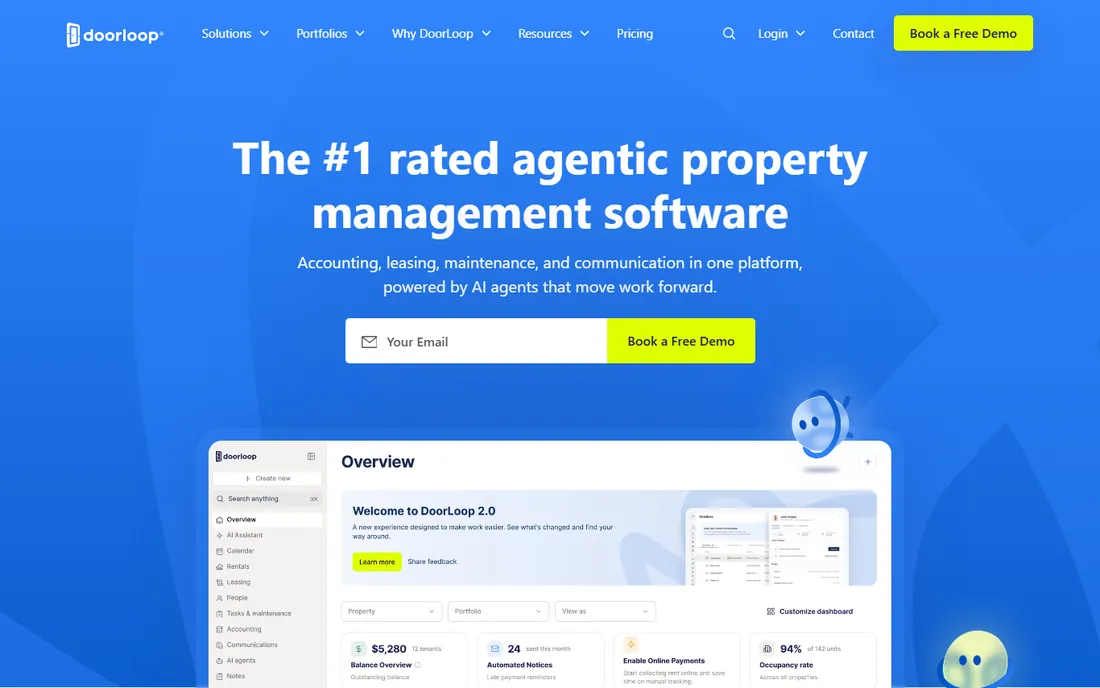
DoorLoop has grown fast by being the modern, easy-to-use alternative to legacy property suites. Maintenance requests, work orders and vendor management come bundled with accounting, leasing and communications, and the tiered plans scale from small landlords to mid-size managers. Users consistently praise how quickly teams get productive.
The vendor's youth cuts both ways: rapid product development, but a shorter track record than AppFolio or Buildium. Pricing is tiered and transparent in sales conversations, though we could not verify a published starting number from the vendor's own page. Worth a demo for any manager who finds the incumbents clunky.
What we like- Modern interface with transparent tiered pricing
- Solid maintenance workflows for small to mid-size portfolios
- Well-regarded ease of use
Watch out for- No published starting price verified from the vendor page
- Newer vendor with a shorter track record
Starting priceSee website
Free planNo
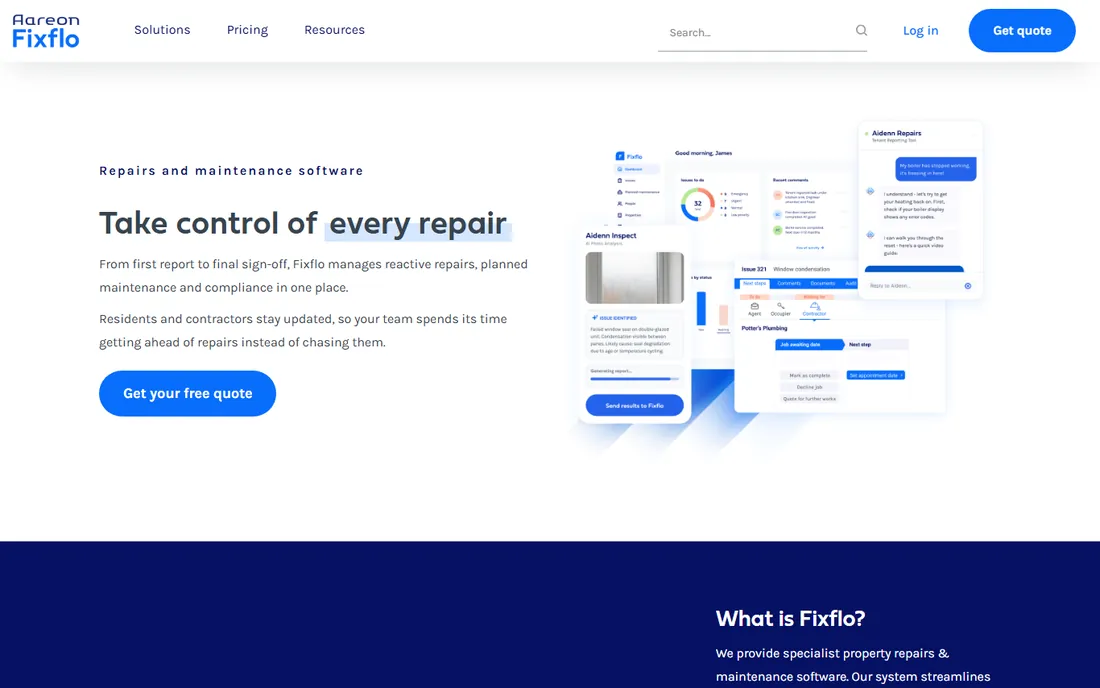
Fixflo approaches maintenance as a reporting problem: its guided repair diagnosis helps tenants describe issues accurately, which cuts the misdiagnosed callouts that waste everyone's time. Every job carries a full audit trail across tenant, agent, landlord and contractor, and compliance tracking keeps safety certificates and obligations visible.
The platform grew up serving UK letting agents, so American managers will notice the terminology and some workflow assumptions. It is also a maintenance specialist rather than a full suite, so accounting lives elsewhere. For agencies where repair quality and compliance documentation matter most, the structured approach stands out.
What we like- Structured repair reporting that reduces misdiagnosed jobs
- Clear audit trail across tenants, agents and contractors
- Strong compliance tracking
Watch out for- UK roots show in terminology and workflows
- Quote-based pricing
- Less accounting depth than all-in-one suites
What to check before you buy
First, decide whether you need a specialist or a suite. If maintenance is handled inside a property management platform you already like, its built-in work orders may be enough. If maintenance is the operational bottleneck, losing requests, slow vendors, no cost visibility, a dedicated platform like Property Meld or Latchel earns its keep fast. Do not buy a specialist to fix a problem you do not have.
Second, count the doors honestly and model the pricing. Per-unit fees, monthly minimums and unit-based tiers behave very differently at 30 doors versus 300. Property Meld's $200 minimum, TenantCloud's $15 flat entry and Buildium's unit-scaled tiers each favor a different portfolio size. Run your actual door count through each model before comparing.
Third, check the resident and vendor experience, not just the manager dashboard. Maintenance software fails when residents will not use it or vendors ignore it. Mobile apps, text-message updates and simple scheduling matter more than analytics for adoption. Ask vendors for a resident-side demo, not just the admin view.
How we chose
We did not manage any properties for this guide. The shortlist comes from vendor pricing pages, product documentation, and public reviews on Capterra, G2, SourceForge and Reddit landlord communities. We favored tools with real maintenance depth, either dedicated or inside a credible suite, and a current US or international user base. Where vendors publish prices, we used their numbers; where they do not, we say so.
Common mistakes managers make
The biggest is buying software for the portfolio you want instead of the one you have. A 40-door landlord does not need enterprise maintenance analytics, and a 400-door manager will outgrow a basic ticketing queue in months. Match the tool to this year's door count, with a path to grow.
The second is ignoring the vendor side. The best maintenance platform in the world fails if your plumbers and electricians will not log in. Check that vendors can accept jobs by text or email without creating accounts, or expect adoption to stall.
The third is forgetting payment processing and add-on fees. Subscription prices are only the headline: card processing percentages, bank transfer fees, tenant screening charges and premium modules stack on top. Ask for the all-in monthly cost at your volume before signing.
Frequently asked questions
What is property management maintenance software?
Software that handles the repair lifecycle for rental properties: residents submit requests, managers triage and assign vendors, vendors schedule and invoice, and owners see costs. It may be a dedicated platform or a module inside a full property management suite.
Should I get dedicated maintenance software or an all-in-one suite?
Get the suite if you need leasing, accounting and maintenance together and your maintenance volume is moderate. Get a dedicated platform if maintenance is your bottleneck: high ticket volume, vendor coordination problems, or no cost visibility.
How much does property management maintenance software cost?
Dedicated platforms start around $200/month (Property Meld's minimum). All-in-one suites range from $15/month (TenantCloud) to $62/month (Buildium Essential) at entry level, scaling with units. Enterprise suites are quote-based. Payment processing and add-ons raise the real cost.
Can tenants submit maintenance requests without an account?
It depends on the platform. Most modern tools offer tenant portals or mobile apps; some let vendors and residents interact via text or email without full accounts. Confirm this before buying, because it decides adoption.
How do I get my vendors to actually use it?
Choose platforms that let vendors accept and update jobs by text or email without creating accounts. Start with your highest-volume vendors, and make the platform the only way jobs get assigned. Vendors follow the work.
What integrations matter most?
Accounting sync (QuickBooks, Xero), your existing property management suite if you keep one, and payment processing. Two-way sync matters: maintenance costs should flow to the ledger without rekeying.
Sources we checked (8)
- https://propertymeld.com/pricing/
- https://www.tenantcloud.com/review/avail-vs-tenantcloud
- https://www.tenantcloud.com/review/tenantcloud-vs-rentredi
- https://www.buildium.com/blog/best-property-management-software-2027/
- https://www.selecthub.com/property-management-software/appfolio-vs-buildium/
- https://lula.life/articles/best-property-management-software
- https://facilio.com/blog/property-management-maintenance-software/
- https://softwarefinder.com/property-management-software/fixflo-lettings
Is your product missing or out of date?
We review this list regularly. Vendors can request a listing, send updated pricing or ask about featured placement.

Shihab Mia · Founder, Rankite
Shihab has spent more than a decade helping SaaS and e-commerce brands grow through search. He writes Rankite's software buying guides from pricing pages, documentation and public user reviews. More about Shihab.