How we make this list: we compare pricing pages, product documentation and public user reviews. Ratings come from G2, Capterra or Trustpilot, with the date we checked them.
Key takeaways
- Google Ads and Microsoft Advertising are the platforms themselves, not optional extras.
- Semrush and SpyFu cover research and competitive intelligence for planning campaigns.
- Optmyzr and Adalysis automate bid, budget, and keyword work at scale.
- WordStream suits small businesses learning PPC basics.
- Marin Software sits at the enterprise end for high-spend cross-channel programs.
Quick comparison
| Tool | Best for | Starting price | Free plan |
|---|
 Google Ads | Search advertising itself | Free; ad spend separate | Yes |
 Microsoft Advertising | Bing and partner search | Free; ad spend separate | Yes |
 Semrush | Competitor PPC research | Pro from $139.95 per month | Free trial |
 SpyFu | Historical competitor research | Basic from $39 per month | Yes |
 Optmyzr | Automation at scale | From $209 per month | Free trial |
 WordStream | Small business PPC | From $49 per month | Yes |
 Adalysis | Ad testing and audits | From $99 per month | Free trial |
 Marin Software | Enterprise cross-channel | From $500 per month | Free trial |
Is your product missing or out of date?
We review this list regularly. Vendors can request a listing, send updated pricing or ask about featured placement.
#1Google Ads
Best for: Search advertising itself4.3/5 on
G2 (2,047 reviews, checked Oct 2026)
Visit ads.google.com
Starting priceFree; ad spend separate
Free planYes
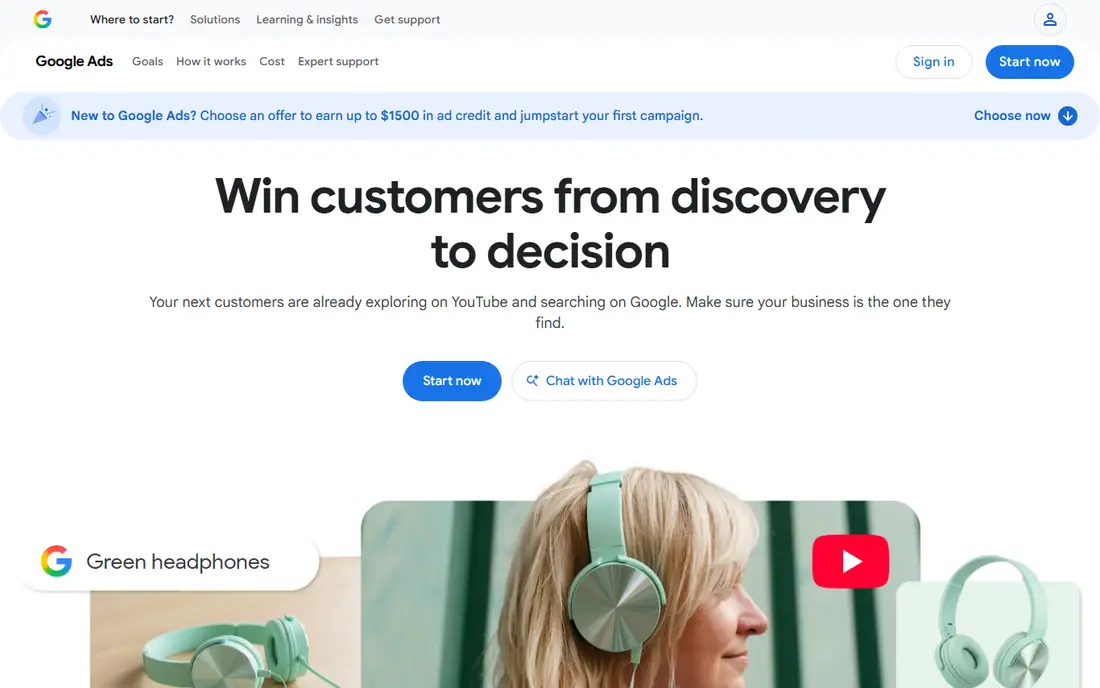
Google Ads is the platform itself, not an optional tool: any PPC strategy runs through it or Microsoft Advertising. Keyword Planner sizes demand and bid ranges, Ads Editor handles bulk builds and edits offline, and Ads Scripts automate alerts and adjustments for teams with technical resources. The platform is free to use, with costs coming from ad spend itself.
Complexity grows with scale, and competitive niches push click prices high. Automation helps but needs oversight, since unchecked automated bidding can overspend. For any business doing paid search, Google Ads is the mandatory starting point.
What we like- Largest search audience
- Keyword Planner for research
- Ads Editor for bulk changes
- Scripts for custom automation
Watch out for- Interface complexity grows with scale
- Costs rise in competitive niches
- Automation needs oversight
Starting priceFree; ad spend separate
Free planYes
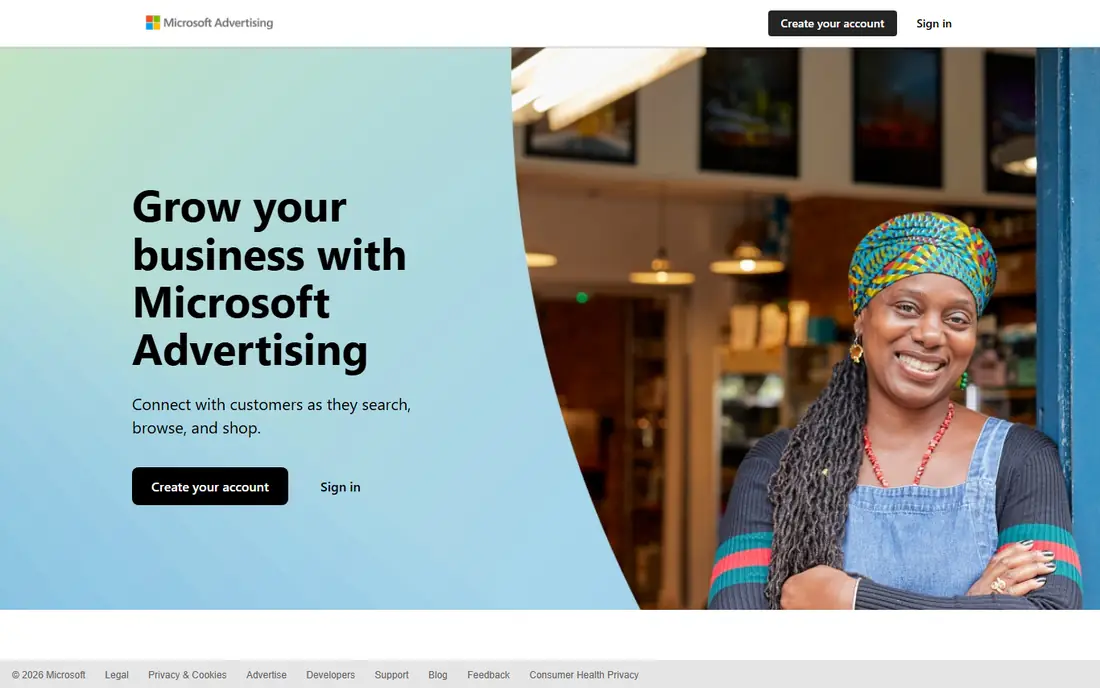
Microsoft Advertising covers Bing, Yahoo, and partner search with lower click costs than Google in many niches. Campaigns import directly from Google Ads, so a team can extend reach without rebuilding everything. Audience demographics skew older and higher-income in some categories, which suits certain advertisers.
The audience is smaller than Google, and third-party integrations are fewer. For a business already running Google Ads, Microsoft Advertising is the cheapest incremental reach available, often at lower cost per click.
What we like- Lower click costs than Google in many niches
- Bing, Yahoo, and partner reach
- Imports Google Ads campaigns
Watch out for- Smaller audience than Google
- Fewer third-party integrations
- Limited social and display reach
#3Semrush
Best for: Competitor PPC research4.4/5 on
G2 (4,035 reviews, checked Oct 2026)
Visit semrush.com
Starting pricePro from $139.95 per month
Free planFree trial
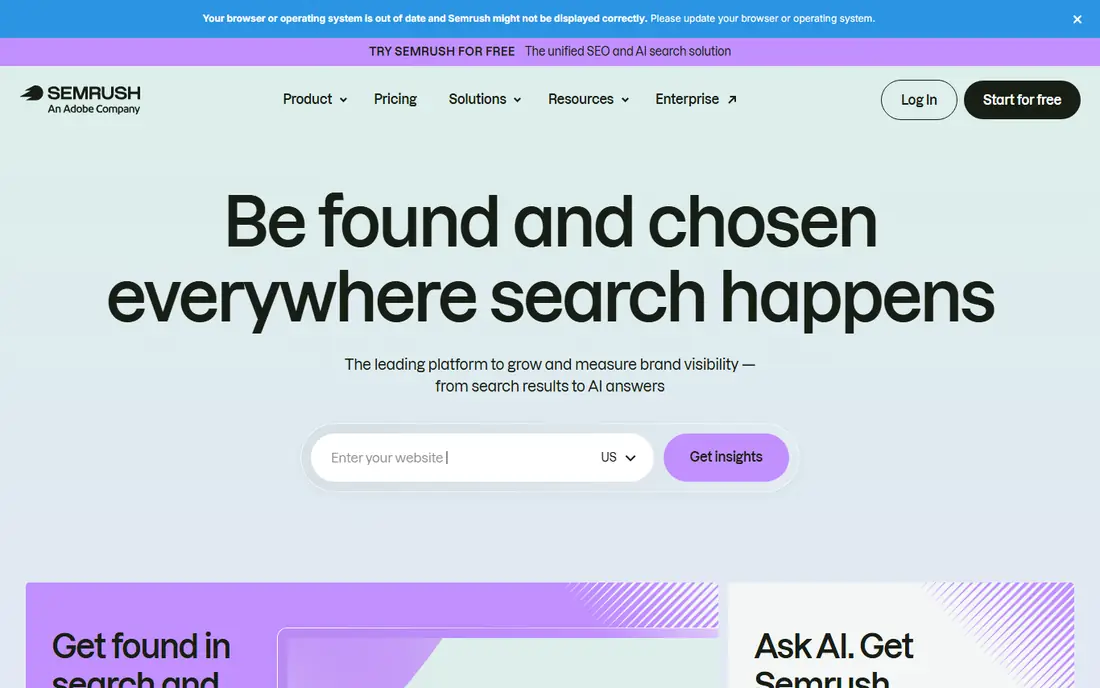
Semrush covers competitor PPC research inside an all-in-one suite. Advertisers can see rival ad copy, keywords, and landing pages, track paid positions over time, and plan campaigns with keyword and competitive data. The Advertising Toolkit starts from $99 a month billed annually, while full Pro runs $139.95 a month.
PPC features sit inside a larger SEO suite, so teams that only want PPC pay for more than they use. For an agency combining PPC and SEO research, Semrush is the most complete research platform.
What we like- Competitor ad history and keywords
- Advertising Toolkit from $99 a month
- Combines PPC and SEO research
Watch out for- Pro at $139.95 a month
- PPC features sit inside a larger suite
- Data depth varies by market
#4SpyFu
Best for: Historical competitor research4.6/5 on
G2 (518 reviews, checked Oct 2026)
Visit spyfu.com
Starting priceBasic from $39 per month
Free planYes
SpyFu tracks how a competitor's Google Ads changed over time, showing keyword history, ad copy evolution, and budget estimates. Basic costs $39 a month, or $29 a month billed annually, making it the cheapest serious research tool here. A free version covers limited searches for quick checks.
SpyFu does not manage bids or automate campaigns, so it pairs with a management tool rather than replacing one. For a freelancer or small team that needs competitor intelligence on a budget, SpyFu delivers the best research per dollar.
What we like- Tracks how competitor ads changed over time
- Cheapest serious research tool
- Unlimited searches on paid plans
Watch out for- Basic at $39 a month monthly, $29 annual
- No bid management
- Data depth varies outside the US
#5Optmyzr
Best for: Automation at scale4.7/5 on
G2 (140 reviews, checked Oct 2026)
Visit optmyzr.com
Starting priceFrom $209 per month
Free planFree trial
Optmyzr automates bid, budget, and keyword work at scale for Google and Microsoft Ads specialists. One-click optimizations apply proven improvements across accounts, rule-based automation handles routine tasks, and reporting covers performance across clients. Essentials pricing starts around $209 a month billed annually.
It covers search channels, not full cross-channel programs, and it needs PPC expertise to use well. For a growing agency or in-house team managing many accounts, Optmyzr saves enough manager time to justify its price.
What we like- Automates bid, budget, and keyword work
- One-click optimizations
- Scales across many accounts
- Strong reporting
Watch out for- From $209 a month billed annually, $249 monthly
- Channel automation only, not cross-channel
- Needs PPC expertise
Starting priceFrom $49 per month
Free planYes
WordStream suits small businesses learning PPC basics. It manages Google and Facebook Ads in one place with guided workflows, and the free grader audits an account for a baseline read before spending. Paid plans start around $49 a month.
It is not built for scaling growth teams, and automation is lighter than Optmyzr or Adalysis. For a small business running its first campaigns, WordStream offers the gentlest on-ramp with real management, not just reporting.
What we like- Small-business friendly
- Manages Google and Facebook Ads in one place
- Free grader audits accounts
- Guided workflows
Watch out for- From $49 a month
- Not built for scaling growth teams
- Automation lighter than Optmyzr
Starting priceFrom $99 per month
Free planFree trial
Adalysis fits search-heavy accounts needing audits and ad testing. Structured testing rotates ad variations and declares winners with statistical care, account audits flag quality issues before they cost money, and alerts catch budget, disapproval, and performance problems early. Pricing starts around $99 a month at the lowest spend band and scales with spend.
It is Google Ads focused, and its bidding automation is lighter than Optmyzr. For a specialist who wants rigorous testing and account QA, Adalysis is the most disciplined tool here.
What we like- Structured ad testing
- Account audits and quality control
- Alerts for account issues
- Spend-based pricing
Watch out for- From $99 a month at lowest spend band
- Google Ads focused
- Smaller feature set than Optmyzr for bidding
Starting priceFrom $500 per month
Free planFree trial
Marin Software sits at the enterprise end for cross-channel PPC management and bid optimization. It coordinates search, social, and retail media programs with forecasting and budget allocation across channels, and publisher integrations cover major platforms. Marin Connect starts from $500 a month, with higher tiers custom priced.
It is heavy for lean teams and implementation takes time. For a large agency or brand above about $250,000 a month in spend, Marin is built for the complexity smaller tools cannot handle.
What we like- Cross-channel PPC management
- Bid optimization at enterprise scale
- Publisher integrations
- Advanced forecasting
Watch out for- Connect from $500, higher tiers custom
- Heavy for lean teams
- Implementation takes time
How we chose
We compared tools on research depth, automation, testing, reporting, and pricing, using vendor pages and published comparisons from September and October 2026. Software costs exclude ad spend, which is the larger budget line for most advertisers. We favored tools US advertisers can use today with a distinct strength. We did not claim hands-on testing, and where prices scaled with spend we quoted the entry band.
Start with the platforms themselves. Google Ads and Microsoft Advertising are mandatory, and their free tools, Keyword Planner, Ads Editor, and Looker Studio, cover research, bulk changes, and reporting at no software cost. A solo practitioner or small business under about $10,000 a month in spend can run entirely on the free stack plus a free grader audit.
Then add paid software only when a specific bottleneck costs time or money. Competitor research needs justify SpyFu or Semrush. Multi-account automation justifies Optmyzr. Structured testing and QA justify Adalysis. Enterprise cross-channel coordination justifies Marin or Skai. The jump from free to lean costs less than a single day of an agency's time, while the jump to mid-market is driven almost entirely by automation and reporting purchases.
Also separate software cost from ad spend in budgets. A $200 tool on $10,000 of spend adds 2% overhead, while the same tool on $1,000 of spend adds 20%, so scale tool spend with account spend. Finally, measure the tool by time saved and performance gained, not by features: a tool that saves five manager hours a week pays for itself, while a dashboard nobody opens does not.
Common mistakes waste PPC budgets. Advertisers buy enterprise tools for small accounts and never use their depth, or run automation without oversight and let budgets drift. Start free, add one paid tool at a time, and keep the tool only if it measurably saves time or improves return on ad spend within two months.
Attribution deserves attention before scaling spend. A tool that reports only last-click conversions will overvalue search and undervalue the display, social, and video touches that introduced the customer. Connect conversion tracking properly, compare assisted conversions alongside last-click results, and judge campaigns on business outcomes like revenue and margin rather than clicks alone, since cheap clicks that never convert are the most expensive kind.
Landing pages decide whether PPC spend converts, and no bidding tool fixes a weak page. Match each ad group to a dedicated landing page with one clear offer, fast load times, and a single call to action, then test headlines and forms as carefully as ad copy. A campaign that sends traffic to a generic homepage wastes the targeting precision that makes paid search valuable in the first place for advertisers of every size, since the click itself is only valuable when the page it lands on completes the job the ad promised.
Frequently asked questions
What is the best PPC tool for beginners?
Google Ads itself plus WordStream. Start with the free platform tools, use WordStream free grader for a baseline, and add paid management only when volume justifies it.
Do I need paid PPC software?
Not at first. The free stack covers research, bulk changes, and reporting. Paid tools pay off when multi-account automation, testing, or reporting bottlenecks cost real manager time.
Which PPC tool is best for competitor research?
Semrush for depth inside a larger suite, or SpyFu for the cheapest serious research at $39 a month. Both show rival keywords, ad copy, and history.
How much do PPC tools cost?
From free for platform tools to $39 a month for SpyFu, $99 for Adalysis, $209 for Optmyzr, and $500-plus for Marin. Ad spend is separate and usually much larger.
What is the difference between Optmyzr and Adalysis?
Optmyzr automates bid, budget, and keyword work across accounts, while Adalysis focuses on structured ad testing and account audits. Many specialists use both.
Is Microsoft Advertising worth it if I already run Google Ads?
Usually yes. It extends reach to Bing and partner search at lower click costs in many niches, and campaigns import directly from Google Ads.
Sources we checked (8)
- https://ads.google.com
- https://ads.microsoft.com
- https://www.semrush.com
- https://www.spyfu.com
- https://www.optmyzr.com
- https://www.wordstream.com
- https://www.adalysis.com
- https://www.marinsoftware.com
Is your product missing or out of date?
We review this list regularly. Vendors can request a listing, send updated pricing or ask about featured placement.

Shihab Mia · Founder, Rankite
Shihab has 5+ years in B2B and SaaS SEO. He writes Rankite's software buying guides from pricing pages, documentation and public user reviews. More about Shihab.