How we make this list: we compare pricing pages, product documentation and public user reviews. Ratings come from G2, Capterra or Trustpilot, with the date we checked them.
Key takeaways
- Profound and Peec AI suit teams that want detailed LLM rank tracking with prompt-level positions and share-of-voice views.
- Otterly and Brandlight suit teams that want straightforward brand tracking across ChatGPT, Gemini, and Perplexity.
- Evertune and Goodie suit agencies and content teams that want prompt libraries, benchmarking, and content gap views.
- Semrush and Ahrefs suit SEO teams that want LLM rankings inside familiar suites alongside traditional rank data.
- LLM ranks shift daily as models update, so track trends over weeks, not single-day positions, and compare tools on identical prompts before buying.
Quick comparison
| Tool | Best for | Starting price | Free plan |
|---|
 Profound | Detailed LLM rank tracking | See website | No |
 Peec AI | Share-of-voice rankings | See website | No |
 Otterly | Simple LLM brand tracking | See website | No |
 Brandlight | Brand rankings plus alerts | See website | No |
 Evertune | Agency LLM tracking | See website | No |
 Goodie | Rankings plus content gaps | See website | No |
 Semrush | LLM ranks inside SEO suite | See website | No |
 Ahrefs | Brand mentions inside SEO suite | See website | No |
Is your product missing or out of date?
We review this list regularly. Vendors can request a listing, send updated pricing or ask about featured placement.
Starting priceSee website
Free planNo
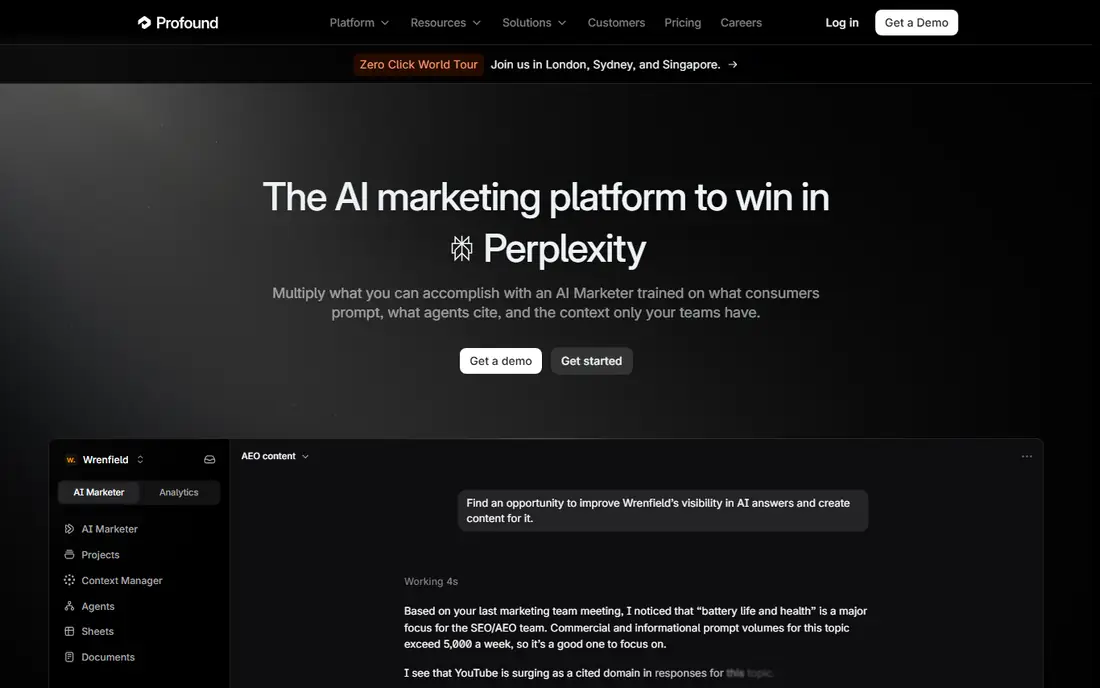
Profound suits teams that want the deepest LLM rank tracking available, with prompt-level positions, citation sources, and conversation detail across major AI engines. Its dashboards show how brand rank changes by prompt, engine, and time, which helps teams link ranking shifts to content changes or model updates. That depth suits brands where AI answers drive real buyer decisions.
Pricing is premium, and the depth takes time to learn, so small teams may find simpler tools faster to adopt. Profound works best for brands that treat LLM rankings as a core metric with dedicated owners. For detailed LLM rank tracking, it leads this list.
What we like- Prompt-level rank data
- Citation tracking
- Conversation-level detail
Watch out for- Premium pricing
- Learning curve for new users
#2Peec AI
Best for: Share-of-voice rankings4.7/5 on
G2 (21 reviews, checked Oct 2026)
Visit peec.ai
Starting priceSee website
Free planNo
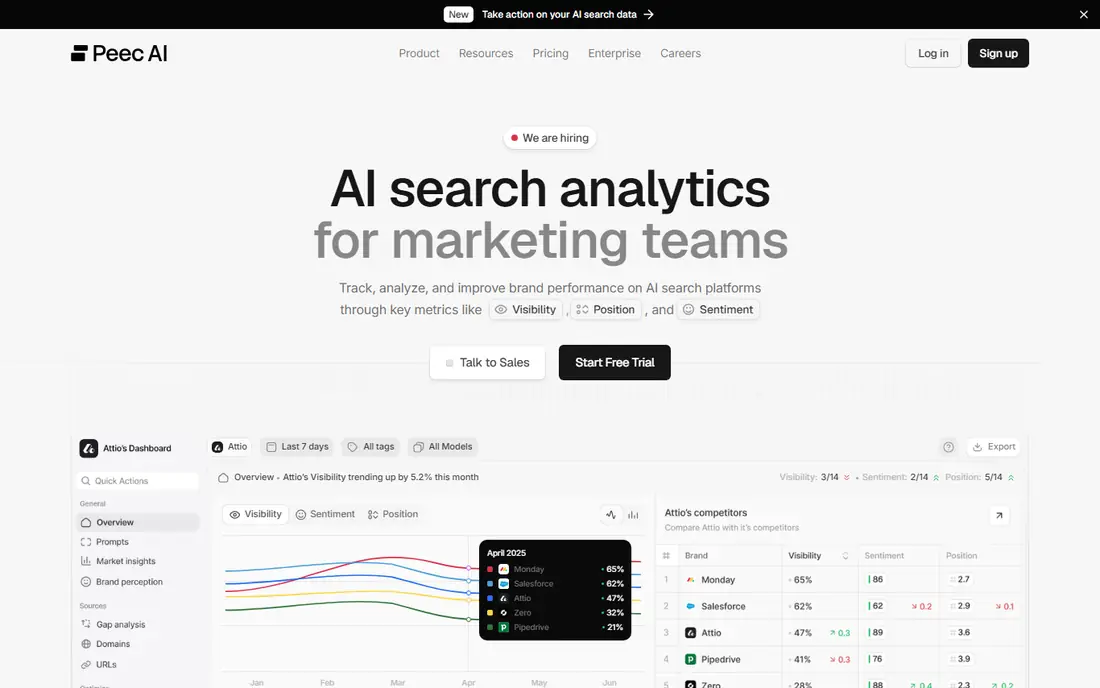
Peec AI suits teams that want share-of-voice rankings showing how often AI answers mention their brand versus competitors. Its prompt tracking covers major engines, and its competitor views reveal which rivals win AI recommendations on key buyer questions. That competitive lens helps brands in crowded markets prioritize content and PR work.
As a newer vendor, coverage varies by market and language, so check prompt coverage for your niche before buying. Peec works best for competitive brands that want clear share-of-voice trends. For share-of-voice LLM rankings, it is a strong pick.
What we like- Share-of-voice views
- Competitor rankings
- Prompt tracking
Watch out for- Newer vendor
- Coverage varies by market
Starting priceSee website
Free planNo
Otterly suits teams that want simple LLM brand tracking with clear rank views and weekly reports. It tracks mentions and link citations across ChatGPT, Gemini, and Perplexity, showing visibility trends without complex dashboards. That simplicity helps small marketing teams start LLM tracking quickly and report results to leadership plainly.
Depth lags Profound on conversation detail, and pricing at scale is custom. Otterly works best for teams that want core LLM rankings plus readable reports, not deep analytics. For simple LLM brand tracking, it is a practical choice.
What we like- Simple rank views
- Link citation tracking
- Weekly reports
Watch out for- Less depth than Profound
- Pricing is custom at scale
Starting priceSee website
Free planNo
Brandlight suits teams that want LLM brand rankings plus alerts when sentiment, accuracy, or visibility shifts. Its tracking covers major AI engines, and alerts flag when AI answers misstate facts or drop brand mentions, so teams can respond before buyers see wrong information. Trend reports show whether visibility improves after content work.
Pricing is premium, and the category is new, so methods vary across vendors. Brandlight works best for brands that need monitoring plus fast alerts, not just monthly scores. For brand rankings with alerts, it stands out.
What we like- Brand rank tracking
- Sentiment and accuracy alerts
- Trend reports
Watch out for- Premium pricing
- Newer category
Starting priceSee website
Free planNo
Evertune suits agencies that track LLM rankings for several clients from one account. Its prompt libraries speed setup for common buyer questions, multi-client views keep accounts separate, and agency reporting presents rankings under client branding. That structure suits firms adding LLM tracking as a service line.
As a newer vendor, its track record is shorter than suite vendors, and pricing is custom. Evertune works best for agencies and multi-brand teams that need organized, scalable LLM tracking. For agency LLM tracking, it is a solid option.
What we like- Prompt libraries
- Multi-client tracking
- Agency reporting
Watch out for- Newer vendor
- Pricing is custom
Starting priceSee website
Free planNo
Goodie suits content teams that want LLM rankings tied to content gaps, so rankings lead directly to pages to create or update. It tracks brand mentions across AI engines, benchmarks competitors, and highlights topics where rivals rank but you do not. That gap view turns tracking data into editorial plans without extra analysis.
As a newer vendor, gap depth varies by plan, so check limits before buying. Goodie works best for content teams that act on rankings weekly. For rankings plus content gaps, it is a useful pick.
What we like- LLM rankings
- Content gap analysis
- Competitor benchmarking
Watch out for- Newer vendor
- Gap depth varies by plan
#7Semrush
Best for: LLM ranks inside SEO suite4.4/5 on
G2 (4,035 reviews, checked Oct 2026)
Visit semrush.com
Starting priceSee website
Free planNo
Semrush suits SEO teams that want LLM rankings inside the same suite as traditional rank tracking. Its AI toolkit shows LLM mentions alongside keyword rankings, audits, and research, which keeps all search performance in one place. Familiar workflows help teams adopt LLM tracking without learning a new platform.
LLM depth lags dedicated tools on conversation and citation detail, and suite pricing runs higher than single-purpose trackers. Semrush works best for SEO teams that want LLM ranks as part of broader search reporting. For suite-based LLM tracking, it is the most complete option.
What we like- LLM tracking inside full SEO suite
- Traditional ranks alongside
- Familiar workflows
Watch out for- LLM depth lags dedicated tools
- Suite pricing is higher
#8Ahrefs
Best for: Brand mentions inside SEO suite4.5/5 on
G2 (717 reviews, checked Oct 2026)
Visit ahrefs.com
Starting priceSee website
Free planNo
Ahrefs suits SEO teams that want AI brand mentions tracked inside a familiar suite with strong keyword and backlink data. Its Brand Radar monitors AI mentions alongside web mentions, which helps teams see how traditional authority and AI visibility connect. Keyword data supports content decisions behind ranking changes.
LLM depth lags dedicated vendors, and suite pricing runs higher than single-purpose tools. Ahrefs works best for SEO teams that want AI mentions as part of existing reporting. For suite-based brand tracking, it rounds out this list well.
What we like- Brand Radar tracks AI mentions
- Strong keyword data
- Familiar suite
Watch out for- LLM depth lags dedicated tools
- Pricing is higher
How we chose
We compared LLM rank tracking tools on prompt coverage, engine coverage, rank accuracy, share-of-voice views, citation data, and reporting, using vendor pages, product documentation, and public user experience. The reference buyer was a brand or SEO team tracking LLM rankings, so prompt-level data and trend reporting mattered more than headline scores. Methods were treated as evolving, since vendors measure LLM ranks differently. Sampling variation was treated as a core limit, since identical prompts can return different answers across runs. That caution applies to daily rank claims across all tools on this list, so judge trends over weeks rather than single days. Engine coverage was checked against buyer usage, not vendor defaults alone. Report customization was compared for agency clients. A tracking program that nobody reads wastes money, so reporting clarity was weighted alongside data depth. Citation source quality was checked, since citation counts alone hide whether sources are authoritative or thin. Data export options were compared for teams that analyze results outside vendor dashboards. Alert quality was compared, since timely alerts drive faster content fixes than weekly reports alone. Prompt organization features were checked for large brands tracking hundreds of questions. Competitor comparison depth was compared across tools, since share-of-voice views differ sharply in detail. Pricing per tracked prompt was compared where vendors publish it, since costs scale fast with prompt volume.
Track your real buyer prompts
List the questions buyers ask before choosing your product, then verify each tool tracks those exact prompts. Generic prompt libraries miss the specific questions that decide purchases.
Compare ranks on identical prompts
Trial two tools on the same prompts, engines, and time window, and compare ranks, mentions, and citations. Method differences appear quickly when prompts match, which prevents buying on incomparable scores. Run trials for at least two weeks, since single-day results hide sampling variation. Document trial setup so results can be repeated later. Share trial results with stakeholders before signing. Compare trial support quality, since onboarding help varies widely. Trial support quality often predicts the service quality you receive after purchase. Test the same prompts at different times of day, since answer variation differs by hour. Compare citation lists, not just ranks, since citations reveal source authority. Record which engines each tool sampled, since coverage gaps skew comparisons. Include a control prompt with a stable answer for calibration. Review trial dashboards with content teams for usability feedback.
Judge trends, not single days
LLM answers change with model updates and sampling, so judge tools by weekly trends and citation patterns, not daily rank jumps. A tool that explains shifts beats one that only reports them. Correlate rank shifts with content changes and model update news, since both drive movement. Share trend reports monthly with leadership for context. Archive trend reports for quarterly reviews. Compare trend explanations across vendors during trials. Trend context turns raw rankings into decisions that content teams can act on. Track citation source shifts alongside ranks, since losing a citation often precedes a rank drop. Separate seasonal demand shifts from genuine visibility losses. Build a simple dashboard that pairs rank trends with content publish dates. Review trend reports in team meetings, so insights reach the people who write content.
Frequently asked questions
What is LLM rank tracking?
LLM rank tracking measures how often and how prominently AI language models mention, recommend, or cite your brand when users ask relevant questions. It differs from traditional rank tracking, since AI answers synthesize sources rather than listing ranked links.
How accurate is LLM rank tracking?
Accuracy varies by prompt, engine, and sampling, since AI answers differ between runs of the same question. Track trends over weeks and compare tools on identical prompts for the most reliable view.
Which AI engines should I track?
Track ChatGPT, Gemini, and Perplexity at minimum, since they drive most AI search traffic today, plus any engine your buyers mention. Engine mix should match your audience, not vendor defaults.
Do LLM ranks replace traditional SEO rankings?
No, traditional rankings still drive search traffic, while LLM ranks cover a growing share of buyer research. Track both, since buyers move between search results and AI answers during decisions.
How often should I check LLM rankings?
Weekly checks suit most brands, since daily LLM ranks fluctuate with model sampling. Check daily only during launches, crises, or major content changes when fast feedback matters.
Sources we checked (8)
- https://www.tryprofound.com
- https://peec.ai
- https://otterly.ai
- https://brandlight.ai
- https://www.evertune.ai
- https://www.goodie.ai
- https://www.semrush.com
- https://ahrefs.com
Is your product missing or out of date?
We review this list regularly. Vendors can request a listing, send updated pricing or ask about featured placement.

Shihab Mia · Founder, Rankite
Shihab has 5+ years in B2B and SaaS SEO. He writes Rankite's software buying guides from pricing pages, documentation and public user reviews. More about Shihab.