How we make this list: we compare pricing pages, product documentation and public user reviews. Ratings come from G2, Capterra or Trustpilot, with the date we checked them.
Key takeaways
- The best LLM keyword rank tracker software in 2026 is led by Profound, Peec AI, and Otterly.AI for tracking how brands appear, get cited, and get recommended in AI answers.
- LLM rank trackers monitor prompts, not just keywords, since AI answers cite brands, compare products, explain trade offs, and recommend options without a classic search results page.
- The right tool depends on whether you need brand visibility, competitor tracking, citation sources, sentiment data, or prompt level detail across ChatGPT, Gemini, Perplexity, and Claude.
- Most LLM rank tools are newer and price by prompts tracked, so expect custom quotes and ask exactly how many prompts, models, seats, and competitors are included.
- Traditional SEO rank data still matters, but AI answers change faster than search rankings, so track weekly at minimum and watch citation shifts and sentiment shifts closely.
Quick comparison
| Tool | Best for | Starting price | Free plan |
|---|
 Profound | Enterprise AI visibility | See website | No |
 Peec AI | Brand monitoring in AI answers | See website | No |
 Otterly.AI | Simple AI visibility tracking | See website | No |
 Brandlight | Brand and competitor AI tracking | See website | No |
 AthenaHQ | AI search analytics | See website | No |
 Goodie AI | AI visibility for agencies | See website | No |
 Promptwatch | Prompt level AI tracking | See website | No |
 Ziptie | AI search monitoring | See website | No |
Is your product missing or out of date?
We review this list regularly. Vendors can request a listing, send updated pricing or ask about featured placement.
The best LLM keyword rank tracker software
Starting priceSee website
Free planNo
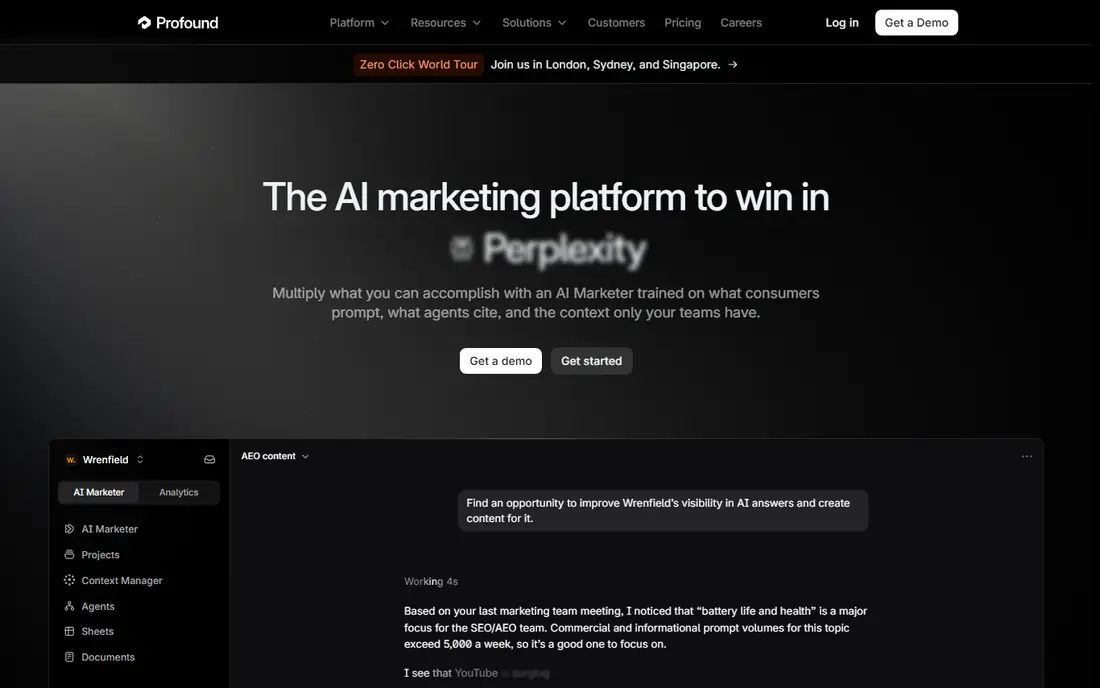
Profound is the best fit for enterprise AI visibility, with deep analytics on how brands appear, get cited, and get recommended across ChatGPT, Gemini, Perplexity, Claude, and other models. Its citation tracking shows which sources AI answers cite, its competitor comparison reveals share of voice and sentiment, and its enterprise reporting suits large marketing teams.
The limits are price and setup. Its pricing is enterprise level and not public, setup is complex, and small teams may find it too heavy today. For an enterprise that needs deep AI visibility data, Profound is the best choice overall.
What we like- Deep enterprise analytics
- Many models
- Citation tracking
Watch out for- Enterprise pricing
- Complex setup
- No public price
#2Peec AI
Best for: Brand monitoring in AI answers4.7/5 on
G2 (21 reviews, checked Oct 2026)
Visit peec.ai
Starting priceSee website
Free planNo
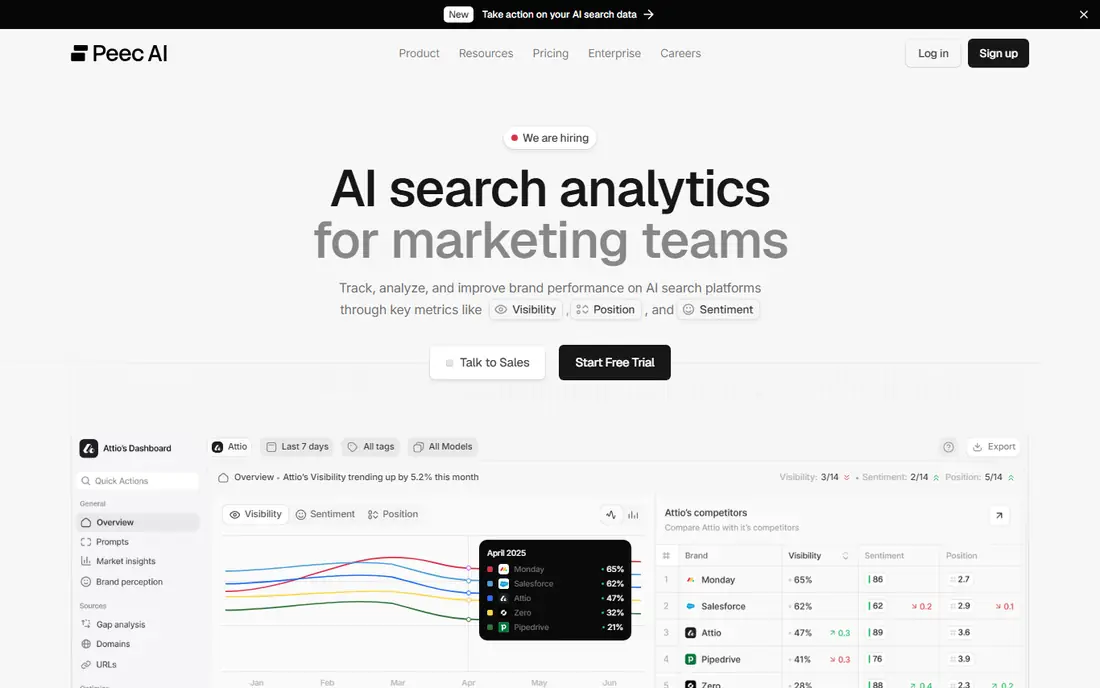
Peec AI suits brand monitoring in AI answers, with a clean dashboard that tracks brand mentions, citations, sentiment, and share of voice across major AI models. Its competitor tracking compares your brand with rivals on the same prompts, and its alerts flag sudden visibility drops quickly.
The limits are price and model coverage. Its price is not public, its model coverage is thinner than Profound, and it is a newer tool today. For a brand team that wants clean AI visibility monitoring, Peec AI is a strong choice today.
What we like- Brand focused
- Clean dashboard
- Competitor tracking
Watch out for- Price not public
- Fewer models
- Newer tool
#3Otterly.AI
Best for: Simple AI visibility tracking4.7/5 on
G2 (54 reviews, checked Oct 2026)
Visit otterly.ai
Starting priceSee website
Free planNo
Otterly.AI is the best fit for simple AI visibility tracking, with easy setup, clear reports, competitor tracking, and prompt tracking across major AI models. Its reports show brand mentions, citations, and sentiment without enterprise complexity, and its value suits mid size teams.
The limits are features and enterprise tools. Its feature set is smaller than Profound, its enterprise tool set is thinner, and its price varies by prompts tracked and models. For a mid size team that wants simple AI visibility tracking, Otterly.AI is a strong choice overall.
What we like- Simple setup
- Clear reports
- Good value
Watch out for- Smaller feature set
- Fewer enterprise tools
- Price varies
Starting priceSee website
Free planNo
Brandlight suits brand and competitor AI tracking, with brand mention data, citation data, sentiment analysis, and competitor comparison across AI models. Its reports are clean, its sentiment data shows how AI models frame your brand, and its competitor view reveals who gains share weekly.
The limits are price and age. Its price is not public, it is a newer tool, and its model coverage is thinner than Profound today. For a brand team that wants competitor AI tracking with sentiment, Brandlight is a strong choice today.
What we like- Brand plus competitor
- Sentiment data
- Clean reports
Watch out for- Price not public
- Newer tool
- Fewer models
Starting priceSee website
Free planNo
AthenaHQ is the best fit for AI search analytics, with deep prompt insights, citation analysis, competitor data, and reporting for teams that treat AI search as a channel. Its analytics show which prompts drive mentions, which sources get cited, and how visibility changes over time weekly.
The limits are price and setup. Its price is not public, setup is complex, and it is a newer tool today. For a data driven team that wants deep AI search analytics, AthenaHQ is a strong choice overall.
What we like- Analytics depth
- Prompt insights
- Reporting
Watch out for- Price not public
- Complex setup
- Newer tool
Starting priceSee website
Free planNo
Goodie AI suits AI visibility for agencies, with multi client dashboards, clear reporting, alerts, and prompt tracking that agencies can share with clients. Its agency focus suits firms that manage AI visibility for many brands at once today.
The limits are price and scale. Its price is not public, its scale is smaller than Profound, and it is a newer tool today. For an agency that tracks AI visibility for clients, Goodie AI is a strong choice today.
What we like- Agency friendly
- Multi client
- Clear dashboards
Watch out for- Price not public
- Smaller scale
- Newer tool
Starting priceSee website
Free planNo
Promptwatch is the best fit for prompt level AI tracking, with detailed tracking of individual prompts across models, showing exactly how each model answers, which brands it cites, and which brands it recommends. Its alerts flag answer changes, and its model comparison reveals differences between ChatGPT, Gemini, Perplexity, and Claude.
The limits are focus and price. Its focus is narrower than full brand platforms, its price is not public, and its team is smaller today. For a team that needs prompt level detail, Promptwatch is a strong choice overall.
What we like- Prompt level detail
- Model comparison
- Alerts
Watch out for- Narrower focus
- Price not public
- Smaller team
Starting priceSee website
Free planNo
Ziptie suits AI search monitoring, with prompt tracking, brand mention data, citation data, and a clean interface for teams starting with AI visibility. Its focus on AI search suits content and SEO teams that want to see how AI models treat their topics weekly.
The limits are age and enterprise tools. It is a newer tool, its price is not public, and its enterprise tool set is thinner today. For a team starting with AI search monitoring, Ziptie is a strong choice today.
What we like- AI search focus
- Prompt tracking
- Clean interface
Watch out for- Newer tool
- Price not public
- Fewer enterprise tools
How we chose
We ranked tools by model coverage, prompt tracking depth, citation source data, competitor comparison, reporting quality, alert quality, and pricing clarity, favoring tools that track real AI answers over tools that only estimate visibility. We gave extra weight to citation tracking, since knowing which sources AI models cite guides content strategy, and to prompt level detail, since aggregate scores hide exactly which prompts you win or lose. We also weighed pricing clarity, though most tools in this guide require a custom quote today.
Buying guide
Start by listing the prompts that matter most before you choose a tool. Write the questions your buyers actually ask AI models, such as best product comparisons, pricing questions, and how to guides in your category, since a tool that tracks your real prompts beats one that tracks generic keywords. One prompt list beats a feature list alone, since AI visibility depends on prompts, context, and citations, not just keywords.
Next, check model coverage and update frequency carefully. Confirm the tool tracks ChatGPT, Gemini, Perplexity, and Claude if those matter to your buyers, and ask how often it refreshes data, since AI answers change faster than classic rankings. Weekly tracking is a minimum, and daily tracking suits fast moving categories.
Finally, ask exactly what prompt volume, models, and competitors are included in each quote. Some tools price by prompts tracked, others by seats or brands, and the total differs sharply at scale. Ask for a trial on your real prompts before you commit, since a trial on your prompts beats a vendor demo alone.
Also plan how you will act on the data, since tracking without content changes wastes money and time. Assign an owner for AI visibility, review citation shifts weekly, and update the pages and sources that AI models cite most, since those sources shape future answers. Track which prompts you win and lose each week, and treat a lost citation as a content gap to fix, not just a metric to watch.
Frequently asked questions
What is LLM keyword rank tracking?
LLM keyword rank tracking monitors how brands appear in AI model answers for key prompts, tracking mentions, citations, and recommendations across ChatGPT, Gemini, Perplexity, Claude, and other models. It replaces classic rank positions with AI answer visibility.
How is LLM tracking different from SEO rank tracking?
SEO rank tracking measures positions on a search results page, while LLM tracking measures mentions, citations, and recommendations inside AI generated answers. Both matter, but AI answers have no single position, so trackers report share of voice and citation data instead.
Which AI models should I track?
Track the models your buyers actually use, usually ChatGPT, Gemini, Perplexity, and Claude, plus any niche models in your category. Confirm each tool model list before you buy, since coverage varies sharply.
How often should I track AI visibility?
Track weekly at minimum, since AI answers change faster than classic rankings, and daily for fast moving categories or during launches. Watch citation shifts closely, since a lost citation can drop visibility fast.
Do LLM rank tools replace SEO tools?
No, LLM rank tools complement SEO tools, since classic search still drives traffic and AI answers cite SEO content. Use both together, with SEO tools for rankings and LLM tools for AI answer visibility.
How much do LLM rank tools cost?
Most price by prompts tracked, models, and competitors with custom quotes, since the category is new and pricing varies widely. Ask for prompt volume, models, and competitors included before you compare quotes.
Sources we checked (0)
Is your product missing or out of date?
We review this list regularly. Vendors can request a listing, send updated pricing or ask about featured placement.

Shihab Mia · Founder, Rankite
Shihab has 5+ years in B2B and SaaS SEO. He writes Rankite's software buying guides from pricing pages, documentation and public user reviews. More about Shihab.