How we make this list: we compare pricing pages, product documentation and public user reviews. Ratings come from G2, Capterra or Trustpilot, with the date we checked them.
Key takeaways
- Latency matters more than download speed for gaming: aim for under 20 ms to the game server.
- Fiber is the best connection type when you can get it, with low latency, symmetrical speeds, and no data caps on most plans.
- Verizon Fios, GFiber, and AT&T Fiber lead on latency, but availability decides what you can actually buy.
- Cable from Xfinity and Spectrum is the strong fallback where fiber has not arrived yet.
- Wired Ethernet beats Wi-Fi for stable ping, no matter which provider you pick.
Quick comparison
| Tool | Best for | Starting price | Free plan |
|---|
 Verizon Fios | Lowest latency fiber | From $49.99 per month | No |
 GFiber | Fastest fiber speeds | From $70 per month | No |
 AT&T Fiber | Affordable fiber | From $35 per month | No |
 Xfinity | Widest cable availability | See website | No |
 Spectrum | Budget cable gaming | From $30 per month | No |
 T-Mobile Fiber | Low latency fiber | See website | No |
 Quantum Fiber | Multi-gig fiber | See website | No |
 Optimum | Low latency cable and fiber | See website | No |
Is your product missing or out of date?
We review this list regularly. Vendors can request a listing, send updated pricing or ask about featured placement.
The best internet services for gaming
Starting priceFrom $49.99 per month
Free planNo
Verizon Fios is the most consistent gaming pick among large providers, with average latency reported around 13 to 18 ms and a pure fiber network that delivers the same speed up and down. Plans run from 300 Mbps to 2.3 Gbps, with no data caps and no annual contract on current offers, which suits households that game, stream, and download large files at once.
The limit is geography. Fios coverage concentrates in the Northeast and Mid-Atlantic, so most US addresses cannot buy it. If Fios serves your address, take it seriously before comparing anything else, since its latency and stability are proven across many 2026 guides.
What we like- Average latency around 13 to 18 ms
- Symmetrical speeds from 300 Mbps to 2.3 Gbps
- No data caps, no contracts
Watch out for- Coverage focused on Northeast and Mid-Atlantic
- Not available in most of the country
Starting priceFrom $70 per month
Free planNo
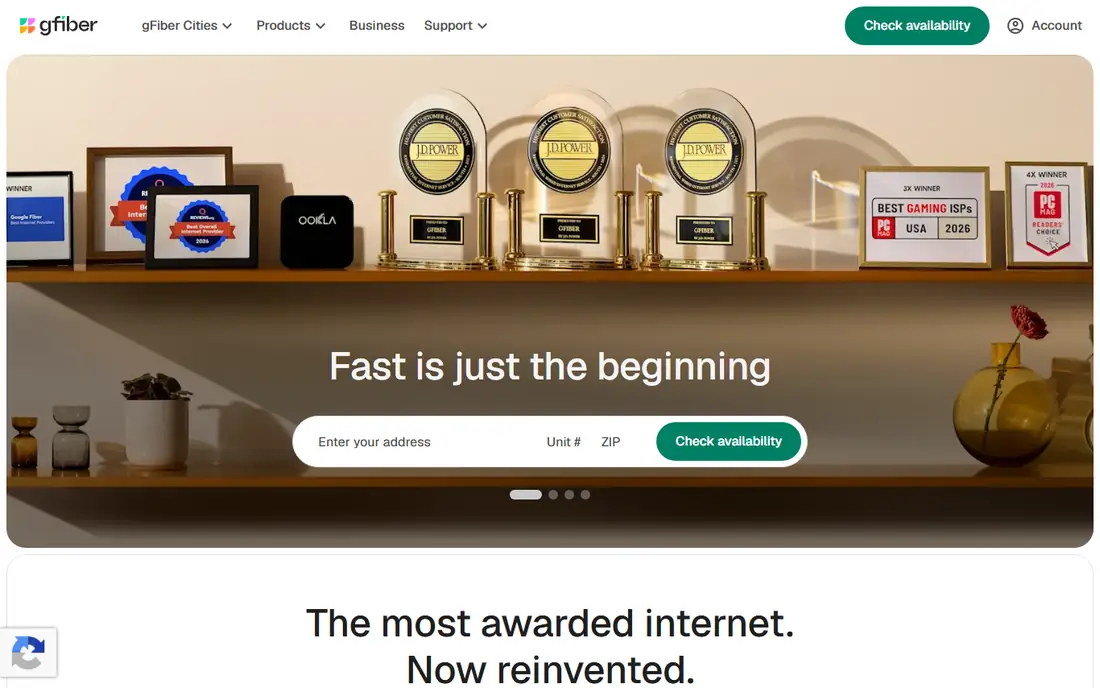
GFiber, formerly Google Fiber, posts the lowest median latency of any major provider in several 2026 comparisons, around 5 to 10 ms, thanks to a network backbone with few routing hops. Plans start at $70 per month for 1 Gbps and reach up to 8 Gbps symmetrical in select areas, with no data caps.
Availability is the catch, with service in roughly 20 metro areas including recent expansions into Phoenix and Chicago suburbs. If GFiber reaches your home, it is the top gaming pick on pure performance. If it does not, the next fiber provider on this list is the realistic target.
What we like- Median latency around 5 to 10 ms
- Speeds up to 8 Gbps in select areas
- No data caps
Watch out for- Only about 20 metro areas
- Install can take time in new areas
Starting priceFrom $35 per month
Free planNo
AT&T Fiber is the value pick among fiber providers, with plans starting at $35 per month and speeds from 300 Mbps to 5 Gbps on a full fiber-to-the-premises network. Typical latency sits around 15 ms, which is well inside the competitive range, and the entry price undercuts most fiber rivals.
One warning matters: AT&T also sells DSL and fixed wireless under similar branding, and those are far worse for gaming. Confirm in writing that your address gets fiber service before you sign. Where true AT&T Fiber is available, it is hard to beat on price for the performance.
What we like- Fiber plans from $35 per month
- Speeds from 300 Mbps to 5 Gbps
- Typical latency around 15 ms
Watch out for- AT&T also sells DSL and fixed wireless, so confirm you are buying fiber
- Coverage varies
Starting priceSee website
Free planNo
Xfinity is the cable pick with the widest reach, and 2026 guides credit it with sub-20 ms latency and consistent quality in many markets, including a first-place consistent-quality ranking in one May 2026 fixed broadband report. Speeds reach up to 2 Gbps on cable, and long-term pricing options suit gamers who stay put.
Cable still trails fiber on uploads and on latency stability during peak hours, and pricing varies by market, with promo rates that rise when the term ends. Check the post-promo price and any data cap for your address. Where fiber is absent, Xfinity is the safest gaming choice.
What we like- Sub-20 ms latency in many areas
- Speeds up to 2 Gbps on cable
- Widest availability here
Watch out for- Upload speeds trail fiber
- Pricing and data caps vary by market
- Promo prices rise after term
Starting priceFrom $30 per month
Free planNo
Spectrum is the budget cable option, with plans starting at $30 per month and download speeds up to 500 to 1,000 Mbps depending on market. For gamers who need solid performance without a premium price, Spectrum covers the basics: enough speed for play plus streaming, and no contract locking you in.
Uploads lag fiber, which matters if you stream gameplay, and latency varies by neighborhood since cable shares capacity locally. Ask neighbors or check local speed reports before committing. For the price, Spectrum is the best cable value on this list.
What we like- Plans from $30 per month
- Speeds up to 500 to 1,000 Mbps
- No contracts on most plans
Watch out for- Upload speeds lag fiber
- Latency varies by neighborhood
- Equipment fees may apply
Starting priceSee website
Free planNo
T-Mobile Fiber earned the lowest average latency spot in one major 2026 provider review series, which makes it a serious gaming pick where available. It offers true fiber speeds with the simple pricing style T-Mobile is known for, and no annual contract on current offers.
Do not confuse it with T-Mobile 5G Home Internet, which is a different product with higher latency around 25 to 45 ms. Fiber availability is limited compared with the big cable networks, so check your address first. Where T-Mobile Fiber exists, its latency numbers put it at the top of the list.
What we like- Lowest average latency in one 2026 provider review
- Fiber speeds
- Simple pricing
Watch out for- Limited fiber footprint
- T-Mobile 5G home internet is a different, higher-latency product
Starting priceSee website
Free planNo
Quantum Fiber, the fiber brand from Lumen, targets households that want multi-gig speeds, with plans reaching 5 Gbps in served areas. For a home with several gamers, streamers, and large downloads running at once, that headroom keeps everyone smooth, and fiber latency stays low under load.
The footprint is limited, and pricing varies by market, so check your address and the full monthly price including equipment. Quantum Fiber suits heavy households in its service areas, while lighter gamers do fine on a cheaper fiber plan.
What we like- Multi-gig speeds up to 5 Gbps and beyond
- Fiber latency
- Strong for heavy households
Watch out for- Limited footprint
- Pricing varies by market
- Install timelines vary
Starting priceSee website
Free planNo
Optimum posted the second-lowest average latency in one major 2026 provider review, behind only T-Mobile Fiber, which earns it a place here. It offers multi-gig speeds in fiber areas and solid cable plans elsewhere, with a broad footprint across the Northeast and parts of the South and West.
Quality varies by street, since Optimum runs a mix of legacy cable and newer fiber networks, so confirm whether your address gets fiber or cable before judging the numbers. Where Optimum fiber is live, latency and speed rival the top names on this list.
What we like- Second-lowest latency in one 2026 review
- Multi-gig options
- Broad Northeast footprint
Watch out for- Service quality varies by legacy network
- Pricing varies
- Fiber availability varies by street
How we chose
We ranked providers on latency first, then speed, stability, data caps, and price, using 2026 guides from BroadbandNow, HighSpeedInternet, Reviews.org, and CompareInternet, plus FCC label data those guides cite. We favored providers with published latency figures and current plans, and we left out satellite entirely, since latency in the hundreds of milliseconds makes competitive play impractical. Availability varies by address for every provider here, so check your exact address rather than trusting a national ranking alone. Street-level coverage can differ even within one ZIP code.
How to pick an internet service for gaming
Check fiber availability at your address first, since the connection type decides more than the brand. If fiber is available, compare latency and price among the fiber providers serving you. If only cable is available, pick the cable provider with the best local latency reports and unlimited data. Avoid satellite for gaming, and treat 5G home internet as a fallback, not a first choice, unless your signal is strong and latency tests under 50 ms.
Fix your home network too
The best provider cannot fix a bad home setup. Connect your gaming PC or console by Ethernet cable, since Wi-Fi adds jitter that no plan can remove. If you must use Wi-Fi, put the router in the same room and use the 5 GHz band. Turn on quality-of-service settings on your router to prioritize game traffic, and keep large downloads off the network during ranked matches.
Read the price beyond month one
Promo prices end, and the real price is what you pay in month 13. Check the post-promo rate, equipment rental fees, installation fees, and any data cap overage charges before signing. A plan that looks cheap for a year can cost more over two years than a slightly pricier plan with stable pricing and no cap. Also confirm the contract length and early termination fee, since a two-year lock-in can trap you on a network whose local performance drops after a neighborhood build-out changes traffic patterns.
Frequently asked questions
How much speed do I need for gaming?
About 25 to 50 Mbps down is enough for play itself, since games use little bandwidth during a match. Higher speeds matter for downloads, updates, and streaming, not for in-game ping. Latency and stability matter far more than headline speed.
What latency is good for gaming?
Under 20 ms is excellent, 20 to 50 ms is fine for most play, and above 100 ms starts to hurt in fast games. Fiber typically delivers 5 to 20 ms, cable 15 to 25 ms, and 5G home internet 25 to 45 ms in good conditions.
Is fiber really better than cable for gaming?
Yes, mainly for latency stability and upload speed. Fiber gives symmetrical speeds and steadier ping during peak hours, while cable shares local capacity and usually uploads far slower. If fiber serves your address, choose it.
Does Wi-Fi ruin gaming latency?
Wi-Fi adds jitter and occasional spikes that wired Ethernet avoids. For competitive play, use a cable. For casual play, a strong 5 GHz signal in the same room is usually fine.
Should I avoid satellite internet for gaming?
Yes, for real-time play. Satellite latency runs into hundreds of milliseconds, which makes fast games unplayable, even though downloads and streaming work. Satellite is a last resort for areas with no wired option.
Sources we checked (8)
- https://www.verizon.com
- https://fiber.google.com
- https://www.att.com
- https://www.xfinity.com
- https://www.spectrum.com
- https://www.t-mobile.com
- https://www.quantumfiber.com
- https://www.optimum.com
Is your product missing or out of date?
We review this list regularly. Vendors can request a listing, send updated pricing or ask about featured placement.

Shihab Mia · Founder, Rankite
Shihab has 5+ years in B2B and SaaS SEO. He writes Rankite's software buying guides from pricing pages, documentation and public user reviews. More about Shihab.