How we make this list: we compare pricing pages, product documentation and public user reviews. Rankite is independent; if a vendor ever pays for a featured spot, that listing is clearly labeled Partner.
Key takeaways
- Most companies do not have an ideas problem. They have an ideas graveyard problem: suggestions in inboxes, chat threads and hallway conversations that never get evaluated.
- Idea management software fixes the graveyard with a pipeline: collect, evaluate, prioritize, implement, and report back. The tools below differ mostly in where they focus.
- Prices span two worlds: Ideanote (free, paid from $6/user/month) and HYPE Boards ($79/month flat) serve teams and mid-market; IdeaScale ($4,999/year) and InnovationCast ($1,199/month) serve enterprise programs.
- Brightidea, Wazoku, Qmarkets and Planview Spigit are quote-based enterprise platforms with deep campaign, scouting and portfolio features.
- Medallia Ideas (formerly Crowdicity) at $250/month is the mid-market sweet spot for open communities and engagement campaigns.
Quick comparison
| Tool | Best for | Starting price | Free plan |
|---|
 IdeaScale IdeaScale | Large organizations running high-volume idea campaigns | $4,999/year | Free trial |
 Ideanote Ideanote | Teams that want to start collecting ideas this week | Free; Scale from $6/user/month | Yes |
 HYPE Boards HYPE Boards | Teams that think in boards and want flat, predictable pricing | $79/month (Basic) | Free trial |
 Brightidea Brightidea | Enterprises running crowdsourcing challenges and hackathons | See website | Free trial |
 Wazoku Wazoku | Companies that want internal ideas plus external crowd innovation | See website | No |
 InnovationCast InnovationCast | Organizations that want the whole innovation lifecycle in one tool | $1,199/month (up to 100 users) | Free trial |
 Medallia Ideas Medallia Ideas | Mid-market companies running open communities and campaigns | $250/month | Free trial |
 Qmarkets Qmarkets | Enterprises that want a modular innovation ecosystem | See website | Free trial |
 Planview Spigit Planview Spigit | Large enterprises managing innovation as a portfolio | See website | No |
Is your product missing or out of date?
We review this list regularly. Vendors can request a listing, send updated pricing or ask about featured placement.
The best idea management software
Idea management software collects ideas from employees (and sometimes customers or partners), routes them through evaluation, and tracks them to implementation. Nine tools below, from free team tools to enterprise innovation suites.
#1
IdeaScale
Best for: Large organizations running high-volume idea campaigns
Visit ideascale.com
Starting price$4,999/year
Free planFree trial
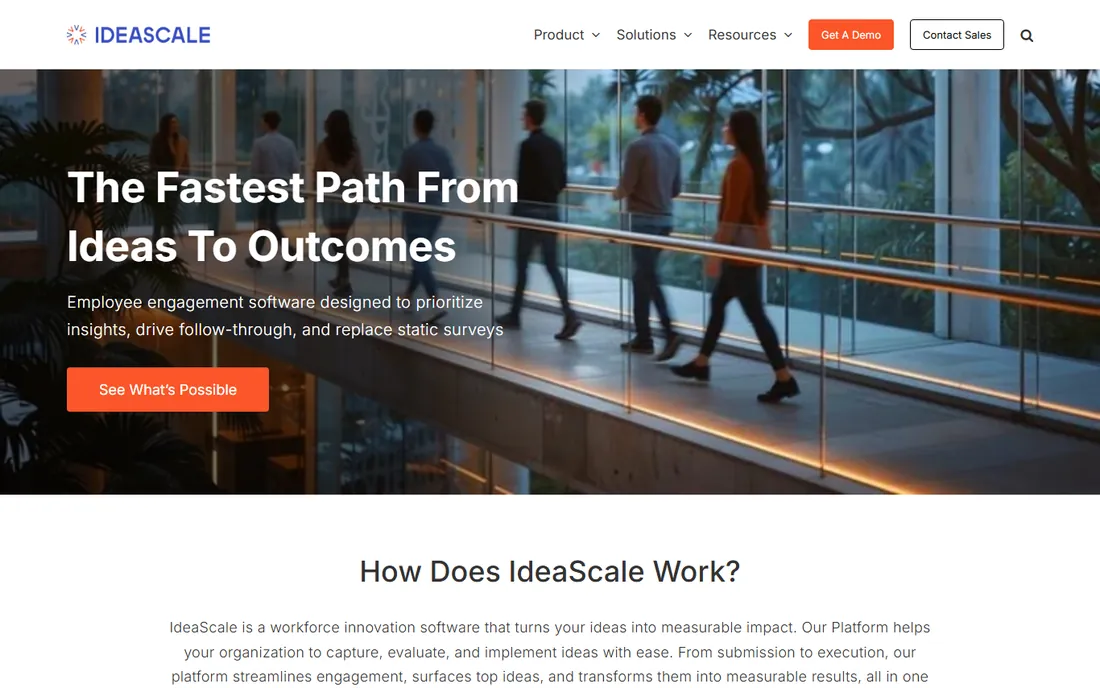
IdeaScale is the enterprise workhorse of idea management. It handles the unglamorous infrastructure of large programs: multi-language communities, granular permissions, stage-gate workflows, and moderation tools that keep a 10,000-person challenge usable. The $4,999-a-year entry plan covers a community with the core campaign features.
Reviewers consistently praise IdeaScale's value for money at scale and its customer support. The caveat from buyers is real: the flexibility that makes it powerful at scale makes it complex for a small team that just wanted a suggestion box. Buy IdeaScale when you already know your innovation program will run campaigns with hundreds of participants.
What we like- Built for scale: moderation, permissions and stage gates hold up with thousands of submitters
- FedRAMP-certified option for government
- Strong community features
Watch out for- Flat annual pricing is a jump for small teams
- Flexibility can overwhelm without proper configuration and training
#2
Ideanote
Best for: Teams that want to start collecting ideas this week
Visit ideanote.io
Starting priceFree; Scale from $6/user/month
Free planYes
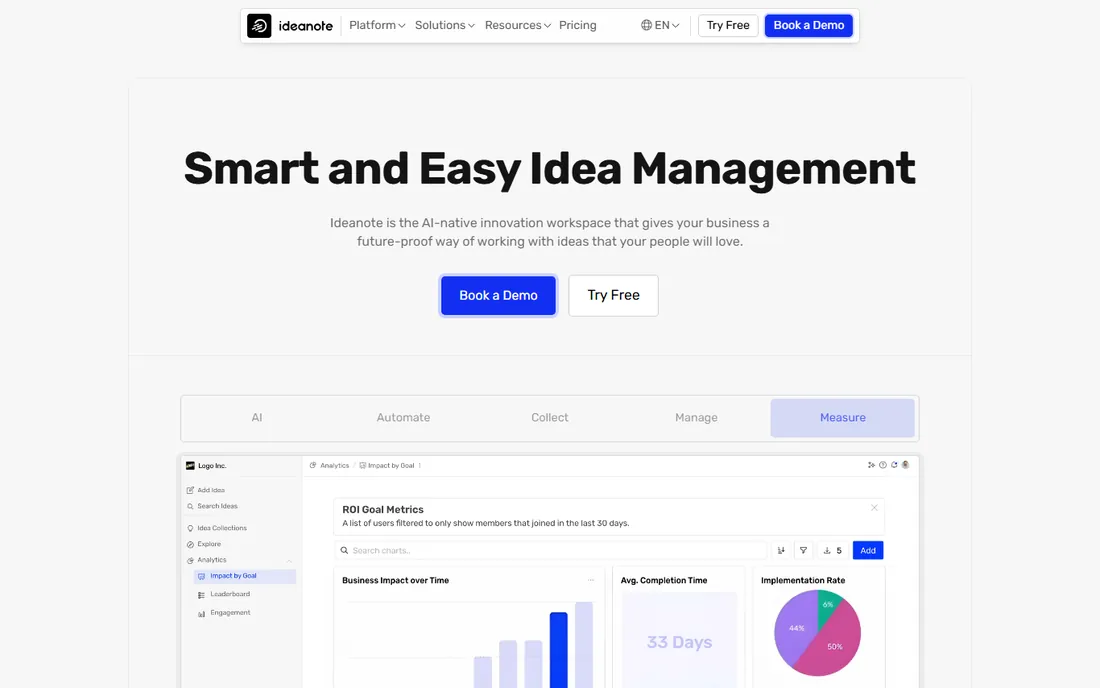
Ideanote is the easiest on-ramp in this category. The free plan gives a small team unlimited idea collection with voting and collections, and Scale at $6 per user per month adds automation runs, AI credits and team features. Setup takes hours, not weeks: create a goal-oriented collection, share the link, and ideas start arriving with structure.
G2 reviewers rate it 4.7 out of 5, with ease of use and customer service near the top of the category. It is the right pick when the problem is getting started: a marketing team, a consultancy, a department that wants structured brainstorming without an enterprise procurement cycle. Scale up to Ultimate when SSO and security reviews enter the picture.
What we like- Free plan for up to 15 users with unlimited ideas
- Goal-oriented idea collections are fast to launch
- AI features for clustering and summarizing
Watch out for- Advanced security (SSO) and white-labeling need the custom Ultimate tier
- Lighter portfolio management than enterprise suites
Starting price$79/month (Basic)
Free planFree trial
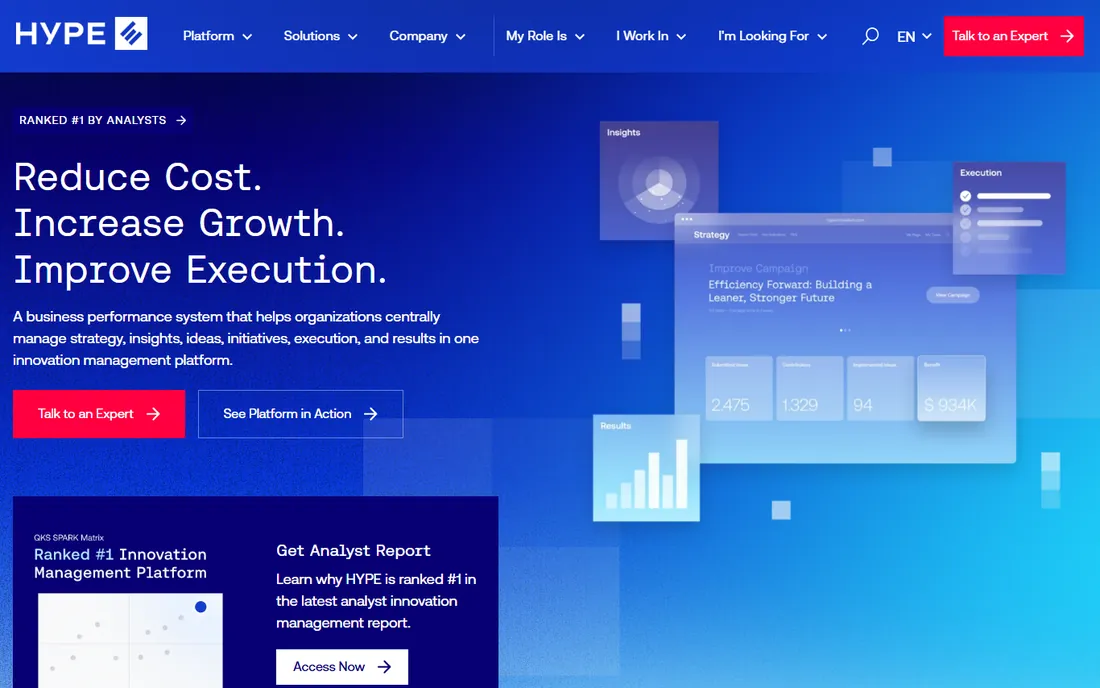
HYPE Boards is the former Viima, rebranded and folded into HYPE Innovation's suite in 2026. The board metaphor is its signature: ideas appear as visual cards you drag through custom pipelines, with list and Kanban views alongside. Basic at $79 a month and Pro at $499 are flat rates, which makes budgeting trivial compared with per-user pricing.
The rebrand matters for buyers: Boards is now the agile front end of a bigger suite, so a pilot can grow into full innovation management without migrating. For a team that runs on visual workflows and wants to start fast, it is the friendliest dedicated option between Ideanote's per-user plans and enterprise quotes.
What we like- Flat monthly pricing, no per-user math
- Visual board approach with Kanban and bubble views
- Now backed by the full HYPE innovation suite
Watch out for- $79/month is steep for a very small team
- Deeper enterprise features (Idea-to-launch, scouting) live in the wider HYPE suite, not Boards alone
#4
Brightidea
Best for: Enterprises running crowdsourcing challenges and hackathons
Visit brightidea.com
Starting priceSee website
Free planFree trial

Brightidea is the enterprise crowd-pleaser: reviewers report the highest customer-reported business outcomes from innovation in the category. The platform covers the full arc from challenge design to evaluation scoring to innovation dashboards, with mobile apps so employees can submit and discuss ideas anywhere.
Everything is quote-based, and serious deployments typically involve services for challenge design and onboarding. That is normal at this tier. Buy Brightidea when innovation is a funded program with executive sponsorship and you need the platform that makes the program look good to the board.
What we like- Top customer-rated enterprise platform three years running
- Strong pipeline management with drag-and-drop idea workflows
- Mobile apps for real-time collaboration
Watch out for- Enterprise pricing is quote-based and not cheap
- Implementation benefits from professional services, which adds cost
#5
Wazoku
Best for: Companies that want internal ideas plus external crowd innovation
Visit wazoku.com
Starting priceSee website
Free planNo

Wazoku's differentiator is the crowd. Beyond internal idea management, the Wazoku Crowd connects you to external solvers for challenges your own teams cannot crack: a genuine open-innovation capability that IdeaScale and Brightidea bolt on less naturally. Gamification, signals and trend radars support continuous programs.
The catch is commitment. Open innovation without a managed program becomes an empty portal, and Wazoku's pricing assumes you are serious. It suits R&D-heavy companies and corporates with defined innovation challenges. If you only need employee suggestions, the cheaper tools here do that job.
What we like- Wazoku Crowd opens innovation to a global solver network, not just employees
- Strong for open innovation and technology scouting
- Proven with large corporates
Watch out for- No free tier and no published pricing
- Open-innovation features need active program management to pay off
Starting price$1,199/month (up to 100 users)
Free planFree trial
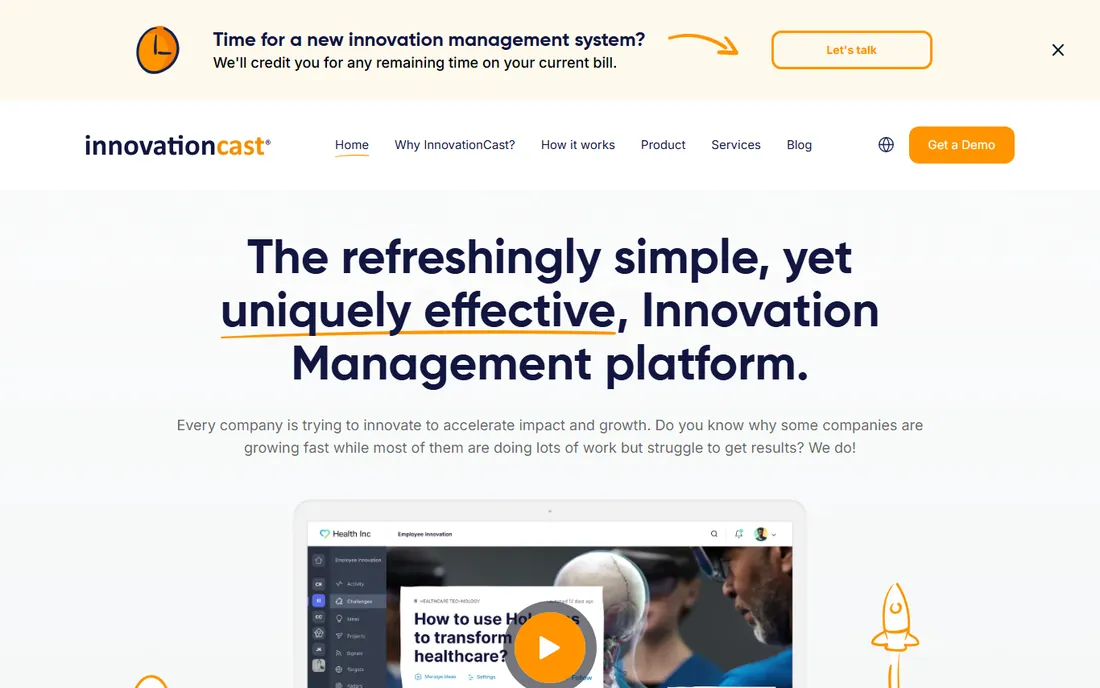
InnovationCast does something few competitors attempt: it follows ideas past selection into execution, with project management, portfolio tracking and results measurement built in. Most idea tools stop at "approved"; InnovationCast asks what happened next. Published pricing starts at $1,199 a month for up to 100 users.
That transparency is itself a feature in a category full of quote-based deals. The trade-off is the floor: this is not a tool for a 20-person startup. It fits mid-market and enterprise companies that want one system for the entire innovation journey and can fill 100 seats.
What we like- End-to-end lifecycle: from idea capture through project execution and results tracking
- Transparent published pricing, rare in this category
- Strong engagement tooling
Watch out for- $1,199/month minimum prices out small teams
- Fewer third-party integrations than the biggest enterprise platforms
#7
Medallia Ideas
Best for: Mid-market companies running open communities and campaigns
Visit medallia.com
Starting price$250/month
Free planFree trial
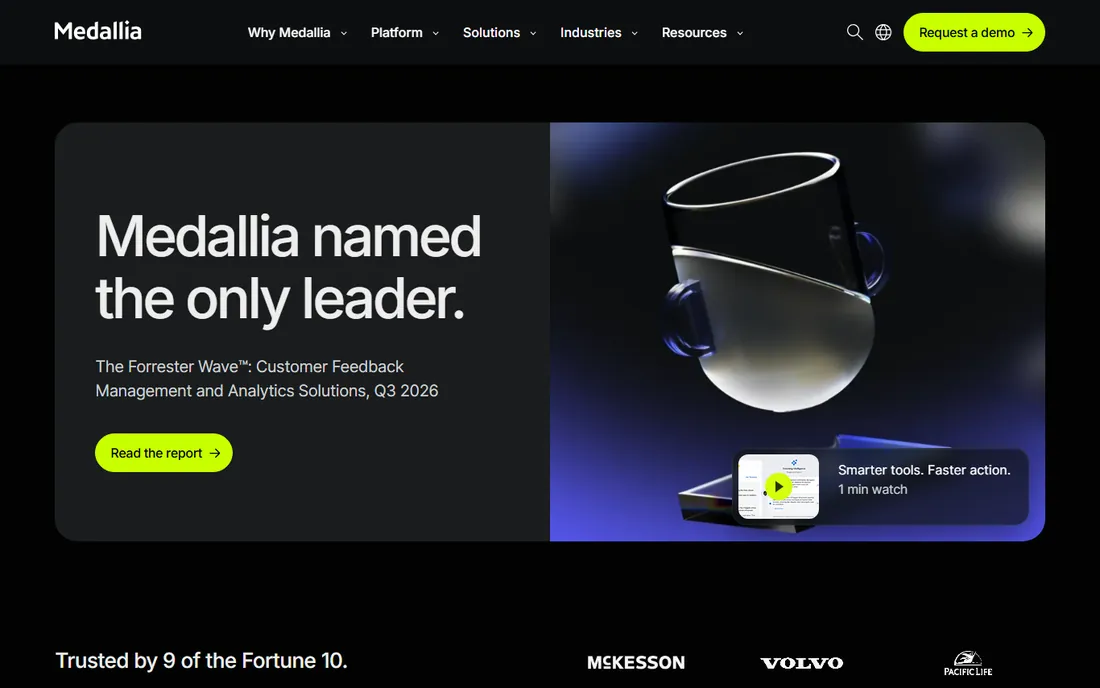
Medallia Ideas is the former Crowdicity, acquired by Medallia and rebranded. It keeps Crowdicity's strengths: open and closed communities, configurable polls, gamification, blogs and content uploads, with a 4.9 rating on review platforms. At $250 a month with a free trial, it is the clearest mid-market offer here.
The positioning is engagement-first: it excels when the goal is participation and culture, from employee challenges to customer co-creation. Companies that need deep portfolio management or technology scouting will outgrow it. For everyone else, it is the best-priced serious platform in the list.
What we like- Published $250/month starting price with a free trial
- Strong community features: blogs, polls, activity streams, gamification
- Intuitive for non-technical users
Watch out for- Now part of Medallia, so the roadmap follows the parent company's priorities
- Lighter on portfolio and scouting than enterprise suites
#8
Qmarkets
Best for: Enterprises that want a modular innovation ecosystem
Visit qmarkets.net
Starting priceSee website
Free planFree trial
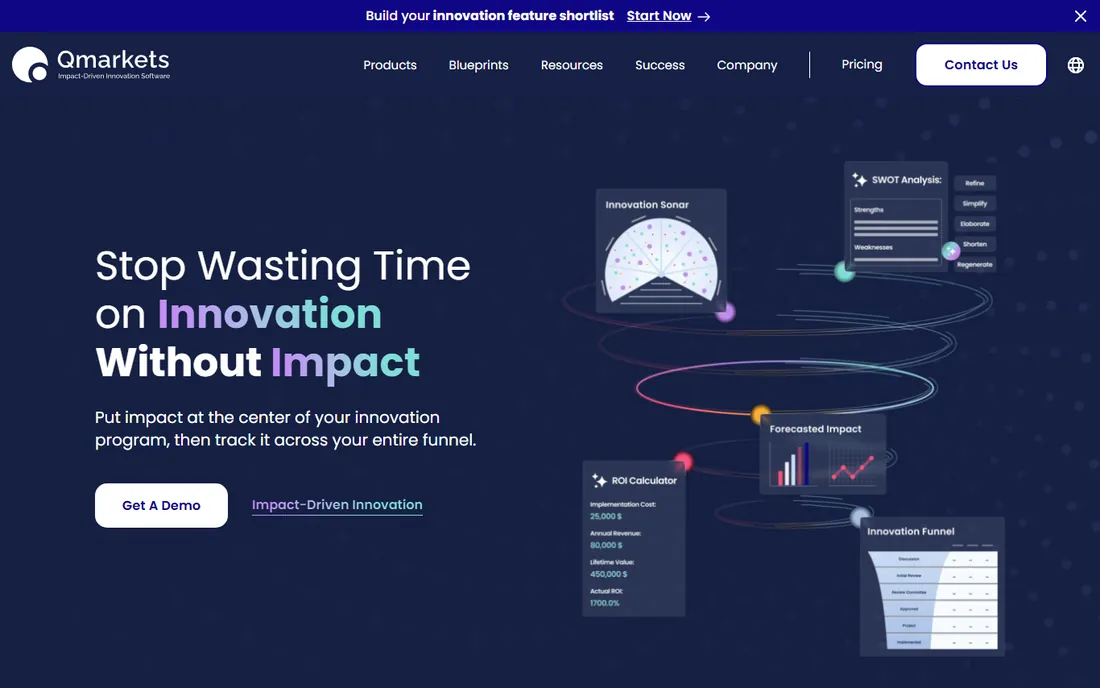
Qmarkets sells innovation as an ecosystem, not a tool. Q-ideate handles idea management; Q-optimize, Q-scout and Q-trend cover continuous improvement, technology scouting and trend management. Each is sold separately, which lets enterprises buy exactly the capability they need, and each is genuinely deep.
The pricing model is the warning label: quote-based, per-module, with setup and data migration fees. A like-for-like comparison is impossible before a demo cycle. Qmarkets suits enterprises with defined innovation functions and the budget to fund them. Smaller buyers should look at the published-price tools above.
What we like- Modular suite: idea management, continuous improvement, tech scouting, trend management sold separately
- Strong enterprise client base (Ford, Coca-Cola, UBS)
- Deep analytics
Watch out for- Quote-based with setup fees and per-module pricing that stacks up
- Implementation is heavier than simpler competitors
#9
Planview Spigit
Best for: Large enterprises managing innovation as a portfolio
Visit planview.com
Starting priceSee website
Free planNo
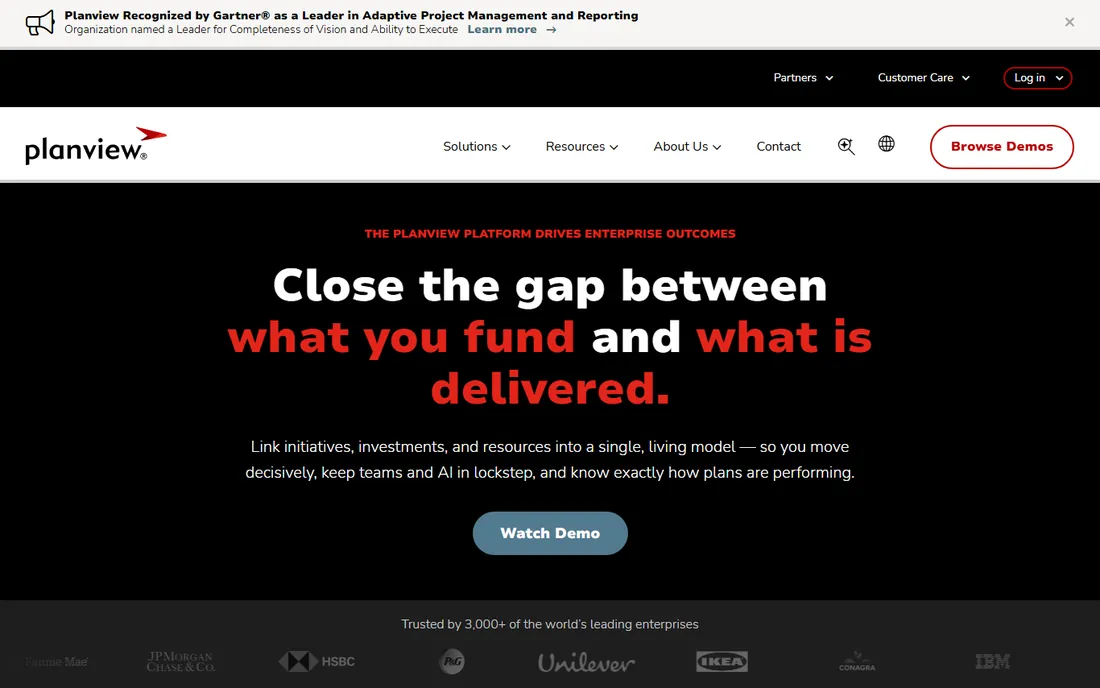
Planview Spigit is the portfolio end of the spectrum. Where most tools manage ideas, Spigit manages innovation investments: which bets to fund, how they perform, and how they connect to strategic objectives. Integration with Planview's broader work management suite means selected ideas flow into execution planning.
There is no trial and no published price, and that tells you the target buyer: innovation leaders at large enterprises with portfolio governance. For a first idea program, start with Ideanote or HYPE Boards. For a mature program reporting innovation ROI to the C-suite, Spigit is the category's heavyweight.
What we like- Portfolio-level innovation management tied to strategic planning
- Strong analytics for innovation ROI
- Part of the Planview work management ecosystem
Watch out for- Enterprise quote pricing with no trial
- Overkill for anything below serious program scale
How we chose
We mapped the category into its real tiers: free and low-cost team tools, mid-market platforms with published pricing, and enterprise suites that price by quote. Every price above comes from the vendor's pricing page or from vendor-supplied pricing on major review platforms (G2, Capterra, Software Advice) checked in 2026. We read user reviews on G2, Capterra, TrustRadius and Software Advice for all nine, favoring tools with verified review volume over marketing claims. We included both idea-management specialists and innovation suites, and noted where products rebranded in 2026 (Viima to HYPE Boards, Crowdicity to Medallia Ideas) so buyers do not get confused.
Campaigns versus always-on: pick your operating model
Idea tools run two operating models, and mismatching yours is the most common buying mistake. Campaigns are time-boxed challenges: "How do we cut packaging costs?" runs for six weeks, ideas flood in, winners get funded. Brightidea, IdeaScale and Medallia Ideas are campaign machines, with challenge design, judging workflows and engagement mechanics built for bursts.
Always-on is a continuous pipeline: employees submit anytime, ideas flow through evaluation boards to implementation. HYPE Boards, Ideanote and InnovationCast fit this model, with Kanban pipelines and lifecycle tracking.
Most mature programs run both: always-on for continuous improvement, campaigns for strategic questions. If you are buying your first tool, pick the model you will actually run in quarter one. A campaign tool left always-on becomes a quiet portal; an always-on tool forced into campaign mode needs workarounds.
The 90-day test: how to pilot before you commit
Do not buy innovation software on a demo. Run a 90-day pilot with a real question and a real audience. Days 1 to 30: configure one collection or board around a single business problem with a named sponsor. Days 31 to 60: open it to 50 to 200 employees, promote it twice, and measure submission and voting rates. Days 61 to 90: run the evaluation process end to end and fund at least one idea.
Judge the pilot on three numbers: participation rate (what share of invited employees submitted or voted), evaluation speed (days from submission to decision), and implementation rate (ideas funded or started). Tools that cannot move an idea from submission to a funded decision in 90 days will not do it in a year either. Ideanote's free plan and HYPE Boards' trial make this test cheap; use that.
Frequently asked questions
What is idea management software?
It is software that collects ideas from employees, customers or partners, evaluates them through voting and scoring, and tracks the best ones through to implementation. Think of it as a structured pipeline for innovation: capture, evaluate, prioritize, execute, measure. Without it, good ideas die in inboxes and chat threads.
How much does idea management software cost?
Free to start: Ideanote has a genuinely free plan, and HYPE Boards starts at $79 a month flat. Mid-market platforms run $250 a month (Medallia Ideas) to $1,199 a month (InnovationCast). Enterprise suites like IdeaScale start around $4,999 a year, with Brightidea, Wazoku, Qmarkets and Spigit priced by quote.
IdeaScale versus Brightidea: which is better?
Both are enterprise-grade. IdeaScale is the better pick for massive open communities and government (FedRAMP certification, multilingual scale) at a published $4,999-a-year entry. Brightidea leads on customer-reported business outcomes and challenge design, with stronger mobile and dashboard tooling. Run both pilots if the budget allows; they feel different in practice.
Is there free idea management software?
Yes. Ideanote's free plan covers up to 15 users with unlimited idea collection. HYPE Boards (formerly Viima) historically offered a free tier and still offers a free trial. For a team just starting, free is enough to run the 90-day pilot described above before spending anything.
Do we need idea management software if we already use Teams or Slack?
Chat tools are good at discussion and terrible at evaluation. Ideas in Teams scroll away; there is no voting, no scoring, no pipeline, no record of what was decided. Some teams start with a shared channel and graduate to dedicated software when ideas start getting lost, which is the right trigger.
How do you get employees to actually submit ideas?
Three things work: a specific question instead of an open box, visible executive sponsorship, and feedback on every submission (even rejections). Gamification helps, but the research is consistent: people submit ideas when they believe someone senior reads them and something happens. The tool matters less than the process around it.
Sources we checked (15)
- https://triangleip.com/ideascale-alternatives-innovation-management/
- https://www.capterra.ca/software/139651/ideascale
- https://www.getapp.ie/software/104651/brightidea
- https://www.softwareadvice.com/ca/help-desk/ideascale-profile/alternatives/
- https://www.spotsaas.com/product/ideascale
- https://storyflow.so/blog/best-idea-management-tools-2026
- https://www.G2.Com/products/ideanote/pricing
- https://www.g2.com/products/hype-boards-formerly-viima/pricing
- https://www.capterra.com/p/148753/Ideanote/
- https://slashdot.org/software/comparison/Lucidspark-vs-Viima/
- https://www.softwareadvice.co.uk/software/131308/crowdicity
- https://www.capterra.com.au/software/132614/crowdicity
- https://www.capterra.com/p/83531/Qmarkets/pricing/
- https://untap.tech/compare/qmarkets
- https://www.tractiontechnology.com/blog/traction-technology-vs-qmarkets-which-innovation-management-platform-delivers-end-to-end-results
Is your product missing or out of date?
We review this list regularly. Vendors can request a listing, send updated pricing or ask about featured placement.

Shihab Mia · Founder, Rankite
Shihab has spent more than a decade helping SaaS and e-commerce brands grow through search. He writes Rankite's software buying guides from pricing pages, documentation and public user reviews. More about Shihab.