How we make this list: we compare pricing pages, product documentation and public user reviews. Ratings come from G2, Capterra or Trustpilot, with the date we checked them.
Key takeaways
- The best holster for you depends first on carry position: appendix, strong-side inside the waistband, outside the waistband, duty, or shoulder each favor different makers.
- Kydex holsters dominate for consistent retention and a clean draw, leather wins for comfort and classic looks, and hybrids try to combine both.
- Fit is model-specific: always confirm your exact firearm, optic, and light against the maker's fit list before ordering, since a near match is not a safe match.
- Duty and retention holsters from Safariland and Blackhawk serve a different job than minimalist concealed carry holsters, so compare within your use case, not across all of them.
- Safety note: a holster must fully cover the trigger guard, hold the firearm through normal movement, and allow a safe re-holster. Follow your local carry laws, get proper training, and practice your draw unloaded before carrying live.
Quick comparison
Is your product missing or out of date?
We review this list regularly. Vendors can request a listing, send updated pricing or ask about featured placement.
The best holster companies
Starting priceSee website
Free planNo
Safariland is the default name in duty holsters, and its reputation rests on retention engineering. Its ALS (Automatic Locking System) secures the firearm on holstering and releases with a thumb movement during a natural draw, while the SLS (Self Locking System) rotating hood adds a second layer for Level II and III retention. Duty models like the 7TS series use a SafariSeven nylon blend that resists weather and will not wear a firearm's finish the way some harder materials can. For officers and armed professionals, that combination of security and draw speed is the whole point.
For concealed carry, Safariland also makes slimmer options such as the Species IWB and the Incog X collaboration, so it is not only a duty brand. The honest catch is that retention holsters demand training: a Level III draw involves two release motions, and fumbling them under stress is a real risk without practice. Safariland holsters also tend to cost more than simple Kydex shells. If your job or lifestyle requires retention against a grab attempt, Safariland is the benchmark other makers are judged against.
What we like- Industry-standard ALS and SLS retention systems
- Duty-rated designs used by law enforcement
- Broad light and optic compatibility
Watch out for- Duty holsters are bulkier than concealed carry options
- Retention systems require practice to master
Starting priceSee website
Free planNo
Alien Gear built its brand on modularity. The ShapeShift system lets one holster shell move between IWB, OWB, appendix, and other carry configurations by swapping backers and attachments, which appeals to buyers who have not settled on a carry style yet. The company also covers a huge range of firearms, including less common models, and offers duty lines like the Rapid Force series alongside concealed carry options. Its Cloak and Photon lines add comfort-focused and low-profile choices, and many items ship within days.
The downside of modularity is clutter. A Core Carry Pack includes hardware for configurations you may never try, and some buyers end up using one setup and storing the rest. A dedicated holster from a specialist maker will usually be slimmer for that one job. Still, for a first-time carrier who wants to experiment without buying four holsters, or for someone with several firearms who values one system, Alien Gear offers flexibility that few competitors match.
What we like- ShapeShift modular system swaps carry styles on one shell
- Very wide firearm fit list
- US-made with fast shipping options
Watch out for- Modular kits include parts many buyers never use
- Bulkier than minimalist single-purpose holsters
Starting priceSee website
Free planNo
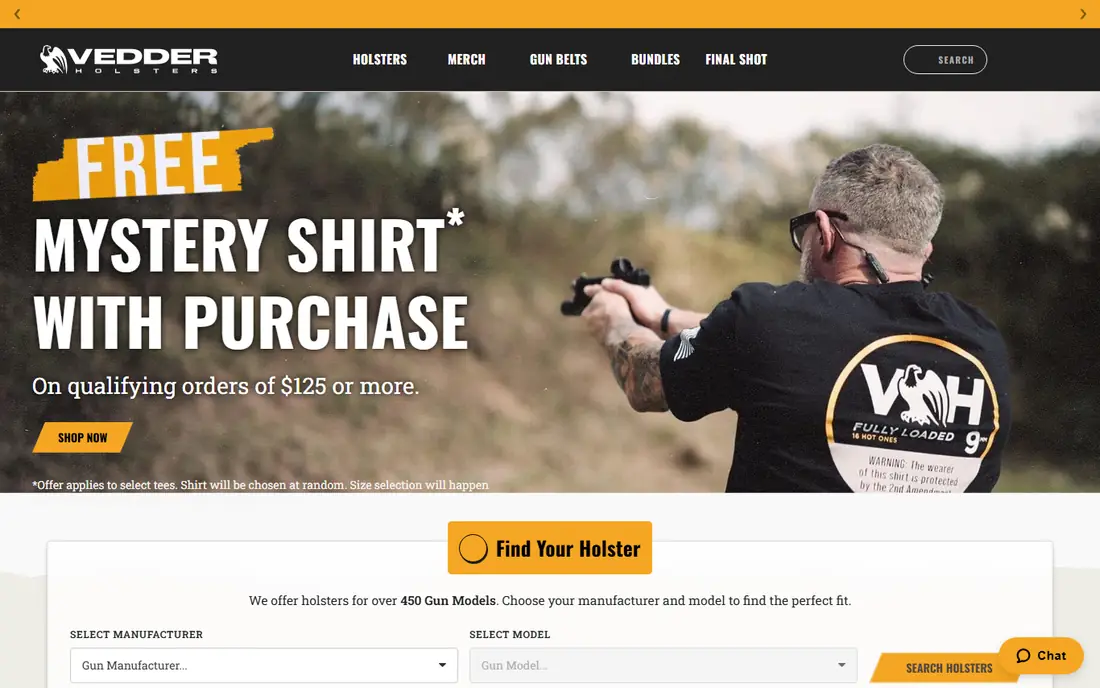
Vedder's LightTuck is one of the most recommended IWB holsters in concealed carry communities, and the reason is adjustability. You can change ride height, cant angle, and retention tension, and add a concealment claw that pulls the grip closer to the body to reduce printing. The company makes holsters for more than 450 gun models with dozens of color and pattern choices, and every product carries a lifetime warranty. Handmade items typically ship within five to seven business days, which is fast for custom Kydex.
The price story needs a footnote: the base LightTuck is affordable, but the claw and optic cut that many buyers consider essential add a few dollars each, so the real cost runs a bit above the headline. Kydex also feels less forgiving than leather against bare skin, though a good belt and proper positioning solve most of that. For a buyer who wants one adjustable IWB holster that can be tuned to their body and carry position, Vedder is a strong first choice.
What we like- LightTuck is highly adjustable for ride height, cant, and retention
- Fits over 450 gun models
- Lifetime warranty
Watch out for- Popular options like the concealment claw and optic cuts add to the base price
- Kydex can feel hard against the body
Starting priceSee website
Free planNo
CrossBreed invented the modern hybrid holster: a leather backer against your body paired with a Kydex pocket molded to your exact firearm. The SuperTuck and MiniTuck remain its best-known models, and the design logic is simple: leather distributes weight and softens pressure points during all-day wear, while the Kydex shell keeps retention consistent and the mouth open for re-holstering. Each pocket is molded for a specific pistol and light or laser combination, and the company has been building them in the USA since 2005.
Leather brings maintenance. A new backer needs break-in time to conform to your body, and it will absorb sweat over years of use in a way Kydex does not. Hybrids are also wider than minimalist Kydex shells, which matters for smaller frames or tighter clothing. For carriers who prioritize comfort over the slimmest possible profile, especially for strong-side IWB carry at 3 to 5 o'clock, CrossBreed's hybrid remains the comfort reference point.
What we like- Leather backer spreads weight and feels comfortable for long wear
- Kydex pocket molded to your exact pistol, light, or laser
- Made in the USA since 2005
Watch out for- Leather backers need break-in and occasional care
- Hybrids are bulkier than all-Kydex designs
Starting priceSee website
Free planNo
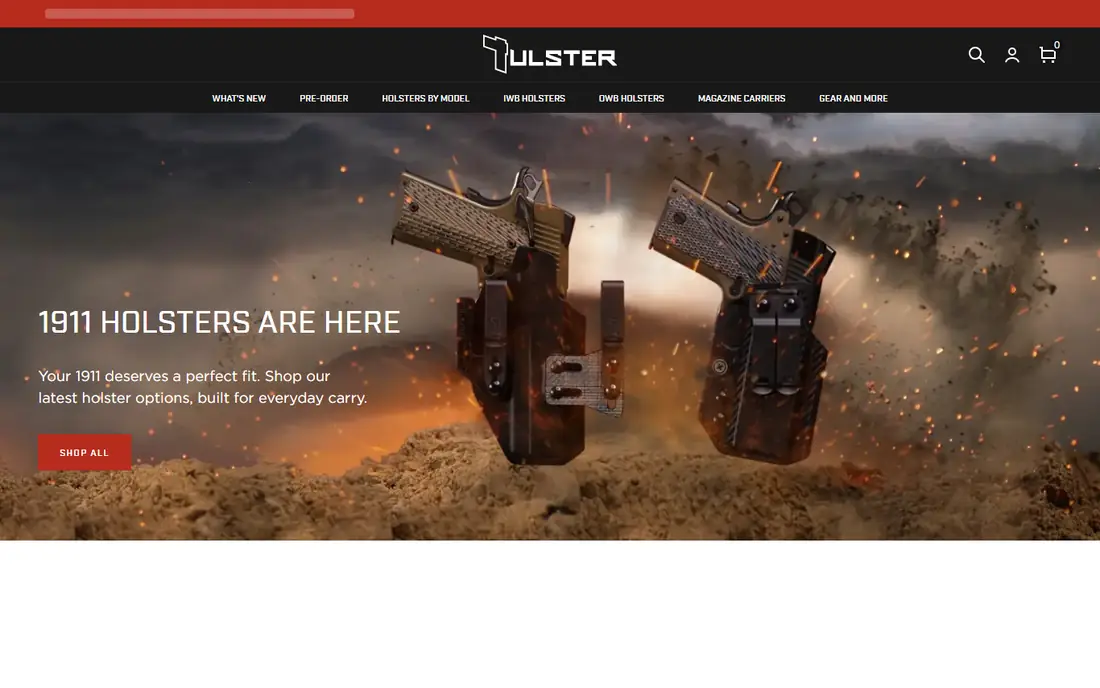
Tulster takes the opposite approach from Alien Gear: do one thing, do it slim, and do it well. Its Profile IWB holster is a minimalist Kydex shell with adjustable retention and cant, designed to disappear under a shirt, while the Contour OWB serves open carry and range use. The company's fit and finish earn consistent praise, and its holsters cover a wide range of modern pistols including 1911 models and light-bearing setups. The design philosophy is that a holster should add as little bulk as possible between you and your firearm.
Minimalism has limits. There is no leather backer to cushion the edge, no modular system to convert the holster, and fewer comfort accessories than hybrid makers offer. Carriers with sensitive skin or those who wear a holster for 12 hours a day sometimes prefer a hybrid instead. For buyers who want a slim, well-made Kydex holster with a clean draw and no extras, Tulster is frequently the first name recommended by experienced carriers.
What we like- Slim, minimal Kydex shells with clean draws
- Profile and Contour lines cover IWB and OWB
- Strong reputation for fit and finish
Watch out for- Minimalist design offers fewer comfort features than hybrids
- Fewer carry styles than modular brands
Starting priceSee website
Free planNo
Tier 1 Concealed specializes in appendix carry, and its Axis Elite is the best-known sidecar rig: a holster and magazine carrier joined by a flexible cord, so the two move with your body instead of fighting it. The design distributes weight across the front of the waistband, keeps a spare magazine in a consistent spot, and uses a concealment wing to tuck the grip. The Kydex work is precise, with clean edges and consistent retention, and the company also makes standalone IWB and OWB models for carriers who do not want a sidecar.
A sidecar is inherently bigger than a holster alone, so it suits appendix carriers who accept that trade for a spare magazine and better balance. It is also priced above basic Kydex shells, reflecting the extra material and build time. For appendix carriers who want a complete system rather than a single shell, Tier 1 Concealed is the specialist to beat, and its rigs are widely considered the comfort benchmark for AIWB with a magazine carrier.
What we like- Axis Elite sidecar design pairs holster with magazine carrier
- Precision Kydex work
- Strong appendix-carry ergonomics
Watch out for- Sidecar rigs are larger than a holster alone
- Premium pricing for the category
Starting priceSee website
Free planNo
Galco has made leather holsters for more than five decades, and its catalog is the broadest in this list for classic carry styles. Alongside IWB and OWB leather holsters, it makes shoulder rigs like the Miami Classic, ankle holsters, chest holsters, and a custom shop that works in exotic skins. The materials are premium steerhide and horsehide, plus Kydex and polymer models for buyers who want modern materials from a traditional maker. Fit coverage spans nearly every major manufacturer, from Beretta to Wilson Combat.
Leather's drawbacks are real: it costs more than Kydex, needs a break-in period, and requires occasional conditioning to stay in good shape. Retention also changes slightly as leather softens over years, unlike Kydex which holds its shape. For buyers who value craftsmanship, classic looks, and the comfort of broken-in leather, and who are willing to pay for it, Galco remains the premier leather holster company in the US.
What we like- Over 50 years in leather holster making
- Premium steerhide and horsehide
- Huge catalog including shoulder, chest, and ankle rigs
Watch out for- Leather costs more than Kydex
- Break-in period and ongoing care required
Starting priceSee website
Free planNo
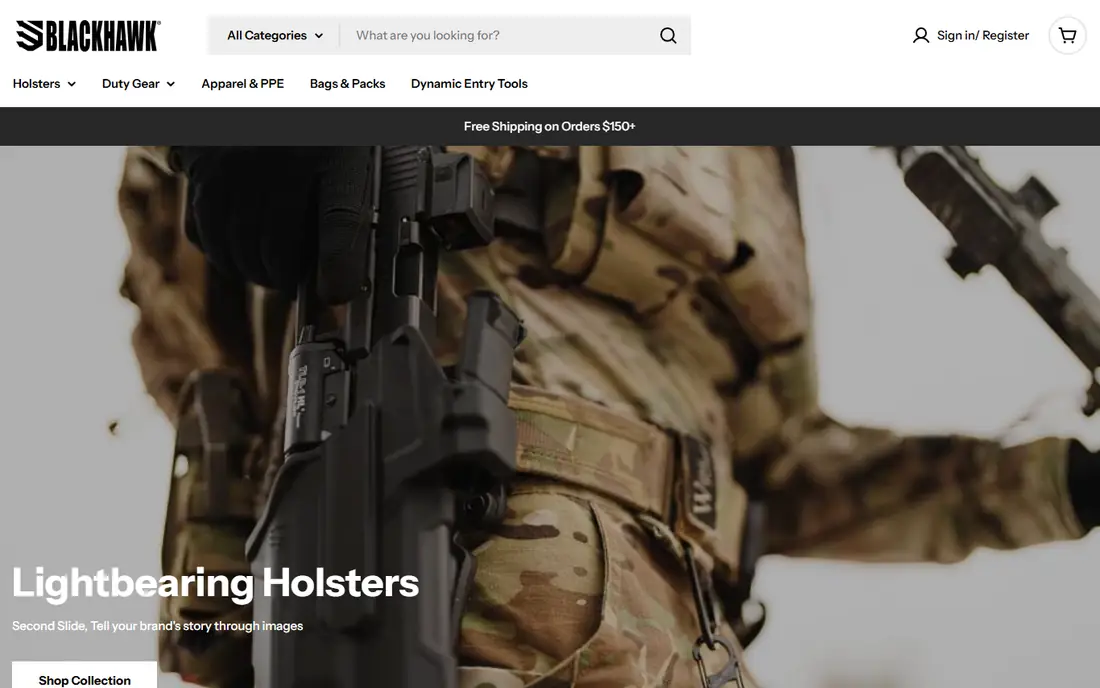
Blackhawk serves the duty, tactical, and outdoor markets with holsters built for hard use. Its lineup emphasizes light-bearing and optic-ready models for modern pistols with weapon lights and red dots, which is exactly where many concealed carry holsters fall short. The brand's duty heritage shows in retention design and rugged construction, and its products are widely available through major retailers as well as direct. Free shipping on orders over $150 softens the cost of a full rig.
The trade-off is focus. Blackhawk's strengths sit in duty and tactical carry, so a buyer looking for the slimmest deep-concealment IWB holster will find better options at Tulster or Vedder. Some Blackhawk models are also bulkier than minimalist competitors. For duty use, range work, or a light-bearing setup that needs to survive rough handling, Blackhawk offers proven designs at fair prices.
What we like- Strong duty and tactical lineup
- Good light-bearing and optic-ready options
- Free shipping on orders over $150
Watch out for- Focus leans tactical rather than deep concealment
- Some models are bulkier than minimalist competitors
How we chose
We compared companies on the factors that decide whether a holster actually gets carried: fit coverage for modern pistols, optics, and lights; retention design; comfort over long wear; build quality; and warranty or support. We favored makers with strong reputations among experienced carriers and verifiable product lines on their own sites, and we separated duty, concealed carry, and appendix use cases rather than ranking them against each other. Where a price could not be confirmed on the vendor's own site for a specific model, we wrote "See website" instead of repeating a retailer's figure. We did not test any holster ourselves, and comfort varies by body type, belt, and clothing.
What to check before you buy
Start with fit, not brand. Confirm your exact firearm model, generation, optic, and weapon light against the maker's fit list, because a holster molded for a similar gun is not safe. Next, decide your carry position honestly: appendix favors Tier 1 Concealed or a slim Vedder or Tulster shell, strong-side IWB favors CrossBreed or Vedder, duty favors Safariland or Blackhawk, and shoulder or ankle carry points to Galco. A good belt matters as much as the holster: a stiff gun belt keeps any holster stable and comfortable.
Test retention and draw unloaded before carrying live. The firearm should stay put when you move, bend, and sit, and it should release cleanly on a consistent draw stroke without shifting your grip. Check that the trigger guard is fully covered and that nothing (clothing, drawstrings, or holster material) can enter the trigger guard during re-holstering. Finally, confirm your local carry laws and any workplace or property rules before buying, since legal carry varies widely by state and location.
Frequently asked questions
What is the difference between IWB, OWB, and AIWB holsters?
IWB (inside the waistband) holsters clip inside your pants, usually at 3 to 5 o'clock, and conceal well under an untucked shirt. OWB (outside the waistband) holsters ride outside the pants, offering more comfort and a faster draw but less concealment. AIWB (appendix inside the waistband) places the holster at the front of the waistband, giving the fastest draw and good concealment under a t-shirt, but it requires careful fit and practice.
How important is retention in a holster?
Retention keeps the firearm in the holster during movement and resists a grab attempt. Passive retention uses friction and adjustable tension, which suits most concealed carry. Active retention adds a lock or hood, which suits duty and open carry where a grab is a real risk. Choose the level that matches your exposure: concealed carriers usually need passive retention, while duty carriers need active retention.
Kydex or leather: which is better?
Kydex holds its shape, gives consistent retention, and needs almost no maintenance, but it feels harder against the body. Leather is more comfortable once broken in and looks better, but it costs more, needs care, and softens over time. Hybrids combine a leather backer with a Kydex shell for a middle ground. There is no universal winner; it depends on your comfort priorities and carry position.
Do I need a holster made for my exact gun and light?
Yes. A holster molded for a different model, or for your gun without its light or optic, may not retain the firearm correctly or may leave the trigger guard exposed. Always check the maker's fit list for your exact combination of firearm, optic, and light before ordering, and test fit unloaded when it arrives.
How do I break in a leather holster?
Wear it around the house unloaded for several days so the leather conforms to your body and the firearm. Some makers suggest wrapping the unloaded firearm in a plastic bag overnight to stretch the leather slightly. Avoid oils or shortcuts that soften retention too much, and never carry live until the fit, retention, and draw feel consistent and safe.
Sources we checked (8)
- https://safariland.com
- https://aliengearholsters.com
- https://vedderholsters.com
- https://crossbreedholsters.com
- https://tulster.com
- https://tier1concealed.com
- https://www.galcogunleather.com
- https://blackhawk.com
Is your product missing or out of date?
We review this list regularly. Vendors can request a listing, send updated pricing or ask about featured placement.

Shihab Mia · Founder, Rankite
Shihab has 5+ years in B2B and SaaS SEO. He writes Rankite's software buying guides from pricing pages, documentation and public user reviews. More about Shihab.
 Safariland
 Alien Gear Holsters
 Vedder Holsters
 CrossBreed Holsters
 Tulster
 Tier 1 Concealed
 Galco Gunleather
 Blackhawk