How we make this list: we compare pricing pages, product documentation and public user reviews. Ratings come from G2, Capterra or Trustpilot, with the date we checked them.
Key takeaways
- Small group premiums are quoted by state, age, group size, and plan design, so no national price in this guide replaces a quote for your team.
- Network fit matters more than brand size: check whether your employees' doctors, hospitals, and pharmacies are in network before you compare premiums.
- Fully insured plans give predictable premiums, while level-funded plans can return surplus in a low-claim year but add risk and admin work.
- Virtual care, pharmacy benefits, and mental health access differ sharply by carrier, so compare those benefits on the actual plan documents.
- A carrier that is strong in one state can be weak in another, because many large brands sell through state or regional companies.
Quick comparison
Is your product missing or out of date?
We review this list regularly. Vendors can request a listing, send updated pricing or ask about featured placement.
The best health insurance companies for small businesses

#1
UnitedHealthcare
Best for: Nationwide and remote teams
Visit uhc.com
Starting priceSee website
Free planNo
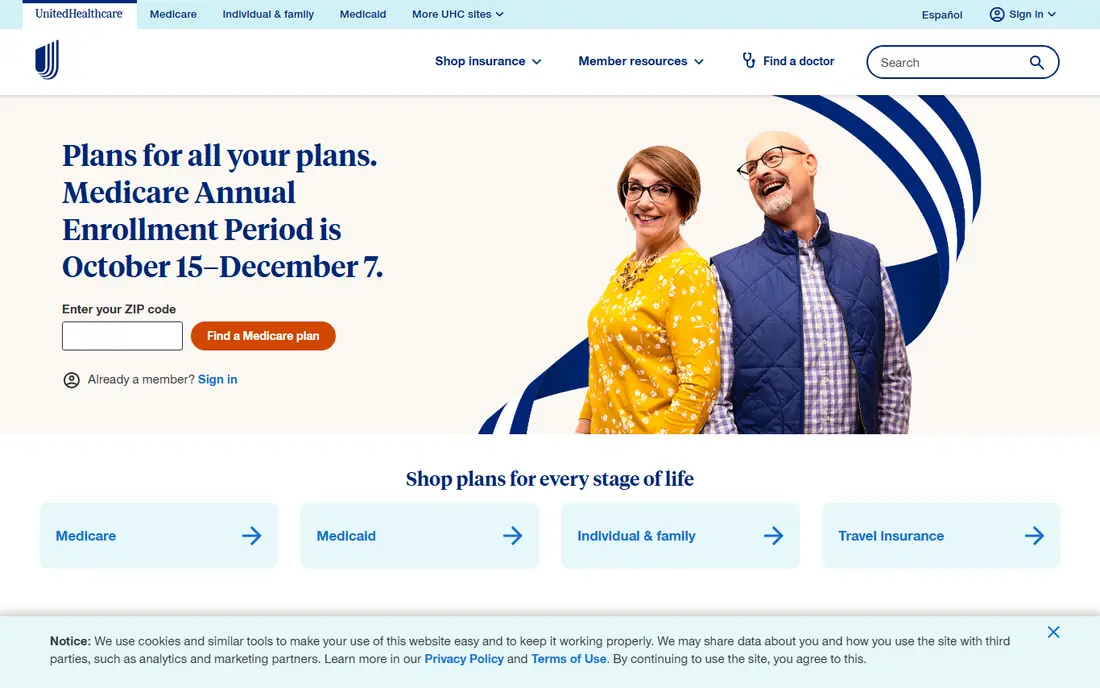
UnitedHealthcare is often the first quote for a small business with staff in more than one state. Its small business site lists networks such as Choice, Choice Plus, Navigate, Core, and Doctors Plan, with HMO, PPO, EPO, and POS designs depending on the state. That range lets an employer offer a broader network for traveling staff and a narrower, lower-cost network for staff near one office.
The catch is complexity. A plan name that looks familiar in one state may carry a different network in another, and provider counts change by ZIP code. Get a census-based quote, run your employees' doctors through the provider directory for the exact plan, and confirm whether out-of-network care is covered at all. For remote teams, that check matters more than the headline premium.
What we like- Large national network
- Many plan designs by state
- Virtual care and wellness programs
Watch out for- Plan names and networks vary by state
- Options can be hard to compare without a broker

#2
Blue Cross Blue Shield
Best for: Local networks by state
Visit bcbs.com
Starting priceSee website
Free planNo
Blue Cross Blue Shield is not one company. It is a set of independent state companies that license the Blue Cross and Blue Shield names, so the carrier, network, and plan design you buy in Texas differ from those in Illinois or Florida. That local structure can be a strength: the state company often has deep ties to local hospitals and doctors, and local brokers know its plans well.
The limit is portability. Employees who move to another state may need a new plan from a different Blue company, and a business with staff across many states may need more than one carrier to get good networks everywhere. Ask your broker which Blue company serves each state where your staff live, and compare its network to the other carriers in that state rather than assuming that the national brand means one network.
What we like- Strong local hospital relationships
- State-based service
- Broad brand recognition
Watch out for- Each state company is separate
- Plans and prices vary widely by state
Starting priceSee website
Free planNo
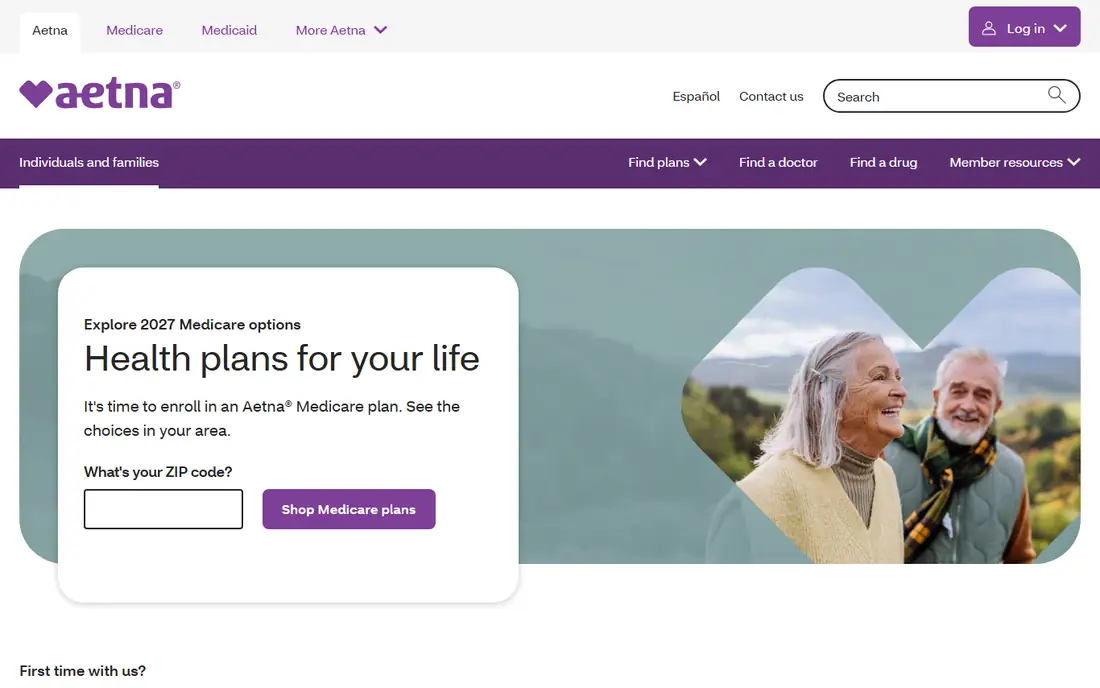
Aetna, part of CVS Health, remains a major employer carrier even after it stopped selling individual ACA plans for 2026. For small groups, it offers HMO, PPO, POS, and EPO plans, plus level-funded Funding Advantage arrangements for qualifying groups. The CVS link gives members pharmacy access, MinuteClinic visits, and chronic condition programs that some employers value for day-to-day care.
The honest limit is regional variation. Network depth, plan names, and available designs differ by state, and some rural areas have thinner coverage than urban areas. Check whether your employees' primary care doctors and specialists take the exact Aetna plan you are quoted, and read the pharmacy formulary for any high-cost drugs your team uses. A plan that looks cheap can cost more if key drugs sit on a high tier.
What we like- CVS Health pharmacy and MinuteClinic access
- HMO, PPO, POS, and EPO designs
- Level-funded options for some groups
Watch out for- Individual ACA plans exited for 2026
- Network strength varies by region

#4
Cigna Healthcare
Best for: Behavioral health and virtual care
Visit cigna.com
Starting priceSee website
Free planNo
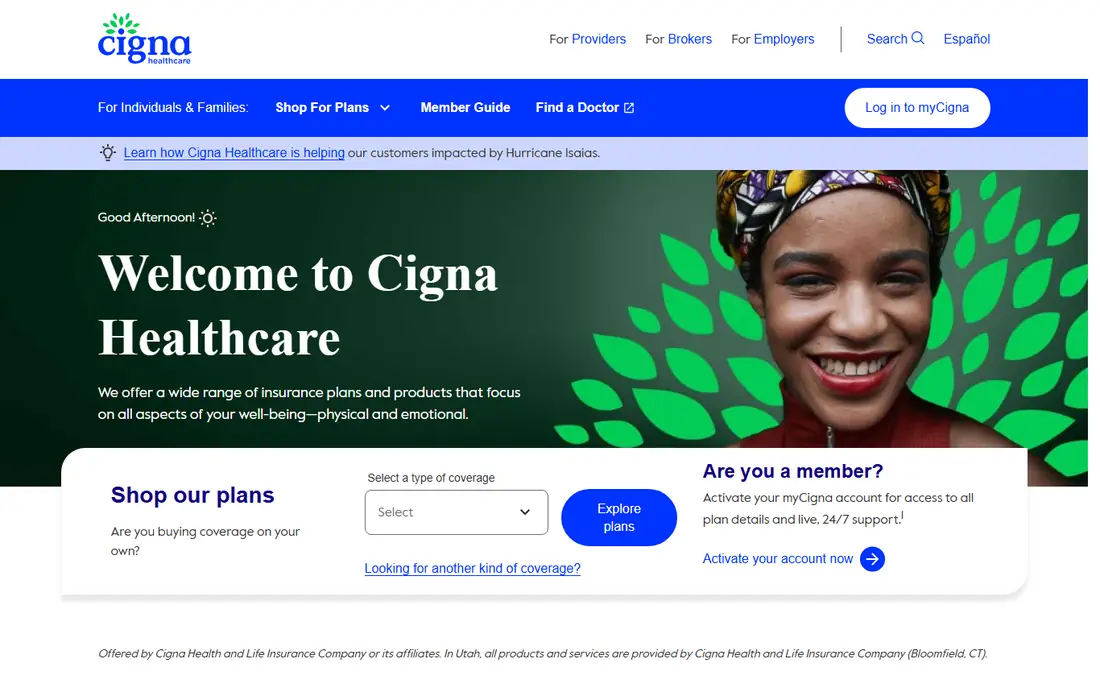
Cigna Healthcare fits small businesses that put behavioral health and virtual access high on the list. Many plans include $0 virtual care for eligible preventive care and dedicated virtual urgent care for minor acute conditions, subject to plan terms, and Cigna's behavioral health programs are a stated focus. The link to Express Scripts also shapes pharmacy benefits, which matters for teams with regular prescriptions.
The trade-off is network size in some markets. Cigna's network can be narrower than UnitedHealthcare or a local Blue plan in certain areas, so provider checks are essential. Confirm which virtual care services carry no cost share on your exact plan, since HSA plans and non-minor acute care may apply a copay, coinsurance, or deductible. For teams spread across states, compare the network state by state.
What we like- Virtual care options including $0 preventive virtual visits on some plans
- Behavioral health focus
- Express Scripts pharmacy link
Watch out for- Network is smaller than some national rivals in certain markets
- Plan availability varies by state

#5
Kaiser Permanente
Best for: Integrated care in service areas
Visit kp.org
Starting priceSee website
Free planNo
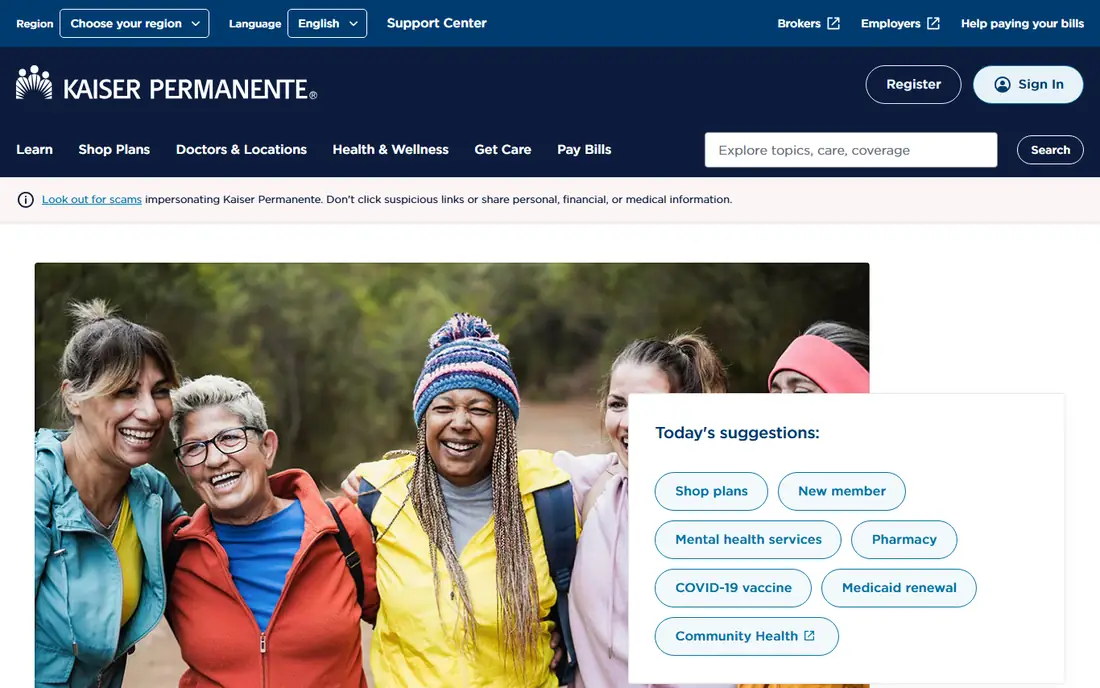
Kaiser Permanente works differently from most carriers, because its doctors, hospitals, and health plan sit in one integrated system. That model gives members predictable copays, shared medical records across doctors, and phone and video visits inside the same system. For small businesses in California, Colorado, Georgia, Hawaii, Maryland, Oregon, Virginia, Washington, and Washington DC, Kaiser also offers KP Plus and PPO options that add some out-of-network flexibility.
The limit is geography. Outside Kaiser service areas, members have little or no in-network access, and most HMO plans cover out-of-network care only in emergencies. A business with staff outside those areas will need a second carrier or a PPO option for those employees. Inside a service area, though, Kaiser is often the simplest experience for employees who are willing to use Kaiser doctors and facilities.
What we like- Doctors, hospitals, and plans work in one system
- Predictable copays on HMO plans
- Strong preventive care and digital tools
Watch out for- Only in certain states and service areas
- Out-of-network care is limited on most HMO plans
Starting priceSee website
Free planNo
Humana is best known for Medicare plans, but it also sells group health coverage and related benefits that small businesses can pair with medical plans. Its strengths for employers include dental and vision options, member discounts, wellness programs, and online tools for claims, benefits, and doctor search. Those add-ons can matter for a small team that wants one vendor for several benefit lines.
The catch is state variation. Humana's small group medical footprint is not as uniform as its Medicare footprint, so availability and plan designs differ by market. Employers should confirm that Humana sells small group medical plans in their state, check the network for their employees' doctors, and compare dental and vision terms separately, since those lines may carry their own networks and limits.
What we like- Broad provider system
- Dental and vision options
- Member tools and wellness programs
Watch out for- Small group medical presence varies by state
- Medicare focus can confuse small group buyers

#7
Oscar Health
Best for: Digital-first individual coverage through ICHRA
Visit hioscar.com
Starting priceSee website
Free planNo

Oscar Health no longer sells traditional small group plans, so it fits this guide in a different way: through ICHRA, an employer-funded arrangement that lets workers buy individual plans. Oscar sells ACA individual plans in about 21 states, with Bronze, Silver, Gold, and Platinum tiers in many markets, mostly on an EPO structure. Its app, virtual care, deductible tracking, and Care Team support appeal to teams that manage benefits from a phone.
The limits are clear. Oscar's EPO model covers in-network care except in emergencies, networks can be narrow in some counties, and availability stops at state and county lines. Employers considering ICHRA should confirm that Oscar sells plans where their workers live, compare the individual plan cost to a group quote, and explain the ICHRA choice clearly to staff, since workers will shop for their own plans rather than enrolling in one group plan.
What we like- Modern app with virtual care
- $0 virtual urgent care on many plans
- Condition-focused plans in some markets
Watch out for- No traditional small group plans
- Limited to about 21 states and selected counties
Starting priceSee website
Free planNo
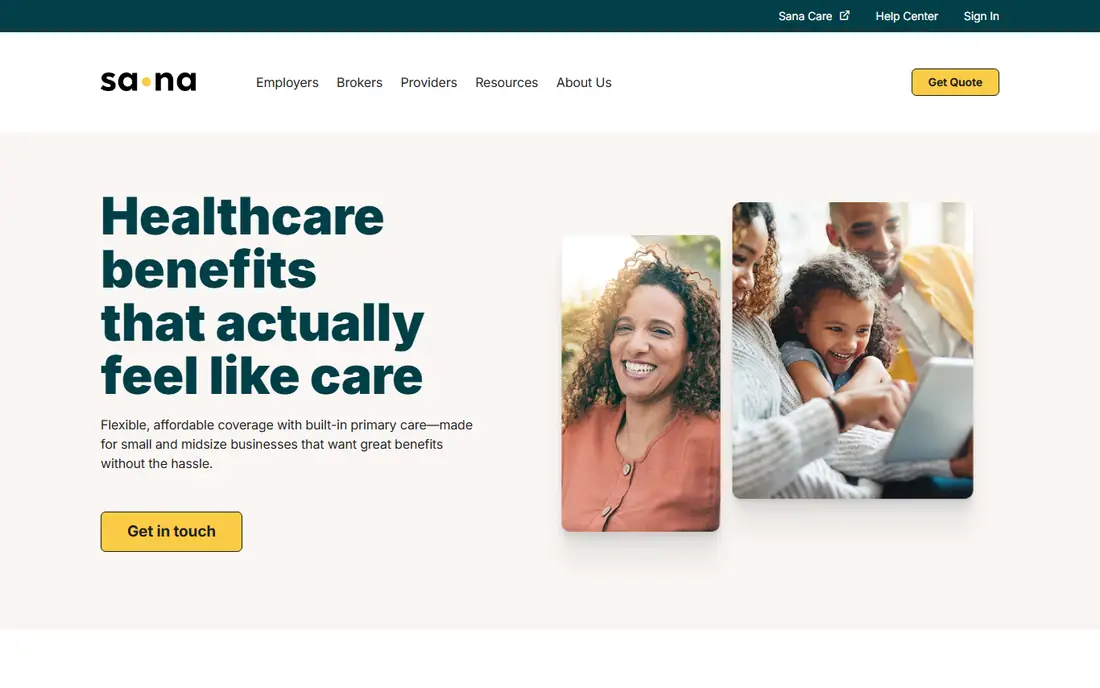
Sana Benefits is a smaller carrier built for small and midsize businesses, and it takes a different approach from the large national brands. Its plans pair nationwide coverage with Sana Care, a virtual-first primary care and care navigation service that gives members unlimited messaging with a dedicated care team. Sana uses level-funded plans, which aim for predictable monthly costs with a chance of a refund in a low-claim year, and states that members can see any provider with no out-of-network fees under its model.
The trade-off is scale and reach. Sana requires an office in a supported state, including states such as Texas, Illinois, Ohio, and Pennsylvania, and a minimum of 2 enrolled employees. A business outside those states cannot buy Sana, and a team that wants a large local hospital network should compare Sana's provider list to a local Blue or UnitedHealthcare network. For a small group inside its footprint that wants hands-on primary care help, Sana is worth a quote alongside a larger carrier.
What we like- Level-funded plans with transparent pricing
- Built-in virtual primary care and care navigation
- No out-of-network fees on its model
Watch out for- Limited to supported states
- Minimum of 2 enrolled employees
- Newer carrier with a smaller footprint
How we chose
We compared carriers on network breadth, plan types, small group availability, virtual care, pharmacy benefits, behavioral health access, and funding options such as fully insured and level-funded plans. We read carrier homepages and small business pages, checked public reviews on G2, Capterra, and Reddit where relevant, and looked at state availability, since a carrier that is strong in one state may be absent in another. We favored carriers with a real small business offering in use today, and we mixed national brands with a smaller carrier so readers can compare a broad network, an integrated system, an ICHRA route, and a level-funded option side by side.
What to compare on a real quote
Start with a census, not a brochure. Give each carrier the same employee list, with ages, ZIP codes, and current doctors, and ask for the same metal tier and deductible range. That discipline keeps quotes comparable. Then read the Summary of Benefits and Coverage for each finalist, since that document controls cost sharing, network rules, and exclusions.
Network, drugs, and virtual care
Run every regular doctor, hospital, and pharmacy through the exact plan directory, not the carrier's general directory. Check the drug formulary for high-cost prescriptions, and confirm which virtual visits carry no cost share. Ask about mental health access, including wait times and whether virtual behavioral health visits are covered on the same terms as in-person visits. A plan that covers a doctor on paper but not in the directory for your ZIP code will frustrate staff fast.
Fully insured, level-funded, and ICHRA
Fully insured plans charge a fixed premium and the carrier takes the claim risk. Level-funded plans combine a fixed monthly payment with stop-loss protection, and may return surplus when claims run low, but they add reporting and renewal work. ICHRA lets an employer give workers a set amount to buy individual plans, which gives workers choice but shifts shopping to the employee. Ask a broker to model all three on your group size and risk tolerance before you pick a structure.
Cost sharing employees will feel
Compare premiums, deductibles, copays, coinsurance, and out-of-pocket maximums together, not one figure alone. A low premium with a high deductible can cost an employee with regular care more over a year than a higher premium with lower cost sharing. Also check employer contribution rules and participation minimums, since small groups must meet those rules to keep the plan in force. This article is general information only, not insurance or financial advice, so confirm terms with a licensed broker before you enroll.
Frequently asked questions
How many employees do I need for a small group plan?
Rules vary by state and carrier, but many small group plans start at 1 to 2 enrolled employees plus the owner rules for the state. Kaiser, for example, describes small group eligibility in terms of W-2 employees and full-time equivalents. A broker can confirm the minimum for your state and whether part-time staff count.
Why do quotes differ so much between carriers?
Premiums reflect the carrier's network costs, plan design, and the age and location mix of your group. A narrow network plan in one state can cost far less than a broad PPO in another state, even from the same brand family. That is why census-based quotes for the same tier matter more than national average figures.
What is the difference between HMO, PPO, EPO, and POS plans?
An HMO usually requires in-network care and a primary care doctor. A PPO allows out-of-network care at a lower benefit level. An EPO covers in-network care only, except in emergencies. A POS plan mixes HMO and PPO features, often with a primary care doctor plus some out-of-network benefits. Read the plan document for your exact plan, since labels vary by carrier.
Should a small business consider level-funded plans?
Level-funded plans can lower costs in a healthy year and return surplus, but they require claims data review, stop-loss terms, and renewal planning. They suit groups that want more control and can handle variable renewal outcomes. Groups that want a fixed premium with no claims follow-up should stay fully insured.
What is ICHRA and who is it for?
ICHRA is an employer-funded account that workers use to buy individual health plans, such as Oscar plans in states where Oscar sells them. It suits employers with staff in many states, or teams that want workers to pick their own plans. It also requires clear communication, since workers shop for coverage themselves instead of enrolling in one group plan.
How do I check whether my doctor is in network?
Use the provider directory for the exact plan and ZIP code, not a general search, and confirm with the doctor's office as well. Directories can lag behind contract changes, so a double check avoids a surprise bill. For drugs, use the plan formulary and ask the carrier about prior authorization rules for high-cost medicines.
Sources we checked (8)
- https://www.uhc.com
- https://www.bcbs.com
- https://www.aetna.com
- https://www.cigna.com
- https://www.kp.org
- https://www.humana.com
- https://www.hioscar.com
- https://www.sanabenefits.com
Is your product missing or out of date?
We review this list regularly. Vendors can request a listing, send updated pricing or ask about featured placement.

Shihab Mia · Founder, Rankite
Shihab has 5+ years in B2B and SaaS SEO. He writes Rankite's software buying guides from pricing pages, documentation and public user reviews. More about Shihab.
 Aetna
 Humana
 Sana Benefits