How we make this list: we compare pricing pages, product documentation and public user reviews. Rankite is independent; if a vendor ever pays for a featured spot, that listing is clearly labeled Partner.
Key takeaways
- Workday HCM, Oracle Fusion Cloud HCM, and SAP SuccessFactors are the enterprise tier, built for large organizations with complex global HR needs.
- UKG Pro and Dayforce stand out for workforce management depth, a real advantage for industries with hourly and shift-based workers.
- ADP Workforce Now is the safe mainstream choice for mid-market companies that want payroll, HR, and compliance from one long-established vendor.
- BambooHR and Rippling are the modern picks for small and mid-size teams, with transparent pricing and faster implementations.
- Only BambooHR and Rippling publish starting prices; every enterprise vendor on this list requires a custom quote.
Quick comparison
| Tool | Best for | Starting price | Free plan |
|---|
 Workday HCM Workday HCM | Large enterprise HR and talent | See website | No |
 Oracle Fusion Cloud HCM Oracle Fusion Cloud HCM | Oracle-centric global enterprises | See website | No |
 SAP SuccessFactors SAP SuccessFactors | SAP shops and global compliance | See website | No |
 UKG Pro UKG Pro | Hourly workforces and WFM depth | See website | No |
 ADP Workforce Now ADP Workforce Now | Mid-market payroll plus HR | See website | No |
 Dayforce Dayforce | Single-platform HR, pay, and time | See website | No |
 BambooHR BambooHR | SMB HR with transparent pricing | $10/employee/month | Free trial (7 days) |
 Rippling Rippling | HR plus IT automation | $8/employee/month | No |
Is your product missing or out of date?
We review this list regularly. Vendors can request a listing, send updated pricing or ask about featured placement.
The best HCM software for HR departments
Starting priceSee website
Free planNo
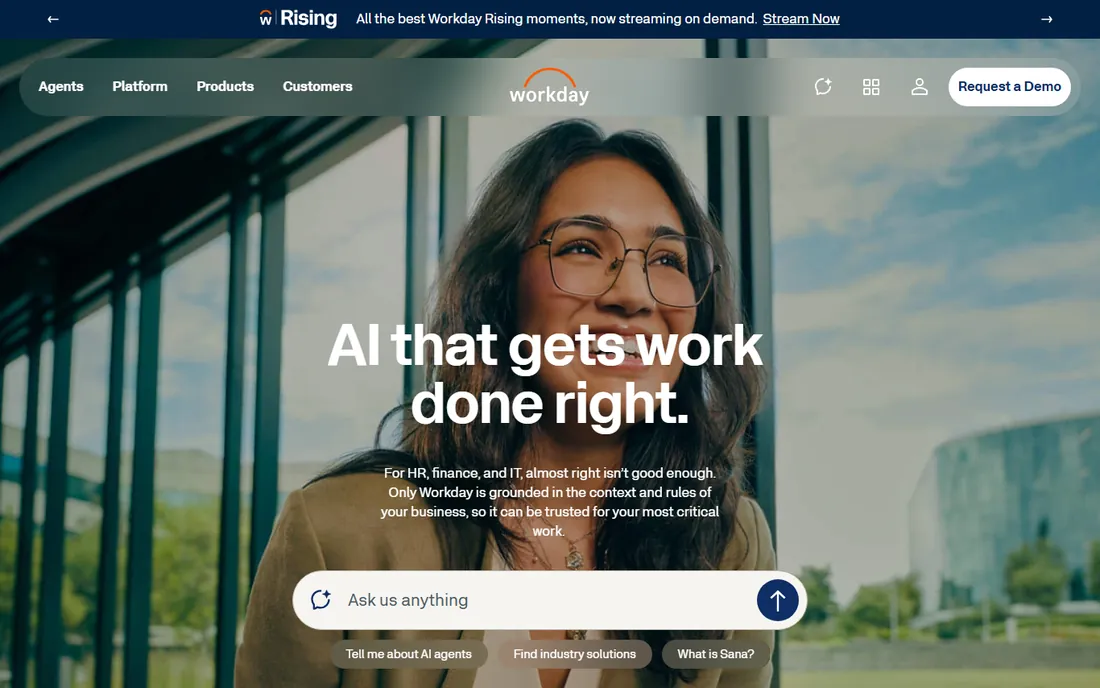
HR departments do not buy HCM software the way they buy other tools. The system touches every employee, every pay cycle, and every compliance filing, which means the switching cost is enormous and the buying decision lasts a decade. Workday HCM is the product most large enterprises compare everything else against, and that position is earned.
Workday's defining trait is its unified data model. Core HR, payroll, talent management, recruiting, and learning share one system of record rather than stitched-together modules. For HR leaders, that means headcount, compensation, and performance data reconcile by construction, not by spreadsheet. Reporting is a genuine strength: HR teams can answer workforce questions without waiting on IT or exporting to Excel.
The trade-offs are cost and commitment. Pricing is quote-based and firmly enterprise, and implementations typically run many months with significant services involvement. Workday also expects customers to adapt to its release cadence and best practices rather than customizing deeply. For large organizations that want a single, modern HR platform and can invest accordingly, Workday is the default evaluation. Smaller companies should look further down this list.
What we like- Unified HR, payroll, and talent on one data model
- Strong reporting and analytics
- Continuous innovation with two releases a year
Watch out for- Quote-based enterprise pricing
- Implementations are long and service-intensive
#2
Oracle Fusion Cloud HCM
Best for: Oracle-centric global enterprises
Visit oracle.com
Starting priceSee website
Free planNo
Oracle Fusion Cloud HCM is the HR pillar of Oracle's Fusion cloud suite, and it shows the company's enterprise DNA in every module. Core HR, payroll across many countries, talent management, and workforce planning come together on a platform designed for the world's largest and most complex organizations.
Its strength is global scale paired with ecosystem integration. Companies already running Oracle Fusion ERP or financials get HR on the same cloud foundation, with shared data and security models. Oracle has also pushed AI assistants into recruiting, performance, and employee service workflows, aiming to reduce the administrative load on HR teams.
The honest catch is that Oracle HCM rewards Oracle shops. Standalone buyers get a powerful system but miss the integration payoff, and the platform's depth means it needs skilled administrators to run well. Pricing is quote-based and enterprise-grade. If your company runs Oracle Fusion already, this belongs at the top of the shortlist. If not, evaluate it against Workday on total cost and fit.
What we like- Deep global HR and payroll coverage
- Strong within the Oracle Fusion ecosystem
- AI assistants embedded across HR workflows
Watch out for- Complexity that demands experienced administrators
- Best value inside an existing Oracle footprint
#3
SAP SuccessFactors
Best for: SAP shops and global compliance
Visit sap.com
Starting priceSee website
Free planNo
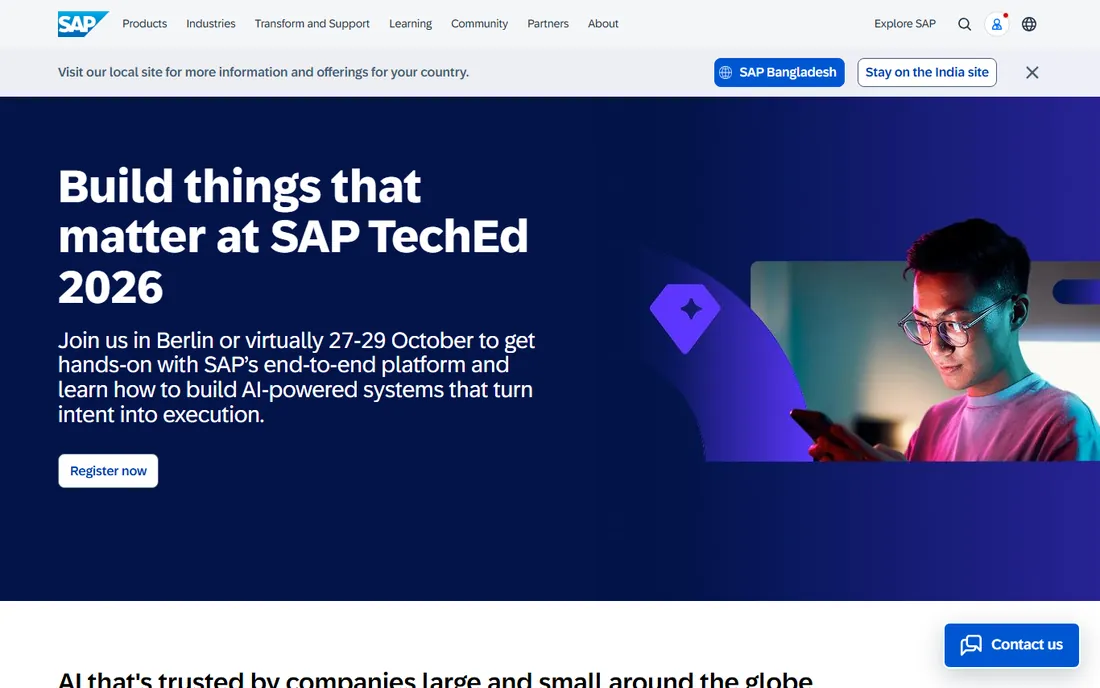
SAP SuccessFactors covers the full hire-to-retire lifecycle: recruiting, onboarding, performance, compensation, learning, and succession, alongside core HR and payroll. For multinational companies, its country coverage for payroll and compliance is among the broadest available, which is often the deciding factor in global RFPs.
The talent modules are the historical strength. Performance and goals, succession planning, and learning management are deep and configurable, which appeals to HR departments that run sophisticated talent processes. Integration with SAP S/4HANA gives SAP customers a unified path from HR data to financial planning.
SuccessFactors grew partly by acquisition, and the seams occasionally show. Different modules can feel like different products, and the user experience is less consistent than Workday's. Pricing is quote-based, and the modular licensing means costs climb as you add talent suites. It fits best where SAP is already the enterprise standard and global compliance complexity is high.
What we like- Comprehensive talent management suite
- Strong global payroll and compliance coverage
- Deep SAP ERP integration
Watch out for- Modular structure can feel fragmented
- User experience varies across modules
#4
UKG Pro
Best for: Hourly workforces and WFM depth
Visit ukg.com
Starting priceSee website
Free planNo
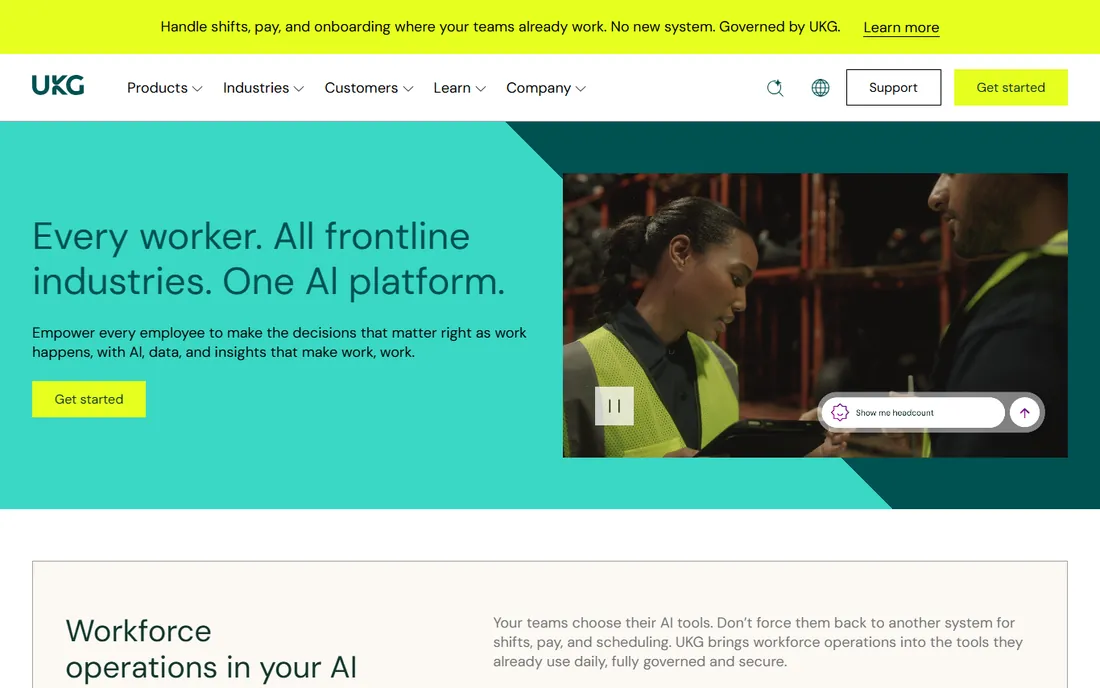
UKG Pro, born from the Kronos and Ultimate Software merger, is the HCM platform that understands hourly work best. Timekeeping, scheduling, absence management, and payroll are deeply integrated, which matters enormously in retail, healthcare, hospitality, and manufacturing, where labor cost is the largest expense and compliance rules vary by jurisdiction.
For HR departments in those industries, UKG's workforce management depth is the differentiator. Scheduling that respects labor laws, time clocks that feed payroll without re-entry, and analytics on labor cost in real time are not add-ons here, they are the core. The broader HCM suite covers core HR, talent, and recruiting around that foundation.
UKG sells to the mid-market and enterprise with quote-based pricing, and implementations for large hourly workforces are substantial projects. Companies with mostly salaried knowledge workers may find the WFM depth unnecessary. But if your workforce clocks in, UKG Pro deserves serious attention.
What we like- Excellent workforce management for shift-based industries
- Strong payroll accuracy
- Large customer base in retail, healthcare, and manufacturing
Watch out for- Quote-based pricing with enterprise sales cycle
- Can be more than smaller teams need
#5
ADP Workforce Now
Best for: Mid-market payroll plus HR
Visit adp.com
Starting priceSee website
Free planNo
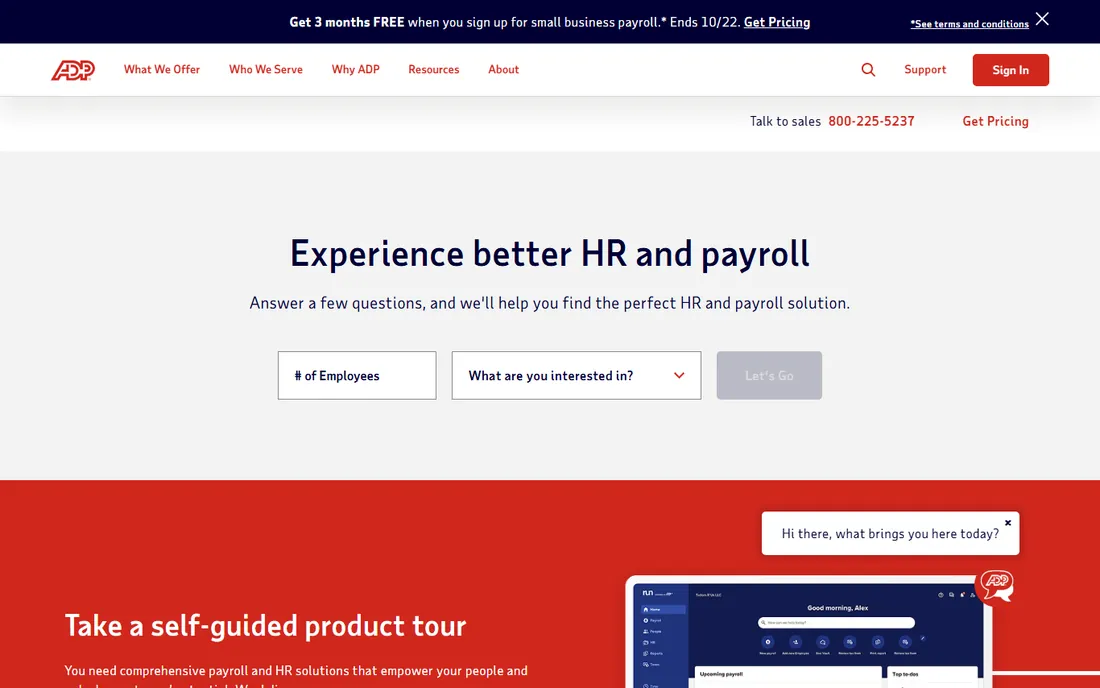
ADP pays one in six US workers, a scale that gives its compliance engine unmatched real-world testing. ADP Workforce Now packages that payroll strength with core HR, benefits administration, time and attendance, and talent tools for mid-market companies. For HR departments that rank "payroll must never be wrong" above all else, that track record carries weight.
The platform's breadth is practical rather than flashy. Benefits enrollment, ACA compliance, tax filing, and new-hire onboarding are handled with the steadiness you would expect from a 75-year-old company. The support organization is enormous, which means help is available, though experiences vary by service tier.
Pricing is quote-based, and ADP's sales process is famously persistent. The interface has improved but will not win design awards against newer rivals. Choose ADP Workforce Now when reliability, compliance coverage, and payroll depth matter more than a flashy modern interface, which for many HR departments is exactly the right trade.
What we like- Payroll accuracy backed by decades of compliance expertise
- Broad HR, benefits, and time modules
- Huge support and partner ecosystem
Watch out for- Quote-based pricing
- Interface modernized but still feels enterprise-traditional
Starting priceSee website
Free planNo
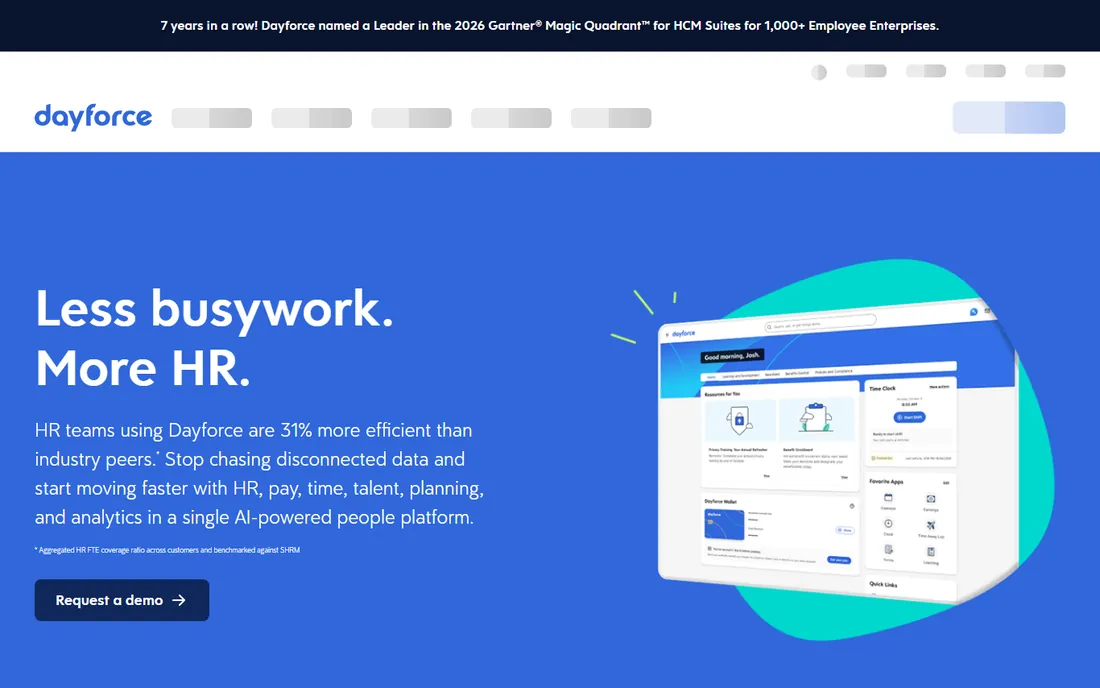
Dayforce's core claim is architectural: one application, one database, one employee record for HR, payroll, benefits, workforce management, and talent. Where competitors integrate acquired modules, Dayforce calculates payroll continuously from the same data that scheduling and time tracking produce. The practical payoff is fewer reconciliation errors and real-time visibility into labor costs.
That single-platform design appeals to HR departments tired of maintaining integrations between HRIS, payroll, and time systems. Global payroll coverage extends the story to multinationals, and the analytics layer benefits from having all workforce data in one place. Dayforce has grown into a genuine enterprise alternative to Workday and Oracle.
The commitment is enterprise-scale. Pricing is quote-based, implementations are significant, and the platform delivers its full value when a company consolidates onto it rather than running it alongside legacy systems. Mid-market companies with complex pay rules and global ambitions are the sweet spot.
What we like- Single database for HR, payroll, benefits, and time
- Continuous payroll calculation
- Strong global payroll reach
Watch out for- Enterprise pricing and implementation effort
- Best fit for companies ready to consolidate systems
Starting price$10/employee/month
Free planFree trial (7 days)
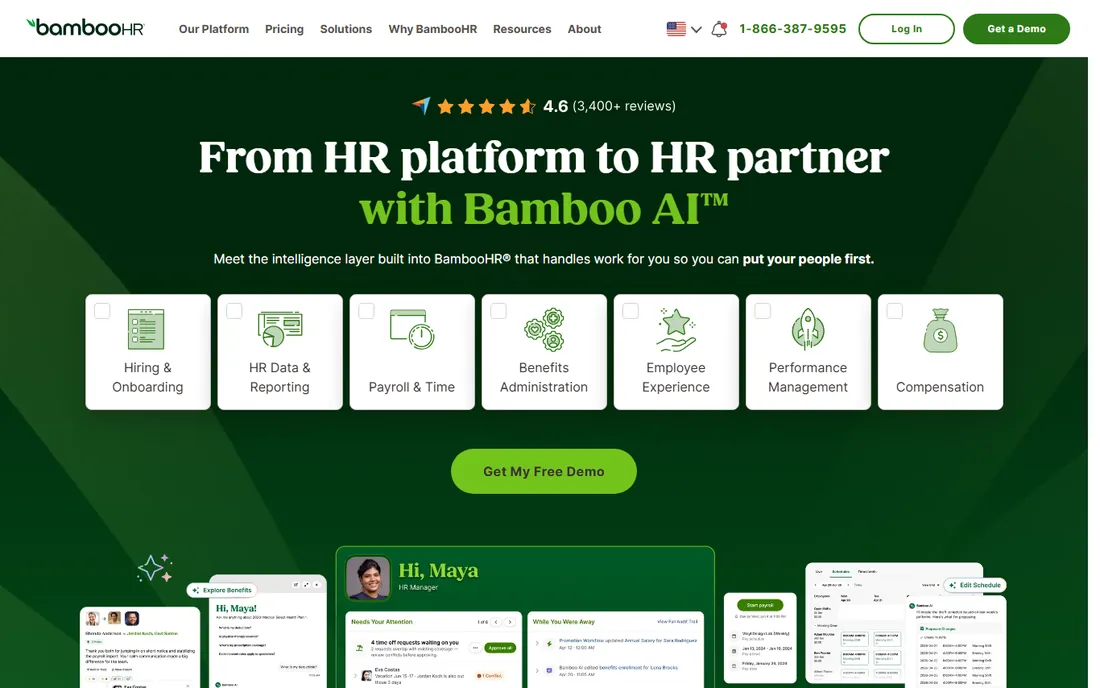
BambooHR is the rare HCM vendor that publishes its prices. Core starts at $10 per employee per month, Pro at $17, and Elite at $25, with a flat rate from $250 per month for teams of 25 or fewer. In a category where every enterprise vendor hides behind "contact sales," that transparency alone wins fans.
The product matches the pricing philosophy: straightforward, pleasant to use, and quick to implement. Core HR records, onboarding, time off, performance management, and reporting cover what small and mid-size HR departments need daily, without the configuration burden of enterprise suites. A 7-day free trial lets teams evaluate it hands-on, which enterprise vendors rarely allow.
The limits are real. Payroll, benefits administration, and time tracking are add-ons rather than native strengths, and global or highly complex requirements stretch the platform. BambooHR knows its lane: companies from tens to low thousands of employees that want HR software running this quarter, not next year.
What we like- Published pricing starting at $10 per employee per month
- Intuitive interface HR teams actually enjoy
- Fast implementation
Watch out for- Payroll and advanced features are add-ons
- Less suited to complex enterprise requirements
Starting price$8/employee/month
Free planNo
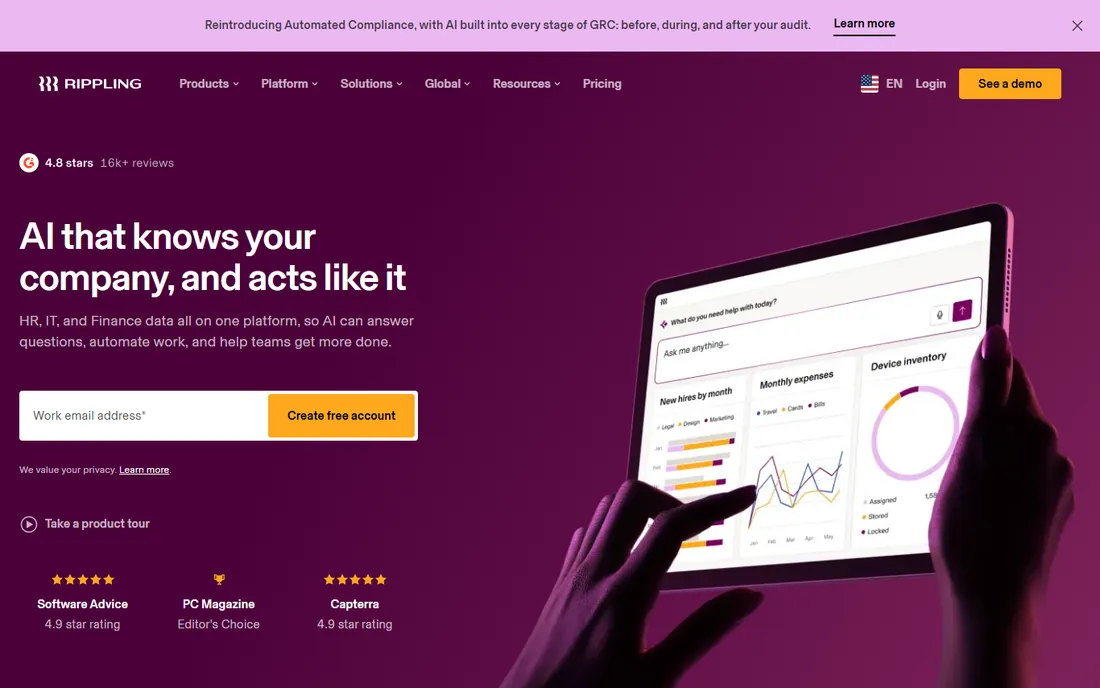
Rippling's insight is that HR data should drive everything else. When you hire someone in Rippling, the same action can provision their accounts, order their laptop, enroll them in benefits, and set up payroll. When someone leaves, one workflow revokes access and recovers equipment. That HR-plus-IT automation is unique on this list and a genuine time-saver for growing companies.
The platform starts at $8 per employee per month for the core HR system, with payroll, benefits, time tracking, and IT modules adding per-employee fees. The modular model means you pay for what you use, but totals can surprise buyers who enable several modules. There is no free trial; evaluation happens through guided demos.
Rippling suits tech-forward small and mid-size companies that feel the pain of disconnected HR and IT processes. Traditional HR departments that only need HR may find the IT layer irrelevant, and heavy manufacturers may miss workforce management depth. But for companies where onboarding speed and automation matter, Rippling's unified approach is compelling.
What we like- Unified HR, IT, and finance data
- Powerful onboarding and offboarding automation
- Modular pricing from $8 per employee per month
Watch out for- Costs stack quickly as modules add up
- No free trial, evaluation through demo
Implementation realities
Every enterprise HCM on this list is a multi-month project, and buyers should plan accordingly. Data migration is the hidden workload: cleaning employee records, mapping pay codes, and reconciling benefits data takes longer than vendors suggest. Assign internal ownership early, because no implementation partner understands your pay practices better than your own payroll team.
Change management decides success more than software features. Managers who approve time off, employees who enroll in benefits, and HR staff who run payroll all need training and a reason to embrace the new system. The smoothest go-lives we see in buyer reports pair the software rollout with clear communication about what changes for each audience.
Finally, negotiate the full contract, not just year one. Implementation services, data migration, training, and annual uplift caps all belong in the initial agreement. The vendors here expect negotiation, and the buyers who get the best outcomes treat the purchase as a ten-year partnership with priced options, not a one-time transaction.
What to ask on the demo call
Ask how payroll handles your hardest case. Every vendor demos the happy path; the differentiator is multi-state taxation, complex overtime rules, or union pay scales. Bring one real scenario from your current payroll and watch how the system handles it.
Ask who owns the data model. In unified platforms like Workday and Dayforce, HR, payroll, and time share one record. In modular suites, ask where the seams are and who maintains the integrations. The answer predicts your future administrative workload.
Ask about the upgrade and release process. Cloud HCM vendors push updates regularly, and you need to know how much testing each release requires from your team. Also ask for customer references in your industry and size band, then actually call them. The reference call is the most underused step in HCM buying, and the most informative.
How we chose
We selected the HCM platforms that HR departments most often evaluate, spanning enterprise suites and modern mid-market tools. We verified each vendor's current homepage and confirmed pricing availability: BambooHR and Rippling publish starting prices, while the enterprise vendors are quote-based. We excluded discontinued products and point solutions that do not qualify as full HCM suites. We did not claim hands-on testing. Instead we weighed HR depth, payroll strength, workforce management, global coverage, implementation reality, and pricing transparency.
Frequently asked questions
What does HCM software include?
Human capital management software typically covers core HR records, payroll, benefits administration, time and attendance, recruiting, onboarding, performance management, and learning. Enterprise suites add workforce planning, compensation management, and global payroll. The exact bundle varies by vendor and tier.
How much does HCM software cost?
It ranges widely. BambooHR starts at $10 per employee per month and Rippling at $8, both published. Enterprise platforms like Workday, Oracle, SAP SuccessFactors, UKG, ADP, and Dayforce use custom quotes based on employee count, modules, and services. Expect implementation services to add substantially to the first-year cost.
How long does HCM implementation take?
Small teams can go live on BambooHR or Rippling in weeks. Mid-market deployments typically take three to six months. Enterprise rollouts of Workday, Oracle, or SAP often run nine to eighteen months, especially with global payroll. Data migration and change management, not software configuration, usually set the timeline.
Should we keep payroll separate from HR software?
Most modern HCM suites handle payroll natively, and unifying it with HR data reduces errors and reconciliation work. Separate best-of-breed payroll can make sense for unusual complexity, but the integration burden falls on you. For most companies, one system for HR and payroll is simpler and safer.
What is the difference between HCM and HRIS?
The terms overlap heavily. HRIS traditionally meant the core system of record for employee data, while HCM implies the broader suite including talent management and workforce planning. In practice, vendors use them interchangeably, so evaluate the actual modules rather than the label.
Can small businesses use enterprise HCM software?
Technically yes, but it is rarely wise. Enterprise platforms are priced and implemented for scale, and small teams pay for complexity they will not use. BambooHR and Rippling are built for the small and mid-market, with transparent pricing and faster go-lives. Match the platform's weight to your company's size.
Sources we checked (8)
- https://www.workday.com/
- https://www.oracle.com/
- https://www.sap.com
- https://www.ukg.com/
- https://www.adp.com/
- https://www.dayforce.com/
- https://www.bamboohr.com/
- https://www.rippling.com/
Is your product missing or out of date?
We review this list regularly. Vendors can request a listing, send updated pricing or ask about featured placement.

Shihab Mia · Founder, Rankite
Shihab has spent more than a decade helping SaaS and e-commerce brands grow through search. He writes Rankite's software buying guides from pricing pages, documentation and public user reviews. More about Shihab.