How we make this list: we compare pricing pages, product documentation and public user reviews. Ratings come from G2, Capterra or Trustpilot, with the date we checked them.
Key takeaways
- Duolingo is the best free starting point for French, with game like lessons that build a daily habit.
- Babbel is the best structured course app, with lessons built around real conversations and grammar in context.
- Rosetta Stone suits learners who want immersion without translation, using images and audio to teach French directly.
- Pimsleur is the best audio only option for speaking and listening, especially for commuters and drivers.
- italki is the best route to real conversation, pairing you with native French tutors for live lessons.
- No app alone makes you fluent, so combine an app with speaking practice, reading, and listening to real French.
Quick comparison
| Tool | Best for | Starting price | Free plan |
|---|
 Duolingo | Free daily habit building | Free | Yes |
 Babbel | Structured conversation courses | See website | No |
 Rosetta Stone | Immersion without translation | See website | No |
 Busuu | Community feedback on writing | Free | Yes |
 Pimsleur | Audio speaking and listening | See website | No |
 Memrise | Vocabulary with video of natives | Free | Yes |
 italki | Live lessons with native tutors | See website | No |
 Lingoda | Live small group classes | See website | No |
Is your product missing or out of date?
We review this list regularly. Vendors can request a listing, send updated pricing or ask about featured placement.
The best french learning apps
#1Duolingo
Best for: Free daily habit building4.5/5 on
G2 (145 reviews, checked Oct 2026)
Visit duolingo.com
Starting priceFree
Free planYes
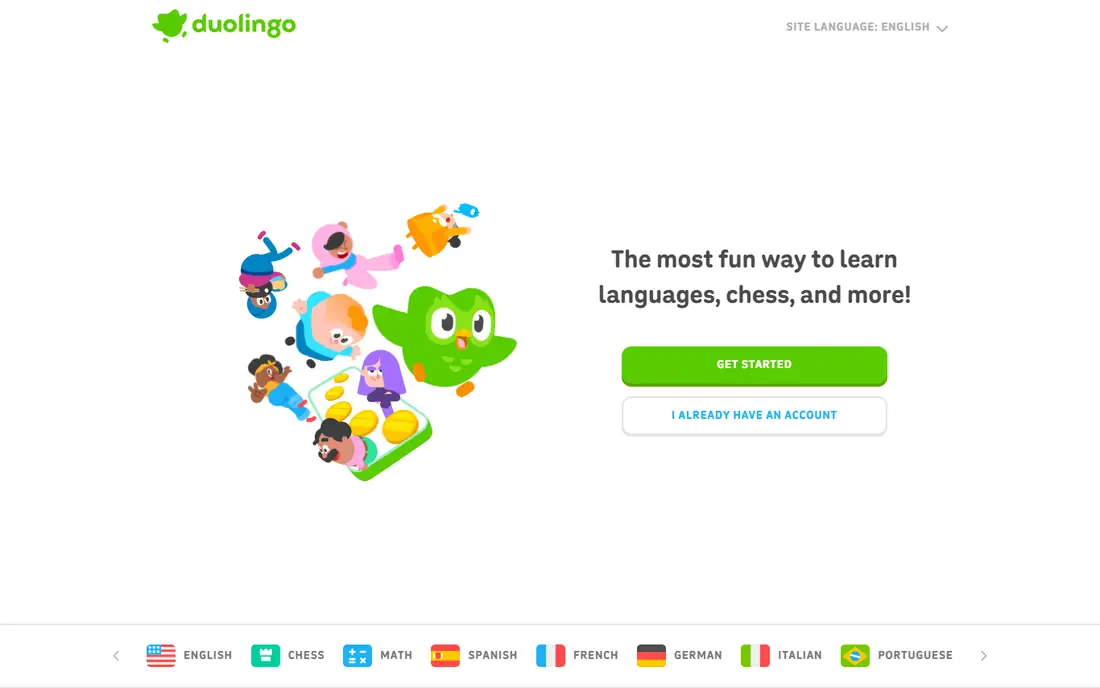
Duolingo is the most popular language app in the world, and its French course is free, game like, and easy to stick with. Short lessons cover vocabulary, sentences, and listening, with streaks, leagues, and rewards that keep daily practice going. Stories and podcasts add reading and listening beyond drills, and the course runs from beginner to intermediate levels.
Grammar explanations are thin, speaking practice is limited to repeating phrases, and the free plan shows ads and uses a hearts system that limits mistakes. For a free daily habit that gets you started in French, Duolingo is unmatched, though serious learners should add a structured course or tutor later.
What we like- Free core course
- Game like lessons build habit
- Large French course with stories and podcasts
Watch out for- Grammar explanations are thin
- Speaking practice is limited
- Ads and hearts on free plan
Starting priceSee website
Free planNo
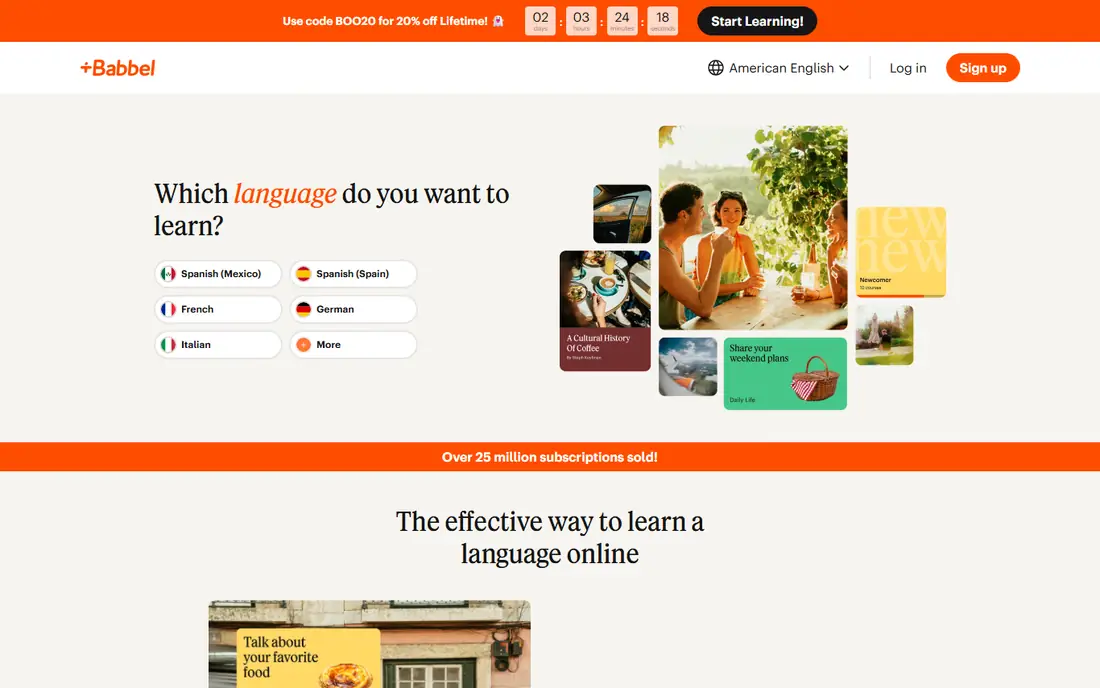
Babbel offers structured French courses built by language experts around real conversations, such as ordering food, asking directions, and talking about work. Grammar is taught in context rather than as dry rules, and speech recognition checks pronunciation. Lessons run 10 to 15 minutes, which fits a daily routine, and review sessions reinforce vocabulary.
Babbel requires a subscription, with prices varying by plan length, and it feels less game like than Duolingo, which some learners miss. Advanced content is thinner than beginner and intermediate levels. For learners who want a clear course path toward conversation, Babbel is the best structured app.
What we like- Lessons built around real conversations
- Grammar in context
- Speech recognition for pronunciation
Watch out for- Subscription required
- Less game like than Duolingo
- Advanced content is thinner
#3Rosetta Stone
Best for: Immersion without translation4.2/5 on
G2 (113 reviews, checked Oct 2026)
Visit rosettastone.com
Starting priceSee website
Free planNo
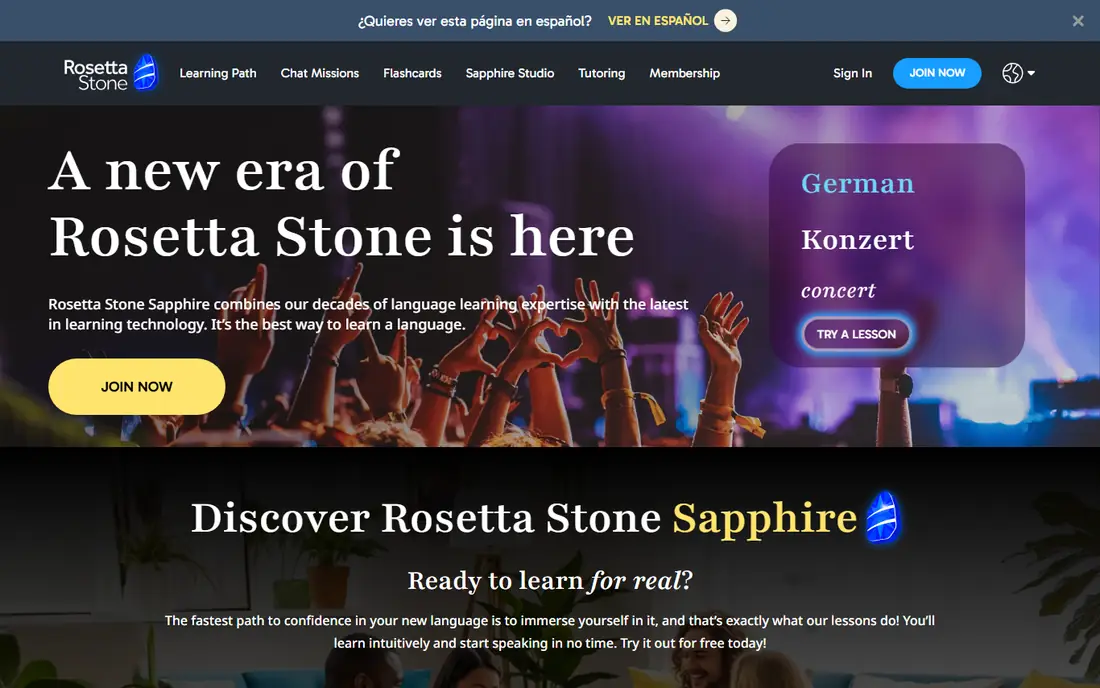
Rosetta Stone teaches French through immersion: images, audio, and French text, with no English translation, so learners associate words directly with meanings. Its speech recognition, TruAccent, checks pronunciation, and its course covers core vocabulary and structures across many units. The method suits visual learners and those who dislike grammar drills.
There are no grammar explanations, which frustrates learners who want rules, and pricing is a subscription or a lifetime purchase. Progress can feel slow compared with game like apps. For immersion learners who want to think in French from the start, Rosetta Stone remains a respected choice.
What we like- Immersion method teaches French directly
- Speech recognition
- Long established course
Watch out for- Subscription or lifetime price
- No grammar explanations
- Slower for learners who want rules
#4Busuu
Best for: Community feedback on writing4.4/5 on
G2 (71 reviews, checked Oct 2026)
Visit busuu.com
Starting priceFree
Free planYes
Busuu combines structured French courses with a community of native speakers who correct your written and spoken exercises. That feedback is valuable, since an app alone cannot tell you whether your French sounds natural, and Busuu courses run from beginner to upper intermediate levels. A free plan covers core lessons, with premium giving access to full courses and offline mode.
The free plan is limited, premium requires a subscription, and community feedback quality varies by corrector. For learners who want human feedback without paying for a tutor, Busuu is the best community option.
What we like- Free core lessons
- Native speaker feedback on exercises
- Structured courses to advanced levels
Watch out for- Free plan is limited
- Premium needed for full courses
- Community feedback quality varies
#5Pimsleur
Best for: Audio speaking and listening4.3/5 on
G2 (2 reviews, checked Oct 2026)
Visit pimsleur.com
Starting priceSee website
Free planNo
Pimsleur is an audio based method built around speaking and listening: 30 minute lessons prompt you to respond in French, with spaced repetition that brings words back at increasing intervals. It is the best option for commuters, drivers, and walkers who cannot look at a screen, and it builds pronunciation and listening confidence faster than text based apps.
Pimsleur requires a subscription or per level purchase, reading and writing get little attention, and 30 minute lessons need more time than Duolingo drills. For speaking and listening first, especially before a trip, Pimsleur is the strongest app.
What we like- Excellent speaking and listening training
- Audio only suits commutes
- Spaced repetition built in
Watch out for- Subscription or per level price
- No reading or writing focus
- Lessons are 30 minutes each
Starting priceFree
Free planYes
Memrise focuses on vocabulary, using spaced repetition plus short video clips of native French speakers using words in real contexts. Seeing and hearing real people say phrases helps learners recognize natural speech, which textbook audio often misses. A free plan covers core content, with premium adding full courses and offline mode.
Memrise is less structured than Babbel as a full course, grammar coverage is thin, and premium requires payment. For building French vocabulary that sticks, especially with native speaker video, Memrise is an excellent companion app.
What we like- Free core content
- Video clips of native speakers
- Spaced repetition for vocabulary
Watch out for- Less structured than Babbel
- Grammar coverage is thin
- Premium needed for full features
#7italki
Best for: Live lessons with native tutors3.8/5 on
G2 (19 reviews, checked Oct 2026)
Visit italki.com
Starting priceSee website
Free planNo
italki connects learners with native French tutors and professional teachers for live video lessons, priced per lesson with wide variation by tutor. Nothing in an app replaces real conversation: a tutor corrects pronunciation, explains culture, and adapts to your level and goals, whether travel, exams, or business French. Scheduling is flexible, with lessons available at most hours.
You pay per lesson, tutor quality varies, so trial lessons matter, and progress needs self direction between lessons. For learners ready to speak French with a real person, italki is the single most effective tool on this list, best paired with an app for daily practice.
What we like- Live lessons with native tutors
- Flexible scheduling and prices
- Conversation practice that apps cannot match
Watch out for- Pay per lesson
- Tutor quality varies
- Needs self direction to progress
Starting priceSee website
Free planNo
Lingoda offers live online French classes in small groups with qualified teachers, following a structured curriculum aligned to European levels from A1 to C1. Classes run around the clock, certificates mark level completion, and the group format adds motivation and peer practice that solo apps lack.
Classes require a subscription or class packs, times are fixed rather than fully flexible, and group pace may be too fast or slow for some learners. For learners who want classroom structure online with real teachers, Lingoda is the best group class option.
What we like- Live small group classes with qualified teachers
- Structured curriculum
- Certificates for levels
Watch out for- Subscription or class packs required
- Fixed class times
- Group pace may not fit everyone
How we chose
We ranked apps by teaching method, course depth, speaking practice, and price, favoring apps that build a sustainable daily habit and lead toward real conversation. We gave extra weight to speaking and listening practice, since reading alone does not produce speakers, and to structured paths, since a clear curriculum beats random lessons. We also included live tutor and class options, since no self study app alone makes a learner fluent. Prices vary by plan length and region, so starting prices are listed as See website except where a free plan applies.
Buying guide
Start by naming your goal and time. For travel phrases in a few weeks, Duolingo plus Pimsleur audio covers the basics. For conversational French over months, Babbel or Busuu plus weekly italki lessons is a stronger plan. For exam levels, Lingoda structured classes align to European levels most directly.
Next, trial before paying. Most paid apps offer a free lesson, trial period, or first lesson discount, and tutor platforms let you try several tutors cheaply. Use trials to check whether the method fits you, since the best method is the one you will actually use daily.
Finally, combine tools and real French. Use an app for daily drills, a tutor or class for speaking, and real French media, such as podcasts, shows, and news, for listening. Track progress by what you can do, such as ordering a meal or holding a five minute conversation, rather than by streaks alone. The best French learning app is the one that keeps you practicing until speaking feels natural.
Frequently asked questions
What is the best French learning app for beginners?
Duolingo is the best free starting point for beginners, with easy daily lessons that build vocabulary and habit. Babbel is the best paid structured course for beginners who want a clear path to conversation.
Can I become fluent using only an app?
No app alone makes you fluent. Apps build vocabulary and grammar, but fluency needs speaking practice with real people, plus listening to and reading real French. Pair an app with italki lessons or Lingoda classes for best results.
How long does it take to learn French?
It varies by time and method, but regular daily practice of 30 minutes can reach conversational level in one to two years for English speakers. Live speaking practice speeds progress more than app drills alone.
Is Babbel or Duolingo better for French?
Duolingo is better for free daily habit building and fun, while Babbel is better for structured conversation courses with grammar in context. Many learners use Duolingo free plus Babbel paid together.
Do French learning apps teach Quebec French?
Most apps teach standard French as spoken in France, with some coverage of Quebec vocabulary and accents in places. Learners focused on Quebec should add a tutor from Quebec on italki for local expressions and accent.
Sources we checked (0)
Is your product missing or out of date?
We review this list regularly. Vendors can request a listing, send updated pricing or ask about featured placement.

Shihab Mia · Founder, Rankite
Shihab has 5+ years in B2B and SaaS SEO. He writes Rankite's software buying guides from pricing pages, documentation and public user reviews. More about Shihab.