How we make this list: we compare pricing pages, product documentation and public user reviews. Ratings come from G2, Capterra or Trustpilot, with the date we checked them.
Key takeaways
- Google Lens is the best free first step: photograph an object and it finds visually similar items, listings and articles that often name the maker and era in minutes.
- WorthPoint and iGuide answer the second question, what it sells for, from databases of past auction and marketplace results; both are free only at the edges, with subscriptions behind the real data.
- eBay sold listings are the free price check anyone can run, and LiveAuctioneers, Invaluable and 1stDibs show what the serious end of the market asks and gets.
- An app's identification is a lead, not an appraisal: for insurance, estates or a valuable sale, a certified appraiser's written opinion is the document that counts.
Quick comparison
| Tool | Best for | Starting price | Free plan |
|---|
 Google Lens | Identifying an object from a photo | Free | Yes |
 WorthPoint | Price history from millions of past sales | See website | No |
 iGuide | Quick price lookups for collectibles | Free | Yes |
 eBay | Checking real sold prices free | Free | Yes |
 LiveAuctioneers | Seeing auction results for serious pieces | Free | Yes |
 Invaluable | Auction prices across hundreds of houses | Free | Yes |
 1stDibs | Identifying high end design and its makers | Free | Yes |
Is your product missing or out of date?
We review this list regularly. Vendors can request a listing, send updated pricing or ask about featured placement.
The best free antique identification apps
Starting priceFree
Free planYes
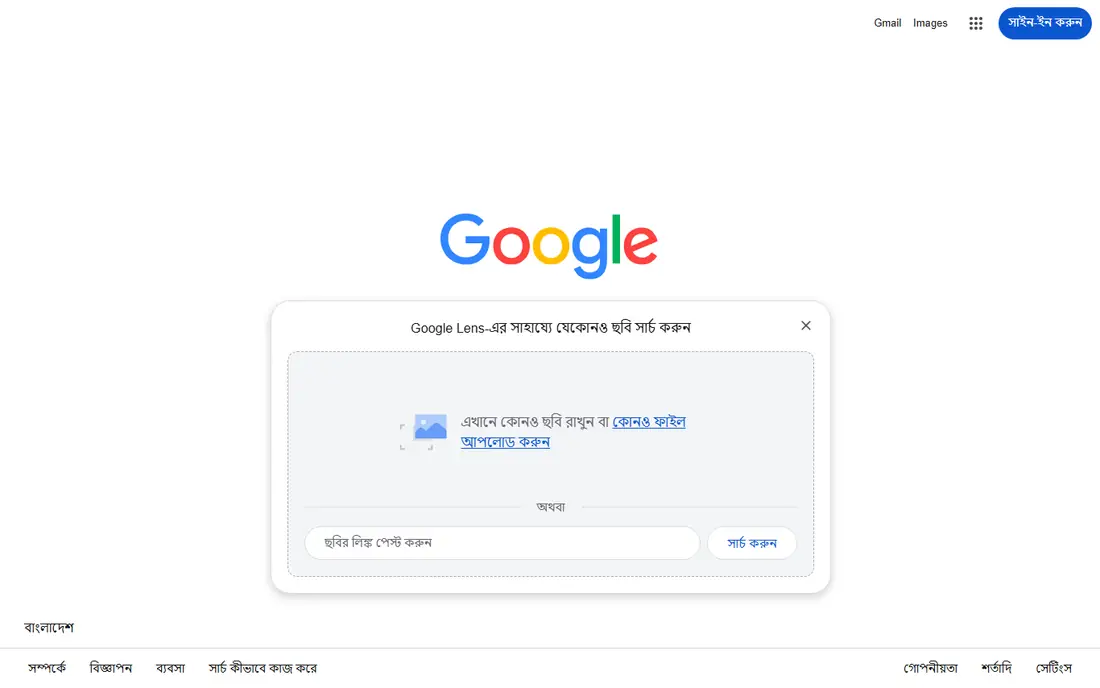
What we like- Google Lens is the astonishing free starting point: point the camera at a chair, a plate, a lamp, and it returns visually similar objects from across the web, marketplace listings, auction results, museum pages and articles, which between them usually reveal the maker, the pattern name and the decade, the facts every later search needs. It reads maker's marks and labels when photographed closely, translates foreign text on bases and boxes, and costs nothing with no account beyond a Google sign in. For the attic and estate cleanout scenario, where the question is simply what is this, nothing else comes close per minute or per dollar.
Watch out for- Lens matches appearances, not authenticity: a reproduction made to look right fools it exactly as it fools a person, and its results mix periods, copies and the genuine article without ranking them by truth. It offers no price opinion of its own, only links to listings whose asking prices may be fantasy. Results quality varies with the object's fame
- A known designer's chair identifies in seconds while a regional potter's work returns cousins rather than the maker. Treat every identification as a hypothesis to verify against marks, materials and construction, the checks the later sections describe.
Starting priceSee website
Free planNo
What we like- WorthPoint is the pricing database professionals reach for: hundreds of millions of sold prices gathered from auctions and online marketplaces over years, searchable by the maker and pattern your Lens search just found, with a marks and makers library covering signatures, hallmarks and pottery marks across categories. For step two of the identification job it is the deepest well here, and its price results, real sales rather than listings, are the kind of evidence dealers and appraisers cite. A free trial lets you test it against objects you own before the subscription, priced on its site, becomes a question.
Watch out for- The real data is the subscription
- The free layer is a shop window, which is why it sits second in a guide about free despite being the strongest pricing tool named. Its interface rewards practice, and a novice can misread results by comparing across conditions and sizes the records describe in shorthand. Sold prices tell you what the market paid then, for that example, in that room
- Your object's mileage may vary in both directions. For a handful of objects a year, the subscription is hard to justify against eBay's free sold listings.
#3iGuide
Best for: Quick price lookups for collectibles4.7/5 on
G2 (3 reviews, checked Oct 2026)
Visit iguide.net
Starting priceFree
Free planYes
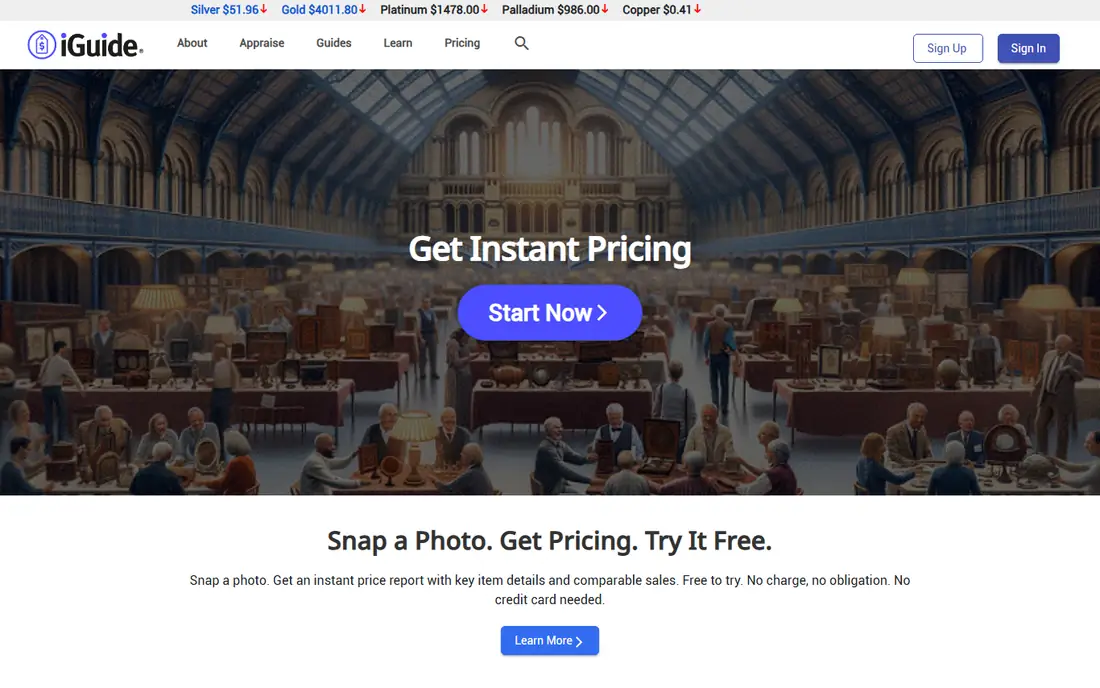
What we like- IGuide publishes online price guides across collectibles categories, coins, comics, dolls, diecast, militaria and general antiques among them, built from marketplace results, with free lookups that answer the what is it worth question at the level a cleanout needs: an order of magnitude and a realistic range. Its category guides explain the variants and marks that separate the valuable version from the common one, which is identification help of the most practical kind. For a mixed box of collectibles rather than fine antiques, iGuide's breadth makes it the quickest free reference after Lens.
Watch out for- Depth varies by category: strong where collector markets are organised, thinner for furniture, silver and fine art. Fuller data and reports sit behind paid options, and prices age as markets move, so a guide figure is a starting point to verify on eBay sold listings before any sale. Identification from photographs is limited compared with Lens. iGuide tells you about the class of object
- The specific example in your hand still needs the marks and condition checks no database performs.
Starting priceFree
Free planYes
What we like- EBay's sold listings filter is the free price check the whole trade quietly uses: search the maker and pattern, filter to sold items, and you see what buyers actually paid recently for objects described like yours, with photographs to compare construction, marks and condition against your piece. For common and mid range antiques and collectibles it is more current than any database, because it is the market itself, updated daily. Combined with Lens for the name and eBay for the money, a free user owns a workflow that answers ninety percent of household identification questions.
Watch out for- The labour is yours: no identification help, no marks library, and sold prices need reading as a distribution, since one desperate buyer and one mislabelled listing both live in the results. Sellers' descriptions include optimistic attributions that a sold price then appears to endorse. Rare and high end pieces trade too seldom on eBay for a reliable read, which is where the auction databases below take over. And a sold price is for that object in that condition
- Reading across to yours is a judgement, not a lookup.
Starting priceFree
Free planYes
What we like- LiveAuctioneers aggregates catalogues and results from auction houses worldwide, free to browse and search: find your object's maker or form and you can read how professional cataloguers described comparable pieces, the attribution language, the measurements, the provenance notes, and what the room paid. That cataloguing language is an education in identification by itself, teaching the difference between period, style of and manner of, distinctions worth real money. For furniture, silver, paintings and decorative arts beyond eBay's centre of gravity, this is the free reference with professional depth.
Watch out for- Auction results skew toward the better examples that reach auction, so the prices flatter a typical household object. Full price results history and some features reward a registered account, and the deepest archive access is a professional habit. Searching well takes the vocabulary Lens and iGuide supply first. A hammer price also excludes the buyer's premium the purchaser actually paid on top, commonly a fifth to a quarter more, which matters when comparing against a dealer's offer.
Starting priceFree
Free planYes
What we like- Invaluable is the other great auction aggregator, with catalogues and results from hundreds of auction houses and a price database that registered users can search free at a basic level: past prices for artists, makers and object types, with alerts for upcoming lots matching your interest. Its artist and maker coverage is a strength for paintings, prints and studio work, and its sold price records complement LiveAuctioneers because the two platforms carry different houses. Browsing upcoming sales also teaches the market's current taste faster than any guide.
Watch out for- The full price database depth is a paid tier, and the free layer's limits arrive once you research seriously. As with all auction data, results reflect auction worthy examples and the premium question applies. Identification is by your search terms alone. Between Invaluable and LiveAuctioneers, coverage overlaps heavily, so pick the one whose houses handle your category best rather than paying either before exhausting the free browsing both allow.
Starting priceFree
Free planYes
What we like- 1stDibs is the marketplace where vetted dealers sell serious furniture, lighting, jewellery and design, and its listings are a free identification library for the top end: professionally photographed, attributed and described pieces, with maker biographies and period detail that name the object you may own a version of. If Lens suggests your lamp might be a known designer's, 1stDibs is where you see the genuine article's construction, signatures and proportions up close. Its editorial material on makers and movements is among the best free education in the decorative arts.
Watch out for- Prices on 1stDibs are dealer asking prices at the market's polished top, routinely several times what the same object makes at auction, so using them as valuations is the classic beginner's error this guide exists to prevent. Coverage is the design led top of the market
- Ordinary antiques are absent. Attribution on any marketplace is the seller's claim, expert vetted at 1stDibs more than most and still a claim. Come here to identify and to learn, then price from sold data on eBay, WorthPoint or the auction platforms.
How we chose
We compared the tools a person can use free in October 2026 to answer the two questions an unknown object asks, what is it and what does it sell for, and ordered them by the workflow itself: Lens identifies, iGuide orients, eBay and the auction platforms price from sold evidence, and WorthPoint, the strongest database, is placed with its subscription stated openly since this guide's promise is free. Every entry's pricing claims rest on sold results rather than listings wherever the tool allows, because asking prices mislead in this field more than any other we cover. No app here performs authentication, and the guide treats professional appraisal as the correct final step for valuable objects rather than a disclaimer.
How to identify an antique properly
Work like a cataloguer. Start with photographs: the object overall, then the details appraisers photograph, maker's marks, signatures, labels, joints, screws, the back and the underside, because construction dates an object better than its face does; dovetails, screw types and materials tell the era plainly once you know to look. Run the clearest photo through Lens and note the names it returns. Then search those names where sold prices live: eBay sold listings for the common, the auction platforms for the serious, iGuide for the collectible, and compare construction and marks against your object at every step, since the valuable and the worthless version often share a silhouette.
Keep a written record as you go: measurements, materials, marks, condition faults and the comparable sales you found, with dates. That record is what an appraiser, an insurer or a buyer will ask for, and it converts an afternoon of phone searches into evidence. Know the vocabulary while you read results: period means made in the era, style of and revival mean later copies of the look, manner of and attributed to mean the experts are hedging, and each step down that ladder divides the price. When the numbers get large, stop and pay for the professional in the FAQ; it is the cheapest step in the whole process relative to what a wrong call costs.
Frequently asked questions
Can an app tell me if my antique is genuine?
Not definitively. Photo recognition matches appearance, and good reproductions are made to match appearance. Authenticity lives in the details an app cannot feel: materials, weight, construction methods, wear in the right places, marks struck or printed in the period way, and provenance, the documented history of ownership. Apps narrow the field and find the comparisons; a specialist's hands and eyes close the case. For anything whose value depends on being genuine, that specialist step is not optional polish, it is the whole determination.
How much is a professional appraisal, and when is it worth it?
A written appraisal from a certified appraiser, through bodies such as the Appraisers Association of America or the International Society of Appraisers, typically costs from around 100 to several hundred dollars depending on the objects and purpose, insurance, estate or resale. It is worth it whenever a wrong number costs more than the fee: insuring a collection, dividing an estate fairly, selling a piece the apps price in four figures, or donating for a tax deduction, where the rules require a qualified appraisal above set amounts. For a houseful of modest objects, the apps in this list plus sold listings are the proportionate tool.
Why do asking prices and sold prices differ so much for antiques?
Because asking is free. A dealer or seller can list at the price of the finest known example and wait, and marketplaces fill with objects priced at hope. Sold prices are the market's memory: what a buyer actually paid, in that condition, on that day. The gap is widest at the top end, where 1stDibs asking prices reflect retail positioning, prime examples and patience, and narrowest for common collectibles with daily sales on eBay. Every valuation habit in this guide, sold listings first, databases of sales second, listings last, exists because of that gap.
What information should I record about an antique I own?
Photographs of all sides plus marks and damage, measurements, materials as best you can judge them, where and when your family acquired it and any paperwork, receipts, old appraisals, exhibition or repair labels, and the comparable sold prices you found with their dates and sources. Store it digitally with a copy outside the house. This file is what insurers pay claims from, what executors divide estates by, and what turns a future identification from a fresh mystery into a lookup. An undocumented valuable object is one accident away from being a story nobody can prove.
Is it worth paying for WorthPoint?
If you price objects regularly, dealers, estate sellers, serious collectors, or are working through one large estate where a dozen significant pieces justify a month of access, yes: its sold price depth across years and sources exceeds what free searching assembles, and one correctly priced piece can pay the fee. For a household identifying a few inherited objects a year, the free stack in this guide, Lens, iGuide, eBay sold listings and the auction platforms, answers honestly without a subscription. Subscribe for a defined job, finish it, and cancel, rather than letting the database become another household bill.
Sources we checked (0)
Is your product missing or out of date?
We review this list regularly. Vendors can request a listing, send updated pricing or ask about featured placement.

Shihab Mia · Founder, Rankite
Shihab has 5+ years in B2B and SaaS SEO. He writes Rankite's software buying guides from pricing pages, documentation and public user reviews. More about Shihab.