How we make this list: we compare pricing pages, product documentation and public user reviews. Ratings come from G2, Capterra or Trustpilot, with the date we checked them.
The short answer: which facilities management software should your hospital buy
Nuvolo is the top pick for large health systems running ServiceNow, because it ties clinical engineering, facilities, and space data into one record. Accruent TMS is the strongest alternative for hospitals needing deep Joint Commission reporting without ServiceNow. Smaller hospitals should start with UpKeep or TMA Systems WebTMA.
Key takeaways
- Hospitals need one system covering both clinical engineering and building facilities, because surveyors ask for both sets of records in the same visit.
- Only two tools here publish a starting price, UpKeep at $24 per user per month and TMA Systems WebTMA at $8,995 per year, while the rest require a quote.
- Joint Commission readiness is the real test, so check preventive maintenance completion rates, life safety documentation, and audit trails before signing.
- Confirm Hippo CMMS availability with Eptura before budgeting, because public reports say the product is moving to Eptura Asset.
Facilities management software for hospitals at a glance
| Tool |
Best for |
Starting price |
Free plan |
| Nuvolo |
Large health systems on ServiceNow |
Quote |
No |
| Accruent |
Hospitals needing deep compliance reporting |
Quote |
No |
| FM:Systems |
Space planning plus maintenance at scale |
Quote |
No |
| TMA Systems |
Multi-site hospitals wanting published pricing |
$8,995 per year (WebTMA Base) |
No |
| Hippo CMMS |
Small hospital teams starting with a CMMS |
Quote; Starter reported at $35 per user per month |
No |
| UpKeep |
Mobile-first work orders for small teams |
$24 per user per month (Essential) |
No |
| eMaint |
Regulated maintenance with condition monitoring |
Quote; Team reported at $69 per user per month |
No |
| ServiceChannel |
Hospitals managing many outside contractors |
Quote, priced per location |
No |
What should a hospital look for in facilities management software
A hospital is not an office building with beds added. The software has to track medical equipment alongside boilers, chillers, generators, and air handling units, and keep both records ready for inspection. Look first for preventive maintenance scheduling that covers clinical devices and building systems in one calendar, with overdue work flagged by risk level rather than date alone. A missed check on a defibrillator or a fire damper carries more weight than a missed check on a hallway light.
Work order handling matters just as much. Nurses, unit managers, and plant operators need a simple way to report a problem, and technicians need the full history of the asset before they arrive. Mobile access is essential, because much of the work happens in patient rooms and mechanical spaces where a desktop is not available. Finally, check the audit trail: every task, parts change, and calibration should carry a time stamp and a named technician, because that record is what a surveyor reads.
How much does facilities management software for hospitals cost
Hospital facilities software is mostly sold by quote. In this list, only UpKeep and TMA Systems publish a starting price. UpKeep Essential starts at $24 per user per month, and TMA Systems WebTMA Base starts at $8,995 per year for an average team of 20 users, with extra named users at $895 per year each. Those two figures give a small hospital a real budget anchor. Everything else is priced by scope, so the vendor will ask about bed count, departments, locations, asset counts, and modules before naming a number.
That scoping matters more than the headline price. Accruent TMS prices by beds and departments, ServiceChannel prices per location, and FM:Systems prices by managed resources and portfolio size. Implementation, migration, training, and integrations are usually priced separately and can add a large share to the first year total. Ask for a written quote that separates licenses, implementation, training, and support, and ask how prices change at renewal. Also ask which users are charged: some vendors charge for every login, while others let requesters and view-only users in free, a definition that can change the annual cost by thousands of dollars.
How do hospitals prepare for a Joint Commission survey with a CMMS
Survey preparation starts months before the surveyors arrive, and a CMMS turns preparation into routine work rather than a last minute scramble. The first step is to confirm that every life safety and environment of care task has a schedule, an owner, and a completion record. Fire door inspections, generator tests, medical gas checks, eyewash flushing, and emergency lighting tests all belong on recurring schedules, and the system should show completion rates by department and by month.
The second step is to close the gaps the system finds. Run a report of overdue preventive maintenance, sort it by risk, and clear the high risk items first. Surveyors look closely at overdue work on life safety equipment, so a hospital should be able to explain every open item and when it will close. The third step is to test the records: pick a random asset, such as an infusion pump, and trace its full history of maintenance visits, parts, calibrations, and technicians. If that trace takes more than a few minutes, the data needs cleaning before the survey.
Quick comparison
| Tool | Best for | Starting price | Free plan |
|---|
 Nuvolo | Large health systems that already run ServiceNow and want clinical engineering, facilities, and space in one platform | Quote (vendor does not publish pricing; checked 22 Nov 2026) | No free plan |
 Accruent | Hospitals and health systems that need deep compliance reporting for clinical engineering and facilities teams | Quote (vendor prices TMS by beds and departments; checked 22 Nov 2026) | No free plan |
 FM:Systems | Hospitals that need strong space planning, move management, and maintenance in one workplace platform | Quote (vendor prices by managed resources, portfolio size, and modules; checked 22 Nov 2026) | No free plan |
 TMA Systems | Multi-site hospitals that want published pricing and a configurable CMMS with strong compliance tools | $8,995 per year (WebTMA Base, average team of 20 users, vendor pricing page checked 22 Nov 2026) | No free plan |
 Hippo CMMS | Small hospital teams that want a simple CMMS for work orders, preventive maintenance, and parts | Quote (Starter reported at $35 per user per month by marketplaces; vendor does not publish pricing, checked 22 Nov 2026) | No free plan; 21-day free trial listed |
 UpKeep | Small hospital teams that want mobile first work orders and a fast start | $24 per user per month (Essential, vendor pricing page checked 22 Nov 2026) | No free plan; free trial available |
 eMaint | Hospitals that need configurable maintenance workflows, calibration tracking, and condition monitoring | Quote (Team plan reported at $69 per user per month by directories; vendor pricing page shows no published price, checked 22 Nov 2026) | No free plan |
 ServiceChannel | Hospitals and health systems that manage many outside contractors across multiple locations | Quote, priced per location (vendor does not publish pricing; checked 22 Nov 2026) | No free plan |
Is your product missing or out of date?
We review this list regularly. Vendors can request a listing, send updated pricing or ask about featured placement.
#1
Nuvolo
Best for: Large health systems that already run ServiceNow and want clinical engineering, facilities, and space in one platform
Visit nuvolo.com
Starting priceQuote (vendor does not publish pricing; checked 22 Nov 2026)
Free planNo free plan
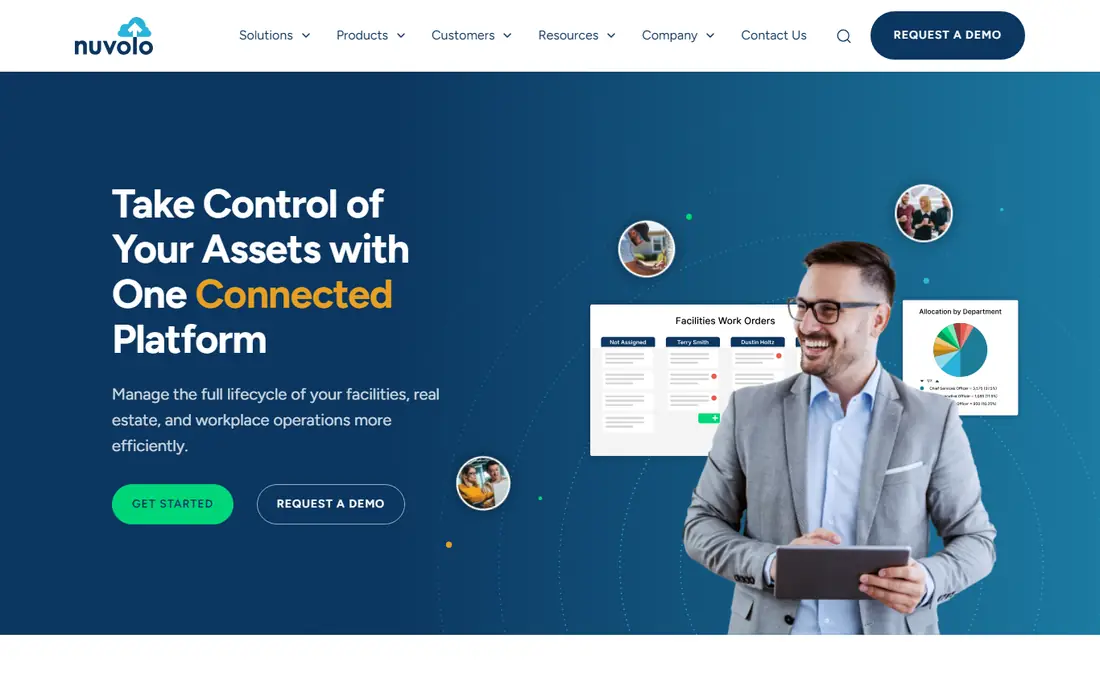
Nuvolo is the most hospital focused platform for large systems, because it was built for healthcare technology management from the start. It runs natively on ServiceNow, so clinical engineering teams can manage medical devices, work orders, recalls, and capital planning alongside IT assets and service requests. That shared record helps when a recall affects hundreds of units, or when a surveyor asks for the service history of a single pump. The trade off is scope and cost: hospitals without ServiceNow cannot deploy it, and even those with it face a long implementation with consulting fees.
What we like- Built natively on ServiceNow, sharing data with IT and security workflows
- Strong healthcare technology management
- Covers space, leases, capital projects, and OT cybersecurity
Watch out for- Requires an active ServiceNow instance, which adds platform cost and locks out hospitals that do not run it
- Implementation is an enterprise project, not a quick setup
#2
Accruent
Best for: Hospitals and health systems that need deep compliance reporting for clinical engineering and facilities teams
Visit accruent.com
Starting priceQuote (vendor prices TMS by beds and departments; checked 22 Nov 2026)
Free planNo free plan
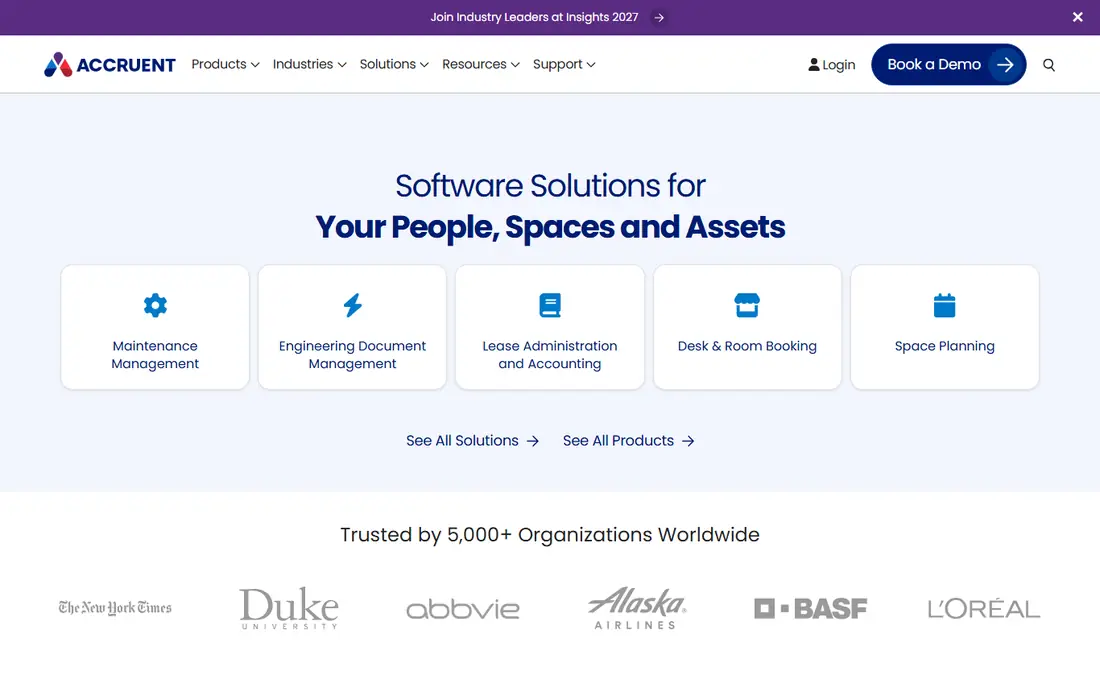
Accruent TMS is a maintenance system designed specifically for healthcare, and that focus shows in its compliance tooling. It supports clinical engineering and facilities teams in one cloud system, with preventive and predictive maintenance and regulatory reporting. Hospitals use it to track medical equipment from arrival to retirement, schedule calibrations and safety tests, and produce the audit records surveyors request. It connects with electronic health records, resource planning, location systems, and parts suppliers, which reduces manual entry. The vendor prices by beds and departments, so quotes vary widely by hospital size. A community hospital should ask for a full written quote before judging the cost.
What we like- TMS is purpose built for healthcare, with preventive and predictive maintenance and audit readiness
- Integrates with EHR, ERP, RTLS, IoT, and PartsSource
Watch out for- No published starting figure, so budgeting requires a sales cycle
- Setup can be heavy for a small hospital team
#3FM:Systems
Best for: Hospitals that need strong space planning, move management, and maintenance in one workplace platform4.2/5 on
G2 (26 reviews, checked Oct 2026)
Visit fmsystems.com
Starting priceQuote (vendor prices by managed resources, portfolio size, and modules; checked 22 Nov 2026)
Free planNo free plan
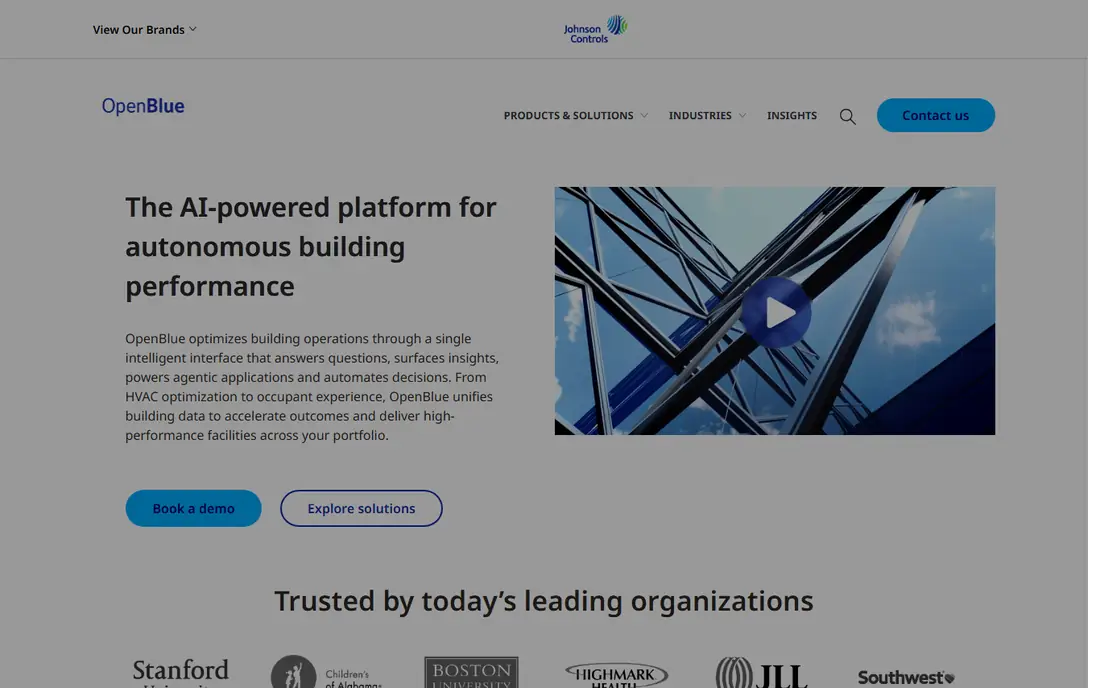
FM:Systems, now part of Johnson Controls OpenBlue, pairs facility maintenance with space planning. For a hospital, the space side is the differentiator. Bed towers, clinics, labs, and offices shift constantly, and FM:Systems gives planners visual floor plans, move management, and utilization analytics alongside work orders and preventive maintenance. That helps a hospital plan renovations and track which rooms are ready for patients. Pricing is custom, driven by managed resources, portfolio size, and modules. It fits large hospitals with complex campuses and active space planning needs.
What we like- Strong visual floor plans, space analytics, and scenario planning
- Modular suite covers maintenance, space, visitors, and sensors
Watch out for- Pricing is quote only, with no published tiers, so cost comparison requires a sales conversation
- The product is now part of Johnson Controls OpenBlue, which adds a layer of vendor change to evaluate
#4
TMA Systems
Best for: Multi-site hospitals that want published pricing and a configurable CMMS with strong compliance tools
Visit tmasystems.com
Starting price$8,995 per year (WebTMA Base, average team of 20 users, vendor pricing page checked 22 Nov 2026)
Free planNo free plan
TMA Systems sells WebTMA, a configurable maintenance and asset management platform that has served hospitals, schools, and government facilities for decades. The Base plan starts at $8,995 per year for an average team of 20 users and covers work orders, preventive maintenance, inventory and asset tracking, and reporting, with mobile included. Additional named users cost $895 per year each. The Plus plan, at $14,995 per year, adds multi-site configuration, role based permissions, advanced analytics, and full API access. The appeal is transparency: it is the only enterprise grade tool here with a published starting price, so a facilities director can budget before calling sales.
What we like- Publishes real starting prices, which is rare in this market
- Configurable modules for work orders, preventive maintenance, inventory, space, and custodial work
- Long track record since 1988
Watch out for- Multi-site configuration, advanced analytics, and full API access sit in the higher Plus tier at $14,995 per year
- The interface feels dated next to newer mobile first tools
#5
Hippo CMMS
Best for: Small hospital teams that want a simple CMMS for work orders, preventive maintenance, and parts
Visit eptura.com
Starting priceQuote (Starter reported at $35 per user per month by marketplaces; vendor does not publish pricing, checked 22 Nov 2026)
Free planNo free plan; 21-day free trial listed
Hippo CMMS is the simplest tool in this list, and that simplicity is its main selling point for a small hospital or a single campus team. It covers work orders, preventive maintenance, asset records, parts, and facility maps. The reported Starter price is $35 per user per month, with a two user minimum, which makes the lowest monthly bill $70. That price comes from marketplaces rather than the vendor, so confirm it in writing. The larger caution is the roadmap: Hippo is now part of Eptura, and public reports say it is moving to Eptura Asset. Ask Eptura whether new subscriptions are available and how long support will last.
What we like- Low reported starting price and a simple interface that small teams can learn quickly
- Covers work orders, preventive maintenance, asset records, parts inventory, and facility maps
Watch out for- Public reports say the product is moving to Eptura Asset, so confirm availability and migration terms
- Starter caps equipment at 100 items
#6UpKeep
Best for: Small hospital teams that want mobile first work orders and a fast start4.5/5 on
G2 (1,106 reviews, checked Oct 2026)
Visit upkeep.com
Starting price$24 per user per month (Essential, vendor pricing page checked 22 Nov 2026)
Free planNo free plan; free trial available
UpKeep is a mobile first maintenance platform built for teams on their feet. The Essential plan costs $24 per user per month and includes unlimited work orders and locations, asset management, barcode scanning, and internal requests, plus a monthly allowance of Nova AI credits. Requester and view-only users are free, which helps where nurses submit requests but never need a full technician seat. The catch is the tier ladder: preventive maintenance, parts and inventory, and time tracking start at Premium at $55 per user per month, while offline mode, multi-site support, and API access sit higher. Even so, the published price and fast setup make UpKeep a practical start for a community hospital.
What we like- Lowest published starting price in this list
- Mobile app is built for technicians in the field
- Requester and view-only users are free, so only technicians and admins need paid seats
Watch out for- Preventive maintenance, inventory, and checklists start at Premium at $55 per user per month, so the entry plan is thin for a full program
- Multi-site support and API access sit higher
#7eMaint
Best for: Hospitals that need configurable maintenance workflows, calibration tracking, and condition monitoring4.5/5 on
G2 (293 reviews, checked Oct 2026)
Visit emaint.com
Starting priceQuote (Team plan reported at $69 per user per month by directories; vendor pricing page shows no published price, checked 22 Nov 2026)
Free planNo free plan
eMaint, part of Fluke Reliability, is a cloud maintenance platform built for organizations where compliance and equipment reliability carry real weight. It covers work orders, preventive maintenance, asset tracking, inventory, and calibration, with configurable workflows that fit hospital procedures. Its strongest link to hospital work is condition monitoring: eMaint connects with Fluke sensors, so a vibration or temperature reading can trigger a work order before a failure affects a patient area. Pricing is the weak point: the Team plan is reported at $69 per user per month by directories, but the vendor pricing page read on 22 Nov 2026 shows no dollar figures. Request a written quote before budgeting.
What we like- Highly configurable, with strong compliance features for regulated industries
- Connects with Fluke condition monitoring hardware and sensors
- Supports multi-site operations and global inventory
Watch out for- The vendor pricing page read on 22 Nov 2026 shows no published prices, so the $69 figure is directory reported and must be confirmed
- Setup takes longer than simpler tools
#8ServiceChannel
Best for: Hospitals and health systems that manage many outside contractors across multiple locations4.2/5 on
G2 (165 reviews, checked Oct 2026)
Visit servicechannel.com
Starting priceQuote, priced per location (vendor does not publish pricing; checked 22 Nov 2026)
Free planNo free plan
ServiceChannel is a facilities management and automation platform built for organizations with many locations and many outside service providers, which describes most health systems. It centralizes work order creation, dispatch, tracking, and invoicing across campuses, and gives facilities teams one view of contractor performance and costs. The analytics help a hospital spot vendors that overcharge or miss service levels, and the provider network helps find trades for specialist work such as medical gas, fire protection, or elevator service. The vendor prices per location by custom quote, and outside estimates put a single location near $200 per month. It fits health systems that run many sites with heavy contractor use.
What we like- Deep contractor network and work order automation for multi-location operations
- Analytics that flag vendor overcharging and slow response times
- Core AI features included at no added cost
Watch out for- Pricing is quote only and per location, which makes early budgeting hard
- Marketplace sourced providers pay a fee that can be priced into their rates
Frequently asked questions
What is the best facilities management software for hospitals
Nuvolo is the best fit for large health systems running ServiceNow, because it unites clinical engineering, facilities, space, and cybersecurity data in one record. Accruent TMS is the best alternative for hospitals that want healthcare compliance without ServiceNow. Smaller hospitals should compare UpKeep and TMA Systems WebTMA, which publish starting prices and start faster.
How much does hospital facilities management software cost
Published starting prices in this list are $24 per user per month for UpKeep Essential and $8,995 per year for TMA Systems WebTMA Base. The other six tools are sold by quote, with pricing set by beds, departments, locations, asset counts, or modules. Implementation, migration, training, and integrations are usually extra, so ask for a quote that separates each line.
Does facilities management software help with Joint Commission compliance
Yes, when it is set up properly. A CMMS schedules preventive maintenance and life safety checks, records completion with time stamps and technician names, and produces the audit reports surveyors request. It flags overdue work by risk, so a hospital can clear high risk items first. The software alone does not create compliance, but it makes the evidence easy to find and hard to lose.
Can a small hospital use the same software as a large health system
A small hospital can use enterprise tools, but it will pay for capacity it does not need and face a longer setup. Smaller teams usually do better with UpKeep, TMA Systems WebTMA, or Hippo CMMS, which start faster and cost less. A large system benefits more from Nuvolo, Accruent TMS, or ServiceChannel, where multi-site control and reporting justify the price and the implementation effort.
What is HTM, and why does it matter in facilities software
HTM stands for healthcare technology management, the work of keeping medical equipment safe, calibrated, and available. It matters because a hospital CMMS must track clinical devices alongside building systems, including recalls, safety tests, and service history. Tools built for HTM, such as Nuvolo and Accruent TMS, handle that mix directly, while general tools need more setup to do the same job.
Sources we checked (10)
- https://www.nuvolo.com/solution/connected-workplace-for-healthcare/
- https://www.accruent.com/resources/knowledge-hub/best-healthcare-cmms-software
- https://www.fmsystems.com/pricing/
- https://www.tmasystems.com/products/webtma/pricing
- https://eptura.com/hippocmms/
- https://reviewgalore.com/pricing/hippo-cmms
- https://upkeep.com/pricing/
- https://www.emaint.com/pricing/
- https://servicechannel.com
- https://facilio.com/blog/servicechannel-pricing/
Is your product missing or out of date?
We review this list regularly. Vendors can request a listing, send updated pricing or ask about featured placement.

Shihab Mia · Founder, Rankite
Shihab has 5+ years in B2B and SaaS SEO. He writes Rankite's software buying guides from pricing pages, documentation and public user reviews. More about Shihab.