How we make this list: we compare pricing pages, product documentation and public user reviews. Ratings come from G2, Capterra or Trustpilot, with the date we checked them.
Key takeaways
- ERIN and EmployeeReferrals.com lead on automation and customization, with broad ATS integrations for enterprise programs.
- Boon and Teamable mine employee networks with social-graph sourcing, turning referrals into a talent pool.
- Firstbird brings European depth, while Draftboard offers a free entry point for smaller programs.
- Referral programs succeed on participation: Slack and Teams integration matters more than bonus size.
Quick comparison
| Tool | Best for | Starting price | Free plan |
|---|
 ERIN ERIN | Referral automation | See website | No |
 Boon Boon | Network-based referrals | See website | No |
 EmployeeReferrals.com EmployeeReferrals.com | Enterprise referral programs | See website | No |
 Firstbird Firstbird | European referral programs | See website | No |
 Teamable Teamable | Social-graph sourcing | See website | No |
 Draftboard Draftboard | Free referral boards | See website | Yes |
 Refered Refered | Simple referral tracking | See website | No |
 Jobote Jobote | Affordable referral management | See website | No |
Is your product missing or out of date?
We review this list regularly. Vendors can request a listing, send updated pricing or ask about featured placement.
The best employee referral software
Employee referral software makes it easy for staff to refer candidates, tracks referrals through hiring, and manages bonuses. Referred hires cost less and stay longer, so participation is the metric that matters. Eight platforms.
Starting priceSee website
Free planNo
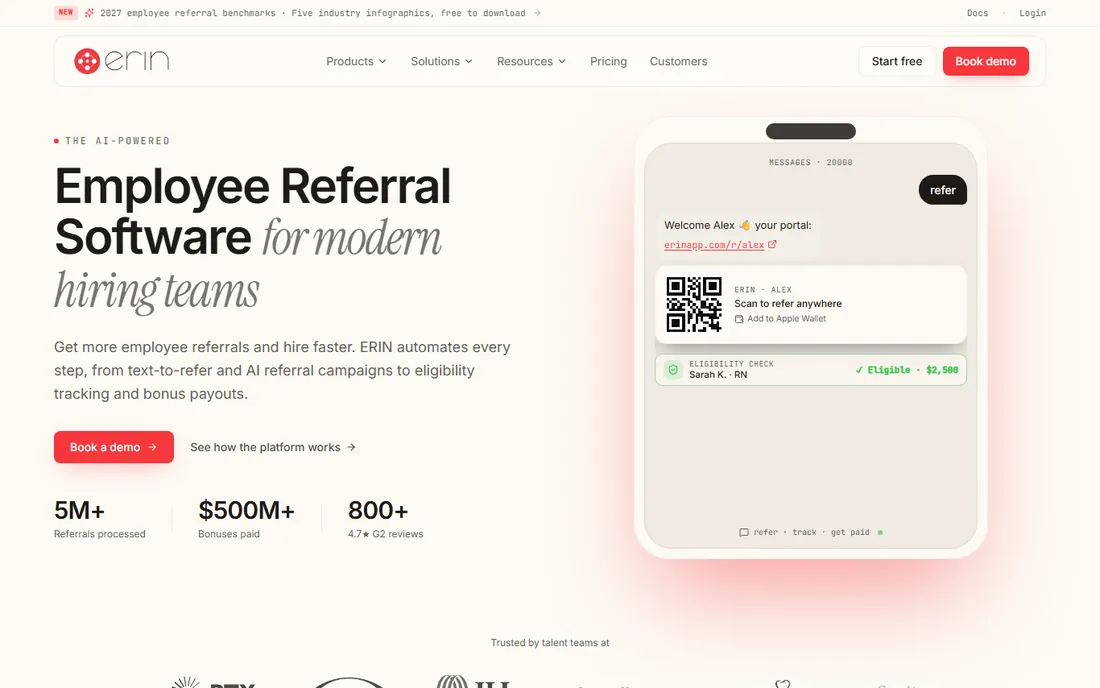
ERIN focuses on participation: a mobile-first experience where employees share jobs and track referrals, with automation handling nudges, status updates and bonus payouts. Integrations cover the major ATS platforms.
Setup effort scales with program complexity. ERIN fits mid-market and enterprise companies wanting referrals to run with minimal recruiter overhead.
What we like- Mobile-first referral experience
- Deep ATS integrations including Workday, Greenhouse and Lever
- Strong automation of nudges and payouts
Watch out for- Pricing is quote-based
- The automation needs configuration to fit your program rules
Starting priceSee website
Free planNo
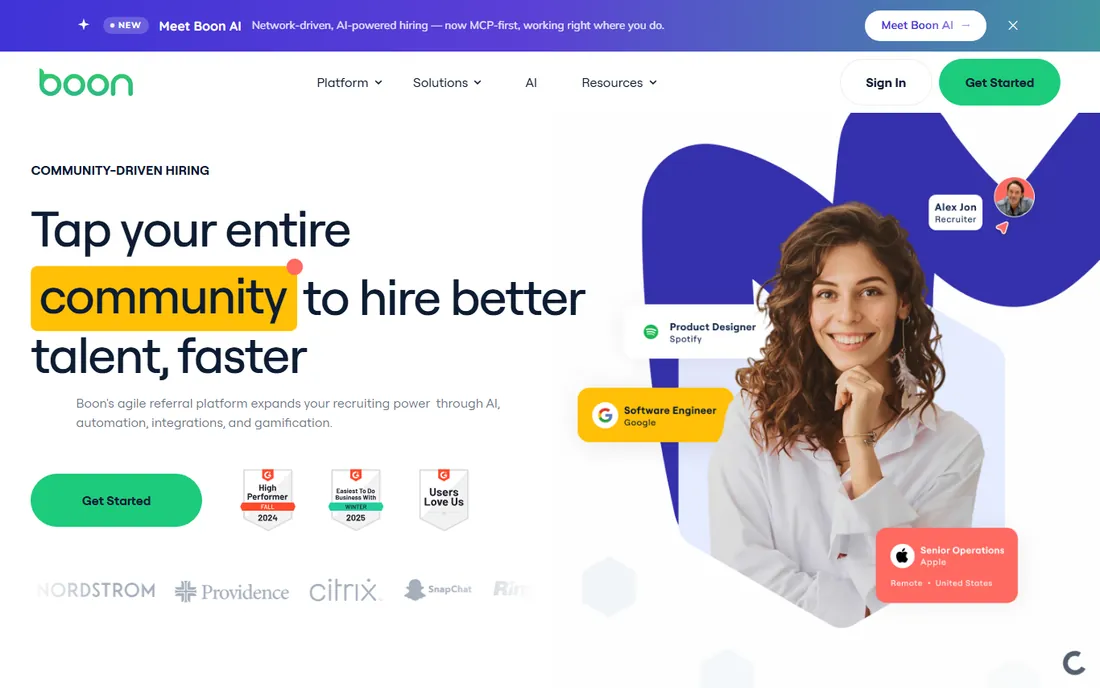
Boon turns employee networks into talent pools: staff share jobs across their connections, and the platform tracks attribution through to hire with rewards managed in-app. It suits roles where the best candidates are not actively job hunting.
Enterprise buyers may want deeper ATS integration. Boon fits companies hiring through networks rather than job boards.
What we like- Taps employee networks beyond direct referrals
- Intuitive sharing
- Rewards platform built in
- Good for hard-to-fill roles
Watch out for- Smaller vendor with less enterprise track record
- Pricing is custom
Starting priceSee website
Free planNo
EmployeeReferrals.com builds comprehensive referral programs: branded portals, campaign management, complex bonus rules and deep integrations with systems from Workday to UKG Pro. The 2011 founding shows in enterprise polish.
Smaller companies may find it heavy. It fits large enterprises running sophisticated, multi-region referral programs.
What we like- Highly customizable enterprise programs
- Broad ATS and HRIS integrations
- Long track record since 2011
Watch out for- Customization adds implementation time
- Pricing is enterprise-grade
Starting priceSee website
Free planNo
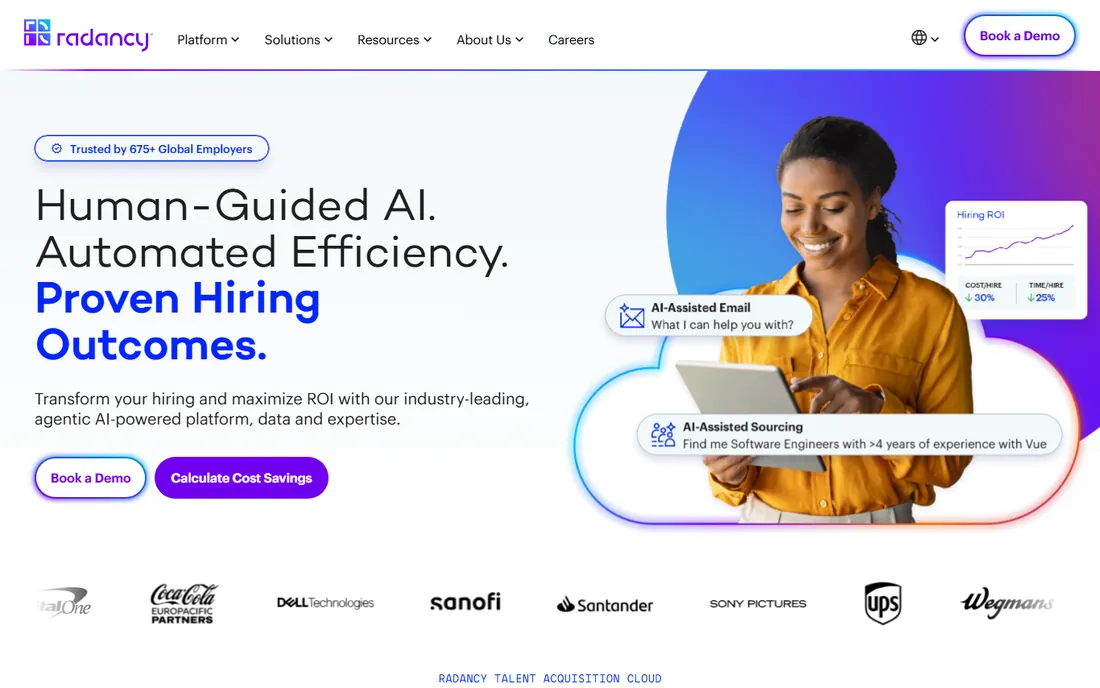
Firstbird serves European referral programs with local compliance awareness, multilingual support and SAP ecosystem integration. The focus shows in markets where US vendors underinvest.
US-centric companies get less. Firstbird fits European employers, especially in German-speaking markets, building referral programs.
What we like- Austrian vendor with European data and language depth
- Strong in DACH markets
- Solid ATS integrations including SAP
Watch out for- Less presence outside Europe
- Smaller ecosystem than US rivals
Starting priceSee website
Free planNo
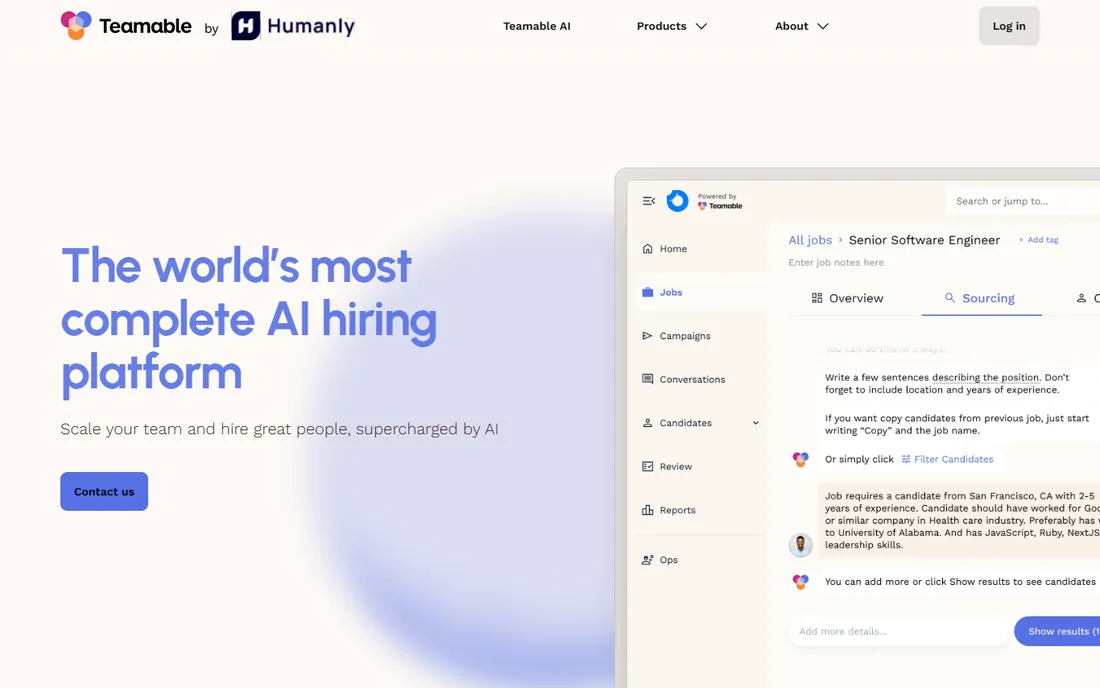
Teamable analyzes employee social networks to surface candidates matching open roles, blending referrals with intelligent sourcing and diversity insights. The talent-pool model compounds value over time.
Teams wanting simple referral tracking may find it much. Teamable fits tech companies where network sourcing drives hiring.
What we like- Intelligent matching across employee networks
- Diversity hiring features
- Turns referrals into a searchable talent pool
Watch out for- Sourcing emphasis may exceed pure referral needs
- Pricing is custom
Starting priceSee website
Free planYes
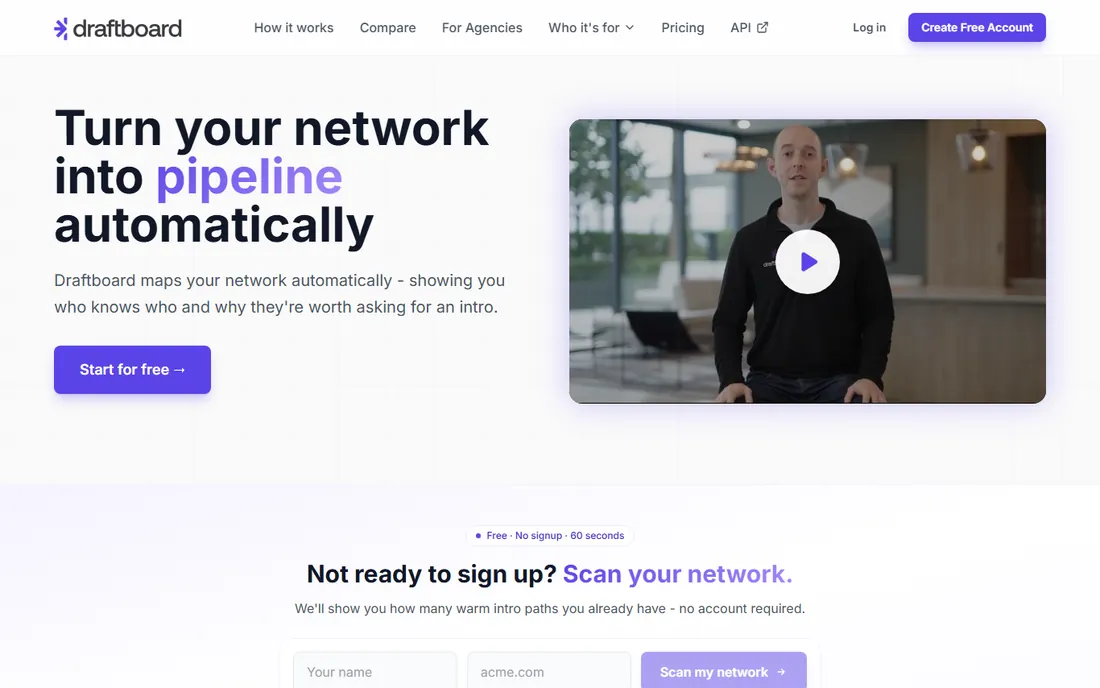
Draftboard lowers the barrier: free referral boards where employees share jobs and track candidates, letting small companies test referral programs without budget approval.
Scaling programs will outgrow it. Draftboard fits startups and small teams launching their first structured referral effort.
What we like- Free plan available
- Simple referral boards
- Quick to launch
- Good for testing referral programs
Watch out for- Thinner feature set than paid platforms
- Limited ATS integrations
Starting priceSee website
Free planNo
Refered keeps referrals simple: employees submit candidates, recruiters track them, and the program runs without complexity. The approachable pricing suits smaller HR budgets.
Advanced programs need more. Refered fits small to mid-size companies wanting basic referral tracking done well.
What we like- Straightforward referral submission and tracking
- Affordable entry
- Easy for employees to use
Watch out for- Smaller vendor with limited integrations
- Fewer automation features
Starting priceSee website
Free planNo
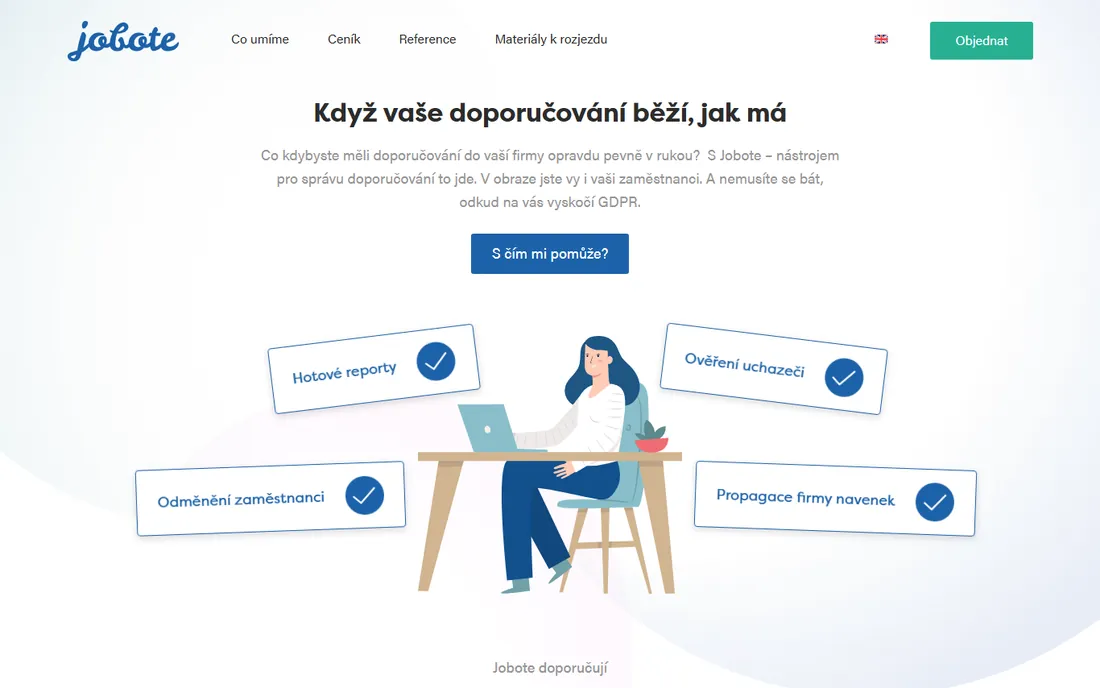
Jobote gives employees visibility into their referrals' progress and anticipated rewards, reducing the "did my referral get hired" inquiries. The pricing undercuts most competitors.
Global enterprises may want more integrations. Jobote fits budget-conscious companies in Europe and beyond running straightforward referral programs.
What we like- Affordable pricing from around $99/month
- Employees track their referrals and expected rewards
- Transparent bonus visibility
Watch out for- Czech vendor with smaller global presence
- Limited integrations versus leaders
What to check before you buy
Verify ATS integration depth: referrals must flow into your recruiting system with attribution intact, or recruiters will work around the tool.
Check the employee experience on mobile: participation decides ROI, and clunky submission kills programs. Confirm bonus and payout management matches your policy complexity. Evaluate campaign tools for driving participation around hard-to-fill roles. Finally, measure the vendor's analytics: referral rate, time-to-hire for referrals and participation by department.
Designing referral bonuses people actually chase
Referral programs live or die on the bonus design. Too small and nobody bothers; too complicated and nobody understands it; paid too late and nobody trusts it. The programs that generate real pipeline share a few design principles.
Pay enough to matter, not enough to distort. The bonus should feel like a meaningful thank-you, not a salary replacement. Benchmarks vary by role: a few hundred for entry-level hires, scaling into the thousands for hard-to-fill technical or executive roles. The test is whether employees mention the bonus unprompted when talking about the program. If nobody knows the amount, it is too small or too hidden.
Tier the payout around retention, not just hiring. Paying the full bonus on day one invites gaming; paying it all after a year kills motivation. The common split pays part at hire and the rest after three or six months. Some companies add a kicker if the referral gets promoted within two years, which rewards quality, not just volume.
Differentiate by difficulty. A flat bonus for every role undervalues the engineer who refers a principal architect and overvalues the referral for the role you could fill in a week. Tiered bonuses by role family or seniority focus employee effort where recruiting struggles most. Publish the tiers openly; secrecy breeds suspicion.
Make the rules stupidly simple. Eligibility, payout timing, what counts as a referral (first source of the candidate, usually) and what disqualifies one (hiring managers referring to their own team, HR staff) should fit on one page. Every edge case you leave ambiguous becomes a dispute that poisons the program.
Pay fast and celebrate publicly. A bonus that arrives nine months later feels like a broken promise. Automate the payout workflow so it triggers on schedule, and recognize successful referrers in company channels. Public recognition multiplies the motivational effect of the cash.
Finally, measure cost per hire against agencies. A three-thousand-dollar bonus that replaces a twenty-thousand-dollar agency fee is not an expense; it is a saving. Report that comparison to finance and the program funds itself.
How we chose
We selected referral platforms with live products and real employer customers, spanning free tools to enterprise suites, using vendor sites, documentation and public reviews. Pricing is quote-based across most of the category, so prices are See website. We did not run referral campaigns.
Keeping referrals fair and diverse
Referral programs have a well-documented side effect: they replicate the current workforce. People refer people like themselves, which means a homogeneous company hiring through referrals stays homogeneous. The program needs explicit counterweights.
Track referral demographics against hiring goals. If eighty percent of referrals come from one department or demographic, the program is narrowing your pipeline, not widening it. Most referral platforms can report on this; make reviewing it a quarterly habit, not an annual surprise.
Reward diverse referrals explicitly. Some companies pay a premium bonus for referrals that improve team diversity. This is legal in most jurisdictions when structured as a general program incentive, but check with employment counsel in yours before implementing.
Widen who gets asked. Referral programs default to headquarters and engineering because those employees are most engaged with the tooling. Actively promote the program in warehouses, stores, support centers and regional offices, where networks look different and referral quality is often just as high.
Keep the bar identical. Every referred candidate goes through the same interview process with the same standards. Referrals get a look, not a pass. When employees see referred candidates fail interviews fairly, trust in the program rises; when they see referrals waved through, resentment builds among everyone who applied the normal way.
Watch for referral rings. Small groups trading referrals to harvest bonuses is rare but real. Basic monitoring (the same employees referring each other in circles, referrals with no genuine connection to the role) catches it. The policy should state plainly that gaming the program ends participation.
Done right, referrals become your highest-quality, lowest-cost channel and a more diverse one than the default. Done carelessly, they become an expensive way to hire the same profile repeatedly.
Frequently asked questions
What is employee referral software?
Software that lets employees submit and track candidate referrals, manages referral bonuses and campaigns, and measures program performance, usually integrated with the ATS.
Do referral programs actually work better than job boards?
Referred hires typically cost less, hire faster and stay longer. The challenge is participation: good software removes friction so employees actually refer.
How much should referral bonuses be?
Typical bonuses range from $500 to $5,000 depending on role difficulty. Software manages the rules and payouts; the strategy is yours to set.
What is the difference between ERIN and Teamable?
ERIN automates the referral workflow: nudges, tracking and payouts. Teamable adds intelligent sourcing, mining employee networks to find candidates beyond direct referrals.
Can small companies run referral programs?
Yes. Draftboard's free plan and Jobote's affordable pricing let small teams start. Even a simple process beats no process.
How do we increase referral participation?
Make submission take under a minute, integrate into Slack or Teams, communicate open roles regularly, pay bonuses promptly and publicly recognize referrers.
What is a typical employee referral bonus?
It varies by role and market. Common ranges run from a few hundred dollars for entry-level roles to several thousand for senior technical or executive hires, often split between the hire date and a retention milestone like six months. Benchmark against your cost per hire from agencies; the bonus should be a fraction of that number while still feeling meaningful to employees.
How do you stop employees from gaming referral bonuses?
Clear rules and basic monitoring handle most of it. Define what counts as a referral (usually the first source to introduce the candidate), exclude HR and hiring managers from their own reqs, and watch for patterns like circular referrals. Most programs see very little gaming when the rules are transparent; the bigger risk is usually low participation, not fraud.
Sources we checked (8)
- https://erinapp.com
- https://goboon.co
- https://employeereferrals.com
- https://www.firstbird.com
- https://www.teamable.com
- https://www.draftboard.com
- https://www.refered.com
- https://www.jobote.com
Is your product missing or out of date?
We review this list regularly. Vendors can request a listing, send updated pricing or ask about featured placement.

Shihab Mia · Founder, Rankite
Shihab has 5+ years in B2B and SaaS SEO. He writes Rankite's software buying guides from pricing pages, documentation and public user reviews. More about Shihab.