How we make this list: we compare pricing pages, product documentation and public user reviews. Ratings come from G2, Capterra or Trustpilot, with the date we checked them.
Key takeaways
- Slack is the best team messaging platform for collaborative, desk-based work.
- Microsoft Teams suits organizations in the Microsoft 365 ecosystem.
- Staffbase is the leading platform for reaching frontline and deskless workers.
- Beekeeper excels at mobile-first communication for shift-based teams.
- Workvivo (Zoom) brings a social-media-like experience to internal comms.
Quick comparison
| Tool | Best for | Starting price | Free plan |
|---|
 Slack Slack | team messaging and collaboration | See website | See website |
 Microsoft Teams Microsoft Teams | Microsoft 365 collaboration | See website | See website |
 Staffbase Staffbase | frontline employee comms | See website | See website |
 Beekeeper Beekeeper | mobile-first shift teams | See website | See website |
 Workvivo Workvivo | social-style employee experience | See website | See website |
 Simpplr Simpplr | AI-powered modern intranet | See website | See website |
 Haiilo Haiilo | multichannel internal comms | See website | See website |
 Firstup Firstup | intelligent workforce comms | See website | See website |
Is your product missing or out of date?
We review this list regularly. Vendors can request a listing, send updated pricing or ask about featured placement.
The best employee communications software
Starting priceSee website
Free planSee website
Slack (now part of Salesforce) defined modern team messaging: channels for topics, threads for focus, and integrations with nearly every work tool. Desk-based teams coordinate daily work here. The search, huddles, and canvas features extend it beyond chat into a genuine work hub.
Per-user pricing scales steeply with headcount. And without governance, channels proliferate into noise. But for collaborative knowledge work, Slack's UX remains the standard others chase. Its workflow builder and AI features keep extending what teams automate inside chat.
What we like- Best-in-class channels
- Huge integration ecosystem
- Beloved UX
Watch out for- Costs scale with headcount
- Can become noisy
Starting priceSee website
Free planSee website
Microsoft Teams combines chat, meetings, and file collaboration inside Microsoft 365. Organizations already on Microsoft get enormous value from the bundle: Teams, SharePoint, and Office integration without extra licenses. Meetings are a particular strength, with reliable video and webinar capabilities.
The user experience trails Slack's polish. And the platform's breadth can overwhelm. But for Microsoft-centric organizations, Teams' integration and bundle economics are decisive. Copilot in Teams brings AI assistance into meetings and chat, summarizing discussions and tracking action items.
What we like- Bundled with Microsoft 365
- Meetings plus chat
- Deep Office integration
Watch out for- UX less loved than Slack
- Complexity
Starting priceSee website
Free planSee website
Staffbase solves the hardest comms problem: reaching frontline workers without corporate email. Branded mobile apps, targeted news, and multichannel publishing (app, email, intranet, digital signage) ensure every employee gets relevant updates. Analytics prove reach and engagement to leadership.
Enterprise pricing and implementation reflect the target market. But for organizations with large deskless workforces, Staffbase's frontline focus is unmatched. Its campaign planning and audience targeting help comms teams run internal communication like marketing runs external campaigns.
What we like- Reaches deskless workers
- Branded employee app
- Strong analytics
Watch out for- Enterprise pricing
- Implementation effort
Starting priceSee website
Free planSee website
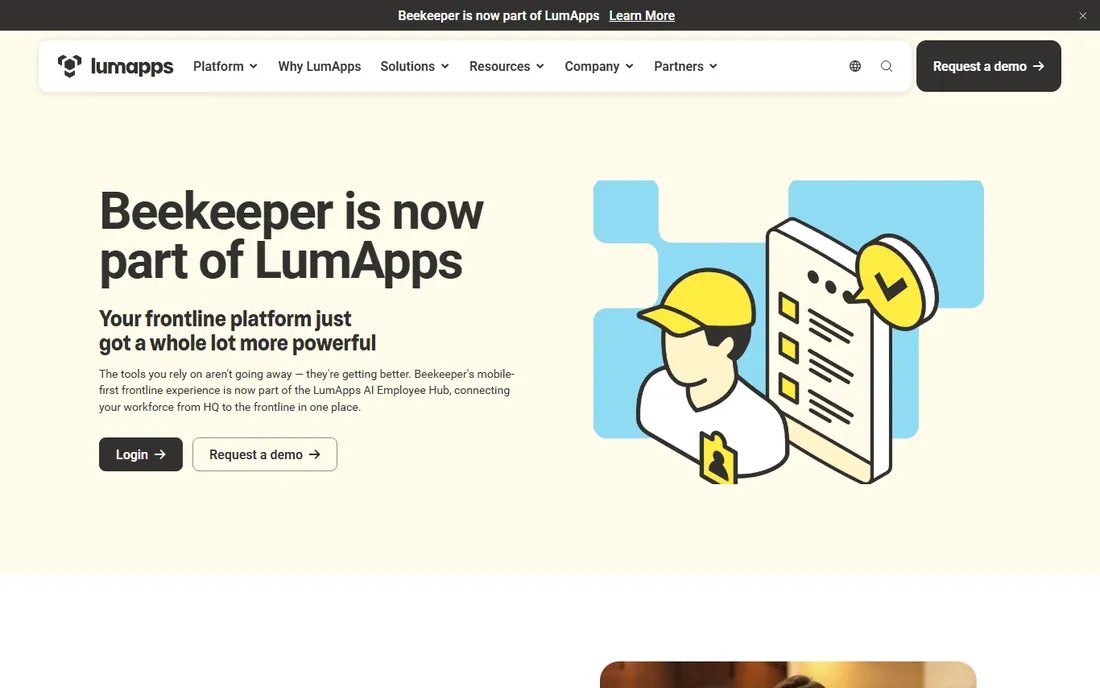
Beekeeper is mobile-first communication for frontline teams: shift updates, operational messaging, and team coordination for retail, hospitality, and manufacturing. Managers reach staff who never sit at desks. The operational focus keeps communication tied to work, not corporate noise.
It is not a desk collaboration tool. Features are narrower than Staffbase's. But for shift-based operational communication, Beekeeper's mobile-first design fits the workflow. Shift handover notes and broadcast messaging keep operations running smoothly across rotations.
What we like- Built for non-desk workers
- Shift communication
- Operational focus
Watch out for- Less for desk collaboration
- Narrower feature set
Starting priceSee website
Free planSee website
Workvivo (now part of Zoom) brings a social-media-like feed to internal communications: posts, reactions, and stories that employees actually enjoy using. Adoption is the pitch; familiar UX means less training. Zoom's backing adds enterprise credibility and integration with meetings and chat.
The social model does not suit every culture. Enterprise track record is shorter than Staffbase's. But for organizations wanting comms employees embrace voluntarily, Workvivo's engagement-first design works. Recognition features and shout-outs build culture in ways top-down announcements cannot.
What we like- Familiar social UX drives adoption
- Zoom backing
- Strong engagement
Watch out for- Newer in enterprise
- Social model not for everyone
Starting priceSee website
Free planSee website
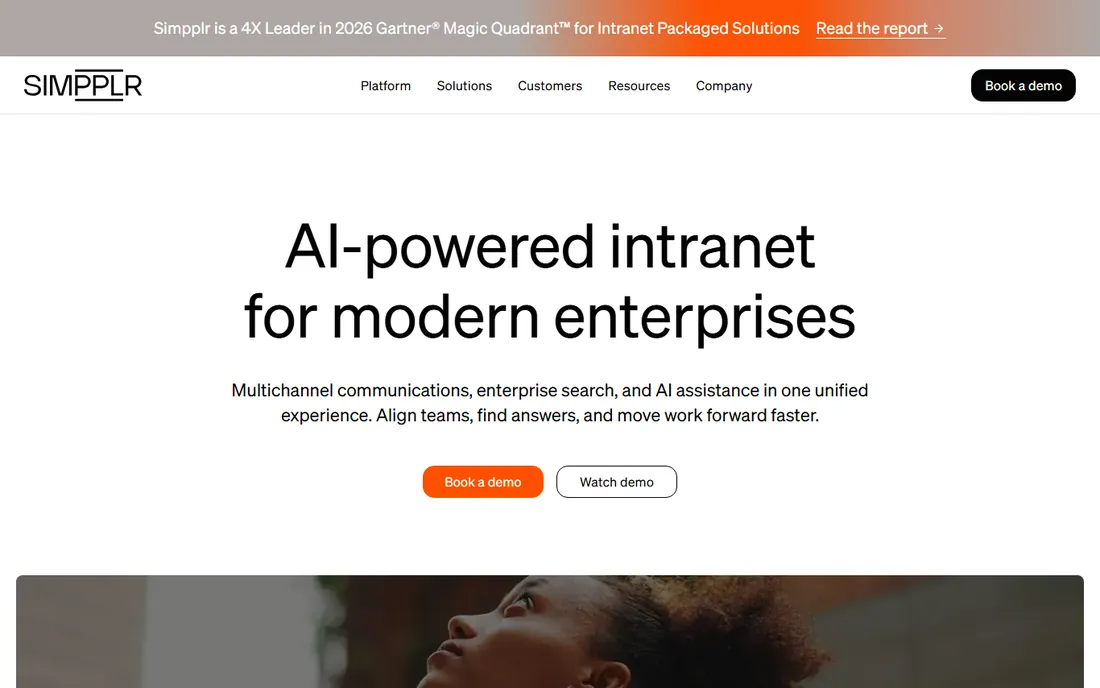
Simpplr is an AI-powered modern intranet: personalized news feeds, intelligent search, and analytics that show what resonates. It modernizes the intranet from document repository to engagement hub. Auto-governance keeps content fresh without manual cleanup campaigns.
It is intranet-centric rather than messaging-first. Pricing is premium. But for organizations wanting an intelligent digital workplace hub, Simpplr's AI personalization stands out. Its analytics reveal which content actually engages employees, guiding comms strategy with data.
What we like- AI personalization
- Modern intranet UX
- Strong analytics
Watch out for- Intranet-centric
- Premium pricing
Starting priceSee website
Free planSee website
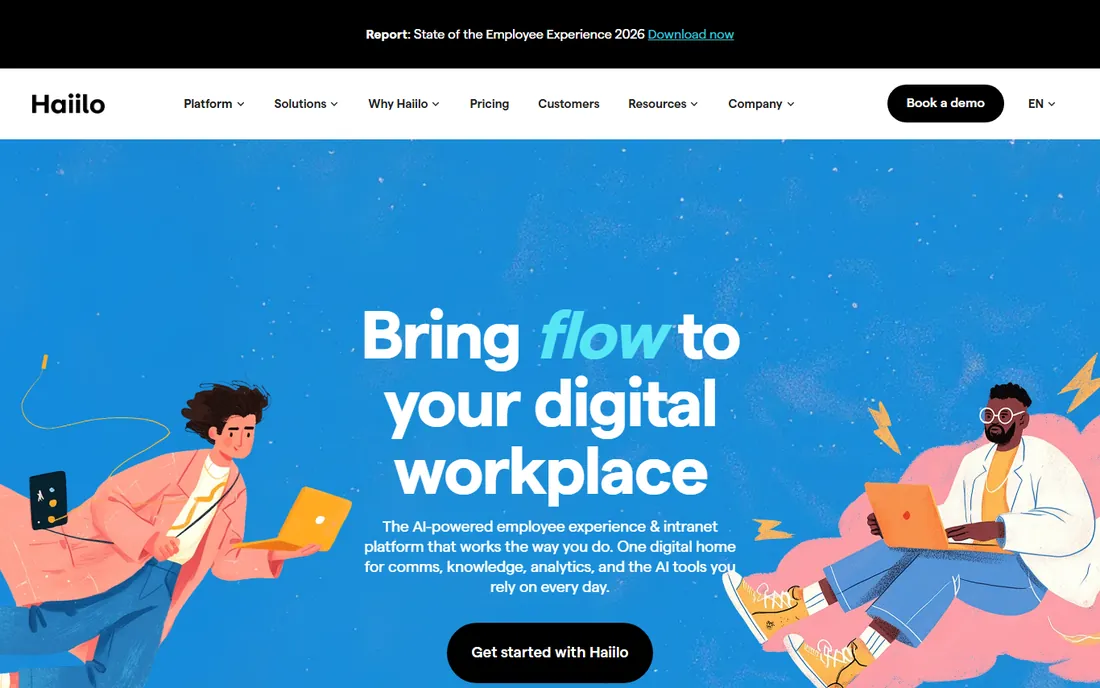
Haiilo combines employee communications, intranet, and advocacy: publish once, reach employees across app, email, Teams, Slack, and digital signage. Targeting by role, location, and language ensures relevance. European enterprises with complex workforces find strong fit and GDPR-aligned data handling.
The platform's breadth brings complexity. It targets enterprise. But for multichannel comms at scale with European data standards, Haiilo delivers. Employee advocacy features turn engaged employees into brand ambassadors on social media.
What we like- True multichannel publishing
- Strong European presence
- Advocacy features
Watch out for- Complexity
- Enterprise focus
Starting priceSee website
Free planSee website
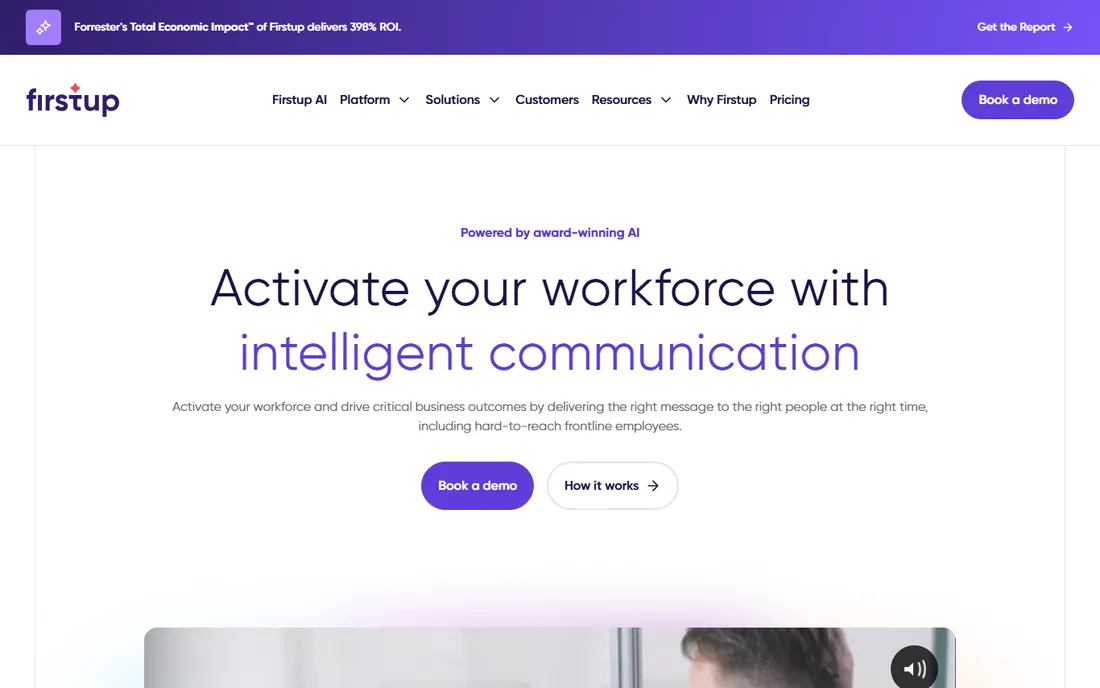
Firstup (formerly SocialChorus) intelligently delivers communications to every employee: orchestration across channels, personalization, and journey-based campaigns. The platform ensures the right message reaches the right worker on the right channel. Large distributed workforces get coordinated comms without manual channel management.
Enterprise pricing applies. Presence is US-centric. But for intelligent, orchestrated workforce communication at scale, Firstup's delivery engine is sophisticated. Journey-based campaigns guide employees through onboarding, open enrollment, and change initiatives automatically.
What we like- Intelligent delivery
- Reaches every worker
- Strong personalization
Watch out for- Enterprise pricing
- US-centric
What to check before you buy
Start with your workforce profile. Desk-based teams: Slack, Teams. Frontline and deskless: Staffbase, Beekeeper, Haiilo, Firstup. Mixed: Staffbase, Haiilo, Firstup. Social culture: Workvivo. Intranet modernization: Simpplr. The workforce you need to reach determines the platform. Get this wrong and you buy elegant software that misses half your employees.
Then assess channels and targeting. Can you reach employees without corporate email? Can you target by location, role, and language? Can you measure who saw what? These capabilities separate comms platforms from chat tools. Map your must-reach audiences first: the night shift, the warehouse, the retail floor. If a platform cannot reach them, its other features do not matter. Then validate targeting granularity: can you send different messages to different sites in different languages automatically, or does that require manual work for each audience?
Finally, consider adoption realistically. The best platform fails if employees do not use it. Pilot with a real employee group, measure engagement honestly, and choose the tool people actually open. Familiar UX (Workvivo's social feed, Beekeeper's mobile simplicity) often beats feature superiority. Ask frontline workers what they already use on their phones; the answer guides your choice more than any analyst report. If your workforce lives on WhatsApp, a platform with WhatsApp-style simplicity will win. If they ignore every corporate app, you need the multichannel fallback of SMS and signage.
Chat tools (Slack, Teams) coordinate daily work among desk employees. Comms platforms (Staffbase, Haiilo, Firstup, Beekeeper) broadcast and target organizational messages to everyone including frontline workers. Most enterprises need both: chat for collaboration, comms platforms for reach. Do not expect one to replace the other.
This is the most common buying mistake in the category: purchasing a chat tool expecting it to solve company-wide communications, or buying a comms platform expecting teams to collaborate in it daily. They are different jobs. Budget for both, integrate them (most comms platforms publish into Slack and Teams), and let each do what it does best. The integration matters: comms teams should publish once and reach chat, mobile, email, and signage simultaneously.
Frequently asked questions
What is employee communications software?
Software that helps organizations share information with employees: internal news, announcements, and updates delivered across channels (mobile app, email, intranet, chat, digital signage) with targeting and analytics. It ensures messages reach everyone, including workers without corporate email. Think of it as the internal equivalent of a marketing automation platform, but for your workforce.
How is this different from Slack or Teams?
Slack and Teams are collaboration tools for daily teamwork among desk workers. Employee comms platforms target organizational messaging to the entire workforce, especially frontline employees, with publishing workflows, audience targeting, and reach analytics that chat tools lack. You need both, for different jobs.
How do you reach employees without email?
Branded mobile apps (Staffbase, Beekeeper), SMS and push notifications, digital signage, and integrations into tools workers already use (Teams, WhatsApp-style interfaces). The key is meeting employees on channels they actually check, not requiring corporate email access. QR codes in break rooms can onboard frontline workers in minutes. Pair the launch with a genuinely useful first message (pay stubs, schedules) so the app earns its place on their phones immediately.
What does employee communications software cost?
Pricing is typically per employee per month or quote-based for enterprise. Chat tools run a few dollars per user monthly. Enterprise comms platforms are quote-based and higher. Budget for implementation and content operations, not just licenses. The content operation (who writes, who approves, who measures) matters more than the software choice. Assign clear ownership: a platform without dedicated content owners becomes an empty shell within months, regardless of how good the technology is.
How do you measure internal comms effectiveness?
Reach (who received it), engagement (opens, reads, reactions), and action (did behavior change). Platforms provide analytics on these. Supplement with pulse surveys and focus groups. The goal is informed, aligned employees, not just sent messages. Tie comms metrics to business outcomes where possible: safety incidents, turnover, and engagement scores. When leadership sees communication data alongside operational KPIs, the comms budget stops being the first cut in difficult quarters.
Can small companies use these tools?
Yes. Slack and Teams serve small teams well. Workvivo and Beekeeper scale down reasonably. Enterprise platforms (Staffbase, Haiilo, Firstup) target larger organizations but offer scaled options. Start with chat tools; add comms platforms when frontline reach becomes a problem. Even a 50-person company with warehouse staff benefits from mobile comms. The question is not company size but workforce distribution: if a meaningful share of employees lacks corporate email, a comms platform pays for itself in reduced confusion and missed messages.
How we chose
We selected employee communications tools that appear consistently in internal comms comparisons, analyst evaluations, and practitioner discussions. Each vendor's site was checked to confirm the product is current in 2026. Pricing details come from vendor pages where published; enterprise pricing is typically quote-based. No hands-on deployment was conducted for this guide; assessments reflect documented capabilities and market position.
Sources we checked (11)
- https://www.slack.com
- https://www.microsoft.com/teams
- https://www.staffbase.com
- https://www.beekeeper.io
- https://www.workvivo.com
- https://www.simpplr.com
- https://www.haiilo.com
- https://www.firstup.io
- https://slashdot.org/software/comparison/Beekeeper-vs-Staffbase/
- https://sourceforge.net/software/compare/SharePoint-vs-Simpplr-vs-Workvivo/
- https://mspcost.com/c/digital-employee-experience/guide/pdf
Is your product missing or out of date?
We review this list regularly. Vendors can request a listing, send updated pricing or ask about featured placement.

Shihab Mia · Founder, Rankite
Shihab has 5+ years in B2B and SaaS SEO. He writes Rankite's software buying guides from pricing pages, documentation and public user reviews. More about Shihab.