How we make this list: we compare pricing pages, product documentation and public user reviews. Ratings come from G2, Capterra or Trustpilot, with the date we checked them.
Key takeaways
- Lattice and 15Five fit growing companies best, because surveys sit next to goals, reviews and weekly check-ins in one system.
- Culture Amp and Qualtrics EmployeeXM suit larger employers that need research backed surveys, benchmarks and deeper people analytics.
- Microsoft Viva Glint and Workday Peakon make most sense inside a Microsoft 365 or Workday stack, where data and logins already live.
- Workleap Officevibe and Bonusly cover smaller budgets and recognition led programs, with simpler setup and faster manager adoption.
- Price alone rarely decides the winner, since minimums, survey depth and manager tools change the total cost more than the headline per user rate.
Quick comparison
Is your product missing or out of date?
We review this list regularly. Vendors can request a listing, send updated pricing or ask about featured placement.
The best employee engagement companies
Starting priceSee website
Free planNo
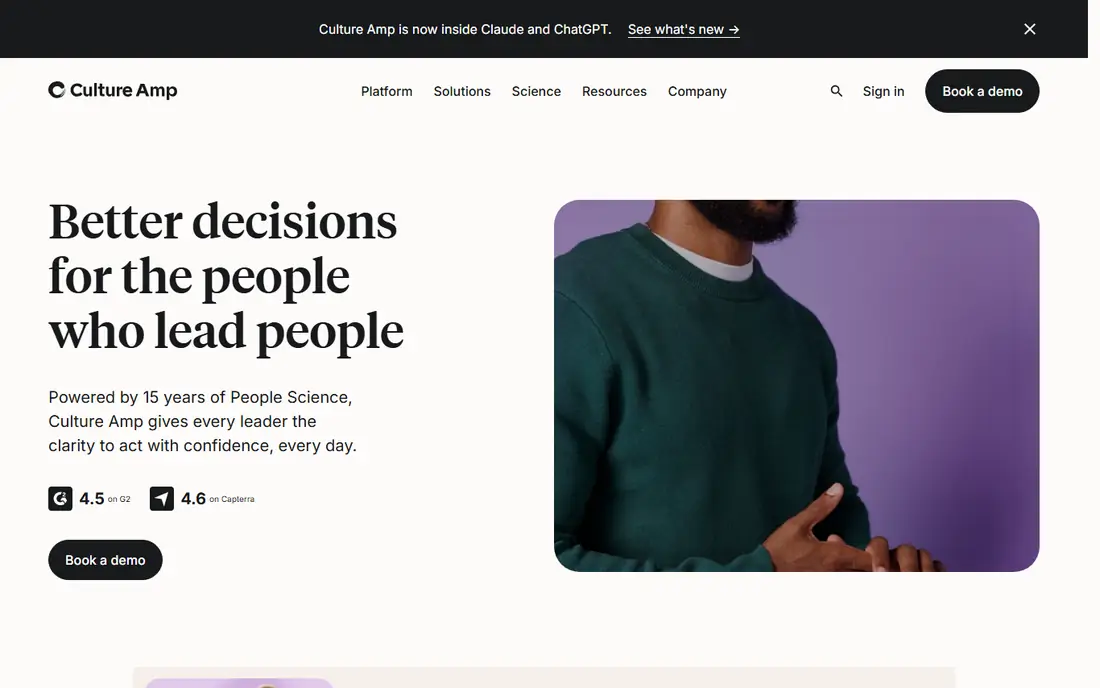
Culture Amp built its name on survey science rather than on a long feature list. Templates draw on research about drivers of engagement, and results can be compared with benchmarks from similar companies. That comparison helps a leadership team see whether a low score on growth or recognition is a local problem or a wider pattern, and it gives managers a place to start instead of a raw score with no context.
Action planning is the part that keeps Culture Amp in use after the first survey closes. Managers get suggested actions tied to their lowest drivers, and later pulses show whether those actions moved anything. The catch is price and effort. Pricing is quote based and usually suits mid size and large employers, and a small team may find the survey depth more than it needs. Companies that already run a formal listening program will get the most value, while a team that only wants a quick weekly pulse may prefer a lighter tool.
What we like- Research backed survey templates
- Large benchmark data set
- Clear action planning for managers
Watch out for- Quote based pricing
- Setup takes time for smaller teams

#2Lattice
Best for: Surveys tied to performance4.6/5 on
G2 (4,117 reviews, checked Oct 2026)
Visit lattice.com
Starting price$4 per user/month
Free planNo
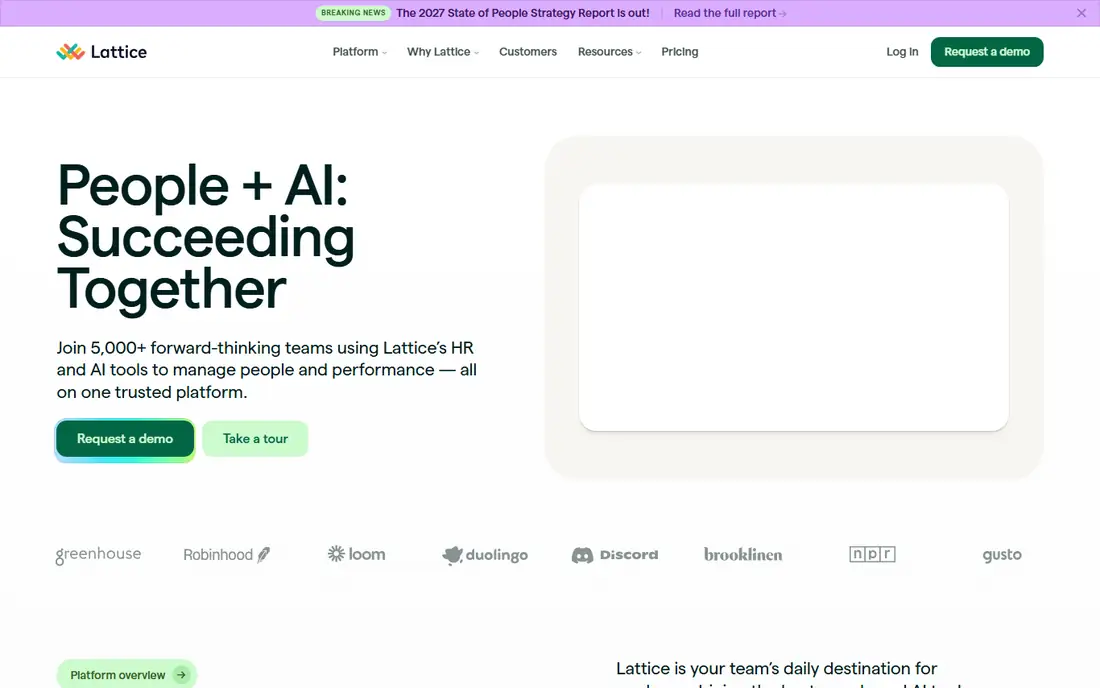
Lattice appeals to companies that already think about performance and engagement together. Engagement surveys run as an add-on at $4 per seat per month, with a $4,000 annual minimum reported on vendor pricing pages in 2026, and results sit next to goals, feedback and review data. A manager can see a low engagement score for a team and check whether goal clarity or feedback frequency also looks weak, which leads to a more useful conversation than a survey alone.
The platform is easy for managers to open and use, with team reports that avoid heavy analyst work. The trade-off is scope. A company that only wants surveys pays for a system built for much more, and the minimum can push the total above a smaller standalone survey tool. Lattice fits a growing company that plans to use reviews and goals anyway, and it fits less well as a survey only purchase.
What we like- Engagement add-on links to reviews and goals
- Clean manager dashboards
- Slack and HRIS integrations
Watch out for- Engagement pricing has an annual minimum
- Full value needs the wider Lattice suite

#315Five
Best for: Check-ins plus engagement4.6/5 on
G2 (1,930 reviews, checked Oct 2026)
Visit 15five.com
Starting price$4 per user/month
Free planNo
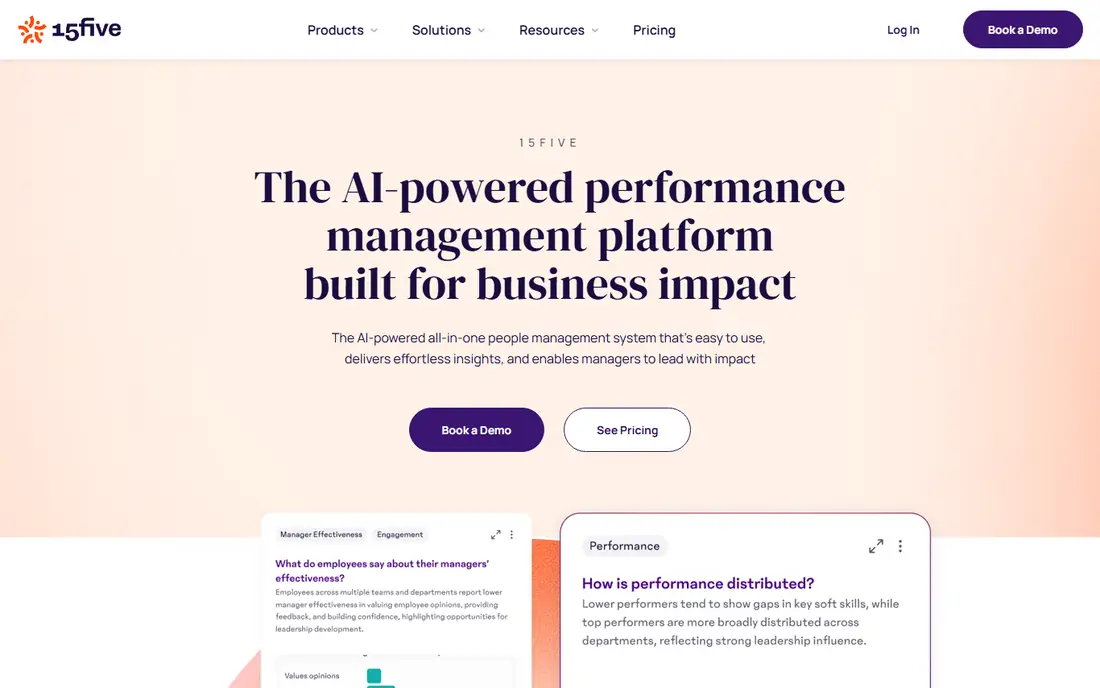
15Five starts from the weekly rhythm between a manager and each direct report. Short check-ins, priorities and wins create a steady stream of signal, and the Engage survey plan adds pulse and engagement surveys on top of that habit. For a company where managers already meet weekly, the tool turns those meetings into trackable data without adding a separate survey project every quarter.
Coaching prompts and 1-to-1 tools help new managers ask better questions, which matters in a fast growing team with many first time managers. The limit is depth. Text analytics and enterprise benchmarking do not match Culture Amp or Qualtrics, and results depend on managers actually reading and acting on check-ins. A company with strong manager habits will see quick value, while a company that only runs an annual survey may not use the weekly features enough to justify the switch.
What we like- Weekly check-ins keep feedback frequent
- Engage plan starts at $4 per user/month
- Strong manager coaching tools
Watch out for- Best results need regular manager habits
- Analytics are lighter than enterprise suites
Starting priceSee website
Free planNo
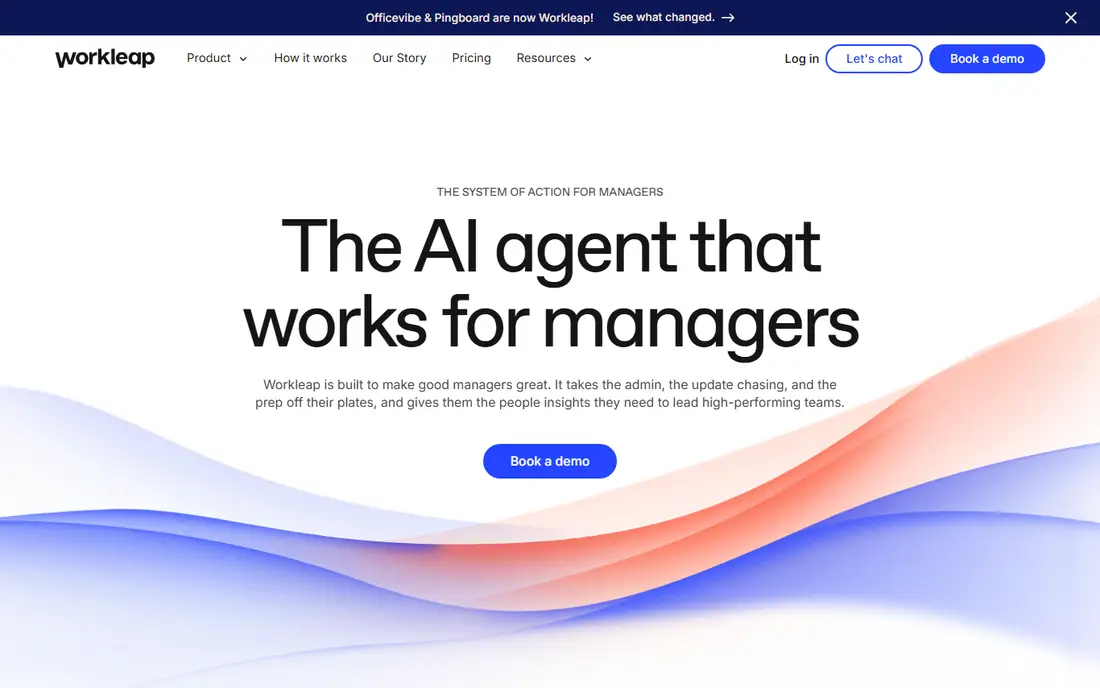
Workleap Officevibe gives HR a manager first toolkit rather than an analyst first platform. Weekly pulse surveys arrive through Slack or Teams, employees can leave anonymous comments, and managers get team reports with suggested next steps. That design suits a mid size company where HR is small and managers must carry most of the follow up themselves.
Setup is faster than an enterprise suite, and the weekly cadence catches problems before they become resignations. Published pricing in 2026 points to annual plans starting around $4,999 per year for standard tiers, so very small teams should confirm the total before committing. Companies that need advanced text analytics, complex org hierarchies or global benchmarking will find Officevibe lighter than Culture Amp or Qualtrics, but many mid market teams will prefer that lighter weight.
What we like- Weekly pulses with anonymous feedback
- Practical manager reports
- Slack and Teams delivery
Watch out for- Annual pricing can be high for very small teams
- Less depth for enterprise analytics
Starting priceSee website
Free planNo
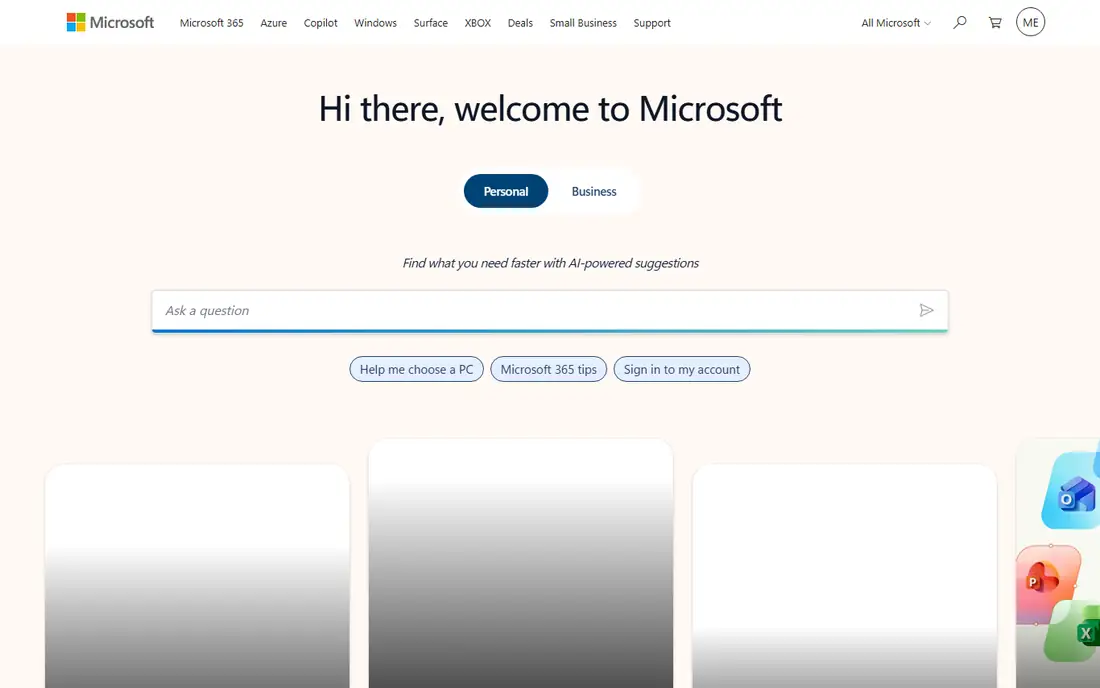
Microsoft Viva Glint fits an employer that already lives in Teams, Outlook and Entra ID. Surveys can be delivered where employees already work, results connect to Microsoft 365 identity and reporting, and leaders get heatmaps and action plans without a separate login system. For a large Microsoft shop, that integration removes a common adoption barrier, since employees do not need to learn a new portal to answer a survey.
The same strength becomes a limit elsewhere. Companies on Google Workspace or Slack get less value from the Teams first design, and pricing is enterprise oriented with seat minimums reported in 2026 guides. Glint also works best as part of a wider Viva plan, so a buyer should check what is already licensed before adding it. Inside Microsoft 365, it is a strong enterprise listener. Outside that stack, a neutral platform will usually fit better.
What we like- Deep Teams and Microsoft 365 integration
- Lifecycle and pulse surveys in one place
- Strong action planning
Watch out for- Weak fit outside Microsoft 365
- Enterprise pricing and minimums
Starting priceSee website
Free planNo
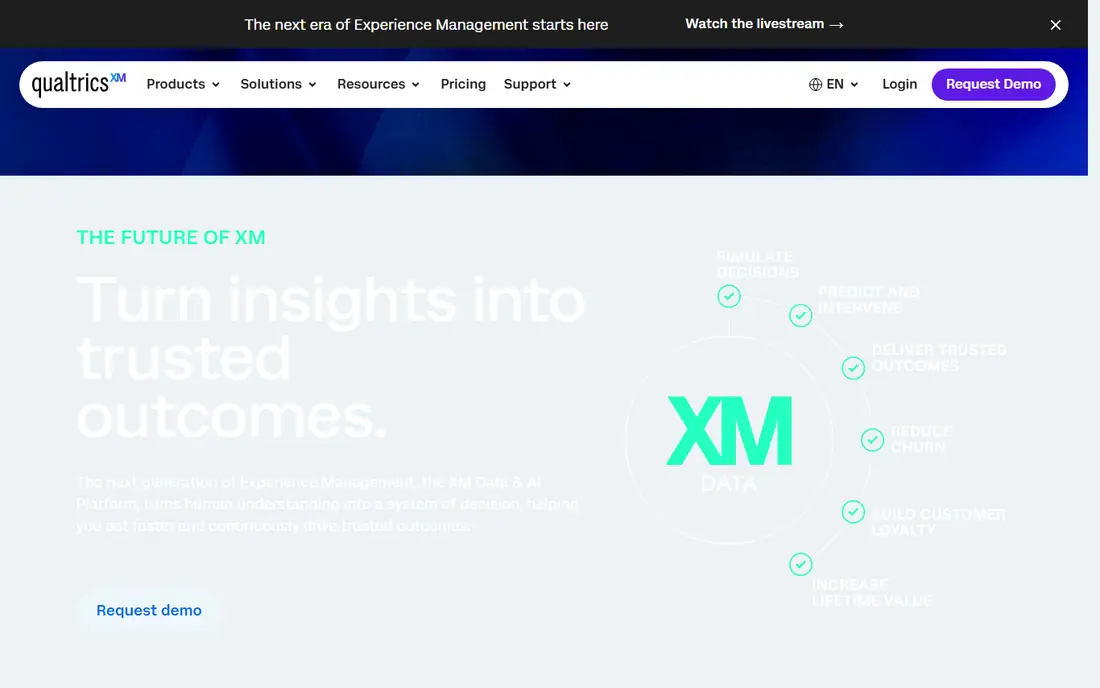
Qualtrics EmployeeXM covers the full employee lifecycle, from candidate and onboarding surveys through engagement, exit and alumni listening. Text analytics can sort thousands of open comments into themes, and predictive models can flag teams at higher risk of attrition. People analytics teams use that depth to connect survey data with HR data and to build dashboards for different leaders.
Flexibility brings complexity. Surveys, logic, dashboards and permissions need careful setup, and pricing is quote based by employee count. A large employer with an analytics team will use that power well, while a mid size company without that team may find the platform heavier than needed. Qualtrics fits best when survey data must feed wider workforce planning, not when a team only needs a simple quarterly pulse.
What we like- Lifecycle surveys from hire to exit
- Advanced text and predictive analytics
- Highly flexible dashboards
Watch out for- Quote based enterprise pricing
- Implementation can be complex
Starting priceSee website
Free planNo
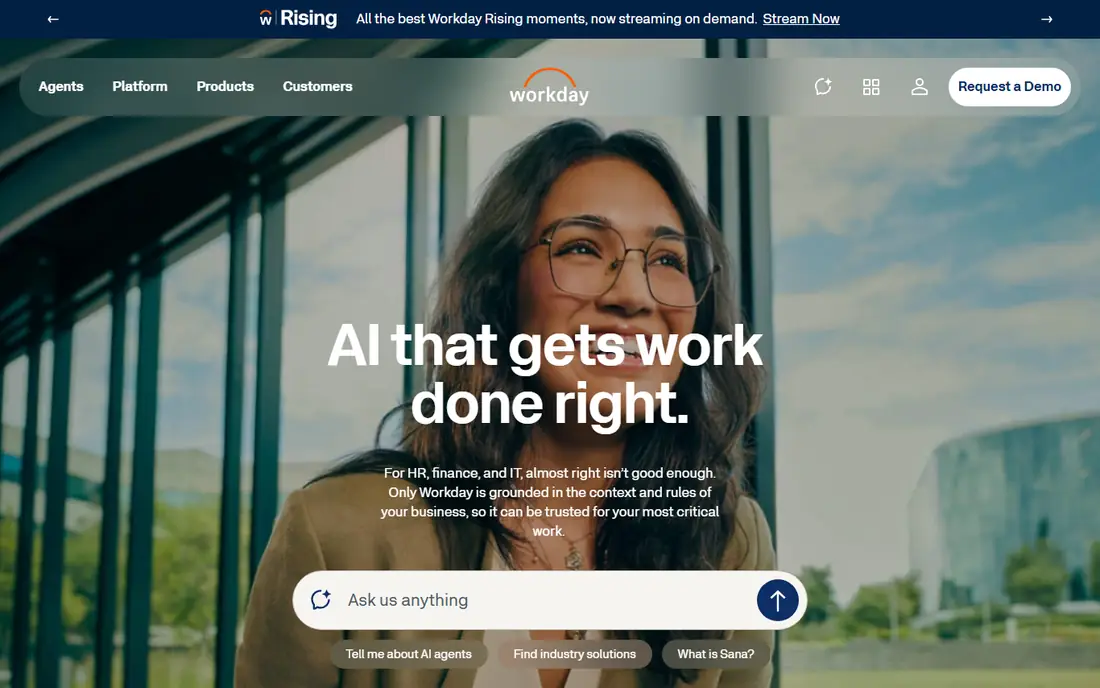
Workday Peakon Employee Voice, often called Peakon, gives Workday customers listening data inside the system that already holds job, manager and location data. That native link means segments update automatically when an employee changes team or location, and leaders can compare engagement with headcount and turnover data without manual exports. Real time pulses and benchmarks help HR spot a drop in a specific team soon after a reorganization or manager change.
Outside Workday, the case weakens fast. Pricing is quote based through Workday sales, and a non Workday buyer gains little from the native integration that justifies the cost. Peakon also suits larger employers with enough responses to protect anonymity in small teams. For a Workday house, it is often the simplest enterprise choice. For everyone else, a standalone platform avoids paying for an integration that will not be used.
What we like- Native Workday HCM connection
- Real time pulse and benchmark data
- Predictive attrition signals
Watch out for- Best value only inside Workday
- Quote based pricing

#8Bonusly
Best for: Peer recognition and rewards4.7/5 on
G2 (7,394 reviews, checked Oct 2026)
Visit bonusly.com
Starting price$3 per user/month
Free planFree trial
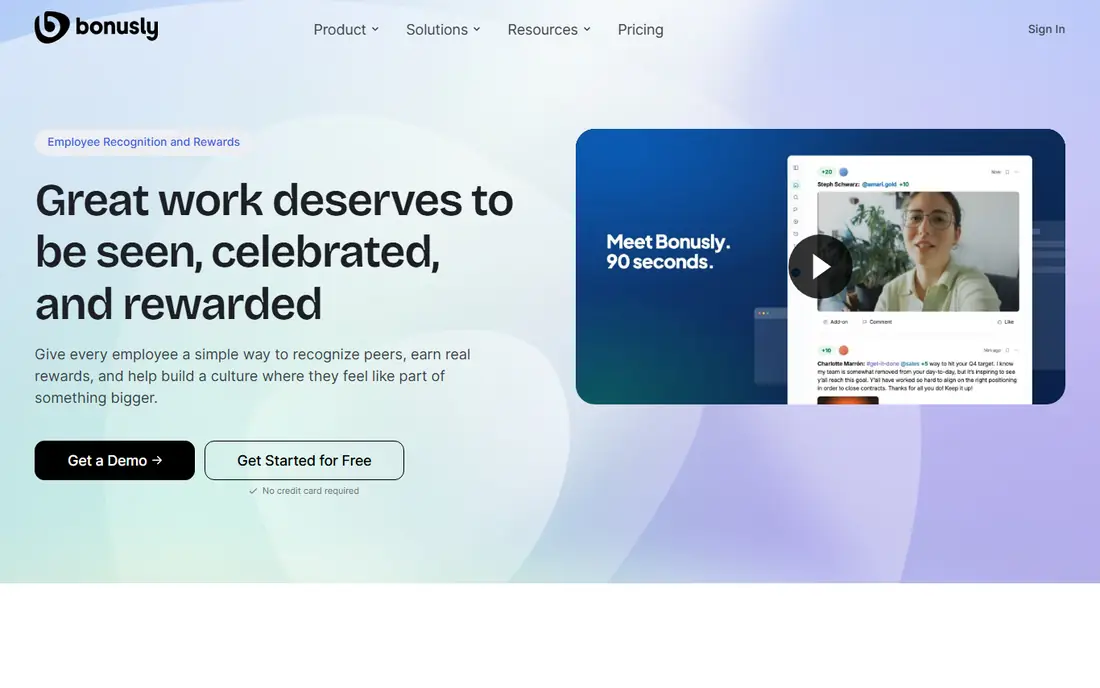
Bonusly takes a different route to engagement. Instead of starting with a survey, it lets employees give small points to peers for good work, with a public feed, rewards and analytics on who gets recognized and who gets missed. That peer layer often reaches employees that surveys miss, especially in support, operations and frontline roles where daily wins are visible to teammates before they reach a manager.
Starting pricing around $3 per user per month keeps the entry cost low, and Slack and Teams integrations put recognition where work already happens. The limit is scope. Bonusly does not replace engagement surveys, lifecycle listening or deep analytics, and a recognition program without a budget, clear rules and manager participation can fade after the first month. Pair Bonusly with a survey tool when both recognition and listening matter, and use it alone only when recognition is the main gap.
What we like- Peer recognition in Slack and Teams
- Points and rewards catalog
- Simple adoption for employees
Watch out for- Not a full survey platform
- Recognition needs a clear budget and rules
Choosing by team size and stack
Start with headcount and the systems already in place, not with the longest feature list. A team under 100 people usually needs a simple pulse tool and a recognition habit more than enterprise benchmarks. A company between 100 and 1,000 people needs manager reports, anonymity thresholds and HRIS sync, since manual survey handling breaks at that size. A company above 1,000 people needs benchmarking, text analytics and governance, because raw scores without comparison or privacy controls create more questions than answers.
Questions to ask in a demo
Ask how anonymity is protected in teams of five or fewer, since small team results can identify people even without names. Ask what happens after a survey closes, including who owns action plans and how progress is tracked in the next pulse. Ask about HRIS, Slack and Teams integrations, data export and contract minimums, since those items decide the real total cost and the real workload for HR.
A simple rollout plan
Run one short pulse first, share results with managers within two weeks, and pick one action per team. Repeat the pulse after six to eight weeks and report what changed and what did not. That loop builds trust faster than a long annual survey with a report that arrives months later. If response rates fall, shorten the survey, explain what changed last time, and stop asking questions that never lead to action.
How we chose
We reviewed pricing pages, vendor documentation and public reviews on G2, Capterra and Reddit, and we compared survey types, anonymity controls, manager tools, integrations and company size fit. We favored platforms that publish at least a starting price or a clear pricing model, and we marked quote based platforms as See website rather than repeating third party estimates as vendor prices. We also favored tools that connect survey results to a next step, since a score without an action rarely changes engagement.
Frequently asked questions
What is the best employee engagement company for a small business?
Workleap Officevibe and Bonusly suit smaller teams best, because setup is simpler and managers can act without an analytics team. 15Five also fits when weekly check-ins already happen. Large enterprise suites usually cost more and need more setup than a small team can use well.
How often should we run engagement surveys?
A weekly or biweekly pulse with a few questions plus a deeper survey each quarter or twice a year works for most companies. Daily pulses cause fatigue, while an annual survey alone misses problems that grow between surveys. The right cadence is the one managers can follow up on without delay.
Are employee engagement surveys anonymous?
Most platforms protect anonymity with minimum group sizes, often five or more responses before a manager sees team results. Small teams need extra care, since a single comment can still identify a person. Tell employees the threshold and the rule before the first survey, and keep that promise in every report.
Do we need a separate recognition tool?
Not always. Some survey platforms include recognition, and some recognition tools include light surveys. A company with a clear recognition gap benefits from Bonusly or a similar tool, while a company with a listening gap benefits more from a survey platform. Many mid size companies use one of each and connect them through Slack or Teams.
What is the difference between pulse surveys and engagement surveys?
Pulse surveys are short, frequent checks on a few topics, while engagement surveys are longer, research based measures of drivers such as growth, recognition and manager support. Pulses track change quickly, and engagement surveys explain why change happens. Use both, with pulses for tracking and engagement surveys for diagnosis.
How much does employee engagement software cost?
Prices in this guide range from about $3 to $4 per user per month for entry plans at Bonusly, Lattice and 15Five, while enterprise platforms use quote based pricing with annual minimums. Always confirm seat minimums, implementation fees and survey only versus full suite pricing before signing, since those items change the total more than the headline rate.
Sources we checked (4)
- https://matterapp.com/blog/employee-engagement-software
- https://thrivesparrow.com/blog/employee-pulse-survey-tools
- https://blog.empuls.io/ms/employee-satisfaction-survey-companies/
- https://www.culturemonkey.io/employee-engagement/employee-feedback-tools/
Is your product missing or out of date?
We review this list regularly. Vendors can request a listing, send updated pricing or ask about featured placement.

Shihab Mia · Founder, Rankite
Shihab has 5+ years in B2B and SaaS SEO. He writes Rankite's software buying guides from pricing pages, documentation and public user reviews. More about Shihab.
 Culture Amp
 Workleap Officevibe
 Microsoft Viva Glint
 Qualtrics EmployeeXM
 Workday Peakon Employee Voice