How we make this list: we compare pricing pages, product documentation and public user reviews. Ratings come from G2, Capterra or Trustpilot, with the date we checked them.
Key takeaways
- Retail dynamic pricing tools focus on competitive repricing and demand elasticity, while B2B pricing platforms optimize deal-level pricing and quote workflows, so pick the category matching your business model.
- Omnia Retail ranks first in one 2026 comparison for its Pricing Strategy Tree and Omnia Agent, though pricing is custom quote with 6 to 12 week rollouts.
- Pricefy is the only tool here with a free forever plan at 50 SKUs, with dynamic repricing from Pro at 99 dollars per month.
- Competera suits enterprise retailers needing category-aware AI pricing with accurate what-if simulations.
- Pricing is usually "See website" for enterprise retail tools, since most vendors quote by assortment size, channels, and modules.
Quick comparison
| Tool | Best for | Starting price | Free plan |
|---|
 Omnia Retail | Enterprise retailers and large assortments | See website | No |
 Competera | Category-aware AI pricing | See website | No |
 Prisync | Competitor price monitoring | See website | No |
 Pricefy | Transparent self-service pricing | Free | Yes |
 Yieldigo | AI pricing with demand signals | See website | No |
 Revionics | Lifecycle pricing across assortments | See website | No |
 Wiser Solutions | Online and store competitor observations | See website | No |
 Repricer.com | Marketplace repricing controls | See website | No |
Is your product missing or out of date?
We review this list regularly. Vendors can request a listing, send updated pricing or ask about featured placement.
#1Omnia Retail
Best for: Enterprise retailers and large assortments4.4/5 on
G2 (100 reviews, checked Oct 2026)
Visit omniaretail.com
Starting priceSee website
Free planNo
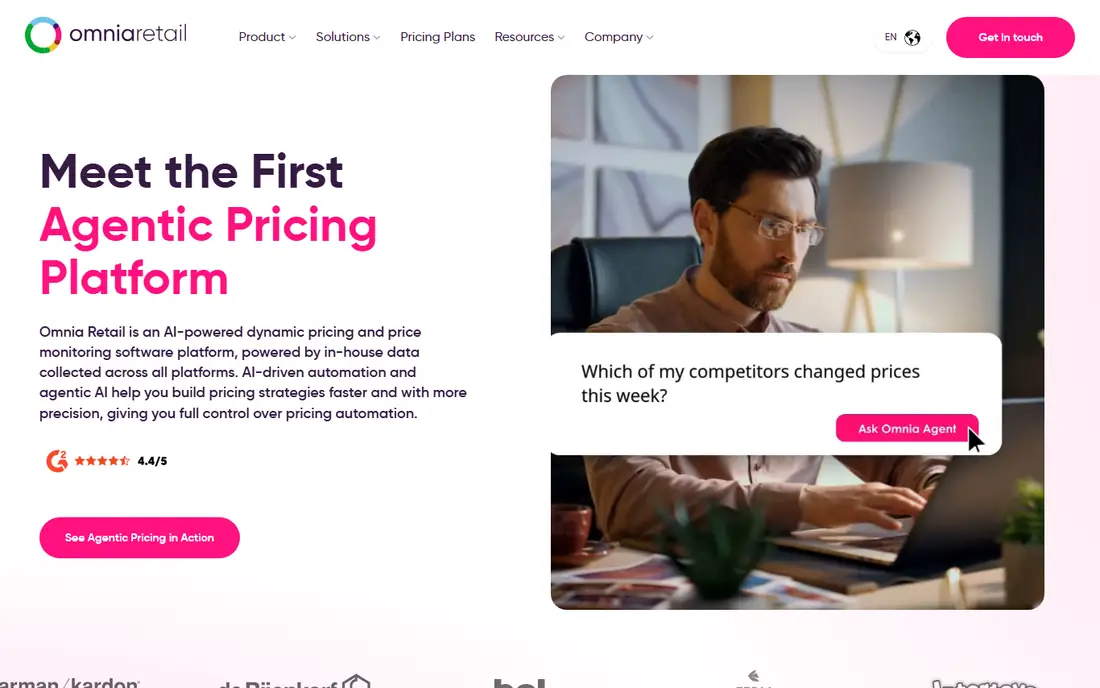
What we like- Omnia Retail stands out because it does not treat dynamic pricing as a black-box problem, combining strong competitor data collection, transparent and explainable pricing logic, and a conversational AI layer through Omnia Agent that answers questions such as who competitors are, what changed in a category, and where margins could rise. It combines competitor price monitoring, dynamic pricing execution, pricing analytics, and conversational AI in one workflow, and it ranks first in one 2026 comparison for its Pricing Strategy Tree and Omnia Agent. It suits European e-commerce retailers doing dynamic competitor-based repricing and enterprise retailers with large assortments.
Watch out for- Pricing is hidden behind a sales call, custom contracts, and a multi-week procurement cycle, with no self-service signup, and rollouts typically run 6 to 12 weeks of onboarding and integration. Each module is packaged as a separate enterprise contract in some comparisons. It suits retailers with pricing maturity and defined governance better than beginners.
#2Competera
Best for: Category-aware AI pricing4.9/5 on
G2 (14 reviews, checked Oct 2026)
Visit competera.net
Starting priceSee website
Free planNo
What we like- Competera suits enterprise retailers needing category-aware AI pricing with accurate what-if simulations, letting teams test price changes across a category before applying them. It focuses on retail pricing rather than B2B deal optimization, with demand elasticity modeling and assortment-aware recommendations. It suits large retailers where a price change in one product affects the whole category.
Watch out for- Pricing is enterprise quote-based, with no published entry price in current comparisons. Implementation needs pricing maturity and clean assortment data, and smaller retailers get better value from self-service tools such as Pricefy. Simulation accuracy depends on history quality, so thin data limits value.
#3Prisync
Best for: Competitor price monitoring4.7/5 on
G2 (172 reviews, checked Oct 2026)
Visit prisync.com
Starting priceSee website
Free planNo
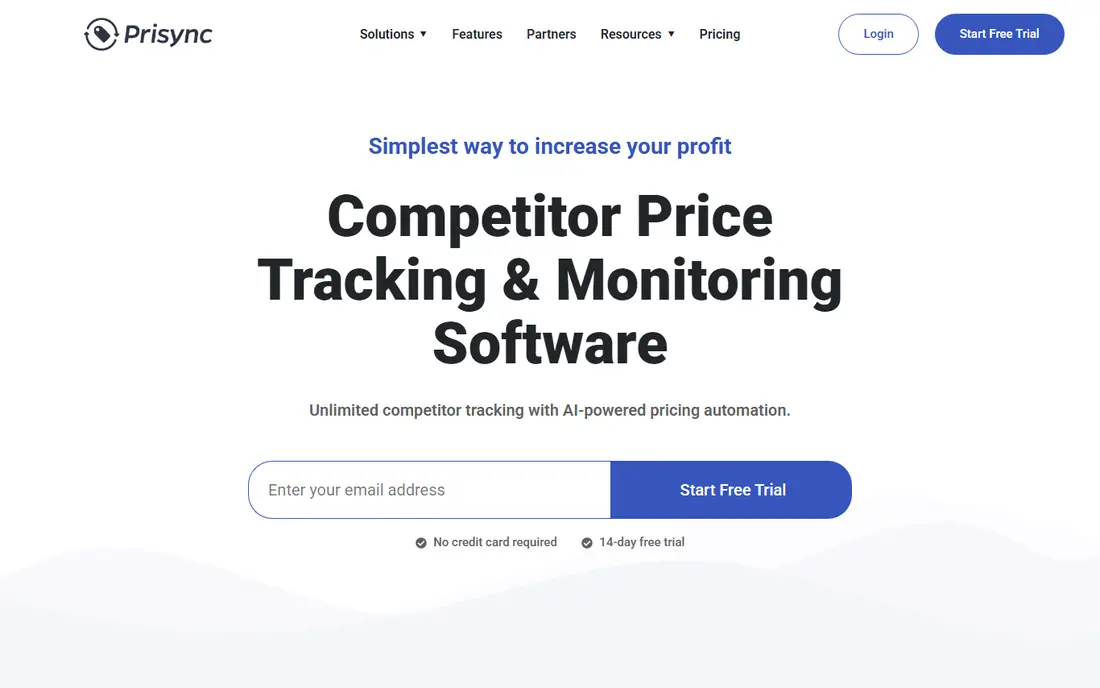
What we like- Prisync is a top pick for pricing intelligence software in one 2026 comparison, with strength in catalog normalization and SKU matching that keeps competitor histories comparable through changing retailer feeds. It suits teams where matching accuracy decides value, since variant resolution through feed changes is the hardest part of price monitoring. The tool covers competitor monitoring with automation depth connecting monitoring outputs to internal workflows.
Watch out for- Pricing is not published as a flat entry rate in current comparisons, so budgeting needs a vendor conversation. Prisync leans toward monitoring and intelligence rather than full repricing execution, so teams needing automatic repricing should pair it with an execution tool. Data quality depends on competitor site accessibility.
Starting priceFree
Free planYes
What we like- Pricefy publishes every plan, price, and feature on its website, with a free forever plan covering 50 SKUs, the only free forever plan in the category in comparison reporting. Paid plans start at 49 dollars per month with a full REST API and AI title matching on every paid plan, dynamic repricing from Pro at 99 dollars per month, and autopilot repricing from Business at 189 dollars per month. It goes live in 60 seconds by pasting a catalog for AI competitor matching, versus 6 to 12 week enterprise rollouts, and it offers native marketplace coverage with daily or twice-daily price refreshes.
Watch out for- The free plan covers only 50 SKUs, so larger catalogs need paid plans quickly. Pricefy suits SMB and mid-market retailers better than enterprise assortments needing category simulations. Read-only Omnia account queries in one comparison show Pricefy positioning as an Omnia alternative, not an enterprise replacement for all use cases.
Starting priceSee website
Free planNo
What we like- Yieldigo appears first in one 2026 best dynamic pricing software list, with AI pricing that analyzes demand, competitor activity, inventory levels, customer behavior, and market conditions. It suits retailers wanting AI recommendations that respond instantly to market changes, with profitability focus rather than pure competitor matching. The platform covers the shift from manual pricing to continuous AI-driven price decisions.
Watch out for- Pricing is not published as a flat entry rate in current comparisons, so budgeting needs a sales conversation. AI recommendation quality depends on demand history and data maturity. Smaller retailers may find self-service tools faster to deploy.
Starting priceSee website
Free planNo
What we like- Revionics coordinates lifecycle pricing decisions across retail assortments and inventory states, covering base prices, promotions, and markdowns in one system. It suits large retailers managing full price lifecycles rather than single repricing rules, with assortment and inventory awareness built in. The platform covers enterprise retail workflows from planning to execution.
Watch out for- Pricing is enterprise quote-based, with implementation complexity to match. It suits large retailers better than SMBs, and lifecycle depth needs pricing team maturity. Smaller catalogs get better value from Pricefy or Prisync monitoring.
#7
Wiser Solutions
Best for: Online and store competitor observations
Visit wiser.com
Starting priceSee website
Free planNo
What we like- Wiser Solutions combines online and store-level competitor observations, suiting retailers with both e-commerce and physical stores who need price intelligence across channels. It covers competitive pricing intelligence with catalog and variant handling, plus execution workflows for repricing. The omnichannel view matters for retailers whose online and shelf prices interact.
Watch out for- Pricing is not published as a flat entry rate in current comparisons. Store-level data collection adds complexity and cost versus online-only monitoring. Smaller online-only retailers get better value from Pricefy or Prisync.
Starting priceSee website
Free planNo
What we like- Repricer.com focuses on marketplace repricing controls, suiting Amazon and marketplace sellers who need rule-based repricing with margin guardrails. It covers marketplace workflows from rule creation to execution, with controls that prevent uncontrolled discounting or margin erosion. It suits sellers whose main channel is a marketplace rather than their own store.
Watch out for- Pricing is not published as a flat entry rate in current comparisons. Marketplace focus limits fit for retailers with their own e-commerce stores and no marketplace presence. Rule design needs care, since aggressive repricing can trigger price wars that erode margins for everyone.
How we chose
We ranked tools on repricing automation, competitor data quality, rule governance, margin guardrails, simulation accuracy, and published pricing. Tools earned credit for transparent logic, explainable recommendations, catalog matching accuracy, and self-service deployment. We excluded B2B deal-pricing platforms from the tool list, since retail repricing and demand elasticity define this category, though the distinction is explained for buyers comparing across categories. Figures come from published pricing and 2026 comparison reporting, and readers should confirm current terms directly, since enterprise pricing is quote-based and self-service prices change.
Start with your business model: retailers need competitive repricing and demand elasticity tools, while B2B companies need deal-level pricing and quote tools, and using the wrong category misses core features entirely. Next, check catalog size: 50 SKUs or fewer can start free on Pricefy, while large assortments need Omnia Retail or Competera enterprise platforms. Then check governance: margin guardrails, approval workflows, and explainable logic prevent uncontrolled discounting, which matters more than raw repricing speed. Then check data quality: catalog normalization and SKU matching decide whether competitor comparisons are trustworthy, so test matching on your own catalog before buying. Then check time to value: Pricefy goes live in 60 seconds, while Omnia rollouts run 6 to 12 weeks, so weigh speed against enterprise depth. Finally, confirm total cost, since enterprise tools quote by assortment size, channels, and modules, and most enterprise tools ask for budget first and quote accordingly.
Frequently asked questions
What is dynamic pricing software?
Dynamic pricing software automatically adjusts prices based on real-time data such as competitor prices, customer demand, inventory availability, seasonality, and predefined business rules, replacing static price lists and manual updates with continuous recommendations or automatic price changes.
How much does dynamic pricing software cost?
From free for Pricefy at 50 SKUs, to 49 dollars per month for Pricefy base, 99 dollars for Pro dynamic repricing, 189 dollars for Business autopilot, and custom enterprise quotes for Omnia Retail, Competera, Revionics, and others. Most enterprise tools ask for budget first and quote accordingly.
Can I use B2B pricing tools for e-commerce retail?
Generally no. B2B tools optimize deal-level pricing and quote workflows, while retail tools focus on competitive repricing and demand elasticity. Using a B2B tool for retail misses competitor monitoring, and using a retail tool for B2B misses quote optimization.
What are margin guardrails in dynamic pricing?
Margin guardrails are rules that prevent prices from dropping below a minimum margin, even when competitor matching or demand signals suggest a lower price. They prevent uncontrolled discounting and margin erosion during price wars.
How fast can I deploy a dynamic pricing tool?
Self-service tools such as Pricefy go live in about 60 seconds by pasting a catalog, while enterprise platforms such as Omnia Retail typically need 6 to 12 weeks of onboarding, integration, and account-manager handoffs.
Do I need AI pricing or just competitor monitoring?
Competitor monitoring suits teams that set prices manually with market awareness, while AI pricing suits teams wanting continuous recommendations or automatic repricing based on demand, inventory, and elasticity. Start with monitoring if your pricing team is small, and add AI execution as maturity grows.
Sources we checked (0)
Is your product missing or out of date?
We review this list regularly. Vendors can request a listing, send updated pricing or ask about featured placement.

Shihab Mia · Founder, Rankite
Shihab has 5+ years in B2B and SaaS SEO. He writes Rankite's software buying guides from pricing pages, documentation and public user reviews. More about Shihab.