How we make this list: we compare pricing pages, product documentation and public user reviews. Ratings come from G2, Capterra or Trustpilot, with the date we checked them.
Key takeaways
- DistroKid and TuneCore both charge 24.99 dollars a year for unlimited releases and pay 100 percent of store royalties, but their extras and social cuts differ.
- CD Baby charges once per release, 9.99 dollars per single, and takes a 9 percent royalty cut forever, which suits artists who release rarely.
- The trap in every subscription model is cancellation: stop paying and your catalogue usually comes down unless you bought a legacy option.
- Keep your masters and your publishing where you can, and read the social and Content ID cuts, since 20 percent of social earnings is a common hidden price.
Quick comparison
| Tool | Best for | Starting price | Free plan |
|---|
 DistroKid | Frequent releasers, unlimited uploads | $24.99 per year | No |
 TuneCore | Analytics, publishing, and advances | $24.99 per year | No |
 CD Baby | One time fee, no annual renewal | $9.99 per single | No |
 Ditto Music | Cheapest unlimited annual plan | $19 per year | No |
 UnitedMasters | Brand deals plus distribution | $19.99 per year | Yes |
 Amuse | Mobile first releasing | $23.99 per year | Yes |
 LANDR | Distribution bundled with mastering | $24 per year | No |
 RouteNote | Zero cost entry | Free | Yes |
Is your product missing or out of date?
We review this list regularly. Vendors can request a listing, send updated pricing or ask about featured placement.
The best distribution companies for music
Starting price$24.99 per year
Free planNo
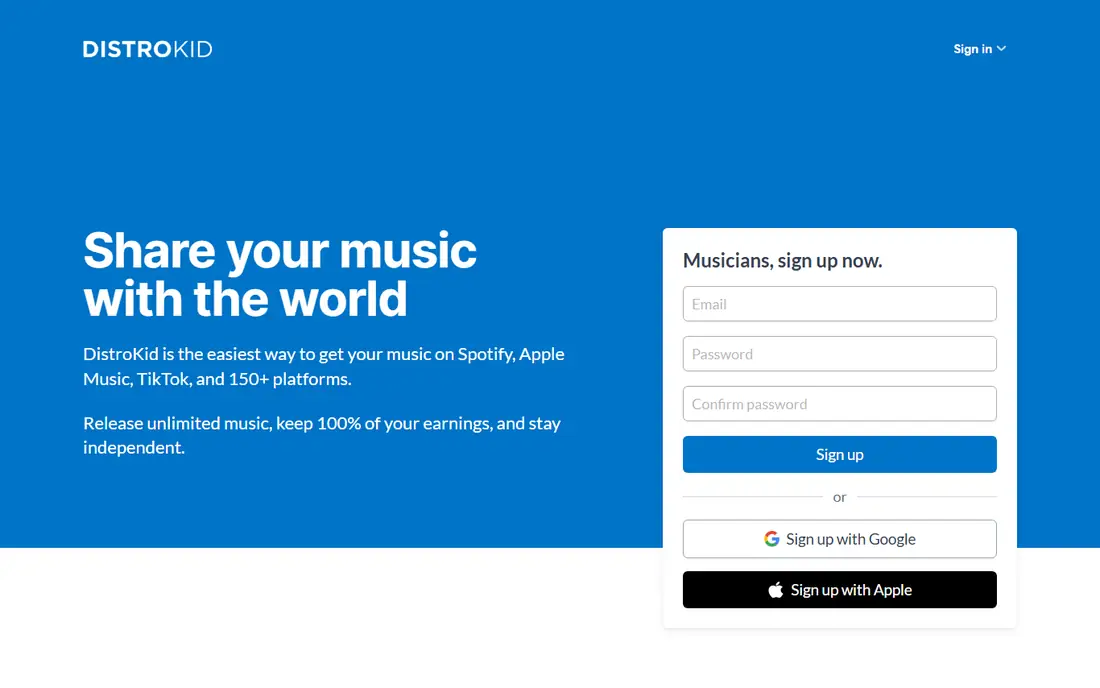
What we like- DistroKid's Musician plan at 24.99 dollars a year covers unlimited uploads for one artist name with 100 percent of streaming royalties passed through, and delivery to stores in 24 to 72 hours is among the fastest available. Automatic royalty splits for collaborators are built in, and payouts are quick once balances clear the small minimum. For anyone releasing several singles a year, the per release cost falls below every rival here.
Watch out for- The extras stack up: YouTube Content ID costs per track per year, and the Leave a Legacy add on is the only way to keep music live if you cancel, priced per release, which makes leaving expensive for big catalogues. Stop paying without it and your music is removed from stores. Support is email and chatbot based, and artists report slow answers at busy times.
Starting price$24.99 per year
Free planNo

What we like- TuneCore's Rising Artist unlimited plan also costs 24.99 dollars a year and pays 100 percent of store streaming and download revenue, with daily trend reporting and an automator that adds your releases to new stores as they launch. Its publishing administration arm and royalty advances for qualifying artists give growing acts services DistroKid does not sell. Pay per release plans remain available for artists who dislike subscriptions.
Watch out for- TuneCore keeps 20 percent of social platform earnings, covering TikTok, Meta, and YouTube monetisation, even on paid plans, which is a real cost for social driven artists. Unlimited plan music is removed at or before renewal if you stop paying. Higher tiers at 44.99 and 54.99 dollars a year push the comparison price up for multi artist and label needs.
Starting price$9.99 per single
Free planNo
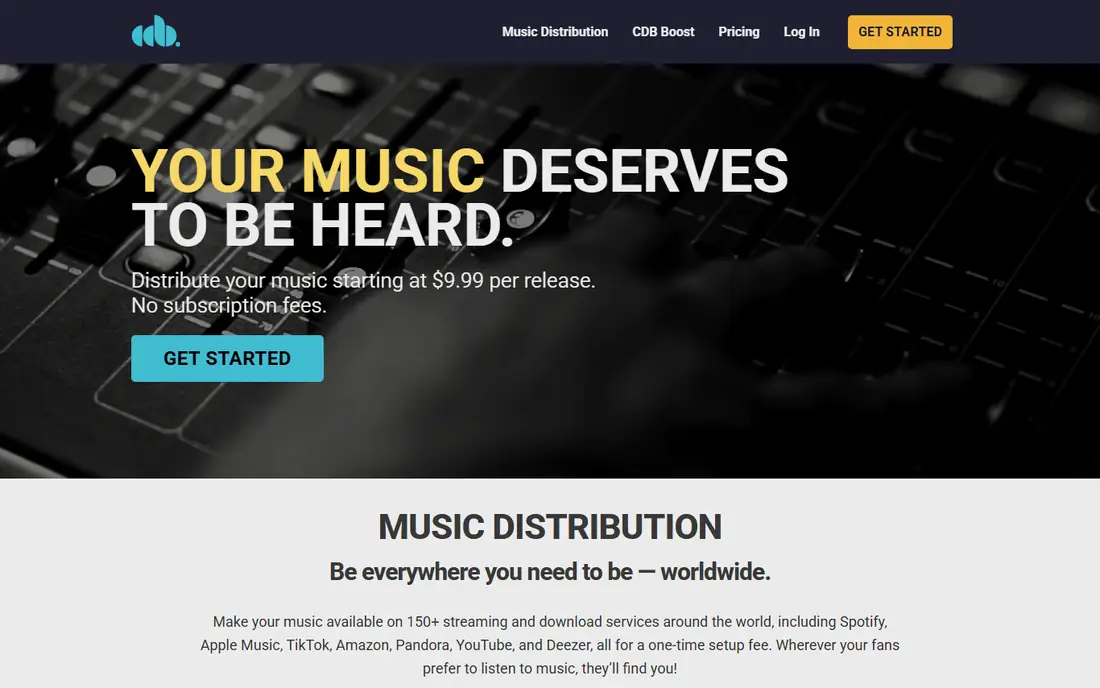
What we like- CD Baby charges once: 9.99 dollars per single or 14.99 dollars per album, and the release stays distributed without an annual bill, which suits artists who release rarely and hate subscriptions. It adds sync licensing pitching and physical distribution heritage that the subscription firms lack. For a catalogue that earns slowly for decades, the maths of paying once is hard to beat.
Watch out for- CD Baby keeps 9 percent of digital revenue permanently, so a song that earns for years pays the commission forever, and the cut outgrows a DistroKid subscription once earnings pass a modest level. Per release pricing punishes prolific artists compared with unlimited plans. Delivery and support run slower than the fastest subscription rivals.
Starting price$19 per year
Free planNo
What we like- Ditto undercuts the leaders at 19 dollars a year for unlimited releases with 100 percent of streaming income kept by the artist. It adds chart registration, sync pitching, and label services tiers for artists building small labels, at prices below TuneCore's higher plans. Store reach covers the same 150 plus platforms as the bigger names.
Watch out for- Support quality is the recurring complaint in artist reviews, and problem releases can take time to fix. Higher tiers climb to 89 dollars a year, so the cheap entry price applies to the simplest setup. As with all subscriptions, cancelling puts the catalogue at risk unless terms say otherwise for your plan.
Starting price$19.99 per year
Free planYes
What we like- UnitedMasters mixes distribution with a brand partnership pipeline, pitching artists for sync and sponsor deals the pure distributors never see. Its DEBUT+ plan at 19.99 dollars a year pays 100 percent royalties, and a free tier exists at a 90 percent share for artists testing the water. The brand suits hip hop and pop artists who want commercial opportunities alongside streaming income.
Watch out for- The brand deal pipeline benefits a small minority of artists
- Most members get distribution and promotion tools only. The free tier's 10 percent cut is a real cost once songs earn. Policies on what happens to releases after cancellation are less clearly documented than at CD Baby or DistroKid, so read the current terms before uploading a back catalogue.
Starting price$23.99 per year
Free planYes
What we like- Amuse built its name on releasing from a phone, and its Artist plan at 23.99 dollars a year pays 100 percent of royalties while the subscription is active. A free tier lets new artists start at no cost, and the company offers royalty advances to artists whose data qualifies. Payout handling and split tools are integrated into the same app centred workflow.
Watch out for- If a paid subscription lapses, Amuse applies a 25 percent commission model rather than removing everything, which is gentler than deletion but still a surprise if you missed the term. Content ID terms differ on the entry plan, so check what social monetisation you actually keep. Support and feature depth trail TuneCore for label style needs.
#7LANDR
Best for: Distribution bundled with mastering2.5/5 on
G2 (3 reviews, checked Oct 2026)
Visit landr.com
Starting price$24 per year
Free planNo
What we like- LANDR bundles distribution at 24 dollars a year inside a wider studio subscription covering AI mastering, samples, and plugins, so producers who already pay for mastering get distribution almost free at the margin. Royalties are 100 percent while you subscribe. For beat makers and self releasing producers, the single bill for tools plus release is the appeal.
Watch out for- Cancel and LANDR takes a 15 percent commission to keep releases live, a term many artists only discover when leaving. The distribution toolset is thinner than DistroKid or TuneCore, with less developed splits and reporting. If you do not use the studio tools, the bundle logic collapses and a pure distributor is cheaper.
Starting priceFree
Free planYes
What we like- RouteNote's free tier costs nothing up front and pays 85 percent of revenue, getting music onto more than 50 major platforms with no annual bill. Its Premium option, 10 dollars per single one time plus a small annual fee from year two, lifts the share to 100 percent. For a first release or a side project, the free route removes every financial excuse not to publish.
Watch out for- An 85 percent share is expensive money once a track earns: past a modest income, DistroKid's flat fee is cheaper. Free tier review and delivery run slower than paid rivals, and support queues reflect the price. Store reach, while covering the majors, is narrower than the 150 plus lists elsewhere.
How we chose
We compared distributors on entry price, royalty share on stores and on social platforms, what happens to releases on cancellation, store reach, and extras such as publishing administration, splits, and advances. We favoured models an artist can price before uploading, and we flagged every cancellation and commission term we could verify in current terms and October 2026 comparisons. We excluded invite only and label services distributors such as AWAL and ONErpm from the main list because any artist cannot simply join them, though their 15 percent commission models suit established acts.
How to choose the right distribution company for music
Work out your release pattern first. Two or more releases a year makes an unlimited subscription, DistroKid, TuneCore, or Ditto, the cheapest shape. One release every year or two makes CD Baby's one time fee the calmest option, since there is no renewal to forget. A first experimental release costs nothing to test on RouteNote or the Amuse and UnitedMasters free tiers, and you can move distributor later, though moving a catalogue means new uploads and lost momentum on playlists.
Then read the three trap terms before you pay anyone. One: what happens when you stop paying, deletion, commission, or permanence. Two: what the company takes from YouTube Content ID and social platforms, since TuneCore's 20 percent social cut and DistroKid's per track Content ID fees change real earnings. Three: which add ons you will actually buy, because legacy protection, extra artist names, and store extras can double a headline price. Keep your masters under your own ownership on every deal here, none of these companies needs your copyright to distribute your music, and be wary of any deal that asks for it. Prices and terms in this guide are October 2026 figures and change often in this market.
Frequently asked questions
Do I keep the rights to my music with these companies?
Yes. Every distributor on this list works on a licence to distribute, not a transfer of ownership, and you keep your masters and your songwriting rights. Publishing administration, offered by TuneCore and CD Baby for extra fees or shares, collects songwriting royalties on your behalf and is a separate agreement you can decline. Any contract that asks to own your masters is a label deal, not distribution, and should be judged very differently.
What happens to my music if I stop paying DistroKid or TuneCore?
On the standard unlimited plans, releases are removed from stores when the subscription lapses, unless you paid for a legacy option such as DistroKid's Leave a Legacy per release. Amuse instead moves lapsed releases to a commission model, and LANDR keeps them live for a 15 percent cut. CD Baby releases stay up because you paid once. This single term is the biggest long term difference between the models.
How much money does a stream actually pay?
Rates vary by platform, country, and subscription tier, and no distributor controls them. A common planning figure is a few tenths of a cent per stream on the biggest services, so a thousand streams might earn roughly 3 to 5 dollars before any distributor commission. That is why royalty share percentages only matter once a catalogue earns consistently, and why flat fee models win for working artists.
Can I switch distributors later?
Yes, artists move catalogues routinely. You upload the same recordings to the new distributor with the same ISRC codes so play counts and playlist placements carry over, confirm the new releases are live, then take down the old ones. Overlap the two for a short window to avoid a gap. It takes admin effort per release, which is another reason prolific artists think carefully before their first upload.
Is a free distributor ever the right choice?
For a first release, a hobby project, or a test of whether an audience exists, yes: RouteNote's free tier at 85 percent costs nothing and reaches the major stores. Once a track earns more than a small amount each year, the 15 percent you give up exceeds a flat annual subscription, and moving to DistroKid, Ditto, or CD Baby pays for itself.
Sources we checked (0)
Is your product missing or out of date?
We review this list regularly. Vendors can request a listing, send updated pricing or ask about featured placement.

Shihab Mia · Founder, Rankite
Shihab has 5+ years in B2B and SaaS SEO. He writes Rankite's software buying guides from pricing pages, documentation and public user reviews. More about Shihab.