How we make this list: we compare pricing pages, product documentation and public user reviews. Ratings come from G2, Capterra or Trustpilot, with the date we checked them.
Key takeaways
- National Debt Relief and Freedom Debt Relief are the largest settlement companies, with programs that usually last 24 to 48 months.
- Accredited Debt Relief suits people with $5,000 or more in unsecured debt who want a personalized plan plus consolidation loan options.
- CuraDebt is different from direct settlement firms, because it now matches users with independent providers for consumer, tax, and business debt.
- Money Management International is the nonprofit option to check first, because counseling and debt management plans carry lower fees and less credit harm.
- Settlement can hurt credit in the short term, and forgiven debt may be taxable, so get a full written fee and timeline estimate before enrolling.
Quick comparison
Is your product missing or out of date?
We review this list regularly. Vendors can request a listing, send updated pricing or ask about featured placement.
The best debt relief companies
Starting priceUp to 25% of enrolled debt
Free planNo
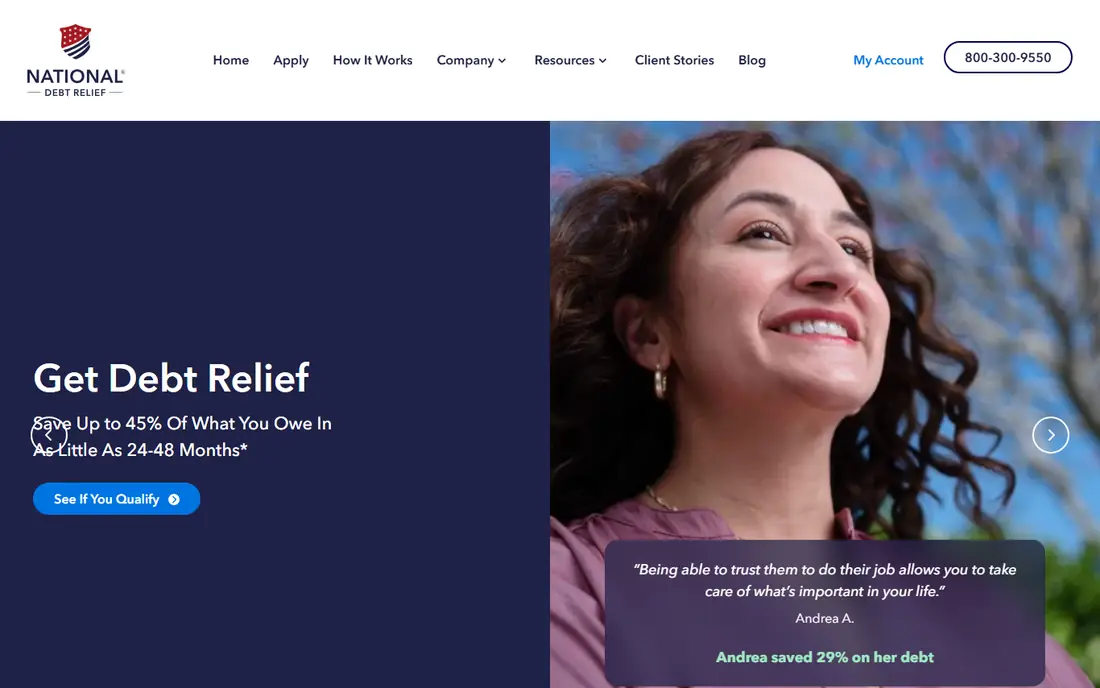
National Debt Relief is the largest dedicated settlement company in the United States, and it is the default first call for many people with $7,500 or more in unsecured debt, though some listings note a $10,000 minimum, so readers should confirm the current minimum on the company site. The program works by depositing a monthly payment into a dedicated savings account, then negotiating with creditors to accept less than the full balance once enough funds have built up. The homepage states that the company does not charge fees until it settles a debt, and that fees vary by state and debt amount, up to 25 percent of enrolled debt.
Programs usually last 24 to 48 months, which is faster than paying only minimums on large card balances, but the path is not painless. While funds build up, enrolled accounts may fall behind, which can lower a credit score, lead to collection calls, and in some cases lead to legal action. National Debt Relief also offers access to partners for consolidation loans, credit counseling, and bankruptcy referrals, so a consultation can show options beyond settlement. For a large, straightforward card and loan debt load, National Debt Relief offers scale, a clear fee model, and a well-documented process.
What we like- Large settlement company with broad creditor coverage
- No fees until a debt is settled
- Free consultation with a savings estimate
Watch out for- Minimum debt is high for some users
- Settlement can hurt credit scores in the short term
Starting price15% to 25% of enrolled debt
Free planNo
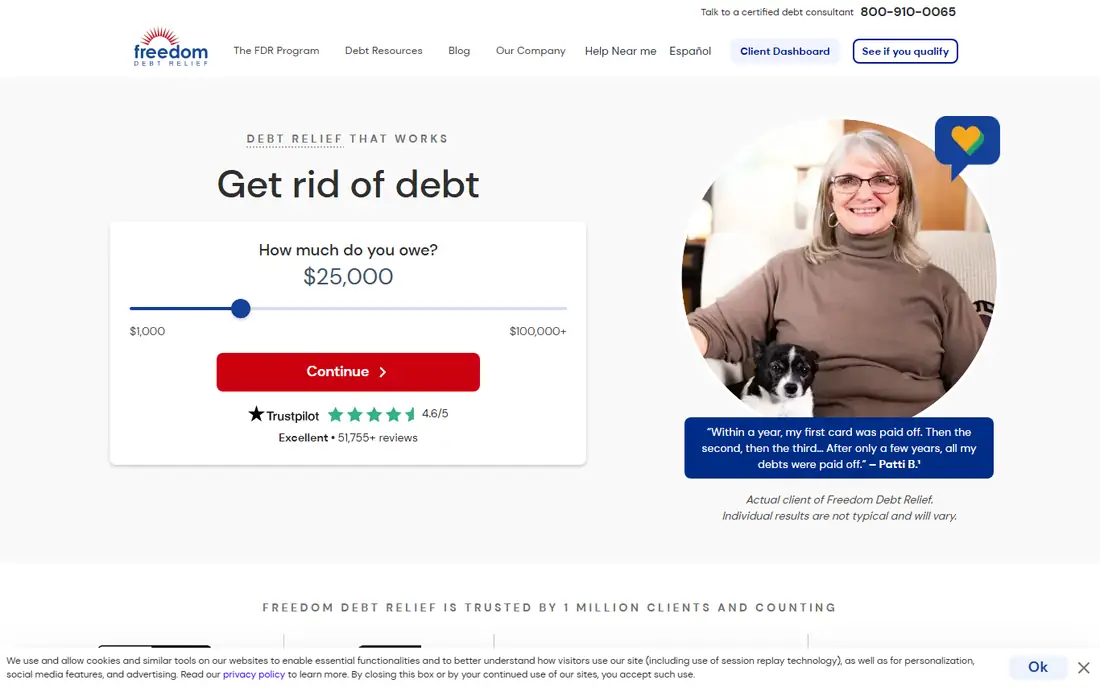
Freedom Debt Relief, part of Freedom Financial Network, has run settlement programs since 2002 and is the other large company in this category. Its homepage notes more than 1 million clients served and more than $20 billion in debt settled, with a team of certified consultants, negotiators, and client service staff. A legal partner network is available for additional support if a client faces creditor lawsuits while enrolled, which is a useful extra that not every settlement firm offers.
The program follows the standard settlement model: one monthly deposit into a dedicated account, negotiation once funds build up, and approval by the client before a settlement payment is sent. Fees are charged only after a settlement is approved and the first payment is made, and the company notes a money-back program guarantee in some cases, with terms that readers should read in full. Freedom does not help with taxes, utility bills, lawsuits, secured loans, or federal student loans, according to its homepage, so users with those debts need a different provider. For large card and personal loan balances, Freedom offers depth, history, and legal support that smaller firms cannot match.
What we like- Long history since 2002
- Legal Partner Network for added support
- Money-back program guarantee in some cases
Watch out for- Not available in all states
- No tax debt lane noted on its homepage
Starting price15% to 25% of enrolled debt
Free planNo
Accredited Debt Relief stands out for accessibility. Its homepage states that it offers options in all 50 states, and that it works with people who have $5,000 or more in unsecured debt, which is lower than the minimum at some larger firms. That lower threshold helps people with smaller, but still unmanageable, card or medical balances who might be turned away elsewhere. The company also reviews consolidation loan options as part of its matching process, so a user who qualifies for a loan with a lower rate may be offered that path instead of settlement.
Fees, according to the company homepage, range from 15 percent to 25 percent of enrolled balance, vary by state and debt amount, and are success-based, meaning no upfront fees are charged. Programs typically last 24 to 48 months, and the company notes that clients often reduce monthly payments by 40 percent or more, though individual results vary and that figure should not be taken as a promise. Accredited also highlights customer service, with a mobile app and dashboard for tracking progress. For a user who wants a highly rated, widely available firm with a lower minimum and loan options, Accredited is a strong pick.
What we like- Works in all 50 states
- Low minimum of $5,000 noted on its site
- Consolidation loan options alongside settlement
Watch out for- Fees vary by state and debt amount
- Results depend on creditor cooperation and completing the program
Starting priceSee website
Free planNo
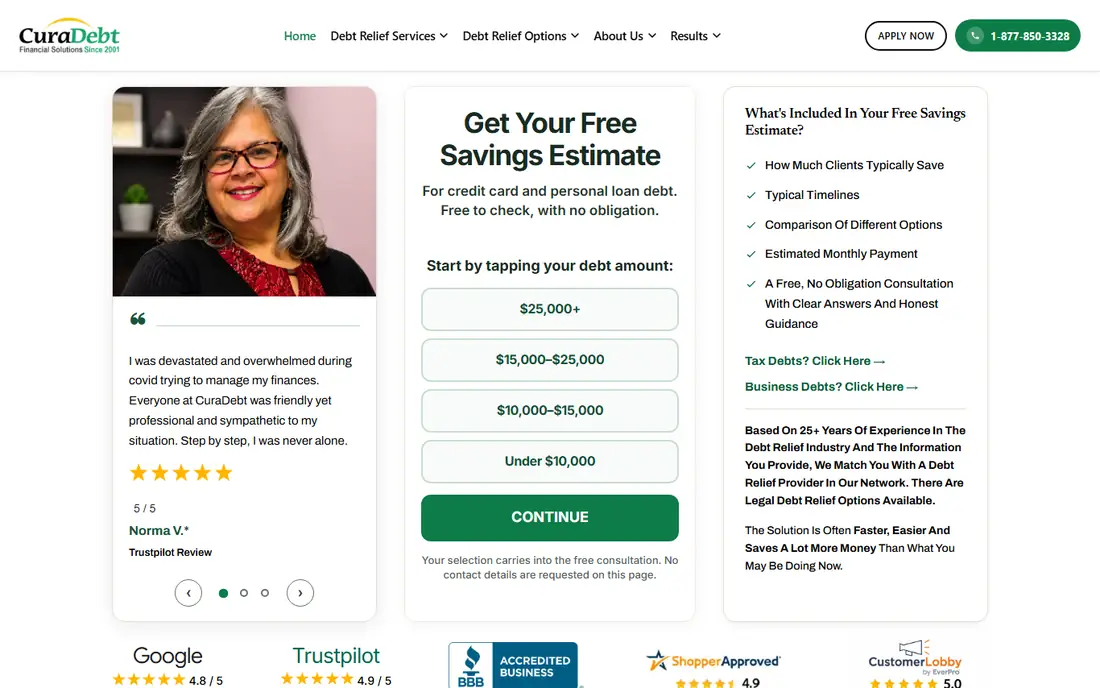
CuraDebt is different from the direct settlement firms on this list, and that difference should be clear before a user contacts it. Its homepage states that, since March 2026, CuraDebt matches consumers with independent third-party providers, rather than operating debt settlement directly, and that many older reviews predate that change. That matching model covers consumer debt, IRS and state tax debt, and business or merchant cash advance debt, which is broader than most settlement firms, which do not handle tax debt.
A free savings estimate shows typical savings, timelines, and estimated monthly payments, with no obligation, and a consultation explains options before any provider agreement is signed. Because the final provider sets its own agreement, fees, and terms, readers should ask for the provider's full fee schedule, state coverage, and timeline in writing, and not assume that CuraDebt's estimate is the provider's contract. For users with tax debt, business debt, or a smaller consumer balance who want to compare options in one place, CuraDebt is useful as a starting point, provided they understand that the actual settlement work will be done by a matched provider.
What we like- Free savings estimate and consultation
- Matching for consumer, tax, and business debt
- Long history since 2001
Watch out for- Does not settle debt directly today, it matches users with independent providers
- State coverage and provider terms vary
Starting price15% to 25% of enrolled debt
Free planNo
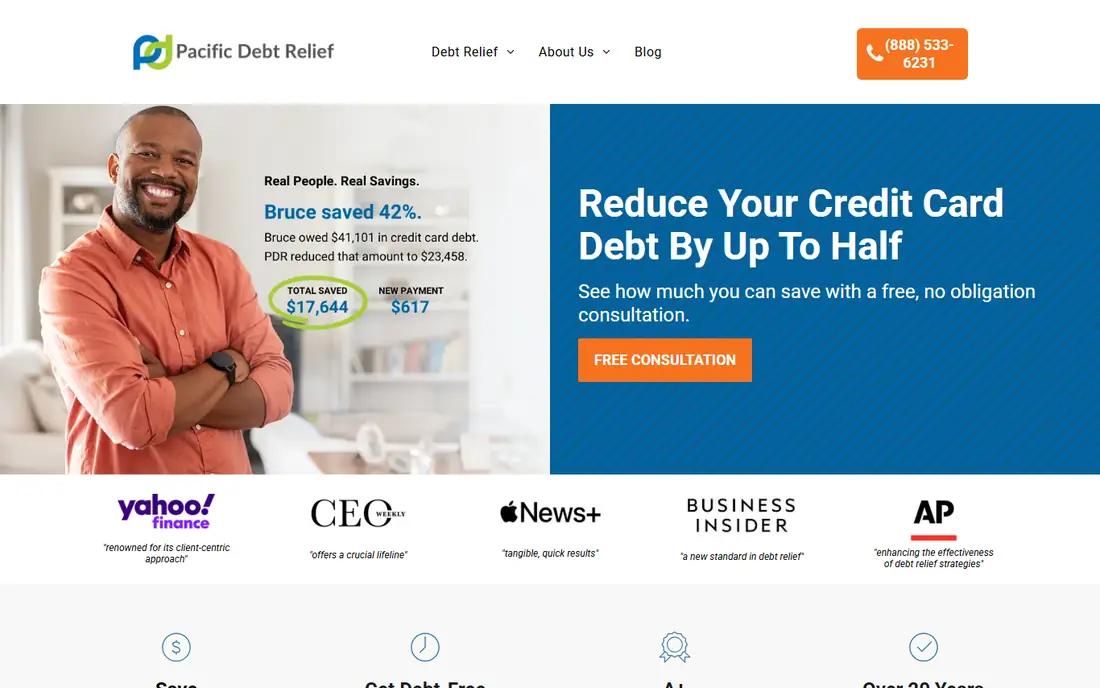
Pacific Debt Relief is a smaller, service-focused settlement firm based in San Diego, celebrating 20 years of service on its homepage. Enrolled clients get a dedicated account manager who guides them through the program, which can make a long, stressful process feel more personal than a large call-center model. The program follows the standard three-step model: enroll, make monthly deposits, and let the negotiation team work with creditors to agree on lower balances and a repayment schedule.
The homepage notes that qualification requires more than $10,000 in unsecured debt, including cards, personal loans, medical bills, collections, and some student loans, while lawsuits, IRS debt, utility bills, secured loans, and mortgages are excluded. Fees fall in the industry-standard 15 percent to 25 percent range for enrolled debt, according to recent comparison research, and readers should confirm the exact fee for their state and debt amount before enrolling. Pacific is a good fit for users who want a smaller firm with a dedicated contact and who meet the $10,000 minimum, rather than the largest firm by volume.
What we like- Dedicated account manager for enrolled clients
- 20 years of service
- Nationwide coverage in most states
Watch out for- Minimum debt is $10,000
- Smaller scale than National or Freedom
Starting price15% to 25% of enrolled debt
Free planNo

TurboDebt connects users with debt relief programs, rather than settling every debt itself, and its homepage presents a four-step process: answer questions about your financial situation, speak with a representative, enroll in a selected program, and make more affordable monthly payments. That connector model can be useful for users who are unsure which type of program fits, since a representative can compare options and route them to a program that matches their debt amount, income, and state. The homepage notes more than 650,000 Americans enrolled and high review scores, with an average saving figure that applies to clients who complete the program, not to every enrollee.
Fees fall in the standard 15 percent to 25 percent range for enrolled debt in recent comparison research, and readers should confirm the exact fee, program length, and provider name in writing before enrolling, since the final terms are set by the matched program. TurboDebt also notes that it does not guarantee a specific saving amount or a specific debt-free date, and that forgiven debt may have tax consequences, which readers should discuss with a tax professional. For users who want a guided starting point and high-rated service, TurboDebt is a practical first call, provided they read the matched program terms carefully.
What we like- Connects users with debt relief programs that fit their needs
- High review scores on Trustpilot and Google
- Clear four-step enrollment process
Watch out for- Acts mainly as a connector, so final program terms depend on the matched provider
- Not available in all states
Starting priceSee website
Free planNo
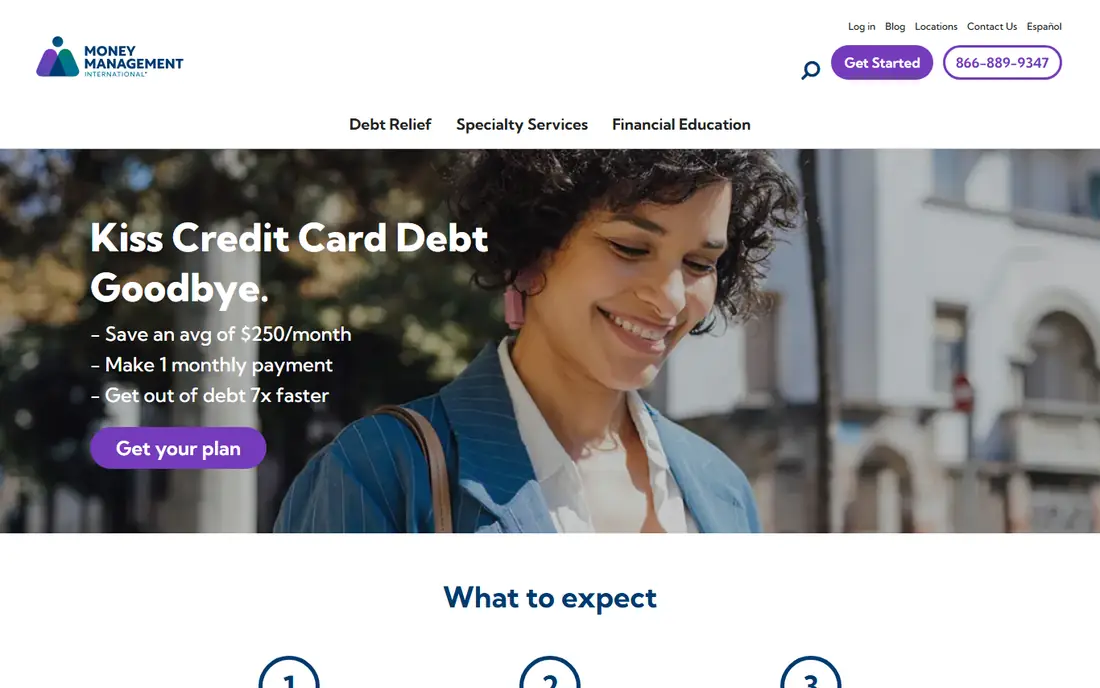
Money Management International, known as MMI, is the nonprofit option on this list, and it is the first place many financial counselors suggest checking. As a 501(c)(3) organization and a member of the National Foundation for Credit Counseling, MMI offers a free financial review, certified counselors, and debt management plans, known as DMPs, that work with creditors to lower interest rates and combine debts into one monthly payment. Unlike settlement, a DMP usually pays debts in full, but at lower rates, which can be faster than minimum payments and less harmful to credit in the long term, though enrolled cards are usually closed and scores may dip at first.
MMI also offers a debt resolution plan, which is similar to for-profit settlement but at a lower cost, according to its homepage, and it offers bankruptcy counseling for users who need that path. Fees for DMPs are low and state-capped in many cases, with a setup fee and a monthly fee that vary by state and debt level, so readers should ask for the exact fee for their state during the free review. For users with smaller debts, a steady income, and a goal of paying debts in full at lower rates, MMI is often the safest and cheapest starting point, and it should be checked before committing to a settlement program.
What we like- Nonprofit with low fees
- Free financial review and certified counselors
- Debt management plans that pay debts in full at lower rates
Watch out for- DMPs require closing enrolled cards in most cases
- Settlement-style partial repayment is a separate, lower-cost plan with different risks
How we chose
We compared companies that are available in the United States in 2026 and that offer debt settlement, debt management, or matching services for unsecured debt. We checked each vendor homepage to confirm the product loads and belongs to the named company, and we reviewed pricing pages, program descriptions, and public comparison research for fees, minimum debt, program length, state coverage, and service model. We favored a mix of large settlement firms, a matching service, and a nonprofit counselor, so readers can compare settlement with lower-risk alternatives. We did not claim hands-on testing, and readers should confirm current fees, minimums, and state availability in writing before enrolling. This guide is for general information only. This is not financial advice.
What to check before you enroll in any debt relief program
Understand settlement versus a debt management plan
Settlement negotiates to pay less than the full balance, usually over 24 to 48 months, and it can hurt credit in the short term. A debt management plan pays debts in full at lower interest rates, usually over three to five years, and it is run by a nonprofit counselor. The right choice depends on debt amount, income, credit goals, and whether you can keep up with full payments at lower rates.
Get fees, minimums, and timelines in writing
Ask for the exact fee as a percentage of enrolled debt, any setup or monthly fees, the minimum debt required, the states covered, and the expected program length. Avoid any company that charges upfront settlement fees, since that practice is restricted under federal rules for telemarketed debt relief, and check whether the company is accredited by a recognized industry body.
Ask about credit, taxes, and lawsuits
Settlement can lower a credit score while accounts fall behind, forgiven debt over $600 may be reported as income and taxed, and creditors may still sue during a program. Ask the company how it handles collection calls, lawsuits, and tax reporting, and talk with a tax professional or attorney if those risks apply to you.
Check nonprofit counseling first if you can pay debts in full
If you have a steady income and can afford a single monthly payment at lower rates, a nonprofit DMP through MMI or another NFCC member may cost less and harm credit less than settlement. Use a free counseling session to compare a DMP, settlement, a consolidation loan, and a self-managed payoff plan before choosing.
Frequently asked questions
What is the best debt relief company overall?
National Debt Relief is the best overall settlement pick for large card and loan debts, while Money Management International is the best nonprofit first check for users who can pay debts in full at lower rates. The best choice depends on debt amount, income, and credit goals, not on size alone.
How much do debt relief companies charge?
Settlement fees usually range from 15 percent to 25 percent of enrolled debt, charged only after a settlement is reached, with exact fees varying by state and debt amount. Nonprofit DMP fees are usually much lower, with a small setup fee and a monthly fee that is capped by state in many cases.
How long does a debt relief program take?
Settlement programs usually last 24 to 48 months, while debt management plans usually last three to five years. The exact length depends on debt amount, monthly payment, creditor cooperation, and whether you complete the program without interruption.
Will debt relief hurt my credit score?
Settlement can hurt a credit score in the short term, because enrolled accounts may fall behind while funds build up, and settled accounts are reported as settled rather than paid in full. A DMP may dip a score at first when cards are closed, but scores often improve as on-time payments are made. Check your credit and talk with a counselor before enrolling.
Is forgiven debt taxable?
Forgiven debt over $600 may be reported on a tax form and counted as income, which can increase tax owed in the year of settlement. Exceptions exist, such as insolvency, so talk with a tax professional about your specific situation before enrolling in a settlement program.
What debts cannot be settled?
Federal student loans, secured loans such as mortgages and auto loans, and most tax debts cannot be settled by the settlement firms on this list, though CuraDebt can match users with tax relief providers. Check eligibility for each debt type during a free consultation, and do not enroll a debt that the company cannot help with.
Sources we checked (7)
- https://www.nationaldebtrelief.com
- https://www.freedomdebtrelief.com
- https://www.accrediteddebtrelief.com
- https://www.curadebt.com
- https://www.pacificdebt.com
- https://www.turbodebt.com
- https://www.moneymanagement.org
Is your product missing or out of date?
We review this list regularly. Vendors can request a listing, send updated pricing or ask about featured placement.

Shihab Mia · Founder, Rankite
Shihab has 5+ years in B2B and SaaS SEO. He writes Rankite's software buying guides from pricing pages, documentation and public user reviews. More about Shihab.
 National Debt Relief
 Freedom Debt Relief
 Accredited Debt Relief
 CuraDebt
 Pacific Debt Relief
 TurboDebt
 Money Management International