How we make this list: we compare pricing pages, product documentation and public user reviews. Ratings come from G2, Capterra or Trustpilot, with the date we checked them.
Key takeaways
- Intercom's Fin and Ada lead AI-native support automation, resolving conversations without human touch.
- Zendesk and Freshdesk bring AI into full helpdesk suites, suiting teams that need ticketing plus automation.
- Kustomer and Gladly take a CRM-first approach, unifying conversation history across channels.
- Tidio and Gorgias serve SMBs and ecommerce brands with affordable chatbots and helpdesk automation.
Quick comparison
| Tool | Best for | Starting price | Free plan |
|---|
 Intercom Intercom | Conversational AI support | See website | No |
 Zendesk Zendesk | AI across the helpdesk | See website | No |
 Freshdesk Freshdesk | Affordable AI helpdesk | See website | Yes |
 Ada Ada | No-code AI agents | See website | No |
 Kustomer Kustomer | AI-native CRM support | See website | No |
 Gladly Gladly | Conversation-centric support | See website | No |
 Tidio Tidio | SMB chatbots and live chat | See website | Yes |
 Gorgias Gorgias | Ecommerce support automation | See website | No |
Is your product missing or out of date?
We review this list regularly. Vendors can request a listing, send updated pricing or ask about featured placement.
Customer support automation uses AI chatbots, agent copilots and workflow automation to resolve tickets faster with fewer touches. The market splits between AI-first platforms and helpdesks adding AI. Eight tools.
Starting priceSee website
Free planNo
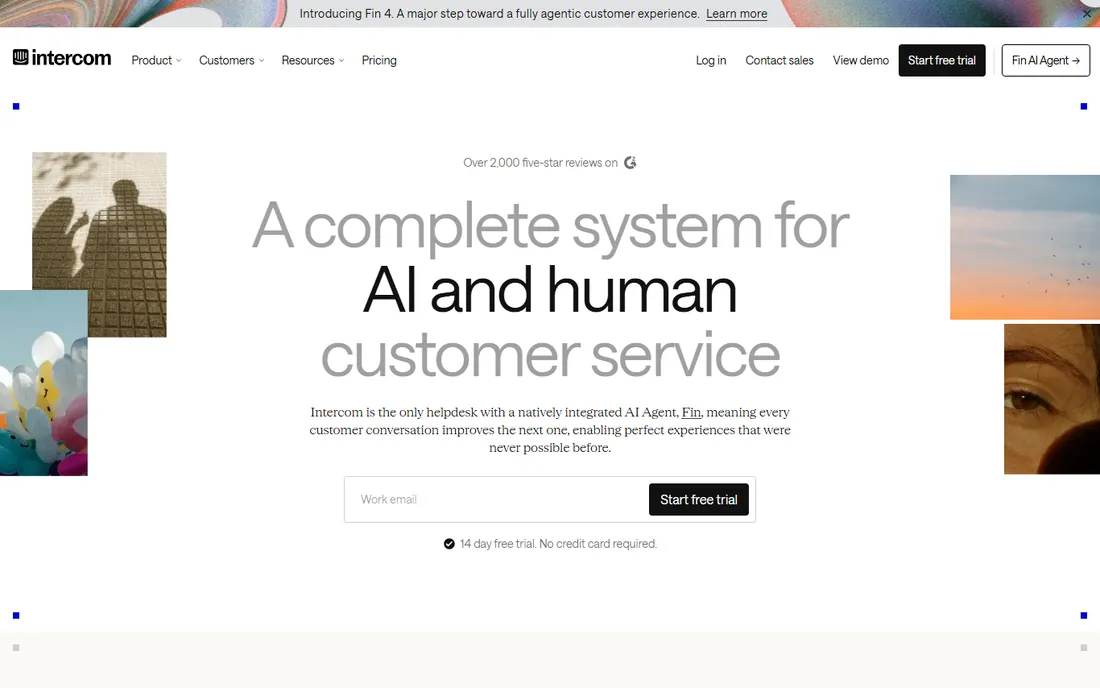
Intercom pioneered conversational support and now leads with Fin, an AI agent that resolves issues using knowledge base content and backend data, escalating with full context. Automation spans the whole support journey.
Cost scales with usage. Intercom fits SaaS and digital businesses where conversational support is the primary channel.
What we like- Fin AI agent resolves complex conversations
- Strong automation across chat, email and voice
- Deep product data integration
Watch out for- Pricing can grow with resolution volume
- The platform rewards committed configuration
Starting priceSee website
Free planNo
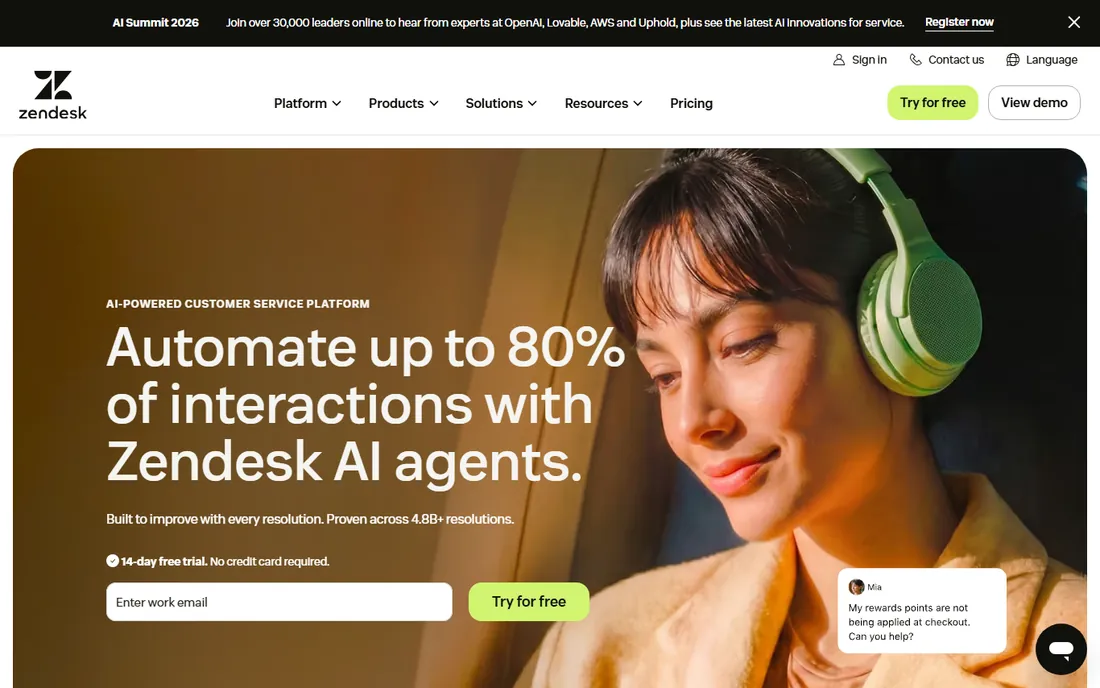
Zendesk integrates AI across the helpdesk: bots deflect tickets, agent copilots summarize and suggest replies, and QA and workforce tools optimize operations. The ecosystem of 1,000-plus apps extends everything.
Advanced AI needs higher tiers. Zendesk fits mid-market to enterprise teams wanting AI inside a complete support suite.
What we like- AI embedded in ticketing, chat, voice and knowledge
- Huge app marketplace
- Proven at enterprise scale
Watch out for- AI features tiered across plans
- The classic interface shows its age
Starting priceSee website
Free planYes
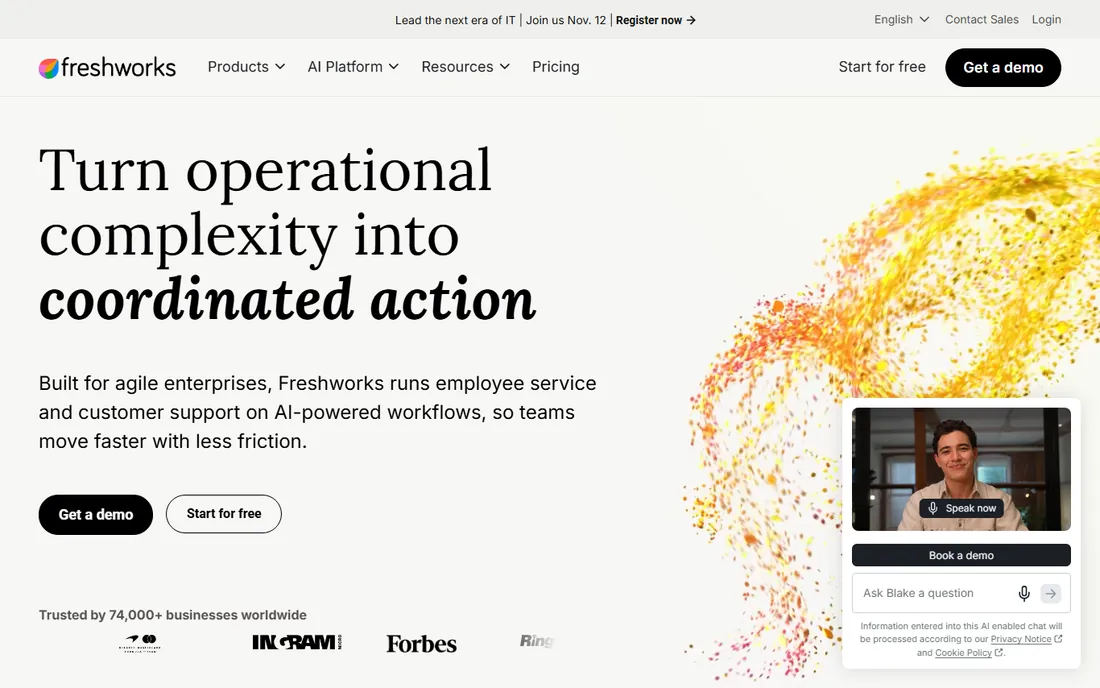
Freshdesk (Freshworks) brings AI to an affordable helpdesk: Freddy AI chatbots, agent assist and smart ticket routing, with a free plan for small teams. Setup is famously quick.
Complex automation needs more. Freshdesk fits SMBs and mid-market teams wanting AI helpdesk value without enterprise pricing.
What we like- Free tier to start
- Freddy AI for bots and agent assist
- Easy setup
- Good value for SMBs
Watch out for- AI depth trails Intercom and Ada
- Enterprise features are thinner
Starting priceSee website
Free planNo
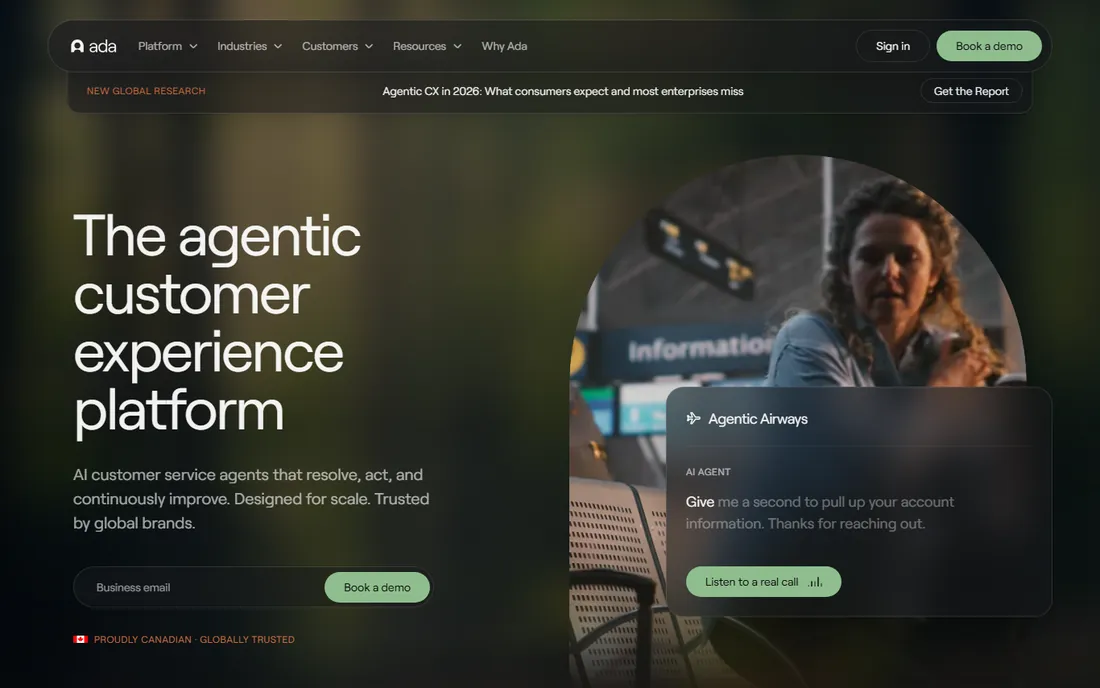
Ada lets non-technical teams build AI agents that resolve inquiries across channels, grounded in company knowledge with guardrails against hallucination. Multilingual support suits global brands.
Content quality decides outcomes. Ada fits enterprises automating high-volume support across languages and channels.
What we like- No-code AI agent builder
- 100-plus languages
- Build once, deploy across messaging, voice and email
- Strong containment rates
Watch out for- Enterprise pricing
- The platform needs content investment to perform
Starting priceSee website
Free planNo
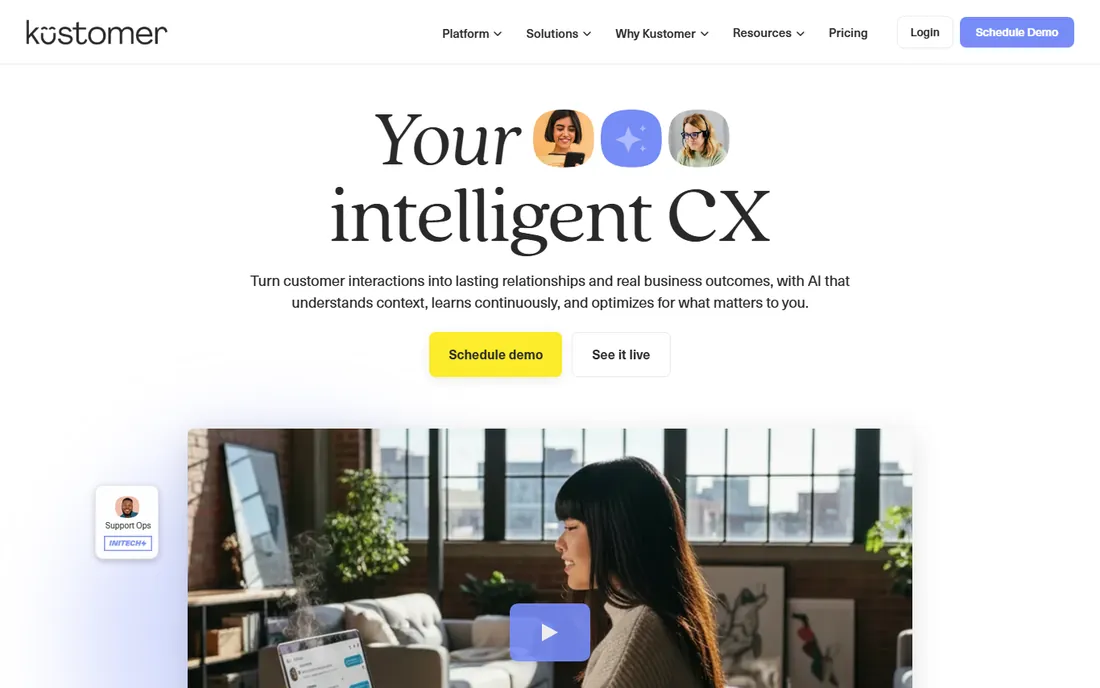
Kustomer rebuilt support around the customer: every conversation, order and event on one timeline, with AI agents resolving issues and humans stepping in with full context. Pricing charges for usage, not seats.
Switching costs are real. Kustomer fits DTC and service brands wanting CRM-first support with AI throughout.
What we like- AI-native platform with connected CRM
- Timeline view of every customer interaction
- Usage-based pricing without per-seat fees
Watch out for- Migration from legacy helpdesks takes effort
- The AI-native positioning is still proving at scale
Starting priceSee website
Free planNo
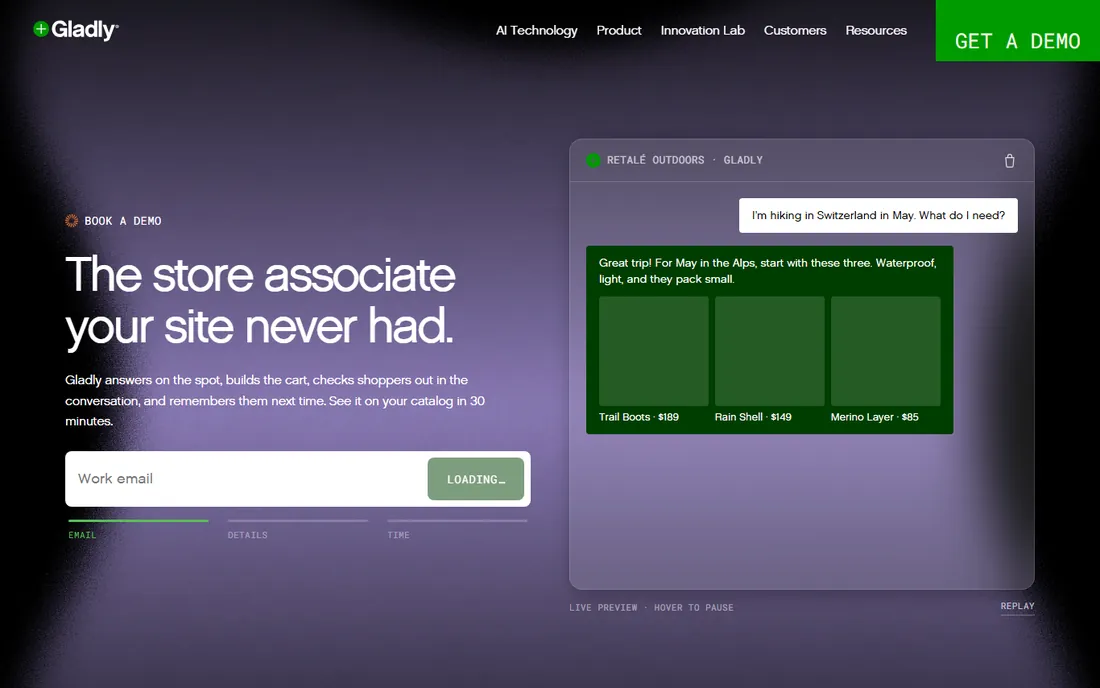
Gladly organizes support around customers, not tickets: conversations continue across channels with full history, and AI helps both self-service and agents. The model suits relationship-driven brands.
Ticket-centric teams must adapt. Gladly fits retailers and service brands where lifetime customer relationships drive revenue.
What we like- People-centered conversations instead of tickets
- Strong omnichannel continuity
- AI assists agents and customers
Watch out for- The no-ticket philosophy requires process change
- Pricing is custom
Starting priceSee website
Free planYes
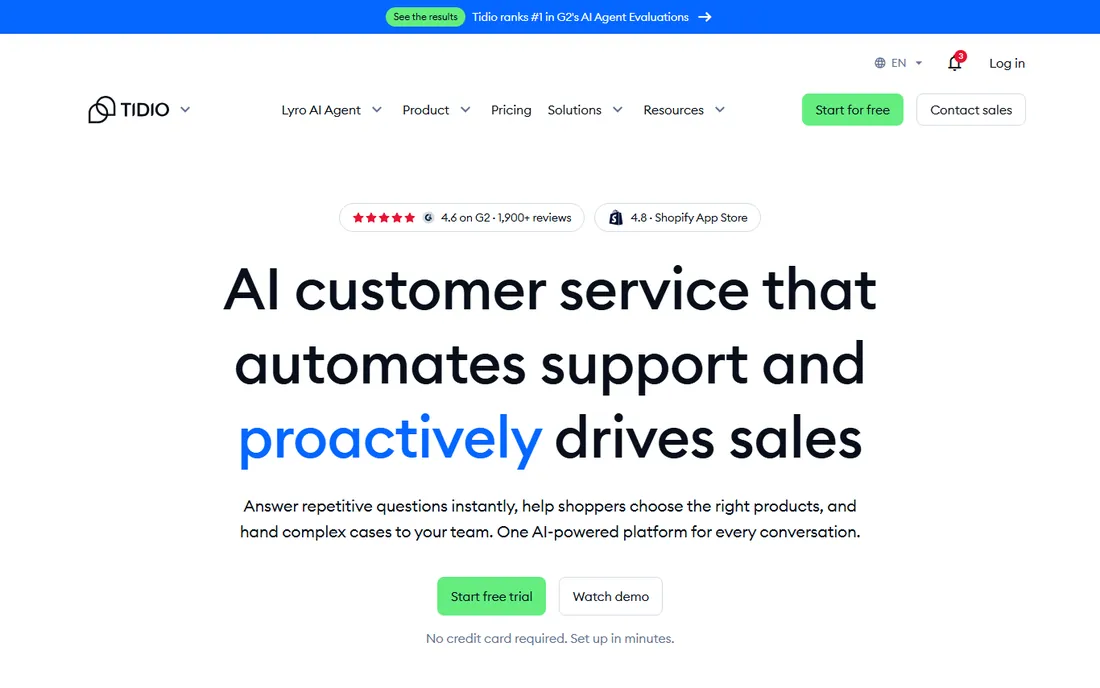
Tidio gives small businesses AI support fast: the Lyro AI agent answers from your content, live chat covers the rest, and automation flows handle proactive messaging. The free plan makes trying it riskless.
Larger operations outgrow it. Tidio fits SMBs and small ecommerce stores starting with AI chat.
What we like- Free plan to start
- Lyro AI agent handles common questions
- Live chat plus helpdesk in one
- Quick to deploy
Watch out for- AI depth is SMB-grade
- Advanced customization is limited
Starting priceSee website
Free planNo
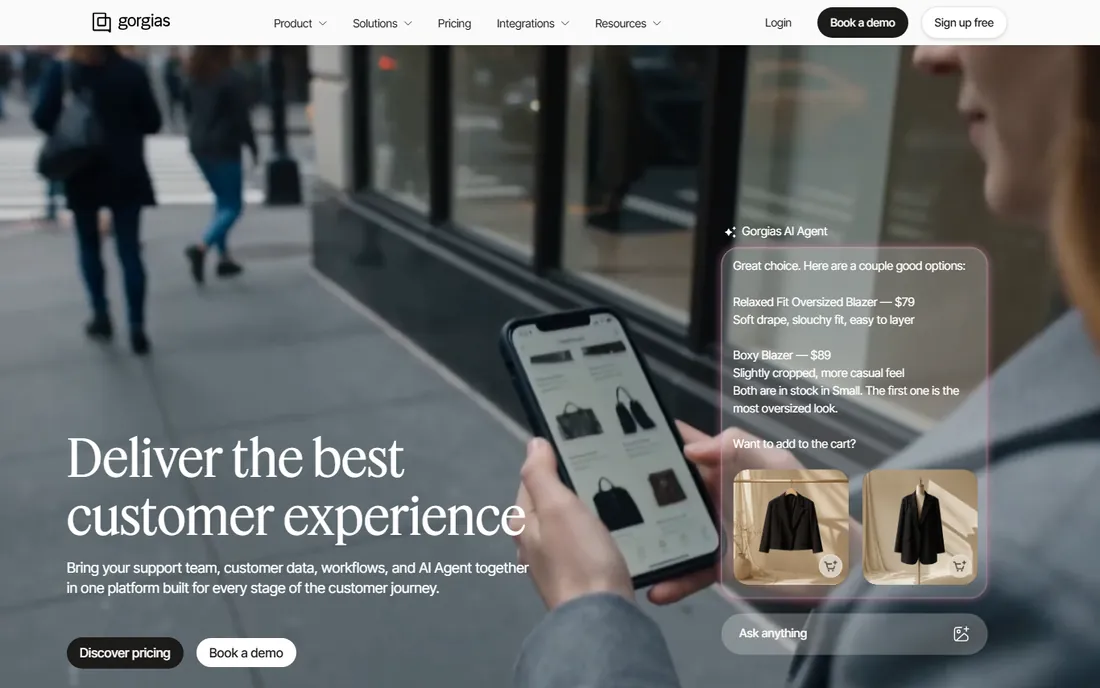
Gorgias ties support to commerce: agents see orders, subscriptions and tracking inside tickets, and automation resolves WISMO and returns without touches. Support's revenue impact becomes measurable.
Non-ecommerce teams get less. Gorgias fits Shopify and ecommerce brands where support and sales intertwine.
What we like- Built for Shopify and ecommerce
- Order data inside tickets
- Automation rules for common issues
- Revenue attribution for support
Watch out for- Ecommerce focus limits other industries
- Pricing scales with ticket volume
What to check before you buy
Measure what you automate. Deflection rate means little if CSAT drops; verify resolution quality and handoff smoothness, not just containment.
Check knowledge grounding: AI agents are only as good as the content they draw on. Confirm escalation paths preserve context. Verify channel coverage matches where your customers actually contact you. Finally, model pricing against conversation volume, since AI resolution pricing behaves differently than seat licenses.
Where automation helps and where it hurts
Support automation has a clear frontier: it excels at speed and scale, and it fails at judgment and emotion. Knowing which side of that line a ticket falls on is the whole game.
Automation wins on the repetitive and the urgent. Password resets, order status, refund policy questions, appointment changes: high-volume, low-ambiguity requests where customers want an answer in seconds, not empathy. It also wins after hours, when the alternative is no response at all. A good bot at 2 a.m. beats a "we will reply within 24 hours" auto-reply.
Automation also wins at triage. Classifying tickets, gathering context, checking account status and routing to the right specialist before a human ever looks at the case cuts handle time dramatically. Many teams get more value from AI-assisted agents than from customer-facing bots, because the human stays in control while the machine does the research.
It loses on the emotional and the novel. Angry customers, edge cases, billing disputes with unusual facts, and anything involving significant money need a human who can read the situation. Forcing these through a bot does not deflect the ticket; it multiplies it, because the customer contacts you again, angrier, through a more expensive channel.
It also loses when it pretends to be human. Customers tolerate bots that identify themselves and hand off gracefully. They do not tolerate bots that waste ten minutes before admitting defeat. Design every automated flow with a visible, one-tap exit to a human, and make the handoff carry the full conversation context so the customer never repeats themselves.
The practical rule: automate the known, staff the unknown. Review your ticket tags quarterly, automate the top categories with clear resolution paths, and keep humans on everything else. Move the frontier gradually as the automation proves itself.
How we chose
We selected support automation platforms with live products and real customer bases, spanning AI-native tools and AI-enhanced helpdesks, using vendor sites, documentation and public reviews. Pricing is quote or usage-based across the category, so all prices are See website. We did not run support conversations.
Measuring whether automation actually works
Automation vendors promise deflection rates and cost savings. Verifying those claims requires measuring the right things, because the easy metrics lie.
Deflection rate needs a strict definition. A conversation that ends without a human is not necessarily resolved: the customer may have given up. Measure resolution, not just deflection, through follow-up surveys and by tracking whether the same customer contacts you again within seven days on the same issue. True deflection is a resolved ticket with no human touch; everything else is theater.
Watch containment quality, not just containment rate. Sample automated conversations weekly and score them: was the answer correct, was the tone appropriate, did the customer get what they needed. A bot with ninety percent containment and a twenty percent error rate is creating future tickets, not preventing them.
Track the handoff experience. When automation escalates, measure time to human response, whether context transferred, and customer satisfaction on escalated tickets specifically. A graceful handoff keeps CSAT stable; a cold handoff tanks it. Many teams find their overall CSAT dips in the first month of automation and recovers once handoffs are tuned.
Measure agent impact, not just ticket impact. Good automation should reduce handle time, increase first-contact resolution and let agents spend more time on complex work. If agents report that the bot sends them worse-prepared customers than before, the triage logic needs work.
Finally, tie it to money honestly. Compare fully loaded cost per resolution before and after, including the automation platform cost, the implementation effort and the ongoing tuning time. Automation that saves agent hours but requires a full-time bot manager may still be worth it at scale, but the math should be explicit.
Frequently asked questions
What is customer support automation?
Using AI chatbots, agent copilots and workflow rules to resolve or route customer inquiries with less human effort, from full self-service to assisted agents.
What is the difference between Intercom and Zendesk?
Intercom is conversational-first with the Fin AI agent at its core. Zendesk is a full helpdesk suite with AI embedded across ticketing, chat, voice and knowledge.
How does Ada differ from a chatbot?
Ada builds AI agents grounded in company knowledge with guardrails, aiming to resolve complete inquiries rather than just answer FAQs or collect contact details.
What should AI containment rates be?
It depends on inquiry complexity. Simple FAQ-heavy support can automate 60 to 80 percent; complex technical support may automate far less. Quality matters more than the rate.
Can small businesses afford these tools?
Yes. Tidio and Freshdesk offer free plans, and Gorgias prices for ecommerce SMBs. Enterprise AI platforms start higher but scale down poorly.
How do we keep AI from giving wrong answers?
Ground agents in verified knowledge sources, set confidence thresholds for escalation, monitor conversations with QA sampling, and keep humans in the loop for consequential actions.
What is a good deflection rate for support automation?
It depends on the definition. Honest deflection (resolved with no human touch and no follow-up contact within a week) of twenty to forty percent is a strong result for most support organizations. Claims above sixty percent usually measure containment rather than resolution, meaning customers gave up rather than got help. Always pair deflection with resolution and satisfaction metrics.
How long does it take to train a support AI?
A basic bot with scripted answers can launch in days; an AI trained on your knowledge base and ticket history typically needs two to six weeks of tuning before it performs reliably. The biggest time sink is usually the knowledge base itself: the AI is only as good as the articles it draws on. Plan a content cleanup sprint before training begins.
Sources we checked (8)
- https://www.intercom.com/
- https://www.zendesk.com/
- https://www.freshworks.com/
- https://www.ada.cx/
- https://www.kustomer.com
- https://www.gladly.ai/get-started/
- https://www.tidio.com
- https://www.gorgias.com/
Is your product missing or out of date?
We review this list regularly. Vendors can request a listing, send updated pricing or ask about featured placement.

Shihab Mia · Founder, Rankite
Shihab has 5+ years in B2B and SaaS SEO. He writes Rankite's software buying guides from pricing pages, documentation and public user reviews. More about Shihab.