How we make this list: we compare pricing pages, product documentation and public user reviews. Rankite is independent; if a vendor ever pays for a featured spot, that listing is clearly labeled Partner.
Key takeaways
- Banking CRMs split into three camps: horizontal CRM giants with banking editions (Salesforce, Microsoft, Pega, Creatio), banking-native platforms (nCino, Temenos, Backbase), and generalists that smaller institutions adopt (HubSpot, SugarAI).
- Salesforce is repositioning Financial Services Cloud around AI agents (Agentforce Financial Services), and SugarCRM has rebranded to SugarAI. Evaluate the current brands.
- nCino and Temenos run deeper than CRM: they cover lending workflows, onboarding, and core-adjacent operations, which matters if you want one platform.
- Pricing is quote-based across this category except HubSpot's published plans. Budget for enterprise sales cycles and implementation projects, not credit-card signups.
- Core banking integration decides success or failure. Every shortlist should start with which cores each vendor already connects to.
Quick comparison
| Tool | Best for | Starting price | Free plan |
|---|
 Salesforce Financial Services Cloud Salesforce Financial Services Cloud | large banks wanting the deepest partner ecosystem | See website | Free trial |
 nCino nCino | banks that want CRM plus lending on one platform | See website | No |
 Temenos Temenos | global and large banks needing front-to-core coverage | See website | No |
 Backbase Backbase | digital-first engagement, onboarding, and servicing | See website | No |
 Microsoft Dynamics 365 Microsoft Dynamics 365 | banks already standardized on Microsoft 365 and Azure | See website | Free trial |
 Pega Pega | top-tier banks needing AI-driven engagement and service | See website | No |
 Creatio Creatio | mid-size banks wanting no-code CRM flexibility | See website | No |
 SugarAI SugarAI | mid-market banks wanting a simpler, AI-assisted CRM | See website | No |
 HubSpot HubSpot | community banks and credit unions getting started with CRM | See website | Yes |
Is your product missing or out of date?
We review this list regularly. Vendors can request a listing, send updated pricing or ask about featured placement.
The best CRM software for banks
#1
Salesforce Financial Services Cloud
Best for: large banks wanting the deepest partner ecosystem
Visit salesforce.com
Starting priceSee website
Free planFree trial
Salesforce Financial Services Cloud is the default answer for large banks, and it earns that position. The banking edition adds a financial-services data model on top of the standard CRM: households instead of just contacts, financial accounts, goals-based planning, referrals that route across lines of business. Salesforce says 24,000 financial services institutions run on its platform, which translates into the deepest partner ecosystem in the category. If you need an integration, someone has probably built it.
Two things to know going in. First, the product is being repositioned as Agentforce Financial Services, with AI agents woven into banker workflows; the underlying platform is the same, but expect the branding to keep shifting. Second, this is the most expensive option to buy and to implement, and the real cost is the SI partner engagement, not the license. For banks that want maximum capability and ecosystem depth and can fund the project properly, it is the safest enterprise choice.
What we like- Purpose-built banking data model with householding
- Massive partner and ISV ecosystem
- Free trial available to start evaluating
Watch out for- Enterprise pricing by quote with significant total cost
- Implementation is a major project
- The Agentforce rebrand adds naming confusion
#2
nCino
Best for: banks that want CRM plus lending on one platform
Visit ncino.com
Starting priceSee website
Free planNo
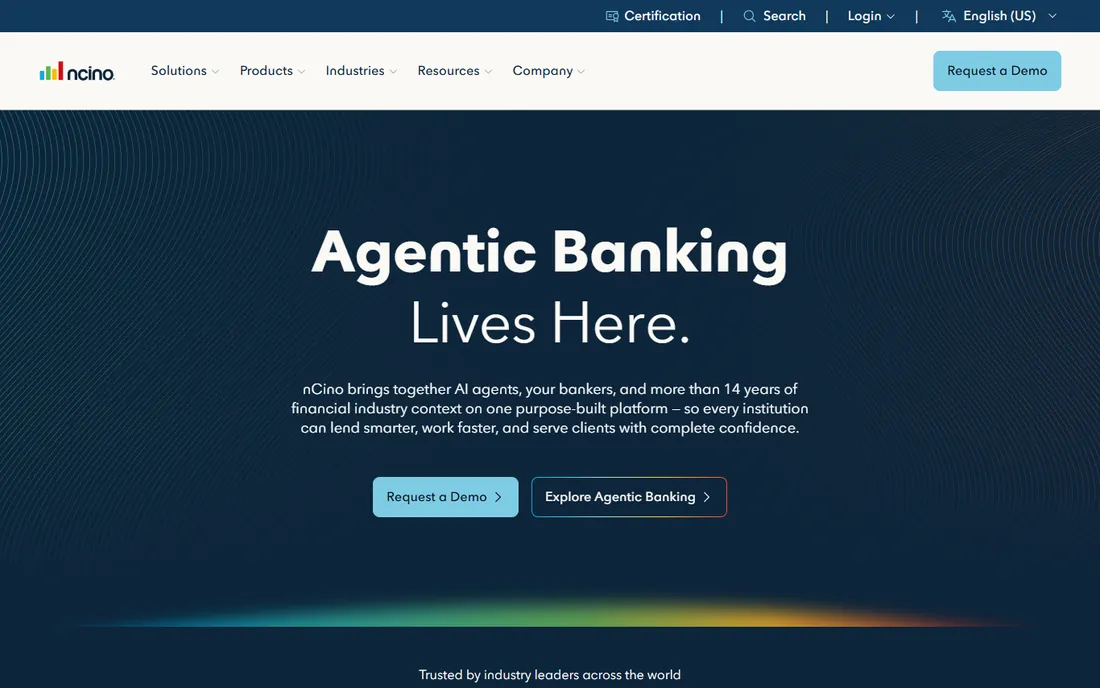
nCino calls itself the Bank Operating System, and the name is accurate about scope. Where Salesforce FSC is a CRM that banks extend, nCino is a banking platform that includes CRM-like relationship views alongside commercial lending, consumer lending, mortgage, account opening, and onboarding. It is built on the Salesforce platform, which gives it ecosystem compatibility while keeping the banking workflows native.
The company reports more than 2,700 customers worldwide and has moved aggressively into AI agents, launching role-based Digital Partners for executive, analyst, service, processor, and client roles. For a bank whose core pain is fragmented lending and onboarding rather than marketing automation, nCino covers the operational half that pure CRMs leave to integrators. The trade-off is breadth outside lending: if your primary need is campaigns and branch marketing, the horizontal CRMs go further.
What we like- Single platform from onboarding through loan lifecycle
- 2,700+ institutional customers
- New role-based AI agents for bankers
Watch out for- Built on the Salesforce platform, so Salesforce licensing is in the stack
- Lending-first, less of a pure marketing CRM
- Enterprise sales cycle
#3
Temenos
Best for: global and large banks needing front-to-core coverage
Visit temenos.com
Starting priceSee website
Free planNo
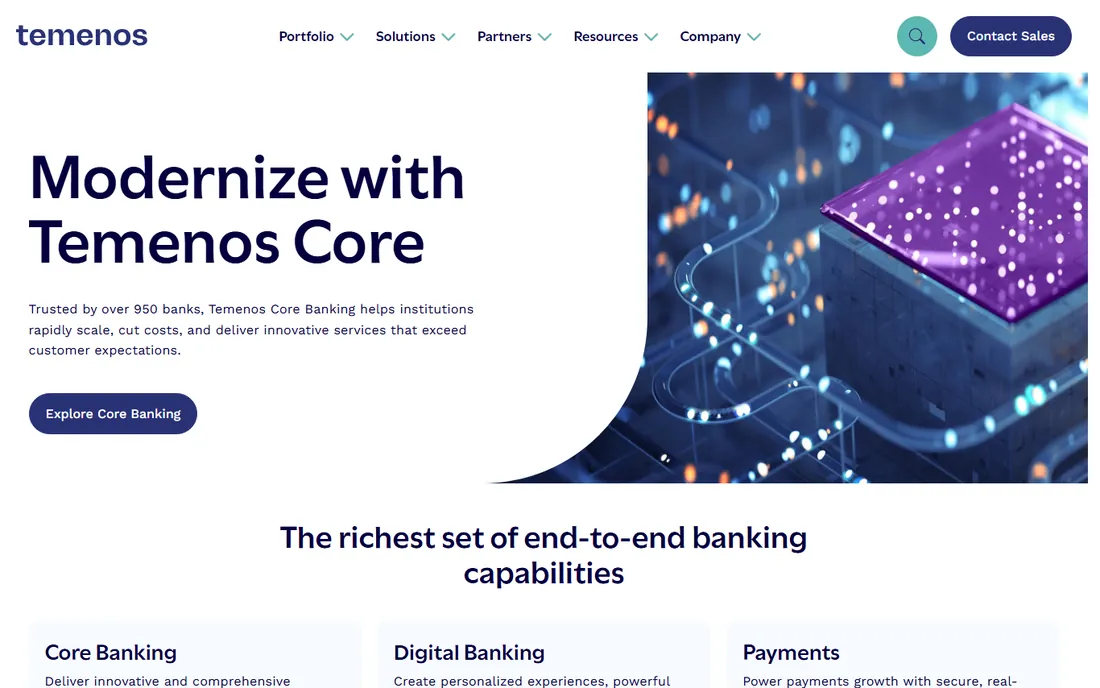
Temenos is the world's largest banking software vendor by client count, and its CRM story is part of a much bigger platform: front office digital banking, core banking, payments, and wealth management. More than 3,000 banks run Temenos, including 41 of the top 50 banks globally, which makes it the choice when the project is really about modernizing the whole technology stack with CRM as one workstream.
That scope is both the strength and the warning. Nobody buys Temenos for CRM alone; you buy it when the core, the digital channels, and the relationship tooling need to move together. The composable architecture lets banks adopt modules progressively rather than ripping everything out at once. For a large bank planning a multi-year transformation, Temenos is the heavyweight option. For a mid-size bank that just needs better banker tooling, it is more than the problem requires.
What we like- Front office, core, payments, and wealth in one vendor
- 3,000+ banks including 41 of the top 50
- Composable SaaS deployment options
Watch out for- Full platform scope means long, expensive implementations
- Overkill for a CRM-only need
- Sales process is enterprise-heavy
#4
Backbase
Best for: digital-first engagement, onboarding, and servicing
Visit backbase.com
Starting priceSee website
Free planNo
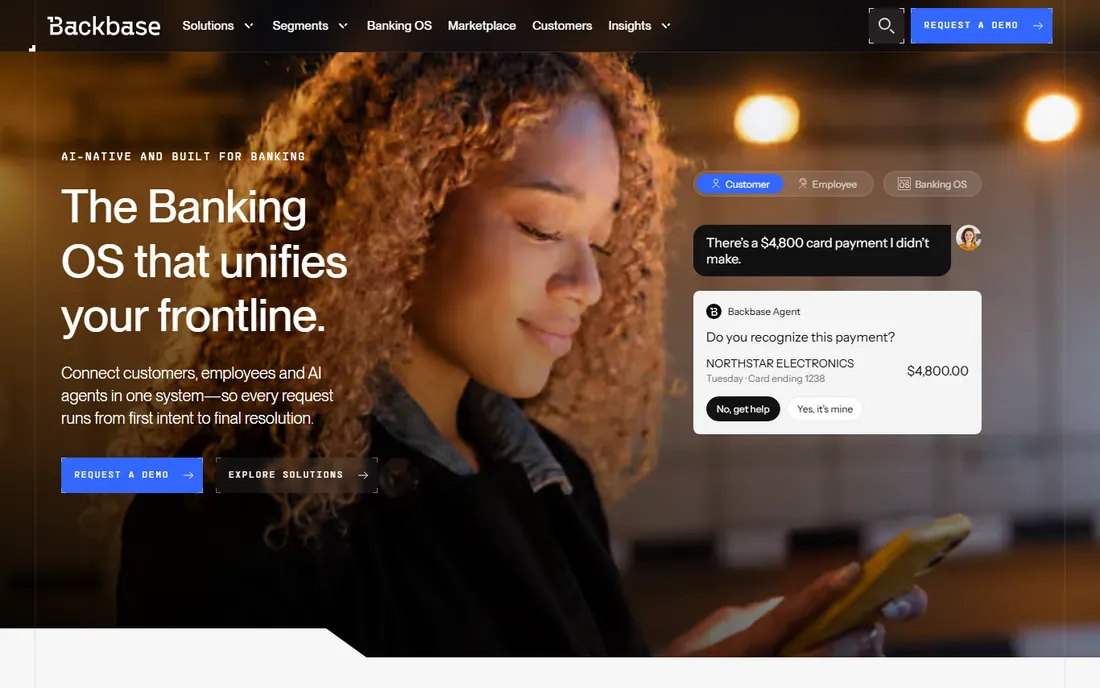
Backbase built the Engagement Banking Platform category: the digital layer that sits over the core and gives customers and employees modern journeys for onboarding, servicing, lending, and investing. The company now frames itself as an AI-native Banking OS for the whole frontline, with conversational banking, relationship intelligence, and customer operations as its four solution areas. More than 120 leading banks run on it, and Forrester named it a leader in the Q2 2026 Digital Banking Engagement Platforms Wave.
The positioning matters for CRM buyers. Backbase is not a system of record; it is the experience and orchestration layer that makes the bank feel like one institution to the customer and the banker. If your core is staying put but your digital experience and banker tooling are a decade behind, Backbase modernizes the front without a core conversion. Pair it with a core modernization plan (or Temenos) for the full stack.
What we like- Purpose-built Engagement Banking Platform
- Named a 2026 Forrester Wave leader
- Strong retail and business banking journey library
Watch out for- Engagement layer, not a core system
- Pricing is enterprise quote-only
- Implementation needs solid digital leadership on the bank's side
Starting priceSee website
Free planFree trial
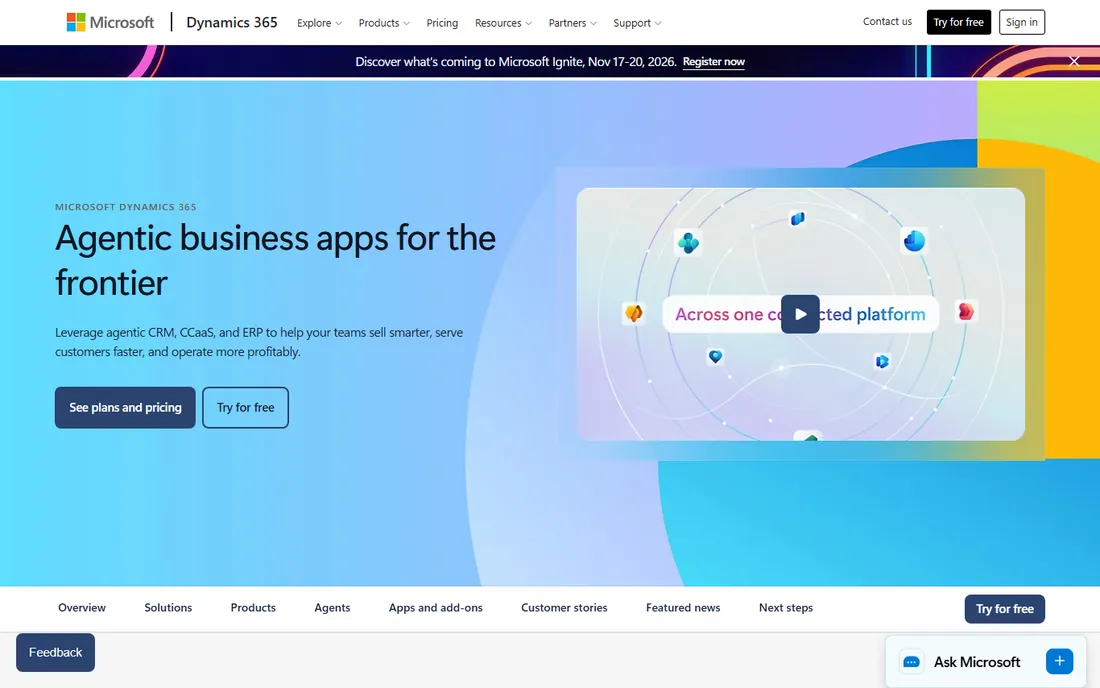
For a bank that lives in Microsoft 365, Dynamics 365 is the path of least resistance. Bankers work in Outlook and Teams, and Dynamics puts the relationship data inside those tools instead of a separate login. The platform covers sales, service, and marketing with AI agents (Copilot) embedded, and Microsoft's compliance certifications and data residency controls fit regulated industries well.
The honest caveat is that Dynamics is a horizontal CRM. The banking-specific data models, householding, and regulatory workflows that Salesforce ships natively come through Microsoft partners and ISVs in the Dynamics world. That ecosystem is large, but it adds a vendor-management layer to the project. If your bank's IT strategy is Microsoft-first and you want CRM that your staff adopts without retraining, Dynamics is the natural pick. If you want banking workflows out of the box, start with Salesforce or nCino.
What we like- Deep integration with Microsoft 365, Teams, and Azure
- Strong compliance and data residency story
- Free trials for evaluation
Watch out for- Banking industry features come via partners, not out of the box
- Customization projects can sprawl
- Licensing across modules gets complex
#6
Pega
Best for: top-tier banks needing AI-driven engagement and service
Visit pega.com
Starting priceSee website
Free planNo
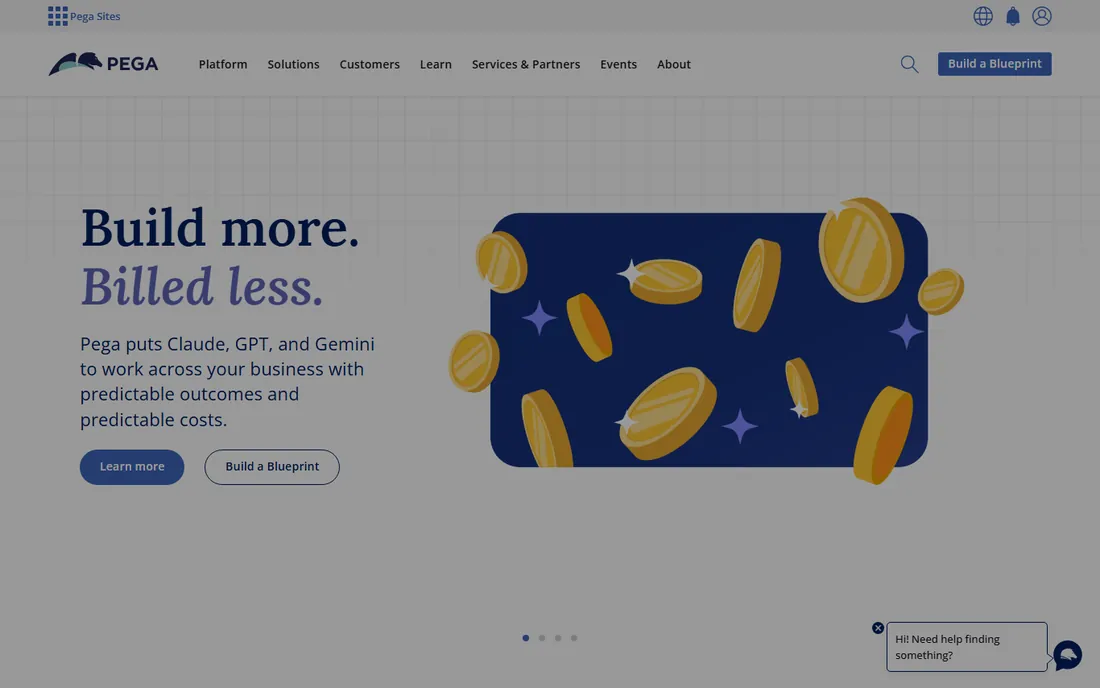
Pega occupies a distinctive corner: it is less a traditional CRM than a customer engagement and decisioning platform that banks use to orchestrate the next best action across every channel. The company says its Customer Decision Hub analyzes billions of data points to serve real-time recommendations, and its banking footprint is concentrated at the top of the market, with claims of seven of the top ten global banks as clients.
Banks typically deploy Pega for service transformation, onboarding, and KYC-heavy processes where its case management and low-code automation shine. The platform's governance and auditability appeal to compliance-conscious institutions. This is not a tool for a 10-branch community bank; it is for institutions with the scale to fund a platform team and the complexity to need real-time decisioning. If that describes your bank, Pega's depth in engagement is unmatched.
What we like- Real-time decisioning with billions of next-best-actions monthly
- Deep roots in large-bank service operations
- Strong low-code process automation
Watch out for- Enterprise-only pricing and delivery
- Platform complexity demands skilled teams
- Overkill for community banks
Starting priceSee website
Free planNo
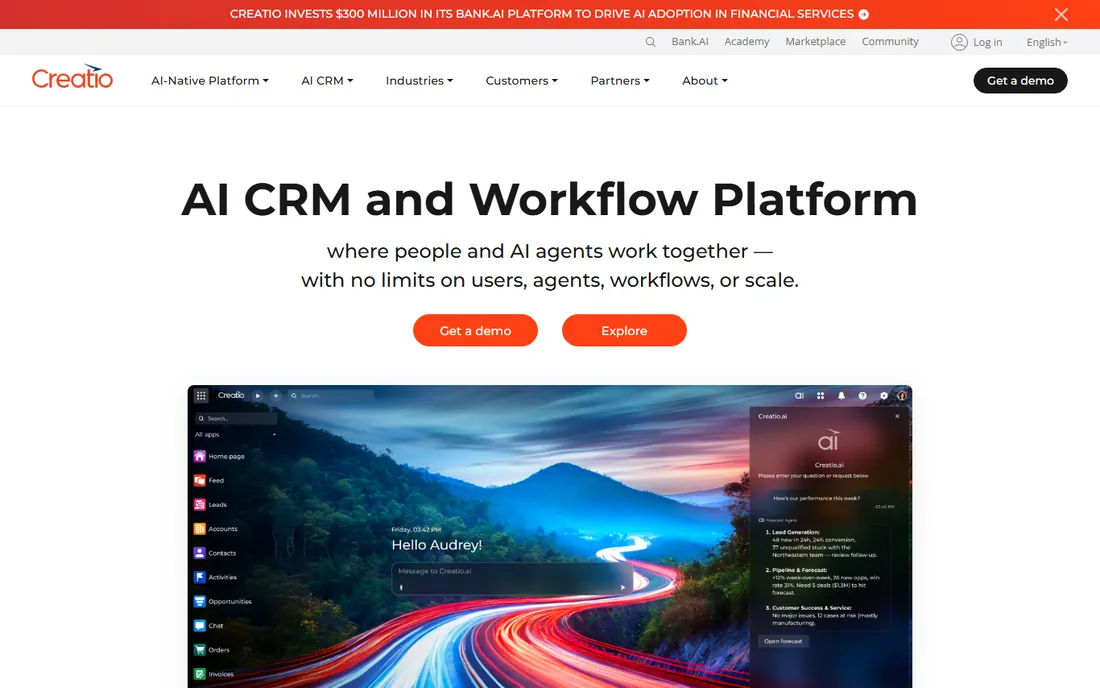
Creatio pitches itself as the AI-native CRM and workflow platform with no-code at its core, and it is making an explicit play for banking. The company launched bank.ai as a banking-focused destination, and its partner network is expanding from credit unions into banks across North America. Customers number in the thousands across more than 100 countries, with industry workflows for 20 verticals including financial services.
The appeal for a mid-size bank is agility. Where Salesforce and Pega implementations run through large SI firms, Creatio's no-code designers let the bank's own teams configure processes and adapt them as regulations and products change. The trade-off is ecosystem depth: fewer prebuilt banking integrations and a smaller partner bench than the market leaders. For a bank that values the ability to change the system itself over the size of the app marketplace, Creatio deserves a demo.
What we like- No-code platform lets business teams build workflows
- Active banking push with bank.ai
- Recognized across Gartner and Forrester reports
Watch out for- Smaller banking install base than the giants
- Ecosystem is thinner than Salesforce or Microsoft
- Enterprise pricing by quote
#8
SugarAI
Best for: mid-market banks wanting a simpler, AI-assisted CRM
Visit sugarai.com
Starting priceSee website
Free planNo
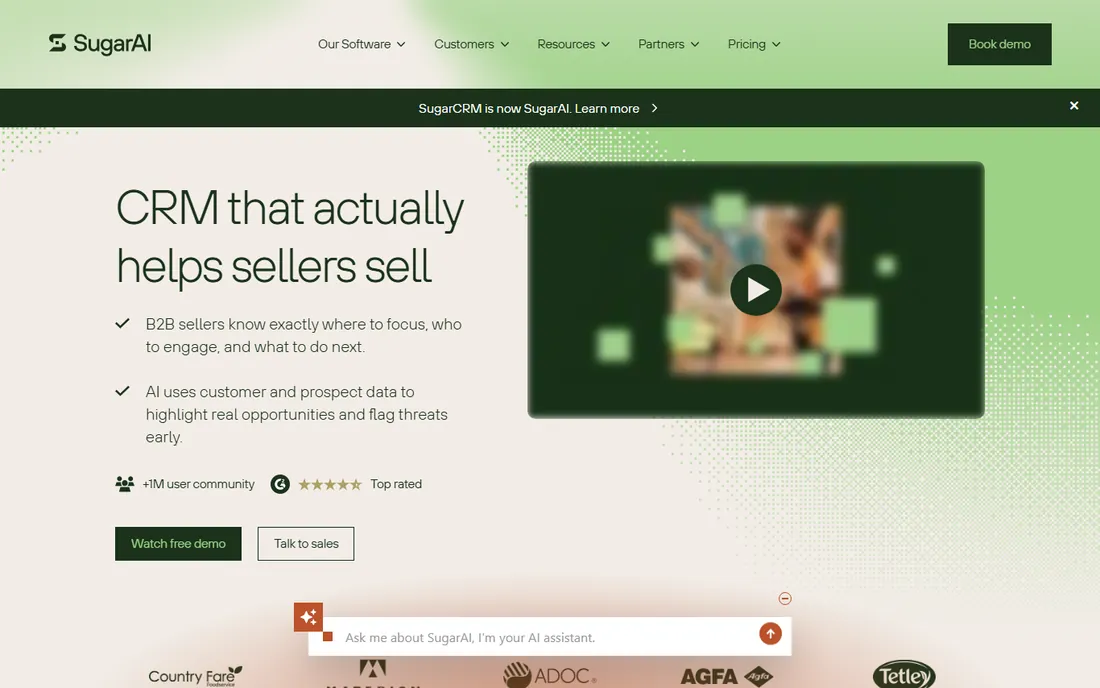
SugarAI is the new name for SugarCRM, and the rebrand signals where the product is going: AI-assisted selling with automatic opportunity surfacing and early risk flagging, aimed at teams that find Salesforce bloated. The company reports more than 4,000 companies in 120-plus countries on the platform, and its financial services credentials include deployments like ESAF Small Finance Bank in India, serving over 9 million customers.
For a mid-market bank, the pitch is straightforward: a CRM your bankers will actually use, with AI that highlights where to focus instead of dashboards they ignore. It will not match Salesforce's banking data model or nCino's lending depth, but it also will not demand their budgets or timelines. If your last CRM failed on adoption rather than features, SugarAI's simplicity-first approach is worth serious consideration. Just make sure everyone on the evaluation knows the new name.
What we like- Streamlined seller-focused experience with AI opportunity surfacing
- Lower complexity than enterprise platforms
- Proven in financial services deployments
Watch out for- Brand transition from SugarCRM may confuse evaluators
- Smaller banking-specific feature set
- Quote-based pricing
#9
HubSpot
Best for: community banks and credit unions getting started with CRM
Visit hubspot.com
Starting priceSee website
Free planYes
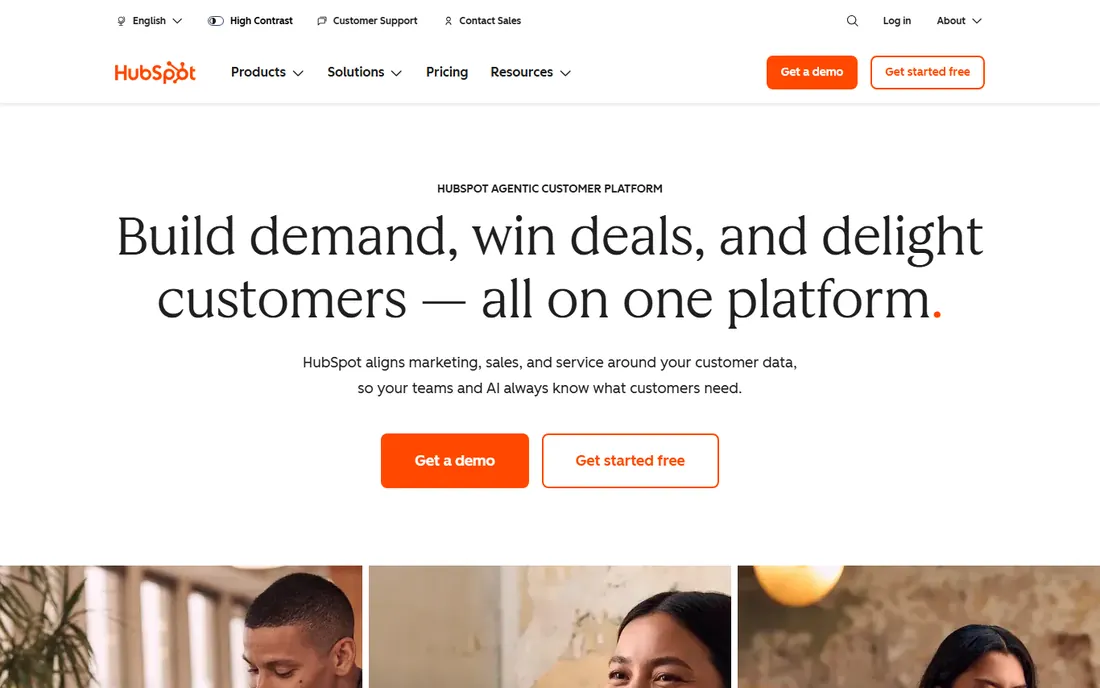
HubSpot is the outlier here, and deliberately so. It is not a banking CRM; it is a general CRM with a genuinely free tier and the gentlest learning curve in the industry. For a community bank or credit union that has never had a CRM and needs to start capturing relationships, running deposit campaigns, and tracking referrals, HubSpot gets you live in weeks instead of quarters.
The limitations are real and should be named. There is no banking data model, no householding, no built-in compliance workflow, and core banking integration is DIY. As the institution grows into serious lending workflows and regulatory demands, most outgrow it toward nCino or Salesforce. But as a starting point for smaller institutions, or as the marketing layer alongside a core banking platform, HubSpot's free CRM and published pricing make it the lowest-risk first step in this list.
What we like- Free CRM tier to start immediately
- Easiest adoption curve in this list
- Strong marketing automation for deposit and loan campaigns
Watch out for- Not built for banking
- Lacks financial-services data models and compliance tooling
- Scaling to enterprise banking needs gets expensive
How we chose
We researched vendor homepages, product documentation, and company announcements, opening each homepage to confirm the current brand and URL. We cross-checked banking fit and scale claims against industry sources including Forrester and Gartner recognitions, company press releases, and banking trade coverage. Where renames occurred (SugarCRM to SugarAI, Salesforce's Agentforce Financial Services positioning), we list the current name and note the change once. Pricing in banking software is quote-based across the board, so we say so rather than inventing numbers. We did not test any of these tools hands-on.
What to settle before you shortlist
Name the job: marketing, service, lending, or all three
Bank CRMs fail when the buying team never agrees on the primary job. Salesforce and HubSpot lead on marketing and relationship management. nCino leads on lending and onboarding operations. Pega leads on service and real-time decisioning. Temenos and Backbase lead when the project includes digital channels. Write down the one workflow that must improve in year one, and weight the evaluation toward it.
Core integration is the whole project
A bank CRM without core banking data is an expensive contact manager. Before you fall in love with a demo, ask each vendor which cores they integrate with out of the box, whether the integration is real-time or batch, and for reference customers on your specific core. This single question eliminates more vendors than any feature comparison.
Budget for the implementation, not just the license
Every enterprise option here sells through a services engagement, and the implementation typically costs multiples of the first year's license. Ask for fixed-scope proposals, reference customers at your asset size, and a realistic timeline. The vendors that can name three banks your size that went live on schedule are the ones telling the truth.
Plan for the examiner
Banking is regulated, and your CRM holds the customer record the examiner will ask about. Ask about audit trails, data residency, access controls, and how the vendor supports your compliance reporting. Microsoft and Salesforce lead on certifications; every vendor should answer with specifics, not assurances.
The AI agent wave is reshaping bank CRM
Every vendor in this list spent 2026 repositioning around AI agents, and for banks the shift is more than marketing. Salesforce's Agentforce Financial Services, nCino's role-based Digital Partners, Backbase's AI-native Banking OS, and Pega's predictable AI agents all point to the same future: the CRM stops being a screen bankers fill in and starts being a workforce that does the filling, the follow-up, and the first draft of the advice.
For buyers, this changes the evaluation. The question is no longer just whose data model fits banking, but whose agents can be governed. Banks need AI that operates inside policy, with audit trails an examiner can read and guardrails that block noncompliant actions before they happen. Ask every vendor to show the governance layer, not just the agent demo. The vendors that treat compliance as the feature, rather than the footnote, are the ones built for banking.
Frequently asked questions
What is the best CRM for a bank?
It depends on the bank's size and primary need. Large banks typically choose Salesforce Financial Services Cloud or nCino; global institutions with core modernization plans look at Temenos; digital-first banks evaluate Backbase; Microsoft-centric banks choose Dynamics 365. Community banks often start with HubSpot or SugarAI. There is no single best option.
How much does banking CRM software cost?
Enterprise banking CRMs are quote-based, typically priced per user per month with implementation services on top. Expect significant total cost for Salesforce, nCino, Temenos, or Pega once implementation is included. HubSpot publishes its pricing and offers a free CRM tier, making it the only budget-transparent option in this list.
Can a bank just use Salesforce or HubSpot instead of a banking-specific CRM?
Yes, with caveats. Salesforce's Financial Services Cloud is banking-specific, so it qualifies directly. Generic HubSpot works for small institutions but lacks banking data models, householding, and compliance workflows, so most banks outgrow it as regulatory and lending complexity increases.
What is the difference between nCino and a traditional CRM?
nCino is a bank operating system that includes relationship views plus lending, onboarding, and account opening workflows. A traditional CRM manages relationships, campaigns, and service. Banks often use both: nCino for the operational lending lifecycle and a CRM for marketing and cross-sell, though nCino covers significant CRM ground on its own.
How long does a bank CRM implementation take?
Typically six to eighteen months for enterprise platforms, depending on core integration complexity, data migration, and the number of lines of business. Smaller HubSpot or SugarAI deployments can go live in weeks. Ask vendors for reference customers at your asset size and their actual go-live timelines.
What should a bank ask about AI agents in CRM demos?
Ask how agents are governed: what policies constrain them, whether every agent action is logged in an audit trail, how noncompliant actions are blocked, and whether sensitive data is exposed to public models. Then ask for a banking-specific agent workflow shown live, not a slide.
Sources we checked (11)
- https://www.salesforce.com/financial-services/cloud/
- https://www.ncino.com
- https://temenos.com/
- https://backbase.com/
- https://dynamics.microsoft.com/en-us/
- https://www.pega.com
- https://www.creatio.com
- https://sugarai.com/
- https://hubspot.com/
- https://en.wikipedia.org/wiki/SugarCRM
- https://markets.financialcontent.com/stocks/article/bizwire-2025-7-31-esaf-small-finance-bank-selects-sugarcrm-to-power-customer-relationship-management-and-digital-banking-for-over-9-million-indian-customers
Is your product missing or out of date?
We review this list regularly. Vendors can request a listing, send updated pricing or ask about featured placement.

Shihab Mia · Founder, Rankite
Shihab has spent more than a decade helping SaaS and e-commerce brands grow through search. He writes Rankite's software buying guides from pricing pages, documentation and public user reviews. More about Shihab.