How we make this list: we compare pricing pages, product documentation and public user reviews. Ratings come from G2, Capterra or Trustpilot, with the date we checked them.
Key takeaways
- AWS remains the largest cloud provider with about 28 percent of the infrastructure market in mid 2026, ahead of Azure at about 20 percent and Google Cloud at about 15 percent.
- The three big clouds win on service range and global reach. They also win on billing complexity, so small teams often pay for capacity they never use.
- DigitalOcean, Vultr, and Akamai Cloud sell plain virtual machines with predictable prices, starting at a few dollars a month.
- Oracle Cloud has the most generous free tier in the industry and the cheapest data egress, which matters more than headline compute prices.
- The cheapest entry virtual machine rarely predicts your monthly bill. Storage, bandwidth, and managed services decide the real total.
Quick comparison
| Tool | Best for | Starting price | Free plan |
|---|
 Amazon Web Services | Widest service range and global scale | See website | Yes |
 Microsoft Azure | Microsoft centred enterprises and hybrid cloud | See website | No |
 Google Cloud | Data, Kubernetes, and AI workloads | See website | Yes |
 Oracle Cloud | Databases and low egress costs | Free | Yes |
 IBM Cloud | Regulated and hybrid enterprise workloads | See website | Yes |
 DigitalOcean | Simple projects for developers and small teams | $4 per month | No |
 Vultr | Low cost compute in many regions | $2.50 per month | No |
 Akamai Cloud | Predictable virtual machines and media delivery | $5 per month | No |
Is your product missing or out of date?
We review this list regularly. Vendors can request a listing, send updated pricing or ask about featured placement.
The best cloud hosting companies
Starting priceSee website
Free planYes
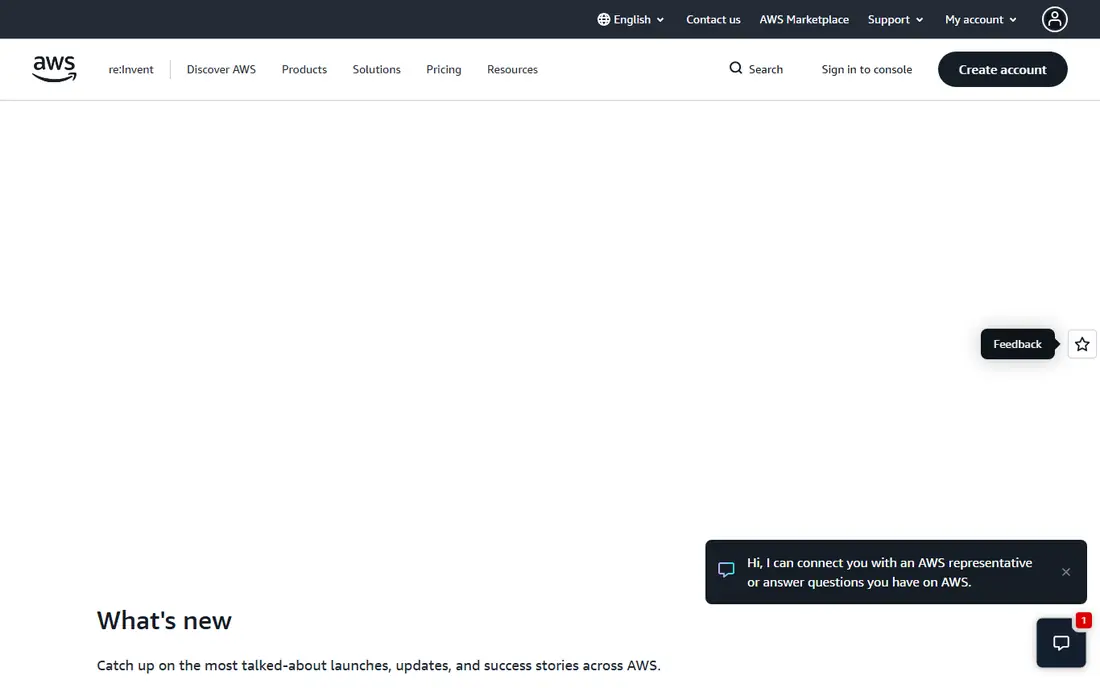
AWS invented the public cloud market and still leads it, with roughly 28 percent share in mid 2026 reporting. Whatever a team needs, virtual machines, managed databases, queues, AI models, satellite ground stations, AWS probably sells it. That range is why enterprises standardise on it and why most cloud engineers learn it first.
The cost of range is complexity. An AWS bill is a line item puzzle, and data leaving the platform costs about $0.09 per GB after the first 100 GB each month. New accounts get a credit based free plan, which softens the start. For a platform that must scale anywhere and do anything, AWS remains the default.
What we like- Largest service catalogue in cloud, from compute to AI
- The most regions and the deepest partner network
- Free plan gives new accounts credits to start
- Hiring pool for AWS skills is the biggest anywhere
Watch out for- Pricing is famously hard to predict
- Egress at about $0.09 per GB after 100 GB free
- Console and IAM have a steep learning curve
- Support plans cost extra
Starting priceSee website
Free planNo
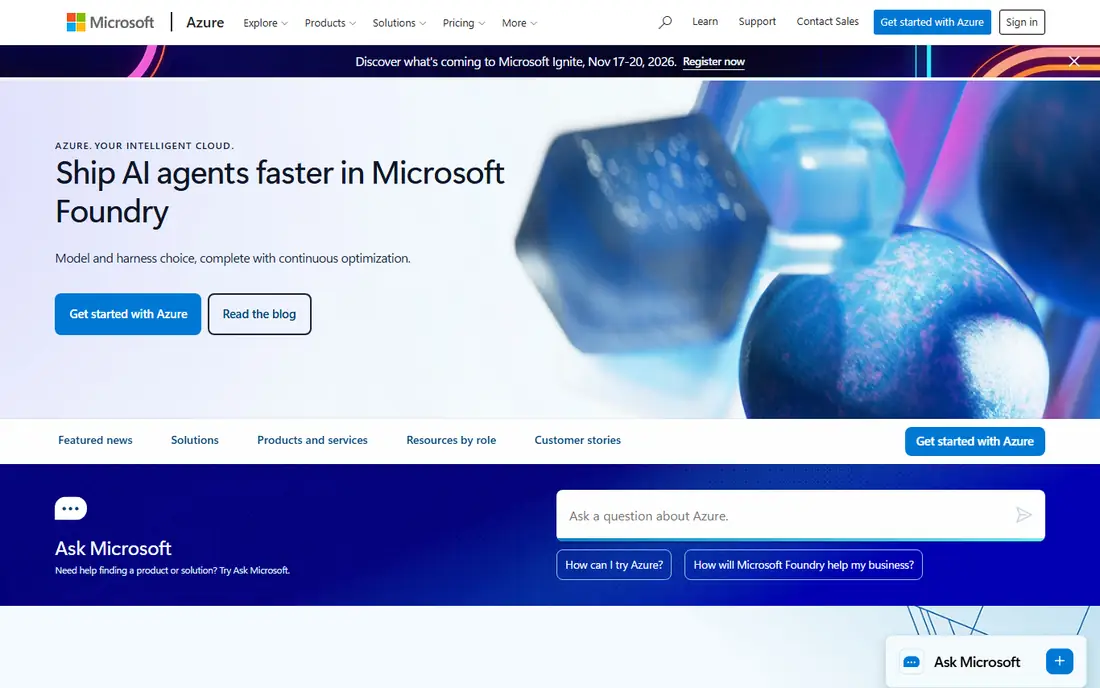
Azure is the cloud of the Microsoft world. Companies that run Windows Server, SQL Server, and Microsoft 365 get licensing and identity benefits here that rivals cannot match, and Azure's hybrid tools manage servers that stay on premises as if they were in the cloud. It holds about a fifth of the infrastructure market and has been the fastest of the big three to sell AI capacity.
Azure gives new accounts a $200 credit for the first 30 days rather than a standing free plan, so this guide marks free plan as No. For a Microsoft house building its cloud estate, Azure is usually the shortest path, and its enterprise agreements make procurement simple.
What we like- Best fit for Windows, Active Directory, and Microsoft 365 estates
- Strong hybrid story with Azure Arc and Stack
- About 20 percent market share and growing in AI
- Enterprise agreements fold into existing Microsoft contracts
Watch out for- Portal and naming can confuse newcomers
- Egress about $0.087 per GB after 100 GB free
- Service quality varies between product teams
- Discount programs reward commitment, not flexibility
Starting priceSee website
Free planYes
Google Cloud is the data and containers cloud. Google created Kubernetes, and its managed version, GKE, is still the one rivals are measured against. BigQuery made large scale analytics ordinary, and the company's AI research shows up in Vertex AI and its TPU hardware. With about 15 percent market share, it is the smallest of the big three and often the most technically admired.
New accounts get $300 of credit for 90 days and an always free e2-micro virtual machine in US regions, a real free plan for small workloads. Watch egress pricing, which runs higher than AWS or Azure. For data heavy and AI first teams, Google Cloud earns its place.
What we like- Kubernetes was born here and GKE is the reference managed service
- BigQuery leads cloud analytics
- $300 trial credit plus an always free small VM
- Strong AI tooling with Vertex AI and TPUs
Watch out for- About 15 percent share means a smaller partner bench
- Egress is the priciest of the big three at about $0.12 per GB
- Enterprise sales culture is thinner
- Some services arrive and retire quickly
Starting priceFree
Free planYes
Oracle Cloud Infrastructure is the value play among the big names. Its Always Free tier is the most generous in the industry, with two small virtual machines and ARM based capacity that never converts to paid. Its data transfer pricing is the friendliest too, with the first 10 TB of outbound traffic free each month where AWS charges after 100 GB.
Oracle holds only about 4 percent of the market, but its infrastructure revenue grew sharply through 2026 as AI companies bought capacity. Naturally, Oracle Database workloads run here with the fewest licensing frictions. For cost sensitive compute and Oracle estates, it is hard to beat.
What we like- Always Free tier includes two small VMs and ARM capacity
- First 10 TB of egress free each month
- Oracle Database runs best here
- Cloud infrastructure revenue grew fast through 2026 on AI contracts
Watch out for- Smaller service range and partner bench
- Console and concepts differ from the big three
- Support culture is enterprise sales led
- Fewer regions than AWS or Azure
#5
IBM Cloud
Best for: Regulated and hybrid enterprise workloads
Visit ibm.com
Starting priceSee website
Free planYes
IBM Cloud sells trust to regulated industries. Banks, insurers, and governments that need audited controls and hybrid setups, part cloud, part their own data centres, are its home market. Red Hat OpenShift, which IBM owns, gives those customers one container platform across both worlds, and its free Lite tier lets teams test services without a contract.
IBM does not chase startups or developers, and its catalogue and community show it. Entry virtual machines exist, but the pitch is compliance, hybrid management, and long contracts with large institutions. If your industry regulator reads your architecture documents, IBM Cloud belongs in the evaluation.
What we like- Deep compliance record in banking and government
- Red Hat OpenShift anchors its hybrid offer
- Bare metal and mainframe adjacent services rivals lack
- Free Lite tier for trying services
Watch out for- Smallest mind share of the enterprise clouds
- Tooling feels dated next to rivals
- Pricing is quote led
- Developer community is thin
Starting price$4 per month
Free planNo
DigitalOcean is the cloud for people who find AWS exhausting. A Droplet, its name for a virtual machine, starts at $4 per month, the price on the page is the price on the bill, and the console is simple enough to learn in an afternoon. Managed databases, Kubernetes, and app hosting sit beside the basic machines for when a project grows.
There is no permanent free tier, only new account credits, and the catalogue is deliberately small. Teams that need exotic services or global compliance coverage will outgrow it. For startups, agencies, and side projects that need servers without a cloud administrator, DigitalOcean is the friendliest serious option.
What we like- Droplets start at $4 per month with flat, predictable pricing
- Clean console a beginner can learn in an afternoon
- Managed databases and Kubernetes without hyperscaler complexity
- Large library of tutorials and community answers
Watch out for- No standing free plan, only trial credits
- Service range is a fraction of AWS
- Fewer regions and compliance options
- Can be outgrown by complex platforms
Starting price$2.50 per month
Free planNo
Vultr competes on price and reach. Its smallest cloud servers start at $2.50 per month, and it runs data centres in more cities than most independent providers, including places the big clouds skip. That makes it a favourite for latency sensitive projects, game servers, and teams serving audiences outside the usual cloud regions.
Vultr also sells bare metal and GPU instances, so a project can grow inside one account. The trade off is polish. Support runs through tickets, the managed services list is short, and there is no standing free tier. For raw compute at a low price in a specific city, Vultr is hard to match.
What we like- Virtual machines from $2.50 per month
- Many data centre locations including smaller markets
- Bare metal and GPU instances beside cloud servers
- Simple hourly billing with monthly caps
Watch out for- No free plan beyond trial credits
- Support is ticket based
- Fewer managed services than DigitalOcean
- Documentation is thinner than bigger rivals
#8
Akamai Cloud
Best for: Predictable virtual machines and media delivery
Visit linode.com
Starting price$5 per month
Free planNo
Akamai bought Linode in 2022 and folded its virtual machines into Akamai Cloud, pairing simple servers with the world's largest content delivery network. The Linode offer survives in spirit: shared virtual machines from about $5 per month, flat pricing, and a console built for developers rather than procurement teams.
The Akamai connection pays off for media, streaming, and download heavy workloads, where the delivery network matters more than another managed database. Transfer is still metered once allowances run out, though at rates far below the hyperscalers. For predictable servers with serious delivery behind them, Akamai Cloud is a sound pick.
What we like- Linode's simple flat rate virtual machines, now on Akamai's network
- Generous transfer allowances compared with hyperscalers
- Strong fit for media and streaming workloads
- Long standing developer goodwill
Watch out for- No free plan
- Egress is metered after allowances at about $0.005 per GB
- Brand transition from Linode confuses some buyers
- Managed service range is modest
How we chose
We used market share reporting for the second quarter of 2026 to set the top of the list, then checked each company's own pricing and product pages in October 2026 for entry prices, free tiers, and transfer costs. The big three earned their places on service range and global infrastructure. Oracle and IBM earned theirs on clear specialties, free capacity and regulated industries. The three independents earned theirs on price clarity, which is what most small buyers actually shop for. We left out regional providers and frontend platforms such as Vercel and Netlify, which host web apps rather than general cloud infrastructure.
What to look for in a cloud hosting company
Price the whole workload, not the virtual machine. A server that costs $5 a month can sit under a bill ten times that size once storage, backups, a managed database, and outbound traffic are added. Egress is the quiet line: the big three charge roughly $0.09 to $0.12 per GB to send data out, while Oracle includes 10 TB free and the independents bundle large allowances. If your product serves files or video, transfer policy matters more than compute price.
Then match the company to your team. A Microsoft house gets real licensing value from Azure. A data team gets its best tools on Google Cloud. A two person startup gets its evenings back on DigitalOcean. Finally, test support before you need it. File a ticket during the trial and read the answer. The day your site is down, support quality is the whole product.
Frequently asked questions
Which cloud hosting company is the largest?
AWS is the largest, with about 28 percent of the cloud infrastructure market in second quarter 2026 reporting. Microsoft Azure is second at about 20 percent, Google Cloud third at about 15 percent, and Oracle fourth at about 4 percent. The rest of the market splits among regional and specialist providers such as IBM, Alibaba Cloud, and the independent virtual machine companies.
Which cloud has the best free tier?
Oracle Cloud has the most generous standing offer, with Always Free virtual machines, including ARM capacity, that do not expire, plus 10 TB of free outbound traffic monthly. Google Cloud adds a $300 trial credit and a small always free VM. AWS now runs a credit based free plan for new accounts. Azure's free offer is mainly a $200 credit for the first 30 days.
Why do cloud bills surprise people?
Because the server is only part of the bill. Storage, snapshots, load balancers, managed databases, and especially data transfer add line items that grow with usage. A busy month or a misconfigured service can multiply a bill quietly. Every company here offers budgets and alerts. Set them on day one, before the first workload runs.
Should a small business use AWS or DigitalOcean?
For most small businesses, DigitalOcean is the easier start: flat prices, a simple console, and enough managed services for typical websites and apps. AWS makes sense when you need a specific service only it offers, plan to hire cloud engineers, or expect enterprise compliance demands. Many companies start simple and move later, once they know what they actually use.
Sources we checked (0)
Is your product missing or out of date?
We review this list regularly. Vendors can request a listing, send updated pricing or ask about featured placement.

Shihab Mia · Founder, Rankite
Shihab has 5+ years in B2B and SaaS SEO. He writes Rankite's software buying guides from pricing pages, documentation and public user reviews. More about Shihab.