How we make this list: we compare pricing pages, product documentation and public user reviews. Rankite is independent; if a vendor ever pays for a featured spot, that listing is clearly labeled Partner.
Key takeaways
- LivePlan is the easiest entry point at $15 per month billed annually, combining budgeting, forecasting, and plan-vs-actual tracking with QuickBooks and Xero sync.
- Float and Dryrun focus on cash flow forecasting, which is the number most small businesses actually need to watch week to week.
- PlanGuru, Jirav, and Centage bring true financial planning with three-statement models and scenario planning; expect $99 to $100+ per month.
- Fathom and Spotlight Reporting shine at turning your accounting data into reports and dashboards you can actually read.
- Connect the tool to your accounting software on day one. A budget built on manual data entry dies within a month.
Quick comparison
| Tool | Best for | Starting price | Free plan |
|---|
 LivePlan LivePlan | budgeting plus business planning | $15/month (billed annually) | No |
 PlanGuru PlanGuru | deep budgeting and forecasting | See website | No |
 Float Float | cash flow forecasting | See website | Free trial (14 days) |
 Fathom Fathom | visual reports and forecasting | See website | No |
 Dryrun Dryrun | cash flow scenario modeling | See website | No |
 Jirav Jirav | FP&A for growing companies | $100/month | No |
 Centage Centage | mid-market FP&A with support | See website | No |
 Spotlight Reporting Spotlight Reporting | reporting and forecasting for advisors | See website | Free trial (14 days) |
Is your product missing or out of date?
We review this list regularly. Vendors can request a listing, send updated pricing or ask about featured placement.
The best budgeting software for small business
Starting price$15/month (billed annually)
Free planNo

LivePlan starts at $15 per month billed annually, which makes it the most affordable way to get real budgeting software rather than a fancier spreadsheet. You get an expense budget, sales forecast, and cash flow forecast that stay connected, plus automatic plan-vs-actual dashboards once you connect QuickBooks or Xero. The Premium tier at $30 per month adds what-if scenarios, milestone planning, and deeper financial analysis. It also handles the business plan side, with 550+ sample plans and lender-ready financial statements.
The honest catch is that the entry tier is deliberately simple. Multi-scenario modeling and the more serious forecasting tools sit in Premium, and there is no free trial, only the 35-day money-back guarantee. LivePlan fits owners who want one affordable tool for budgeting, forecasting, and tracking, especially if they are also writing or updating a business plan.
What we like- Cheapest full-featured option on this list
- Syncs with QuickBooks and Xero for automatic plan-vs-actual
- 35-day money-back guarantee
Watch out for- No free plan or trial, only the money-back guarantee
- Advanced forecasting features need the $30/month Premium tier
Starting priceSee website
Free planNo

PlanGuru is built for people who take forecasting seriously. It generates an integrated three-statement model with over 20 forecasting methods, budgets up to 10 years out, and handles payroll utilities, debt schedules, and business valuation in one place. Imports from QuickBooks, Xero, and Excel get historical data in within minutes, and the reporting tools produce professional budget-vs-actual reports. It is popular with accountants and fractional CFOs who run planning for multiple clients.
The trade-off is complexity and opacity. Pricing is quote-based, and the depth that finance professionals love can overwhelm an owner who just wants a monthly budget. PlanGuru suits businesses with an accountant or finance person driving the process, or advisors who need one platform for many clients.
What we like- Forecasts up to 10 years with 20+ methods
- Integrated income statement, balance sheet, and cash flow
- Strong fit for accountants and advisors
Watch out for- Pricing is not published
- Steeper learning curve than simpler tools
Starting priceSee website
Free planFree trial (14 days)
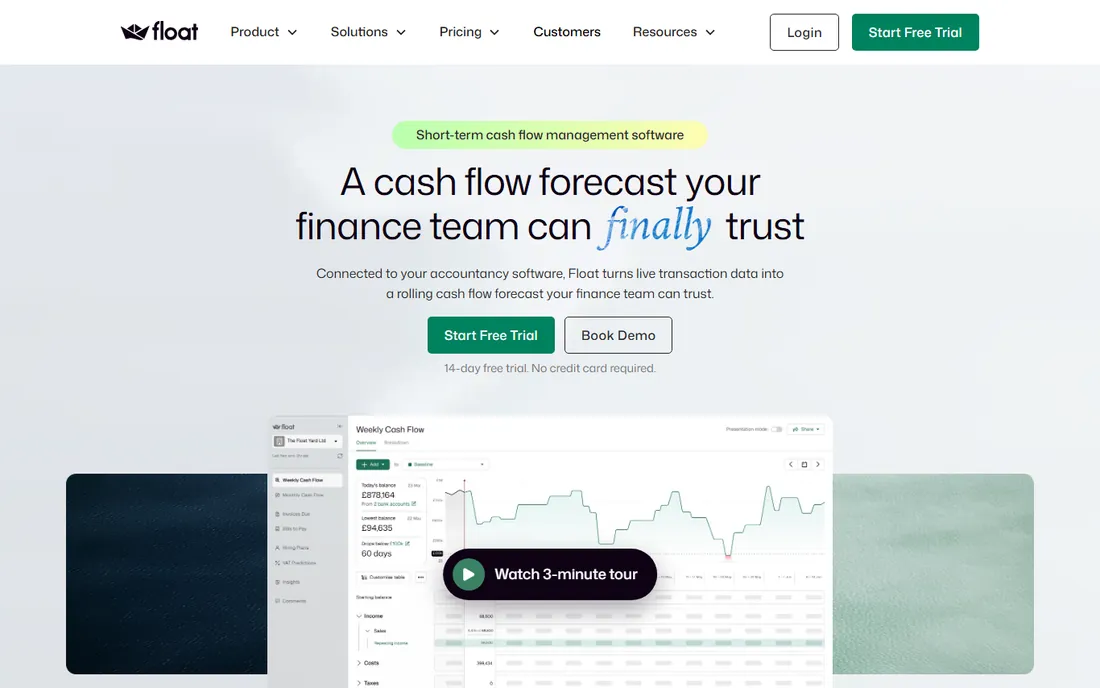
Float does one job and does it well: it turns your live accounting data into a rolling cash flow forecast you can trust. It syncs with Xero and QuickBooks Online every 24 hours, shows exactly when invoices get paid and bills come due, and lets you toggle scenarios to see what a new hire or a late-paying client does to your cash position. The company reports 8,000+ finance teams using it, and the 14-day free trial requires no credit card.
The catch is scope. Float is a cash decision tool, not a full budgeting platform. You will not build a detailed departmental expense budget here. It fits small businesses where the critical question is "will we have enough cash in six weeks," which, honestly, describes most small businesses most of the time.
What we like- Live rolling forecast synced from Xero or QuickBooks
- Clear scenario planning for hiring and spending decisions
- 14-day trial with no credit card
Watch out for- Focused on cash, not full P&L budgeting
- Pricing is not published on the site
Starting priceSee website
Free planNo
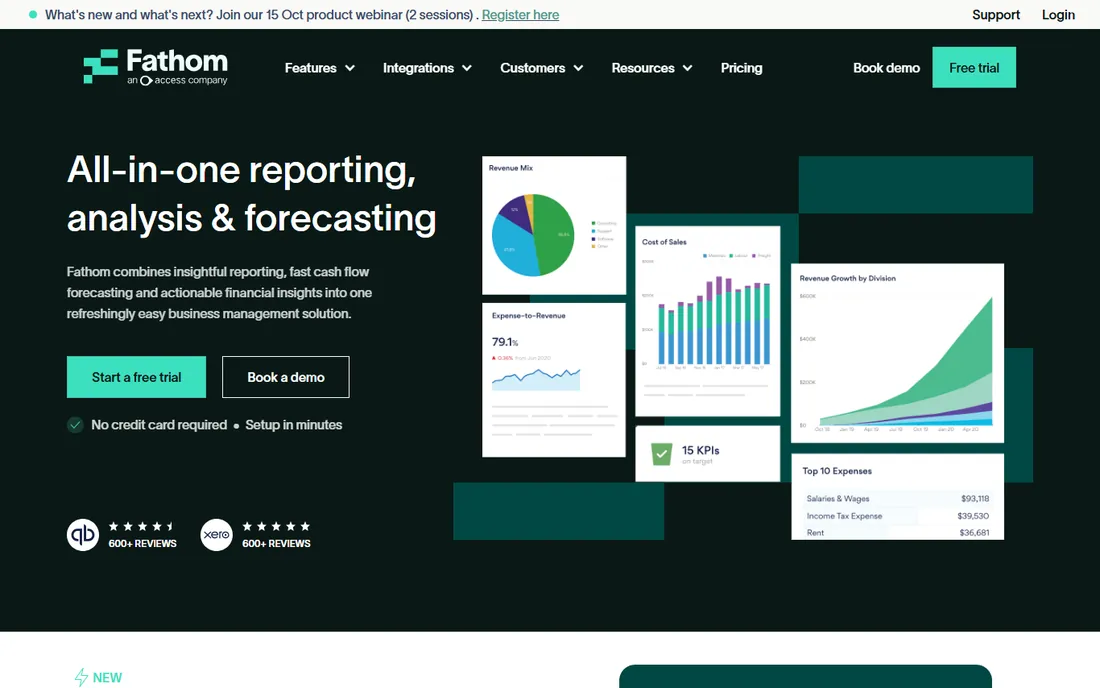
Fathom takes your accounting data and turns it into reports people actually want to read: visual KPI dashboards, trend analysis, benchmarking, and cash flow forecasts, all generated in minutes. It connects directly to major accounting platforms, handles consolidations across multiple entities, and now offers a portfolio view for accounting firms monitoring whole client bases. The company reports powering insights for 110,000+ businesses.
The honest catch is that Fathom leans toward reporting and analysis rather than deep forward planning. If you need multi-year scenario models with driver-based logic, PlanGuru or Jirav go further. Fathom fits owners and advisors who want clarity on what the numbers mean right now and a credible near-term forecast, presented well enough to share with a bank or board.
What we like- Beautiful, readable financial reports and dashboards
- Fast cash flow forecasting
- Consolidations for multi-entity businesses
Watch out for- Pricing is not published
- More reporting-focused than planning-focused
Starting priceSee website
Free planNo
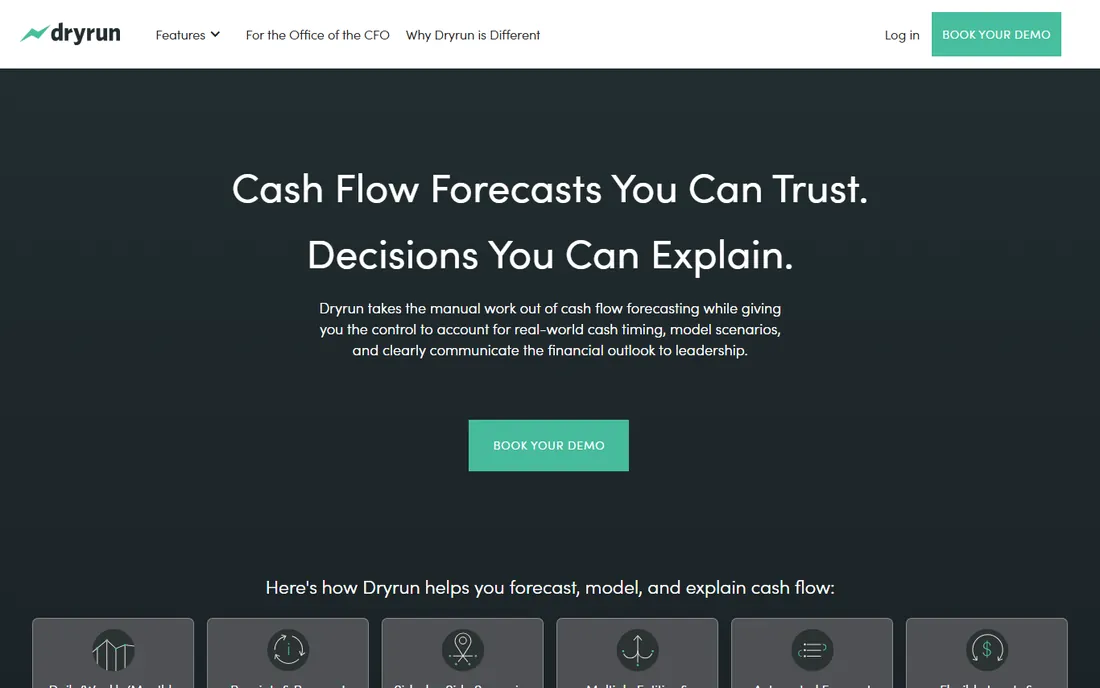
Dryrun sits between a spreadsheet and a full FP&A platform. It pulls in your accounting data, then lets you layer on expected projects, payment timing changes, and manual assumptions with clear, explainable forecast logic rather than black-box AI. Scenario comparison is the core strength: model a hire, a price change, or a slow quarter side by side and show leadership exactly what each path does to cash. It integrates with QuickBooks, Xero, NetSuite, and Dynamics 365 Business Central.
The trade-off is that Dryrun expects you to think like a finance person. An owner who wants a simple monthly budget may find it more tool than needed, and pricing requires a conversation. It suits growing companies with a controller or fractional CFO who wants spreadsheet-like control without spreadsheet chaos.
What we like- Flexible scenario modeling with transparent forecast logic
- Blends accounting data with manual inputs and spreadsheet imports
- Built for advisors and CFOs
Watch out for- Pricing is not published
- Interface favors finance users over casual owners
Starting price$100/month
Free planNo
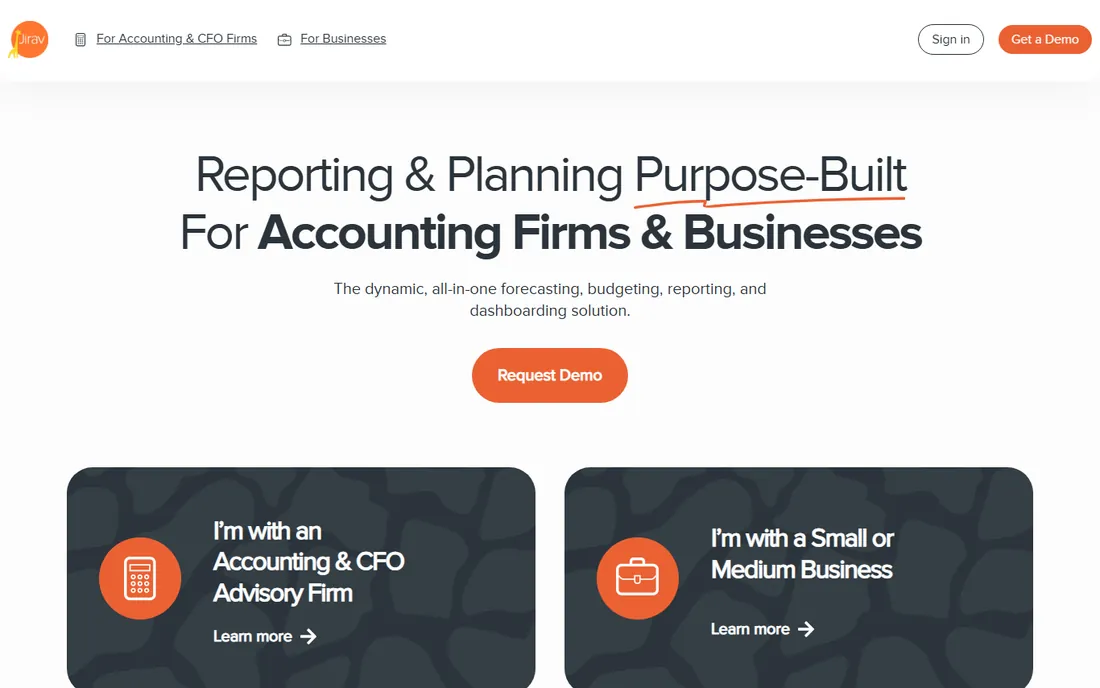
Jirav is an all-in-one budgeting, forecasting, reporting, and dashboarding platform aimed at small to mid-size companies and the accounting firms that serve them. Its driver-based models forecast the full three statements, connect accounting, HR, and operational data, and generate board-ready reporting packages in clicks. The company reports 4,000+ companies and firms on the platform and publishes a price range of $100 to $750 per month on its own site.
The catch is the floor. At $100 per month to start, Jirav costs meaningfully more than LivePlan or Float, and it assumes someone on your team owns the finance function. It fits companies that have outgrown simple budgeting and need real FP&A, or firms offering planning as an advisory service.
What we like- Driver-based budgeting and forecasting with P&L, balance sheet, and cash flow
- Strong accounting-firm partner channel
- Fast implementation
Watch out for- $100 per month starting price is steep for the smallest businesses
- Built for finance users
Starting priceSee website
Free planNo
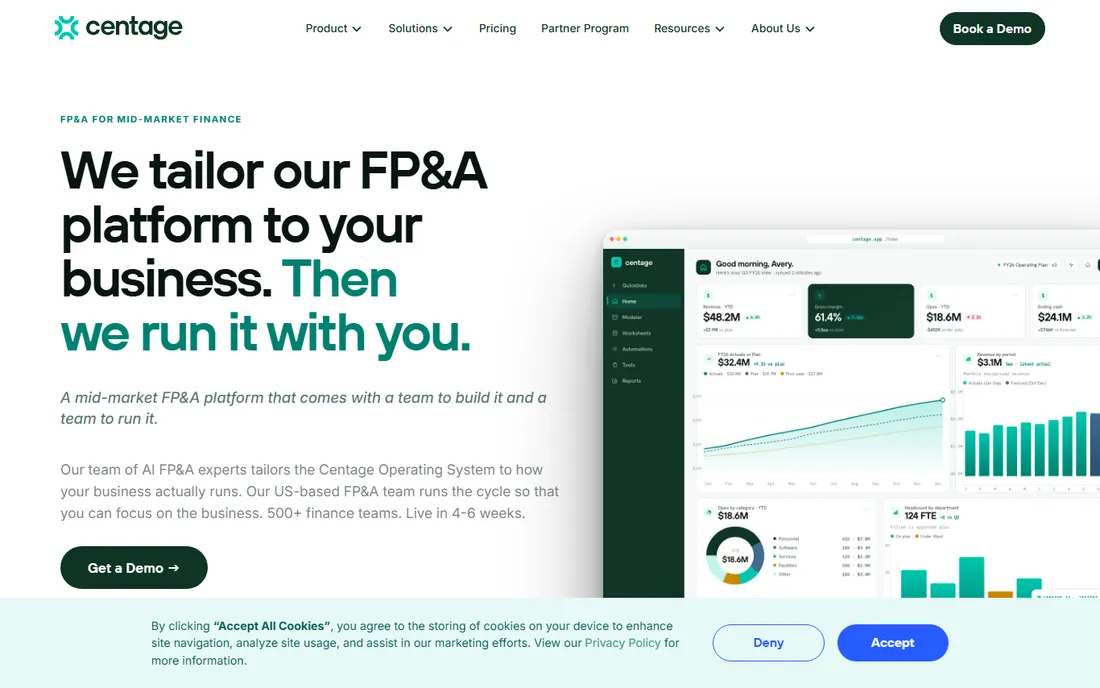
Centage positions itself as FP&A for mid-market finance teams that do not have a large in-house staff. Beyond the software, which covers automated budgeting, rolling forecasts, driver-based planning, multi-entity consolidation, and workforce planning, Centage provides a US-based team that helps tailor the platform and can even run the planning cycle with you. The company reports 500+ finance teams and go-live in four to six weeks.
The honest catch is fit. This is built for companies with real finance complexity: multiple entities, detailed workforce plans, board reporting. A 20-person business will find it oversized and overpriced. Centage earns its place for mid-size companies that want enterprise-grade planning without hiring an FP&A team.
What we like- Full FP&A with budgeting, forecasting, workforce planning, and consolidation
- US-based team helps build and run the platform
- Live in 4 to 6 weeks
Watch out for- Quote-based pricing aimed at mid-market budgets
- More platform than a small business needs
Starting priceSee website
Free planFree trial (14 days)
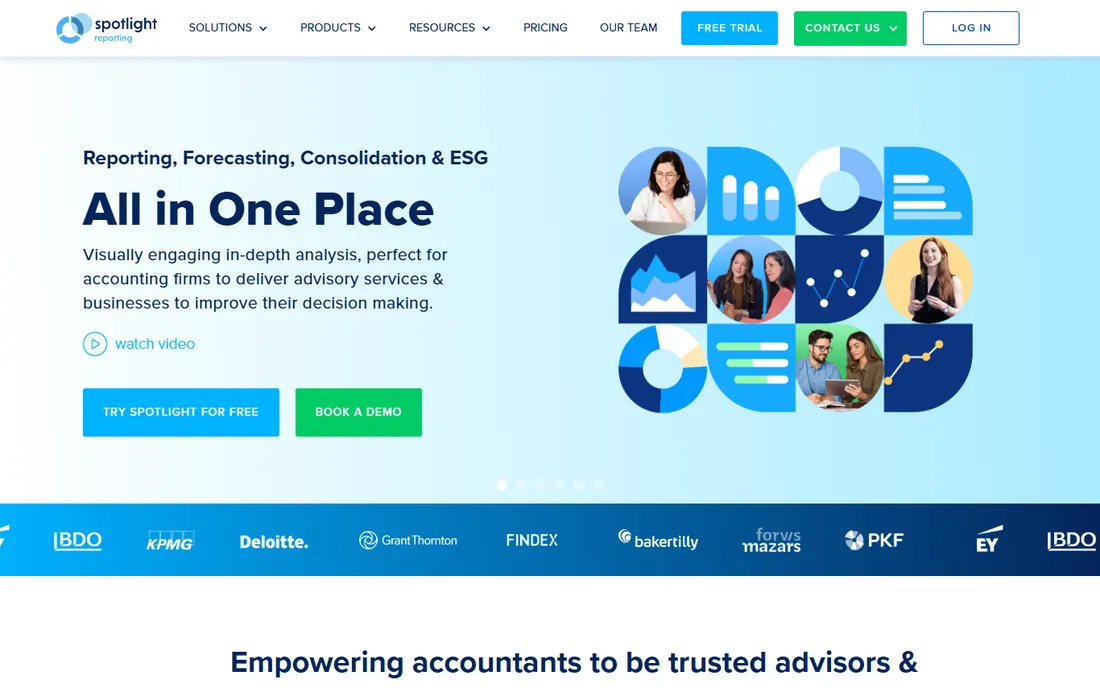
Spotlight Reporting combines visual financial reporting, three-way forecasting and budgeting, dashboards, and group consolidations in one platform. It is especially popular with accounting firms that use it to deliver advisory services across their client base, with features like benchmarking, multi-entity consolidation up to 500 entities, and white-labeled reports. Businesses can use it directly too, connecting their accounting data for automated, readable reports.
The catch is positioning. The product, pricing, and partner program are built around accountants and advisors, so a business owner buying direct gets less hand-holding than a firm's client would. Pricing is also unpublished. Spotlight fits firms building an advisory practice, and businesses whose accountant already runs on it.
What we like- Strong visual reports, dashboards, and consolidations
- Three-way forecasting with scenario planning
- 14-day free trial
Watch out for- Pricing is not published
- Strongest value is for accounting firms rather than direct business owners
How we put this list together
We started with the budgeting and forecasting tools most recommended for small businesses on G2, Capterra, and Reddit, then verified each vendor's current offering on its own website. We read pricing pages where published, product documentation, and feature lists, and checked user reviews for honest complaints about setup difficulty and support quality. We weighted small-business fit, accounting integrations, forecasting depth, scenario planning, and pricing transparency. We did not test the software hands-on. Where vendors publish prices, we show them; where pricing is quote-based, we say so instead of guessing.
What to check before you buy
Connect your accounting software first, then judge. Every tool on this list is dramatically better with live QuickBooks or Xero data flowing in. During a trial, connect your real books and see whether the budget, forecast, and reports make sense with your numbers. A tool that looks great in a demo can fall apart on a messy chart of accounts.
Match the tool to the question you actually ask. If the question is "can we make payroll in eight weeks," you need cash flow forecasting like Float or Dryrun. If it is "are we on budget this quarter," you need plan-vs-actual tracking like LivePlan or Fathom. If it is "what happens if we open a second location," you need scenario modeling like PlanGuru, Jirav, or Centage. Buying a scenario-modeling platform to answer a cash question wastes money and attention.
Ask what happens after month three. Budgets die when updating them is manual. Ask each vendor exactly how actuals flow in, how often, and what you have to do. If the answer involves CSV exports, keep looking.
Check the real total cost. A $15 per month tool that you actually use beats a $100 per month platform that sits idle. But also check per-user pricing, entity limits, and add-on costs. Get the full price for your situation in writing before committing.
Making the budget stick
The software is the easy part. Pick one person to own the budget and give them a recurring monthly hour to compare actuals against plan. That single habit matters more than which tool you choose.
Start simple and add detail only where it pays. A budget with 12 expense categories you review monthly beats a 200-line budget nobody opens. Add granularity to the lines you actually manage, like payroll, marketing spend, or cost of goods, and leave the rest aggregated.
Revisit the forecast when reality changes, not on a schedule. A new hire, a lost client, a price increase: those are the moments to update the numbers. The tools with rolling forecasts make this a 20-minute job instead of a weekend project.
Frequently asked questions
What is the best budgeting software for a very small business?
For businesses under about 20 people, LivePlan at $15 per month billed annually is the best value: real budgeting, forecasting, and plan-vs-actual tracking with accounting sync. If cash flow is the main worry, Float's 14-day trial is worth testing. Avoid the FP&A platforms until you have someone owning finance.
What is the difference between budgeting software and forecasting software?
Budgeting software sets the plan: what you intend to spend and earn over a period. Forecasting software projects what will actually happen based on current trends and assumptions. Most tools on this list do both, because a budget without a forecast goes stale and a forecast without a budget has no target.
Do I still need my accountant if I buy budgeting software?
Yes. The software handles the mechanics; your accountant handles judgment: tax planning, entity structure, and whether your assumptions are sane. Several tools here, including PlanGuru, Jirav, and Spotlight Reporting, are designed to be shared with your accountant or advisor.
How much should a small business spend on budgeting software?
Most small businesses land between $15 and $100 per month. LivePlan starts at $15, cash flow tools typically run $30 to $60, and FP&A platforms like Jirav start at $100. Spending more only makes sense when someone on your team will use the advanced features weekly.
Can budgeting software replace my spreadsheet?
It can replace the mechanics of the spreadsheet: the formulas, the version confusion, the manual updates. What it cannot replace is the thinking. You still need to set the assumptions, review the variances, and make the decisions. The win is spending that time on decisions instead of spreadsheet maintenance.
How long does it take to set up?
Simple tools like LivePlan or Float can be connected to your accounting software and producing a first budget or forecast within a day. Deeper platforms like PlanGuru or Jirav typically take two to six weeks including model setup and training. Centage reports four to six weeks with their team helping.
Sources we checked (9)
- https://www.liveplan.com/
- https://www.liveplan.com/pricing
- https://planguru.com/
- https://floatapp.com/
- https://www.fathomhq.com/
- https://dryrun.com/
- https://www.jirav.com/
- https://www.centage.com
- https://spotlightreporting.com/
Is your product missing or out of date?
We review this list regularly. Vendors can request a listing, send updated pricing or ask about featured placement.

Shihab Mia · Founder, Rankite
Shihab has spent more than a decade helping SaaS and e-commerce brands grow through search. He writes Rankite's software buying guides from pricing pages, documentation and public user reviews. More about Shihab.