How we make this list: we compare pricing pages, product documentation and public user reviews. Ratings come from G2, Capterra or Trustpilot, with the date we checked them.
Key takeaways
- WordPress still gives you the most control over schema, redirects, and site architecture, but it only performs if you stay disciplined about hosting and plugins.
- Webflow is the closest hosted alternative to WordPress for technical SEO, with clean code output and native schema control, at a higher learning curve.
- Ghost is the standout for publishing-heavy sites, with fast pages and a first-class blog out of the box, starting around $9 per month on Ghost(Pro) in guides.
- Wix and Squarespace can rank well for small business sites, while their limits show up when a strategy needs custom structured data or granular crawl rules.
- No platform guarantees rankings: content quality, links, and page experience decide results, and the platform only removes technical obstacles.
Quick comparison
| Tool | Best for | Starting price | Free plan |
|---|
 WordPress.org | Maximum SEO control | Free | Yes |
 Ghost | Publishing-heavy sites | $9 per month | Yes |
 Webflow | Designer-built sites | $14 per month | Yes |
 Wix | Small business all-in-one | $17 per month | Yes |
 Squarespace | Design-led brand sites | $19 per month | Trial |
 Shopify | Ecommerce product SEO | $39 per month | Trial |
 HubSpot Content Hub | HubSpot CRM companies | $20 per seat per month | Yes |
 Superblog | Automated blog SEO | $29 per month | Trial |
Is your product missing or out of date?
We review this list regularly. Vendors can request a listing, send updated pricing or ask about featured placement.
The best blog software for seo
#1WordPress.org
Best for: Maximum SEO control4.4/5 on
G2 (9,546 reviews, checked Oct 2026)
Visit wordpress.org
Starting priceFree
Free planYes
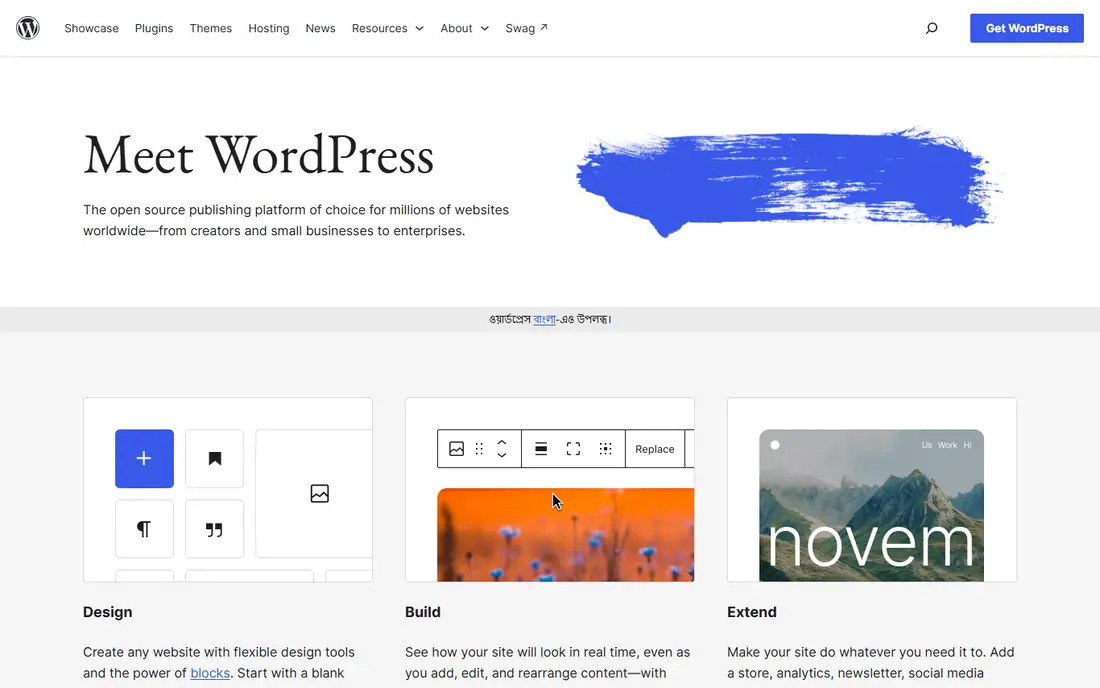
WordPress still gives you the most control over schema, redirects, and site architecture, but it only performs if you stay disciplined about hosting and plugins. With Rank Math or Yoast for on-page SEO, post-name permalinks, caching, and careful plugin choices, WordPress blogs can outrank hosted rivals on technical flexibility alone.
Real-world costs rise as you add memberships, email marketing, SEO tools, and ecommerce functionality, and WordPress typically scores 40 to 70 on Lighthouse Performance in one guide without optimization. For maximum SEO control with a team willing to maintain it, WordPress remains the standard.
What we like- Most control over schema, redirects, and site architecture
- Huge plugin ecosystem with Rank Math and Yoast
- Self-hosted with full data ownership
Watch out for- Core software free, but hosting typically $5 to $30-plus per month, plus premium themes $50 to $200 and plugins $100 to $300 per year
- Speed needs discipline
#2Ghost
Best for: Publishing-heavy sites4.0/5 on
G2 (40 reviews, checked Oct 2026)
Visit ghost.org
Starting price$9 per month
Free planYes
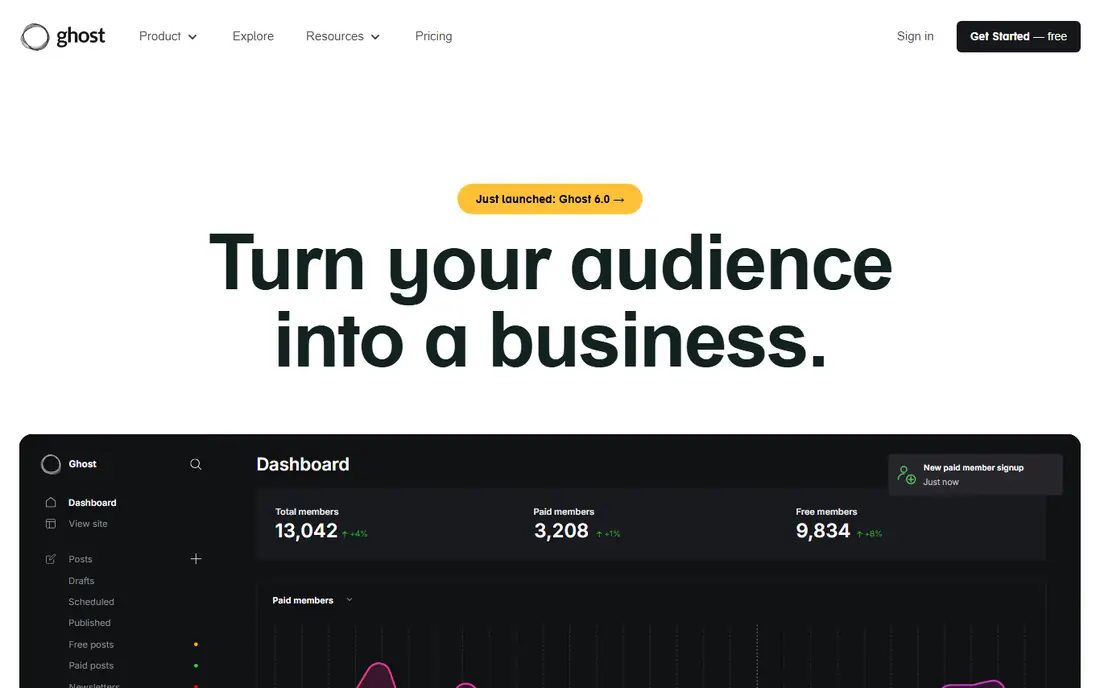
Ghost is the standout for publishing-heavy sites, with fast pages and a first-class blog out of the box, starting around $9 per month on Ghost(Pro) in guides, though other guides list $11 or $18 per month for entry tiers, so confirm the current figure. It offers automatic SEO basics, built-in memberships with 0 percent revenue share, and open-source software with full data ownership.
Self-hosting requires Node.js and command-line knowledge, and there are no native growth tools such as referral programs or an ad network. For writers and publishers who want speed, simplicity, and subscription monetization without dozens of plugins, Ghost is the best pick.
What we like- Fast pages with a first-class blog out of the box
- Automatic SEO basics including XML sitemaps and structured data
- Built-in memberships with 0 percent revenue share
Watch out for- Guide prices conflict, from $9 to $18 per month for entry tiers
- No free Ghost(Pro) plan, though self-hosting is free
- Limited themes, with 92 total and 15 free in guides
#3Webflow
Best for: Designer-built sites4.4/5 on
G2 (995 reviews, checked Oct 2026)
Visit webflow.com
Starting price$14 per month
Free planYes
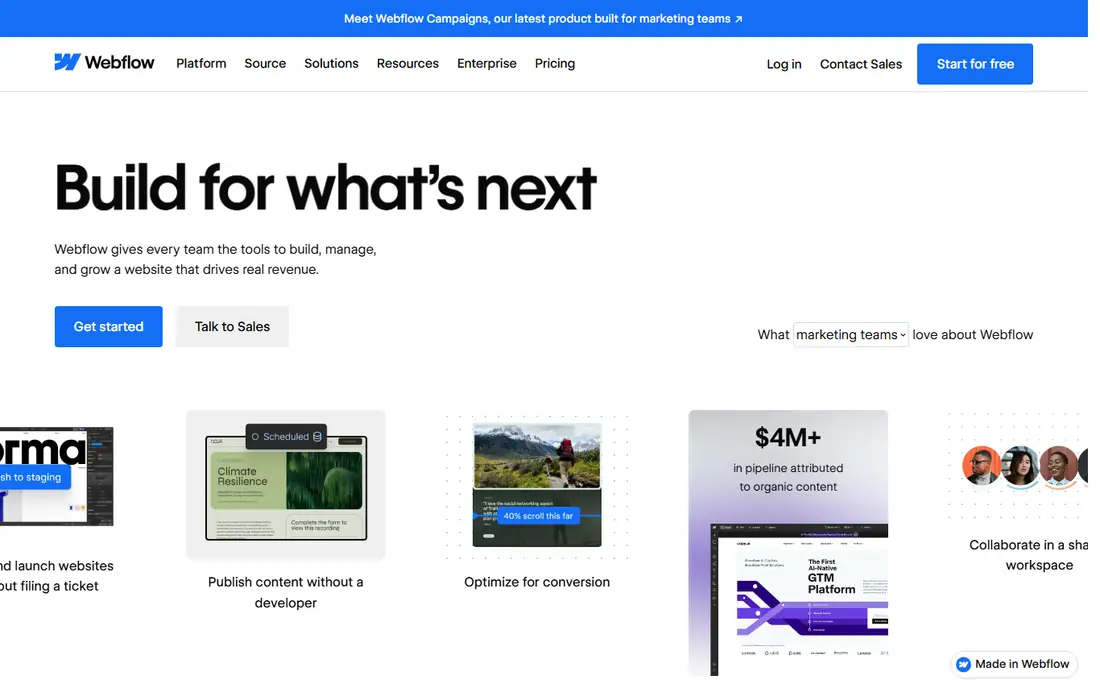
Webflow is the closest hosted alternative to WordPress for technical SEO, with clean code output and native schema control that let designers control markup without plugins. Its $14 per month billed annually entry plan includes a free Starter tier for testing, and its visual builder suits design-led teams that want pixel control.
The learning curve runs higher than Wix or Squarespace, and blog features trail WordPress depth for large publishing operations. For designer-built sites that need technical SEO without self-hosting, Webflow is the best hosted pick.
What we like- Clean code output with native schema control
- Closest hosted alternative to WordPress for technical SEO
- Strong design freedom
Watch out for- $14 per month billed annually in guides
- Higher learning curve than Wix or Squarespace
- Blog features trail WordPress depth
#4Wix
Best for: Small business all-in-one4.2/5 on
G2 (1,888 reviews, checked Oct 2026)
Visit wix.com
Starting price$17 per month
Free planYes
Wix suits small businesses wanting an all-in-one editor, with AI tools, templates, and hosting bundled at $17 per month billed annually in guides, plus a free tier for testing. Small business sites on Wix can rank well for local and low-competition terms, especially when content and links are strong.
Limits show up when a strategy needs custom structured data or granular crawl rules, and vendor lock-in makes migration harder than on WordPress or Ghost. For small businesses that want one tool for site, blog, and bookings, Wix is the simplest pick.
What we like- All-in-one editor with AI tools
- $17 per month billed annually in guides
- Free tier for testing
- Small business sites can rank well
Watch out for- Vendor lock-in in guides
- Limits show up when a strategy needs custom structured data or granular crawl rules
- Less flexible than WordPress
Starting price$19 per month
Free planTrial
Squarespace suits design-led brand sites, with stunning templates and an all-in-one platform at $19 per month billed annually in guides, plus a 14-day free trial. Its blog tools cover the basics well, and its design quality helps brand-led blogs look polished without a designer.
It is less flexible than WordPress, with limits on custom structured data and granular crawl rules that show up for advanced SEO strategies. For brand sites where design matters as much as blogging, Squarespace is the best pick.
What we like- Beautiful templates with an all-in-one platform
- $19 per month billed annually in guides
- 14-day free trial
- Strong for brand-led blogs
Watch out for- Less flexible than WordPress
- Limits on custom structured data and crawl rules
- Blog depth trails WordPress and Ghost
#6Shopify
Best for: Ecommerce product SEO4.4/5 on
G2 (5,144 reviews, checked Oct 2026)
Visit shopify.com
Starting price$39 per month
Free planTrial
Shopify is the safe pick for product SEO, pairing a store with a blog that supports product storytelling, buying guides, and content marketing. Its $39 per month billed monthly plan covers the store and blog together, which suits merchants who blog to sell rather than blog as their main product.
Its fixed URL structure for products and collections forces workarounds for some permalink strategies, and blog-first publishers will find WordPress or Ghost deeper. For ecommerce brands that blog to support sales, Shopify is the best pick.
What we like- Safe pick for product SEO
- Strong ecommerce blogging beside a store
- 3-day free trial in guides
Watch out for- $39 per month billed monthly in guides
- Fixed URL structure for products and collections forces workarounds for some permalink strategies
- Blog-first publishers should look elsewhere
#7HubSpot Content Hub
Best for: HubSpot CRM companies4.5/5 on
G2 (2,207 reviews, checked Oct 2026)
Visit hubspot.com
Starting price$20 per seat per month
Free planYes
HubSpot Content Hub suits companies already on HubSpot CRM, bringing blog publishing, SEO recommendations, analytics, and personalization inside the same platform as contacts, deals, and campaigns. Its $20 per seat per month billed annually entry plan includes a free tier for testing.
Best value sits inside the HubSpot ecosystem, and per-seat pricing grows with teams, so blog-first publishers who do not need CRM features pay for breadth they will not use. For HubSpot companies that blog to generate leads, Content Hub is the natural pick.
What we like- Content tools inside the HubSpot CRM ecosystem
- $20 per seat per month billed annually in guides
- Free tier for testing
- Strong analytics and personalization
Watch out for- Best value only for companies already on HubSpot CRM
- Per-seat pricing grows with teams
- Blog-first publishers pay for CRM features they may not need
Starting price$29 per month
Free planTrial
Superblog automates blog SEO entirely, with JSON-LD schemas, XML sitemaps, IndexNow, LLMs.txt, internal link suggestions, and multilingual support built in, plus subdirectory hosting included. Its Basic plan costs $29 per month in guides for up to 300 posts, one team member, and 100,000 pageviews per month, with a 7-day free trial and a 30-day money-back guarantee.
It scores 90-plus on Lighthouse Performance automatically in guides, versus 70 to 85 for Ghost and 40 to 70 for WordPress, though those figures come from the vendor own comparison. For bloggers who want SEO handled automatically with zero maintenance, Superblog is the best pick.
What we like- Automates SEO entirely with JSON-LD schemas, XML sitemaps, IndexNow, and LLMs.txt
- Subdirectory hosting included
- 7-day free trial with a 30-day money-back guarantee
Watch out for- $29 per month for Basic with up to 300 posts in guides
- Newer platform with a smaller ecosystem
- Blog-only focus means no full website builder
How we chose
We started from what blog software must do well for SEO: produce fast, crawlable pages with correct schema, sitemaps, and metadata, without forcing workarounds. We compared vendor pricing pages and current 2026 guides, and we favored platforms with clear pricing, real SEO controls, and honest limits. We left out stalled platforms, such as BlogEngine.NET in guides, and tools whose SEO features could not be traced. Prices here come from 2026 guides and vendor pages, and they vary by billing period, so check the pricing page before you pay. No platform guarantees rankings: content quality, links, and page experience decide results, and the platform only removes technical obstacles.
How to pick blog software for SEO
Start with your publishing volume and your technical skill, not the template gallery. A solo blogger, a design team, and a publishing company each need a different platform, and the wrong fit costs more in workarounds than any template saves.
Match the platform to your publishing model
Solo bloggers and small businesses should pick Wix, Squarespace, or Superblog for simplicity. Publishing-heavy sites should pick Ghost for speed and first-class blogging. Design teams should pick Webflow for clean code and schema control. Maximum-control teams should pick WordPress, and ecommerce brands should pick Shopify.
Control the technical basics yourself
Whatever platform you choose, control titles, meta descriptions, headings, image alt text, internal links, and URL structure, and keep posts per page reasonable. WordPress guides suggest post-name permalinks, 6 to 10 posts per page, caching, and Core Web Vitals monitoring, and those habits matter on every platform, not just WordPress.
Plan for migration before you need it
Choose a platform with full data export, since vendor lock-in makes switching painful later. WordPress and Ghost offer open data ownership, while Wix and Squarespace export less cleanly. If your blog may outgrow its platform, start on an open platform rather than paying migration costs later.
Frequently asked questions
What is the best blog software for SEO overall?
WordPress for maximum control, Ghost for publishing-heavy speed, and Webflow for hosted technical SEO. Small businesses can rank well on Wix or Squarespace, while Superblog automates SEO for bloggers who want zero maintenance.
Is WordPress still the best for SEO in 2026?
Yes, for control. WordPress still gives you the most control over schema, redirects, and site architecture, but it only performs if you stay disciplined about hosting, plugins, and speed. Hosted rivals beat undisciplined WordPress sites on performance.
Is Ghost better than WordPress for blogging?
For pure publishing, often yes. Ghost offers faster pages, a first-class blog out of the box, and built-in memberships without plugins, while WordPress offers deeper customization and a larger plugin ecosystem. Choose Ghost for simplicity and speed, WordPress for maximum flexibility.
Can Wix and Squarespace rank well?
Yes, for small business sites and low-competition terms, especially with strong content and links. Their limits show up for advanced strategies needing custom structured data or granular crawl rules, where WordPress or Webflow fit better.
How much does blog software cost?
WordPress core is free plus $5 to $30-plus per month for hosting, Ghost(Pro) starts near $9 to $18 per month in guides, Webflow $14, Wix $17, Squarespace $19, Superblog $29, Shopify $39, and HubSpot Content Hub $20 per seat per month, all billed annually unless noted.
Sources we checked (8)
- https://wordpress.org
- https://ghost.org
- https://webflow.com
- https://www.wix.com
- https://www.squarespace.com
- https://www.shopify.com
- https://www.hubspot.com
- https://superblog.ai
Is your product missing or out of date?
We review this list regularly. Vendors can request a listing, send updated pricing or ask about featured placement.

Shihab Mia · Founder, Rankite
Shihab has 5+ years in B2B and SaaS SEO. He writes Rankite's software buying guides from pricing pages, documentation and public user reviews. More about Shihab.