How we make this list: we compare pricing pages, product documentation and public user reviews. Ratings come from G2, Capterra or Trustpilot, with the date we checked them.
Key takeaways
- Chainalysis, TRM Labs, and Elliptic are the enterprise core of this category, with screening, monitoring, and investigation products sold on annual contracts.
- Bitquery and Arkham are the accessible entry points: Bitquery publishes API pricing from $39 per month, while Arkham offers a free investigation platform.
- Chain coverage claims need checking per product, since screening depth, tracing depth, and supported networks differ even inside one vendor.
- Crystal Intelligence and Merkle Science suit investigation-led and behavior-led teams respectively, rather than buyers who only need a wallet score.
- No blockchain tool proves who owns a wallet on its own: attribution still needs exchange records, public data, and off-chain evidence.
Quick comparison
| Tool | Best for | Starting price | Free plan |
|---|
 Chainalysis | Enterprise investigations and monitoring | See website | No |
 TRM Labs | Cross-chain monitoring and forensics | See website | No |
 Elliptic | Screening and cross-chain tracing | See website | No |
 Crystal Intelligence | Evidence-ready investigations | See website | No |
 Merkle Science | Behavior-based risk monitoring | See website | No |
 Arkham Intelligence | Public entity and wallet research | See website | Yes |
 Bitquery | Developer APIs and money-flow data | $39 per user/month | Free trial |
 Scorechain | European compliance teams | See website | Free trial |
 Breadcrumbs | Visual tracing for smaller cases | $0 per user/month | Yes |
Is your product missing or out of date?
We review this list regularly. Vendors can request a listing, send updated pricing or ask about featured placement.
Starting priceSee website
Free planNo
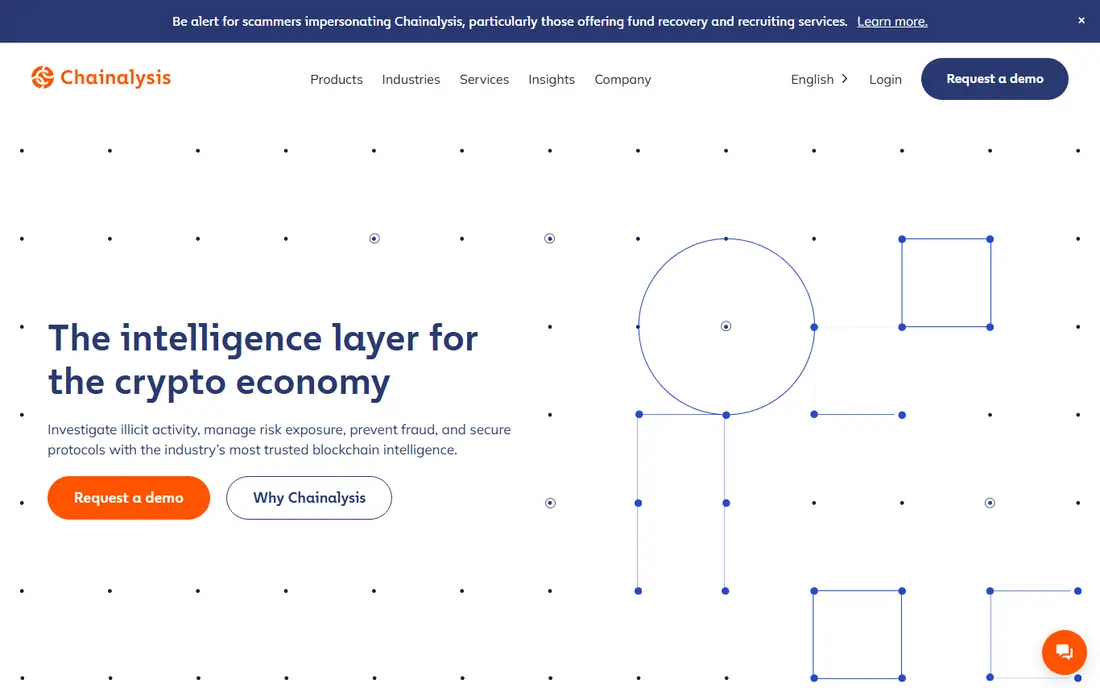
Chainalysis is the default enterprise choice for a reason: its Reactor investigation tool and KYT transaction monitoring product cover tracing, screening, sanctions checks, and case work in a connected suite. Investigators can follow funds across hops and chains, flag exposure to sanctioned or high-risk entities, and build a case file that holds up in compliance review. Large exchanges, banks, and government agencies use it as a system of record for crypto risk.
The cost and buying process are the barriers. Pricing is quote-based and reflects transaction volume, chains, and modules, so a mid-market team should expect a sales cycle and an annual contract, not a self-serve signup. Smaller teams that only need occasional tracing will find it too heavy. For a regulated exchange or an agency with steady investigation volume, Chainalysis remains the benchmark other tools are measured against.
What we like- Reactor investigations and KYT monitoring in one suite
- Deep attribution data
- Strong use by government and large exchanges
Watch out for- Quote-based enterprise pricing
- Buying process is heavy for mid-market teams
- Modules are sold separately
Starting priceSee website
Free planNo
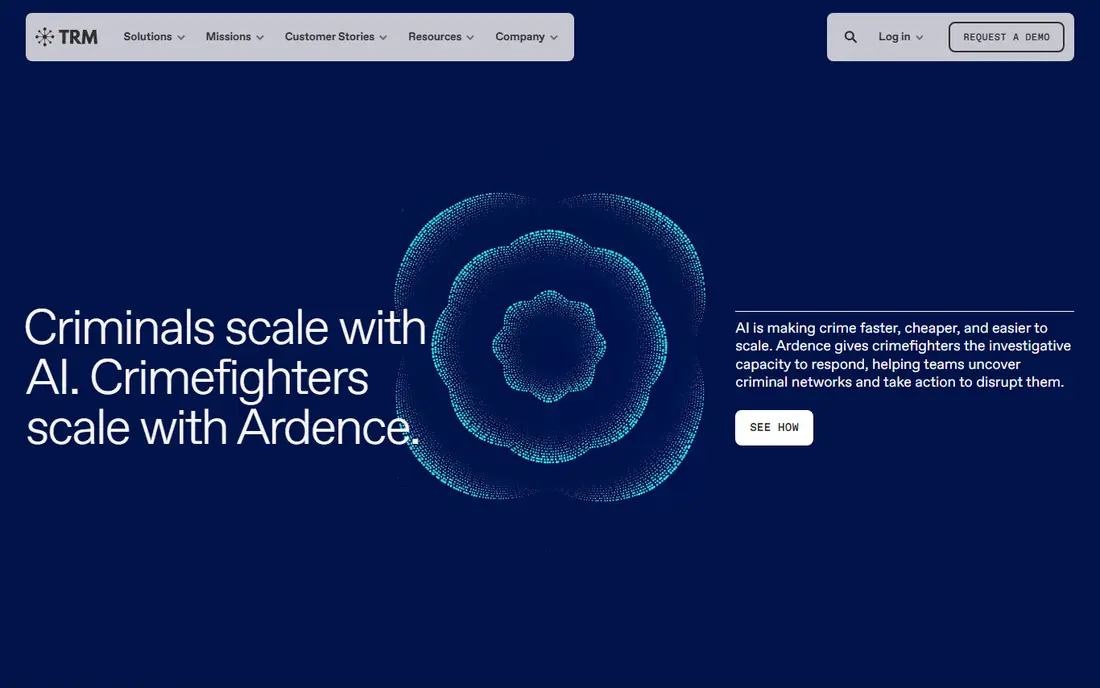
TRM Labs combines wallet screening, transaction monitoring, and forensics in a platform built for cross-chain work. Compliance teams can set risk rules, receive alerts on exposure, and move from an alert into a full investigation without switching tools. Its chain coverage is a selling point for teams that deal with newer networks and bridges, not just Bitcoin and Ethereum.
Like Chainalysis, TRM sells through annual contracts priced on volume and scope, so budgeting requires a scoped conversation. Buyers should test coverage on their actual transaction mix, since headline chain counts do not guarantee deep tracing on every network. TRM fits a mid-market to enterprise exchange, fintech, or agency that needs automation and broad coverage in one platform.
What we like- Broad chain coverage for screening
- Configurable risk rules
- Modern investigation interface
Watch out for- Quote-based pricing
- Depth varies by chain
- Enterprise onboarding takes time
Starting priceSee website
Free planNo
Elliptic pairs Lens wallet screening with Investigator tracing and Navigator transaction monitoring, giving compliance teams one path from a single address check to a full fund flow. Its risk scores aim to explain why an address is flagged, including direct and indirect exposure through swaps and bridges, which helps a compliance officer defend a decision to block or escalate a transaction. Cross-chain tracing is a particular strength for DeFi-heavy flows.
Pricing is enterprise and quote-based, and buyers should validate each required chain and asset before signing, since coverage depth varies. Elliptic suits a large regulated institution screening at volume, especially one with DeFi exposure. A small team with occasional checks will get more value from a lighter tool.
What we like- Lens screening plus Investigator tracing
- Explainable risk scores
- Strong DeFi and bridge coverage
Watch out for- Enterprise pricing
- Product coverage differs by chain
- Implementation needs planning
Starting priceSee website
Free planNo
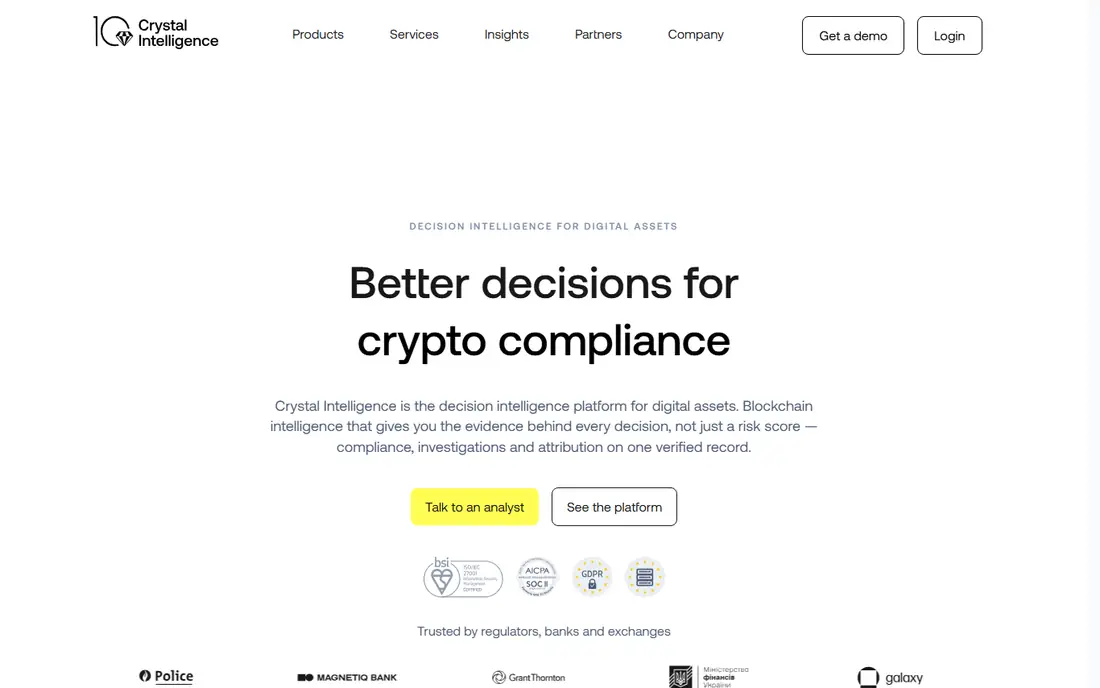
Crystal Intelligence, formerly Crystal Blockchain, focuses on investigations that must stand up to audit or court review. Its tracing visualizations show fund movement step by step, and its reports document the path, the entities involved, and the risk indicators behind each hop. That clarity matters when an investigator hands a file to counsel, a regulator, or law enforcement.
The platform also covers screening and monitoring, so a smaller compliance team can use one environment for both daily checks and deeper cases. Pricing is quote-based, and buyers should confirm tracing depth on the chains they actually see. Crystal fits an investigation-led team, a law firm, or a compliance unit that values defensible documentation over raw chain count.
What we like- Clear visualizations for fund flows
- Audit-ready reports
- Combined screening and investigation workflows
Watch out for- Quote-based pricing
- Smaller ecosystem than the top two
- Chain depth needs validation
Starting priceSee website
Free planNo
Merkle Science approaches risk through behavior, not only through known bad addresses. Its Compass monitoring product and Tracker investigation tool look for patterns that suggest laundering, fraud, or sanctions evasion, even when no address on the path is already flagged. Custom rules let a compliance team tune alerts to its own risk appetite, and case records keep an audit trail for each decision.
Behavioral models need tuning. Without it, a team can face alert fatigue from patterns that look risky in general but are normal for its customers. Pricing is quote-based, so a pilot on real transaction data is the right first step. Merkle Science fits a crypto-native product or fintech that wants monitoring tailored to its own flows rather than a generic score.
What we like- Behavioral analytics beyond blacklist matching
- Custom risk rules
- Case management and audit trails
Watch out for- Quote-based pricing
- Coverage depth varies by transaction mix
- Needs tuning to avoid alert noise
Starting priceSee website
Free planYes
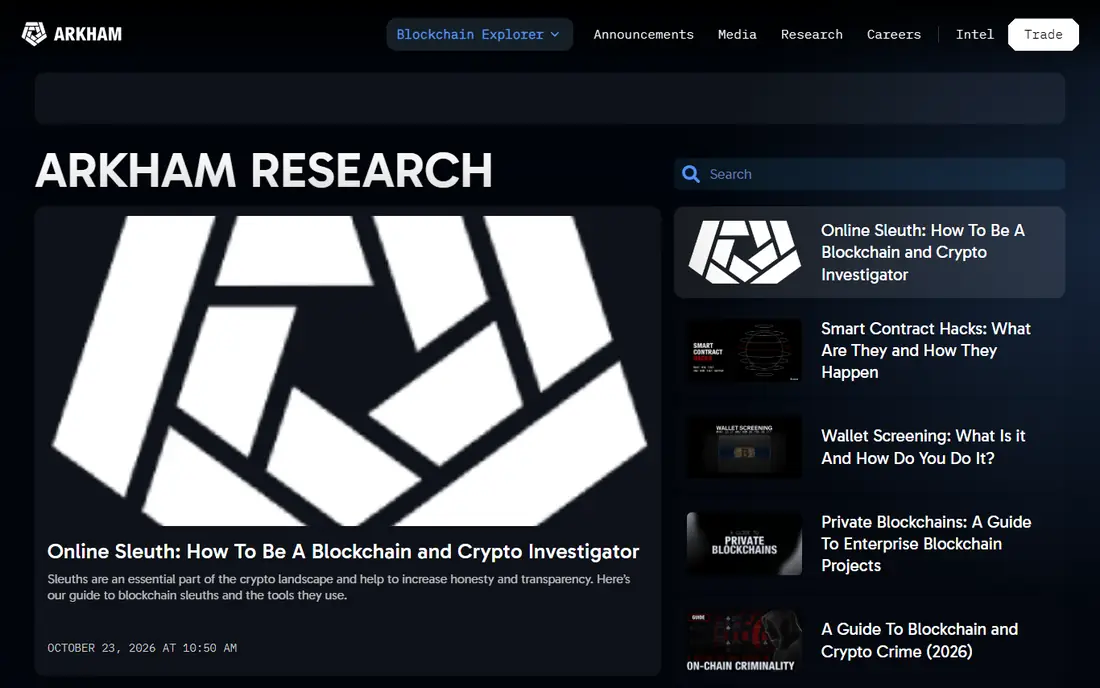
Arkham gives individual researchers and smaller teams a way to start blockchain investigation without an enterprise contract. Its platform labels wallets tied to known entities, tracks portfolios, and visualizes fund flows between addresses. A journalist, researcher, or analyst can test a hypothesis about an entity in minutes, which is a sharp contrast to the sales-led enterprise tools.
Labels deserve caution. A label reflects Arkham's attribution work, not a legal proof of ownership, and researchers should corroborate important claims with exchange records or public statements. Arkham is not a replacement for a compliance monitoring suite with alerting and case management. For public research and early-stage investigation, it is the most accessible tool in this list.
What we like- Free platform for wallet and entity research
- Labeled entities and portfolios
- No sales call to start
Watch out for- Labels are not proof of ownership
- Advanced features are paid
- Not a full compliance suite
Starting price$39 per user/month
Free planFree trial
Bitquery is an API-first product for teams that build their own analytics, dashboards, or risk checks. Its GraphQL APIs return decoded blockchain data across many networks, with streaming for real-time use and Coinpath tools for tracing money flows. A developer can query balances, transfers, and token movements in a structured form instead of parsing raw chain data.
That power comes with ownership. Your engineers must design queries, handle rate limits, and build the user interface and alerting around the data, since Bitquery does not ship a full compliance case system. Plans start at $39 per month, with higher tiers for volume, which makes it far more accessible than enterprise suites. Bitquery fits a Web3 product team or data team that wants raw, flexible blockchain data.
What we like- GraphQL APIs for many chains
- Real-time streaming data
- Coinpath money-flow analysis
Watch out for- Needs developer skills
- Implementation work falls on your team
- Support is developer-focused
Starting priceSee website
Free planFree trial
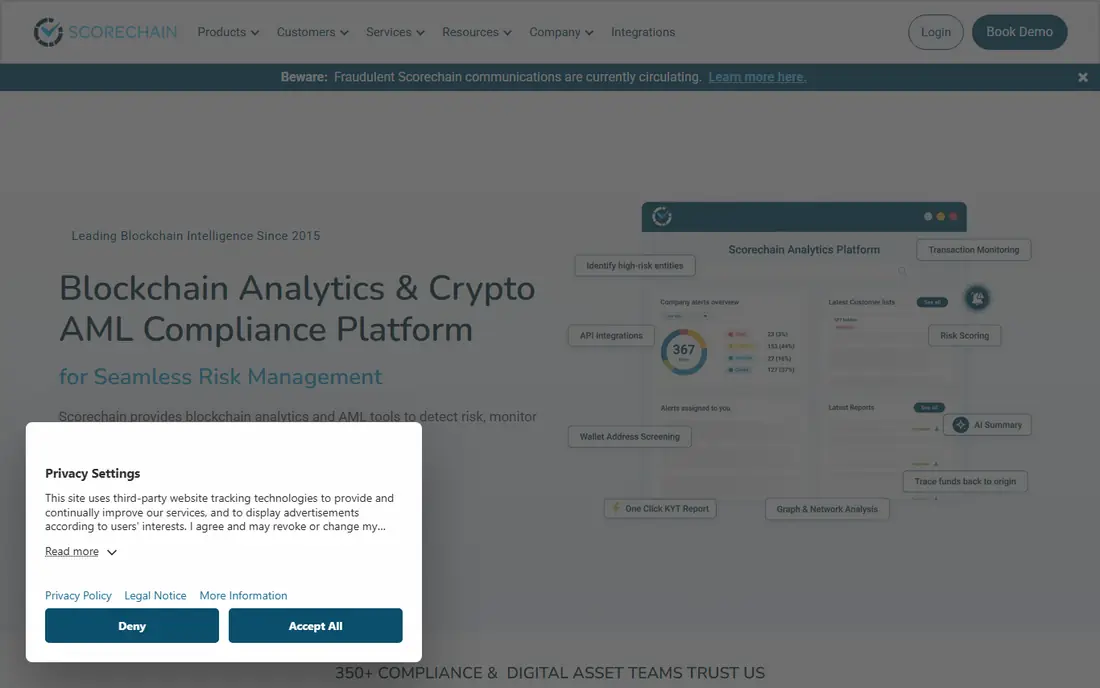
Scorechain serves crypto firms that need practical compliance workflows without the weight of the largest platforms. It covers wallet screening, transaction monitoring, sanctions checks, and source-of-funds analysis, with an emphasis on European regulatory needs. For a virtual asset service provider preparing for audits, that focused workflow can be easier to operate than a sprawling enterprise suite.
Buyers should review the published coverage matrix carefully, since chain and capability figures vary by product. Pricing is not a single public starting price for all use cases, so a trial and a scoped quote are the right path. Scorechain fits a European or mid-market crypto firm that wants compliance coverage it can actually staff and run day to day.
What we like- Wallet screening and transaction monitoring
- Source-of-funds analysis
- Practical compliance workflows
Watch out for- Pricing and coverage vary by product
- Smaller scale than top vendors
- Needs close review of chain matrix
#9Breadcrumbs
Best for: Visual tracing for smaller cases4.3/5 on
G2 (23 reviews, checked Oct 2026)
Visit breadcrumbs.app
Starting price$0 per user/month
Free planYes
Breadcrumbs is a visual investigation tool that traces funds from one address through subsequent hops on a clear graph. A small team, journalist, or student can follow a suspicious transfer, see where it splits or merges, and export a simple view of the path. Basic use is free, which makes it a good teaching tool and a first step before paying for an enterprise platform.
It does not offer the screening, monitoring, alerting, or case management of Chainalysis, TRM, or Elliptic, and its chain depth is narrower. For a single case or a training exercise, that is fine. For ongoing compliance monitoring, Breadcrumbs is a supplement, not a system. Use it to understand a flow quickly, then move to a compliance suite when volume or regulatory stakes rise.
What we like- Visual fund-flow tracing
- Free basic use
- Useful for learning and small investigations
Watch out for- Depth is thinner than enterprise tools
- Limited compliance features
- Not built for high-volume monitoring
How we chose
We reviewed vendor product pages, documentation, and public comparisons, and we kept only tools that offer real blockchain tracing, screening, or monitoring in 2026. We weighed chain coverage, risk score explainability, investigation workflow, API access, and pricing transparency, and we separated enterprise suites from developer APIs and free research tools because they serve different buyers. We did not treat a headline chain count as proof of depth, and we flagged where attribution still needs off-chain evidence.
Buying for your actual risk
Blockchain intelligence buying fails when a team buys chain count instead of workflow. Start from the decisions you must make each week, then match the tool to those decisions.
For an exchange or regulated fintech
You need screening at transaction time, monitoring with alerts, and a case system for escalations. Shortlist Chainalysis, TRM Labs, and Elliptic, and pilot each on your real transaction mix, including bridges and DeFi flows. Check alert volume, false positive handling, and how risk scores are explained to an auditor before signing an annual contract.
For an investigator or law firm
You need tracing depth, clear visualizations, and reports you can hand to counsel. Crystal Intelligence and TRM Forensics are strong starting points, with Arkham and Breadcrumbs useful for early research. Keep a record of every data source behind a claim, since a graph alone does not prove ownership.
For a developer or Web3 team
You need flexible data, not a compliance suite. Bitquery gives API access at a published price, while Arkham covers entity research. Build screening rules on top of the API only after you define your risk thresholds, and test with known high-risk and low-risk addresses before going live.
Frequently asked questions
What is blockchain intelligence?
It is the use of software to trace cryptocurrency funds, screen wallets and transactions for risk, and monitor activity for fraud, sanctions exposure, and money laundering. Tools combine public ledger data with labeled entities, risk models, and case workflows. They do not reveal private identities on their own.
Can a tool prove who owns a wallet?
No. A tool can show that a wallet interacted with a known exchange, service, or labeled entity, but ownership proof usually needs exchange records obtained through legal process, public statements, or other off-chain evidence. Treat labels as leads, not conclusions, especially in a legal filing.
How much do enterprise blockchain tools cost?
Most enterprise platforms use quote-based annual contracts priced on transaction volume, chains, and modules, so there is no single public price. Expect a sales conversation and a pilot. Developer APIs are the exception, with Bitquery publishing plans from $39 per month.
Which tool is best for a small team?
Arkham is the best free starting point for research, and Bitquery is the best low-cost option for developers who need data. A small compliance team should trial Scorechain or Merkle Science before committing to a large enterprise suite, and use a free tool for early investigation.
Do these tools cover every blockchain?
No tool covers every chain with equal depth. Screening, tracing, and monitoring support differ by network, and newer chains or bridges may have thinner coverage. Ask each vendor for a chain matrix tied to your specific products, and test with your own transactions during a trial.
Is blockchain intelligence legal to use?
Using public ledger data for research and compliance is a normal part of anti-money laundering and fraud work, and many regulators expect it from crypto businesses. Rules on data handling, privacy, and evidence still apply, so a compliance team should align tool use with counsel and local regulations before sharing findings externally.
Sources we checked (9)
- https://www.chainalysis.com
- https://www.trmlabs.com
- https://www.elliptic.com
- https://crystalintelligence.com
- https://www.merklescience.com
- https://www.arkhamintelligence.com
- https://bitquery.io/pricing
- https://www.scorechain.com
- https://www.breadcrumbs.app
Is your product missing or out of date?
We review this list regularly. Vendors can request a listing, send updated pricing or ask about featured placement.

Shihab Mia · Founder, Rankite
Shihab has 5+ years in B2B and SaaS SEO. He writes Rankite's software buying guides from pricing pages, documentation and public user reviews. More about Shihab.