How we make this list: we compare pricing pages, product documentation and public user reviews. Ratings come from G2, Capterra or Trustpilot, with the date we checked them.
Key takeaways
- AWS Auto Scaling is the default for EC2 and container workloads already running on Amazon.
- Kubernetes HPA with Karpenter gives open-source teams fast, efficient pod and node scaling.
- Cast AI suits Kubernetes teams that want autonomous optimization of cost and performance together.
- Spot by NetApp fits organizations that want to run reliably on discounted spot capacity.
- Densify is the pick for enterprises that want analytics-driven rightsizing across clouds.
Quick comparison
| Tool | Best for | Starting price | Free plan |
|---|
 AWS Auto Scaling AWS Auto Scaling | EC2 and AWS container workloads | See website | See website |
 Google Cloud Autoscaling Google Cloud Autoscaling | Compute Engine and GKE workloads | See website | See website |
 Azure Autoscale Azure Autoscale | Azure VMs and AKS workloads | See website | See website |
 Kubernetes HPA Kubernetes HPA | open-source pod autoscaling | See website | See website |
 Spot by NetApp Spot by NetApp | reliable spot instance automation | See website | See website |
 Densify Densify | analytics-driven rightsizing | See website | See website |
 Karpenter Karpenter | fast Kubernetes node provisioning | See website | See website |
 Cast AI Cast AI | autonomous Kubernetes optimization | See website | See website |
Is your product missing or out of date?
We review this list regularly. Vendors can request a listing, send updated pricing or ask about featured placement.
The best auto scaling software
Starting priceSee website
Free planSee website
AWS Auto Scaling adjusts EC2 capacity automatically based on demand, with target tracking policies that maintain metrics like CPU utilization and predictive scaling that provisions ahead of anticipated traffic. It integrates natively with load balancers, CloudWatch, and container services, making it the obvious choice for AWS workloads.
It only works within AWS, so multi-cloud teams need other answers. And predictive scaling improves with history, meaning new workloads scale reactively at first. But for the core job of keeping AWS capacity matched to demand, the native tooling is capable and free beyond the resources it manages.
What we like- Native integration with EC2, ECS, and EKS
- Target tracking and predictive scaling
- No additional charge for the service itself
Watch out for- AWS-only
- Predictive scaling needs historical data to work well
Starting priceSee website
Free planSee website
Google Cloud's autoscaling covers Compute Engine managed instance groups and GKE clusters, scaling on CPU, load balancer serving capacity, or custom Cloud Monitoring metrics. GKE Autopilot takes it further by managing nodes entirely, so teams define pod requirements and Google handles the rest. Configuration is notably straightforward.
The ecosystem lock-in mirrors AWS: this is for Google Cloud workloads. Some advanced scaling policies available on AWS have no direct equivalent. But for teams standardized on GCP, the native autoscaling plus Autopilot combination reduces operational burden significantly.
What we like- Managed instance group autoscaling with custom metrics
- GKE cluster autoscaler and autopilot
- Straightforward configuration
Watch out for- Google Cloud only
- Some advanced policies trail AWS options
Starting priceSee website
Free planSee website
Azure Autoscale handles virtual machine scale sets, App Service plans, and AKS clusters with rules based on metrics or schedules. Scale-out during business hours and scale-in overnight is easy to express, and Azure Monitor provides the metrics. For Windows-heavy shops and enterprises standardized on Microsoft, it fits naturally.
Like its rivals, it stays within its cloud. Complex rule sets can become hard to reason about, and testing scaling behavior requires care. But as the native answer for Azure infrastructure, it covers the standard autoscaling patterns well.
What we like- VM scale sets and AKS cluster autoscaler
- Schedule-based and metric-based rules
- Azure Monitor integration
Watch out for- Azure-only
- Rule configuration can get complex
Starting priceSee website
Free planSee website
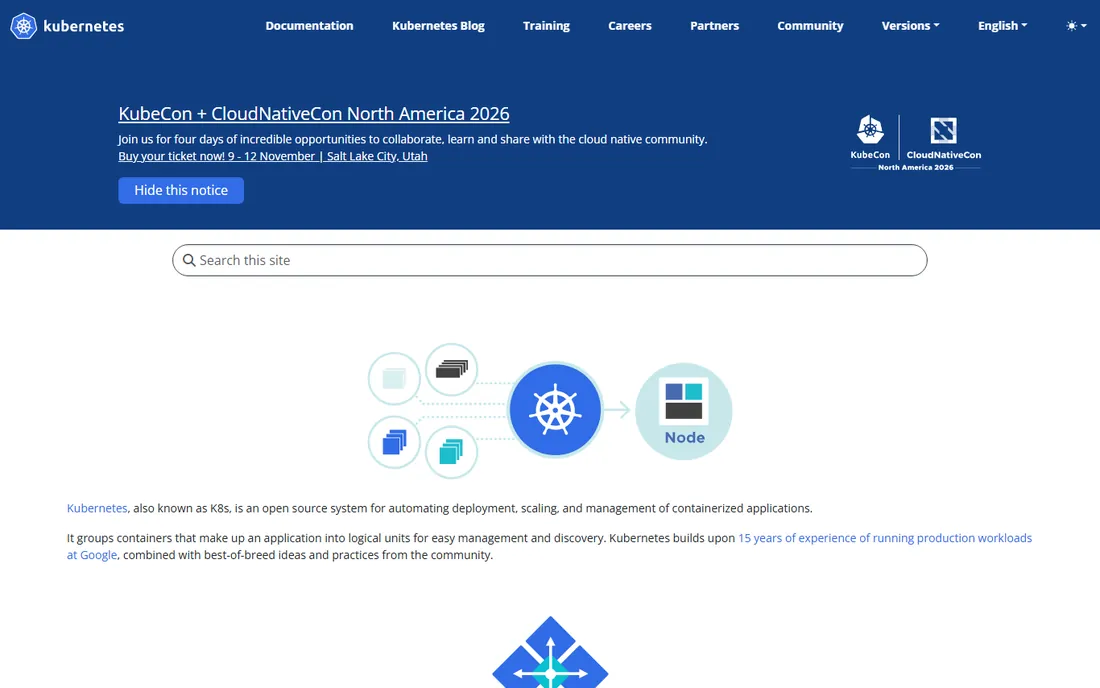
The Horizontal Pod Autoscaler is Kubernetes' built-in answer to variable load: it adjusts replica counts based on CPU, memory, or custom metrics from Prometheus and similar systems. It works on any conformant cluster, costs nothing, and every Kubernetes team should understand it before buying anything else.
HPA only scales workloads, not the nodes underneath them. Full cluster scaling needs the Cluster Autoscaler or Karpenter alongside it. And tuning thresholds takes experimentation. But as the foundation of Kubernetes autoscaling, HPA is where every team starts.
What we like- Free and built into Kubernetes
- Scales on CPU, memory, or custom metrics
- Works on any cluster
Watch out for- Only scales pods, not nodes
- Needs cluster autoscaler or Karpenter for full scaling
#5
Spot by NetApp
Best for: reliable spot instance automation
Visit spot.io
Starting priceSee website
Free planSee website
Spot by NetApp (formerly Spotinst) solves the spot instance reliability problem: it predicts interruptions, rebalances workloads across instance types and zones, and falls back to on-demand capacity gracefully. Elastigroup manages VM fleets while Ocean handles Kubernetes clusters, across AWS, Azure, and GCP. The result is spot pricing with near on-demand reliability.
It adds cost and operational complexity that simple workloads may not need. Teams with steady, predictable demand get less value. But for variable workloads where compute is a major bill, Spot's automation can cut costs dramatically while keeping availability high.
What we like- Makes spot instances reliable with predictive rebalancing
- Elastigroup and Ocean for VMs and Kubernetes
- Multi-cloud support
Watch out for- Adds a management layer and cost
- Complexity for simple workloads
Starting priceSee website
Free planSee website
Densify analyzes actual resource utilization with machine learning and recommends optimal instance types, sizes, and scaling configurations across AWS, Azure, GCP, and Kubernetes. Rather than automating scaling directly, it tells you exactly how to rightsize, which appeals to enterprises that want human approval on changes. The analytics show precisely where money is wasted.
Recommendations only save money when implemented, so teams need processes to act on them. And it is sold as enterprise software. But for organizations whose scaling problem is really a rightsizing problem, Densify's analytical depth beats rule-of-thumb tuning.
What we like- Machine learning rightsizing recommendations
- Multi-cloud and container coverage
- Strong enterprise reporting
Watch out for- Recommendations need implementation to realize value
- Enterprise sales process
Starting priceSee website
Free planSee website
Karpenter is the modern Kubernetes node autoscaler: instead of managing node groups, it provisions right-sized nodes just in time for pending pods, then consolidates and removes underutilized capacity. Provisioning latency drops to seconds, bin packing improves dramatically, and spot integration cuts costs. The 1.0 release brought API stability and better disruption controls.
It grew up on AWS EKS, with other providers following. And it assumes real Kubernetes operational skill. But for teams running significant Kubernetes workloads, Karpenter's efficiency gains over the traditional Cluster Autoscaler are substantial enough that it has become the default recommendation.
What we like- Sub-minute node provisioning
- Just-in-time capacity matched to pod needs
- Open source and free
Watch out for- AWS-focused historically with expanding provider support
- Needs Kubernetes expertise
#8
Cast AI
Best for: autonomous Kubernetes optimization
Visit cast.ai
Starting priceSee website
Free planSee website
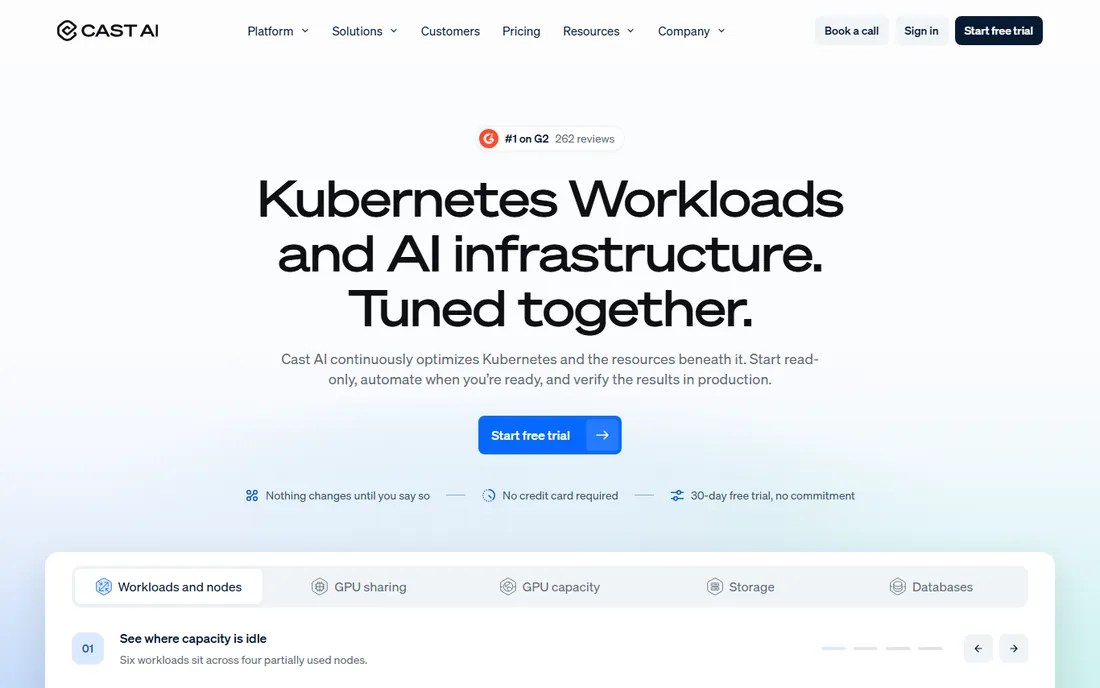
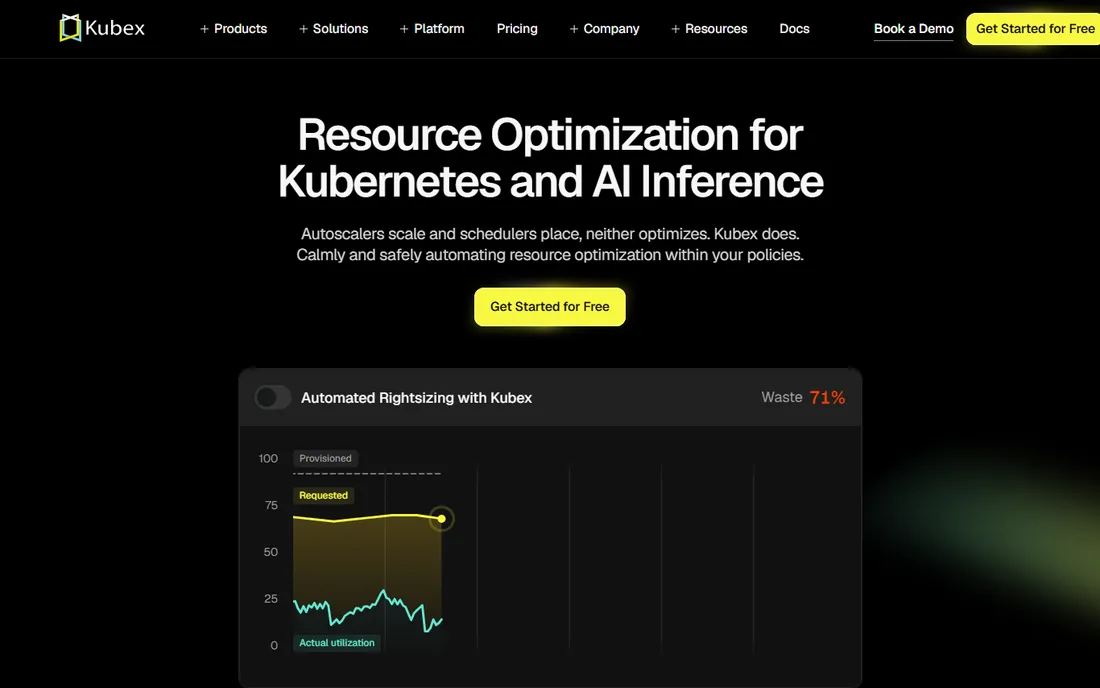
Cast AI positions itself as an autonomous optimization platform for Kubernetes: it analyzes clusters, rightsizes workloads, provisions cost-effective nodes including spot, and rebalances automatically. Teams connect their clusters and watch costs drop without manual tuning. The pitch is compelling for organizations that know their clusters are wasteful but lack time to fix them.
Autonomy requires trust; teams should start with recommendations before enabling automatic changes. Pricing tied to savings needs scrutiny. But for Kubernetes cost problems that manual effort never quite solves, Cast AI's automation is the most hands-off answer available.
What we like- Autonomous cost and performance optimization
- Automatic spot usage with rebalancing
- Single platform for scaling and rightsizing
Watch out for- Autonomous changes need trust and guardrails
- Pricing tied to savings
What to check before you buy
Start by separating pod scaling from node scaling from cost optimization. HPA scales pods. Cluster Autoscaler and Karpenter scale nodes. Spot, Densify, and Cast AI optimize cost. Most teams need all three layers, and the tools compose: HPA plus Karpenter plus a cost tool is a common stack.
Then test scaling behavior under real load patterns. Configure autoscaling in staging, run load tests that mimic production spikes, and watch what happens: how fast do new pods appear, how quickly do nodes provision, and does scale-in happen gracefully? Scaling that works in theory but lags in practice causes the outages it was meant to prevent.
Finally, set up guardrails before enabling automation. Define minimum and maximum capacity, configure pod disruption budgets, and alert on scaling events. Autonomous tools should start in recommendation mode. The teams that get burned are the ones that enable full automation on day one without understanding the tool's behavior under their specific workloads.
Native vs third-party: the real trade-off
Cloud-native autoscaling is free, integrated, and sufficient for standard patterns. Third-party tools earn their place on cost optimization, multi-cloud consistency, and advanced automation that native tools do not provide. The question is not which is better but whether your scale justifies the added layer.
A useful rule: start native, measure waste, then buy. If native autoscaling plus basic rightsizing keeps your bill reasonable, stop there. If compute costs are significant and manual optimization never happens, tools like Spot, Densify, or Cast AI pay for themselves. Complexity should follow demonstrated need, not precede it.
Frequently asked questions
What is auto scaling software?
It is software that automatically adjusts computing capacity based on demand: adding resources when load increases and removing them when it drops. It covers VM scaling, Kubernetes pod and node scaling, and cost-optimization layers that make scaling cheaper.
What is the difference between HPA and Cluster Autoscaler?
HPA (Horizontal Pod Autoscaler) adjusts the number of pod replicas based on metrics. The Cluster Autoscaler adjusts the number of nodes in the cluster. You typically need both: HPA scales workloads, and the cluster autoscaler provides nodes to run them. Karpenter is a modern alternative to the Cluster Autoscaler.
Will auto scaling save me money?
It prevents over-provisioning waste, which saves money compared with static capacity. But scaling alone does not optimize costs: rightsizing instances, using spot capacity, and eliminating idle resources matter as much. Combine scaling with cost optimization tools for the full benefit.
How fast can Kubernetes scale?
Pod scaling with HPA typically reacts within a minute or two. Node provisioning with the traditional Cluster Autoscaler takes several minutes; Karpenter reduces this to under a minute. For instant spikes, keep headroom or use predictive scaling rather than relying on reactive provisioning.
Should I use spot instances for production?
Yes, with proper automation. Spot instances offer deep discounts with the risk of interruption. Tools like Spot by NetApp, Karpenter, and Cast AI handle interruptions gracefully by diversifying across instance types and falling back to on-demand. Stateless and fault-tolerant workloads are ideal candidates.
What metrics should trigger scaling?
CPU and memory are the defaults, but application metrics like request queue length, latency, or custom business metrics often scale better. The best signal is the one most directly tied to user experience. Start with CPU, then graduate to custom metrics as you learn your workload's behavior.
How we chose
We selected auto scaling tools that appear consistently in cloud infrastructure shortlists on G2, DevOps community discussions, and practitioner guides, covering native cloud autoscaling, Kubernetes scaling, and cost optimization platforms. Each vendor's site was checked to confirm the product is current in 2026. Pricing details come from vendor pages where published; usage-based and free native options are noted as such. No hands-on infrastructure testing was conducted for this guide.
Sources we checked (12)
- https://www.aws.amazon.com
- https://www.cloud.google.com
- https://www.azure.microsoft.com
- https://www.kubernetes.io
- https://www.spot.io
- https://www.densify.com
- https://www.karpenter.sh
- https://www.cast.ai
- https://aws.amazon.com/about-aws/whats-new/2024/08/karpenter-1-0/
- https://Slashdot.org/software/comparison/Amazon-EC2-Auto-Scaling-vs-Google-Compute-Engine/
- https://slashdot.org/software/comparison/Densify-vs-ParkMyCloud/
- https://healthitcost.com/c/spot-instance-management/guide/pdf
Is your product missing or out of date?
We review this list regularly. Vendors can request a listing, send updated pricing or ask about featured placement.

Shihab Mia · Founder, Rankite
Shihab has 5+ years in B2B and SaaS SEO. He writes Rankite's software buying guides from pricing pages, documentation and public user reviews. More about Shihab.