How we make this list: we compare pricing pages, product documentation and public user reviews. Ratings come from G2, Capterra or Trustpilot, with the date we checked them.
Key takeaways
- Poshmark and Mercari suit everyday sellers with large buyer audiences and simple listing.
- Depop suits vintage and streetwear sellers reaching younger buyers.
- ThredUp and Vinted suit sellers who want hands-off selling or low fees.
- Vestiaire Collective and The RealReal suit luxury sellers who need authentication.
Quick comparison
| Tool | Best for | Starting price | Free plan |
|---|
 Poshmark | Everyday closet selling | Free to list | Yes |
 Depop | Vintage and streetwear | Free to list | Yes |
 ThredUp | Hands-off selling | Free to list | Yes |
 Mercari | Simple general selling | Free to list | Yes |
 Vinted | Low-fee selling | Free to list | Yes |
 eBay | Largest buyer audience | Free to list | Yes |
 Vestiaire Collective | Luxury resale | Free to list | Yes |
 The RealReal | Authenticated luxury | Free to list | Yes |
Is your product missing or out of date?
We review this list regularly. Vendors can request a listing, send updated pricing or ask about featured placement.
The best apps to sell used clothes
Starting priceFree to list
Free planYes
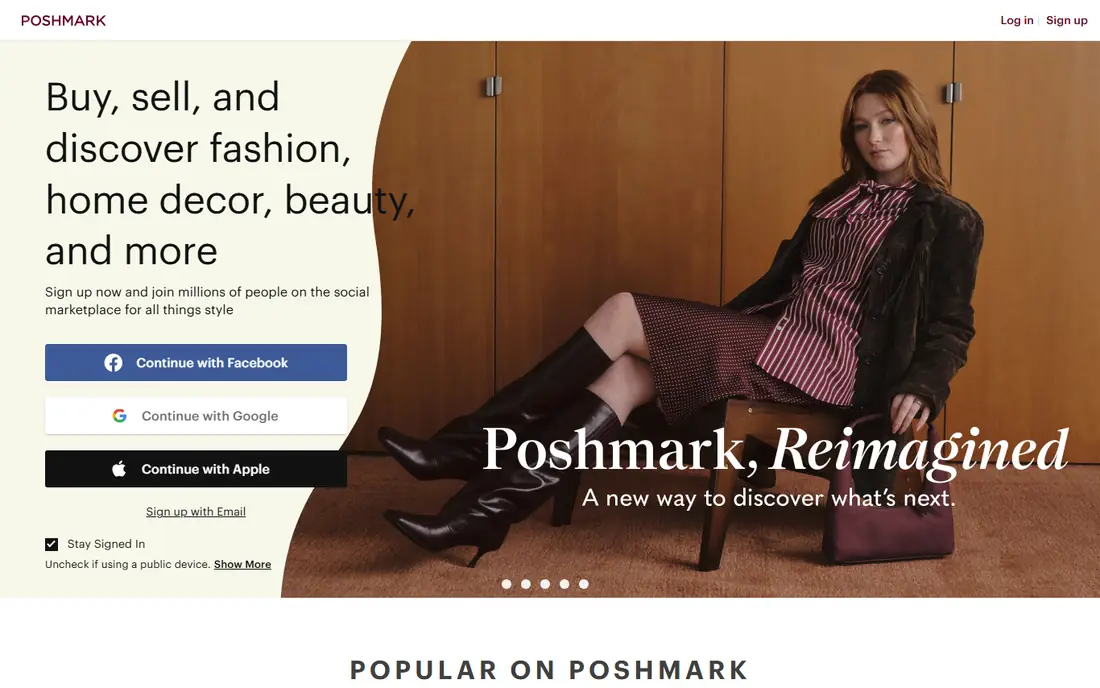
Poshmark is the default closet-cleanout app in the United States, with a large buyer audience for everyday brands, mall brands, and mid-range fashion. Listing is simple: photograph the item, describe it, set a price, and share it to your followers and parties for visibility. Buyers make offers, and Poshmark provides a prepaid shipping label once a sale completes.
The commission is the catch: Poshmark takes 20 percent on sales of 15 dollars or more, and a flat fee on smaller sales, which eats into low-price items. Sharing listings regularly takes time, since visibility depends on activity. For a seller clearing a closet of everyday clothes today, Poshmark audience makes it the easiest place to start.
What we like- Huge US buyer audience
- Simple listing
- Community sharing boosts visibility
Watch out for- 20 percent commission on sales over 15 dollars
- Sharing takes time
Starting priceFree to list
Free planYes
Depop suits vintage, streetwear, and Y2K fashion, with a younger buyer audience that shops socially, following sellers and saving items like a feed. Sellers who curate a clear aesthetic, photograph well, and price fairly can build a following that buys repeatedly. The app feels closer to social media than a marketplace, which suits fashion-forward sellers.
Fees apply to sales plus payment processing, and casual buyers often send low offers, so patience and firm pricing help. For a seller with vintage finds, band tees, or streetwear, Depop audience and culture beat general marketplaces. For everyday basics, Poshmark or Mercari will sell faster.
What we like- Strong younger buyer audience
- Great for vintage and streetwear
- Social shopping feel
Watch out for- Fees on sales and payments
- Casual buyers and low offers are common
Starting priceFree to list
Free planYes
ThredUp is the hands-off option: order a Clean Out Bag, fill it with clothes, send it in, and ThredUp photographs, lists, and sells accepted items for you. That suits sellers with a large closet cleanout who do not want to photograph and list dozens of items individually. Payouts arrive as cash or shopping credit once items sell.
Payouts are lower than self-selling, since ThredUp keeps a larger share for its work, and acceptance varies by brand, condition, and demand, so some items are recycled rather than sold. For a bulk cleanout where time matters more than maximum payout, ThredUp is the most convenient choice.
What we like- Send a bag and ThredUp sells for you
- No listing work
- Good for bulk cleanouts
Watch out for- Payouts are lower than self-selling
- Acceptance varies by brand and condition
Starting priceFree to list
Free planYes
Mercari suits sellers who want the simplest possible listing flow. Photograph, describe, price, and ship with a prepaid label, without the sharing and party mechanics of Poshmark. Because Mercari sells everything from electronics to home goods, a closet cleanout can sit alongside other household items in one shop.
Fees apply to sales, and Mercari is less fashion-focused than Poshmark or Depop, so vintage and luxury pieces may find fewer specialist buyers. For a seller who values speed and simplicity over fashion community, Mercari is the easiest general marketplace.
What we like- Very simple listing
- Sells clothes plus other items
- Good buyer audience
Watch out for- Fees apply
- Less fashion-focused than Poshmark or Depop
Starting priceFree to list
Free planYes
Vinted stands out on fees: sellers generally pay no commission in many markets, with buyers paying a protection fee instead, so sellers keep more of each sale. Listing is simple, the app is clean, and its European strength is growing in the United States. That fee model suits sellers of everyday clothes who sell at lower prices, where commissions hurt most.
Buyer fees can deter some buyers, and Vinted is less focused on luxury than Vestiaire or The RealReal. For a seller who wants to keep the most from each sale and does not need a fashion community, Vinted is the best fee deal on this list.
What we like- No seller commission in many markets
- Simple listing
- Growing US presence
Watch out for- Buyer fees can deter some buyers
- Less luxury focus
Starting priceFree to list
Free planYes
eBay gives sellers the largest buyer audience on this list, which matters for rare, collectible, or unusual pieces that need a global search to find the right buyer. Auctions can drive prices above fixed listings for in-demand items, while fixed-price listings suit everyday selling. Seller tools cover shipping, returns, and promotions in depth.
Fees apply to sales, and listing well takes more work, with detailed titles, measurements, and photos mattering for search. For a rare vintage piece or a high-demand item, eBay audience beats every specialist app. For everyday closet basics, simpler apps sell with less effort.
What we like- Huge global audience
- Auctions plus fixed price
- Strong for rare items
Watch out for- Fees on sales
- More work to list well
Starting priceFree to list
Free planYes
Vestiaire Collective suits designer and luxury sellers, with authentication checks that give buyers confidence and justify higher prices. Its global audience seeks designer brands specifically, so a designer bag or jacket finds the right buyer faster than on a general marketplace. Listing includes detailed condition and authenticity information.
Commissions apply, and authentication checks add time before payout, so sellers should expect a slower process than Poshmark. Everyday clothes do not belong here. For a designer piece where trust and price matter, Vestiaire authentication makes it the safer marketplace.
What we like- Authentication for luxury items
- Global luxury buyer audience
- Good for designer pieces
Watch out for- Commissions and authentication checks take time
- Not for everyday clothes
Starting priceFree to list
Free planYes
The RealReal is a luxury consignment service: send in designer items, and its experts authenticate, photograph, price, and list them for you. That hands-off luxury service suits sellers with valuable pieces who do not want to manage listings or authenticity disputes themselves. Its buyer audience trusts RealReal authentication, which supports strong prices for true luxury.
Consignment payouts are lower than self-selling, since The RealReal keeps a share for its service, and the process takes longer than listing yourself. For a high-value designer item where authentication and presentation matter most, The RealReal gives the most professional result.
What we like- Expert authentication
- Handles photography and listing
- Strong luxury audience
Watch out for- Consignment model with lower payouts
- Slower than self-listing
How we chose
We compared vendor pages, product documentation, and public user reviews, and we judged each app on buyer audience, fees, listing ease, shipping, authentication, and payout speed. Everyday, vintage, and luxury selling were judged separately, since the best app for a five-dollar tee differs from the best app for a designer bag. We did not claim hands-on testing. Fees change, so check the vendor fee page before listing, and compare the final payout, not just the headline commission.
What to check before you pick
Start with what you are selling. Everyday brands sell fastest on Poshmark, Mercari, or Vinted, vintage and streetwear on Depop, bulk cleanouts on ThredUp, rare items on eBay, and luxury on Vestiaire or The RealReal. Check fees fully, including commission, payment processing, and shipping costs, because a low commission with high shipping fees can pay less than a higher commission with free labels.
Also check condition standards, since buyers expect honest photos and descriptions, including flaws, measurements, and wear. Good photos in natural light, with close-ups of labels and flaws, sell faster and reduce returns. Check payout timing and method, since some apps hold funds until delivery is confirmed, and check return policies, since a buyer-friendly return policy can cost a seller time and shipping.
A further check matters for taxes and records: in the United States, marketplace sales may trigger tax reporting above certain thresholds, and sellers should keep records of sale prices, fees, and shipping costs for tax purposes. Check your platform tax documents at year end, and consult a tax professional if you sell at volume, since casual closet selling and business reselling are treated differently. Keeping simple records from the start saves a painful January.
Finally, protect yourself from scams by using platform payments and shipping, never accepting off-platform payment or gift cards, and keeping messages inside the app. A buyer who asks to move off-platform is a red flag, and platform protection only covers transactions completed inside the app. Ship promptly with tracking, keep proof of shipment, and photograph the item before packing, so disputes can be resolved with evidence.
Frequently asked questions
Which app is best for selling everyday clothes?
Poshmark suits everyday closet selling in the United States, thanks to its large buyer audience, while Mercari suits sellers who want simpler listing and Vinted suits sellers who want the lowest fees. Try one app first, and expand only if items do not sell.
How much do selling apps charge?
Fees vary widely, from no seller commission on Vinted in many markets to 20 percent on Poshmark for larger sales, plus payment processing and shipping costs on some platforms. Compare the final payout after all fees, not just the headline rate.
Should I use ThredUp or sell myself?
ThredUp suits bulk cleanouts where time matters more than payout, since it handles listing and selling for you. Self-selling on Poshmark or Mercari pays more per item but takes far more time in photography, listing, and messaging.
How do I sell luxury items safely?
Use an authenticated marketplace such as Vestiaire Collective or The RealReal, which verify items before buyers pay. Keep proof of purchase, photograph serial numbers and details, and never accept off-platform payment for luxury items.
What photos sell clothes best?
Natural light, a clean background, front and back views, close-ups of labels and flaws, and a photo of the item worn or on a hanger all help. Include measurements in the description, since sizing varies by brand and buyers return items that do not fit.
Do I need to pay tax on clothes I sell?
Tax rules depend on your country and sales volume, and US marketplaces may issue tax forms above certain thresholds. Keep records of sales, fees, and costs, and consult a tax professional if you sell regularly or at volume.
Sources we checked (8)
- https://www.poshmark.com
- https://www.depop.com
- https://www.thredup.com
- https://www.mercari.com
- https://www.vinted.com
- https://www.ebay.com
- https://www.vestiaire.com
- https://www.therealreal.com
Is your product missing or out of date?
We review this list regularly. Vendors can request a listing, send updated pricing or ask about featured placement.

Shihab Mia · Founder, Rankite
Shihab has 5+ years in B2B and SaaS SEO. He writes Rankite's software buying guides from pricing pages, documentation and public user reviews. More about Shihab.