How we make this list: we compare pricing pages, product documentation and public user reviews. Ratings come from G2, Capterra or Trustpilot, with the date we checked them.
Key takeaways
- Strength apps divide into fast loggers, program libraries, auto-generated sessions, and coached plans, and the right type matters more than the brand name.
- Hevy offers the strongest free tier for lifters who want to log and share workouts, while Strong offers the fastest plain logging experience.
- Fitbod suits lifters who want each session built for them, while Boostcamp suits lifters who want to follow a named, coach-designed program.
- Caliber and Alpha Progression suit lifters who want more structure than a blank log, without giving up control over their training.
- Price differences are large, from free logging to monthly coaching plans, so start free for a few weeks before paying for a full year.
Quick comparison
| Tool | Best for | Starting price | Free plan |
|---|
 Hevy | Social logging on a budget | $2.99 per month | Yes |
 Strong | Fast, minimal workout logging | $4.99 per month | Yes |
 Fitbod | Auto-generated strength sessions | $12.99 per month | Free trial |
 JEFIT | Deep exercise and program library | $12.99 per month | Yes |
 Boostcamp | Following proven strength programs | $14.99 per month | Yes |
 Caliber | Coach-designed plans with free logging | See website | Yes |
 Alpha Progression | Guided progression for beginners | See website | Yes |
 StrongLifts 5x5 | Simple barbell progression | See website | Yes |
 Setgraph | Freestyle training with strong analytics | $4.99 per month | Yes |
Is your product missing or out of date?
We review this list regularly. Vendors can request a listing, send updated pricing or ask about featured placement.
The best app for strength training
Starting price$2.99 per month
Free planYes
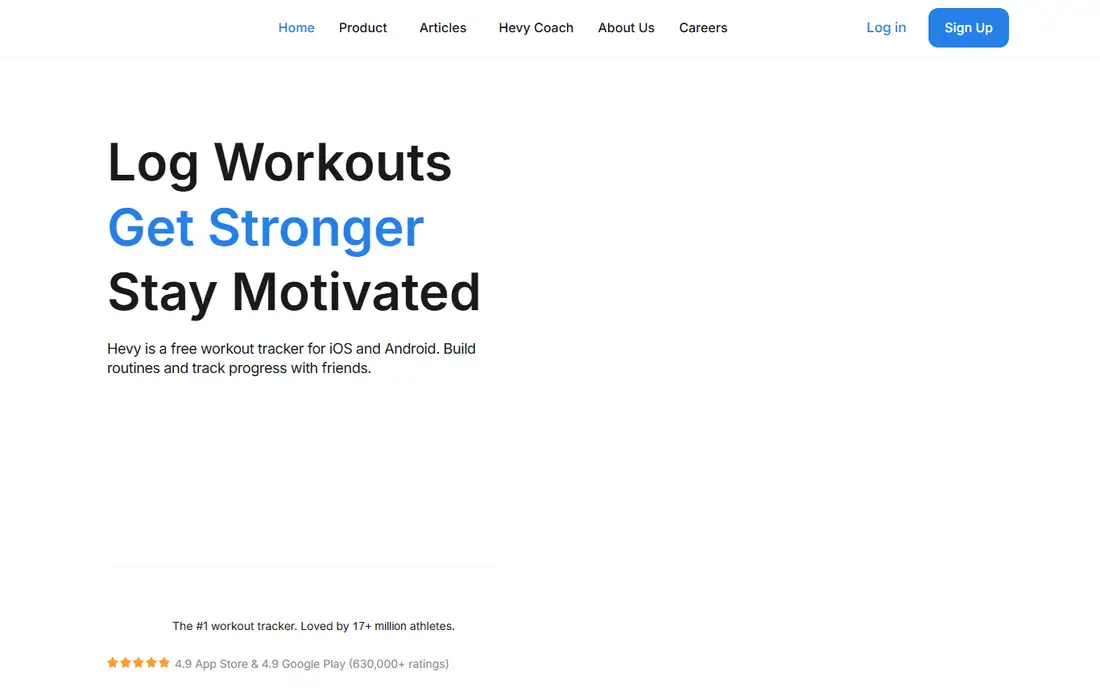
Hevy is a good starting point for lifters who want a clean log and a little social pressure to stay consistent. Routines can be built in advance, sets and reps can be entered quickly between sets, and previous weights for each exercise appear when the exercise comes up again. That history is the core value for progressive overload, because it removes guesswork about what weight to load next. The social feed adds a second layer, with friends, comments, and shared routines for lifters who train better when others can see their work.
The free tier is generous for logging, but it limits how many routines can be saved and how far back some stats reach. Lifters with a simple three or four day split may never hit those caps. Lifters who run many variations, or who want full history charts, will need Pro. At its yearly price, Hevy remains one of the cheapest paid upgrades in this list, which makes it easy to test free first and upgrade only when a cap actually gets in the way.
What we like- Unlimited workout logging on the free tier
- A social feed for following friends and sharing routines
- Routine builder with exercise videos and history
Watch out for- Free tier caps the number of saved routines
- Advanced analytics and all-time graphs need the paid tier
Starting price$4.99 per month
Free planYes
Strong is built around one idea: logging should not slow down a workout. The interface puts the next set front and centre, rest timers run in the background, and a plate calculator helps lifters load a bar without mental maths. Charts for volume, estimated one-rep max, and personal records turn months of logs into a readable trend. For lifters who already know their program, from a coach, a book, or their own planning, that focus is a strength rather than a gap.
What Strong does not do is tell a lifter what to train. There is no large program library and no session generator, so beginners who want guidance must bring a program from elsewhere. The free tier also caps saved routines, which can frustrate lifters who rotate many templates. Strong fits experienced lifters who value speed and clarity over hand-holding, and it fits less well for someone who opens an app hoping it will plan the week.
What we like- Very fast set entry with rest timers and plate calculator
- Clear volume and strength charts
- Apple Watch support for logging without a phone in hand
Watch out for- No built-in program library or auto-generated sessions
- Free tier limits the number of saved routines
Starting price$12.99 per month
Free planFree trial
Fitbod takes a different approach from a plain log. A lifter enters goals, experience, available equipment, and schedule, and the app generates each session, adjusting for which muscles have recovered. That automation suits home gym users with limited equipment, hotel gym users, and returning lifters who do not want to plan. Exercise videos help with form cues, and substitutions keep a session moving when a machine is taken.
The main drawback is cost and control. There is no free tier to fall back on after the trial, so the app must earn its subscription every month. Lifters who follow a strict program with fixed sets, reps, and progression may also dislike an algorithm changing exercises or weights. For lifters who want the app to decide, and who train in varied settings, Fitbod removes the most common planning friction. For lifters with a fixed program, a logger such as Strong or Hevy will feel less intrusive.
What we like- Builds each session around available equipment and muscle recovery
- Suggests weights and swaps exercises when equipment is busy
- Tracks strength scores over time
Watch out for- No permanent free tier beyond a trial
- Lifters who want full control over every exercise may find the generator restrictive
Starting price$12.99 per month
Free planYes
JEFIT suits lifters who like to browse, compare, and tinker. The exercise library covers many training styles, and the program section offers both JEFIT-built plans and a large set of community plans. Logging covers sets, reps, rest, and supersets, and the analysis tools break volume down by muscle group, which helps a lifter spot a neglected area. Web access also helps lifters who like to plan on a computer and log on a phone.
That depth comes with a busier interface. New users may need a few sessions to learn where plans, logs, and stats live, and the free tier shows ads. The paid tier removes ads and adds adaptive plans and deeper periodisation tools. JEFIT is a strong pick for lifters who want one app for discovery, logging, and analysis. It is less suited to lifters who want the simplest possible screen between sets.
What we like- A very large exercise library with instructions
- Hundreds of built-in and community programs
- Detailed per-muscle volume and recovery analysis
Watch out for- Free tier includes ads
- The interface carries more menus and options than simpler loggers
Starting price$14.99 per month
Free planYes
Boostcamp is the app to open when the question is not how to log, but what program to follow. Its library includes well-known strength programs and coach-designed plans, with progression written into the program rather than left to guesswork. A lifter picks a program, follows the scheduled sessions, and uses the tracker to record each set. The custom builder also lets experienced lifters design their own multi-week cycles and share them with others.
Choice is both the appeal and the risk. A beginner who has not settled on a goal can spend too long browsing programs instead of training. The paid tier adds features such as unlimited plate calculator use and extra tools, while the free tier still covers core logging and many programs. Boostcamp fits lifters who want a proven plan and a tracker in one place. It fits less well for lifters who only want a blank log.
What we like- A large library of coach-designed programs
- A custom program builder for multi-week plans
- Logging tools include RPE, supersets, and rest timers
Watch out for- Monthly price is higher than simple loggers
- Program choice can overwhelm lifters who have not picked a goal yet
Starting priceSee website
Free planYes
Caliber starts with a free logger and adds coach-designed training plans on top. That combination suits lifters who are past the beginner stage but still want a plan built by a coach rather than by an algorithm alone. The free tier covers the core job of recording workouts, while paid options add structured programs and, for lifters who want it, access to human coaching. That path from self-guided to coached training is clearer here than in most logging apps.
Cost rises with coaching, and lifters should compare the coaching price against a local coach or a cheaper program app before committing. The structured plans also suit lifters who are happy to follow a set schedule. Lifters who change exercises daily, or who follow a highly personalised program, may find the structure limiting. Caliber works best for lifters who want guidance they can trust, with a free logger to fall back on.
What we like- Core workout logging is free
- Coach-designed programs add structure
- Optional human coaching is available for lifters who want direct guidance
Watch out for- Coaching and some premium plans cost more than a simple logger
- Program structure may feel rigid to lifters who prefer full freedom
Starting priceSee website
Free planYes
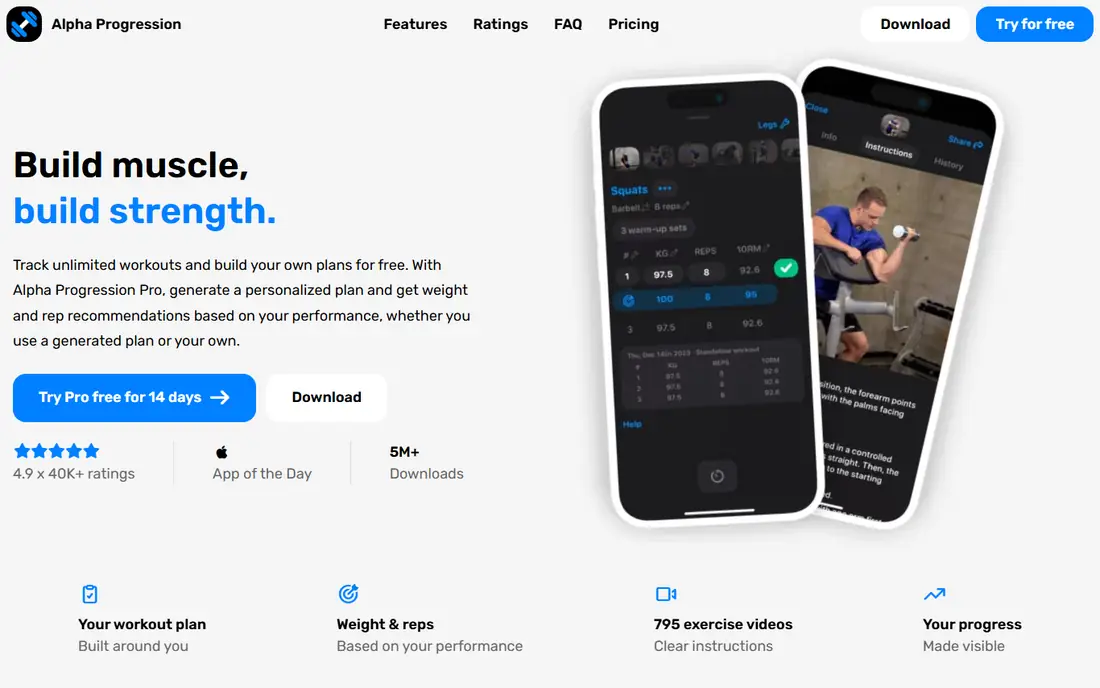
Alpha Progression is designed to reduce the decisions a newer lifter faces. The app suggests progression, shows what to do each day, and provides demonstration videos for its exercise library. That guidance helps beginners who know they should train, but are unsure how much weight to add, when to change exercises, or how to structure a week. The interface keeps the next step visible, which lowers the chance of a lifter stalling because of planning doubt.
Advanced lifters may outgrow that guidance. Lifters who run specialised powerlifting or bodybuilding programs, with custom periodisation and accessory rules, may find the app less flexible than a blank logger or a program builder. Paid features also gate some of the deeper tools. For a beginner or returning lifter who wants a clear path forward, Alpha Progression is one of the most approachable options in this list.
What we like- Personalised progression with clear next weights
- A curated exercise library with demonstration videos
- Simple day-to-day guidance for newer lifters
Watch out for- Less suited to advanced lifters with highly specific programs
- Some advanced features sit behind a paid tier
Starting priceSee website
Free planYes
StrongLifts 5x5 does one program well. Lifters train three days a week, rotate two workouts built around squat, bench press, overhead press, deadlift, and barbell row, and add a small amount of weight each session. The app handles the maths, rest times, and deloads, so a beginner can focus on form and consistency. That narrow focus is the point. There is no program library to browse and no decision fatigue about what to do next.
The limit is scope. Lifters who want dumbbell work, machines, bodybuilding splits, or sport-specific training will need another app. Lifters who have already progressed past linear 5x5 gains will also need a more varied program. For a new lifter starting with a barbell, or a returning lifter rebuilding basic strength, StrongLifts 5x5 remains a clear and low-cost way to start.
What we like- One clear program with automatic weight progression
- Simple logging for five compound lifts
- Rest timers and deload guidance built into the plan
Watch out for- Only suits lifters who want a 5x5 barbell program
- Accessory work and other training styles are not the focus
Starting price$4.99 per month
Free planYes
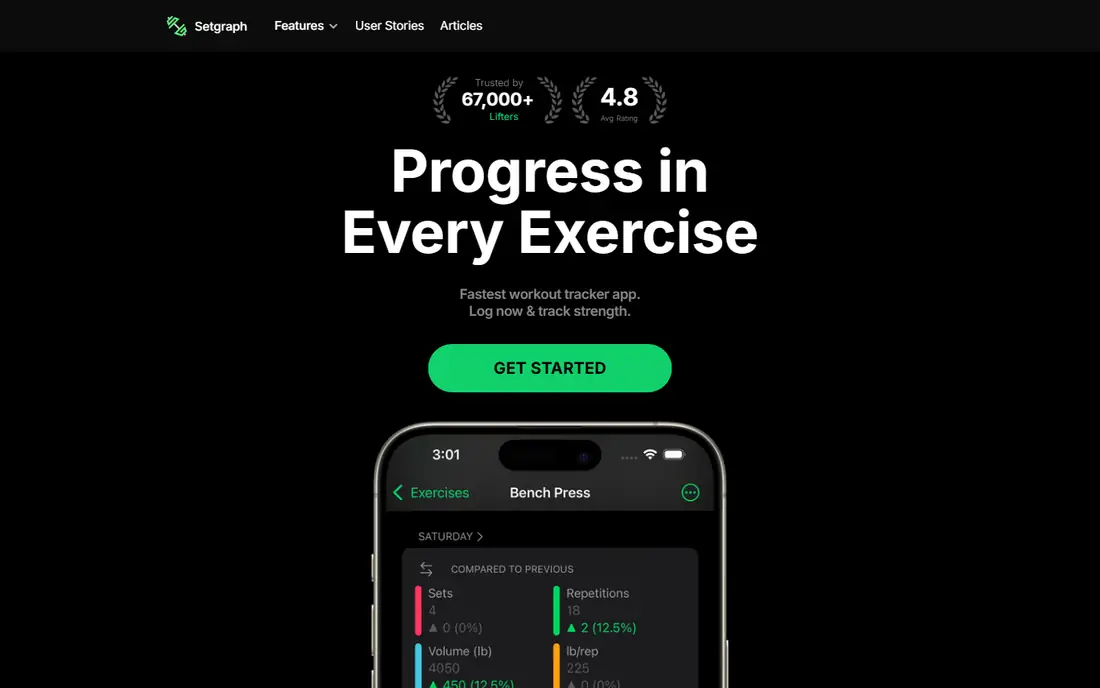
Setgraph suits lifters who want freedom in the gym and clear numbers after it. Sessions can be built around personal routines, and the analytics turn those sessions into charts that show progress over weeks and months. That combination works for lifters who have outgrown a single fixed program but still want data to guide decisions. The free tier covers the core logging job, which makes it easy to test before paying.
The smaller ecosystem is the trade-off. Lifters who want a large program library, community routines, or coach-designed plans will find more choice in Boostcamp, JEFIT, or Caliber. Setgraph is best for self-directed lifters who value a clean log and useful charts over a library of plans. Lifters who want the app to choose their training should look at Fitbod or a coached option instead.
What we like- Flexible logging for lifters who design their own sessions
- Strong charts and progress views
- A free tier that covers core logging
Watch out for- Smaller community and program library than the largest apps
- Fewer guided programs for lifters who want a ready-made plan
How we chose
This list was built from vendor pricing pages and product pages, public documentation, and public reviews on G2, Capterra, Reddit, and app store listings, with attention to logging speed, program quality, exercise libraries, analytics, and platform support. An app made the list only if it is available today and clearly focused on strength training, rather than general fitness classes or step tracking. Leaders such as Hevy, Strong, and Fitbod sit beside smaller and newer options such as Setgraph and Alpha Progression, so readers can compare both scale and specialisation. Prices were checked against vendor pages where available, and marked as See website where a vendor page did not confirm a figure on the day of writing.
Picking a strength app that you will still use in three months
Start with the job, not the brand
Decide first whether you need a log, a program, or a coach. A log suits lifters with a plan already. A program library suits lifters who want to follow a proven plan. An auto-generated session suits lifters who want decisions made for them. A coach suits lifters who want accountability and feedback. Matching the job first prevents paying for features that sit unused.
Test the free tier for a full training block
Use the free tier for at least three weeks, through a full set of training days, before paying. Check how fast logging feels between sets, whether rest timers and calculators work the way you train, and whether charts show the progress you care about. A trial that only covers a few sessions can hide caps on routines, history, or exports.
Check exports and platform support before you commit
A strength log becomes more valuable over time, so check whether you can export your history and whether the app runs on your phone and watch. Lifters who switch phones or watches often lose value when an app is tied to one platform. A clear export option and broad device support protect years of training data.
Frequently asked questions
Do I need to pay for a strength training app?
No, several strong loggers offer free tiers that cover unlimited workout logging, though they may cap saved routines or advanced charts. Paying usually adds unlimited routines, deeper analytics, programs, or coaching. Start free, and pay only when a specific cap or feature blocks your training.
Which strength app is best for beginners?
Alpha Progression and StrongLifts 5x5 suit beginners because they give clear next steps and progression rules. Boostcamp also suits beginners who want to follow a named program. A plain logger suits beginners less well, because it assumes the lifter already knows what program to follow.
Which strength app is best for experienced lifters?
Strong and Hevy suit experienced lifters who bring their own program and want fast logging with clear history. JEFIT suits experienced lifters who want a large library and deep analysis. The best choice depends on whether speed, social features, or analytics matter most.
Can a strength app replace a coach?
An app can replace the planning and tracking parts of coaching for many lifters, but it cannot watch form in person or adjust for pain, injury, or life stress in the same way a coach can. Caliber offers a path to human coaching for lifters who want that layer. Lifters with medical concerns should speak to a qualified professional.
What should I check before buying a yearly plan?
Check the monthly and yearly price on the vendor pricing page, the refund and cancellation terms, and whether the paid features solve a real limit in the free tier. Yearly plans save money only if the app is still in use after a few months. A monthly plan for the first month is often the safer test.
Sources we checked (9)
- https://www.hevyapp.com
- https://www.strong.app
- https://fitbod.me
- https://www.jefit.com
- https://www.boostcamp.app
- https://caliberstrong.com
- https://alphaprogression.com
- https://stronglifts.com
- https://setgraph.app
Is your product missing or out of date?
We review this list regularly. Vendors can request a listing, send updated pricing or ask about featured placement.

Shihab Mia · Founder, Rankite
Shihab has 5+ years in B2B and SaaS SEO. He writes Rankite's software buying guides from pricing pages, documentation and public user reviews. More about Shihab.