How we make this list: we compare pricing pages, product documentation and public user reviews. Ratings come from G2, Capterra or Trustpilot, with the date we checked them.
Key takeaways
- Google Flights is the best starting point for most travelers, with free tracking and a clear calendar view.
- Skyscanner suits open-ended trips, with Everywhere searches and whole-month pricing.
- KAYAK is the best all-round travel app, with flight, hotel, and car tracking in one place.
- Hopper is best for buy-now-or-wait advice, with color-coded calendars and push alerts.
- Momondo and Kiwi.com surface fares from smaller agencies and unusual route combinations.
- Going is best for curated deal alerts, with a free tier and paid plans for deeper deals.
- Fares change fast, so check baggage fees and booking terms before you pay.
Quick comparison
| Tool | Best for | Starting price | Free plan |
|---|
 Google Flights | Fast search and free route tracking | Free | Yes |
 Skyscanner | Everywhere and whole-month searches | Free | Yes |
 KAYAK | Flight, hotel, and car tracking together | Free | Yes |
 Hopper | Buy-or-wait predictions | Free | Yes |
 Momondo | Smaller agencies and odd fares | Free | Yes |
 Kiwi.com | Multi-airline route combinations | Free | Yes |
 Going | Curated deal alerts | Free | Yes |
 Skiplagged | Hidden-city fare searches | Free | Yes |
Is your product missing or out of date?
We review this list regularly. Vendors can request a listing, send updated pricing or ask about featured placement.
The best apps for cheap flights
Starting priceFree
Free planYes
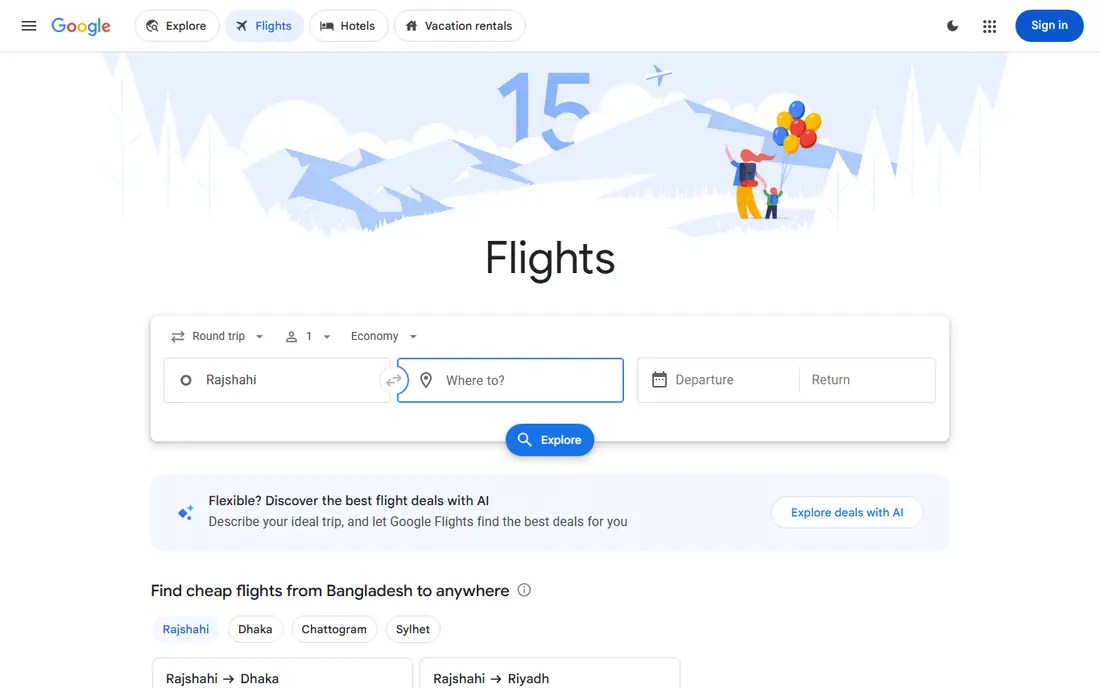
Google Flights is the strongest place to start a flight search. Its calendar view shows fares across a whole month, and the Explore map shows the cheapest destinations from your home airport when you have not picked a destination yet. The track prices toggle sends email alerts when a tracked fare changes by a meaningful amount, and it links you out to the airline or agency to complete the booking, so you avoid an extra layer of middleman fees.
The limits are modest. There is no native app, so the experience lives in a mobile browser, and alerts come by email rather than push notice. Some ultra-low-cost carriers do not appear in every result. For most travelers, Google Flights plus one alert app covers the basics better than any single paid tool.
What we like- Clean interface
- No booking fees
- Flexible-date grid and Explore map
Watch out for- No native app
- Email alerts only
- Some ultra-low-cost carriers may be missing
Starting priceFree
Free planYes
Skyscanner stands out for open-ended trips. You can set your destination to Everywhere and your dates to a whole month to find the cheapest flight from your airport to anywhere, and its calendar color-codes prices so bargain dates are easy to spot. Coverage spans many airlines and online travel agencies, which helps for routes where the big sites miss smaller sellers.
The watch-out is agent quality. Skyscanner surfaces fares from many third-party booking agents, and smaller agencies vary in customer service, so check reviews before you buy through an unfamiliar provider. For travelers who are flexible on destination or dates, Skyscanner is the best discovery tool on this list.
What we like- Everywhere destination search
- Whole-month view
- Broad airline and agency coverage
Watch out for- Third-party agent quality varies
- No fare prediction depth
- Booking goes through partners
Starting priceFree
Free planYes
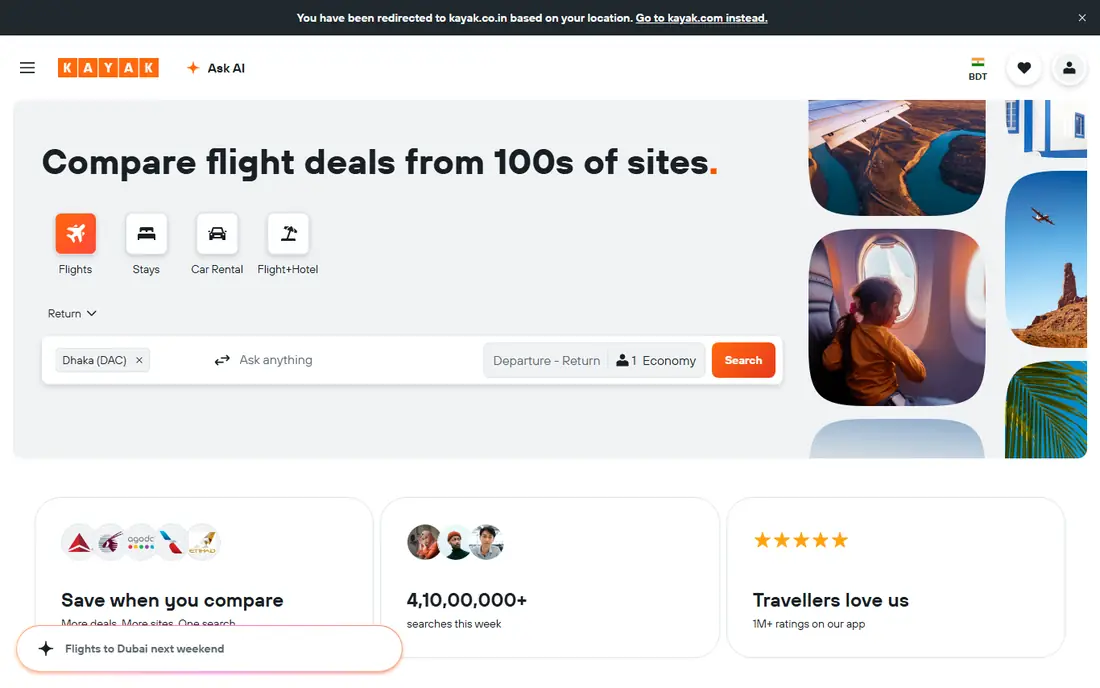
KAYAK is the most complete travel-management app on this list. Its price forecast gives a buy-or-wait call, alerts can be set by email or push, and the same account tracks hotels and rental cars alongside flights. Trip tools such as bag measurement and offline access help once you are traveling, not just while you are booking.
The forecast is a statistical guide, not a promise, and fares can move against it. Results also include many agencies, so the same agent-quality check applies as with Skyscanner. For travelers who want one app for a whole trip, KAYAK is the best all-round pick.
What we like- Price forecast
- Unlimited alerts with an account
- Hotel and car tracking included
Watch out for- Results include many agencies
- Forecast is a guide, not a guarantee
- App is busy
Starting priceFree
Free planYes
Hopper takes a prediction-based approach. Its models study fare data and tell you whether to buy now or wait for a likely drop, shown on a color-coded calendar where green days are cheapest and red days are priciest. Push alerts notify you when it is time to book, and a price freeze option lets you lock a fare for a fee while you decide.
The trade off is that Hopper acts as the booking agent, so ticket changes and support go through Hopper rather than the airline. Optional add-ons such as flexibility plans cost extra. For mobile-first travelers who want a clear buy-or-wait call, Hopper is the best prediction app available.
What we like- Color-coded price calendar
- Push alerts
- Price freeze option
Watch out for- Books in-app, not through the airline
- Paid add-ons cost extra
- Predictions cover short windows best
Starting priceFree
Free planYes
Momondo searches hundreds of smaller online travel agencies, and it often surfaces fares that bigger sites miss. Its calendar matrix shows how fares change across nearby dates, and it links you to the provider to complete the booking. It is owned by the same company as KAYAK, but its results skew toward smaller sellers.
The same caution applies: check the seller before you buy through an unfamiliar agency, and read the fare terms for baggage and change rules. For travelers who want a second opinion on a route after checking Google Flights, Momondo is a useful cross-check.
What we like- Searches hundreds of smaller agencies
- Calendar matrix
- Links to providers
Watch out for- Same agency-quality caveat as Skyscanner
- Limited prediction features
- Booking goes through partners
Starting priceFree
Free planYes
Kiwi.com builds routes that combine airlines that do not normally sell tickets together, which can cut the price on unusual trips. Its Nomad tool plans multi-city journeys, and free alerts watch fares on chosen routes. For backpackers and multi-stop travelers, Kiwi.com finds combinations other apps do not show.
The risk is real. Self-transfer connections mean you collect bags and check in again, and if the first flight is late, the second airline owes you nothing. Read the connection terms carefully before you book a self-transfer route. For odd routes where a single ticket is pricey, Kiwi.com is worth checking.
What we like- Self-transfer route combos
- Nomad multi-city tool
- Free alerts
Watch out for- Self-transfer connections carry missed-connection risk
- Books in-app
- Support quality varies
Starting priceFree
Free planYes
Going, formerly known for cheap flight deal alerts, sends curated fare deals to members by email and push. Its team checks fares by hand, and it reports average member savings of about $200 on domestic economy and $550 on international fares. The free tier covers basic alerts, while paid plans add premium cabin deals and more departure airports.
The limits are geography and speed. Going works best for US departures, and the best deals sell out fast, so alerts only help if you book when they fire. For travelers who like deals found for them rather than searching themselves, Going is the best deal club on this list.
What we like- Hand-checked deal alerts
- Average savings claims for members
- US departure focus
Watch out for- Paid plans cost $49 or $199 per year
- Mainly US departures
- Deals need fast action
Starting priceFree
Free planYes
Skiplagged is the only mainstream app built around hidden-city ticketing, where a ticket to a farther city with a connection in your real destination costs less than a direct ticket there. You get off at the connection and skip the last leg. It can save real money on some routes, and its search is free.
The caveats are serious. Hidden-city ticketing breaks most airline fare rules, you cannot check bags on such a route since bags go to the final ticketed city, and airlines may cancel return legs or penalize repeat use. Use it with eyes open, only for one-way trips with hand baggage. For travelers who understand the risks, Skiplagged finds fares no other app shows.
What we like- Finds hidden-city fares other apps miss
- Free search
- Clear fare breakdown
Watch out for- Hidden-city ticketing breaks airline rules
- No checked bags on such routes
- Airlines may penalize repeat use
How we chose
We compared search coverage, alert quality, fare prediction, booking route, and total cost including fees. Tools that only show a headline fare scored lower than tools that flag baggage costs and agency terms. We favored tools with free tiers that cover real use, and noted where paid plans add value. We did not test any tool hands-on, and prices here reflect published list prices that vendors change often.
Buying guide: what to check before you pay
Start with the seller. Booking direct with the airline gives the best support when flights change, while agencies can be cheaper but harder to reach in a crisis. Next, check the full total. Baggage fees, seat fees, and payment surcharges can erase a headline saving, so compare totals, not first prices. Check the fare class too, since basic fares often exclude changes, seat choice, and overhead bag space. Set alerts early, because fares move most in the final weeks before departure. Finally, book when an alert fires rather than waiting for a better one, since waiting is how most deals are lost.
Frequently asked questions
Which app is best for finding cheap flights?
For most travelers, Google Flights is the best starting point, Skyscanner is best for flexible searches, and Hopper is best for buy-or-wait advice. Combine two or three apps rather than relying on one.
Are flight price alerts free?
Mostly yes. Google Flights, Skyscanner, KAYAK, and Hopper offer free alerts at the level most travelers need. Going has a free tier, with paid plans for deeper deals.
Should I book through the app or the airline?
Booking direct with the airline gives better support when flights change. Apps that book in-app, such as Hopper and Kiwi.com, can be cheaper but add a middleman for changes and refunds.
What is hidden-city ticketing?
Hidden-city ticketing means booking a cheaper ticket to a farther city and getting off at the connection, which is your real destination. It breaks airline fare rules, so use it only for one-way trips with hand baggage, and know the airline may cancel return legs.
Why do fares change so much?
Fares move with demand, remaining seats, season, and day of week. Prices vary sharply by date and route, so flexible dates and early alerts are the two most reliable ways to pay less.
Sources we checked (0)
Is your product missing or out of date?
We review this list regularly. Vendors can request a listing, send updated pricing or ask about featured placement.

Shihab Mia · Founder, Rankite
Shihab has 5+ years in B2B and SaaS SEO. He writes Rankite's software buying guides from pricing pages, documentation and public user reviews. More about Shihab.