How we make this list: we compare pricing pages, product documentation and public user reviews. Ratings come from G2, Capterra or Trustpilot, with the date we checked them.
Key takeaways
- ComplyAdvantage and Dow Jones Risk and Compliance suit firms that need screening against sanctions, watchlists, and adverse media.
- Chainalysis and Elliptic suit crypto businesses that need transaction monitoring and wallet risk scoring.
- Actimize and Fenergo suit banks and large firms that need case management and client lifecycle workflows.
- AML software supports compliance work but does not replace legal judgment: this guide is general information, not legal advice.
Quick comparison
Is your product missing or out of date?
We review this list regularly. Vendors can request a listing, send updated pricing or ask about featured placement.
The best AML compliance software
Starting priceSee website
Free planFree trial
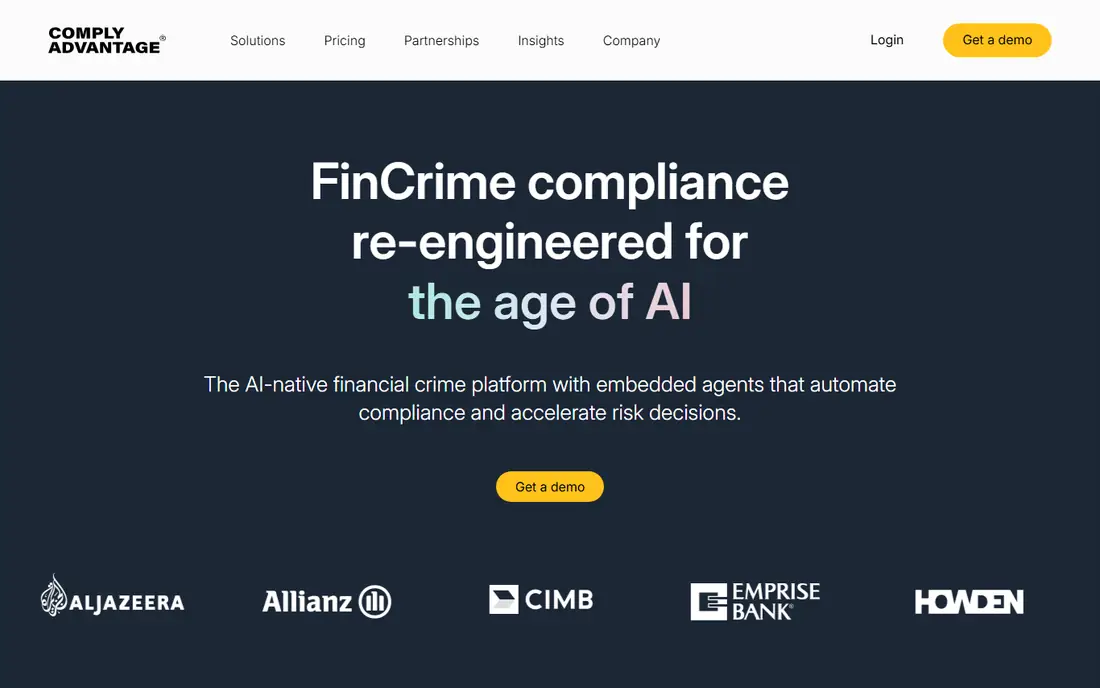
ComplyAdvantage screens customers, transactions, and counterparties against sanctions lists, politically exposed persons, watchlists, and adverse media in real time, with APIs that fit into onboarding and payment flows. Its data updates frequently, and its monitoring re-screens customers as lists change, which matters since sanctions designations move fast. Firms use it for customer onboarding, transaction screening, and ongoing monitoring.
Pricing is quote-based, and data depth varies by region, with stronger coverage in major markets. ComplyAdvantage also offers transaction monitoring rules that flag unusual patterns alongside screening, which helps firms catch risk that static lists miss. ComplyAdvantage fits fintechs, banks, and payment firms that need fast, API-driven screening with adverse media included.
What we like- Real-time sanctions and PEP screening
- Adverse media
- API-first design
Watch out for- Quote-based pricing
- Data depth varies by region
Starting priceSee website
Free planNo
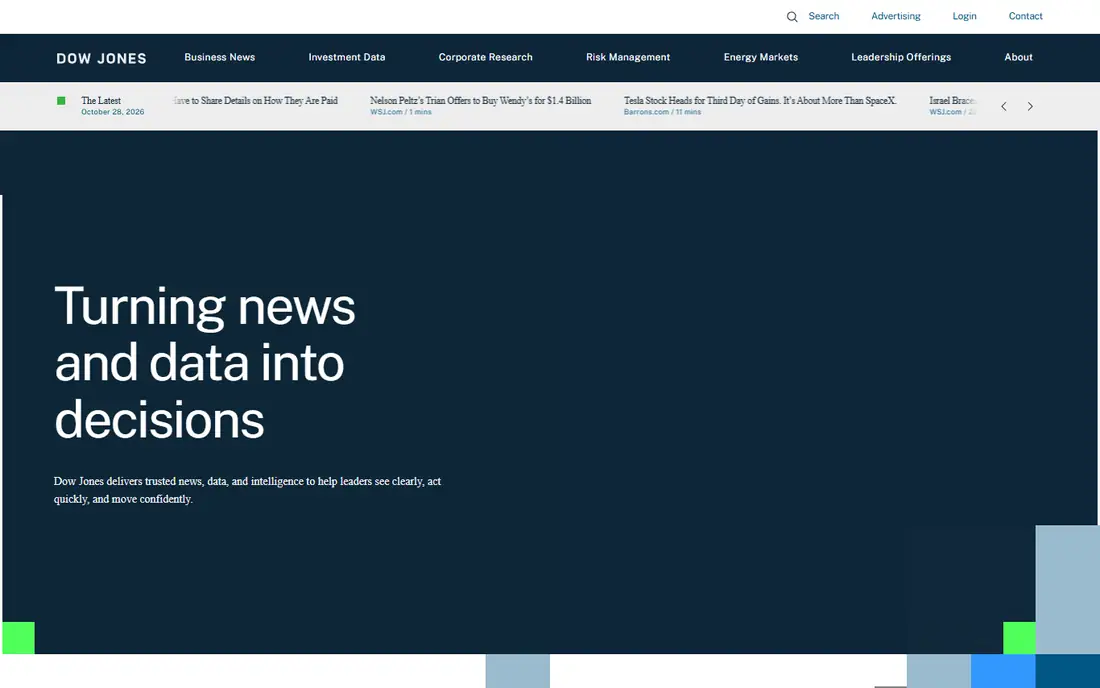
Dow Jones Risk and Compliance provides watchlist, sanctions, politically exposed person, and adverse media data used by banks and regulators worldwide. Its research teams maintain and verify list entries, which gives compliance teams confidence in the underlying data. Firms integrate its feeds into their own screening engines, case systems, or third-party platforms.
It is primarily a data product, not a complete screening workflow, so buyers often pair it with screening software. Dow Jones fits institutions that prioritize data authority and depth, especially for sanctions and PEP coverage, and that already have screening workflows to feed.
What we like- Authoritative watchlist data
- Deep PEP and sanctions coverage
- Long track record
Watch out for- Data product, not a full workflow tool
- Enterprise pricing
Starting priceSee website
Free planNo
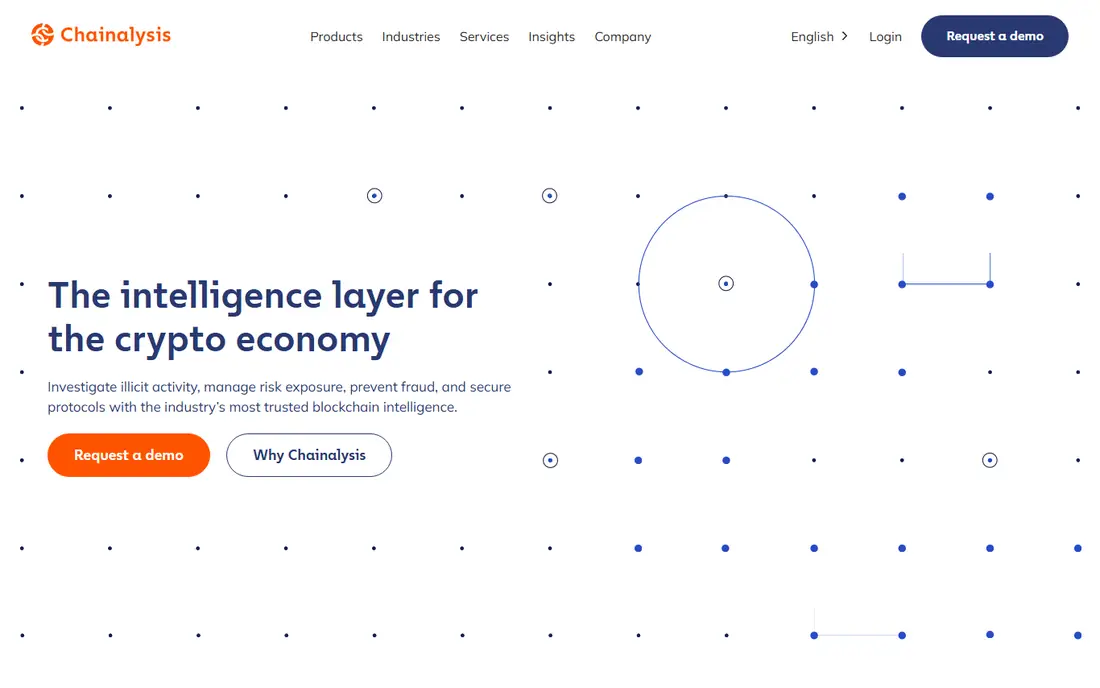
Chainalysis is the leading blockchain analytics platform for anti-money laundering, tracing crypto transactions across wallets, exchanges, and illicit networks. Its KYT transaction monitoring screens transfers in real time, while its Reactor investigation tool traces funds through complex paths. Regulators and exchanges rely on its data for enforcement and compliance.
It covers crypto only, so fiat compliance needs separate tools, and pricing is enterprise-grade. Chainalysis also publishes annual crime reports that help compliance teams understand emerging typologies and justify monitoring budgets internally. Chainalysis fits crypto exchanges, custodians, and financial institutions with crypto exposure that need the deepest transaction analytics available.
What we like- Deep blockchain analytics
- Sanctions and illicit-finance detection
- Regulator trusted
Watch out for- Crypto-only
- Enterprise pricing
- Complex for newcomers
Starting priceSee website
Free planFree trial
Elliptic scores crypto wallets and transactions for illicit-finance risk, covering many coins and tokens, with APIs that fit into exchange and wallet onboarding flows. Its risk scores help firms decide which customers and transactions need review, and its screening covers sanctions-linked addresses and darknet exposure. Crypto businesses use it for both customer screening and ongoing transaction monitoring.
Scoring models need tuning to each business's risk appetite, since a score that is too strict blocks legitimate customers. Elliptic also offers wallet screening for sanctions-linked addresses at onboarding, which catches high-risk customers before they transact. Elliptic fits crypto firms that want risk scoring plus screening in one API-driven platform, at lower entry cost than Chainalysis.
What we like- Wallet and transaction risk scores
- Broad coin coverage
- API access
Watch out for- Crypto-only
- Scoring models need tuning to each business
Starting priceSee website
Free planNo
Actimize, from NICE, offers a full anti-money laundering suite covering transaction monitoring, customer due diligence, screening, and case management for banks and large financial firms. Its models detect suspicious patterns across accounts and channels, and its case workflow routes alerts to investigators with audit trails. Large banks use it as their core AML platform.
Implementation and pricing are enterprise-scale, with long projects and significant services costs. Actimize also offers prebuilt models for common laundering patterns, which shortens the tuning period for new deployments. Actimize fits large banks and financial institutions that need a complete, auditable AML platform and can fund enterprise implementation.
What we like- Full AML suite
- Case management
- Strong bank adoption
Watch out for- Enterprise pricing and implementation
- Heavy for small firms
Starting priceSee website
Free planNo
Fenergo manages the client lifecycle for banks and financial firms: onboarding, know-your-customer checks, due diligence, and periodic reviews, with a rules engine that adapts workflows to jurisdiction and client type. It centralizes client data and documents, reducing duplicate requests to clients and giving compliance teams one view of each relationship. Banks use it to cut onboarding time while keeping audit trails.
Pricing and implementation are enterprise-grade, and smaller firms may find it heavier than screening-only tools. Fenergo also supports ongoing due diligence refreshes that re-check clients on schedules set by risk tier, keeping reviews current without manual tracking. Fenergo fits banks and large firms that need governed client onboarding and lifecycle management, not just screening.
What we like- Client onboarding and KYC workflows
- Rules engine
- Bank adoption
Watch out for- Enterprise pricing
- Implementation complexity
Starting priceSee website
Free planNo
LexisNexis Risk Solutions provides identity verification, fraud, sanctions, and risk data used across financial services, insurance, and government. Its screening and monitoring products draw on large identity and risk datasets, helping firms verify customers, detect synthetic identities, and screen against watchlists. Its breadth suits firms that need identity and AML data from one vendor.
The product range is broad, which can confuse buyers choosing between overlapping offerings, and pricing is enterprise-grade. LexisNexis fits firms that want deep identity and risk data alongside AML screening, especially where fraud and identity risk matter as much as sanctions.
What we like- Deep identity and fraud data
- Screening and monitoring
- Broad coverage
Watch out for- Enterprise pricing
- Product range can confuse buyers
Starting priceSee website
Free planNo
Moody's, through its compliance and risk products, offers sanctions, politically exposed person, and adverse media screening with global coverage, plus a screening platform for onboarding and monitoring. Its data draws on regulatory sources and research teams, and its platform suits firms that want screening integrated with wider risk workflows. Banks and fintechs use it for customer and transaction screening.
Pricing is enterprise-grade, and screening depth varies by package, so buyers should confirm list coverage for their jurisdictions. Moody's fits firms that want screening from a major risk vendor with global coverage and platform integration.
What we like- Sanctions and PEP data
- Screening platform
- Global coverage
Watch out for- Enterprise pricing
- Screening depth varies by package
How we chose
We compared product documentation, vendor pricing pages, and public user reviews for AML compliance tools that are actively sold in 2026. We favored tools with real screening, monitoring, or case management capability, current availability, and adoption by regulated firms. We checked coverage claims carefully, since list depth and country coverage vary, and we left out tools that no longer sell a current AML product. This guide is general information, not legal advice: AML obligations vary by jurisdiction and business type, and firms should confirm requirements with qualified counsel.
AML tools differ by the risk they address: sanctions screening, crypto monitoring, transaction monitoring, and client onboarding are different problems, and no single tool covers all of them equally well. Map your obligations first: which regulations apply, which customer types you serve, which channels carry risk, and what your regulator expects in audit trails. Then shortlist tools that cover those specific risks, rather than buying the broadest suite and hoping it fits.
Tune models to your business, or alerts will drown you
Out-of-the-box transaction monitoring models generate large alert volumes that small compliance teams cannot clear. Budget tuning time: review false positives, adjust thresholds by customer segment, and document tuning decisions for auditors. A tool that produces ten thousand unreviewed alerts is worse than a narrower tool whose alerts your team actually investigates.
Keep audit trails that survive regulator scrutiny
Regulators ask how decisions were made, not just what the decision was. Keep records of screening results, alert dispositions, model changes, and reviewer identities, with timestamps and reasons. Tools with built-in case management and audit trails, such as Actimize and Fenergo, help here, but process discipline matters more than any single feature.
Train investigators, not just software users
AML software flags risk, but investigators decide what it means, and weak investigations undermine strong tools. Train compliance staff on typologies, red flags, and documentation standards, and rotate case reviews so quality stays consistent. A well-trained small team with a good screening tool often outperforms a large team drowning in untuned alerts.
Plan for list and regulation changes
Sanctions lists, PEP definitions, and AML regulations change constantly, and a screening tool is only as good as its data updates. Ask vendors how often lists update, how quickly new designations propagate, and how re-screening works for existing customers. Test re-screening after major list changes, since stale screening is a common audit finding.
Frequently asked questions
What does AML compliance software actually do?
It screens customers and transactions against sanctions and watchlists, monitors transactions for suspicious patterns, manages investigation cases, and keeps audit trails. Different tools cover different parts: screening, crypto monitoring, transaction monitoring, and client onboarding are distinct functions.
Is ComplyAdvantage or Chainalysis better for AML?
They solve different problems. ComplyAdvantage suits fiat screening and monitoring for banks and fintechs, while Chainalysis suits crypto transaction monitoring and investigation. Crypto firms often need both, plus fiat screening for their traditional payment flows.
Do small fintechs need enterprise AML tools?
Not necessarily. API-driven screening tools like ComplyAdvantage or Elliptic offer lower entry costs and faster setup than enterprise suites like Actimize. Small firms should match tooling to their actual risk and regulator expectations, then scale as volumes grow.
How often should customers be re-screened?
Continuously or at least whenever relevant lists change, plus periodic reviews by risk tier. Real-time monitoring tools re-screen automatically, while manual processes need scheduled re-screening. Regulators increasingly expect ongoing monitoring, not one-time onboarding checks.
Can AML software guarantee compliance?
No. Software supports compliance work by screening, monitoring, and recording decisions, but it cannot guarantee compliance. Firms remain responsible for policies, tuning, investigation quality, and regulatory filings, and should confirm obligations with qualified legal counsel.
Sources we checked (8)
- https://complyadvantage.com
- https://www.dowjones.com
- https://www.chainalysis.com
- https://www.elliptic.com
- https://www.niceactimize.com
- https://www.fenergo.com
- https://risk.lexisnexis.com
- https://www.moodys.com
Is your product missing or out of date?
We review this list regularly. Vendors can request a listing, send updated pricing or ask about featured placement.

Shihab Mia · Founder, Rankite
Shihab has 5+ years in B2B and SaaS SEO. He writes Rankite's software buying guides from pricing pages, documentation and public user reviews. More about Shihab.
 ComplyAdvantage
 Dow Jones Risk and Compliance
 Chainalysis
 Elliptic
 Actimize
 Fenergo
 LexisNexis Risk Solutions
 Moody's