How we make this list: we compare pricing pages, product documentation and public user reviews. Ratings come from G2, Capterra or Trustpilot, with the date we checked them.
Key takeaways
- No single tool covers every competitor question, so pair a traffic or SEO tool with a monitoring or sales tool when the budget allows.
- Semrush and Ahrefs give the widest view of search and paid activity, while Similarweb is stronger for estimated traffic and audience share.
- Crayon fits teams that need sales-ready battlecards, while Visualping and Owler suit lighter, lower-cost monitoring.
- Check data freshness and coverage for your own market before paying, because estimates vary by country, industry, and company size.
- Free plans are useful for a first check, but serious tracking almost always needs a paid plan with more competitors and history.
Quick comparison
| Tool | Best for | Starting price | Free plan |
|---|
 Semrush | Broad SEO, paid, and AI visibility research | $139 per month | Free trial |
 Ahrefs | Backlink and keyword gap research | $129 per month | No |
 Similarweb | Traffic and market benchmarking | See website | Yes |
 SpyFu | Paid search history on a budget | $39 per month | No |
 Crayon | Sales battlecards and CI programs | See website | No |
 Brand24 | Competitor mentions and sentiment | $199 per month | Free trial |
 BuzzSumo | Competitor content and media coverage | $199 per month | Free trial |
 Visualping | Website change alerts | $10 per month | Yes |
 Owler | Company news and competitor lists | See website | Yes |
Is your product missing or out of date?
We review this list regularly. Vendors can request a listing, send updated pricing or ask about featured placement.
#1Semrush
Best for: Broad SEO, paid, and AI visibility research4.4/5 on
G2 (4,035 reviews, checked Oct 2026)
Visit semrush.com
Starting price$139 per month
Free planFree trial
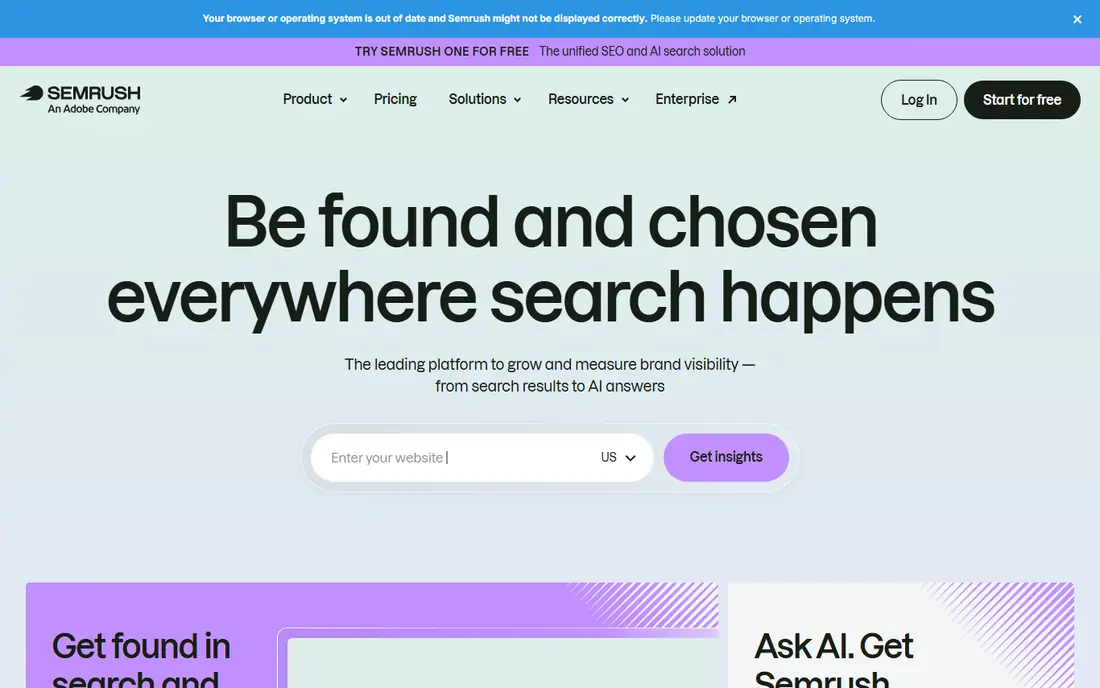
Semrush works best as the main research hub for a marketing team that tracks several rivals at once. You can compare domains side by side, find keyword gaps, review paid ads, and audit your own site without switching products. The newer AI visibility reports add prompt-level tracking, which matters now that buyers often meet a brand first in an AI answer rather than on a results page. That breadth is the reason many agencies standardize on it, even when they only use part of the suite each week.
The catch is cost and complexity. Lower plans limit the number of projects, tracked keywords, and reports, so a team tracking many competitors may need a higher tier. Setup is still fast for a single domain, but getting value from the full toolkit takes a few weeks of regular use. If you only need one job, such as backlink research, a narrower tool may cost less and feel simpler.
What we like- Very wide keyword, backlink, and advertising data
- AI visibility tracking for prompts and citations
- Strong reporting for agencies
Watch out for- Price rises quickly with extra seats and add-ons
- The size of the toolkit can slow down new users
#2Ahrefs
Best for: Backlink and keyword gap research4.5/5 on
G2 (717 reviews, checked Oct 2026)
Visit ahrefs.com
Starting price$129 per month
Free planNo
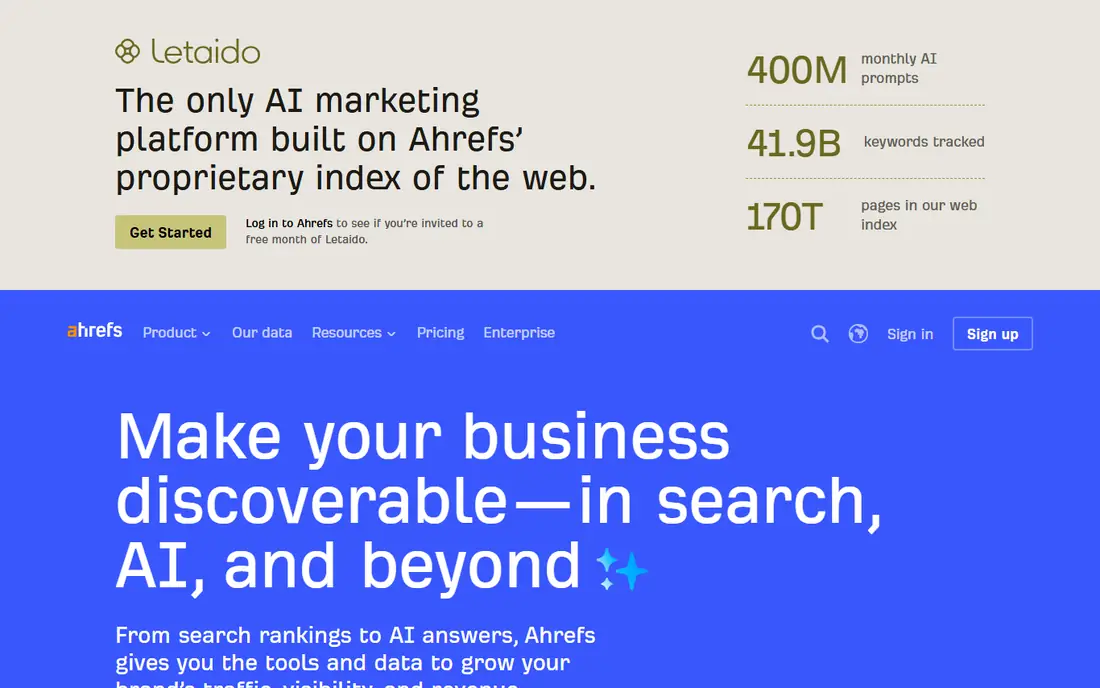
Ahrefs suits teams whose main competitor question is search: who ranks, who links to them, and which pages earn traffic. Its Site Explorer and Content Gap reports make it easy to see where a rival wins and where your own site is thin. The interface stays focused on search data, which helps analysts move fast without wading through unrelated modules. Recent AI features add brand tracking across chatbots, which extends the same workflow into AI search.
The main limits are price and scope. There is no free tier for full competitor research, and traffic figures are estimates, not exact analytics. It also covers social and paid activity less fully than some rivals. Buy it when search performance drives your pipeline, and pair it with a monitoring tool if you also need pricing or messaging alerts.
What we like- Deep backlink index and content gap reports
- Clear domain comparison views
- AI assistant for plain-language questions
Watch out for- No free plan for full research
- Higher plans are needed for larger teams and API use
#3Similarweb
Best for: Traffic and market benchmarking4.4/5 on
G2 (1,236 reviews, checked Oct 2026)
Visit similarweb.com
Starting priceSee website
Free planYes
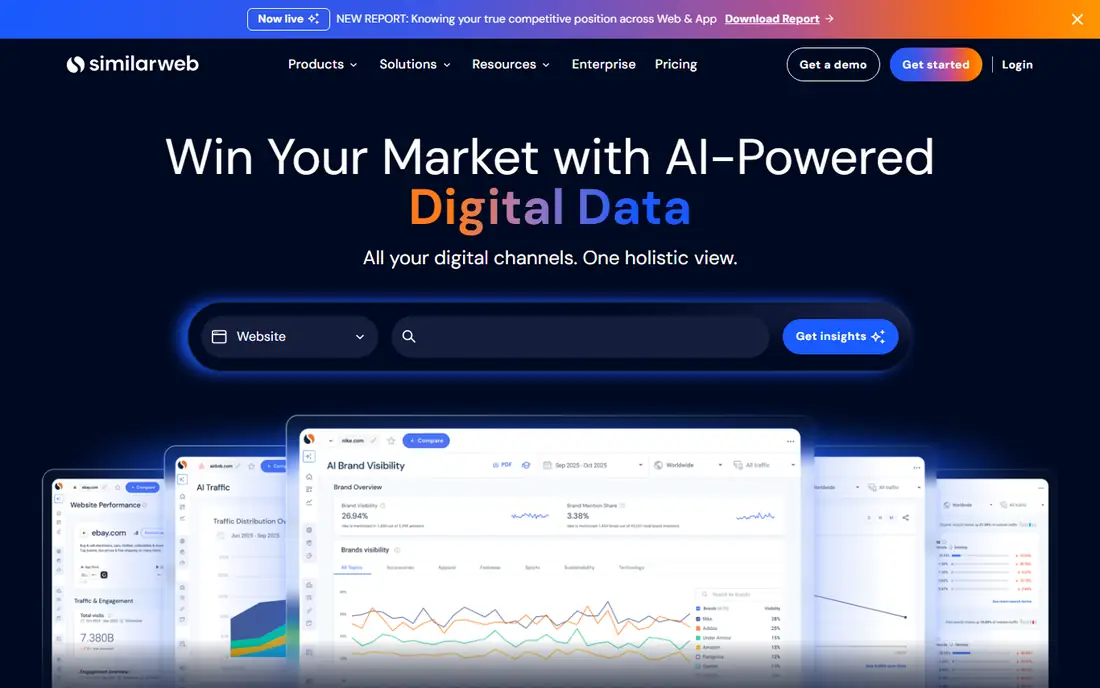
Similarweb answers a different question from Semrush and Ahrefs: how big is a competitor in the market, and where does its audience come from. That view helps with budgeting, partnership choices, and board reporting, because it puts your own traffic next to category totals. Marketing leaders use it to check whether a rival is growing through search, social, paid, or direct visits, and to spot channel shifts over time.
The trade-off is precision. Traffic numbers are modeled estimates, so they work best for comparison and trend-spotting rather than exact counts, especially for smaller sites. Full access is also priced by quote, which makes budgeting harder for small teams. Start with the free tier to test coverage for your market, then ask for a quote only if the benchmarks prove useful week after week.
What we like- Estimated traffic, channels, and audience data at market level
- Useful industry benchmarks
- App and web coverage in one place
Watch out for- Pricing is quote-based for fuller access
- Estimates are less precise for small sites
#4SpyFu
Best for: Paid search history on a budget4.6/5 on
G2 (518 reviews, checked Oct 2026)
Visit spyfu.com
Starting price$39 per month
Free planNo
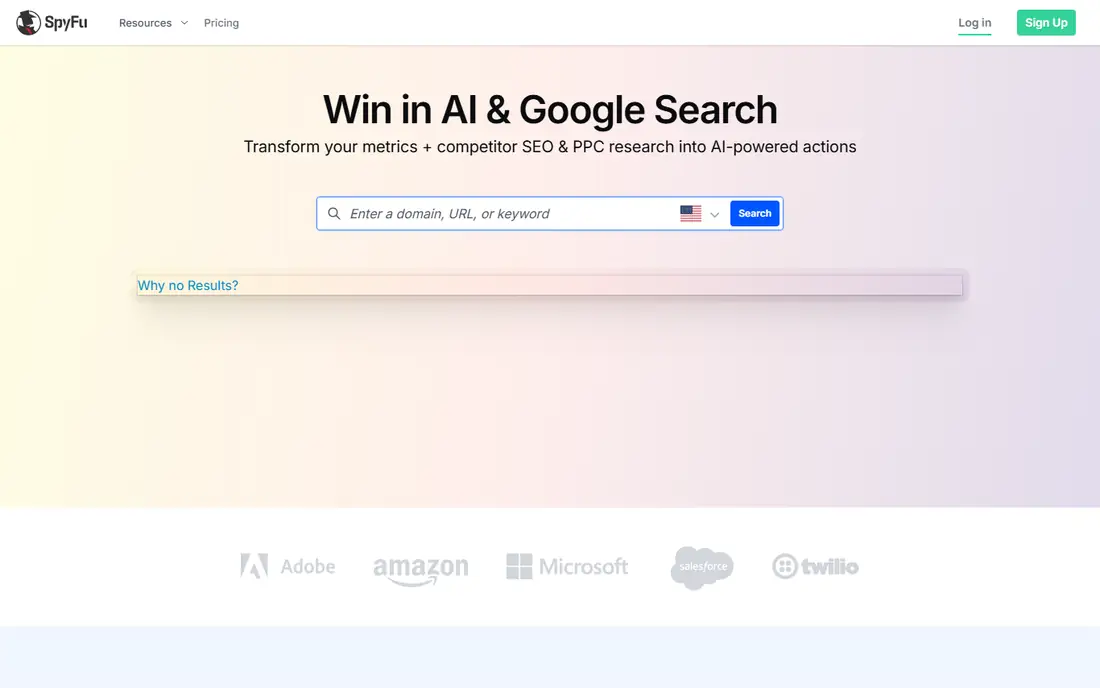
SpyFu is the budget pick for teams that mainly want to know what rivals pay to promote and which keywords they target. Its long ad history helps you see which campaigns a competitor kept running, which is a fair signal of what worked for them. You can also compare domains quickly and export keyword lists for your own campaigns. For a small team or a freelancer, that focus keeps the monthly bill low.
It is not a full market intelligence suite. Backlink depth, traffic modeling, and social monitoring are thinner than in Semrush or Similarweb. The newer site audit and AI features help, but they do not close that gap. Choose SpyFu when paid search is the main battleground, and accept that you may still need a second tool for content or traffic questions.
What we like- Long history of competitor keywords and ads
- Low entry price
- Simple domain comparison
Watch out for- Less depth on backlinks and market data
- Interface feels dated next to larger suites
#5Crayon
Best for: Sales battlecards and CI programs4.6/5 on
G2 (385 reviews, checked Oct 2026)
Visit crayon.co
Starting priceSee website
Free planNo
Crayon is built for companies that run a formal competitive intelligence program rather than occasional checks. It pulls changes from competitor websites, pricing pages, reviews, and news into one feed, then turns the important items into battlecards sales teams can open during a deal. That distribution step is the point: research that stays in a marketing folder rarely helps a rep answer a pricing objection on a call. Integrations with Slack, Teams, and Salesforce put the same material where sellers already work.
The cost is the honest catch. Pricing is by quote and aimed at mid-size and larger teams, so it is hard to justify for a one-person operation. Setup also needs decisions about which competitors matter, which signals to track, and who owns each battlecard. If your team closes deals against the same few rivals every month, that effort pays off. If you only check competitors now and then, a lighter tool will do.
What we like- Automated tracking of competitor sites, news, and reviews
- Battlecards inside Slack, Teams, and Salesforce
- AI summaries of key changes
Watch out for- Quote-based enterprise pricing
- More setup than a simple monitoring tool
#6Brand24
Best for: Competitor mentions and sentiment4.6/5 on
G2 (366 reviews, checked Oct 2026)
Visit brand24.com
Starting price$199 per month
Free planFree trial
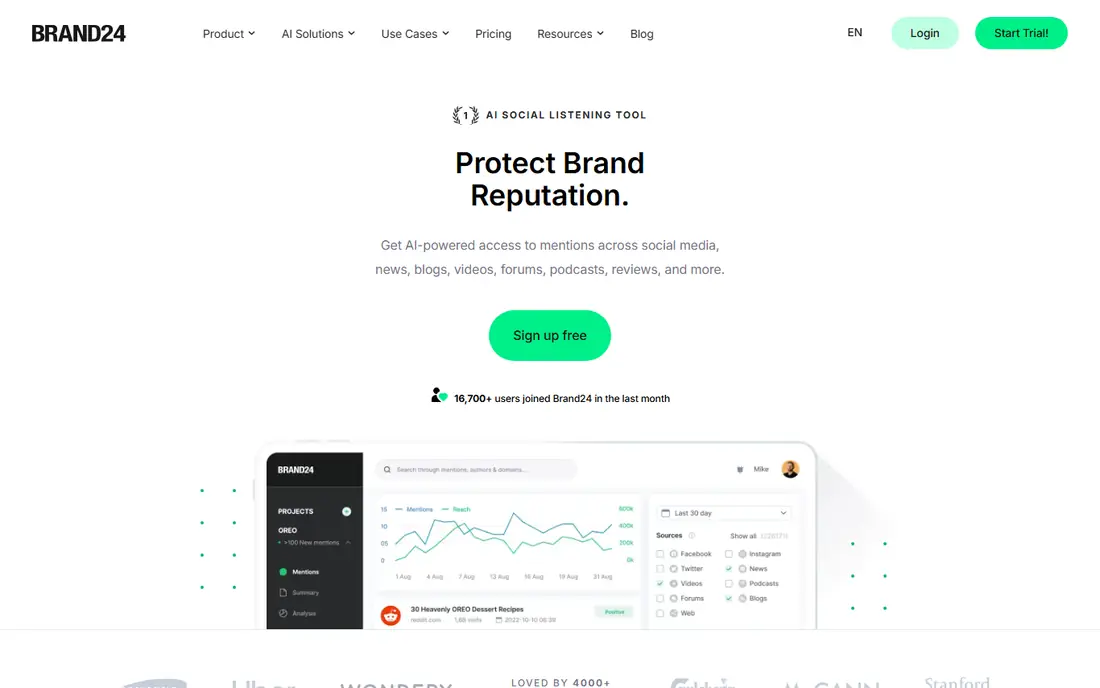
Brand24 fits teams that want to hear what customers say about rivals, not just what rivals publish. It tracks mentions across social platforms, news, blogs, videos, forums, and reviews, then groups them by sentiment and topic. That makes it useful for spotting a product complaint trend, a PR spike, or a campaign that is gaining traction. You can benchmark your own share of voice against named competitors and export reports for leadership.
The limit is volume. Plans cap mentions and keywords, so a brand in a noisy category may hit limits sooner than expected. It also works best as a listening layer, not a full SEO or traffic tool. Use it when reputation and customer voice drive decisions, and pair it with a search tool when you also need keyword and traffic data.
What we like- Wide mention coverage across social, news, blogs, and forums
- AI sentiment and topic summaries
- Competitor comparison reports
Watch out for- Higher entry price for small teams
- Mention volume limits shape what larger brands can track
#7BuzzSumo
Best for: Competitor content and media coverage4.5/5 on
G2 (107 reviews, checked Oct 2026)
Visit buzzsumo.com
Starting price$199 per month
Free planFree trial
BuzzSumo answers the content question: which competitor articles, videos, and posts actually earned attention. That helps editors plan topics, spot formats worth copying in their own voice, and find journalists who already cover the space. The media database adds an outreach angle, so PR teams can move from monitoring to pitching without exporting lists between tools. Trend alerts keep the research current between deeper reviews.
The price is the main barrier for smaller teams, and engagement figures should be read as directional, since platform coverage changes over time. It also does not replace a traffic or keyword tool. Pick BuzzSumo when content and earned media are central to your strategy, and skip it if your main need is paid or technical SEO data.
What we like- Finds top-performing competitor content by engagement
- Journalist and media database for outreach
- Trend alerts by topic
Watch out for- Entry price is high for casual use
- Social engagement data varies by platform
#8Visualping
Best for: Website change alerts4.6/5 on
G2 (503 reviews, checked Oct 2026)
Visit visualping.io
Starting price$10 per month
Free planYes
Visualping is the simplest tool on this list, and that is its strength. You pick competitor pages, such as pricing, features, or careers pages, and get an alert with a highlighted screenshot when something changes. AI summaries help you tell a minor edit from a pricing or positioning shift without opening every alert. For a small team, that is often enough to stay current without a large platform or a weekly manual check.
Its narrow scope is also its limit. Visualping does not analyze traffic, keywords, or sentiment, and it will not build sales battlecards. Treat it as a tripwire, not a research suite. It pairs well with a free tier of Owler or a search tool, and it is an easy first step if you have never run competitor monitoring before.
What we like- Simple page monitoring with before-and-after comparisons
- AI summaries flag important changes
- Low entry cost
Watch out for- Narrow scope compared with full CI suites
- No deep traffic, SEO, or sales enablement features
#9Owler
Best for: Company news and competitor lists4.3/5 on
G2 (484 reviews, checked Oct 2026)
Visit owler.com
Starting priceSee website
Free planYes
Owler suits anyone who wants a quick, ongoing feed of competitor company news: funding rounds, acquisitions, leadership changes, and product announcements. Its competitor graph helps you find rivals you had not named yet, which is useful in a crowded niche. The free tier lets you follow a small set of companies, so you can test whether the alerts are relevant before paying.
The data is thinner for small private firms than for larger public ones, and detailed contacts and lists sit behind paid plans. It is best used as a news layer alongside a search or monitoring tool. If your main need is company-level news rather than keyword or traffic analysis, Owler gives good value for little or no cost.
What we like- Large company database with competitor graphs
- News alerts and funding updates
- Free tier for following a few companies
Watch out for- Depth varies by company size and coverage
- Premium features need a paid plan
How we chose
We compared vendor pricing pages, product documentation, and public reviews on G2, Capterra, and Reddit, and we checked each homepage to confirm the product still exists and matches its category. We favored tools with a distinct job, such as traffic benchmarking, paid history, listening, or sales enablement, over tools that only repeat the same keyword data. Prices shown here come from vendor pages and comparison guides checked in October 2026; where pricing was quote-based or unclear, we wrote See website rather than guessing.
What to check before you pay
Start by naming the decision each tool must support. A search team needs keyword gaps and backlink data, a sales team needs battlecards and pricing alerts, and a brand team needs mentions and sentiment. Buying a broad suite for a narrow job wastes money, while buying a narrow tool for a broad program leaves gaps that show up during a deal review or a quarterly plan.
Test coverage on your own rivals before committing. Add three to five real competitors, run the same reports you would use each month, and check whether the data looks complete for your country and niche. Look at limits that matter in practice: number of competitors, tracked keywords, mention volume, seats, and history length. Ask about contract length, data export, and whether AI summaries can be reviewed or edited, because those details affect how much your team trusts the output.
Frequently asked questions
What is the best AI tool for competitor analysis for a small business?
Start with SpyFu for paid and keyword history or Visualping plus Owler for low-cost monitoring, then add Semrush or Ahrefs only when search drives a clear share of revenue. Small teams get more value from one tool used weekly than from three tools checked once a quarter.
Do AI competitor analysis tools give exact traffic numbers?
No. Traffic figures from Similarweb and similar tools are modeled estimates based on panels, partnerships, and public signals. They are reliable for comparing rivals and spotting trends, but they should not be quoted as exact visitor counts.
How often should I check competitors?
A light weekly check of pricing, messaging, and mentions catches most changes, while a deeper quarterly review of keywords, traffic, and content works for planning. Increase the pace when a rival launches a product, raises prices, or enters your market.
Can one tool replace a full competitive intelligence program?
Rarely. Most teams combine a search or traffic tool with a monitoring tool and, for sales-led companies, a battlecard platform. The right mix depends on whether marketing, sales, or product makes the most competitor-driven decisions.
Is it legal to monitor competitor websites and public mentions?
Monitoring public pages, ads, and mentions is standard practice, but you should not scrape private data, bypass logins, or copy copyrighted content. Keep your research to public sources and follow each tool's terms of use.
Sources we checked (9)
- https://www.semrush.com/pricing
- https://ahrefs.com/pricing
- https://www.similarweb.com/pricing
- https://www.spyfu.com/pricing
- https://crayon.co/pricing
- https://brand24.com/pricing
- https://buzzsumo.com/pricing
- https://visualping.io/pricing
- https://www.owler.com/pricing
Is your product missing or out of date?
We review this list regularly. Vendors can request a listing, send updated pricing or ask about featured placement.

Shihab Mia · Founder, Rankite
Shihab has 5+ years in B2B and SaaS SEO. He writes Rankite's software buying guides from pricing pages, documentation and public user reviews. More about Shihab.