How we make this list: we compare pricing pages, product documentation and public user reviews. Rankite is independent; if a vendor ever pays for a featured spot, that listing is clearly labeled Partner.
Key takeaways
- Profound and Scrunch AI lead for enterprise AI search visibility.
- Goodie AI combines monitoring with optimization for brand narratives.
- Peec AI suits international brands tracking many engines and languages.
- Otterly.ai and AIclicks offer affordable entry points.
- Evertune and AthenaHQ add perception research and revenue attribution.
Why AI search visibility is a new discipline
People increasingly get answers from ChatGPT, Gemini, Perplexity, and Google AI Overviews instead of clicking links. When an AI summarizes your category, whether your brand appears, and what it says about you, shapes demand. That is what AI visibility platforms measure and improve.
The discipline has a few names: generative engine optimization, answer engine optimization, AI search monitoring. Whatever the label, the job is the same: track how AI systems describe your brand, find the gaps, and fix the content and citations behind them.
Pricing is young and moves fast; treat any figure as a starting point and verify on the vendor's pricing page. The comparisons below focus on platforms built for this job rather than SEO tools with AI features bolted on.
How we chose
We selected platforms purpose-built for tracking and improving brand visibility inside AI-generated answers, with real customers and current products. We looked for multi-engine coverage, prompt-level tracking, and actionable optimization guidance.
We covered enterprise suites and affordable entrants because budgets vary enormously. We checked for trial or demo availability and noted where pricing is public. Vendor claims were checked against documentation and independent comparisons, and buyers should verify current pricing before deciding.
Starting priceSee website
Free planNo, demo available
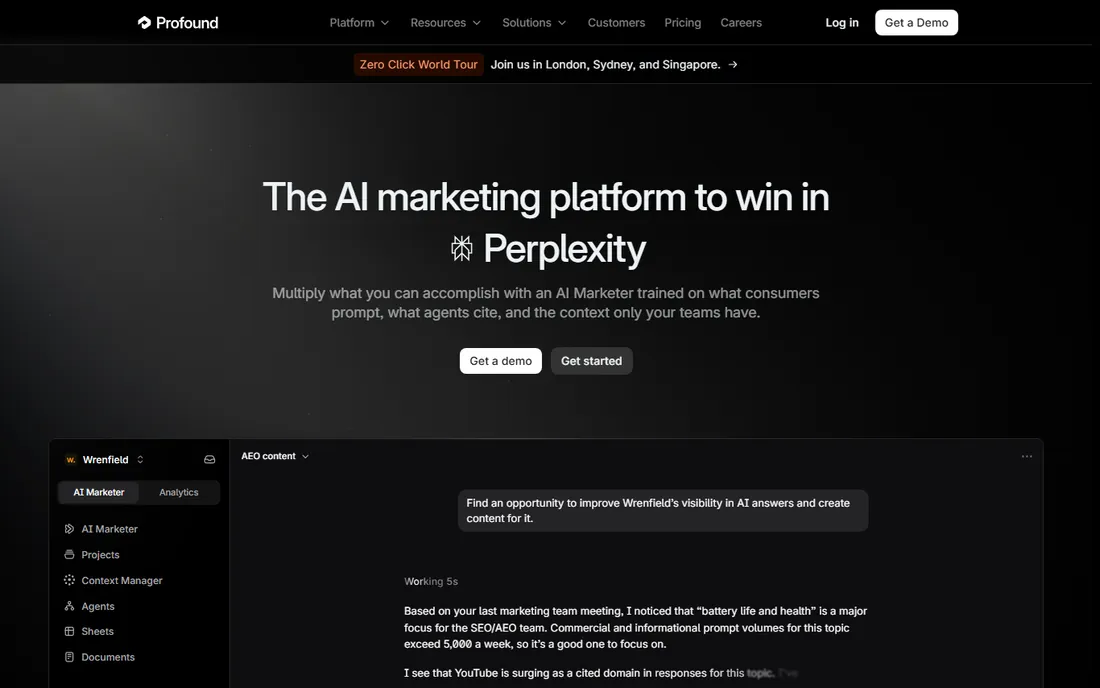
Profound analyzes how AI engines describe your brand across millions of real user conversations, scoring visibility, sentiment, and citation patterns. Enterprise teams use it for strategic reporting on a channel that traditional analytics cannot see.
The platform emphasizes measurement rigor and compliance-friendly security, which suits regulated industries entering AI search carefully. Optimization guidance helps teams influence how AI systems portray them.
Pricing starts with limited engine coverage and rises steeply. For enterprises that need defensible AI visibility data, Profound is the reference.
What we like- Deep visibility scoring
- Large real-user prompt datasets
- Strong enterprise security
- Good for regulated industries
Watch out for- Enterprise pricing
- Entry tier covers limited engines
- Newer category means evolving product

#2
Scrunch AI
Best for: Teams wanting monitoring plus AI-readable content
Visit scrunch.com
Starting priceSee website
Free planTrial available
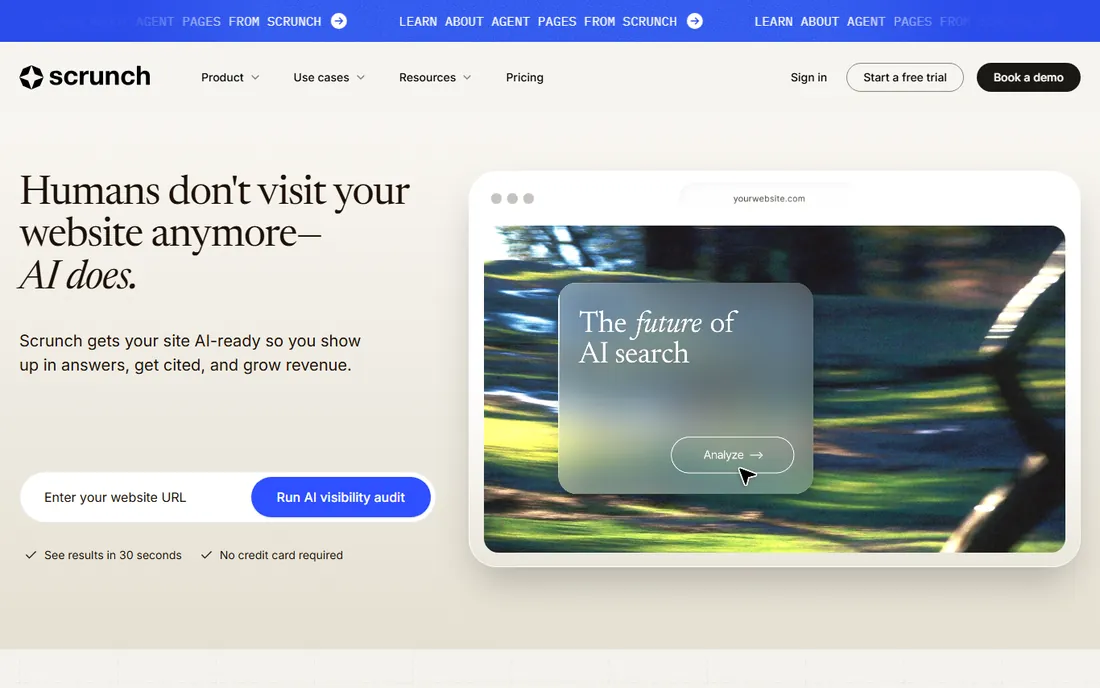
Scrunch AI pairs prompt-level visibility tracking with an Agent Experience Platform: a structured, machine-readable layer that serves verified brand information directly to AI crawlers. The idea is to control what AI systems learn about you.
Bot traffic analytics show which AI crawlers visit and what they consume. Enterprise features include compliance certifications and multi-brand support.
The content-layer concept requires technical commitment. For teams serious about shaping AI answers, the combination of monitoring and structured content is compelling.
What we like- Broad engine coverage
- Agent Experience Platform for crawlers
- Good for technical teams
- Used by major brands
Watch out for- Pricing is significant
- Newer platform
- The AXP concept needs buy-in

#3
Goodie AI
Best for: Enterprises wanting full-stack brand narrative control
Visit goodieai.com
Starting priceSee website
Free planNo, demo available
Goodie AI offers the full loop: monitor visibility across major AI engines, get optimization recommendations, and attribute results to traffic and revenue. Brand narrative and sentiment monitoring help comms teams track how AI portrays them.
The platform suits enterprises willing to invest in controlling their AI presence systematically. Attribution features connect the work to business outcomes.
Smaller teams will find it more than they need at the price. For comprehensive AI visibility programs, it is the most complete stack.
What we like- Monitoring plus optimization plus attribution
- Brand sentiment tracking
- Good for narrative control
- Comprehensive
Watch out for- Expensive
- Overkill for small teams
- Newer vendor

#4
Peec AI
Best for: International brands tracking many engines
Visit peec.ai
Starting priceSee website
Free planNo, demo available
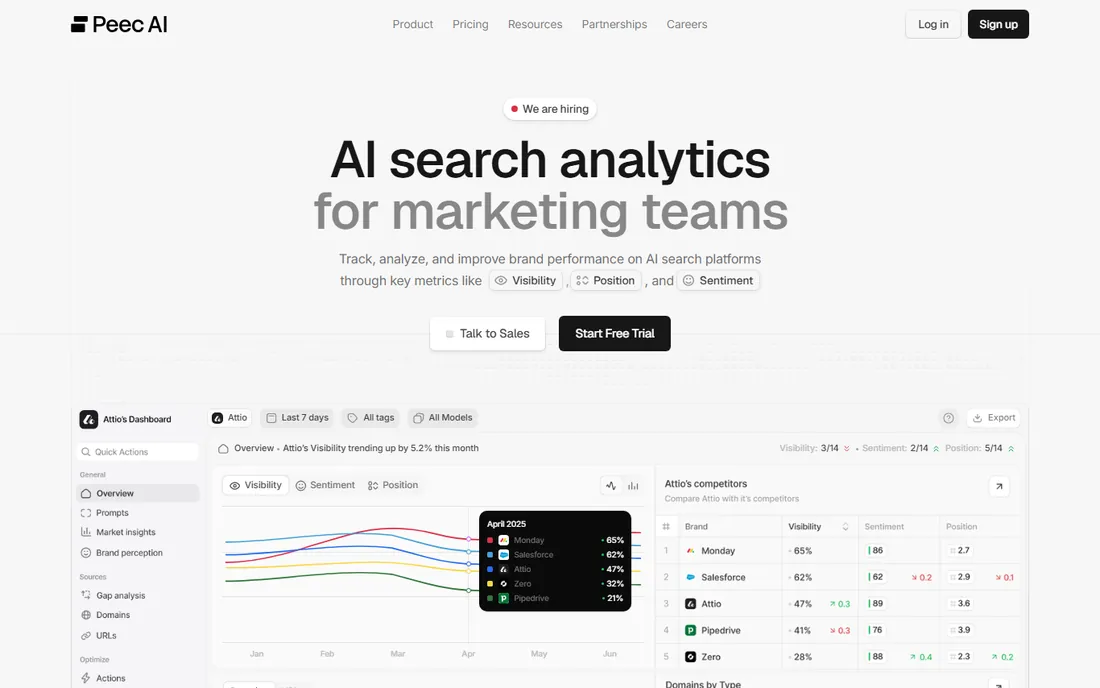
Peec AI tracks brand visibility across many large language models and over a hundred languages, which suits international brands that need consistent measurement across markets. Regional benchmarking shows where the brand wins and loses by country.
The analytics go deep on mentions, citations, and competitive positioning. Teams managing global brands get the multi-market view that single-market tools miss.
Pricing reflects the breadth. For international AI visibility, the coverage justifies evaluation.
What we like- Broad LLM and language coverage
- Strong reporting
- Good for multi-market brands
- Deep analytics
Watch out for- Pricing adds up
- Newer company
- The market moves fast
Starting priceSee website
Free planTrial available
Otterly.ai makes AI search monitoring accessible: track prompts across ChatGPT, Perplexity, Gemini, and other engines at prices small teams afford. Agencies white-label it for clients entering the space.
Setup is quick and the interface focuses on the essentials: visibility trends, competitor comparison, and mention tracking. It is the low-risk way to start measuring AI visibility.
Enterprise teams will want Profound or Scrunch depth. For affordable monitoring that works, Otterly.ai is the entry pick.
What we like- Low entry price
- Quick setup
- Good for agencies and SMBs
- Covers major engines
Watch out for- Less depth than enterprise tools
- Newer vendor
- Advanced features limited

#6
Evertune
Best for: Brands wanting perception research on AI answers
Visit evertune.ai
Starting priceSee website
Free planNo, demo available
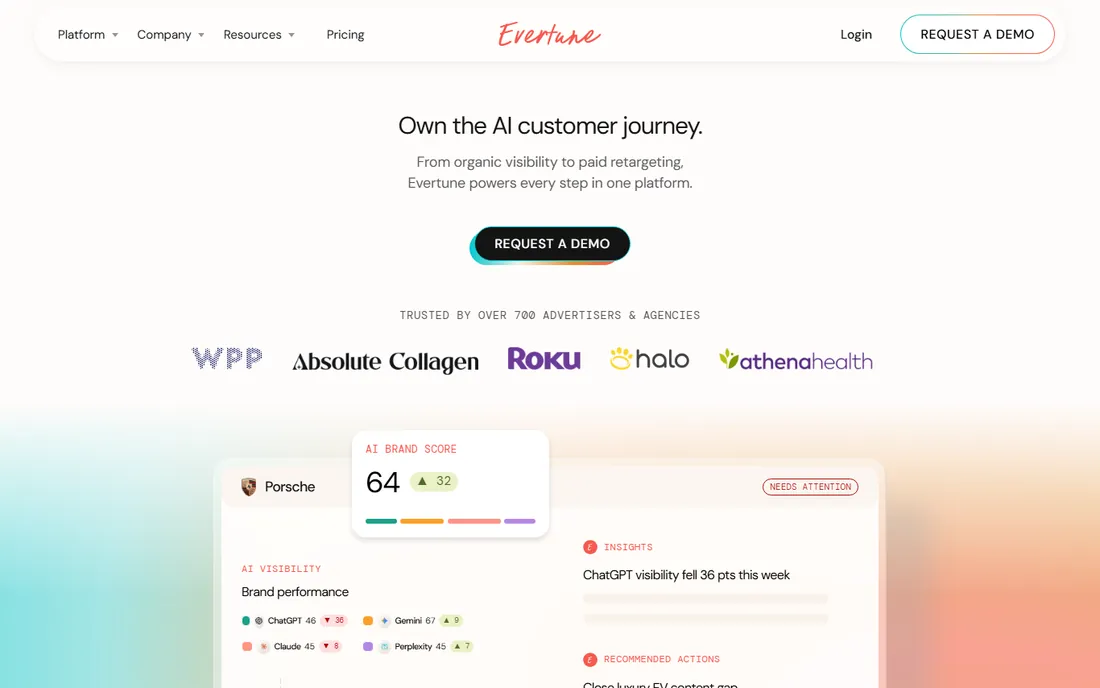
Evertune approaches AI visibility as brand research: how do AI systems perceive your brand, and how does that perception compare to competitors. Panel data grounds the analysis in real user interactions.
Brand and comms teams get the narrative insights they need without technical SEO machinery. The enterprise positioning suits large organizations.
It is less of an optimization toolkit than Scrunch or Goodie. For understanding AI-driven brand perception, the research angle is distinctive.
What we like- Panel-based perception data
- Enterprise focus
- Good for brand teams
- Research-grade insights
Watch out for- Expensive
- Newer company
- Less of a technical SEO tool
Starting priceSee website
Free planNo, demo available
AthenaHQ combines AI visibility tracking with citation prediction and revenue attribution, aiming to show not just where the brand appears but what drives the appearances and what they are worth. The startup moves fast on features.
Early adopters like the attribution angle, which connects AI visibility work to pipeline. The platform feels modern and focused.
As the youngest vendor on this list, diligence matters more. For teams comfortable with emerging tools, the feature direction is promising.
What we like- Citation prediction features
- Revenue attribution angle
- Modern platform
- Startup agility
Watch out for- Youngest vendor here
- Track record short
- Pricing unclear
Starting priceSee website
Free planTrial available
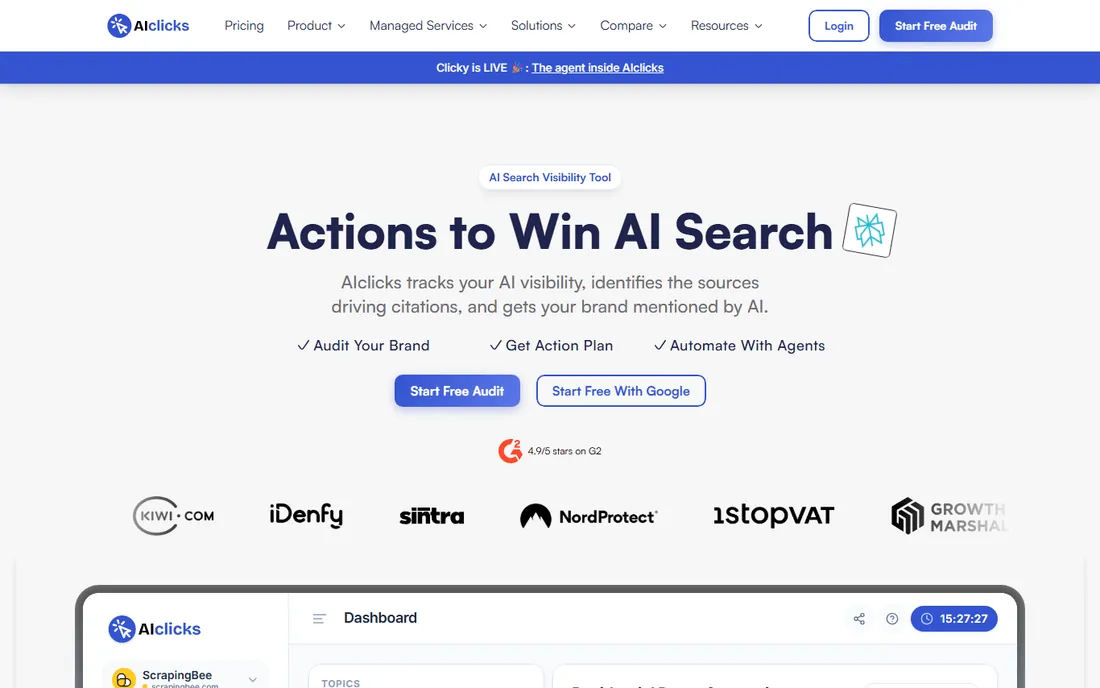
AIclicks offers end-to-end AI visibility tracking, from prompt monitoring to citation attribution, at accessible prices. Small marketing teams get the core capabilities without enterprise contracts.
The feature set is practical rather than flashy: track, analyze, optimize. For teams that need the basics done well on a budget, it competes with Otterly.ai on value.
Larger programs will want the depth of the enterprise tools. As an affordable all-rounder, AIclicks deserves a trial.
What we like- Broad engine coverage
- Citation attribution
- Affordable entry
- Practical feature set
Watch out for- Smaller vendor
- Less brand recognition
- Enterprise features thin
Quick comparison
| Tool | Best for | Starting price | Free plan |
|---|
 Profound Profound | Enterprises needing rigorous AI visibility analytics | See website | No, demo available |
| Scrunch AI | Teams wanting monitoring plus AI-readable content | See website | Trial available |
| Goodie AI | Enterprises wanting full-stack brand narrative control | See website | No, demo available |
| Peec AI | International brands tracking many engines | See website | No, demo available |
 Otterly.ai Otterly.ai | Affordable AI search monitoring | See website | Trial available |
| Evertune | Brands wanting perception research on AI answers | See website | No, demo available |
 AthenaHQ AthenaHQ | Teams wanting citation prediction and attribution | See website | No, demo available |
 AIclicks AIclicks | End-to-end visibility tracking on a budget | See website | Trial available |
Is your product missing or out of date?
We review this list regularly. Vendors can request a listing, send updated pricing or ask about featured placement.
Start with the engines your customers actually use. Coverage claims vary, so verify ChatGPT, Gemini, Perplexity, and AI Overviews specifically for your market. Then check the actionability: monitoring without optimization guidance is just expensive curiosity.
Trial with your own brand prompts and compare what each platform reports, because methodology differs enormously in this young category. And verify pricing in writing; the market moves fast and published figures drift.
AI visibility mistakes
The biggest mistake is treating AI visibility as traditional SEO with new branding. Ranking tactics do not directly control what language models say about you. AI systems draw on training data, citations, and structured sources. Optimize for being cited accurately: clear factual content, consistent brand information, and credible third-party references.
Second, monitoring without acting. Dashboards showing declining visibility impress nobody if nothing changes. Every visibility report should end with assigned actions: which pages to improve, which claims to correct, which publishers to engage. Measurement without response is expensive curiosity.
Third, ignoring the sources AI cites. Language models lean heavily on Wikipedia, review sites, news, and forums. Audit what those sources say about your brand and fix inaccuracies at the source. Optimizing your own site while Wikipedia misstates your founding year is wasted effort.
Fourth, expecting overnight results. AI systems update on their own schedules, and training data refreshes slowly. Visibility work compounds over quarters, not days. Set expectations accordingly and measure trends, not snapshots.
Finally, neglecting the fundamentals. Fast pages, clear information architecture, accurate business details, and genuine reviews help both classic search and AI answers. The platforms above amplify good foundations; they cannot replace them.
Frequently asked questions
What is generative engine optimization?
The practice of improving how AI systems represent your brand in generated answers, through content structure, citations, and technical accessibility for AI crawlers.
How is this different from SEO?
SEO optimizes for ranked links; GEO optimizes for being mentioned and cited inside AI answers. They share content foundations but measure different outcomes.
Which AI engines should we track?
At minimum ChatGPT, Google AI Overviews, Perplexity, and Gemini, since these drive most AI-assisted discovery. Add Claude, Copilot, and Meta AI for completeness.
How much do these platforms cost?
Entry points range from around $30 monthly for basic monitoring to several hundred monthly for professional tiers, with enterprise contracts higher. Verify current pricing with each vendor.
Can we improve AI visibility without a platform?
Partly. Clear, well-structured content with credible citations helps everywhere. Platforms add measurement, scale, and the crawler-facing infrastructure that manual effort cannot match.
How do AI Overviews change our existing SEO strategy?
They raise the stakes on the fundamentals rather than replacing them. AI Overviews cite sources, so the same authority, clear content, and credible references that earn rankings also earn citations. What changes is measurement: add AI visibility tracking alongside rank tracking, and optimize for being quoted accurately, not just linked. Content that answers questions directly, with verifiable facts and original data, performs well in both. Treat AI Overviews as a new surface for the same quality work.
Should small businesses care about AI visibility yet?
Yes, but proportionally. If customers discover you through AI answers, and increasingly they do, then what AI says about you matters regardless of size. Start with the free fundamentals: accurate business information everywhere, clear service descriptions, and genuine reviews. Add a monitoring tool when AI-driven discovery becomes a meaningful traffic source. Small businesses cannot outspend enterprises here, but accuracy and specificity are free advantages.
Sources we checked (0)
Is your product missing or out of date?
We review this list regularly. Vendors can request a listing, send updated pricing or ask about featured placement.

Shihab Mia · Founder, Rankite
Shihab has spent more than a decade helping SaaS and e-commerce brands grow through search. He writes Rankite's software buying guides from pricing pages, documentation and public user reviews. More about Shihab.